
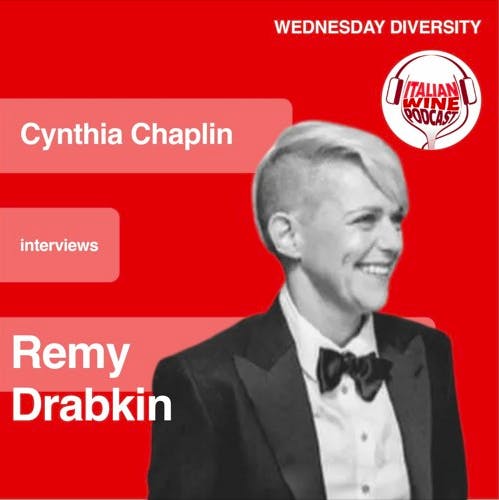
Ep. 737 Remy Drabkin | Voices
Voices
Episode Summary
Content Analysis Key Themes and Main Ideas 1. Diversity, Equity, and Inclusion (DEI) in the Wine Industry: The central discussion revolves around fostering inclusivity, addressing historical biases, and implementing equitable practices within the wine sector. 2. Sustainable and Ethical Business Practices: Remy Draftkin's pioneering efforts in building a carbon-neutral winery and her intentional focus on worker safety and accessibility. 3. The Evolution and Community of the Oregon Wine Industry: Remy's personal journey highlights the growth of Oregon's wine scene from a nascent community to a recognized region, emphasizing its supportive nature. 4. Personal Leadership and Overcoming Adversity: Remy's experiences as an ""out queer person"" in business, her engagement in civil service, and her resilience in the face of public scrutiny. 5. Global Wine Culture and Adaptation: Comparisons between ""Old World"" and ""New World"" wine regions regarding traditional practices, language barriers, and the adaptation of grape varieties to changing climates. Summary In this episode of the Italian Wine Podcast, host Cynthia Chaplin interviews Remy Draftkin, an esteemed Oregon winemaker, and community leader. Remy discusses her lifelong passion for winemaking, rooted in her childhood among Oregon's wine pioneers. A significant part of the conversation focuses on her ambitious new winery project, which aims to be the world's first carbon-neutral winery built with a strong emphasis on equity, accessibility, and worker safety, featuring innovative design elements like all-gender, ADA-accessible restrooms. The interview deeply explores the critical topic of Diversity, Equity, and Inclusion (DEI) within the wine industry. Remy shares insights from ongoing DEI training in the US, stressing the importance of intentional business practices—such as bilingual pay incentives and accessible tasting room materials—to dismantle exclusionary barriers. She openly discusses her challenges as an ""out queer person"" in business, highlighting the need for strong community support while acknowledging the occasional backlash she receives. The discussion also touches on the unique characteristics of Italian grape varieties like Dolcetto and Lagrein in Oregon, praising their adaptability to climate change. The episode concludes with a broader reflection on the global wine industry's journey towards greater inclusivity and accessibility. Takeaways - Diversity, Equity, and Inclusion (DEI) is a significant and evolving focus within the US wine industry, with active training and policy implementation. - Remy Draftkin is pioneering a new standard for winery construction with a carbon-neutral design and a profound commitment to equitable practices for both employees and visitors. - The Oregon wine industry, historically, fostered a supportive, family-like community that influenced early winemakers like Remy. - Openly embracing one's identity in business can attract supportive customers and allies, though it may also invite criticism, necessitating a strong support network. - Implementing inclusive business practices (e.g., bilingual staff, accessible information) is not only ethical but also a smart business strategy, offering a return on investment. - Certain robust Italian grape varieties, such as Lagrein, show promise in New World regions due to their climate resilience and ability to produce complex, lower-alcohol wines. - The wine industry globally is grappling with traditional exclusivity and language barriers, with ""New World"" regions like Oregon actively working to dismantle them. Notable Quotes - ""I'm going to endeavor to build a winery before harvest next year... we're going to be the first winery build that we know of in the world that will be our concrete will be carbon neutral."
About This Episode
The speakers discuss the success of Remi Wines' new wine winery, which will be the first in the world to do its concrete construction. They also talk about the success of the Oregon wine industry and how it has broadened their knowledge and appreciation for their craft. They emphasize the importance of worker safety and sustainability in the industry and the success of the Oregon wine industry. They also discuss their past success in the industry and how it has broadened their knowledge and appreciation for their craft. They emphasize the importance of acknowledging and being open about diversity and racism in the industry and being a positive person. They also talk about their upbringing and family, their love for community, and their commitment to bringing free content every day.
Transcript
Welcome to the Italian wine podcast. I'm Cynthia Chaaplin, and this is voices. Every Wednesday, I will be sharing conversations with international wine industry professionals discussing issues in diversity, equity, and inclusion through their personal experiences, working in the field of wine. If you enjoy the show, please subscribe and rate our show wherever you get your pods. Okay. Welcome to voices, everyone. I'm Cynthia Chaplin, and today I'm speaking to Remi Draftkin, the owner and winemaker of Remi wines in Oregon, where she's also the Council president of her hometown in Mcminville, and the director of the Oregon wine board. So this is a conversation I've been longing to have. Thank you for joining us, Remy. I'm really excited to chat with you today. I'm very excited to chat with you too, and I actually completed my service with the Oregon wine board two days ago. Oh, wow. Have you have you left them completely? But for the time being, yes. Well, I think you've been there for a while now. So new eyes are always a good thing, but I suspect you've got something in your pipeline that's gonna be taking up your time. I'm going to endeavor to build a winery before harvest next year, build a physical winery. Right? I've been in, I've been leasing space for the last fifteen years. And so I have a an old barn on my vineyard that it's always been the the dream has always been to convert it into a winery, and I'm now going to do that. So it it's it's already taking a lot of time. Wow. That sounds so exciting. How how many square feet. Have you got? It's a five thousand square foot ag barn, but it's very rudimentary. You know, we we store our tractors and picking bins and things of that nature in there. So there's no floors. There's no electricity or water or anything. So it's it's a it's a pretty big project, but we're doing a lot of really amazing things with it. One thing is that we're going to be the first winery build that we know of in the world that will be our concrete will be carbon neutral, and not because we're offsetting by purchasing carbon credits, but because we'll be mixing in fly ash and and other byproducts, to to actually encapsulate, as much carbon, to to offset the carbon footprint in, in reality of using concrete. We're doing a lot of other forward thinking, things with this winery. One thing we're going to be doing is having a restroom that's accessible from the outside and the inside and It will be one restroom for all genders. All of the stalls will be ADA accessible, and it won't actually be able to be locked from the outside, which is very intentional so that there can never be an instance when our vineyard crews show up to work in the morning. And they're accidentally locked out of the bathroom. So we were really trying to have a focus on worker safety and be very smart in our design and and bring a an extra level of focus to equity in how we construct the winery? I'm so impressed. I I love the sustainable and the equity, you know, both rolled into one in one place. And it was kind of cool to have a blank canvas of an old building that you can really create something that's gonna be unique and functional and and add a lot of value to your community. I'm sure. I hope so. It will. Yeah. Well, it sounds amazing. I'm gonna to come to Oregon and see it when it's finished. Please do. I'm on a tight timeline, so plan your trip for August next year, and I'll be I'll be moving in. Excellent. I'll I'm coming to you caught the ribbon. I'll put it in the diary. Well, I'm I'm gonna dig into your background now that we've discussed your future kind of kind of the wrong way around for an interview, but I'm every single thing that I have ever read about you starts off the same way. That you wanted to be a winemaker from the age of eight, which is kind of not the average eight year old sort of aspiration. So nobody ever seems to ask you how you knew this. I mean, how did this happen? How did an eight year old say, yeah, cool. I'm gonna be a winemaker. So my parents, friends, when I was growing up, were the people that are now referred to as the Oregon wine industry pioneers. So the the Oregon wine industry was very nascent and and very small. You know, there were a handful of families here that were making wine. The ponzis, the let's the ERAS and and and a and a few few others, but it was a very small industry. And I grew up in their homes and in their sellers, and it was a very celebratory community We did a lot together. There were great parties, whether those were harvest parties because, you know, everybody needed help picking. So all of our families would show up and help pick for the day, which also meant tractor rides and cinnamon rolls and things of that nature or all the good things that kids love. Yeah. Exactly. Or if they were having open houses to to, you know, sell their their product and try to attract local customers. We were there helping with the food and the setup. And I was running around with their children that were similarly aged and following around the kids that were, you know, nine and ten years older than me. And I knew that some of those kids, especially, Louisa Ponzi was, you know, was already planning on becoming a winemaker. And you know when somebody is when you're six and somebody's sixteen, they're the coolest person in the world. Yeah. That's your icon right there. Definitely. Yeah. Absolutely. So it was really laid out for me in many ways. There was this kind of promise, if you will, of community. And and that promise has certainly been fulfilled. That's that's so fantastic. I I love the support that that you feel in a community like that. I mean, it and it does sound like sort of you know, an epic wine commune, you know, harking back to the seventies where people are living together, eating together, growing things, making things, being creative, and doing it in a in a family setting. I don't think there's anything more sustaining than that kind of a community especially when you're young. So you were really fortunate to be involved. I'm jealous. I was very fortunate. I feel very fortunate still. Well, so I'm assuming that that one of these, lovely people gave you a job when you were old enough to, start working How did that go? Well, I had, you know, already been helping if you will in the sellers for for years at that point. But when I was, legal to work, I applied, for a job. And I was given a a a harvest intern position in nineteen ninety five at Ponzi Vineyards, and I immediately loved it. And right, following that, and I my mother was so supportive. She would, you know, pick me up from school, drive me to the winery, pick me up late at night, drive me home, drive me out there on weekends, and she was wonderfully supportive. And then after a time at Ponzi, I applied for a job at IRath where Rob Stewart was the winemaker at the time. He and his wife then started our Stewart and company, in Mcmindville. But I worked for Rob for three years at erath, and, you know, my just knowledge base expanded tremendously, right, from simple winemaking process to starting to really understand equipment and and all lots of different things about, running a business. You know, I was running the bottling line by the time I was sixteen years old, and whether that meant making sure that we didn't run out of labels or that people were back in time from break to keep us on a schedule. I started to get this more holistic view of running a business, and he also started to mentor me in the lab. And my wife kind of went on like that. I I had good I had great mentors in including another a number of other, notable winemakers who put a lot of faith and energy into me and really worked on my professional development, my winemaking development. And, I and so I worked in wine for, you know, really my entire life. And and then was also challenged by one of my mentors, who gave me a a small, a small amount of of juice as we were pressing and said, you know, you I'm I'm gonna make this tank of wine. And here's five gallons, and you're on your own and see how you do. And that was so it was such a great challenge, right, because I was being asked to to not follow out somebody else's, instructions, but to do it myself. And, you know, in America, it's not so common for people to make wine at home. No. Not at all. Definitely. And I grew up in Ohio and there was no wine making at home at all. No. Unfortunately. In fact, there was no wine in Ohio back in the day. Right. There is now. All fifty states amazingly produce some wine. But the but that challenge was great because it was very empowering. I've I've since often encouraged people to make wine at home you know, I think everybody should make wine at home. I think it's a beautiful practice, a beautiful cultural practice. It's wonderful to get to enjoy things that you've made yourself. And then also I think it it creates appreciation for those of us that do it professionally. Absolutely. Absolutely. I've I have had a go at making wine myself at home. I I have one grapevine in my garden. I'm a big gardener. And it is not an easy process, and there's so many things that can go wrong. And it sounds like you had, you know, that wonderful gift of a great deal of hands on experience from such an early age in a in an environment where you felt comfortable and and people looked after you and encouraged you and challenged you. I don't think that that could ever be replaced. You know, that's that is a real gift. My my next question is what on earth made you decide to go to Europe when you had this wonderful stuff going on at home in Oregon? Oh, well, I mean, who knows? I was so You know, I was I was so anxious to get out of Oregon. Every every kid wants to get away from home. Oh, believe me. Yep. Ohio. I couldn't wait to shake the dust off my shoes. I was just the same. Yeah. Exactly. So I I mean, I was itching to I was itching to get to get away from my small town, the small town that I have, you know, returned to and and love. But at the time, I was itching to get away and And so I I I I did. And I had a number of wonderful life experiences. I lived on a kibbutz in Israel, and I actually was hired to go work at the Golan Heights winery, and then I somehow didn't realize through the interview process, but then realized just shy of my first day of work that I wouldn't actually be allowed to touch the line. Oh, interesting. Why not? Why not? COcha it was all kosher wine and yeah. So I I and I all the gender dynamics and just so many things. I actually didn't I'm sure the I'm I'm sure they're practices are are different now, but I I ended up not going to work for them. And left Israel and applied to the Lisa Viti called Abone and and and moved to Burgundy, and was able to study there for a semester, which was fantastic. And then so on and so forth, you know, go about how life learning how to make wine. Well, I'm I'm just I I'm I'm a so interested in the experience with Golan Heights because, of course, now, you know, wines from Israel and and Lebanon are are, you know, going up and up in the world and recognition and value and quantity, you know, really, really doing well. And I'm just I'm fascinated to understand the process, so women weren't allowed to touch the wine when you were there. That was part of the kosher aspect of it. I, you know, I don't wanna go I don't wanna dive too deep into it because I was so young and it was so long ago, and my memory is is is foggy. So I don't wanna be I'm not, I don't wanna come across as though I'm saying anything bad about that winery because it wasn't. It was just kind of, I didn't spend a lot of time investigating, you know. I was seventeen. I just moved on. Yeah. Well, it's these sorts of things are so informative and so interesting because it's I think so often people just take for granted that other people's cultures in wine are more or less similar to their own. And it's really not the case. And that's that's really fascinating. I I'm gonna follow that up after this just to find out what it's like now. I had never put my mind to that, having never, set foot on a winery in Israel yet. But I plan to. But that's that's a really fascinating thing. So Yeah. I would be I would be interested as well. And, you know, it's the the culture of wine. I mean, I think here locally, we're doing we're focusing a lot in Oregon and in in my community about really, applying an equity lens to the wine community. And I think you you're starting to see that on a larger scale as well. And there's so many things that come into play, whether that's race and ethnicity or gender dynamics. I was in a training yesterday, a diversity equity and inclusion training yesterday that was for the wine industry. And there were people all along the western seaboard of the United States attending this particular training. And there was a lot of, kind of reveal and discussion about what people are doing inside their own companies, which also, you know, force people to admit things that weren't practices that weren't good within their own company. We, you know, we heard about, from a larger winery that has its own garden and orchards that supplies food to its kitchen. And somebody was talking about how just in this last year, they kind of had to go to bat to get good pay for the garden workers who, of course, are, I say, of course, because in Oregon, our vineyard workers are predominantly, Latinx, and and and the same is true for for lots of garden and vineyard and orchard labor is the the population tends to be is predominantly Latinx. And so, you know, it and that's different. I I worked in Australia for a time as well, and the vineyard workers there at the time were primarily cambodian. So, you know, you have dynamics that repeat throughout the wine industry, but they're certainly not the same everywhere. And the culture in France when I was there and there as a very young woman was was very regressive quite quite frankly. I mean, there were there were still sellers that wouldn't allow women in. And simultaneously, you had, you know, Veronique Joanne, who's leading one of the largest wineries in the world. It's shocking to think that, you know, this this sort of thing was just going on only thirty years ago. You know, that's, you know, it's it's very recent. I think people tend to forget that, you know, this has been a practice that has followed us into the twenty first century in a way that is, you know, really unacceptable. And it's great to hear that there's that much training going on on the west coast of the states, especially after all of the court of master sommelier debacle and things it's it's important that these conversations are being had. And as you said, being had in an open and honest way. Yeah. It's very important. That's the only way we can really effectively change systems of discrimination and oppression is by is by talking about them and and not saying, oh, this is, you know, this is kind of terrible or shooing it away, but saying, no, you know, this is this happens in all industries. And so how are we going to correct it and start focusing on on equity? Absolutely. It's still a conversation that's very difficult to have here in Italy. There's a lot of resistance to that conversation. So part of my goal with this podcast is to, you know, to get this topic and to get some, you know, insight and perspective out into the airwaves, and let people think about it and ponder about you know, what they're doing in their own business, that perhaps they should take a look at changing. So, yeah, it's it's it's really it it's not only, you know, a current topic. It's really crucial to, you know, our humanity going forward, I think. Yeah. And it doesn't have to be something that's associated with shame. You know, sometimes I think people feel shamed when you are talking to them about their their their company practices or their company culture, and it's it's not that that doesn't need to be any shame associated with it. It's more about how can you be intentional as you move forward. And I and I've I've talked about this to large for I did a presentation to the Washington State Wine Commission recently and, all about diversity in the wine industry and and racism in the wine industry. And, you know, part of it is just being in very intentional. So when it's time for you to hire, where are you advertising the jobs? Are you just putting it out through your, social network or literally your social networks? Or are you seeking out groups that are doing the important work of educating and advancing minority or historically oppressed populations and advertising with those groups. One thing we do at RemiWines is we offer a bilingual pay incentive. One thing that we're working on is translating our tasting room materials so that we have them available in English and Spanish. And, you know, thirty percent of our population or approximately thirty percent of our population locally is, Spanish speaking. And we want to make our tasting room as accessible as we can be. And so we don't, you know, we don't shame ourselves because we don't have these things yet. Right? We just set our intention to to broaden our to broaden our scope. We don't have somebody that is bilingual on staff right now, but every time we advertise, I advertise a bilingual pay incentive. And I'm sorry I'm talking specifically about our tasting room. Of course, we with. So even that. Right. I mean, that saying we don't have somebody on staff that's bilingual when really the majority of our vineyard crew is bilingual is, you know, I mean, we we but we have to we have to pay attention to what we're saying and how we're acting and what our practices are if we're going to create a better industry. And and that's what I hope to do is create a very inclusive industry that welcomes people from all sorts of different backgrounds and where it's comfortable for people to come to my winery. And there's no concern about exclusionary practices. And and the wine industry has kind of a bad reputation for being exclusive? Definitely. Definitely. And I'm a wine educator as well. And it's it's one of those things that I fight against all the time. The the snobbiness, the exclusivity, but more importantly, you know, the the actual discrimination. So I think just putting people in a position where they feel comfortable being willing to think about what they could be doing that they aren't doing instead of as you say shaming them about it, but but having that conversation about being willing to do better. I like to remind business owners that there's a real return on investment, you know, for if when you it's not it's not only because it's the right thing to do. It's also the smarter business thing to do. And so you know, we've seen that we've seen that in many other industries that when you when you're intentional, then you you either create successes or failures. There's a a story that I love about Chevy the car producer, Chevrolet, and they produced a car call in the seventies called the Nova. Oh, yes. Absolutely. Right. And they went to market that car in central American countries, but they didn't invest in, kind of, you know, creating some cultural competency before they launched it. And of course, no Vah in Spanish is it doesn't go. Don't go. Exactly. So, you know, it was a complete failure. Right? But we can see it in these positive ways as well where let's say, Let's say you had somebody on staff in your tasting room that was fluent in ASL or Japanese or Spanish or any other language, you could offer that employee. You could compensate them for that skill And then you could offer tours, you know, vineyard tours or winery tours in Russian or Japanese or for the deaf community. And that would be very unique. And it has great value and it's it's good for community, but it's good for your company. And I think that's something that old world wineries have been doing for ages because they had to make their wineries accessible to people who speak English and even still in Italy, not a lot of wineries have English on their website. I lived in Spain for a while and and France, and it wasn't until, oh, I don't know, twenty years ago, that they really sort of got to grips with the fact that a lot of their client base is is English speaking or speaks a language other than their own French, Italian, Spanish, the old world languages. So you're now doing it in the reverse of of what they've been doing here for a while. So I think this is, again, a global trend of trying to welcome people into the wine world, people who've felt shut out in the past, either by a language barrier or accessibility barrier or even just discomfort in face of wine and and the technical terms we use and the barriers we put up to people coming in. So, I'm a big advocate for taking those barriers down. That's it's very important in what we do. I couldn't agree more. Well, I know you've you've been doing a lot of civil service as well, and you've been the liaison for the diversity and equity and inclusion task force over there. How has being a part of several different communities yourself sort of informed and helped you or hindered you in your wine work and your civil service work when you you've talked about feeling like a minority at different times and that it's actually been a positive for you. I think a lot of people find themselves in that position and can't find the positivity. I'm just wondering how you did because clearly, you know, you you went on to start your own winery in two thousand and six. I love it that you named it after yourself. I think that's excellent. But, you know, you're you're you're out there in the community being active and encouraging people. I think a lot of our listeners would love to hear how you found the strength to to do that and the things that that you managed to overcome on the way. Well, I will tell you I'm generally a very positive person. I I try very hard to find the good things in life. And and I I I'm I'm an out queer person. And, for the first many years of business, I actually hid that and I hid it intensely because I was, only in business. I mean, not at, you know, not at home or with my family or friends, but intensely in business. I I I really did hide it. I was very concerned about the how that would reverberate back onto my business and hinder sales. And as I made that change to being out in business a number of years ago. Both things happened. One, I had people that were so grateful and happy to have somebody be out and a an out leader, and and so it attracted business. And I've gotten a lot of hate mail. And, you know, I I I it still is a regular occurrence. That somebody sends me a nasty email telling me, why don't I just focus online and leave, you know, social justice in its place or something like that? But I can't. I'm, you know, I was raised in a rural rural town. I'm I'm Jewish. I'm queer. I it's it's I I am these things. So I have to be able to stand up for myself. And I've been in civil service for over ten years now started as the on the planning commission for my my town, which was an appointed position and And then I've I've was elected to the city council. I've been elected twice. And then as you mentioned at the beginning, I was elected, to the council presidency, which is kind of like the assistant mayor or the person that takes over as mayor and if something were to happen to the mayor. And so I've moved through this leadership role, and I've done it very openly. I also started a nonprofit called wine country pride. And and I think I'm able to to continue to do these things because by being open and honest with the community about, you know, myself and my identity, I've attracted customers and friends that are good allies and and good support. And when I am depleted, you know, when I get an email admonishing me for being openly gay, I, you know, I share that with my my small network and they they respond, you know, how, you know, how are you? I mean, it's hard when people attack you personally. And when you put yourself in a leadership position, you get attacked and you get attacked quite publicly. I think sometimes people forget that we're still those of us that are stepping up to lead, we're still human. Right? It's still it still hurts. That's so true. It's so true. I think people, and and COVID didn't help this when we weren't able to be together for the better part of two years. People forget that, you know, the words that they say or that they write aren't just, you know, going out into the into the air, they're actually landing on someone's heart. And that's, you know, that's not something to toy with. People forget, again, it comes down to that humanity of, you know, what you're taught in kindergarten do unto others as you'd have them do unto you. You know, don't don't attack people for for who they are. So I'm I'm so inspired by how much you have stepped up, and put yourself out there and put your neck on the line really to, to represent and support and mentor and be an example and be a leader for all of the communities that you represent. I mean, I think it's a great, a testament to your upbringing with such a strong family community of friends. And, you know, wine wine people in general tend to have that lovely family attachment and and supportiveness. So, I mean, it's Italy is a funny place because, you know, being gay and and, you know, not being Catholic and things like this are definitely not the favorite topics in Italy. You know, seventy five percent of all wineries here are owned and run by you know, generally typically middle aged to elderly, old white men. So, this conversation is a conversation that I feel is so important for people to hear because it's not like that everywhere. And the fact that you're growing that community in Oregon and actually speaking and talking to people along the West Coast is amazing. I think I'm gonna recruit you right now to be a speaker at our wine to wine business forum next October. I think you'd be amazing. You'll have to come to verona, which would be awesome. I have to come to verona during harvest? We'll make it worth your while. Well, you you just you just played right into my hands because I know that you grow a lot of Italian grapes And I was wondering how you picked them, you know, why? And, what is your favorite Italian wine? You can't choose your own. What's your favorite Italian wine? But I'm I'm very interested in your grape selection for your vineyard. Yeah. So are those grapes doing in Oregon? I, again, I don't wanna take take credit that's that that is in mind. So I pay a lot of attention, and a lot of our early wine growers we're planting Italian varietals as well, experimentally. It's just that, you know, pinot noir and pinot gris were automatically, you know, they did so well here. And so we became quite well known for that, and and then chardonnay, etcetera. But I've worked, I've been working with Dolceto that's been planted here at other vineyards for thirty five, forty years. So really well established vines. I personally planted Legrine, my vineyard, which which is one of my favorite geeky grapes. I love Legrine. So I was thrilled when I saw that. We were we were gonna get to this point in the talk because I wanted to know why you picked that one. It's not the easiest grape. It's not the easiest grape but, there was a gentleman named Bryce Bagnell, who worked here in Oregon, and he thought it would be a great blending grape for Peen and Warren. So he planted a an experimental half acre, and I worked with that fruit, making, a hundred percent the grind from it, but I worked with that fruit, for a couple of years. And I I thought it just it it was it it's just a great varietal for us. And one of the reasons I thought it was so great too is because, you know, we we've been watching our climate change and Legrine is so, sturdy in many ways. Right? It has very thick skin, it the the clusters themselves are very open. So there's they're kind of naturally mold or mildew resistant in that way. Yep. Exactly. Yep. And it tends to ripen lower, lower bricks levels. So, you know, the legrines that you're finding coming out of Northern Italy are ten, eleven, twelve percent alcohol. And I love wines that are I I really appreciate low alcohol wines that are complex and It's hard to do. It's hard to do. It's tricky to, yeah, to keep that complexity and keep the alcohol low. Yeah. But we're able to do that here, especially with the lagrange. I mean, It it is a fantastic varietal for our area. And I make it very what I would consider traditionally if you were, but, you know, I barrel age it for two years and then bottle age it for an additional year before release. That's commitment. That is a lot of commitment. That's three years without any income, but that's what that grape needs. I'm I'm so impressed. It does. You have to tame it in a way. Yeah. Yeah. Exactly. I'm dying to taste it. I I'm sure I can't get your wines over here, but, when you to Corona for the conference. You can bring some. Perfect. Well, Rami, I'm gonna let you go. I know you're busy, and I'm I'm just so happy that we got this chance to talk. I we've we've gone into some areas that I just think are important for our listeners. They're definitely important to me, and and I know that you are a champion of so many things. Thank you so much for giving me your time today. I really appreciate it. And I'm I would really love to meet you in person, so we'll have to make that happen. Okay. I look forward to it. Thank you so much. Yeah. Well, I live in Verona so you can come and visit and we'll go up to La Gryne ourselves. Okay. And can we go taste a lot of Teral to go? You asked about one of my favorite wine? Absolutely. For a dory for a dory is about two hours from my house. We're we're on a road trip. Oh, perfect. Elizabeth is, I think, a amazing leader in the Italian wine industry. I I love I love her wines, and I I love how she makes them and everything from the label to what's in the bottle. I I I think she's fantastic. So that I would I would love to I've been I've been there before and I would love to go back. Lots of wine in the amphora. So She is one of my wine heroes. So I'm I'm ready. That I will, be ready with my suitcase. We are off. Okay. Perfect. I'll see you then. Alright. Well, thank you so much, and have a good day. Thank you. Thank you for listening. And remember to tune in next Wednesday when I'll be chatting with another fascinating guest. Italian wine podcast is among the leading wine podcast in the world, and the only one with a daily show. Tune in every day and discover all our different shows. You can find us at Italian wine podcast dot com, SoundCloud, Spotify, Himalaya, or wherever you get your pods. Hi, guys. I'm Joy Livingston, and I am the producer of the Italian wine podcast. Thank you for listening. We are the only wine podcast that has been doing a daily show since the pandemic began. This is a labor of love and we are committed to bringing you free content every day. Of course, this takes time and effort not to mention the cost of equipment, production, and editing. We would be grateful for your donations, suggestions, requests, and ideas. For more information on how to get in touch, go to Italian wines podcast dot com.
Episode Details
Related Episodes

Ep. 2789 ColleMassari: a long-term vision rooted in Montecucco with Giuseppe Di Gioia | On The Road With Stevie Kim
Episode 2789

Ep. 2788 Ep. 14: Austria and Hungary | Study Smart for your WSET Level 3
Episode 2788

Ep. 2785 From Volunteer to Speaker at TEXSOM with Samantha Cole Johnson | TEXSOM 2026
Episode 2785
Ep. 2766 Inside the U.S. Non-Alcoholic Wine Market: What Wineries Need to Know with Jill Sites | Masterclass US Wine Market
Episode 2766
Ep. 2761 Winemaking and Consulting Across Sicily with Alessandro Serughetti | Wine, Food & Travel with Marc Millon
Episode 2761

Ep. 2759 Part 2 – The VIA Educational Program & Italian Wine | Heart-to-Heart Conversation with Sarah Looper
Episode 2759