
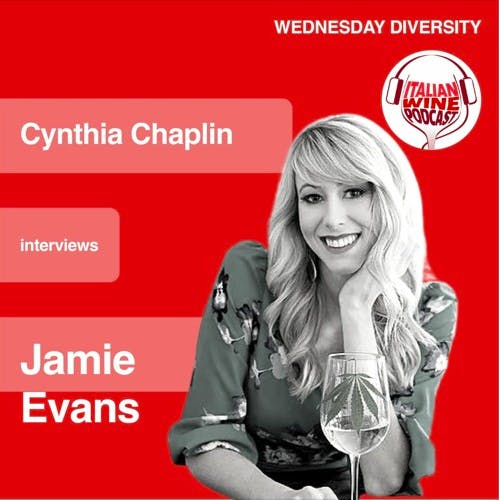
Ep. 780 Jamie Evans | Voices
Voices
Episode Summary
Content Analysis Key Themes and Main Ideas 1. The personal and professional journey of Jamie Evans from the wine industry to cannabis. 2. The striking similarities between wine and cannabis, particularly in sensory evaluation, terpenes, and the concept of terroir. 3. The emerging field of cannabis education and professional certifications (e.g., ""interpining""). 4. The development of gourmet cannabis culinary experiences and the importance of safe, responsible consumption. 5. Introduction and explanation of Erbassy, a non-alcoholic cannabis-infused wine, and its production process. 6. The role of cannabis products as a low-calorie, non-alcoholic alternative in the beverage market. 7. Emphasis on community building and supporting cannabis farmers. Summary In this episode of the Italian Wine Podcast, host Cynthia Chaplin interviews Jamie Evans, a certified wine specialist who transitioned from the traditional wine industry to the world of cannabis. Jamie details her personal journey, starting with using cannabis for medical purposes after a traumatic event, and how this led her to founding ""The Herb Som,"" a platform focused on the gourmet aspects of cannabis. She highlights the surprising parallels between wine and cannabis, emphasizing their shared characteristics like terpene profiles, sensory evaluation techniques, and the influence of terroir. Jamie discusses the growth of cannabis education, including ""interpining"" programs, and her work in curating low-dose, cannabis-infused culinary events designed to educate consumers on responsible consumption. A significant part of the conversation focuses on her new venture, Erbassy, a non-alcoholic cannabis-infused sparkling rosé. She explains the innovative process of dealcoholizing wine and then infusing it with cannabis using nanoemulsion technology, creating a low-calorie beverage that retains wine characteristics. The episode concludes with a discussion of marketing strategies, the product's unique selling points, and Jamie's passion for community support within the cannabis industry. Takeaways - Jamie Evans, a former wine industry professional, found parallels between wine and cannabis, leading to her career change. - Both wine and cannabis contain terpenes, contributing to distinct aroma and flavor profiles, making sensory evaluation skills transferable. - Cannabis education is developing, with certifications like ""interpining"" (interpreting terpenes) emerging. - Cannabis-infused gourmet dinners are designed to educate on safe, responsible consumption and highlight cannabis as a culinary ingredient. - Erbassy is a non-alcoholic cannabis-infused wine created through dealcoholization and nanoemulsion technology. - The product aims to provide a low-calorie (10 calories per 10oz can) and non-alcoholic alternative that maintains a wine-like drinking experience. - Supporting cannabis farmers and local community initiatives is a core value of Jamie's work. - The cannabis beverage market is a nascent field with significant potential for growth and innovation. Notable Quotes - ""The ways in which cannabis works with our internal systems is really what led to my career change and what I'm doing today."
About This Episode
The speakers discuss the importance of diversity, equity, and inclusion in the cannabis industry and their career journey, including their experience with learning about the ins and outs of cannabis and their interest in learning about its origins. They also discuss a program called Tricom Institute that teaches them the ins and outs of cannabis and provides sensory evaluation techniques and learning to use cannabis to improve crafting experiences. They also discuss their involvement in a virtual farm event and their plans to expand their sparkling cannabis and nonalcoholic cannabis infused wine portfolio. They express excitement about the potential of their partnership with Italian wines and mention their love for Italian wines and their plans to expand their sparkling cannabis and nonalcoholic cannabis infused wine portfolio. They also discuss their love for Italian wines and mention their favorite brands.
Transcript
This episode is brought to you by the Italy International Academy, the toughest Italian wine program. One thousand candidates have produced two hundred and sixty two Italian wine ambassadors to date. Next courses in Hong Kong Russia, New York, and Verona. Think you make the cut. Apply now at viniti international dot com. Welcome to the Italian wine podcast. I'm Cynthia Chaplin, and this is voices. Every Wednesday, I will be sharing conversations with international wine industry professionals discussing issues in diversity, equity, and inclusion through their personal experiences, working in the field of wine. If you enjoy the show, please subscribe and rate our show wherever you get your pods. Hello, everybody, and welcome to voices. This is me Cynthia Chaplin. And with me today is Jamie Evans, a certified specialist of wine with over a a decade of wine industry experience. She's worked with the likes of Jackson family wines, folio Fine wine partners, Napa Valley Grape growers. She's done all kinds of high end events and top notch public relations works, marketing, hospitality, but what we're here to talk about today is her new venture. In two thousand and seventeen, she founded the herb sum, a culinary meets cannabis blog that's focused on the Gourmet side of the cannabis industry. She's an entrepreneur and an author and a writer, and she's specializing in cannabis now, CBD, food, recipes, wine, the canna culinary world with a new venture on her hands. And I wanna hear all about this. So welcome, Jamie. So thank you so so much for coming on today. Yeah. Well, thank you for having me on the podcast today, Cynthia, and hello to all your listeners. Well, great pleasure. Let's let's dive in. So I know you were born in California and you studied wine and Viticulture and wine business at Cal poly, and then you traveled all over the globe studying wine. I know you were in Sienna for a while here in Italy, Australia, and Switzerland and France, and you're a certified specialist of wine and a French wine scholar. So I am dying to know what on earth brought you to the decision to ditch wine and move into the world of cannabis. Yeah. So my relationship with cannabis began back in college. So I could I think everybody's did. Yes. Very true. So I can remember coming home from my wine sensory evaluation classes at cal poly and smelling through all these different cannabis strains and thinking to myself, you know, wow, these two things are so similar, just like the aromas and the flavors. But back then, there really wasn't a lot of information about cannabis. And of course, the conversation was a lot different than what we're experiencing today. So it really wasn't until January twenty seventeen that I began using cannabis for more medical purposes. So around this time, I had witnessed a terrible car accident, near my home in Sausalito, and it was pretty traumatic. So I I really couldn't sleep, and I didn't wanna turn to pharmaceutical drugs. I didn't wanna you know, heavily drink alcohol. So I really, you know, turned to cannabis to help me work through this trauma because it was just this more natural alternative. So the more I started learning about cannabis and researching about cannabis, I realized there was just so many similarities between wine, which of course is my first love, and then cannabis, which I say kind of later became my muse. But the ways in which cannabis works with our internal systems is really what led to my career change and what I'm doing today. That that is so interesting. I, you know, cannabis isn't the forbidden fruit that it was, back in the day, certainly back in my day. And it's it's great to really be in part of this movement of seeing, you know, this plant as something that is a natural alternative to relaxation methods and ulcerative medical and healing things. So, interested that you got into it from from that way. You know, as a way to deal with your anxiety. So I'm very intrigued by this whole idea about the aroma profiles and things. I'm, obviously, I'm a wine person like you. I sort of did my bit of research before I jumped on this call, and I know that cannabis and grapes both carry terpenes, the aroma and flavor compounds that are found in a lot of plants. Can you sort of explain this? Like, you know, here in Italy, we have over five hundred varietals of grapes. I have no idea how many varietals of cannabis are there. You know, how did you get into this dissecting this, and decoding this this situation? Yeah. That's a great question. So there's hundreds and hundreds of cannabis strains out there just like wine, and just like how we develop a palette for wine tea You can also develop a palette for cannabis. So it's all about kind of sensory training. And similar to grape varieties, cannabis strains are uniquely different. So they each have their own look, their own smell, their own taste, and effect. Which is actually pretty interesting. And cannabis is also terroir expressive. So it it really makes it a fascinating plant to learn more about, you know, especially coming from the wine side where I have been focused on you know, sensory evaluation and terror, wow, and abilations, you know, ever since I was eighteen when I started studying at cal poly. So it really was this kind of natural bridge to think about cannabis in this way. So, like, what I like to, you know, teach my readers and teach my guests that come to my events is, you know, by learning to use, these sensory evaluation techniques with cannabis, we cannot only learn the differences between, you know, several strains, but it also helps us identify top quality flower. It helps us identify terping profiles, faults in cannabis, and more. And so I think by learning to discover, I call it the your herbal palette, you can train yourself to really become an herb sommelier or an herb connoisseur, which really begins with this thorough understanding of terpenes. And so I I think I think, once you're familiar with terpenes, you can really train your nose to pick out these profiles in your cannabis just like we do with wine. I am completely fascinated by this. I mean, utterly, I am fascinated by this. Is there such a thing as sort of cannabis education? We all know there are, you know, levels and levels and levels of wine education. Absolutely. Yeah. So actually, out here in the US, there is a program and it's brought on by the Tricom Institute. So It's very similar to, like, a wine Psalm program, I would say, but they call it interpining. So you're interpreting terpenes. What a cool thing? Okay. I love this. I'm loving this. Go on. Yeah. So during this program, I actually actually work with, the Tricom Institute founder quite often. His name is Max Montrose. And so they've basically set up a program that teaches you the ins and outs of cannabis. So you're gonna learn the evolution of global cannabis initiation you're going to learn what to call thousands of cultivars. You're gonna learn cannabis history, terminology, appalachians, and so on. So it is very, very much like the wine, you know, certifications that are out there, and you can actually move through this program and become a certified interpiner. I'm I'm taking it back. This is this is a whole new, a whole new thing for me. I'm really excited about this. Let me just ask you. So, you know, with wine, you know, we we swirl, we sniff, we drink it. With cannabis, you know, how do you go about the whole tasting, you know, obviously not everybody is smoking cannabis anymore? How are you ingesting it? How are you tasting it? How are you laying out the scent profile? Fill me in. I want details. This is also a great question. So what I love to do is actually put my cannabis in a wine glass and then to really evaluate the aromas. I think like the wine glass is really truly the perfect vessel to do this and really smell all the different layers that are in each cannabis strain. And similar to like we do with wine, you could actually line up different cannabis strains side by side and go through and smell each different one. And you'll just be so surprised that there's so many different nuances between these strains. But also a lot of these aromas and flavors are found in wine, which is quite fascinating. And then for taste, what I like to do is, you know, I really think if you're smoking cannabis, that could really change, you know, your palate with smoke taint, what I like to recommend is using a dry flour vaporizer, which is a tool that you can find that really helps you vaporize cannabis flour so you can actually taste that true terpene profile. And so, at the dinners that I host, you know, this is something that I have all of my guests do. They they're smelling cannabis in a wine glass, they're tasting cannabis, and I also like to pair cannabis with wine. So this is like another way of educating people on how to think about cannabis on a deeper level, you know, really focusing on kind of that sensory evaluation, which we were talking about earlier. Interesting. So when you're pairing cannabis with wine, do you go for flavor and aroma profiles that match or that complement each other or that sort of stand apart from each other. How do you do that pairing? I think the simplest way to approach it, especially for people who are new to cannabis, is to look for those similar tasting profiles. And so on on my website, it's called the herbsom dot com. I actually created a terping aroma and pairing guide, which lists the six most common terpenes found in cannabis, and then it lists all of the kind of like aroma and flavors that you're looking for in, you know, particular strains. And then I've also supplied just some recommended food pairings, wine pairings, and this is a tool that I give to everyone at my events. So you're kind of tasting, you're looking out this grid and, you know, piecing everything together. So with these educational tools, and by thinking about, you know, okay, how are these things related? Do they taste the same? Do they smell the same? It's just a really, it's it's a really fun and interesting thing to do. And, of course, you can always contrast flavors too, but I think step one is teaching people how to find kind of those similar aromas and flavors. Okay. Very cool. You've opened the door for for my next question. I know that in two thousand and eighteen, you started Thursday infused. Which is sort of a gourmet event series that highlights all the different cannabis chefs across the US. What's the what's the focus? What's the objective of the series? I mean, how do you perceive the cannabis meets culinary world? How how is the crossover between cannabis and fine dining or, you know, modern cuisine gonna develop in the future in your opinion. Oh, well, in my opinion, cannabis is such an amazing ingredient to cook with. So not only does it add unique aromas and flavors to the meal, but it adds this sense of you area. So when I when I started my Thursday infused event series, it was really this idea of working with different cannabis chefs across the US to bring this pairing concept to life but also teach people how to consume cannabis infused foods safely and responsibly and really showcase cannabis as a gourmet ingredient. So at my events, From start to finish, I really like to take my guess on this sensory journey highlighting the complexities and similarities between wine food and cannabis. So you're really kind of pairing three things together at these meals. And, there's really an art to crafting the experience. And, these are low dose dinners as well because the food is infused. That was gonna be my next question. When we you kind of know what you're getting yourself in for with wine and dinner because the alcohol is is listed right there on your label. So when you're having a cannabis dinner, and do you does it come with a warning note or something that's gonna tell you the impact that you're likely to feel. So I think the the most important thing to think about when you're hosting an infused dinner is to really gauge the comfort level of your guests. So at these dinners, you know, I would check-in with each guest that was coming to the dinner and ask them, you know, what level are you comfortable with of consuming THC? And so when you're approaching cannabis, it's just really important to remember that it's such an individualized medicine, and everybody is so different with how they can consume. And so, and the chefs at these dinners are so amazing too because they can precisely dose each guest meal based on those preferences. And so you know, maybe some, you know, I had some guests come. They're maybe just comfortable with two point five milligrams of thc throughout the entire meal. We can certainly accommodate that, or I have some guests who prefer a higher dose. Because they are used to eating infused foods. They're comfortable at a higher level. And, you know, we can certainly accommodate that. And so just give me an example, Jamie, you know, what's a what's a great wine pairing cannabis pairing infused food dinner look like. So what I love to do is we usually create these four course tasting dinners. And so what I like to do is I I sit down with the chef I sit down with our cannabis, farmer, and I've had lots of farmers come down for these events. And I usually sit down with the wine partner. So what we'll do is before the event, we sit down, we taste the cannabis, we taste the wine, we have the chef there, and we're really thinking about you know, what flavors are working together, what ingredients we want to highlight through this meal, and we put the menu together. So it's very thoughtful, and usually we also like to incorporate some different cannabinoids throughout the meal. So like I said, of course, we're gonna have some THC, but we usually like to do THC, at the beginning of the meal, and then incorporate some non intoxicating cannabinoids, maybe some CBD some THCA throughout the other courses to really help round out that experience. And it's really about taking your guests on this journey, and educating along the way. Because I firmly believe that education is so so important, especially when it comes to cannabis. So give me a great dish, an infused dish, and then how you'd pair it with the cannabis in your wine glass and the wine in your wine glass. So I am recalling one of my events. I worked with this amazing chef. Her name's chef Hyjin Chen of Big Bad Wolf, and during one of the meals, she made this gorgeous, salmon sashimi and topped it with a citrus sauce. So with that course, we paired it with a rosette that kind of expressed a similar like citrus profile that really also matched perfectly well with the salmon sweeter notes. And then the flower that we chose, it was called tangy. Which is rich in the terpene called limonene, which really gives those citrus notes as well. So when you're pairing all of these strings together, you know, they have that similarity of the citrus profile. And on your palate, everything is just kind of working together as a great wine and food pairing would. I'm so excited you threw a rosé in there because I I am I am a big, Italian rosé sort of that's that's my my jam here. So I'm interested. There was a a rosette in that mix, and I I'm picturing this in my mind, and it just sounds really exciting and creative and really cool. And you've also you've you've raised a whole another issue. You said you bring your cannabis farmers in. And I know you're donating part of your event revenues to local nonprofits in the San Francisco Bay area that are doing sort of sustainable, urban, farms, and gardens. I'm assuming some of these will be cannabis farmers as well. How are you collaborating with these farmers and these gardeners? So with the cannabis farmers, you know, I always like to showcase flower, cannabis flower throughout the meal, but I also think it's so important for the cannabis farmer to get, you know, FaceTime with the consumer. And it's just so amazing. Yeah. You don't think about who is your cannabis producer the same way that you think about who is your Kianti producer. Exactly. And it's just every time I've had them at my dinners, they're just so passionate about the plant. They're passionate about their flower and they can like paint the picture of where the cannabis came from. The soil the cannabis was grown in and then just the steps of creating this beautiful product So to really hear the story from the farmer, I just I I feel like it's so important for consumers to know that story. And it, you know, much like wine. Like, we wanna know where our wine comes from. We wanna know who grows the wine, who produces the wine, and so on. And I think that's a large part of cannabis, which maybe we don't talk about as often as we should. And so supporting these farmers has always been a very critical part of what I do. But as you mentioned, we do donate a portion of event sales revenue. I was actually working with organization calls city slicker farms here in the Bay Area, and they ded they're dedicated to just building these high yield urban farms in backyard gardens to the community. And so it's just really important to me to give back to our community, which, you know, coming from cannabis, this is such a critical part is supporting the community. So that's kind of where those, where those relationships started. And once I bring my event series back, I would love to continue to support their that's that's fantastic. I mean, it's it's a community builder for sure, but I it goes so far beyond that. I mean, my my first garden was an allotment that I had when I was in college in Connecticut. So, it's having that interconnection between, you know, food and cannabis and grapes that you're growing and that you're consuming and that you're working with, creatively in your business life and your personal life. I think that's really something that sustains you know, sustains people in a very holistic human way. I've actually helped, I participated in one of their urban garden builds as well. So it was just really fun to get out there and, you know, help with the initiative. So So before we got on the the call today, I did some stocking as I always do. And from what I can tell, your herb sum site is pretty much providing the same sort of resources as a good wine based channel would. You know, you've got recipes on there and tasting tips and travel ideas and life experiences, but you're also really helping people to navigate sort of the gourmet cannabis industry. What sort of responses are you getting from your audience? How do you source your tasting tips and your travel experiences that are based around cannabis? Because that's it's still an evolving field. There's not, you know, thousands of books like there are about wine. Where are you getting this information and are people feeding back to you about it? Yeah. So luckily, I'm based here in the San Francisco Bay area. And so this area is just bustling with cannabis chefs, edible producers. There's, you know, well, before COVID, there was a lot of cannabis focus events and beyond. And so what I've learned has been a lot of personal research, but also from these amazing people in the industry. And so because of this supportive community, you know, I've really learned the ins and outs of the culinary cannabis world and know, even when I was hosting my Thursday infused event, I would learn something each time from each of these cannabis chefs and their approach to cooking with cannabis. So it it's just I think the culinary side too is just so incredibly fascinating and we're just at the beginning. Of cooking with cannabis really. And so, yeah, so a lot of what I've learned is, from these amazing people I've interviewed and that I work with and just also a lot of personal research. And I think once people understand and learn the process, of cooking with cannabis. It kind of just opens the door to so many new. Very cool. Very cool. And, yeah, I love I'm I'm loving the creativity that I'm hearing, you know, time and time throughout your story and the things that you're still learning and that you're sharing with people. I think it's really important to do that. And I know that you're you're also focusing on, wellness and education. You know, how are you developing those areas in relation to cannabis consumption and supporting and informing and educating your audience. Yeah. Well, I I firmly believe that education is the key to breaking the stigma that surrounds cannabis. So, you know, since launching the herb sum, I've been really focused on building out this educational platform really educate consumers on how to incorporate cannabis into daily life, but in a very safe and responsible manner. And so I've also, like, we talked about earlier, you know, by curating and hosting interactive dining experiences, I've also found that cannabis is more approach and relatable when combined with food and beverages. So I think when we frame it that way and talk about cannabis with food and beverages, it just peep it makes people feel more comfortable. You know, they're they're more open to asking questions, especially when they're coming to these infused meals, you know, they're with their friends, they're laughing. It's a very inviting environment. And I I feel like the food and beverage side of cannabis too is also bringing in more curious consumers because we live in a society that loves food and beverages. So I think it's a really great way to kind of frame education around those things. It also sounds like it's got an element of of being a lot less formal than some wine events and wine education can be you know, probably a lot more inclusive for people who are new to the field. They don't feel so put off by, you know, an existing body of of judgment and knowledge. So you're you're clearly doing a great job with with what you do because wine enthusiasts recognized you the herb Psalm as one of their forty under forty taste makers. So congratulations. I know it was a couple years ago, but still that's I'm still excited about it every day. I think you should be. I think it's well deserved, you know, to to break into that list for something that's not wine based is pretty amazing, and and I love that revolutionizing what we're doing in our sector. And you've written a bunch of books and cookbooks, and now you've got a new venture called Erbache, which you just opened just this past autumn, So queued us for being brave enough to open a new business during the ongoing global pandemic, I've seen your your new ventures are described as a floral and feminine weed wine brand, non alcoholic cannabis and base wine that explores the divine connection between cannabis and the grapevine. I'm reading from a quote here. So this is, again, utterly fascinated, not gonna lie. I'm completely curious. What exactly is weed wine? How is that made? How does that happen? Yes. So coming from the wine world, this has been one of the most fascinating projects I've ever worked on. And luckily, we're able to lodge this December, but to jump back of what exactly Vine is, so as with any great wine, really quality begins with the vineyard. So to make cannabis wine. We really first begin by making a traditional wine sourced from high quality grapes. And so for the batch that I made, and, the French way to pronounce it is Erbassy. I love that you said Erbache, which is more of the Italian way, which is great. But, we actually sourced our wine lot from down in the central coast of California. So down by Cal poly San Luis Obispo. So it's very near and dear to my heart of where we sourced our wine from. But how it is made. So in order to legally make cannabis infuse wine, the wine must go through dealkylization. So we must remove the alcohol before we can infuse it. Okay. Tell us how that I can guess, but I suspect there are gonna be some very curious people listening out there right now. Yeah. So it's actually a really interesting process. I work with a a company up in Santa Rosa called Bev zero. And so this is really accomplished by a combination of vacuum distillation and reverse osmosis to gently remove the alcohol. But during this process, as you can imagine, you know, this isn't the kindest method of working with wine, and some of the wine's essence is lost. Throughout the way. But I do think that the bev what bev zero is doing up in in Santa Rosa, their their technology is really helping preserve, you know, a lot of those aromas and flavors in the wine, which is great. And so by the time you kind of de alkalize the wine, it's really up to the cannabis winemaker to kind of build back the wines profile. And so as you can imagine, it's it's a difficult process to build back a wine and really create kind of that complex profile that we're so used to. And, you know, we're really thinking about adding aromas and flavors, structure and body to really provide that wine like drinking experience. So what what physically happens? Do the cannabis flowers go into the wine? Walk me through this. Walk me through this. Yeah. So after you de alkalize the wine, there is some amazing new technology that is allowing us to create these really homogenous cannabis infused beverages. And so this is called nanoemuls or nanoemulsion technology. And so basically what you're doing and how we can incorporate cannabis into a cannabis infused wine is by adding a nano emulsified solution into the beverage. So this contains the extracted form of cannabis, your your cannabinoids, so thc or Cbd, and you have the solution that you basically agitate into the wine that's, you know, basically combining the two things together in this really homogeneous, well crafted way. And the coolest thing about these these emulsions, which we call them, is nowadays, you can have an emulsion that has like no cannabis aromas and flavors. So it's really not changing the profile of the wine at all. It's so neutral. And, you know, the goal with my product is to really let the wine characteristics shine through. So you're not gonna, you know, take a glass or take a drink of the wine and have this, like, blasts of cannabis aromas and flavors in your face that really does drink like a wine and tastes like a wine, which is pretty cool, but there's zero alcohol. That's kind of what I was getting at because from from my point of view, that would be something that would be important to me for trying weed wine, I would wanna want it to be more of a wine experience with the with the with the wheat on a lower level. So that's you've just answered about my ten next questions, but I love your packaging. It it's at absolutely beautiful. For everybody listening out there, you have to jump on Erbase, and take a look at the packaging. It's very feminine and floral, and you're using bottles and cans, which also kind of excited me. So what's the marketing strategy? And I I will you know, spoiler littler, it's a sparkling rose. So sort of south of France inspired blend made with grenache and more veterans. And so in these really gorgeous looking, floral covered bottles and cans, So what's the marketing strategy? And who do you see as the primary competitors for Erbasse? Oh, yes. So the inspiration behind, you know, Erbasse's flowers, colorful packaging, This really came from the desire to celebrate mother nature's bounty. So this includes plants, flowers, of course, cannabis, and all the different herbs that really provide us with so many different healing properties. So as a nonalcoholic cannabis infused wine, so Urbasi actually means herbaceous in French, which is a term that we actually use in the wine industry to describe herbal notes and wine. So I kind of like thought it fit perfectly with kind of like the vision of I utterly agree. I think it's genius. It's genius. Thank you. And, you know, this product really explores this divine connection between cannabis and the grapevine. So because both of these plants are terpene rich, they offer this wide array of botanical aromas and flavors. We really wanted to bring this concept to life, you know, through our packaging, through our messaging, And so if you look at our bottles and cans, they're very floral, and it's just a very it just kind of makes you feel like you're, you know, in a flour field drinking rose, if you will. And, I think that, you know, we do have the cans available right now, and then, hopefully, our seven fifties will be bottled this year. But that is definitely the vision. And I I would love to start, building out our sparkling wine, cannabis wine portfolio. So we do have our sparkling rosé, and it's actually called sparkling rosier because of the California regulations. But we're also me launching a sparkling blanc this spring, which I'm calling sparkling blanchette. Oh, fantastic. Fantastic. So getting back to this idea of what kinds of products do you think will be your primary competitors? I mean, are you competing? Do you think you'll be competing in the wine market? Do you think you'll be competing in the non alcoholic beverage market? Where where is this gonna fit in your marketing strategy. Yeah. So in the cannabis space itself, there's really only a handful of cannabis infused wine brands at this moment. So I think there's maybe like five or six that are out there total, which isn't a lot. And, you know, from the cannabis beverage side, I really consider us more collaborators than competitors at this point because it is such a young category, and we're all kind of learning together along the way. And so You know, I do think you kind of touched on this. I do think the non alcoholic category is kind of where we fall into, but also it is a great alternative to alcohol. So I think, you know, for those people who are looking to cut back or just, you know, not drink alcohol at all, I do think cannabis beverages are a perfect alternative to explore. I'm so interested. I mean, I I think you I think You're right. You know, you're you're falling kind of in between two stones into this unexplored territory. Now let me just ask you, what's the calorie count like here? You know, a lot of people are cutting down on alcohol because too many calories you know, what's the calorie count in, you know, say a can of your sparkling rosé? And this is one of the most exciting parts. So in one can, which is ten ounces per can, there's only ten calories. Holy cow. Alright, I'm converted right now. Can I get this in Italy? Yeah. I really hope one day we'll make it out there, but it's pretty incredible, and that's because, because of the dealkalization process. And something about this specific brand as well is, you know, I really wanted to create a dry style wine. I don't wanna add a ton of extra sugar, which is sometimes something that we find in a lot of non alcoholic wines in general is it's coated with sugar but I really wanted to have, you know, this dry beverage with bright acidity that pairs well with food. And so I've tried so many different pairing so far with our sparkling Rosier, and I just love the bright vicinity profile. Alright. Well, I think we buried the lead of this entire story until the very end. I mean, ten calories, and it's and it's still a rose, and it has a cannabis emulsion. Well, this has just been so great, Jamie. I really, really appreciate this. And I'm very excited to hear about the sparkling blood shed when that comes out. I'm gonna keep my eye on this. This is I'm utterly intrigued, but Before I let you go, I have to ask my famous final question, especially since you've spent quite a bit of time in Italy. What's your favorite Italian wine and how come? Well, first of all, I adore Italian wines. When I was studying in Italy, as we mentioned earlier, I was based in Sienna, and this is just one of the most incredible experiences in my life. So my love for Italian wines grew when I was working at folio fine wine partners And so we had an incredible Italian portfolio at that time. And I really fell in love with the wines from Piedmont. And one of the brands we carried was Bruno Giacosa, his Barbarresco and Barolo, like, truly changed my life. They was just the most amazing wine, and then also I love wines from Sicily. And one of the brands I was working with was Donna Fogada. We'll have to give a shout out to Piet Truza, their amazing analogist Oh my gosh. Well, Donna forgot it. I just I love their wine so much. And, actually, just the other night, I was drinking their twenty fourteen Benrier. It is absolutely delicious, and I I truly think it's perfection. So that that's definitely one of the top Italian wines that I've just truly love. Alright. Well, I said that was my last question, but I'm gonna have to because you have picked a wine that I am, you know, profoundly fond of. Benrier, for those who don't know, is is a sweet wine. Made on the island of Pantelaria. It's a passita wine, and it is filled to the brim with terpenes floral notes, herbal notes, saline notes. It has a briny, bright acidity to it, dried fruits, so What cannabis pairs with Benrier? Oh, this is a really great question. And so there is a strain called LA confidential, and it kind of has this, like, really nice, like, citrus blossom, apricot, these kind of, like, really rich like, notes that would pair well with dessert wine. And it has actually it's pretty rich and linalool, which is a terpene that kind of gives these really floral notes. And so I think it'd be a perfect pairing with Fenrier. Wow. This is this has just been the most fascinating conversation. I love those questions. Well, for me, this is really kind of outside of the the wine box. I mean, I don't consider it a box. I consider it a gift and a pleasure but my wine world to dive into the cannabis side of things. And I've learned so much. I'm you have really sparked my curiosity even more than it was before we spoke. So just huge, huge thanks. For coming on and and chatting with us about this and all of our best wishes from Italian wine podcast with your new venture. Well, thank you so much, Cynthia. And please, if you're out here in California, I would love to meet with you and taste them or bossy with you and, of course, have you at one of my events. And that goes for all the listeners too. Yeah. That would be amazing. That would be amazing. I'm putting it on my calendar. Okay. Great. Just one more thing. If if everyone's on social media, you can find more information about me, about my cannabis wine and, my books and recipes at the Herb Song, which is my handle on Instagram and Facebook and Twitter. Thank you again so much for coming and chatting with us, and I look forward to all of the new weed wines that you're going to produce with Erbase. Thank you so much Cynthia and cheers. And hope to see everybody out here in California soon. Cheers. Bye, Jamie. Bye bye. Thank you for listening, and remember to tune in next Wednesday when I'll be chatting with another fascinating guest. Italian wine podcast is among the leading wine podcasts in the world, and the only one with a daily show. Tune in every day and discover all our different shows. You can find us at Italian wine podcast dot com, SoundCloud, Spotify, Himalaya, or wherever you get your pods. Hi, guys. I'm Joy Livingston, and I am the producer of the Italian wine podcast. Thank you for listening. We are the only wine podcast that has been doing a daily show since the pandemic began. This is a labor of love and we are committed to bringing you free content every day. Of course, this takes time and effort not to mention the cost of equipment, production, and editing. We would be grateful for your donations, suggestions, requests, and ideas. For more information on how to get in touch, go to Italian wine podcast dot com.
Episode Details
Keywords
Related Episodes

Ep. 2787 Prosecco Superiore by Dr Susan H. Gordon | Book Club with Richard Hough
Episode 2787

Ep. 2784 The Other Side of Valpolicella: Volcanic Soils & Sparkling Wines with Francesca Marcato of Talestri Winery | Wine, Food & Travel with Marc Millon
Episode 2784

Ep. 2780 The Bridge between the Past and the Future of Wine with Serena Costanzo from Palmento Costanzo on Etna | Clubhouse Ambassadors' Corner
Episode 2780

Ep. 2773 Trento DOC: one of Italy’s finest sparkling wines with Alessandra Caroni of Maso Martis | Wine, Food & Travel with Marc Millon
Episode 2773

Ep. 2749 The Many Faces of Etna: Climate, Contrade and the Art of Volcano Winemaking with Federico Graziani | Wine, Food & Travel with Marc Millon
Episode 2749

Ep. 2744 Ep 25: Pantelleria, Salina e il fascino del vino insulare | Pellegrinaggio Enoico con Attilio Scienza
Episode 2744