
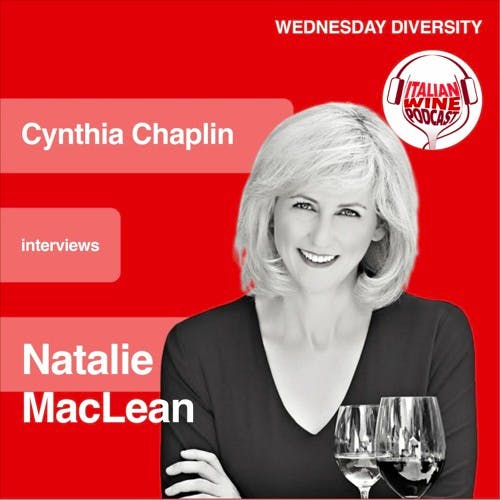
Ep. 789 Natalie MacLean | Voices
Voices
Episode Summary
Content Analysis Key Themes and Main Ideas 1. Transition from Tech to Wine: Natalie MacLean's unconventional career shift from the high-tech industry to becoming a renowned wine writer and expert, highlighting the contrasting cultures of the two sectors. 2. Challenges in Male-Dominated Industries: The shared experience of working in two historically male-dominated fields (tech and wine) and the misogyny and sexism encountered, particularly in the wine industry. 3. Overcoming Adversity and Public Controversy: Natalie’s personal and professional struggles, including a divorce and a significant online copyright controversy, and her strategies for resilience and self-reclamation. 4. Mentorship and Empowerment: Her commitment to ""paying it forward"" by mentoring other women, providing opportunities, and using her platform to foster inclusivity in the wine industry. 5. The Evolving Wine Industry: Discussion on how the wine industry has adapted to technology, especially post-pandemic, and the ongoing push towards greater inclusivity. 6. The Sensory and Emotional Power of Wine: The profound personal connection to wine, its ability to engage senses, evoke memories, and serve as a tool for connection and learning. Summary In this episode of the Italian Wine Podcast, host Cynthia Chaplin interviews Canadian wine writer and expert Natalie MacLean. Natalie shares her unique journey from the high-tech industry to the wine world, describing the stark cultural differences between the ""brave new world"" of tech and the traditional, hierarchical wine industry. She recounts the significant personal and professional challenges she faced in 2012, including a divorce and a highly public and vitriolic online copyright controversy that escalated into severe personal attacks and threats. MacLean discusses her process of healing and growth, leading to her decision to write a memoir about the experience to help others. She emphasizes her philosophy of ""paying it forward"" by actively mentoring other women, providing them with opportunities in media and publishing. MacLean also touches on the wine industry's recent embrace of technology and its slow but steady progress towards greater inclusivity. The conversation concludes with Natalie sharing a poignant memory of her pivotal experience with an Italian Brunello, underscoring wine's deep emotional and sensory impact. Takeaways * Natalie MacLean transitioned from a high-flying tech career to become a leading wine writer and sommelier despite lacking traditional wine credentials. * Both the tech and wine industries are historically male-dominated, presenting unique challenges for women. * The 2012 online copyright controversy significantly impacted Natalie MacLean personally and professionally, prompting a period of deep self-reflection and growth. * Natalie is writing a memoir about her experiences with the controversy and misogyny in the wine industry, aiming to provide a universal story of resilience. * She actively mentors and creates opportunities for other women in the wine and media sectors, promoting inclusivity. * The wine industry has seen accelerated adoption of technology and is becoming more inclusive, partly due to the pandemic. * Natalie advocates for humor and accessibility in wine education, believing entertainment paves the way for learning. * Wine can evoke powerful emotions, memories, and sensory experiences, making it a deeply personal and transformative element of culture. Notable Quotes * ""I kind of left a brave new world and stumbled onto the set of Downton Abbey. Tech urged me... to break the rules. Whereas, why the white industry clamped down on me to keep them."
About This Episode
Speaker 0 and Speaker 2 discuss their interest in wine and how it has made them more comfortable in roles. They also talk about their experiences with writing and creating their own projects, including their blog and website. Speaker 2 talks about their transition to being a wine educator and how it has impacted their personal and mental health. They also discuss the trend of technology and the importance of educating people about the topic. Speaker 2 is looking for beta readers and offers to provide a guide for those interested in learning more about the show.
Transcript
This episode is brought to you by the Italy International Academy, the toughest Italian wine program. One thousand candidates have produced two hundred and sixty two Italian wine ambassadors to date. Next courses in Hong Kong Russia, New York, and verona. Thank you, make the cut. Apply now at viniti international dot com. Welcome to the Italian wine podcast. I'm Cynthia Chaplin, and this is voices. Every Wednesday, I will be sharing conversations with international wine industry professionals discussing issues in diversity, equity, and inclusion through their personal experiences, work in the field of wine. If you enjoy the show, please subscribe and rate our show wherever you get your pods. Welcome to voices. This is Cynthia Chaplin, and today I have with me Natalie McClain. She's a Canadian wine writer. Author of two very successful books and a myriad of articles. She's the publisher of a reviewing website, and she is the wine expert on CTV's the social, which is Canada's largest daytime television show. She's also an accredited Sommelier and a member of the wine writer's circle, and she has a podcast too called Unreserve Weintalk. So welcome to the show, Natalie. Thank you so much for coming on today. I'm so glad to be here with you, Cynthia. Thank you. Huge pleasure. Huge pleasure. I've been wanting to talk to you for ages. I understand you had quite an unusual path into the wine world. You were in the high-tech industry, and you had no typical wine study background or trade experience. What on earth made you take the leap from tech into wine? You know, what was it like trying to get your foot in the door of a new sector where you had absolutely no contacts and no traditional credentials? Well, I felt like when I went from high-tech to wine, I kind of left a brave new world and stumbled onto the set of Downton Abbey. Tech urged me, urged all of us really, to break the rules. Whereas, why the white industry clamped down on me to keep them. So Tech's mantra was fail forward fast. It was all about breaking the rules to cover a newer better way to do things. Whereas, I found wine was all about keeping the rules and the hierarchies, you know, if you think of the eighteen fifty five ranking a board of wines based on the wine's reputation and price, the you know, the labyrinthine laws. Absolutely. Very restricted governing winemaking. Yeah. Post pandemic ways of selling it. And yet, Cindy, I think one field led me to the other. So the headquarters of the supercomputer company I worked for was based in Mountain View, California, and it's now the campus of Google. And like so many people in tech, I I worked seven days a week, and I did not have time for hobbies. However, dining it with clients and colleagues was part of my schedule. So I took an increasing interest in wine, and I think part of that was probably to get through some of the more tedious conversations. But Mountain View was just an hour's drive from Napa and Sonoma. So I started arranging my meetings at headquarters on Fridays, So I could spend the weekend in wine country. And eventually, I took Somolier courses at night just for fun, and then I went on maternity leave for a year. And because, of course, I hadn't taken any vacation and it all accrued. I had a year off. And so during that time, I pitched a wine column to a food magazine. And, what tech taught me was to call high. So I pitched the editor in chief and to aim high, really. I don't even published in my high school newspaper up till then. That became a regular column. And it also gave me the confidence to cold call other publications. So I didn't go back to my high-tech job. But, yes, to answer your question, it was hard getting into the industry. I really felt like I was a nobody from nowhere who made eventually a career at a nothing, and I learned as I went. So I asked questions. Even when I was worried, they would make me look stupid or naive, and I had to keep reminding myself of my why. Why I got into this industry? Why I loved it? Both the writing and wine itself. You know, how transformative, I'm sure you feel how transformative and transporting those feelings are when when you write a good sentence or you drink a great wine? Absolutely. It's so true. And I think there are a lot of people, certainly myself included who who under stand that feeling of starting from absolute ground zero and, and being the, the nobody from nowhere with no background and, and sort of working your way up. And, and wine is certainly not the most welcoming sector and definitely not for women. So you sort of went from one traditionally male dominated world in tech to another traditionally male dominated world in wine. What sort of similarities and differences did you find between the two sectors? You know, did you have strategies as you just said call high and aim high from tech that helped you be successful when you got into wine? Yeah. I sure know how to pick them, but, both are traditionally male dominated industries as you you mentioned. If you still look at any of the stats, even today related to company or winery ownership or senior management, it's very male dominated. I live in Italy, Natalie. I understand. We're very male dominated in wine over here. I feel you. And I think to where the similarities are, both are trying to create something, you know, whether it's a new software program or a different blend. But, actually, I find the differences between the two industries more intriguing. For me, wine is a much more tactile industry. It's tied to the earth, of course. And perhaps that attraction for me is partly my Scottish heritage because, you know, the desire for land was pretty strong in my ancestors after the highland clearances in the eighteen hundreds, but wine for me got me out of my office. And and into the fields. And I just I love that. And sometimes I felt like I was part of sort of the underground mole people who never saw daylight, and then finally came to the surface. Why? Why was also a reawakening of my senses? You know, in tech, I lived mostly in my head with writing and analyzing and planning, whereas wine got me back down into my body feeling and smelling and tasting. It felt it really felt more holistic Now I think that said, tech really taught me to look for the unusual intersections between ideas and discipline. So Steve Jobs said the sweet spot in tech was weird design and science overlapped. And I think that's why he was so obsessed with the design of the iPhone. It couldn't simply be functional. It also had to be beautiful. And I find the interaction between wine and tech a natural fit, even though it might not look like it. Wine has so much information tied to it. And those of us who are obsessive about it like to learn as much as we can, and that's why I started my website, natalie mcclean dot com, back in the paleolithic era of two thousand, launched mobile apps with bar code scanners and eventually label readers in two thousand eight, tech, I think, can make learning about wine, not only easier, but also beautiful. It's it's really interesting that you put it that way. And I I find wine, obviously, a very creative them sector to be in. I'm I'm also a gardener, so I I like that connection between my work and and my hobby. But the crossover between the science is is something that's very important to me. There is so much depth of information about wine that people don't really think about geography and geology and lots of other climate related issues that I find increasingly crucial. So it is. I think you've you've hit the nail on the head with that, but there is a lot of science connection to wine and an endless amount of learning, you can never know everything about wine. There's always another exam. There's always a new book, something else, a new study coming out. So I I completely agree with that. I think Yeah. The sweet spot, you seem to have found it. I'm I'm really happy about that. You you're clearly doing a good job at what you have achieved since, as you say, the dark ages of two thousand. You were named the world's best drinks writer at the World Food Media Awards in Australia in two thousand and three. So not long after you started online, and you've won James Beard Foundation, journalism Awards, and MFK Fisher Awards for excellence in writing. So you've got props in the sector now. You you have all the credentials that you possibly need, but it it definitely hasn't been an easy, an easy road to where you are today. Ten years ago, I know you were at the center of a big controversy about how you reported and credited tasting notes from other wine experts on your new website. Can we just talk about that a little bit? There was a lot written about it at the time, and I feel that often some of the voices shouted louder than you. So I'd love to hear what you have to say about that experience in your life and not so much what happened, but how you handled it and how you overcame what was a a public and and relatively nasty experience. I appreciate the opportunity to to talk about this, Cynthia. At the time, I only made two comments and then stopped because it was just fueling the the flames, and I really haven't spoken about it since. So two thousand twelve I consider the worst vintage of my life. Started with my husband of twenty years asking for a divorce and a custody battle over our son. And then it ended with this issue and confusion over copyright one day I got a Google alert from about one of my wine reviews. But when I clicked on the link, it took me to another wine website. And I thought that's weird because I told the man who ran the website that I I didn't wanna be part of his site. And then I noticed that his site and another one were republishing wine reviews from the liquor store monopoly here in Ontario. It's the LCBO. Yes. Yeah. And so being a glass half full kind of gal, I started republishing them as well rather than asking them to remove my reviews from their site because I assumed wrongly that the reviews must be in the public domain and qualified as fair use. And since they've been doing this for years, as had the liquor store site, But as I said, I was wrong, and I removed the reviews from my site. However, the issue escalated online, as you mentioned, kinda went far beyond the wine reviews themselves into an attack on my character. And my body, from my hair, to my breasts, to what certain men would like to do to me in intimate detail, several of whom were male wine writers, to a rape threat if I didn't shut up. That's just outrageous. It's I have six children, four of whom are daughters, and they they are all in their twenties now. But I think you experienced, you know, the the type of online, you know, sexual harassment bullying and, you know, abuse that is rampant in the world right now, and and you you had that happening at a time where it wasn't really spoken of. And and people didn't take it all that seriously. Oh, it's just online. It doesn't matter. How did it affect you? Well, you're right. I mean, the two thousand twelve was Pre Harvey Weinstein. There were no support groups, wonderful support groups like we have today for women in the industry. So I w god. I was shaken by these two events, the divorce and the attack. And I really to choose Cynthia whether to give up and just retreat into bitterness, drinking too much wine, or pick myself up and reclaim my son and my career and my health and my self worth. This this happened ten years ago as we've said, but it's it's only now that stories like this are coming to light and being taken seriously. And we're recognizing how deeply embedded misogyny is in the wine world. You know, the New York Times didn't excellent expose and follow-up articles on the quartermaster Sommelier. Absolutely. Yes. But in November twenty twenty, I believe it was. And I think there's still many more stories to come. And so that is why I'm writing mine now in a memoir that is intensely personal. It is about my fall from grace and journey back and what I learned along the way. And I it's it's my hope that it will help men and women, anyone. Who's ever been completely misunderstood or just felt really lost and ached for understanding and some compassion. So when when's the memoir due out, Natalie? Because it sounds like there is a lot of meatiness in there that people, you know, and certainly a lot of our listeners will really want to tap into. Thank you. It's, I have signed a a publishing deal just recently. And so the book will actually be published in spring twenty twenty three. You know, for five years, Cynthia, I couldn't even look at the notes I took at the time that became the basis for this book. They were just too painful, too raw, too unprocessed. And I had no intention of writing a book, but I had to get the thoughts down on paper because they just kept ricocheting in my head. It took another five years to make sense of them. And it's only, I think, when I could pull back through the lens of time that I had any perspective on my story. You know, I love author memoirist Glenn Doyle. She said, right from a scar, not an open wound. And so writing a memoir for me was, like, writing about a younger sister rather than myself because I was a really different person a decade ago. I mean, we all were. Weren't we all exactly? For better or worse? I know. Exactly. It was like, who was that? But if I weren't writing about that experience, I think I wouldn't have learned as much now as just simply going through it. And, you know, I had a Zoom call with an editor who was interested in publishing the book and he asked, aren't you worried that this is just gonna stir that whole thing back up again? And I said, well, first off, I'm a Catholic at heart, so I believe suffering is good for your soul. It's purifying and he laughed. But on a more serious note, I said, you know, what happened to me is part of my story now. It's made me who I am. And I'm no longer afraid to talk about it or the consequences of doing so. And in fact, I had to write this story to make sense of my life and actually to save it at one point. You know, but I think more importantly, the elements of what happened to me are happening to many women. It's it's a it's a universal story. It's not mine. And this book is as much for them as it is for me. And in my small, but mighty group of beta readers right now who are reviewing the book, there are lots of comments on the manuscript. Like, I can't believe how similar our stories are. How did you get inside my head? And it's not just women Cynthia who are making these comments. It's men too who are reading the book right now are resonating with it for their wives, their mothers, their daughters, and, you know, as much as I'd never wanna repeat what I went through. I'm glad I did and that some good can come from it, even if it helps just one reader as they say, feel like she's less alone and can survive what life throws at her. Hello. And I think there you you also have a point. As I said, I I also have two sons, and I make a point of discussing these sorts of issues with them so that they are aware not only for me and for their sisters, but, you know, for the women who will be in their lives in the future. And I think these sorts of personal stories. First of all, it's very brave and very courageous to put that down in, you know, in writing in a way that will be, you know, irretrievable once it's out there. So that's very brave. And I commend you for for being a beacon in that way. But, it's it's important to to have that material not only to support women who may have experienced the same thing or are concerned about that happening, but also to, in form and to educate and to grow some empathy with with our, you know, co inhibitors of the earth, fifty percent of whom are men. So I think that's a very important point to make. It's not only a story that is going to support a lot of women because I'm sure it will, but I I would like to think that your story will resonate with a lot of men. So I, as I say, I commend you. I think it's very brave. And, you know, obviously, you you are standing in the firing line potentially again, and it's inspiring. It's, you know, that's what a leader does to take that risk, and it's a personal risk. So I I think that's that's great. I will be looking forward to to reading it when it comes out. After the after the whole controversy had it's not that it died down, but eventually it became quieter. How did how did it change how you position yourself as a woman in the industry? In terms of your sort of your voice and your personal branding? Oh, well, I think I've become more confident. There's that word thing. I've become more confident. Overcoming self doubt, I think. Also means accepting your power, trusting your intuition, seeing yourself as someone who can leave even when you don't feel it. You just do it and the feeling will come after you lead. So now when I sense a feeling about something or someone, Cynthia, I go with that. I trust myself rather than second guessing, and it's often the right decision. Agent experience are are great, great body armor, aren't they? Exactly. I've also, had to let go of needing to do everything myself. I started transitioning several of my regular newspaper columns to women who are trying to get published for the first time, and that meant convincing my editors to take a chance on them as new writers and that I would edit their work to ensure it meant their publication standards. I also transitioned several of my regular TV segments to other women. Getting a column or a segment gave these women the media credentials they needed, which opened more doors in the industry for them. How not to be nobody from nowhere? Exactly. You gotta get started somehow. And when wine councils to this day invite me on all expense paid media trips to regions around the world, I usually ask that one of these women can go in my place and that she can write about her trip on my site if if the person doesn't have another outlet. So I've encouraged both men and women since to post wide reviews on my site coming full circle. Their full names, head shots, links to their website, social media channels are also posted beside each review. And I've commissioned, several women to write articles on the site, which I edit so they can develop a portfolio. I think letting go of doing it all also has to come from a place of confidence of knowing that you are enough that you don't have to do this one more thing, and and then you'll be good. Yeah. Absolutely. It's, again, that's it's a very inspiring way to look at how to improve one's self and one's own life while also improving the lives of other people and and giving people that leg up that, they might not find in, in any other place. So you, you are a wine educator, and you're clearly in the business of of educating not only your audience, but also all of these people that you're mentoring. And I know your philosophy is about including novices and knowledgeable people all at the same table, you know, in light of everything we've just been talking about in your opinion, how has the wine industry changed since you got into it sort of twenty years ago? You've seen the good, the bad, and the ugly sounds like a little bit more ugly than you bargained for. How how has it changed, or do you think it's changed at all? What would you like to see happen? Well, yeah. To answer your first question, I do welcome, novices, and experts in my online wine pairing classes because we focus on food pairings from pizza to multi course meals, as that's, I think, what brings people together rather than, you know, trying to memorize a whole lot of vintage charts and appylations. Food and wine pairing is fun, but it's accessible. I think it it, really is a great entry point into learning about wine. So to answer your second question, the wine industry, I think, has embraced technology more so in the last two years than in the past twenty, of course, because of the pandemic, it's had to. The pandemic has been an accelerant I think pushing the industry forward. Some say a decade or so into the future in terms of how it sells and markets wine, how it connects with consumers. And I believe that's a good thing. Absolutely. Where are you even seeing NFL teas now in in wine. It's it's very interesting that we're talking again about that crossover of wine and technology. Exactly. Exactly. And I think the industry is also is becoming more inclusive. It's it's happening slowly with podcasts like yours and mine we try to feature different voices, it's happening with the initiatives in some wineries and companies that are trying to change their cultures. It's happening now with support groups that didn't exist when I started or in two thousand twelve, but, as Helen Reddy says, we still have a long, long way to go. Oh my gosh. Yeah. I think you and I are the last people in the world who remember her. Oh, she is my anthem. She my mom used to play that. She was a single mom and she was a school teacher, and she would have the teachers come over on Friday nights because she she didn't have the money to pay for a babysitter at the time, and I could hear them belting out that song as though it was was their anthem. It was like, what is this? And why are they talking about roaring and being down there on the floor? What what is. So it's embedded. I think we had the same mother. I remember being dragged to a Helen Ready concert in Cleveland, Ohio by my mother and her bowling team who are all women. So I absolutely resonates that's that's a great it's a great memory, actually. But it's it's true. It's it's really it's a very that's a very interesting point. And and I I like that whole idea. You have this great way of sort of describing yourself not only as, you know, the roaring woman, but you have called yourself true, quote, red nosed superhero helping people discover the wines they love. Now this is something that I get on board with. This is kind of my philosophy with my clients and my students. So how are you playing that goal out in your everyday action? I I envision you in a cave now with a wine glass. Yeah. Yeah. Well, I can't I can't resist humor. I am woman watch me poor. Right? Always believed that you don't have to be serious to be professional. And science, Cynthia shows us that the moment after we laugh, our attention to the message is highest and our resistance against it is lowest. And that is the ideal time to learn about wine. You're relaxed, you're open, you're receptive. And so I believe you need to entertain, actually, before you can educate, and you need to earn the right to someone's attention, especially these days with social media. That's harder than ever. And so how that plays out in everyday action is through my online wine food pairing courses, the Unreserve Wine Talk podcast, and now through a memoir. And even though, you know, the memoir itself deals with serious issues, there is still lots of levity woven in through it. Because I think, again, it's that lens of time when you could pull back and put it in perspective, and that's when you can blend the the grief and the liberty. Well, and life has to be balanced like a good wine. It can't be all acid. There has to be some sweetness in there. So I'm glad you have that same philosophy. I'm gonna I'm gonna take us to my my favorite final question because we're running out of time here, but, since we are on the Italian wine podcast, I have to ask you, and I'm also curious now to get an answer to this. But what's your favorite Italian wine? Well, you knew, Cynthia, as a young adult, I wasn't drawn to alcohol at all. You know, beer and spirits were too bitter. I didn't start drinking until after I finished graduate school when I had the funds to get fancy. And if I could share a short passage with you from my first book red, white, and drunk all over about the pivotal wine that turned me on to wine in general. It was an Italian one, if that's okay with you. Oh, wow. Everyone has one. What was it? Alright. So let me just, share this passage with you. So As I raised the glass to my lips, I stopped. The aroma of the wine rushed out to meet me and all the smells that I'd ever known fell away. I didn't know how to describe it, but I knew how it made me feel. I moistened my lips with the wine and drank it slowly, letting it coat my tongue and slide from one side of my mouth to the other. That brunello trickled down my throat and out along a thousand fault lines through my body dissolving them. My second glass, tasted like a sigh at the end of a long day, a gathering in and a letting go. And I felt the fingers of alcoholic warmth relax the muscles at the back of my jaw and curl around my ears. The wine flushed warmth up into my cheeks down through my shoulders and across my thighs. My mind was as calm as a black ocean, and the wine gently stirred the silt of memories on the bottom, helping me recall childhood moments of wordless abandon. Looking back, I still yearned for that first taste, and I can't for the life of me recall the name of the wine. But I think in the end, Cynthia, that doesn't matter. Very good. Very good. It's well. It's so lovely how wine has that ability to take you back to a particular moment. I someone recently asked me what was the wine that that turned the light bulb on for me. And for me, it was a rioja when I was about, oh, well, I started I started getting interested in wine when I was nineteen. There was no wine in Ohio when I was showing up. It was University in in Connecticut, but the wine that really flipped the switch for me was with my father-in-law in Spain in Rioca, and he introduced me to a wine there. And it's the same thing. It just takes you back to that moment. Whenever I open a rioja now, which isn't my favorite wine at all, that particular moment of, oh my goodness, what is this? I need to know more about this. I'm falling in love opening a Pandora's box and a treasure chest all at once. It is that wonderful feeling of of something new and overpowering and, and really wonderful and sensuous and filled with memories. So I completely understand that description, and I agree so much. It's it's true. Wine does have a lot of power to, to stir emotions and creativity and memories and everything that is good about being a human So I am going to look forward very much to your new book coming out. And hopefully, we will cross paths at some point in the future when COVID allows us all to resume our travels around the world. Absolutely, Cynthia. And if I could just mention, I am still looking for beta readers. So if you or anyone listening to this podcast would like to read the manuscript, get a sneak peek. I would love your input. Anyone can email me at natalie at natalie mcclean dot com. Well, I would love you, Natalie. I would be delighted. I would be delighted. Thank you so much for coming on, and hopefully we shall meet up soon. Absolutely, Cynthia. I look forward to sharing a glass with you in person. Cheers. All the best. Cheers. Thank you. Thank you for listening. And remember to tune in next Wednesday when I'll be chatting with another fascinating guest. Italian wine podcast is among the leading wine podcasts in the world, and the only one with a daily show. Tune in every day and discover all our different shows. You can find us at Italian wine podcast dot com, SoundCloud, Spotify, Himalaya, or wherever you get your pods. Hi, guys. I'm Joy Lemings Denon. I am the producer of the Italian wine podcast. Thank you for listening. We are the only wine podcast that has been doing a daily show since the pandemic began. This is a labor of love and we are committed to bringing you free content every day. Of course, this takes time and effort not to mention the cost of equipment, production, and editing. We would be grateful for your donations, suggestions, requests, and ideas. For more information on how to get in touch, go to Italian wine podcast dot com.
Episode Details
Related Episodes

Ep. 2789 ColleMassari: a long-term vision rooted in Montecucco with Giuseppe Di Gioia | On The Road With Stevie Kim
Episode 2789

Ep. 2788 Ep. 14: Austria and Hungary | Study Smart for your WSET Level 3
Episode 2788

Ep. 2785 From Volunteer to Speaker at TEXSOM with Samantha Cole Johnson | TEXSOM 2026
Episode 2785
Ep. 2766 Inside the U.S. Non-Alcoholic Wine Market: What Wineries Need to Know with Jill Sites | Masterclass US Wine Market
Episode 2766
Ep. 2761 Winemaking and Consulting Across Sicily with Alessandro Serughetti | Wine, Food & Travel with Marc Millon
Episode 2761
Ep. 2759 Part 2 – The VIA Educational Program & Italian Wine | Heart-to-Heart Conversation with Sarah Looper
Episode 2759