
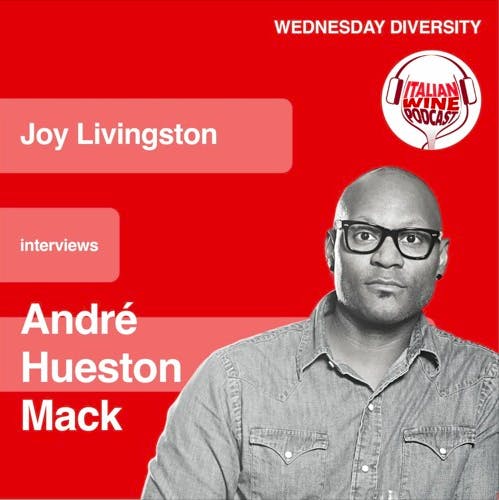
Ep. 798 André Hueston Mack | Voices With Cynthia Chaplin
Voices
Episode Summary
Content Analysis Key Themes and Main Ideas 1. Andre Hueston Mack's unconventional career path from finance to sommelier to multi-faceted entrepreneur in the wine and hospitality industries. 2. Experiences and challenges faced as a black man in the predominantly white wine industry, particularly regarding diversity and genuine inclusion. 3. The diverse ventures of Andre Hueston Mack, including his wine label (Maison Noir Wines), design company (Get Fresh Crew), restaurant group, and media presence (YouTube, Bon Appétit). 4. Andre's philosophy on wine education, emphasizing accessibility and relatability for broad audiences. 5. The importance of delegation, continuous learning, and a strong work ethic in managing multiple successful businesses. Summary In this episode of the Italian Wine Podcast's ""Voices"" series, host Joy Livingston interviews Andre Hueston Mack, a distinguished sommelier, winemaker, and entrepreneur. Andre recounts his unexpected entry into the wine world, inspired by the TV show ""Frasier,"" transitioning from a finance career to becoming a highly acclaimed sommelier at prestigious restaurants like French Laundry and Per Se. A central part of the conversation revolves around Andre's experiences as a black man in the wine industry. He candidly expresses his frustration with being frequently invited to speak on diversity topics, particularly during Black History Month, feeling that his extensive accomplishments are often overshadowed by his race. He advocates for a broader, industry-wide responsibility in fostering inclusivity, rather than placing the burden solely on underrepresented individuals. Andre then details his entrepreneurial journey: founding his wine label, Mouton Noir Wines (now Maison Noir Wines), in 2007; establishing his design company, Get Fresh Crew, born from his need to create his own wine labels; and his recent expansion into the New York City restaurant scene with a group of seven businesses, even amidst the pandemic. He highlights his personal involvement in content creation for his YouTube channel and Bon Appétit shows, emphasizing his passion for editing. Finally, Mack discusses his commitment to making wine education accessible and relatable, believing it's crucial to demystify the subject for new enthusiasts. The interview underscores Andre's relentless work ethic and his strategic approach to delegation to manage his diverse portfolio. Takeaways * Andre Hueston Mack's career demonstrates a remarkable entrepreneurial spirit, transitioning successfully across finance, sommelier roles, winemaking, design, and restaurant ownership. * The wine industry needs to address systemic issues of diversity and inclusion more holistically, beyond token gestures or placing the burden on marginalized individuals. * Starting a business, especially in creative fields, can often involve self-teaching and leveraging initial necessities into new ventures. * Effective delegation and building a trusted team are critical for scaling multiple businesses and maintaining personal well-being. * Making complex topics like wine accessible and relatable is essential for engaging new audiences and fostering wider appreciation. * Entrepreneurship often demands significant personal sacrifice and a robust work ethic. Notable Quotes * ""Being a black man in the wine business is no different. Right? Like, there's a certain things that you you choose on how you go about life."
About This Episode
Speaker 1 and Speaker 2 discuss their experiences with learning wine and the importance of being a part of the New York City
Transcript
This episode is brought to you by the Italy International Academy, the toughest Italian wine program. One thousand candidates have produced two hundred and sixty two Italian wine ambassadors to date. Next courses in Hong Kong Russia, New York, and Verona. Thank you, make the cut. Apply now at viniti international dot com. Welcome to the Italian wine podcast. I'm Cynthia Chaplin, and this is voices. Every Wednesday, I will be sharing conversations with international wine industry professionals discussing issues in diversity, equity, and inclusion through their personal experiences, working in the field of wine. If you enjoy the show, please subscribe and rate our show wherever you get your pods. Welcome to voices. My name is Joy livingston, the producer of the Italian wine podcast. And today, I'm very excited to speak with Andre Houston Mac, a heavy hitter in the wine industry. He started out in the financial world, but left his traditional nine to five to work in the food wine industry as a sommelier. While living in Texas, Mac was awarded the sought after title of best young Sommelier in America, and he went on to work for some very prestigious restaurants, one in California, and then in New York. And from there, you seem to have exploded into everything because you're in hospitality author of books. You hold talks like Ted X. You're a YouTuber, a winemaker, a foodie, a graphic design company owner. Mhmm. An educator, a mentor with Unifie, You've created some apps even I saw. I was like, wow. Okay. And I was a bit scared to start a conversation with you because I'm not sure if I can do, you know, justice to your entrepreneurial spirit in such a small window of time. So Well, we'll do we'll get as far as we can get. No. That's great. No. Thank you for having me. I'm excited to be here. Well, I'm really, really happy to be speaking to you. I've actually stopped you online. Really? Yes. I didn't even know. You're you're good at it. This is awesome. So I'm gonna start with my first question, which was, when you first decided to leave City Corp, what was the catalyst that made you pursue wine instead? Was there a process you went through Did you take courses first? Did you have any help from friends or a mentor to help you make your decisions? I didn't have a mentor. I was inspired to have wine in my life by watching old episodes of Fraser. I wasn't a wine drinker. So after working at Citibank and, you know, taking severance and spending, you know, days, weeks, months on the sofa, there used to be around the same time each day. There used to be back to back to back episodes of this show called Fraser. And you know, it was something about those two brothers. They were pompous. They loved wine. They had, you know, Sherry ritual. There was something about them. You know what I mean? Just, like, just help me, like, say, oh, you know what? You should have wine in your life. Like, it like I was miss they made me feel feel like I was missing out. And it was just like, wow. Okay. Like, I will yeah. Okay. I'll take whatever money I had. I didn't have a lot of money or, you know, that kind of thing of not willing to spend a lot of money online. So I'd go with, you know, whatever budget I had, twelve dollars, fifteen dollars. And, you know, that show really gave me the courage to walk into a wine shop for the first time in my life. I love that show. I actually, to be honest, I kinda like the dad more. Yeah. No. Totally. Absolutely. Yeah. There's so many good characters on the show, and, you know, they were just the the first part that invited me and kinda thing. And then that was it. You know, I was like, I I had never thought that I would be doing what I'm doing now based off of watching that show or from sitting on the sofa. I didn't know where wine would take me. You know, I just for me, it was just like, oh, my life is missing something. Maybe it's wine. And then as I started to dig deeper, peel back the layers of the onion, you know, you realize that I was like, wow, like, this is really interesting. There's, like, so much information here. Wine is just, you know, this amazing thing. And that was it. You know, I caught, like, the proverbial wine bug, and then it was off to the races. And this was quite quite a, you know, not that long. I mean, it was long ago. It was over twenty years ago or right around twenty years ago. And, you know, there weren't a lot of resources in Texas. I was living in Texas at the time. I think WSET was, was remotely was the exam was given on a proxy. So, you know, for me, I was trying to get as much information as I could. The internet wasn't, like, fully up and running. I think it it existed, but not everybody was on it. And so I remember calling a restaurant in Chicago and asking, you know, could they email me their wine list? And they couldn't, but they offered to fax it to me. Oh my. So they they faxed it to me. And, you know, for a lot of it, wine was, like, you know, I didn't take any courses. You know, I did the entry level for everything. And I think that was, you know, a lot of that is, like, you know, self starter. Like, you get your books, you get your stuff, you study, you study, you study, then you go to two or three day seminar, and they go over the same stuff, and then you'd take an exam. And, you know, that kind of proves how much you know. But for me, at the beginning, there were no mentors or anything. I just kinda hopped right in. It was just something, you know, I started to work at Better restaurants. I went back to restaurants after working in finance, And, you know, I ended up working at a couple of steakhouses that took wine pretty seriously. And, and that was it. I was all in. There was no turning back. Awesome. Yeah. No inspiration struck. So you were working at these places and you were you you caught the wine bug as you said, and then Eventually, you you became the Sommelier and you won this best young Sommelier award, which is really sought after. And it it you went to work for a place called French Laundry in California and Keller's per se. Correct. In New York, managing an award winning wine list of fifteen hundred plus wines. Was there ever a point this question, you know, this is voices? I gotta ask these things, but was there due to your race or because, you know, people didn't this is not what they expected us so many to look like. Did you experience hardships or pushback with customers or coworkers? What did you respond if that if that was the case? Like What I would say to address that is is that being a black man all my life in America like, being in the being a black man in the wine business is no different. Right? Like, there's a certain things that you you choose on how you go about life. Yeah. Right? And I think for me, I was interested in being around people who were into wine. Was there some pushback? Maybe yes, maybe no. But, you know, I showed up at the best restaurant in the world. And, yeah, sometimes I would go to the table and people wouldn't think to them the same way, but I really got to choose how I felt about it. Yeah. Right. You know, I could be angry. I could be all of those things. But to me, that was just more fuel for the fire. Right. Right. You know what I mean? I don't I I could never contemplate in in in my opinion waste time on whether I didn't get something or not because of the color of my skin. I get to choose that. Right? And I think for me, I chose just to keep pushing. Get on with it. Yeah. Right? Keep pushing along and and not worrying about that. I can there's nothing I could do about it. You know? So for me, like, I'm sure maybe there was, or maybe I didn't get this because of that. I I don't know. I don't know. It, you know, it doesn't just doesn't stop there. Right? You know, I show up to a wine shop anywhere in the world to sell wine or whatever it might be. I don't know why they don't buy my wine. Right? But, you know, I mean, so, like, that, I try not to, like, it exists. Yeah. I don't think that I ignore it. I understand what's going on, and I, you know, I just keep going. It didn't it didn't stop me. You're just gonna do your work and and, you know, do the best. Yeah. When it's all said and done, then, you know, people can say whatever. But you you know what I mean? Like, like, even for this this very podcast that we're on, I'm on the podcast because of the color of my skin. Right? Not not really on the merit of my work. Right? You you see what I'm saying? So it's a little one of those things where it's like, oh, yeah. I'd love to speak to everybody. Yeah. I could be upset that, you know, at the beginning, you did say, that I was a heavy hitter in the wine industry, but I'm only on an in February because it's black history month, and and I'm on a show to talk about diversity, whereas someone else who's maybe done the exact same thing as me or maybe less or whatever you have it. They don't carry the burden of diversity. You see what I'm saying? So the last the last person that was on this podcast that didn't look like me, no one asked them about diversity. And that and so that to me is part of the I wouldn't call it a problem, but could also be part of the solution. Right. You know what I mean? It it it actually kinda goes back to the whole thing of, like, you know, slavery has been over four hundred years, but yet, and still, as a black man and a black people, we still carry the burden of slavery. Right. That you know what I mean? So it's not my job to carry the burden of diversity in this industry when when I only represent less than one percent or half a percent. The conversation doesn't just start with me. It has to be everybody. Right? You know what I mean? And for me, I felt like I've done enough work that I that validates that I should be on this show, not just in February, but any other time of the month. Okay. I actually I'm gonna I'm gonna stop you just for a second just, but I honestly didn't put two and two together. It was black history month. I really didn't realize that. No. No. No. No. It's it's it's nobody's bad. Right? But, like, but I need to say you know, I feel like I need to say something. Right? You you know what I mean? Where it's like, well, wait a minute, my all of my work that I've done in this industry is is really kinda denoted into this into only to one thing. Like, I can only be on this show if it's about diversity. You know, are you seeing what I'm saying? But you may you do make a good point, and I've actually never looked at it like that because Mhmm. You know, we have so many different shows and this being, you know, the diversity. No. I get it. We, like, because it's so important nowadays to highlight underrepresented communities. And that's great. And and and that you're ready, and you should. Right? Like, if that's the stance that you wanna take is highlighting them, then highlight them for their merits of what they've done, not because it not because it's a show about diversity. And then what and then the other question is is like, oh, what can we do to make make the wine industry more inclusive? Well, that's just not a question for for people who look like me. It's a question for it's a question for everybody. It's a question for all of your listeners and all the people that come on your show. And so for me, that's the, you know, it's it's this problem that I have with all of it is, like, it can't just fall on me. Yeah. Right? It it it just it just can't. And and so I I get it nowadays. It's it's important to highlight, and that's great. But, like, to highlight and put in a certain little box is, to me, is unfair. You know? And, you know, and I'll speak for myself. It's unfair to me personally. You know, like, I'm not for whoever, you know, but for me, considering the amount of things that I've done in the industry, that that I can only be on a particular show within this network about diversity. And, you see what I'm saying? Like, it's it's kinda it's kind of a it's kind of a slap in the face. Right? They say they say that I that that the only thing that I've done, the only reason why I'm really on the show is because of what I look like. Okay. Well, just before I go back to, like Yeah. Yeah. Questions and You can keep it you could keep it in if you like. I'm I'm totally fine with that. Let me let me listen to it first because I really sound No. No. I mean, but these are but these are the conversations. Right? These are these are conversations. I'm just being really candid. These are the conversations that we all need to have if we wanna this if you want this industry to be inclusive. Well, then let me ask you a question. Yep. Based on what you just said to me, the premise of if I understand, like, of you being on this show is only it's only because of the color of your skin. How would you because I'm the producer. Right? So I spend a lot of time looking for people, and so it really falls on me. So my question to you is how can I Okay? Like, how can I fix this? You know what I mean? How can I? Yeah. Well, I mean, I guess, I mean, I guess, like, for me, the if we're talking about me in particular, I mean, I don't know what other shows you have or whatever, but, like, the fact that you chose me to be on your show to talk about diversity is unfair to me. So when I start to think it's like, oh, wow. Okay. It's black history month. It's February. It is it is. I'm on a show about diversity. And for many years, this is this is what I got to talk about, not that I make over a hundred thousand cases, not that I represent any anything all the things that you talked about, they all become minimalized because because I'm on a show about diversity. When when I've done way more than any than than a lot of the people that are on the show for who are being celebrated for for the accomplishments that they've done it within the industry. Not clouded by by by race or this this dark topic about whatever. Right. Right. Right. You know, you you see what I'm saying? And I think for me, you know, and and let's be honest, like, I didn't wasn't gonna I wasn't gonna do this podcast because I don't do these anymore. Right. Right. Right. And then I said, you know what? That's not fair. Let me let me come on. And the right thing to do is to talk about it. Okay. To say to say, hey, Just a just a hint, maybe just a nudge, like, hey, this is this is kinda how this this is. Right? It's like, you know, for some people, I think I think they've judged on their experience and the things that they've done, maybe, like, okay. Yeah. They can start off because maybe they haven't done much, but we wanna highlight these people. I'm I'm You know what I mean? I'm being singled out Okay. For my race once again, which is which is something that I didn't you know what I mean? Which is something that I wanna get away from. But, you know, and that and and that when I say get away from, it's like there's nothing I could ever change about who I am. Right? I'm proud to be who I am. I'm a proud of all the things that I got to do in this wonderful industry. And it wasn't just because I just hung out with people who looked like me. It was because I was a part of this industry. And the fact that, like, within that industry, I get talked about only because of, like, because of what I look like and that I get it. I'm not supposed to be here. I get it. There's not a lot of people who look like me. I get it. There's not a lot of people who they're not used to seeing someone like me in those roles. Right? I get that. I understand the power in that. I truly do. Right? Because there's thousands of people that I mentor every single day, and not all of them look like me. I understand what all of that is, but, like, in in instance for this. And and just just for the whole conversation is that if you sup support if you wanna support those people, then support those people, not diminishing them to, to one month or two, one show. And if we're really gonna talk about have the conversation about diversity, then we need to have the the conversation about diversity with people with people who don't look like the people being being oppressed or whatever. You you you see what I'm saying? Like, that, like, those are the people. The industry is I think making wine now represent a half a percent. Right. People who look like me. So the fact that you would ask me what I could do about diversity and not my neighbor Right. You know, in in the Willow Valley and asked him what he can do, then it then the then we'll always be having this conversation and with nothing getting done. Right. And I'll get off my soapbox. I just wanna I just I'm not angry or anything. I'm very passionate. I I just wanted to say say that. I know you weren't expecting that and you're like, oh my god. I'm nervous. And, like, this guy's landing too. I'm not landing too. I just I just wanted to say that that that particular thing. No. I I do actually appreciate it because so often most people when they talk on the podcast. They don't actually tell me what they're actually thinking or how they feel. So I can listen to this at any point later and try and you know, because it hits home now, but it will hit home more when I sort of pick it apart. And I try to, you know, take the best out of it. And I think you are somebody who I can get, I get why you're a mentor now. I guess I think I actually learned something here from you, which is useful. And, yeah, good for the way that I think and, how why I do things and my decision process. So I I think it's fascinating. But Thank you. Okay. Okay. Like, I just needed to say that on the onset. I get what you're saying. You can you can ask whatever questions you like about whatever because you when you said, I have to ask just because of the name of the show. And then I was, like, alright. Maybe I can say what I really wanna stay here, just like, just like, hey, like, you really don't have to because but I understand what the show is. And I agreed to come on to show, and so I under I I know the rules of the game. So I'll answer those questions, but I just wanted to say, what I need to say kinda thing. I I kinda just wanted to ask you about wine, YouTube, and, like, stuff like that. Yeah. That's great. No. It's great. You can ask me anything. I like I said, I know the rules for the show. And when you said at the beginning when you were like, you're like, I only wanna ask these questions because I have to. Uh-huh. Okay. So okay. So so moving on. All good. I don't wanna mess your show up, Joy. I'm here. No. I'm dying here. Okay. Tell me about your wines. Okay. Because you made use you you you are, you you're a winemaker. And, Yep. I know. It's alright. Like, I'm like, I'm I'm good, but it's like, alright, I was like, wow. Okay. Alright. You have a wine label or several wine labels? Help me understand. Yeah. Yeah. Yeah. I started a company called, Nissan, actually, it was called Mouton noir wines back in two thousand and seven. And You know, I was leaving the restaurant business. And, you know, I was, you know, I had a I had a great job. I would say one of the top ten jobs in the world, being a sommelier at Perse, running the beverage department, you know, those aren't jobs that you walk away from that many people walk away from. And I think for me, the big thing was, like, I wanted to continue to learn about wine. Just, you know, outside of the confines of the four walls of the restaurant, I just wanted to it was something else. And and and I think learning about wine, I felt like the natural progression was like, oh, okay. I'll maybe I'll go make wine, start a company that could scratch the itch of me wanting to be an entrepreneur, I wanted to have more creativity in my life. I felt like, you know, some ways are more like curators. You know, they collect people's stories, they put them on the list, and that's kind of it for create for creativity. And I thought by making this move, I could do all of this. I guess, you know, the push that I needed is that, you know, now my wife, my girlfriend, at the time, we wrote a New York Times top selling book called service included about working in the restaurant, which was more of a love letter. It wasn't a tell all. I'd like to say it was a tell some. Was done very classy and gracefully. But that, you know, I think that gave me the the to jump off the cliff in a way of just saying, hey, I could I could do this. I wanna I wanna go accomplish this other thing. And so I left, you know, I had no money. I didn't write a business plan. You know, I wrote an email to everybody I had ever ever worked with saying, you know, what I was going to do was go to make wine. And it was through the good graces of the people that had met and relationships that kinda really made it come together as, you know, as I kinda, like, it was all kind of finagled and Frankenstein together at the beginning just because I had no plan. And, you know, wherever I had free terms, no terms is where I went, you know, I made wine and other people's winery, and that's kinda how it all started. I built the company off of receivables. So if I didn't sell anyone I didn't eat, I really took three years to get it off the ground. It's a lot of stop and start. I made wine in Washington, state, Oregon, Napa, Lompoc. So Southern California And, you know, my heart really lied in Oregon. I I think for me, all the great wine lists that I had a hand in building, you know, they bookend on bread and white burgundy. So that was kind of my first love. And when I thought about, you know, domestically who was making great Peno, you know, I kept circling back to the Wyoming Valley. And then, you know, the stars condo of Line, you know, a a guest of the restaurant who I was friendly with. He was thinking about he was a movie producer. You know, I ran into him on the street. And he was like, hey, kid, you know, how you doing? Last time I talked to you, you said you were, you know, making wine. I said, yeah, I got a project, then I'm doing out in Napa, blah, blah, blah. And he's like, yeah, well, you know, I just bought a parcel of Vineyard, the seven Springs vineyard in Oregon and, and, and, you should come check it out. Call my assistant, and she'll book you a ticket, and you can come out and check it out. And that's kinda really how I started. And, you know, that seems like a lifetime ago. And that was kind of that was my ideal ideal. I mean, we went from I mean, we were sold in, I don't know, thirty something countries something like that in almost every single state. You must be I'm very good at multitasking because three years and you you've been doing other things in that time as well. Yeah. No. Absolutely. Yeah. No. It's amazing, you know, when I think about, like, how much time I spent at work when I, you know, ran the the, you know, I worked for Thomas and ran the beverage department. You know, it, you think about how long you're gone and and the first thing you notice when you when you leave is like, how much time is left in the day? Yeah. You know, I think at the beginning, you know, a lot of it relied on me. I mean, I don't really sleep much. You know, I just I'm all in. You know, I found a partner who understands that about me. You also have a a bunch of kids. Don't you? Yeah. Yeah. I do. I have four I have four children. I have four boys from thirteen eleven, six. Actually, pickle turned six. Next week. And Ry just turned three. Yeah. And so, yeah, no. I mean, like, I think I realized that you can have it all, but you have to you know what I mean? That doesn't mean that you have to manage it all. Right. And that was, you know, and, you know, had to learn that in therapy. Right? You know what I mean? Like, I really had a hard time. And how hard time delegating, you know, where I, you know, I got to, you know, I got to. Oh, are you talking about, like, relinquishing control? Yeah. Absolutely. In terms of you know, all the different projects and just not micromanaging everything or Yeah. And I think that all really started. Should I wait for that? I should wait for that. Can you hear the car horn going off? It's New York. That's okay. Okay. Good. Good. Good. That's how and you're ready. And that's how I would really do a podcast. I'm like, oh, yeah. You know, the bus has stopped and it's New York City. Yeah. No. When, you know, when I worked at the French Maundry, I was one of the floors on ways, and the one I moved to New York, I became the beverage director, and now I had, like, four or five other Salmoyais work underneath me. And that was was a a challenge for me. You know, it was, you know, I would kinda claim from that background. If I had to ask you twice, then I might as well do it myself. Yeah. And and also, like, you know, I think something mentally where it was like, oh, I'll go move these boxes because that was what I knew. That's what was easy. What I should have been working on was this and that. And, and by going to therapy, I felt like I really started to understand how to how to do that. And, like, all the good things that come from that. And so that was one of the first places that it I realized like, oh, okay. I just need I just don't need it. I didn't wanna depend on anybody because they would let me down, but then also I realized that I can't accomplish the things that I wanna accomplish just by myself. I'm only one person. Yeah. And so I did a really good job of that by myself for a long time. And then I realized that, like, you know, there's other things that I and I need to need to do. And so for To to to have that trust trust. Yeah. Yeah. And you and you have to build it. You know, I mean, I I think for me, the biggest thing is I hired a personal assistant, and that was, I mean, that was about five years ago, six years ago. And that made my whole life better. Right? Like, made, like, made me a better father, made me a better husband, made me a better business person, made me a better boss, all all because, you know, I could actually focus on the things that I needed to do. You know, I I I felt like I was, you know, disrespecting people's time and couldn't write back in an email in a timely manner. And so, you know, to have someone help me manage my life on a per on all sides was, like, great. But that, you know, that to me, that was the key. I think for me, was the key is, like, being able to delegate, allowed me to be able to do a lot more. You know, I I took a lot of, you know, I mean, for ten years, I traveled over two hundred and fifty days a year. Okay. So I also had a question about get fresh crew, your Yes. Design company. Let me get the Titleines trade again. Okay. So when did you start this winery? This this wine label. I started in two thousand and seven. Yeah. Two thousand and seven, I started our first vintage was two thousand and seven. We had some ones from Oregon, some ones from, from California. Two thousand eleven, you started get fresh crew. We officially started it then. But it, but I had been already doing the work. So I designed all the wine labels for me for my company. Yeah. That's why I was gonna ask is because there's gotta be some overlap here. Like, it seems like a good creative outlet, but also you get to work like minded people. You get to work on your wines with your own company. Like Yeah. No. I mean, it was all the things that I, basically, that I had to teach myself to do because I didn't have any money that I end up being able to use to make money. Right? So it's like, I remember We were talking about I was like, I needed a graphic designer, so I was asking my friend. I was like, hey, you have a recommended recommendation for a graphic designer. He's like, oh, we love these people. And so I go take a meeting with them. And afterwards, they're like, oh, it'll be twenty five thousand dollars per, you know, label designer or something like that. Oh my god. And I was like, what? You know, and I was like, I don't even have twenty five thousand dollars, like, liquid for, like, for, like, grapes, you know, barrels. Like, none of that corks glass, you know? So I was like, alright. So I end up, you know, buying, I use IMac on Craigslist and digging in. And that was kind of a a big deal. You know, by it took me years to realize that that I like doing that, like, that I felt that he's doing that, and actually still to this day, sitting behind my computer and bringing something to life through design, is is there is, you know, almost therapeutic for me. It's it's a really amazing for me to be able to just, like, space out. Like, I don't get to do it as much just because we have so much stuff going on, but, it's definitely something that I that I love doing. But, yeah, we I started a company called Gitfresh and we do we've been doing design work, for a lot of industry people for, for years. No. I I find it. Like, I think it's it's great, actually, that you're able to to have that overlap with your other products, you know? Actually, is speaking of okay. So you talked about creativity and being artistic. And so I watch a lot of YouTube from how I ended up interviewing you. And Mhmm. Okay. So we have a YouTube channel but I noticed you're actually on other channels as well. Your channel, it seems is very personal. Like, we've got trips, we got friends, we got food, you've got stuff you like. It's it's a really great chat. I also saw you on bone appetit, which I thought was awesome. You did something through the grapevine? Yeah. So, with Bon appetit, I have, two shows. I have a show called World Divine with Andre. And so it's like, educational, kind of fun. You know, it's fun, like, you know, breaking down some of the barriers, how to decipher a wine label, you know, all those kind of things. I think we just did one on wine tools and I think sparkling wine for fifteen. So I've shot. Oh, geez. Probably about twelve or twelve or thirteen of those. I've been watching them. Yeah. It's so funny because I would have never thought that they would be, like, such a big hit. I think, well, you know, I think there's quite a few that are over a million views, which is so weird to me. But, and then they gave me another show called, through the Grapevine, and that's really fun for me. You know, it's challenging because normally I'm getting interviewed instead of doing the interviewing. And I also feel like, you know, wine sets the tone, you know, so it's a celebrity wine tasting with a twist. More we said. Yeah. Well, they look like they're having a great time. No. Totally. Yeah. We were having a ball. Yeah. We have a I watched one with Kevin Hart, and I was like, oh my god. This one is so funny. Yeah. It was it was pretty fun. It was it was pretty fun. And then on my own, I started my personal, own personal YouTube back in the day, and it was just something fun to do. And I think for me, it was more of just showing a glimpse of, like, of my life. Like, we moved to Europe for four months with after our third son was born, you know, and I was on the road a lot. Right? So I had I had less I didn't have all I didn't have my restaurant business. I didn't have all those stuff. And so I I felt like I had time. I I shot and edited all of those. So I didn't even hand them off to anybody It was one of those things where I just wanted to do. You're preempting my questions because I really wanted to ask, like, a, do you do it just for fun? Do do you is it something for your personal brand or just just because you enjoy it? Or, you know, do you have other people at it for you? Like, do you know what I mean? Like No. No. No one edited it for me. It was just me. I did it for fun and for brand. Like, it was, like, to be able to learn something, it was just, like, really fun to be able to do and to be able to edit all of that. And And then there goes the whole delegating thing again. Right? It's like Yeah. Yeah. Yeah. Yeah. If I gave it to someone else, what you really realize is that a lot of the creativity is in the edit, how you tell the story. Exactly. And if I handed it over to someone else, and I couldn't really tell it. And a lot of it was personal. But it I mean, I basically found, like, three years of my life. Yeah. And so I only got around to editing those particular videos that you see that that are up there. But a lot of it is like me going to the airport every single week. Yeah. I noticed that. And then and then where I can then wherever I would land, you know, whether that be Sweden, France, you know, Indianapolis or, you know Well, I think yesterday I watched you a day in Seattle or something. And Yeah. Do you do you when you're done with your videos and stuff, even, like, the ones you edit it, for example, you spend hours and hours of editing. Do you, like, do you worry about things like views? No. No. Because I yeah. Because it's like everything else. Like, you just start. Like, I think people get discouraged by how many people see it. And that's not it. You know, I think for me, you know, I always kinda relate it to music, you know, underground music, and you discover it when you, or when you finally discover an artist you like, it's kinda cool. To be able to go back and see their other works of art. You know what I mean? They're they're earlier stuff, and they can kinda binge on it. Right? And I think Oh my god. That's so true. He the same way. You know what I mean? Like Yes. I do that. Yeah. And so I that's what I love. That's what I kinda loved about it. So for me, I never I never worried about the views. And, you know, I'm only on any of these social media platforms because my friend Gary Gary Vangerach told me to get on the like, way back in the day, he was like, hey, man. You're on Twitter? And I was like, what is that? He's like, dude, you should get on Twitter. I said, okay. You know what I mean? Like, all of it? Hey. You're on YouTube? No. I'm not on YouTube, like, whatever. You know, like, that kind of thing, but we You know, we we've been friends and and, you know, he was always talking about technology. You know, I had never met anybody who owned a wine shop that had eight IT guys. Yeah. Yeah. Like, you know what I mean? It was, like, on another level. And And that's, you know, that's the reason why I got on any of the platforms. And so for me, it was always just like, hey, just experiment. We put them up there. I mean, we have way more have way more views on on bon appetit, but that's their channel that they built. For me, people are slowly discovering and I think there'll be stuff there, and we're getting ready to reboot. So now as I realize that, like, I can't do everything. And now, you know, I can talk a little bit more about what I want, then we have people go back in in editing the videos. And, I mean, which is cool. I don't have time to shoot anymore because, you know, I think we're, you know, we're negotiating a couple shows so that, you know, so you'll see more of me on prime time TV, but, like, less. You know what I mean? So I won't be able to shoot I'm shooting a lot of my own stuff. But Okay. So I should be fun. I have two more questions. It was one more question, but now I have two. So Okay. Alright. Cool. You said you were gonna do more stuff and, like, what is it that you're going to be doing? What is it you want to do that you're going to do now that you can do it? Yeah. No. I mean, everything. I mean, I during the pandemic, I just built a whole restaurant group. Yeah. Wow. Alright. So, I mean, it started with one one little hand bar. All I wanted ever, like, was, like, to be a part of the New York City restaurant landscape, to be a part of that history. And, you know, moving here and, you know, dining out a lot and doing a lot of that kind of stuff and working where I worked at, you know, it was something that that was, like, oh, man, one day I wanna own my own place. And it was, like, this, you know, is all I want is, like, this little hand bar. It's, like, I'm sitting in it now. It's four hundred square feet. It's each twenty two people. And, you know, we do all American shoecuterie. We have the world's largest selection of country hams. And, you know, we do American cheeses, and we have, you know, old American wine back to the fifties. Wow. And, all in the little neighborhood place, I've lived, like, I don't know, call it eighty four seconds from here. Awesome. And, and so I started that in the, we opened in January January twenty twenty. And then the pandemic hit, so we're open for two and a half months. And then to be honest, we've even we haven't had a solid year underneath our belt. Right? Twenty twenty, it closed we closed down and then opened back up until October. And then twenty twenty one, we didn't open until August because of mandates. So we weren't allowed to open. But in that time, next door, we already had to lose there and we wanted to do, you know, a a provision store, you know, so I've kinda boosie deli. And then in the and then the in between, in, like, nineteen, we bought a wine shop. All so everything's all on the same street. We bought a wine shop. One night, I got drunk and bought, like, a a stone mill, a large twenty six inch stone mill. It took them two months to build. And then we decided to start our own bakery because when we were open for two months, at the hand bar, we what we realized is that we couldn't get good bread. Like, you know, a lot of my friends, they they make good bread, but, like, just getting it, I mean, logistics of New York, but just getting it there, with something different. So, yeah, we just we just did a whole bunch of stuff. How how there's just so much of it. How do you logistically stay on top of everything? Because, okay, I know you said you have an assistant, but Oh, well, I mean, that's that's just my personal thing. But there's people I mean, there's, I mean, I have, like, thirty something employees. Yeah. Of course. But, like, still, how do you stay on top of, like, every single thing. Like, that's a lot of stuff. Like Well, well, I think I think if you have, you know, maybe the way my brain works, but, like, we have you have a point person. That person, that person is responsible for that. I meet with that person. Think of this, what you put it priority. I'm like, I love doing this. This is great. Like, what and what we've been able to do in my neighborhood. Yeah. I mean, we have seven businesses on one street. That's amazing. And then I put my office. So on my off my office on the East Coast for everything is is here on the street, and Yeah. No. I mean, it takes a lot, but, like, I think being able to let go and let other people be responsible and run those and run those things are great. Yeah. But, you know, I don't I mean, there's sacrifices. Right? I don't have a lot of free time. I don't know what I mean? It's like, that's not how how it works for me. That's not how I I work. I don't go on vacation. Right. Actually, the v word is a bad word in my house. So they all they all know. They're like, they're like, oh, yeah. Pop's working. Okay. Alright. Cool. But, I mean, I go with them. Alright. So wherever we go, I go with them, but I stay in work I stay in the hotel and work or wherever we're at, and then they go out and do their thing. But it's, it's been, you know, it's fun. Like, I I enjoy doing this park. Like, I don't know what else I would be doing. But the last, point I really wanted to touch on today that I really wanted to talk about was education because, again, I was watching you on one of these videos, and I saw you on this thing called, it was titled Spoon University, Yeah. I remember them. I remember them. Yeah. You were talking to this, this young girl, and she was really responding to you. Yeah. Okay. You guys were tasting. Yeah. I looked it looked really cool. And I just, you know, I wanted you to talk about your your sort of connection to to education and how you how did you get into it? You know, how do you feel about teaching people? You know, do you have special strategies that you that you always try and employ? Cause you seem to really have a knack with talking to younger people. Yeah. I I think it'll just all comes from training. Like, this is what you did in the restaurant. You know, every day, you'd get up in front of the staff and talk about wine, talk about a region. You would give classes once a week. To educate the front of the house staff or whoever wanted to attend. So teaching really had to be a part of it. I didn't I didn't realize that I would do it. You know? And then also, I think it's the way that you convey it. Like, for me, he I just try to put it in layman's terms. Everything and, you know, relate it to to popular culture. And I think, you know, that that relates with young people. I I and also, like, you know, I think the stereotypical thing is that, you know, that you wear in a suit or you're all buttoned up. Maybe you have an mascot. You know, this this real pretentious thing that people think goes on with mine. And for me, you know, I show up. You know, I got tennis shoes on. You know, you know what I mean? You know, it's like Oh, yeah. Yeah. You know, just, you know, just come relaxed and, you know, and I think I think being able to explain wine in that way, and I've done it so time so many so many times that, you know, you try to be able to break it down to its, you know, to its smallest particle. And, you know, I mean, All all the dinner. Yeah. All the dinner, the dinners every I mean, I traveled two hundred and over the and I think it did two ninety two one year. But all of those are going to dinners, like, taking, like, putting on dinner, winemaker dinners, like, speaking in front of people, trying to break down things in a way that that are that are relatable in a way, you know, talking about palate fatigue. Right? And people are like, what? And it's like, well, you yeah. You remember, like, chewing a piece of gum for, like, twenty minutes, and then it loses its flavor. And they're like, yeah. And I said, then maybe you took it out of your mouth, put it on the side of your plate, and somehow you're like, oh, there's some gum there, and you picked it back up and put it in your mouth. And and automatic and then it had flavor. It had more flavor that it did the you know, had more flavor than it did at the end. That's palate fatigue. You know, so just being able to break it down and explain it in a in a way that I think that people can understand, and I think sometimes, you know, it's it's the messenger too. Right? You know, it's like, being at ease and saying, wow, this if, like, you know, this guy can learn about why maybe I can too, you know, the power of seeing someone that looks like you too helps. But, yeah, it's funny about the young people. She was really great. I had a I had a really fun time there. I think I'd left there and got straight on a plane too. So I went to go somewhere, but it was here in New York. It was fun. Yeah. No. I was I I really enjoyed that. So, well, this brings us, I think, to the end, I don't want it to end, but it has to end. There's so many things that I could and would love to ask you. You have been an absolute pleasure to talk to. Like Thank you. Oh, I appreciate it so much. I know you're a busy busy man, and I can only say I wish you all of the best. Thank you, Joy. I'm gonna go hide my car because that's the only place. I actually you know, it's the only place that I'm like, a long normally, I take all my Zoom calls in the car. Oh, god. People are like, people are like, what are you doing? I'm like, oh my god, dude. I can't go anywhere and I have to park around the corner because all my employees in my car looks like. Do people sort of point and say, look, there's a crazy guy talking himself in a car? Yeah. And I can't go home because, like, they're all like I used to work from home. That was like crazy. Well, with four children, I can imagine that. Like Yeah. We just had to, you know, it's like, it's like, hey, when I am wearing this cowboy hat, papa's invisible. Okay? You can't see me. Don't talk to me. Nothing. You know? Does that work? It it it used to work earlier than now. It's like, it's like, pop thinks he can't see him. We can see him. We see you pop. You know what I mean? They're really funny. But, was that was that was about five or six years ago. So they're they're really funny about it. That's sweet, though. Yeah. I'm not that great. Awesome, Jordan. Have a great day. Alright. You too, Joy. Alright. You have a good one. You too. Bye. Alright. Cheers. Thank you for listening. And remember to tune in next Wednesday when I'll be chatting with another fascinating guest. Italian wine podcast is among the leading wine podcast in the world, and the only one with a daily show. Tune in every day and discover all our different shows. You can find us at italian wine podcast dot com SoundCloud, Spotify, Himalaya, or wherever you get your pods. Hi, guys. I'm Joy Livingston, and I am the producer of the Italian wine podcast. Thank you for listening. We are the only wine podcast that has been doing a daily show since the pandemic began. This is a labor of love and we are committed to bringing you free content every day. Of course, this takes time and effort not to mention the cost of equipment production and editing. We would be grateful for your donations, suggestions, requests, and ideas. For more information on how to get in touch, go to Italian wine podcast dot com.
Episode Details
Related Episodes

Ep. 2789 ColleMassari: a long-term vision rooted in Montecucco with Giuseppe Di Gioia | On The Road With Stevie Kim
Episode 2789

Ep. 2788 Ep. 14: Austria and Hungary | Study Smart for your WSET Level 3
Episode 2788

Ep. 2785 From Volunteer to Speaker at TEXSOM with Samantha Cole Johnson | TEXSOM 2026
Episode 2785
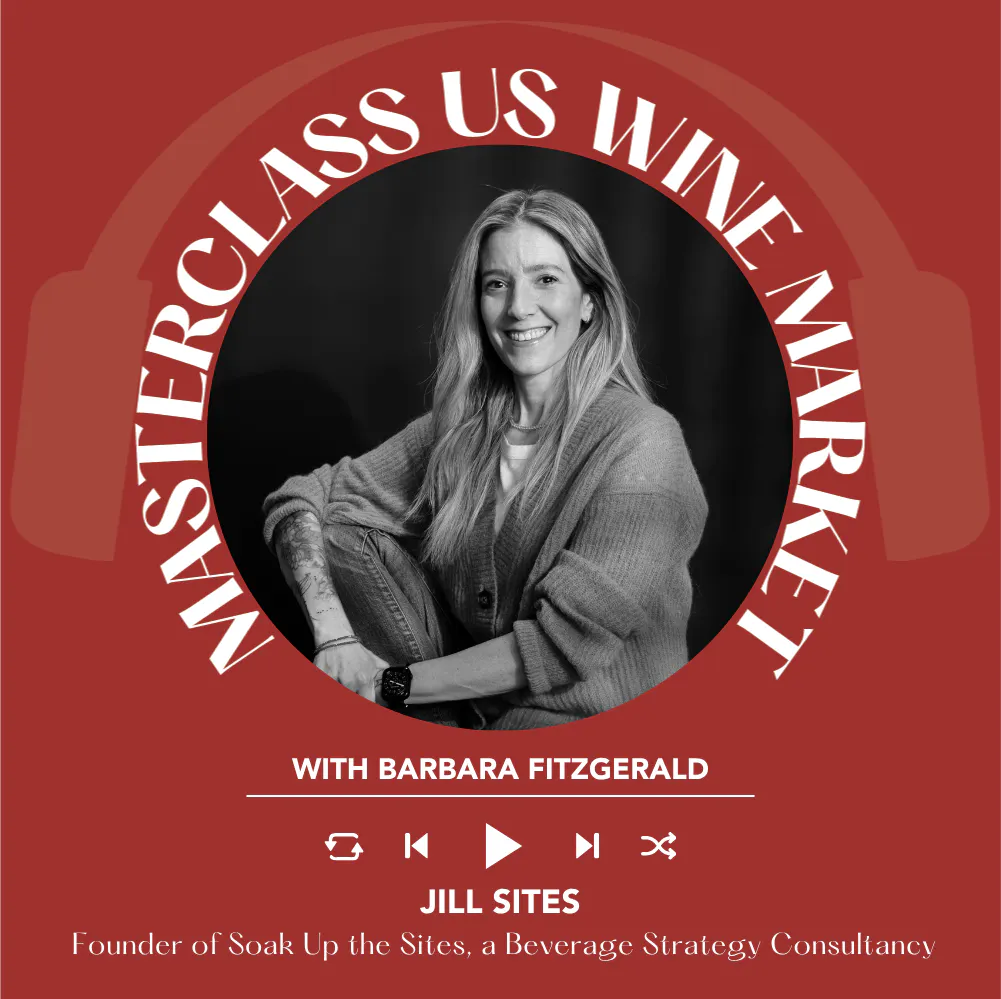
Ep. 2766 Inside the U.S. Non-Alcoholic Wine Market: What Wineries Need to Know with Jill Sites | Masterclass US Wine Market
Episode 2766
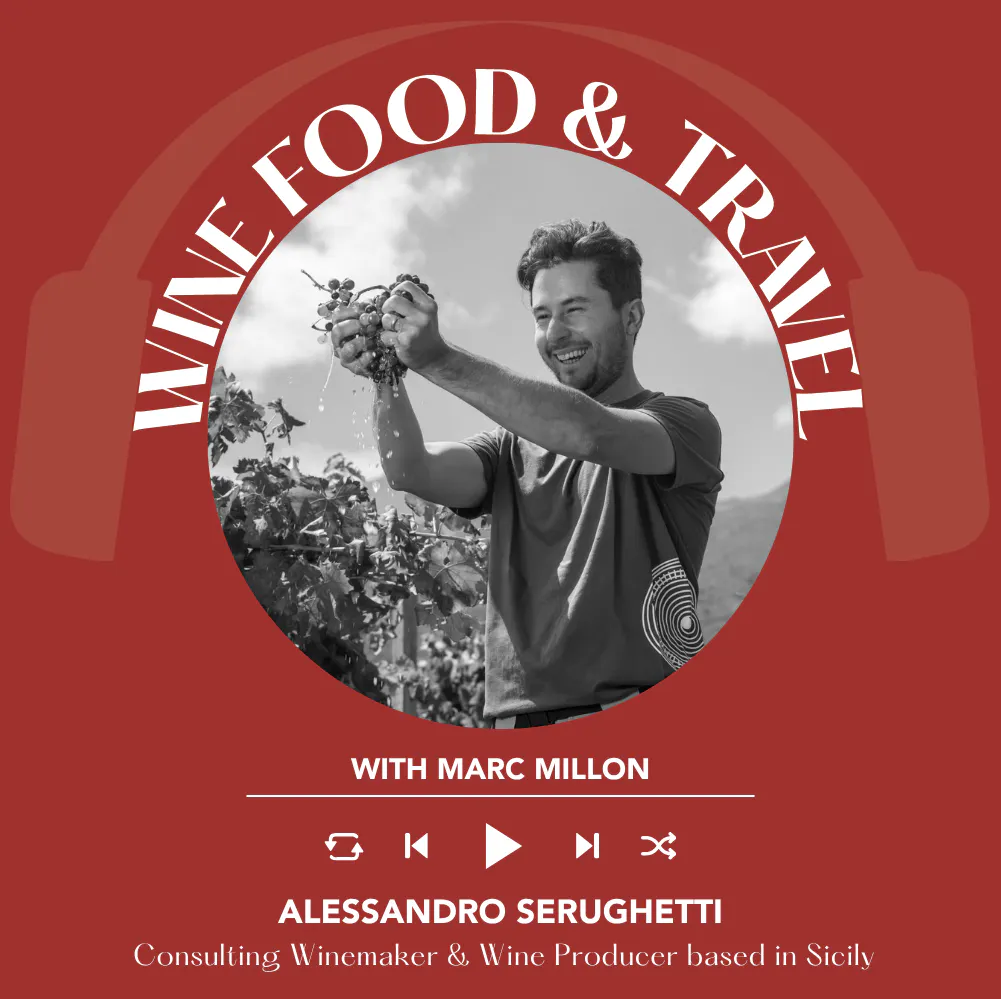
Ep. 2761 Winemaking and Consulting Across Sicily with Alessandro Serughetti | Wine, Food & Travel with Marc Millon
Episode 2761
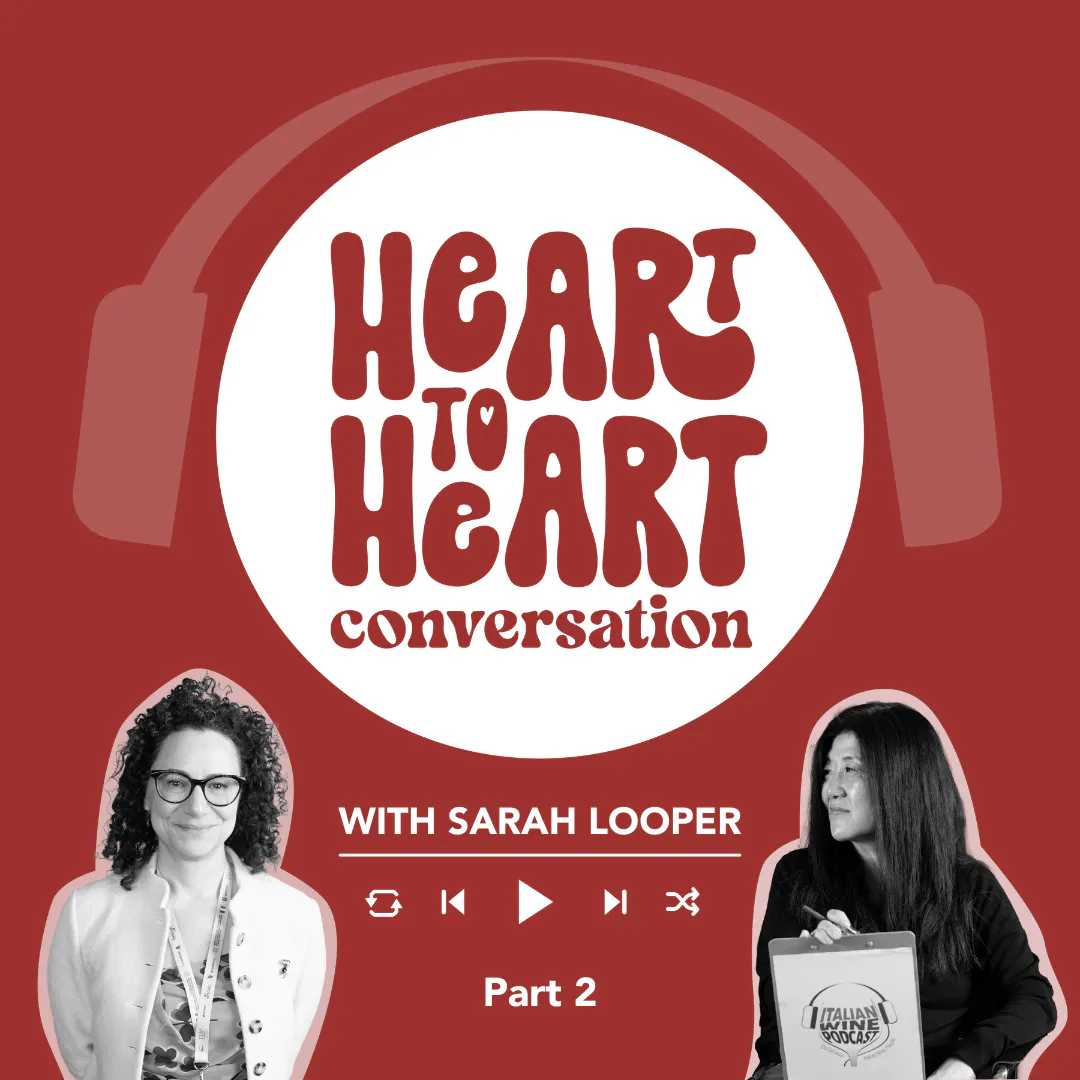
Ep. 2759 Part 2 – The VIA Educational Program & Italian Wine | Heart-to-Heart Conversation with Sarah Looper
Episode 2759