
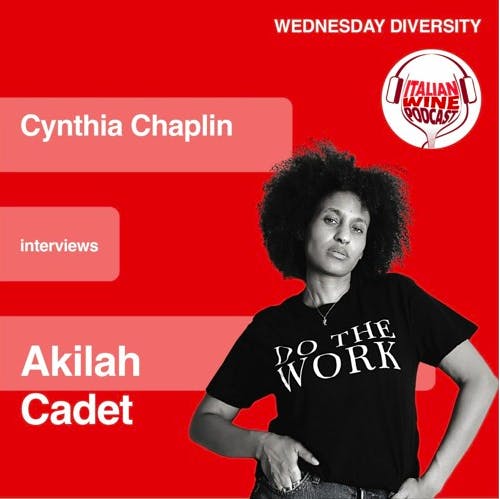
Ep. 900 Dr. Akilah Cadet | Voices With Cynthia Chaplin
Voices
Episode Summary
Content Analysis Key Themes and Main Ideas 1. The personal and professional impact of racism, discrimination, and bullying on Dr. Akilah Cadet's career. 2. The founding and mission of Change Cadet, focusing on anti-racism, diversity, equity, and inclusion (DEI) in workplaces. 3. The concept of ""isms"" (racism, sexism, homophobia, xenophobia) and their pervasive nature across industries, including public health and wine. 4. The importance of diverse and inclusive leadership in creating positive work environments. 5. The distinction between allyship and accomplice, and the ""beanbag chair"" analogy for understanding privilege and action. 6. The specific challenges and opportunities for DEI within the wine industry, including issues of representation, retention, and systemic bias. 7. The role of culture, humor, and self-care in navigating difficult conversations and driving social change. Summary In this episode of the Italian Wine Podcast's ""Voices,"" host Cynthia Chaplin interviews Dr. Akilah Cadet, founder of Change Cadet and co-founder of the Diversity in Wine Leadership Forum. Dr. Cadet shares her personal journey, detailing how experiences with workplace racism and discrimination, even within the public health sector, led her to establish Change Cadet in 2015. Her organization provides anti-racism and DEI services to companies like Google and Lululemon, focusing on creating diverse and inclusive teams. Dr. Cadet emphasizes the pervasive nature of ""isms"" and the need for leaders to move beyond fear and ego to implement genuine change. She introduces the concept of being ""comfortable being uncomfortable"" to drive progress and distinguishes between allyship and accomplice, using the vivid ""beanbag chair"" analogy to illustrate privilege and the need for active, daily action. The discussion also delves into the unique challenges of the wine industry, highlighting how traditions of luxury, nepotism, and ""best"" often exclude BIPOC, LGBTQ+, and disabled individuals. Dr. Cadet advocates for greater representation, retention, and conscious challenging of bias, noting her own experience as a Black disabled woman in predominantly white spaces. She stresses the importance of accountability, communication, and transparency (ACT) for companies, and concludes with her personal mantra of ""keeping amazing"" despite adversity, advocating for grace, humor, and perseverance in the pursuit of a more equitable world. Takeaways * Dr. Akilah Cadet founded Change Cadet after experiencing discrimination and bullying in her public health career. * Change Cadet provides anti-racism and DEI services to a wide range of companies. * ""Isms"" (racism, sexism, etc.) are prevalent across all sectors, making DEI work universally needed. * Leaders often avoid DEI conversations due to ego and lack of training, but true change requires addressing this discomfort. * Being an ""accomplice"" involves daily, active efforts to dismantle systemic biases, going beyond passive ""allyship."
About This Episode
During a podcast, the host discusses the importance of diversity and equity inclusion in the industry and how it is important for leaders to be comfortable with their own values and create environments that empower change. They also discuss the importance of privacy and privacy in the industry and how it is important for leaders to avoid discomfort and create environments that empower change. The speakers also discuss the importance of working for companies and being an accomplice to achieve success with their diversity strategy. They also talk about the importance of keeping amazing things in small steps and small actions to reflect on people and create environments that empower change.
Transcript
Welcome to the Italian wine podcast. I'm Cynthia Chaplin, and this is voices. Every Wednesday, I will be sharing conversations with international wine industry fessionals discussing issues in diversity, equity, and inclusion through their personal experiences working in the field of wine. If you enjoy the show, please subscribe and rate our show wherever you get your pods. Hello, everybody, and welcome to voices. This is Cynthia Chaplin, and today I am very happy to welcome doctor Akila Caday to voices. She's the founder of Change Caday in Oakland, California, as well as a founder of the diversity and wine for and she holds a whole bunch of advanced degrees in health sciences and public health and health leadership. But at Change Kadeh, she's providing people and companies with services that support anti racism and diversity, inclusion, equity, and offering workshops, coaching, advisory services to help companies create more diverse and more inclusive teams. My favorite thing about Akila is she describes herself as amazing, and I totally agree with that So we are going to find out why. So welcome to the show Akila. Thank you for coming. Thank you, Cynthia, for having me. I'm I'm happy to tell you all the ways in which I'm amazing. I'm sure we all need to hear good positive stuff. We like this. So you started out in the public health sector, obviously, and had a hugely successful career for fifteen years before you started up Change today in two thousand fifteen. What was the catalyst for this move? So this won't be a surprise to anyone, but racism, this discrimination, harassment, bullying. Unfortunately, all the greatest hits that come with being a black person, a black woman, an educated black woman in the workplace. And so it was kind of a series of fortunate, unfortunate events where I was in a position and I was being treated horribly. I was given a promotion, and then it was taken away because of politics or lack of money or whatever it was. But I was forced to find all the seed funding for a new department. And when I received that seed funding, then the position magically wasn't available. So I was manipulated in use. That turned into bullying, discrimination, harassment, and going to work every day was PTSD, but I didn't have time to find another job because I was working full time and doing my doctoral program full time. My program was four to seven years and I did it in three because even though I have lots of degrees, I do not like school at all. I cannot stand school, but I also understood the importance of education being a black person, in different workplace settings. Yeah. I get that. And also it gives you, like, a serious set of credentials. People cannot deny that you have PHD. They cannot, you know, and particularly I was in, in and out of clinics and hospitals and healthcare spaces. So having that was definitely helpful, and I got it at thirty three. But once I graduated, a month later, I was diagnosed with major depressive disorder. Just because of what I was experiencing in the workplace. And I had this aha moment, like, wait, what? We what? We spend so much time we spend more time at work than we do in our lives, and it's important that we're supported in that space. And can be ourselves in that space and not feel like we have to fit into boxes. So, I ended up finding another job. It was a doctor level position job, felt like I had arrived, you know, the big salary, power suits, top floor, you know, views of the city, like, doing it. Like, I was like, okay. I've done it. But in a one on one meeting, I was with my boss, a white male, older, probably in about his sixties, and he looked at me and said, I didn't think you were that smart when I interviewed you, but you are smart. Oh my god. That's sucks. What did you say? I said, well, you know, I have like fifteen years of experience and I know how to do this work and, I come from an organization three times a size. So I'm curious as to why you said that. And he said, oh, I guess that's offensive. I'm sorry. I guess. Wow. I guess. And I said, okay. Well, it was. And I'm gonna need some time. That was hurtful to rebuild my trust with you. And so the way he wanted to rebuild trust was firing me the next week. Oh, nice. Okay. Well, that solved his problems. The thing I'm finding really ironic here is that this was in the public health sector. Am I right? Yeah. That was in a a health setting. So, you know, the politics of health care, so it's more of a it was a health system. So, you know, not as save the world vibe. Ironic. That he, yeah, damaged your health is is a bit ironic, and that's just horrendous. So so it was after this when you you had to handle the fallout from that. Yeah. Well, I started to change today as a side hustle in the previous job I was telling you about where feel valued or appreciated. So I'm like, will people pay me as a pretend doc as I was finishing up school? And the answer was yes. And so I took this moment because, okay, major depressive disorder diagnosis. And I'm noticing this pattern of it happening into these traditional nine to five spaces. And as I looked back in my career, I was like, oh, wait, that happened. That was oh, that was bad. That was a form of racism. That was sexism. That was an ism or phobia bias, whatever it was. That was going against me. And so I was doing all this stuff in places where people really didn't want me to be there, and it was affecting my overall health and well-being. And so I decided, I'm like, okay, maybe this is the time I take a chance myself. And maybe you know what? There's other people. There's other women, disabled people, LGBTQ plus, other people of color, that experience the same thing. So what could I do to fix that? And I've been fixing it for seven years. Well, that's incredible. I like I like the taking a chance on yourself even though that you had, you know, a a depressive disorder at the time. You still had the gumption and and were undaunted. I I'm also really fascinated with this concept of isms. Now I'm, you know, I am a a white woman from middle class America. I've been living in Europe for thirty five years, so I have absolutely no concept of anything other than know, misogynistic problems, which happens a lot in the wine industry, but that's a whole another rabbit hole. What are you kidding? This is news. Yep. I know. Breaking news, shocker. How how did you sort of get the the whole taking it from a hustle, taking a chance on yourself, moving away from these isms and kind of carving out the space for you to grasp, like, your own reality and just smash through these obstacles. You know, there's always this driving force in me when people were telling me I was being difficult, challenging, or an angry black woman that I actually was right. I just wasn't in the right space. So I was focused on creating the right space for me. And by doing that, it was helping other people also find their rights and be in the right space. Right? And so that, yeah, that was that was really the the precipice to get me into this position of problem solving. You know, the funny thing is I always think back and it's like, you know, I'm on a Forbes list. I've been informed several times. I've been in lots different magazines. I'm an international expert, and so I actually was right. You know? So when I think about it, I really it was just other folks. And so I I use that as the, like, the thread and momentum with how we go in to solve problems. So what we do is twofold. We dismantle white supremacy, but we also create cultures of belonging. And when you create a culture belonging, you are dismantling white supremacy or white dominant culture because othering happens for folks who aren't part of the dominant group. And so I use my storytelling. I use my own personal experience along with that journey to help leaders who may look like me, leaders who don't look like me, realize they have a lot of power and privilege to create healthier, happier workplaces that celebrate innovation, diversity, inclusion, belonging, you know, anti racism, all the things that are needed for people to thrive and be their best selves. The funny thing is, like, being fired sucked, I'd never been fired before. Don't recommend it. No. Definitely not. Definitely don't. You know, and the lawsuit later was fine. But I was in a position where I was fired for being myself. I didn't wanna fit in the box anymore. I stood my ground. I knew what I had to offer. And if I was fired for being that person, that was really powerful. So that's why I talk about a series of fortunate, unfortunate events to get to this place to help leaders, companies, and people, you know, know that they deserve to be in places where they're valued and appreciated. Yeah. That's that's really interesting. And you've got some, you know, really high profile clients coming to you for help. You've you've worked with Google, you work with Lululemon, mean, what are the sectors that you are being called in to work with the most? You know, where's the most reception to the idea of, look, we need to be more inclusive. We need to be more diverse. You need to be you know, making spaces for these things to happen in your company. Yeah. Well, I always like to say discrimination doesn't discriminate. So we're everywhere and anywhere. Like, in twenty twenty, if there's meat in a box, we were working with you. That that is bad times, but I think it's really true. No. There's a there's an interesting time. We're still in a pandemic, but you have things that are sent to home that were taking off. So we spent a lot of times with things that were sent to homes that gave you that sense of normalcy. We have that. We do a lot with beauty brands. We do a lot with fashion brands. We do a lot with tech companies, but we literally are everywhere. It's more so the willingness of the company and of the leaders to want to enact change. So when we're talking about organizational development, my doctorate is in leadership and organizational behavior, organizational development encompasses diversity. It encompasses a reorg. It encompasses, you know, any type of structural change that happens. It's all the same thing, but there's more fear, ego, and anxiety around diversity, equity inclusion, and belonging, because those who are in power don't have an identity or lived experience that helps them understand the importance of that, where they're in positions where they aren't typically othered so they don't necessarily see the value of that. So we're always looking for leaders who may not understand that, but they see the value in it so that we can create organizational change. That's a really good point. Where do you think that's fear comes from. Oh, ego. You know, as leaders, we're told we're always great. We're the best, the best, the best, the purest. Pretty more ops. We we are amazing people. We can do no wrong. We know solutions to everything. We know how to fix and solve problems. And so when you're presented with something as having a difficult conversation around someone saying something that was perhaps homophobic or xenophobic, then it's like, oh, hey. Hey. There was no MBA for that. Yeah. I think that is so true. That's so true. Yeah. Conversation or coaching for that. So I'm just gonna avoid it. Because they have the power and privilege to avoid it, it doesn't affect them, but it does affect the person who was harmed in that case. And now that person doesn't wanna be there. Then you have retention issues. It's well, this is this is fascinating. I mean, we we've all been watching news and, you know, discussions lately most recently among the merchant marines about women's claims of being, you know, harassed and worse raped and things being dismissed by the the all male sort of regime above them. You have this great saying that I really like, be uncomfortable, do the work. How how do you explain to our listeners what you mean by that? Because there's obviously a lot of work that is getting done, but there's still so much work that needs to be done. And I think people need to understand, first of all, that there's work to be done. As you said, put aside your ego and actually see the fact that there is a problem. Yeah. So I always say, you know, with the goals to be comfortable being right, to do the work. You wanna be comfortable, being uncomfortable. And the reason for that is if you're in a place of comfort, you're not creating change. If you're in a place of comfort, you're not thinking about folks who are other. If you're in a place of comfort, you are benefiting from the privilege of white dominant culture or white supremacy and everything's fine and great. But the reality of the situation is if someone wants to enact change as an ally, accomplice someone who's anti racist, they have to lean into that discomfort. And here's why. I am uncomfortable all the time. As a black woman, I'm uncomfortable all the time. I'm uncomfortable right now, but I'm comfortable being uncomfortable. And that's because as soon as I entered in white spaces, then I had to learn how to navigate being the lonely, one of few, or only in spaces. And that started in preschool. I was privileged enough to have a middle class upbringing, so preschool was predominantly white. The other black person was my twin sister. Wow. And so I had to learn how to navigate that. Continued to k through twelve, that continued in college continued right now, you know, running a business. I I experienced that all the time. And so because that's something we do, I have to learn how to acclimate. I have to learn how to be part of white dominant culture in order to get what we all should get, which is opportunity, success, growth, education, health care, the list goes on on on wealth, and so forth. And so it's really saying, hey, I'm already doing it. So if you really wanna make change, you also have to do the same thing too. To lean into that discomfort. Sometimes it looks like apologizing, you know. Like, there's and not understanding why you're apologizing, but it's just that it's reciprocal. Yeah. I mean, if that's if that's so interesting to hear you say that so openly. I mean, now I'm uncomfortable, which is really good. Because it's it's important to me to to have these conversations and to have our listeners hear them where I can I can listen to what you say? I'll never experience what you have, but understanding that, you know, sort of low of constant discomfort is is something that's a really interesting concept. And I don't think people talk about that as much as they should. So thank you for being as open about that as you are. It's it's helpful just in the discussion, really. Yeah. I mean, I I'm part of Verini Institute, which I love being part of. And the last time I actually gathered in person was Bordeaux, in twenty nineteen. The last time any of us saw anybody was in twenty nineteen. Any of us saw any I know. I know. I know. It was it was supposed to be in South Africa this year, but the variant said no. That's not gonna happen. But there are only two black people at that event, you know, that gathering. These are world leaders and experts in the wine industry, and I'm representing diversity. And it's shocking. You know, that's with that's with change. Mean, they're doing a great job with a focus on diversity. I'm not taking that away at all. There's a whole pillar and area on on diversity, but that just speaks to the volume of the wine industry. You're absolutely right. You're absolutely right. And the heavy lift that that needs to happen Yeah. It's putting me in a position that's even thinking about that experience and being comfortable, being uncomfortable. Everyone wanted to know why I was there. Why are you there? And that wasn't a question for other folks because it's the norm to see a lot of white people. So I had to constantly explain why I was there. That's just shocking to me that you have to constantly earn your your right to be somewhere that you have a complete right to be in anyway. The fact that you're there is doing a good job. I mean, in twenty twenty one, you were, as you said, you were honored by Forbes as part of their next one thousand list, and you were named one of staffing industry analyst top influencers in the DEA arena. So this is this is serious important work that's being done all over the world, someplace better than others. I think the US is is doing quite a lot of work on this right now. Italy, I can tell you for a fact is not. But what's what's a normal work week like for you? You know, what do you do in the space of a week? Because this is a lot of heavy stuff to carry on your shoulders. What does your week look like? Well, I mean, I can tell you about this week. This is my Friday. So, this week has consisted of workshops, podcast interviews, fireside chats. It's Black History Month and US. So there's lots of conversation and dialogue that's happening partnerships with Lululemon. We're doing work for Black History Month Emergency Meetings. I have emergencies all the time with leaders who contact me not knowing how to navigate something, and it's not that you don't necessarily know to do. Usually, it's for validation, maybe a little bit of problem solving that goes in there, just because they wanna do right by, you know, their their employees. I am developing a strategy for a billion dollar company right now. So that's being presented, next week. Oh, and then I launched an entire educational platform, this week where folks can do independent learning. It's called the Change Today Action Network. So there are some press, around that. And I managed to have a little bit of sparkling Rosay, to celebrate that. I I love that, oh, by the way, I managed to launch an entire educational platform. You are actually doing so much for so many people. I I just, like, what's your take on you started up change today? Let's about seven years ago now. Does the work feel place feel different to you now? You know, do you still see huge impediments for young bipoc people? Or Yeah. You know, the interesting thing is it's always it's always a new adventure. Because a lot of our work is tied to what happens in the world, what happens in society. So the murder George Floyd in May twenty twenty, that changed everything. So I went from being in a position of you know, doing work to all of a sudden being on this global stage to solve the world's problems. And so we had to scale quickly. We had to kind of figure out what the needs were and meet with the needs and to know that the the thing that's different about the type of work that I do, not only is that that societal factor in connection. It's that I'm still a a black I'm a black disabled woman who who runs a company. And so when demands there, it gives me this weird pressure of, wow, this feels like reparations, and also now I can build generational wealth. And so I have been working tirelessly for two over two years meets the demand to put myself and my employees in a a better financial position to be in a place to to reap the benefits of being part of, white dominant culture. And then when it comes to bipoc people, black indigenous people of color, which is more of a US term and you still hear, you know, people of color, and other countries, which is totally fine, is that they are in a position where there's still this feeling of social justice and reckoning and and awareness and and need for change where they're using their voices more. And it's adding to the great resignation too that we're seeing as well because it's like this company really doesn't care about me or this company doesn't care about the people I care about. So I'm gonna go do my own thing or I'm gonna go to another place, you know, where that's happening. And so it's great to still have this momentum of accountability and this momentum of change. And I hope it continues, you know, as long as it can. It probably will in the US when when midterms happen. And, again, will happen again with the election, but it's a it's a really beautiful thing to see. Let's cross our fingers right here and now. Absolutely. Yeah. You you brought up twenty twenty. And you you took on a lot more in twenty twenty in light of of the George Floyd murder. You took another step and you found a diversity in wine form with Mary Am Ahmed and Elaine Shukhan Brown. Can you tell us a little bit about the ethos behind the forum and and what the goals are for the future? Ameriam and Elaine founded the diversity and wine leadership forum, and I came and joined last year to help with content development and and facilitate the workshops that we put together. And then as you know, Elaine's doing lots of things now over at Kansas. So They asked me to to step in, and I I cannot fill Elaine's at all, but I'm happy to keep that tradition going. So, Ma'am and I are doing are creating change in the wine industry by providing content by providing workshops, providing gatherings for folks to within their capacity, their power and privilege to slowly chip away at the barriers that are there for true diversity, equity inclusion in the wine industry, really talking about representation, moving past pipeline, like pipeline is always that's not the issue. It's really the retention opportunity and removing bias that is so prevalent in the wine industry, so that it moves past around, away from, you know, families and nepotism and the white guy. To women, lgbtq plus, disabled, and bipock people, and really having a highlight on indigenous people, and black people, and Latinee people as well. That is such a good point. I I, you know, we've we've had this conversation, in the US, particularly, but it it has gone global to a certain extent, not as big as it could be around race and equity and justice. How do we keep this conversation sort of relevant and and vibrant Why why is it that the wine industry in particular really needs this kind of scrutiny and action right now? What do you think it is about our industry that has prevented it from being being more inclusive before now? Power and privilege. Right? So when we think about the wine industry, we're thinking about wine, sparkling wine, champagne. We're thinking about privilege. We're thinking about luxury. We're thinking about the best. We're thinking about these experiences that are are viewed as only for certain types of people who have access to that space. And it's taking away from the reality of the situation that one, millennials and Daniels have a lot of money, and they like to spend it online. And that's because LeBron James is posting his favorite wine. And they also wanna do that too. They also have a palette. They also have interest, and they also have access to more money and spaces where they can do something that is a little bit more pricey or something that is a delicious fifteen, twenty dollar bottle of wine. Right? And so when you have that, there's this fear of, but this was for us. And are they deserving of that? So you have to think about this idea of luxury and the best the best is part of white dominant culture. It's white supremacist thinking of the best is only for white people or people who have proximity to that type of power. When we hear the best, and wanting the best, the best experience, the best wine, the best people to work for this label. It always excludes black people. It always excludes bipoc people. I've never viewed as the best. And so it's that thinking that continues in the marketing, the branding, the partnerships, the roles, and the positions of wanting to hire the best that keeps excluding BIPock people disabled in LGBTQ plus. That is really fascinating that it dam damning and fascinating. And I'm feeling very glad at the moment that I grew up in a in a, you know, relatively low income household and and do not come from that sector over the privilege. Yeah. So you can have some empathy and some passion and understanding, but you also know that you have the benefit of being part of the dominant culture. I'm a white woman. Yeah. I'm always gonna be a white woman. Yeah. And so it's easier for you to come into that space compared to someone like myself who's middle class and black and going into that space. Just because of that additional bias that I I just explained. Yeah. Yeah. That's that is so interesting. The idea that luxury is only for, you know, quote, unquote, certain people. And at I'm very glad that, you know, as you said, social media, one of its gifts is that we're seeing all kinds of people, celebrating luxury and success and financial success and spending power. So that's one of the great sides of social media. We hear about so many bad ones. That's actually a really effective good one. How do we harness sort of influencers and and newcomers to this party and get their energy moving in the right direction to create more space for for young people from underrepresented communities to get into wine? Yeah. So it goes into, attitudes and behavior around who those influencers should be. Right? We see lots of bipoc influencers that are out there, but they're not getting the same opportunities as others because their view does not having the right credentials, or they do have the right certifications, and they're still overlooked. Right? And so it's really checking bias and checking privilege to think differently about who those partners are with. The other part is realizing that we have a real diverse consumer in the wine industry. You know, it's not just white people who are are drinking wine. We have lots of people of color who drink wine as well. So it's the understanding of that and getting out of the notion that it's just sweet wines. Getting out of the notion that it is, you know, maybe just champagne that there's a palette that's there. And so it's leaning into those partnerships with influencers who already know that. Right? So it's filling a void for these brands and companies so that they have more expansion and connection to the communities that they are not connecting with. It is a twofold thing where you're providing leverage and opportunity for the influencer who may not have that exposure or reach so they can create content. But it's identifying and addressing the gap that a lot of folks have the wine industry that don't have those connections. So it's really a beautiful marriage to get to the place of more diversity, equity inclusion, and belonging with consumers. And in time, it develops another pipeline for folks who come into the business through those influencers as well. That's that's that's a really good take on it. It's I I have a love hate in sort of relationship with influencers. Many of whom I love, many of whom not so much, but that's that's a very interesting way of looking at sort of how to, as you said, how to make a happy marriage there. One of the things you've also done that I that I really feel sort of connected with is you've put the spotlight on women supporting women. And, I mean, quite honestly, sometimes women can be our worst enemies. You know, if it often occurs in male dominated sectors like the wine industry, women are more cutthroat amongst each other than than other people would be. What are your views on how to crack this one? Yeah. So it's identifying code switching. Code switching, we know, something that bipoc people tend to do in the workplace. Non binary folks will do in the workplace. So it looks like maybe someone who is naturally curly hair, they'll straighten their hair or they'll sound a certain way or use certain language. They wouldn't typically use a non binary person may wear something with the gender that folks feel more comfortable with so they don't have to, you know, dress with issues. So there's this code switching that happens. But a lot of people don't realize that code switching happens for loneliness and onlys. So if it's the only black person, it's the only woman in a role, they'll code switch to the dominant culture. So the dominant culture typically in the wine industry, it's white men. And so they'll do things to make white men comfortable, and then it will alienate black people. It'll alienate women, right, as a result of that. Lownies and onlys is something I haven't really put into this conversation. That's a really interesting topic. It it it still happens for me too of being lonely one of the few or only the only one in that room space department company, you know, it goes on and on. And it's really important to note that, you know, when we talk about diversity and wine, we're still talking about white women too. Think about it. We're still talking about white women too where there may be more leverage in other industries with acceptance of white women. That's still a problem, in the wine industry. And so Oh, definitely. Italy, we see it all the time. Very male dominated even today. Yeah. And it could still happen in familiar situations, right, even in in cases of nepotism. You could still see that in family structures where it's like, oh, I only had a daughter. So I guess she has to take over the winery and there's, like, some disappointment. Right? That could come as a result. Of that, as well. But when we talk about women supporting women, it's really breaking through that that urge to code switch to the dominant culture and to disrupt. So how are you bringing other women into that space? How are you bringing other, you know, bipoc folks into that space to change what's happening because it does nothing if that woman goes into space and just goes back to dominant culture. We're in the same position. And it actually creates more harm because now the other white guys can say, well, we have a woman or we have a black person. So we did it. What what else do we need to do? So the way to support women when they realize, like, they aren't supporting other women is realizing we've all been in those positions before where we weren't supported, right, at just like we were talking about. You're just not supported. And so it's that light bulb moment of I don't wanna do this. I don't wanna be the person or even a woman who's alienated me before. I wanna lean into how I can support them. I wanna lean into how I can be there. To change the situation. So as women, as bipoc, it's disabled, we've all been in positions of imposter syndrome. And imposter syndrome is feeling less than, not good enough, questioning ourselves, working really, really hard, and not having the outcome we would desire, but even though it's really, really great. It's stuff we put on ourselves. So when we remember those feelings and emotions and we work through those feelings and emotions, we can create lasting change, and it could lead towards the goals that a lot of these wine industries are setting when it comes to diversity, equity inclusion belonging. And also using that as a way to work through it too. It's like, hey, we said we're gonna do these things, so I'm doing those things. Yeah. Exactly. Exactly. And I like I like the idea of sort of a measurable standard of action where you can show that actually, not only have I said that I'm gonna do this, but I have actually done it and here's here's what I've done and you can see it. So that's that's a really good point in and of itself. I've I've gotta ask you because I have heard you describe yourself as a non threatening black person. You're you're light skinned and you've you've already pointed out that sort of in America, anything that's white or closer to white is seen as better or best, you know, and that's where white supremacists come from. But, you know, you've you've talked about this concept of privilege and understanding where privilege functions I'm I'm looking at how do we break this down more and and sort of call people out educate people and educate companies about this privilege, about not carrying these old standards of of best that are so wrong. What do you what do you do in your strategies with your companies? You know, how do you help them to address this? Yeah. So, one, I help companies by role modeling the behavior of understanding privilege. So as you mentioned, I do say I'm a non threatening black woman, and that is because I do have lighter skin. I have a lighter complexion. And so people feel more comfortable around me opposed to someone else who could look exactly like me and have a a deeper complexion. And so I use that as an advantage. I use that because that's privilege that I have. All these degrees, privilege that I have, owning a business, privilege that I have to go into these spaces and really call people in, for change. I like that rather than calling them out. You're calling them in. I'm calling them in. Yeah. Yeah. Calling them in. So let's talk about that. So calling out is cancel culture. We see that a lot. And they're for sure people who need to be canceled. That happens for sure. And there's one that starts with a t and ends with a p that should always be canceled, but here in US, right? But when we say we're calling someone out or cancel culture, it's saying you suck. Period. That's it. When we're calling someone in, it's like, that sucked. And here's why for me as a black woman in the wine industry, our data is showing x, y, z. You're calling someone in to action and accountability. You're calling someone in to learn and unlearn. So when they move forward, they can move in more of a productive way. Because when we talk about privilege, the beautiful thing about privilege for those who have more of it, again, part of white dominant culture white supremacy culture. And when I'm saying white dominant culture white supremacy culture, I'm not saying people are racist. They can be. But what I'm saying is that they have that additional privilege and benefit of not knowing things. The people who have more privilege don't know what they don't know, and that's the product and design of white supremacist white dominant culture. To not know things. And so we have to give people the opportunity to understand and learn things so they know it. So then moving forward, they have a choice. They have a choice to be inclusive, diverse, anti racist, or they have a choice to be homophobic, xenophobic, and racist. But we have to give them the tools to do that. Yeah. And and recognizing that they have a choice rather than not even understanding there's a choice to be made is is really that's something that's pretty fundamental to making this go right in the future. Yeah. And so we role model that behavior with our strategies. And one of our main strategies is how do you act? How do you act as a company? How do you act as a leader? How do you act with each other? And that stands for accountability, communication, and transparency. How are you holding yourself and others accountable with the policies and practices and the languages, language that you know, you put down for how you're gonna work together with your diversity strategy, your values of the company, how are you communicating change? How are you communicating? You don't know something? How are you apologizing in that communication? And then how are you being trans was saying, like, I don't know. I'm gonna need to hire a diversity consultant. I'm gonna need to ask for help in this situation. I'm gonna need to take some time to get back to you about whatever it is. And yes, it could mean diversity, but also for work in general. Like, I don't we may be able to do it next quarter or come back to me next quarter, and we can figure out what we can do. All of that is important for creating change, role modeling behavior that's needed, for creating workplaces of belonging. That's really great. That and and it seems to be being effective for the companies you're working with. I I wanna just sort of cycle back for a minute. You touched about on this idea of being an ally and being an accomplice. And the difference between those two things, which I personally find really fascinating and not something that most people of privilege ever consider among many other things that you've brought up today. What do these two things mean to you, Ally Ship, and and accomplice how can people gauge where they sit in that framework? Yeah. So an ally is someone who's learning how to use their privilege. They're realizing it's a roadmap to speak up immerse themselves in the community group person they wanna advocate for, you know, they're they're learning how to do the work, which is important. Allyship allows for comfort. And that comfort is where there's pause, and that comfort goes back into white dominant culture, that comfort goes back into not wanting to be comfortable being uncomfortable. So, for example, In the US, we have Columbus Day, but now it's also indigenous people's Day. And allies, like, listen, I'm Italian American. Columbus is my jam. We do a little parade. We have a dinner. And I'm never gonna say it's an indigenous people's day, and that's an ally. Right? And accomplice is like, okay, I'm Italian American, but I'm realizing there's a whole bunch of genocide. There's a lot of negative stuff that goes along with Columbus Day. Also, you know, you can't celebrate the oppressed with the oppressor that makes no sense whatsoever. So it's indigenous people's day for me, and I'm gonna donate to an indigenous organization. Right. I get it. It's it that's very interesting. We're we're seeing a bit of that in Europe. Going back against slavery, going back against other things, not as much as in the states, but I think the states in this particular instance is leading by a good example, not always the case, but this time it is. I that's that's very interesting how being an accomplice, yeah, is is very different from being an ally. And at it wasn't really something I'd ever thought about before. I heard you talk about it. Yeah. I mean, an accomplice is someone who brush their teeth. They put on their deodorant. They check their bias and privilege every single day. Like, it's that routine for them. Are my thoughts creating bias? Am I thinking a certain way about that person? Am I going to lean into being comfortable, being uncomfortable to say something? So for folks who are still like, okay, but feel like I'm a really good ally. Alright. Well, I'm gonna push you to move to being an accomplice by talking about a beanbag chair. So if you think about white supremacy, so the benefit of white supremacy, white dominant culture, you have all the things you need to thrive and be your best self. It's literally what it is. It's to set you up for success minimizing barriers. If you think about white supremacy as a beanbag chair and a white person sits in that beanbag chair, it's very comfortable, but it's also hard to get out of. If you think about a person in the white supremacy beanbag chair and they have some popcorn, with their favorite pairings, and they're watching their favorite movie living their best life, that's white supremacy. But if that white person on the white supremacy be my chair looks to the left, they'll see me a black disabled woman on the floor because I was told I wasn't good enough for the beanbag chair, for the construct, the benefits, success of white supremacy and white dominant culture. When I asked for my popcorn and pairings, I'm told I have to pay for it. So I'm like, alright, I'll pay for it. And then when I asked for a movie that has representation so I can see myself in it, so it's not just white people. I can see black people in a movie. I'm told in being challenging, difficult hostile, or an angry black woman. And so an accomplice is someone who looks around that room, they're like, okay, that South Asian person doesn't have a beanbag chair. That disabled person needs some popcorn. And you know what? I'm gonna get representation for the Latino on the the movie screen. And that is an accomplice, both big and small actions daily so that we all can eventually get to the point of having the free popcorn, the Bmag chair, and representation in our movies. I love that. That's actually, like, really good homework for all our listeners to think about. The beanbag analogy is a great one. I'm gonna go home and throw the beanbag chair out of my house, but No. Beanbag pairs are great. Now people know how old I am because I do love beanbag chairs. I still have a beanbag chair. So there you go. But that is that's great homework. It's a good takeaway for our listeners because as you said, it's small steps, but they're meaningful. And if you start practicing them every day, hopefully, that makes a change in your own life, which will reflect on the people that you interact with. I I wanna ask you, you know, sort of just a personal question. You know, you've you have got a very tough road hoe that you have chosen, or it shows you. I'm not which you seem to use, like, a lot of patience, a lot of humor, you know, you have a lot of hope in your writing and your speaking. You know, if you could give out one message to our listeners today, what would it be to keeping amazing? I say that to myself. I say that to my clients, and that's because, you know, we all go through stuff. You know, we all do regardless of how you identify. And if we are in positions, you know, fight people wanna lean into that being comfortable, being uncomfortable. Keep being amazing. That's fantastic that you're doing that because your entire structure and being, maybe even your family, your workplace may not want you to do that. So keeping amazing for doing that, for bipapock people. We are dealing with adversity struggles are being told. We're a strong black woman, perseverance, all these things, stereotypes that come our way. Keeping amazing because you're doing it. You are where you are. Maybe you're in the wine industry. That's amazing that that that is happening. So keeping amazing and for people who live with disability also to keeping amazing too because the world isn't designed for people like us to thrive. For folks who are part of the LGBTQ plus community, same there because people don't want you to be yourselves keeping amazing. And so when we tell ourselves that, you know, on a daily basis, when we tell ourselves that in moments of frustration and darkness, we really can ultimately make the world a better place. Well, I there's nowhere left for me to go other than to ask you when you've had a day that was amazing and that you are feeling, you know, truly amazing about yourself and everything that you do, what would be your favorite Italian wine to drink as a celebration, little gift to yourself? What would it be? I mean, it would be So here's the thing. I always like to go by the recommendation of where I am because I always like to try new things, and that's what helps expand my palette. So it would be some type of red, something that would probably be local to the area. Or you can already tell that I'm in Italy. I'm I moved out of Oakland, California, and I'm in Italy. And something that would be recommended maybe I mean, yes, from the somme, but I always like things that are recommended from the the waiter because they're not always in that position. And so I don't know. Some some type of red something. I mean, I could I could go down a road of stuff, but I just I really like the excitement and the adventure. And the the thing I will say is that what I love about the wine industry is that I love when people send me wine because there are things that I didn't even know existed. Right? And I'm like, oh, wow. That's the best thing about wine. It it you'd never know everything. You've never tried every wine. There's always something new around the next corner, and and it's the best. Yeah. Like, Lambrusco popped into my life a couple years ago. And I'm like, this is fun. How come no one told me about lampris? This is great, you know, on a hot day. You know, you have something that's different, and it's just, you know, fantastic. But I do wanna say the reason why I am very patient is, and use a lot of humors because, one, we're all in positions where we're figuring it out. And so we deserve grace. Right? And a lot of this change that we're doing is also still happening in a pandemic. So we deserve grace and patience for that. When it comes to diversity at conclusion, belonging anti racism, it takes time because we're dealing with systemic issues, within ourselves, and within the organizations that we live and and work in. And then I use a lot of humor because I'm disabled. I'm in chronic pain all the time. And so using humor does two things. It helps with the pain that I'm in, but also helps of the trauma that I endured daily doing this type of work. And so if I can bring some humor in it, if I can bring some comfort into folks feeling comfortable, being uncomfortable, I'm gonna do it. And I have the privilege to do that, and it's been working pretty well. Well, I think you've brought a huge amount of grace to our show today. And I really appreciate that. So I hope you get to kick back with a good cold Lambrusco pretty soon and celebrate really how how amazing you are. I'm I'm so grateful to have you on the show today. Thank you so much. Thank you, Cynthia, for having me, and remember to keeping amazing. Thank you for listening, and remember to tune in next Wednesday when I'll be chatting with another fascinating guest. Italian wine podcast is among the leading wine podcast in world and the only one with a daily show tune in every day and discover all our different shows. You can find us at Italian wine podcast dot com, SoundCloud, Spotify, Himalaya, or wherever you get your pods. Hi, guys. I'm Joy Livingston, and I am the producer of the Italian wine podcast. Thank you for listening. We are the only wine podcast that has been doing a daily show since the pandemic began. This is a labor of love and we are committed to bringing you free content every day. Of course, this takes time and effort not to mention the cost of equipment, production, and editing. We would be grateful for your donations, suggestions, requests, and ideas. For more information on how to get in touch, go to Italian wine pot cast dot com.
Episode Details
Related Episodes

Ep. 2789 ColleMassari: a long-term vision rooted in Montecucco with Giuseppe Di Gioia | On The Road With Stevie Kim
Episode 2789

Ep. 2788 Ep. 14: Austria and Hungary | Study Smart for your WSET Level 3
Episode 2788

Ep. 2785 From Volunteer to Speaker at TEXSOM with Samantha Cole Johnson | TEXSOM 2026
Episode 2785
Ep. 2766 Inside the U.S. Non-Alcoholic Wine Market: What Wineries Need to Know with Jill Sites | Masterclass US Wine Market
Episode 2766
Ep. 2761 Winemaking and Consulting Across Sicily with Alessandro Serughetti | Wine, Food & Travel with Marc Millon
Episode 2761

Ep. 2759 Part 2 – The VIA Educational Program & Italian Wine | Heart-to-Heart Conversation with Sarah Looper
Episode 2759