
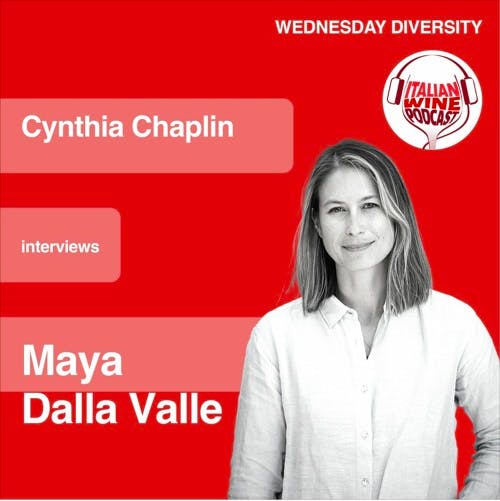
Ep. 984 Maya Dalla Valle | Voices With Cynthia Chaplin
Voices
Episode Summary
Content Analysis Key Themes and Main Ideas 1. The unique personal and family journey of Maya de la Valette at Delave Vineyards. 2. The founding and evolution of Delave Vineyards, including post-tragedy leadership. 3. The practical and philosophical integration of Old World winemaking techniques with New World innovation. 4. Challenges facing Napa Valley winemaking, particularly climate change and how to adapt. 5. Strategies for marketing to and engaging younger generations of wine consumers. 6. The dynamics and benefits of working in a multi-generational family wine business. Summary In this episode of the Italian Wine Podcast's ""Voices,"" host Cynthia Chaplin interviews Maya de la Valette, director of Delave Vineyards in Napa Valley. Maya shares her unique upbringing as a first-generation American with Italian and Japanese parents, detailing how the family winery, named after her, serendipitously began. She recounts how her mother bravely took over the business after her father's early passing, becoming a profound role model. Maya initially pursued international relations but eventually returned to the wine industry after gaining formal education in viticulture and enology and hands-on experience at esteemed Old World estates like Pétrus and Ornellaia. She discusses the challenges of adapting to Napa's climate change issues, such as fires, and her measured approach to winemaking, which incorporates Old World philosophies like biodynamic farming and reverence for old vines. Maya also touches on engaging younger wine consumers, advocating for authenticity, transparency, and sustainability, believing that palates will eventually evolve back to classic wines. She expresses her long-term commitment to the winery, respecting its legacy while subtly guiding its future. Takeaways * Delave Vineyards was founded by Maya's Italian father and Japanese mother, with the flagship wine named after Maya. * Maya's mother became an inspiring leader, successfully running the winery after her husband's death. * Maya pursued formal viticulture and enology education and gained diverse international experience before joining the family business. * Working in a family business requires learning to separate personal and professional dynamics. * Delave Vineyards is transitioning to biodynamic farming, drawing on Old World influences. * Napa Valley faces significant challenges from climate change (drought, fires, smoke taint), though Delave has been fortunate to avoid direct smoke taint. * Maya believes younger consumers, even if initially drawn to trendy wines, will eventually appreciate classic wines as their palates develop. * Authenticity, transparency, and a commitment to sustainability are key strategies for connecting with modern consumers. * Maya emphasizes patience and a long-term perspective in winemaking and business, respecting tradition while subtly implementing her vision. Notable Quotes * ""No pressure really to become a winemaker when the family's most famous vineyard is named after Right?"" - Cynthia Chaplin * ""It was not my wine, and it was meant to be, you know, something very separate from the identity of who I am as a person."" - Maya de la Valette * ""It's like stepping on a banana peel and sliding the industry."" - Maya de la Valette (on how her parents got into the wine business) * ""You know, that's the one thing no one can ever take away from you."" - Maya de la Valette (on education, quoting her mother) * ""People always return to the classics."" - Maya de la Valette (on younger wine consumers) * ""As long as you are authentic and you are transparent about what you do... I think people are attracted to that."" - Maya de la Valette * ""This is a long game. Like, you know, I'm only thirty four years old, so I still have a long time to make these wines and to run the business."" - Maya de la Valette Related Topics or Follow-up Questions 1. What specific adaptations has Delave Vineyards made in vineyard management and winemaking to address climate change challenges? 2. How does Maya balance the stylistic expectations associated with Napa Valley Cabernet Sauvignon with her philosophy of restraint and site expression? 3. Can Maya elaborate on the practical steps and challenges involved in transitioning a established vineyard to biodynamic farming? 4. Beyond general marketing, what specific digital strategies or direct-to-consumer initiatives is Delave Vineyards employing to reach new audiences? 5. How has Maya's collaboration with Axel Heinz of Ornellaia influenced specific wine characteristics or vineyard practices at Delave?
About This Episode
The Italian wine podcast discusses the importance of having a winery and the value of international relations in the wine industry. Speakers emphasize the need for passionate people to grow up in a family where women are valued. The challenges of working in a family business and the importance of learning to separate personal and professional strengths are also discussed. The podcast emphasizes the need for a sense of place in winemaking and offers support for finding their favorite Italian wines.
Transcript
Welcome to the Italian wine podcast. This episode is brought to you by Vinitally International Academy, announcing the twenty fourth of our Italian wine Ambassador courses to be held in London, Austria, and Hong Kong. From the twenty seventh to the twenty ninth of July. Are you up for the challenge of this demanding course? Do you want to be the next Italian wine Ambassador? Learn more and apply now at viniti international dot com. Welcome to the Italian wine podcast. I'm Cynthia Chaplin, and this is voices. Every Wednesday, I will be sharing conversations with international wine industry professionals discussing issues in diversity, equity, and inclusion through their personal experiences, work in the field of wine. If you enjoy the show, please subscribe and rate our show wherever you get your pods. Hello, everybody. This is Cynthia Chaplin, and I'm very happy to welcome you all to voices today. I have Maya de la valet from Dalave vineyards in California with me today. Which was a great treat, and thank you, Maya, for joining me because I know you're in New York for a couple of days. Delaveale is recognized as one of Napa's preeminent family run wineries ever since it was founded in nineteen eighty six by Maya's Aaron. They're in Oakfield and Rutherford in Napa, and they've earned huge acclaim as one of the world's most celebrated wine estates in the new world. Maya herself has a master's degree in Viticulture and inology from Cornell, as well as a of business and science in vineyard and winery management from Bordeaux Science Agro, and she joined her family's winery as a director in two thousand and seventeen at the age of thirty. So welcome to the show, Maya. Thank you so much for making time for us today. Thank you so much, Cynthia, for having me in for the really kind introduction. No. It's my great pleasure. I'm I'm so happy to be talking to you today. I I love I have four daughters. I love young women who are you know, successful and driven and smart and talented and working hard. So this is one of my my happy kinds of interviews. So I just wanted to kick off this interview. I have got to ask you. I mean, no pressure really to become a winemaker when the family's most famous vineyard is named after Right? No pressure at all. Naya's vineyard was was, you know, on your estate and and your parents named it for for you after you were born. What was that like? Was it like a pleasure or a burden when you were growing up? You know, what what made your parents start a winery and and Why on earth did they name it after you? You poor kid. Well, I don't know. Lack of imagination, maybe. No. It's okay. Well, for me, you know, since I was bored, and since I could read and comprehend, you know, that wine has always been in existence. And my parents were very clear from the beginning that, you know, they love me very much, and that is why they named this, you know, special wine after me, but it was not my wine, and it was meant to be, you know, something very separate from the identity of who I am as a person. So I think that stuck very strongly since the beginning, so I never really thought much of it because I it was always clear that it was two separate things. And then, you know, going back even further to why my parents decided to start a winery was originally they came to the Napa Valley with the intention of, doing a Relay of Chateau type of business at a hotel restaurant, and, had a hard time finding the, the right spot to, to do that because We are inside of an agricultural preserve where most of the land is reserved specifically for agricultural use. So in the meantime, they had found this property that was up on the hill and my father being Italian wanted to be always, you know, on the hillside, up above with a nice view. So they fell in love with this property and I happen to have a little bit of grapes planted. And my mom always jokes it's like stepping on a banana peel and sliding the industry because, okay, you have these grapes and my father one day decided that we're going to make wine to my mom's shock and the aw. She's like, we don't know how to make wine. And then it's like, okay. Well, let's plant more grapes. Okay. Now we need a winery. Let's build the winery and then just kinda it just kind of grew from there. So, a lot of you know, trial and error in the beginning, but they were very fortunate to, you know, have success early on. It's like the the famous Kevin Coser line in the baseball movie. And if you if you build it, they'll come. Exactly. Yeah. Exactly. That would be, definitely was their mentality. Exactly. But so your dad your dad was Italian, and your mom is Japanese. So they were both not from America. You're the first generation American. I mean, yes. Besides being sort of saddled with this winery named after you, you had a really interesting kind of position in your family. How how did all of this kind of inform your childhood growing up? Well, it was very interesting. I mean, those are two obviously very different cultures, but somehow there's a lot of alignment between the Italian and Japanese cultures, especially around the culture of food. For sure. For sure. Yeah. I grew up, you know, with a great appreciation of both cuisines and act funnily enough. My mom, before my parents got married, my dad insisted that She needed to learn how to cook, Italian dishes and specifically Venetian dishes because he is from Sara grappa. So Oh my god. He yeah. So my mom went and spent time in Vasana with my, great aunt And, you know, my aunt didn't speak any English, and my mom didn't speak any Italian. So they would just be going to the market together, pointing, and kind of by showing, and by cooking and doing, she learned all of these you know, dishes like Bakala, the Vinciana, and Oso Buko, and she makes her own tiramisu from scratch. And, you know, I grew up very centered around you know, all these dishes, both Italian, and Japanese, and having a deep appreciation for food, and also also for wine. I was exposed to it from a a very young age, and my parents always wanted me to taste and learn about you know, how wine was made and and the culture around that. That's that's such a great way to grow up. I mean, sort of, I think food is its own language, and it it really does have that power to cross so many boundaries, you know, when you can't act actually speak to one another, you can still do meaningful things together if you can speak food. And and and winds often like that too. So, what a great what what a great way for your mom to get integrated in the family and for you to grow up I'm in Verona, so bakalawi chence idea. I get that. Oh, yeah. That's a lot. The labor of love addition. It is. It is. And especially trying to get those ingredients in California must have been something of a challenge. So that's dedication for you. Yeah. A lot of suitcase smuggling, I think. Yeah. Well, that still goes on. I'm I'm a culprit. So, I mean, unfortunately, you you lost your dad at a very young age in nineteen ninety two right around the time that the Maya wine got its one hundred points from Robert Parker. And I know luckily your dad knew about that before he died. So that's that's very nice to have in your heart. I'm just wondering how did his death affect your outlook on the winery, and obviously your mother had to take it all on herself. So what happened at that point for the two of you? So, I mean, I at that time, it's it was the end of was December of ninety five. So I was eight years old. I think that's the age where you just start to comprehend what death means. So, you know, it was just a lot of watching my mom, you, you know, being first generation American, and actually no one else in our either side of the family, moved to the US. So she was really alone in that sense, with, you know, her child and the business and she was forced with this decision, you know, do I sell it and go back to Japan or do I stay? And I think in her mind, at that point, she had developed such a love and passion for wine growing. And also for the community, you felt, you know, a lot, like, our extended family, and they really came in and, you know, embraced us and supported us through that really difficult time. But Wine people are so good that way. They really are very very generous of spirit. Yes. Absolutely. And so she felt motivated. And I don't think she really ever crossed her mind to sell the property and just watching her take it on and, you know, take the business to the next level was really admirable and for me, built this really strong foundation of this role model. And, you know, I grew up never thinking, oh, because I'm a woman, I I'm gonna be limited or I'm gonna face these challenges that just, you know, as you just do it, and you can do it successfully. And it was never even question of if she was capable or not. So I felt very fortunate to be able to watch my mom build a business. And also probably it also inspired me subliminally to take a thought about coming back into the wine business because I originally growing up, I wasn't interested in in being part of it. When I it was really what I left for university that I started thinking about the sentimental value of our of our vineyard and our winery and what my parents have started together and keeping that connection to my father even though he was no longer with us. Of course. I mean, it's I think that's true for a for a lot of people. You don't really understand home until you leave it to go do something else. And it, and it suddenly looks a lot more attractive in your rearview mirror than it typically standing there every day, but Absolutely. It's yeah. And, you know, your mom too, you know, no pressure on her. I'm sure there was, you know, she had she couldn't sell that vineyard. She named it after her child. Be like selling a child. Yeah. It is like where are they at? It is almost like her older child. So, you know, before you actually got into the business, you you went off to university and you wanted to do something else. What did you wanna do instead? Please tell me you wanted to be a ballerina or something really off track for a walk. No. Well, I mean, I grew up riding horses, and I was very seriously competitive in Versage, and the the thought crossed my mind for a moment, but it I don't think I ever really seriously entertained the idea of becoming a professional and not feel But I was interested. I studied international relations in college, and, I was interested in, you know, eventually working for NGO or to do foreign service, because of my international background. I always had this desire to to travel and stay connected to, you know, the around the world. So that was originally my interest in college. But Well, and both both really good disciplines for going back to your winery. I mean, one of my daughters is very much involved in the horse world. And it's there's a lot of determination that has to be there and discipline and international relations is something that changes every day. So you have to have a Absolutely. Brain that works pretty fast. You know, when did you get to that point where you said, you know, actually, I'm gonna take a look at going back into this wine business thing. I think it was about midway through college. I started to really think about seriously about what I wanted to do. Also, it was the session pen in pending. So I had started to take on some internships, you know, in the marketing and business side. I even dabbled in working in hospitality, at the tasting room at Robert Mindavi, and I learned. That probably wasn't my favorite thing. Good family connections. By the time I graduated, it was full on recession two thousand nine. So what can you always do? You can always work for this. So It was working harvest at Myers vineyards, that really sealed the deal for me for what I wanted to do. No. That's that's so cool. That is such an interesting point when there's recession. You can still always work in agriculture. Yes. I think that's that's such a relevant point right now because, of course, with COVID, it was, I I'm not quite clear on how things went in California, but certainly in Europe, we lost that sort of migrant workforce that that takes those jobs when there aren't other jobs available. And now, with the war in Ukraine, we're not too sure what our harvest is gonna look like this summer. So that's a really interesting point, actually, that those agricultural jobs are there. And you have to be sort of insightful to understand how valuable that is really. Yes. And, I mean, during COVID, we're considered essential workers. So, you know, we were really unaffected in that sense from the pandemic because we never had to close or shut down. We were able to continue, you know, working in the vineyards and in the cellar uninterrupted. So, it was nice to have that, sense of stability during the pandemic. For sure. Absolutely. For sure. And especially because there, you know, so many other issues going on with climate change and fire and and different things like that. It's nice to have at least that sort of reassurance that what you're doing is is valuable and lucrative and meaningful to the economy of where you live. So really, really important. I hadn't really gotten there in the way I was at, like, looking at, talking to you today, but those are really interesting points. And and really relevant, really relevant. So you you finally joined the company full on in two thousand and seven nineteen, and you started working full time with your mom. And she has said that she secretly always hoped that would be the case someday. So, you know, good job on you for making your mother happy. How how's it going working together now? You know, she was in charge for so many years after your dad died and she knows your state, obviously, extremely well. How have you two combined your strengths? I think, you know, of course, there's always challenges to being in a family business, but the advantages really outweigh the challenges. So I think, you know, the biggest challenge I would say working together is learning to separate the personal and professional side and learning to work with, you know, from both sides, I can imagine from my mom, it's it was very challenging to, you know, consider your daughter as your colleague and see them in a professional way, not just your daughter or your child. And then, you know, for me, I had a formal training for winemaking and grape growing. So I came in with more of a technical aspect, which my mom encouraged, since she was never able to have a formal training in that. And just, you know, she believes very heavily in education because she she always says, you know, that's the one thing no one can ever take away from you. I think everybody's parents say that I, my parents said it to me, and I certainly say it's my children. It's very true, of course. As well. It is very true. You know, there's very few things in life like that. So, I think that also helps, you know, playing to our different strengths. So I am learning more now about the business side from her and then bringing in some technical aspects and changing very minor things or just adding more data and organization into the into the production side. So I think we can learn both learn from each other. And it's great because you both share the same passion. Our name is on the line at the end of the day. So, you know, we want it to be represent the best product possible. That is a very good point. I I always respect winemakers who put their own name on the label or, have clear glass bottles in the cases of white wines or rose, because it does show, you know, that you really believe in what you're doing. If you're willing to put your name on it, that's that says a lot about who you are and and what your wine is and what it means to you. So I I get the responsibility of that. It's it's interesting because I know before you officially came into the Delabali winery as a partner, you know, as your mother's colleague, you spent a lot of time getting some good hands on experience in some pretty rarefied places like Petrice and Chateau latour and Ornelayan Maseto, which are all old world wine making experiences mostly in in Italy and France. I'm sure your dad must have been smiling down on you. I hope now? I'm sure. I'm sure. How did these old world experiences kind of affect you and your philosophy about winemaking? Because very different places from Napa. Thank you for listening to Italian wine podcast. We know there are many of you listening out there, so we just want to interrupt for a small ask. Italian wine podcast is in the running for an award, the best podcast listening platform. Through the podcast awards, the people's choice. Lister nominations is from July first to the thirty first, and we would really appreciate your vote. We are hoping our listeners will come through for us. So if you have a second and could do this small thing for us, just head to Italian wine podcast dot com from July first to the thirty first and click the link. We thank you and back to the show. Yes. I think I mean, it was highly influential, I think, on my, you know, personal wine making philosophies today. It also confirmed a lot of things you know, that we were already doing on our estate. You know, focusing on doing our own farming and, really spending most of the year and efforts in farming and, really being very precise in everything you do. And then also with winemaking, you know, always having this philosophy of maintaining balance in the wines and, you know, not trying to make something over the top and really showy, but something that's really meant to go with food and to be enjoyed as part of a meal, a very experiential, you know, not making the wine, the meal So for me, it was a lot of just confirmation of things that we were already doing at home. And and then also just bringing out a little bit of, you know, elevated technique. So with biodynamic farming, for example, I learned a lot about that and had firsthand experience while working in Bordeaux and just thinking, you know, seeing the value of old vineyards and old vines and really translating that into our vineyard, which now, you know, fortunately we've already had to do one full round of replanting. And my hope is now to be able to maintain those vines and not have to do another round of replanting and be able to have, you know, fifty, sixty year old clients and really see the value in that. So I think that's one of the big philosophies and takeaways I I took from from the old world to to our as of now? It's it's a it's a legit goal also these days, and the the value of old vines is becoming more and more recognized. So, you know, aiming for that in California, I think, is a a really exceptional goal. Definitely something a good takeaway from from France and from Italy. I know you started collaborating with Axle Hines, the wine director from Ornelia, good choice, by the way. Yes. What what's the objective of this collaboration. What is Axle bringing to Gallavalle? And I'm sure you're sharing things with him as well. I love young winemakers because they do have different perspectives. So how's the the symbiosis going there? Been going really, really well. I mean, axl, obviously, is a highly respected and very talented winemaker. So I feel very You could say that. Yes. You could to say the least. So for me, I mean, it's kind of been a dream to be able to do this collaboration because I feel, from my end, being at being a young winemaker, you know, I can push all these ideas and, you know, rock his brain about things and with his experience and knowledge. I feel like I am constantly being learning more and more, just by working together. And, you know, I really admire and respect all the work that he's done. And so to be able to make and collaborate on something new in Napa has been really exciting and just a really creative and innovative way to work, you know, outside of what we do, our estate. So, well, let's talk about these wines. Let's let's get down to the fun part here now So so I know Maya is a blend of cabernet sauvignon, cabernet franc. What other grapes are you growing? What are you doing with axle? What have you got in mind for for new, vineyards, new blends, what's what's coming up for you? So currently for DBO, we work with Cabernet sauvignon, of course, and then, always Cabernet franc as well. And then more recently, we've found, little, merlot vineyard that we really loved, and just start, of course, because, you know, masato does merlot better than, you know, anyone with some of the best below in the world. Yeah. I know. So being able to work with these groups together has been, yeah, has been really fun and different, you know, working for me, being able to work at vineyards outside of our own estate and exploring different AVAs. And, I think for axle too, he comes normally three times a year. I think we're now in a safe enough place pandemic wise where he can return to coming at that frequency and being able to walk the vineyards together and taste the wines. And, you know, during during a harvest, we're working every day together on, you know, WhatsApp is a great tool to actually know that they're out in the world. It's, really even more exciting to be able to open and to share them. What what have the recent fintages been like for you in Napa? I mean, there's drought. There's fire. Have you had problems with smoke taint? You know, how do you envision preparing for for the future in light of, you know, climate changes here. We have to find the advantages and work around the disadvantages. You know, how how has it been for you in the past couple of years? Yeah. Well, my first year back was seventeen, which was the first year of fire. That was pretty stressful and definitely nothing that I had been prepared for in my training. So it was a it was a new, challenge that has, you know, come to light and Now this is seemingly becoming, you know, part of part of making wine in Napa. So, it's all about adopting to, learning about research, collaborating with universities, trying to understand smoke taint more because it is a very nuanced topic. Yeah. I know UC Davis is doing a lot with it now. They yeah. UC eight Davis does a lot. Australia is the is the authority currently on smoke tainment. Other universities like Fresno State and Washington State are also doing a lot of work, research on this topic. But, I mean, us as a winery, we're very fortunate not to have been affected by smoked taint, in any of the recent vintages. Oh, I'm so glad to hear that. Yeah. Thank you. We feel extremely lucky because that was that was very painful, especially in twenty twenty. We already had the pandemic. It was already false strained and stressful due to that and trying to adapt. And then on top of it, just having this fire appear in mid August, and then another one at the end of September, it was just, you know, it felt pretty wiped out by the by the end of the year. Yeah. I mean, I've I've been working in wine for over twenty years, and it was, you know, the past couple of years have just been a series of bad news in the wine world, which wine generally tends to be a fairly joyful place to work And, I know. I can only imagine how difficult it was for you. So I'm really glad that Delavalli wasn't effective. That's great. And I hope that it isn't in the future. So we'll keep our fingers crossed. The other thing I wanna ask you about is you're young and your generation and and people who are younger than you, sort of the age of my kids who are all in their twenties, are just really not drinking as much wine as previous generations. Data is showing us these days. How are you marketing to younger consumers or or people who are just completely new to wine? There's a lot of snobbiness out there and barriers, language, and, things like that that keep younger people out. How are you combating that and reaching out to that audience? You know, I always considered Napa Valley to be a a classic not a trend maker or trendy wine. And I agree with that. Yeah. I think, you know, people always return to classics. I think there's a there's this constant panic, you know, around, yeah, younger people aren't drinking as much, and They're not drinking Napa wine. Like, how do we get them to drink Napa wine? And for me, I just think, you know, eventually they'll return to the classics. People always return to the classics. So a lot you know, Maybe they're drinking more, you know, trendy natural wines or off dry wines or, you know, whatever. As long as they're drinking wine, and I feel like, you know, looking at a lot of, you know, my friends, who aren't in the wine industry, who aren't really big wine drinkers, they're still drinking, like, those kinds of beverages. And I think eventually as your palate evolves, that you will seek something different or try to learn more about wine and that will inevitably bring you back to the classics like Napa. So for us, I don't feel too much stress about that, and I feel like it's as long as you are authentic and you are trans parent about what you do, you know, we farm organically and biodynamically, we are very open about how we make the wines. And I think people are attracted to that, and we'll naturally gravitate towards you know, people with a passion and are showing what they're doing and and is trying to be sustainable as well because I think that's a big topic as, you know, with climate change is very apparent and here and trying to make an impact and set yourself apart. I think that's a very natural way to market and talk about your wine. As an agricultural product, and that'll inevitably bring younger consumers to to our brand. I think you make a really good point there. And I I like this concept of as long as they're drinking wine, their palate will evolve. I think that's that's a very cool concept that people don't really talk about. As you say, there is this, you know, huge sense of nervousness young people aren't drinking wine, but I I like that thought. As long as they're drinking some kind of wine, they will eventually come back to the classic and you are ready for them and waiting. Yeah. And building a reputation as being sustainable and, you know, organic and biodynamic. I think that's a very smart approach, which I don't think a lot of people are taking. I think a lot of the wine market it is pretty reactive to these numbers that we're seeing about young people not drinking drinking wine. And I I like the fact that you have enough sort of Zen to just say, no. I'm not I'm not gonna change what I'm doing. I'm I'm going to be authentic and and be transparent and just keep doing what I already do well. I think that's very smart. Thank you. Yeah. I feel I mean, I myself am a millennial, on the older end of the millennial side, but I see it firsthand and it's funny. Like, I feel like every there's so much speculation around it. Like, most recently, I was in a a group meeting, and it was mostly older people in the wine industry. I think I was the only millennial in the room, and, like, they're all talking Like, how are we gonna get younger people to drink wine and bubble? And, like, I'm right here. Like, you can ask me directly. I I am a millennial. I think, like, people get so bogged down with data. If you think of all, you know, the emergence of wine culture in the US, you know, that didn't really emerge till the, I would say, the nineties. And no one was taking data on who was drinking wine into this level of detail. No. Absolutely. I grew up in Ohio in the sixties, and my my parents didn't drink wine. So, yeah, I think you're you're absolutely right. You put your finger on it, and wine culture in America is still a pretty young thing. So trying to extrapolate from data is, you know, potentially not the best way forward. It's it's interesting again because the US is a very different market from Europe, and I think we tend to forget that sometimes. So I feel very reassured to hear someone of your age saying, don't worry about it. My friends are drinking some sort of wine. They'll come back and find you. So, you know, what are your dreams and your plans for the winery and for your estate as a whole? You're looking at at some other kinds of grapes, some other vineyards, you know, what do you want to do to add your own imprint onto the brand? Have you got some new projects on the horizon that you are hoping to bring into the light I think I have my hands pretty full between Dolovol and DBO. So I think right now, it's, you know, my focus is really on the the transition to to farming biodynamically. And I don't know. I I don't necessarily have a plan to, you know, make an imprint of my imprint into the estate. I think it's a lot for me about respecting and acknowledging what my parents' vision was and sharing that vision and kind of guiding the wines and the vineyards towards, you know, being having age and showing expression of the site and really focusing a focus has always been on the vineyard uritan. Oh, inevitably, whoever is making a line, of course, the style is going to evolve and be slightly different. But every vintage that you have from our estate and taste and drink, there is always this continuity of a sense of place. And I think, for me, it's my responsibility to continue to maintain that. And then it becomes, you know, my personal interpretation, of course, of what that means, but that's kind of the the beauty of winemaking. So I can't say, yeah, necessarily that I have a vision to for myself. I think right now, I'm very focused on on guiding the the vineyard and the estate in our team. I think your old world experience has has touched you more than you know. Probably. Clearly, a woman endowed with enormous patience. And I like your sense of being a caretaker and that you're not rushing in to change it up. You you're respecting what's been sitting there for thirty years and and going fairly well. It has to be. Oh, thank you. I hope so. One of the iconic lines of of that part of California. So it's nice to hear. Again, as I say, I have a lot of respect for young winemakers, and I like a lot of the new things they wanna do, but it's very nice to hear your patience and sort of your measured approach to what you're doing. Thank you. Life was long. I think I think early on in the first year or two. I was back. I kinda came in, like, really shopping at the bit wanting to do things and then realizing that, you know, this is a long game. Like, you know, I'm only thirty four years old, so I still have a long time to make these wines and to run the business. So I know this is my mom's, you know, second child. So I am totally fine. Like, as long as she wants to be in charge and oversee everything I respect that, because it's her passion. I share that. And I still, you know, I know it won't be forever that we'll be able to work together. So I I appreciate these moments now. That's really that's really nice. Again, generosity of spirit in in wine people, there's a perfect exam plus it's just it's just nice that, you know, you you have that, that approach to it. You know, nothing happens in the wine world very fast anyway. So I think people who who want to make change really quickly are often very disappointed. So or or go the wrong way and end up with a bad product. So you're undoubtedly doing your estate a lot of service by taking your time and and finding your way. So before I let you go today, I have got to ask especially given your dad's family background and your mom's time spent in Italy, what is your favorite Italian line? This is gonna sound like a really, called out answer, but or no the or no I am is that the wines are really my favorite one. Well, I kinda I was kinda betting on that because you probably get in a lot of trouble if you didn't say that. But, but it's be fair. It's a good choice, Maya, honestly. Yeah. Apart from, you know, the relationship we have, you know, I I think probably I was able had the opportunity to work harvest there in thirteen. I know the team very well. I respect highly what they do. And, having that personal connection to the line, of course, makes it that much more special and unique, but what they do is really fantastic. For sure. And their their grapes align with yours as well. So that has a lot to do with it. And that's I think that's nice that you found that bridge across the you know, two continents and and across sort of the old world, new world style. So I'm not disappointed. You said Ornelaya. I don't think that's a cop out at all. Okay. Good. I will say, you know, my favorite, white wine from Italy is the, Benanti Catra marina. Oh, yeah. Aetna. Good choice. Yeah. Yeah. I absolutely love. I I that's a good one too. Yeah. And and really emerging. I think still undervalued. So Yes. A great a great wine with some potential for age, and and that's fun in Italy with white wines seeing those age able whites coming out now and getting some recognition. So, yeah, Banante all the way. I'm with you on and more affordable than Orneli it has to be said. Yes. It's true. I can't I'm my eye myself cannot drink Orneli every day. So that is a good back up. Well, thank you so much for talking to me today. I really appreciated it. Oh, thank you so much for having me. And it's it's just lovely to get your perspective on on what's happening in California and what you're you're doing there and having, you know, such a integral role in your family's vineyard from the time you were tiny all the way up till today. So, we wish you all the very best, and I hope that we will get to talk to you again soon. Absolutely. Thank you so much, Cynthia. Thanks for listening to this episode of Italian wine podcast brought to you by Vineetli Academy, home of the gold standard of Italian wine education. Do you want to be the next ambassador? Apply online at benetli international dot com. For courses in London, Austria, and Hong Kong, the twenty seventh to the twenty ninth of July. Remember to subscribe and like Italian wine podcast and catch us on Soundfly, Spotify, and wherever you get your pods. You can also find our entire back catalog of episodes at Italian wine podcast dot com. Hi, guys. I'm Joy Lemings Denon. I am the producer of the Italian wine podcast. Thank you for listening. We are the only wine podcast that has been doing a daily show since the pandemic began. This is a labor of love and we are committed to bringing you free content every day. Course, this takes time and effort not to mention the cost of equipment, production, and editing. We would be grateful for your donations, suggestions, requests, and ideas. For more information on how to get in touch, go to Italian wine podcast dot com.
Episode Details
Related Episodes

Ep. 2789 ColleMassari: a long-term vision rooted in Montecucco with Giuseppe Di Gioia | On The Road With Stevie Kim
Episode 2789

Ep. 2788 Ep. 14: Austria and Hungary | Study Smart for your WSET Level 3
Episode 2788

Ep. 2785 From Volunteer to Speaker at TEXSOM with Samantha Cole Johnson | TEXSOM 2026
Episode 2785
Ep. 2766 Inside the U.S. Non-Alcoholic Wine Market: What Wineries Need to Know with Jill Sites | Masterclass US Wine Market
Episode 2766
Ep. 2761 Winemaking and Consulting Across Sicily with Alessandro Serughetti | Wine, Food & Travel with Marc Millon
Episode 2761
Ep. 2759 Part 2 – The VIA Educational Program & Italian Wine | Heart-to-Heart Conversation with Sarah Looper
Episode 2759