

Ep. 1134 Julia Prestia | Wine, Food & Travel With Marc Millon
Wine, Food & Travel
Episode Summary
Content Analysis Key Themes and Main Ideas 1. The history and unique organic viticultural approach of Tenuta Venturini Baldini in Emilia-Romagna. 2. The diversity and resurgence of high-quality Lambrusco wines. 3. The symbiotic relationship between Emilian wines and the region's renowned food traditions (the ""Food Valley""). 4. The rediscovery and cultivation of indigenous grape varieties like Spagola. 5. The production of traditional balsamic vinegar and its historical significance. 6. The development of luxury wine tourism and hospitality at the estate. Summary In this episode of the Italian Wine Podcast, host Mark Millen interviews Giulia Prestia of Tenuta Venturini Baldini, located in Emilia-Romagna between Parma and Reggio Emilia. Giulia shares the estate's rich history, emphasizing its pioneering organic farming practices since the 1970s. She highlights the estate's role in the ""Food Valley,"" famous for products like Parmigiano Reggiano and balsamic vinegar, and the perfect pairing of these foods with their diverse range of Lambrusco wines. Giulia explains that Lambrusco is a spectrum of styles, not just one wine, and discusses its recent comeback as a versatile and social wine, even pairing well with Asian cuisine. She also introduces Spagola, a rare indigenous grape they are reviving, and details their production of traditional balsamic vinegar. Finally, Giulia describes Tenuta Venturini Baldini's luxury boutique hotel and personalized hospitality, offering guests an immersive experience in the region's nature, wine, and food culture. Takeaways - Tenuta Venturini Baldini is a historic Emilian estate practicing organic viticulture since the 1970s. - The estate has played a key role in the comeback of high-quality Lambrusco, showcasing its diversity and versatility. - Lambrusco is a convivial, accessible sparkling wine that pairs exceptionally well with both traditional Emilian cuisine and a range of international dishes. - Emilia-Romagna is a ""Food Valley,"" producing globally recognized foods that inherently complement its wines. - Wineries like Tenuta Venturini Baldini are actively working to preserve and revive neglected indigenous grape varieties such as Spagola. - Traditional balsamic vinegar is a distinct, aged product from the region, often confused with mass-produced versions. - The estate offers a comprehensive wine tourism experience, including a boutique hotel, tastings, and explorations of the local area. Notable Quotes - ""The Lambrusco is really a spectrum. There's so much there's not one Lambrusco. So it's really there's a whole variety of grapes in that grape family, colors, expressions, production methods."
About This Episode
The hosts of the Italian wine to wine business forum discuss their upcoming edition on the wine to wine business forum, focusing on wine communication and historic property of Tenuta ventorini Baldini. They also discuss the success of their respective wines, including the traditional dishes and the unique and historic nature of their wine. They offer a full immersion in definition and a proper luxury hotel, and discuss their plans to create a hotel in definition. They also discuss the benefits of pairing wines with different dishes and the hospitality experience at their own hotel.
Transcript
Welcome to the Italian wine podcast. This episode has been brought to you by the wine to wine business forum twenty twenty two. This year, we'll mark the ninth edition of the forum to be held on November seventh and eighth of twenty twenty two in Verona Italy. This year will be an exclusively in person edition. The main theme of the event will be all around wine communication. Tickets are on sale now. So for more information, please visit us at wine to wine dot net. Welcome to wine food and travel. With me, Mark Millen, on Italian wine podcast. Listen in as we journey to some of Italy's most beautiful places in the company of those who know them best. The families who grow grapes and make fabulous wines. Through their stories, we'll learn not just about their wines, but also about their ways of life. The local and regional foods and specialities that pair naturally with their wines. And the most beautiful places to visit. We have a wonderful journey of discovery ahead of us, and I hope you will join me. Welcome to wine, food, and travel with me, Mark Millen, on Italian wine podcast. Today, we travel to Aminia Romania to visit Tinutta, Venturaini Baldwinini, where my guest today, Julia Prestia, together with her husband, Giuseppe, produce a range of typical wine that pair wonderfully well with the foods of reggio Amelia and Parma. Thank you so much for being my guest today, Julia. How are you? And is it a beautiful day at where you are? Thank you, Mark, for having me. It's a pleasure to be on on the podcast. I'm very well today. Thank you. And it's actually it's a really nice, autumn day. We are having this you know, the Indian summer coloring in the estate. So it's a it's a it's it's not too warm, but it's not it's just right. It it just feels like a really nice autumn there. Oh, it sounds beautiful. Can you, tell us a little bit about where the tenuta, the ventorini Baldini is exactly what the landscape it's like. And, you know, really give our listeners a picture of where you are in a media. Sure. It's my pleasure. So the the state is just between Parma and Regrimilia, almost almost same distance between the two cities on the first foot hills of the opinion. So if you want to imagine it, it's almost like being in Tuscany because it's this is the the opinion that goes all the way down from the north to the south of Tuscany, the Appinino tosca Miliano. You come into the state and you have this Cyprus tree lined roads that go up, a few hills. So the estate stretches about hundred and thirty hectares. That's, I think, something around three hundred acres just a bit more on various hills. So we go up to about four hundred meters in in terms of altitude. Okay. It sounds really beautiful. I'm imagining that Cyprus lined, entrance to the estate with the mountains behind, and, of course, vineyards all around. Tell us a little bit about the story of tenuta ventorini Baldini. It's a historic property, isn't it? And you're in a very historic area. Yes. It is really one of the historic estates in Amelia. It's quite unique actually for that because it used to be for centuries. It used to be a private residence of, you know, some of the noble families in the area, then late lately, the family of the Maques de Manodori who used to be the governors of Regamilia. So for for a long time, it was just a private residence, like a hunting a hunting lodge if you want. And then in the seventies, Ventura Bardini, husband and wife, they set about, to create an, you know, an agricultural estate that I think was really quite visionary and innovative at the time. We're talking seventies. So seventies in Italy, they started out create an organic estate. So it's always been organic. Got certification that that's really very early at the time. They started out with a premium, version of Lambrusco. So high quality, sparkling wines, of, you know, indigenous grapes from our area. So, obviously, also Lambrusko wines. And that was quite revolutionary, I think, at the time. And, you know, they kept the state also an integralist state. So it it it was never sort of split up, in various parcels. So it is really a very unique, property. And like you said, rightfully, it is a very historic part of of our of our region. It's the Terdi canossa. So it's you know, where Matildaikhanoster, one of those really formidable women, almost one thousand years ago, very powerful woman, and she ruled a vast empire. And and I think she would I I would have loved to meet her to meet her, actually. She She must have been a very, interesting person. And she those were her her that that was her area. Yeah. That was her her terady canosa. So canosa is near where you are. Canosa is about a to our to our walk. If you want to hike from our estate, you can walk to to Kanosa. And where we are is, our, our, kumuna is called Quato Castela. So the four castles, and those four castles where they sort of formed her frontier, I believe. So the the her her defense line. And, and, you know, we we have on the estate. We have also the the oldest natural tire from, Redromelia. So it's where the balsamic vinegar comes from, and that's that's all really connected to her history and and to this territory. So it's a really fascinating, interesting, terroir that we have there. Absolutely fascinating story, Julia. Now tell us how you and your husband came to be on the estate a little bit about your background because you weren't, originally in the world of wine. Yeah. That's right. I was actually I I I come from a completely different, part of the of the world in terms of business. I used to be in finance, but my focus, was often related to food, food investments, food companies. So there was a strong connection at being in the middle of the food valley because that's also really important to to remember in Emilia. This is the food value of Italy. This is where so much of the produce that we know comes from. And so my husband and I, we both, you know, work in in that area, invest in in food companies. My husband also has produces wine in Sicily, he's he's from Sicily. And and so we we spend a lot of time in Amelia. And then I think it's a bit of a combination of, you know, you're looking for it. You're not you're not sure if you're looking for it. You don't know if you're looking for it. And then we found each other, I think. So it was a bit of a coincidence. It was a bit of looking for it, I think. And, and, you know, of eight four, someone to take over their estate. And so it's really a bit of a succession story where we try to continue their work, but obviously with a lot of changes from our side as well. Okay. And what year was that that you took over, Julia? Two thousand fifteen. Two thousand fifteen. So not that long ago then. What an exciting project for you? Yes. It is actually. And, you're right. It's not that long ago, but it I feel like we have It's it's been very busy. Let's put it this way. So we've I I imagine so. I imagine so. Now it's interesting that you are saying that the estate were really pioneers in producing quality, Lambrusco, I suppose in the sixties going back a little earlier was one of the great success stories for industrially produced wines and vast quantity, but this is going the in the other direction farming organically and making quality, Lambrusco, which I think when your in Amelia is such a special wine, again, to go with the products of this wonderful food valley. Tell us a little bit about Lambrusco and the lambbrusco that you produce is not everybody's aware of the very different varieties of the Lambrusco grape that make wonderful wines. Yeah. That's actually a really important point that you're making. The Lambrusco is really a spectrum There's so much there's not one Lambroosco. So it's really there's a whole variety of grapes in that grape family, colors, expressions, production methods. So it's really, yeah, there are lot there are lots of different versions of lambroosco out there. And and yes, Lambousco, you know, Lambousco is having a huge comeback, and it's really it's beautiful for me to see, and and that's really the rock, you know, that we've been that Ventura in bardini started, but also that we have been pursuing very actively in the in the last years to bring back Lambrusco, you know, in the in the important wine lists in, really introducing it as a serious wine to people who probably haven't even tried it because it really after that success in the sixties, seventies, you know, which was a very industrialized mass produce, which still exists to some extent. But in the last ten, fifteen years, so, like, family estates like ours, they've really been working towards that comeback of Lambrozco. So you you you obviously you we love the the characteristics of Lambrozco. It is such a beautiful social wine accessible. It's it's it's not meant to be a a complicated, difficult wine. It's it is, you know, a very, yeah, I find a very social and and accessible wine, and it pairs wonderfully with so many things, not just the Italian kitchen, but, increasingly Asian cuisine is is finding how the the pairing really is nicely offsetting some of their dishes, you know, a barbecue as well as steak. So it's it's it's a really versatile wine, and and I think it's important to, you know, show that not without losing those characteristics. It can be a serious wine. Absolutely. And, you're right about, I think, one of its best qualities. It's such a convivial wine. It's a wine that makes you want to drink it. And and not just one glass, but two glasses, three glasses with friends, with family. Absolutely. And it's and that's really what is so beautiful about it. It's really it's a social setting. It's a being together with friends and family. And I think that's that's also a large to a large extent DP that it has to people. It is, you know, it, it's just a very convenient situation and, and, you know, you don't need to spend a fortune either on on, on a vine that, you know, is very serious good quality wine, and that everyone enjoys. Are you enjoying this podcast? There is so much more high quality wine content available for mama jumbo shrimp. Check out our new wine study maps or books on Italian wine including Italian wine unplugged and much much more. Just visit our website, mama jumbo shrimp dot com. Now back to the show. Yes. Absolutely. Now maybe part of that conviviality comes from the bubbles because Emilia is, Emilia is separate from Romania. It's really a land where people love wine with bubbles Bolicine, whether from the Martinaugherty method or the classical method of secondary fermentation in the bottle, you produce both styles of wine. Is producing sparkling wines really something that you love to do? And tell us a little bit about the difference between the Martinaulti and the Matodo classico wines. Yes. No. But you're absolutely right. It's, Emilia is is definitely known for its sparkling wines, you know, that goes back to the also Lamvosco being lending itself to to a sparkling, expression. And, and we have all the the production methods available. And even though I think the Matinotti method is really perfect for Lambrusco, and it's it's it's a wonderful way of, you know, making the Lambrusco what it what it's supposed to be. A lot of, estates including us have been for many years, have been using also the other production methods. So, for example, the the Champagne method or method or classical method, and the difference really is that, you know, as you know, Champagne is is fermented in the bottle. So it's a bottle fermentation, by the me to do matinotti or Shamat. So those, two names effectively the same same style is in, in a tank. So it's in a what we call in Italian and Altoclave. So that that is fundamentally the the difference. The the champagne method tends to be also longer. So the fermentation in the bottle, beef, for example, we have wines that are typically thirteen months and even longer up to sixty months fermented in the bottle while the the Matinorti method can be quite short in some instances. We advento anybody who use a longer, fermentation time that goes from three, four months to up to six months in the in the in the tank, in the steel tank. Okay. Very slow fermentation at low temperature, I imagine, maintaining the freshness and and that beautiful fruit of the Lambrusco Absolutely. You're very knowledgeable about it. Well, I love Lambrusco, and I think it's a wine that that I want people to love because, you know, especially when one is in Amelia, and there's this wonderful food traditions that go so well, the salumi. Well, tell us a little bit about some of these food traditions in your food valley and why they pair so well with your wines. Yeah. I think I think it's an interesting part of food pairing that often the wines and the food in each of the Italian regions really do have a a symbiosis in a way. They they really match or offset each other. It's quite interesting. And I think that's definitely the case in in Amelia. If you think, first of all, the food value is really the source of so many things that across around the world, people use in the in their daily cuisines. So think of the parmesan balsamic vinegar, the parma ham. There's really there's really an unbelievably big variety of food coming from from our area. And the dishes, you know, that, yeah, of course, you can have ordered traditional dishes like, a lasagna or the Tayatella, I'll or bolognese often, I think it's called, abroad. So meat which meat pasta is a perfect perfect pairing, obviously, with our with our lamb whiskers. As it as also, like, all a lot of the meat dishes in general because it's a nice way of offsetting slightly fatier food. So it's a really nice refreshing wine. It's not too heavy. It has and that I think is that the essence of that pairing. That's also why the some of the the Asian cuisines work really well. You have a fatty fish, for example. It's an amazing dish to offset to be offset with a with a lambrozco. So it's it's that contrast that works really well. Oh, that's a fascinating. Of course, that's the high acidity that the lambroz go grape pads. Is that right? Yes. Yes. Absolutely. And, you know, the the Lambrusco grapes, like we said, there are so many different ones. And that's also the fun part. You can experiment a little bit and see what you like, what works best with with each of the individual dishes. Yeah. Yeah. And different colors, you know, from the deep bread of the Garparos, so to the pale, lambbrusco di sorbada, almost a rosato. So that's fascinating. I'm really interested, in The point you're making is that Lambrusco really is a wine to go with a lot of different cuisines, not just the local cuisine. I'm thinking that perhaps it would be a very good sushi wine then with that with the fish of fish. Yes. Absolutely. And I think for example, you just mentioned the the Sabara, which is a fascinating grape, and it has a beautiful acidity. And we have, for example, we have a wine which is our Cadelvento, which is quite very known now, because it's so, so so unique and especially, and it was really one of the first, rosé sparkling lambrozco. And it's a Sabara, blended with Casperosa, and has that beautiful acidity and and in fact a lot of, you know, a lot of our Japanese, restaurants love it in in pairing with sushi because it's very delicate. So it, it it's not overwhelming. And, it really is a really really good way of, yes, pairing in the in the in the real essence of the word. Right? Yes. Absolutely. Now, tell tell me about another wine you produce because you produce a whole range of wines. Tell me about spettico a lot. Yes. No. It's actually it's it's wonderful for you to ask because it's, what we are trying to do, we we really, obviously, Lambrozco is is our tradition and and is a big part of our of our work and our business and our history. But but it's really important, you know, to not forget and actually rediscover some of the grapes, the indigenous grapes that are available in our in our terroa, and Spagula is one of those. And the Spagula is you know, it's it's almost it's almost been forgotten. And then in and sometimes it was also confused with the sovignon, for example. So it's it's a grape that also was a little bit neglect it, and and and probably it was on the on the brink of being extinct as well. And it's really having a comeback. It's not a it's not a big production. We we produce it on five hectares in a in a smaller part, close by to the estate because it's in in a diff slightly different hill. So it's the only part that is not inside of our estate. And it it really has for us and a wonderful potential, and we use it both to mix parking wines and that's traditionally what people have been using it again, but we also make a steel vine out of it. And that was also, you know, for us a really interesting project, you know, bringing back great varieties that have been neglected forgotten that are really very, very historical and giving them a new identity and also experimenting a little bit, to to see what the potential could be. Well, that's fascinating. I have to say I've never I've never tasted spoutar gora. So it's a wine I'm eager to discover myself. It has a the you you'd often see it with a beautiful straw yellow, almost ours, for example, even has, like, like, a honey honey yellow color. It's a beautiful, very, very Oh my. From skin skin contact? Very beautiful. Yes. It it it it stays on the skin for some time. We we try to do that for and then it I I feel like it the on the palate is very fresh and balanced and does have a very good persistence. So it it it really lends itself, you know, we'll see what time shows, but we we decided to to also you know, give give a chance to a still wine, and I I do think it has an enormous potential. Now, you mentioned another very important product that comes from grapes. The less well known perhaps than the traditional balsamic vinegar of modena. But but just as just as special, just as prestigious, and And actually, the Atataydikanosa that you mentioned is did you say the oldest in the area? The it's the oldest in Regemilia. It dates back all the way to the seventeenth century, and it's really a very, unique, almost a museum. So it's a very unique place. Yeah. And so this is where you you would be making the traditional balsamic vinegar, which I must stress to our listeners is completely different from the supermarket balsamic vinegars that are industrially produced. Just as real Lambrusco is very different from industrial Lambrusco. So it's really a almost an elixir, a very special, product made just from the cooked grape moss to summarize it perfectly. And I think what when you said it's almost like an elixir, I think that is really going back to Matilda de canosa, you know, they refer to it as a bizamo. So it's it had this type of, yes, elixir, cure, slightly medicine aspect to it, and, and it is really a very special product. And so, yes, we produce the the traditional balsamic vinegar, which is a hundred percent grape must and and age for many, many years, up to twenty five years. And, and then we produce, obviously, also, you know, products that go that continue that spirit, but, obviously, that are also a little bit more for everyday use. So the Of course. Of course, that's important too to be able to have that more accessible, but still genuine products. Now, Julia, finally, can we turn to hospitality, at Ventura Boundini, and what you offer both for those you want to come and sample and discover your wines, but also for those who may want to stay or eat or what what what do you what do you offer to visitors? Yeah. We have, you know, that was a big part of our when we when I said we we've made a lot changes in the those years since we took over the estate and creating a proper luxury hospitality offering was really the the the biggest most fundamental part of our plan because we really felt like there is a a terrace that needs to that needs to have a space for people to come and live and experience that, that beautiful emilia that we see. And so we created, we created a proper little boutique hotel on the on the hills of our estate, partly formed by the villa and then the the outbuildings around the villa. So it's a it's a full immersion in Emilia. It's surrounded by nature. It's really a very beautiful place that allows people to experience Amelia. And, you know, all of our guests have a balsamic vinegar tasting. They see the actually tire. They they often join us for wine tastings as well, cooking classes, they can explore the area. We organize a lot of trips to other producers to the motor value as well. So we have obviously, you know, the automotive fans who can see Ferrari and lamborghini or ducati, maserati. So there's there's really a lot on offer in in our area. And, you know, we we like we love the fact that we're a small place. We have, you know, we have seventeen rooms that are really, that allow us really to have a very personalized offering for our guests. And sometimes people just want to just hang out at the pool and, you know, go for a hike, enjoy the nature and just chill and and, you know, enjoy that up up in mountains that I referred to before. Yes. Absolutely. That to me is wine, hospitality at its best. A really wonderful way to to enjoy an area and really discover what how wine and food really are linked to a territory. Yes. It's an amazing way of, you know, when we talk about wine experience, another experience, that in in a essence, that is really what it is that people come and and live with us and enjoy and and discover the things as we do them. And, and I it's fast. It's an amazing thing because it gives us really that opportunity to also connect with our guests and and, you know, have an experience together. Yes. Absolutely. Well, I hope that some of our listeners, will come to Regio Amelia and to and and find you in the wine hills of Regio Emilia to discover and enjoy the the hospitality. I would very much like to join you one day myself. So I will have you. That would be a pleasure. It would be my pleasure to have you over, so definitely. Well, I'll certainly would love to do that. Julia, thank you so much for being my guest today. It's been really nice talking to you and learning all about your world, and the wonderful wines that you produce. So I hope to see you soon. But in the meantime, thank you very much. Thank you so much for having me. We hope you enjoy today's episode brought to you by the wine to wine business forum. Twenty twenty two. This year, we'll mark the ninth edition of the forum to be held on November seventh and eighth twenty twenty two in verona Italy. Remember tickets are on sale now. So for more information, please visit us at wine to wine dot net. Hi, guys. I'm Joy Livingston, and I am the producer of the Italian wine podcast. Thank you for listening. We are the only wine podcast that has been due a daily show since the pandemic began. This is a labor of love and we are committed to bringing you free content every day. Of course, this takes time and effort not to mention the cost of equipment, production, and editing. We would be grateful for your donations, suggestions quests and ideas. For more information on how to get in touch, go to Italian wine podcast dot com.
Episode Details
Keywords
Related Episodes

Ep. 2787 Prosecco Superiore by Dr Susan H. Gordon | Book Club with Richard Hough
Episode 2787

Ep. 2784 The Other Side of Valpolicella: Volcanic Soils & Sparkling Wines with Francesca Marcato of Talestri Winery | Wine, Food & Travel with Marc Millon
Episode 2784

Ep. 2780 The Bridge between the Past and the Future of Wine with Serena Costanzo from Palmento Costanzo on Etna | Clubhouse Ambassadors' Corner
Episode 2780

Ep. 2773 Trento DOC: one of Italy’s finest sparkling wines with Alessandra Caroni of Maso Martis | Wine, Food & Travel with Marc Millon
Episode 2773
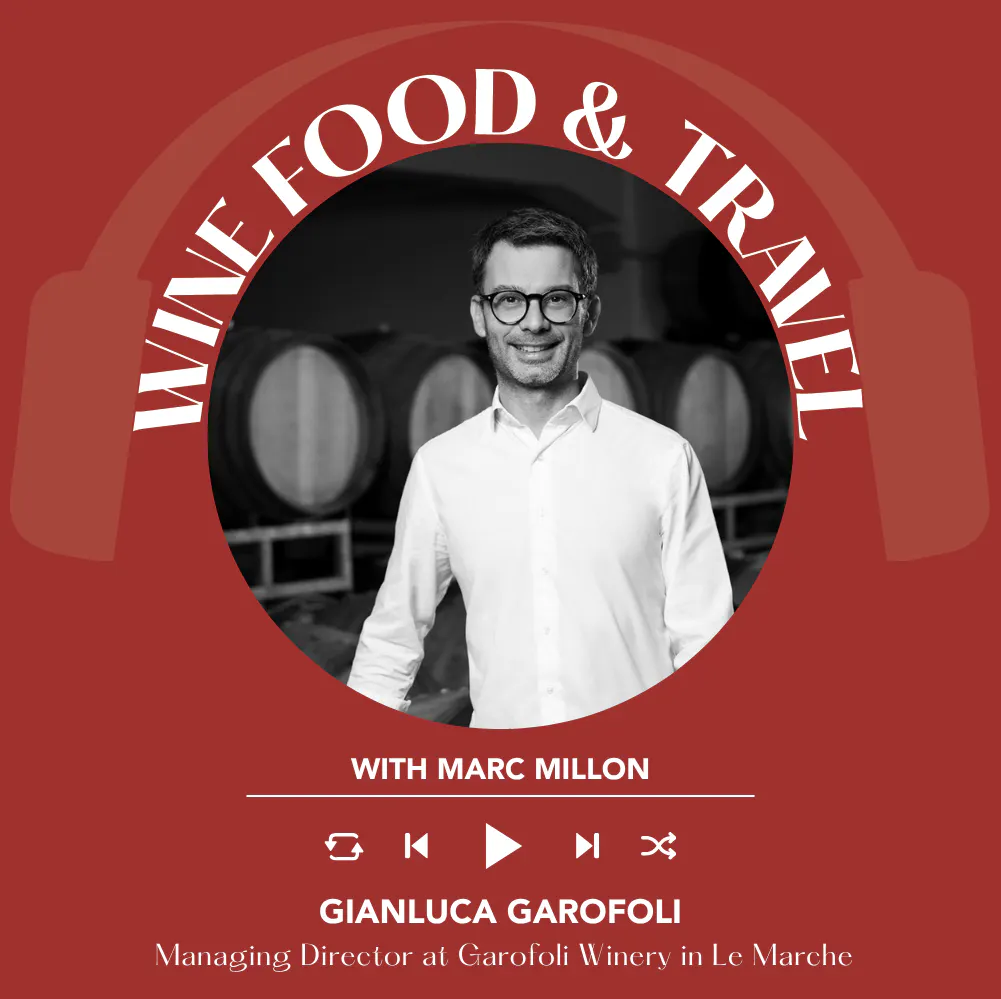
Ep. 2767 Le Marche: Verdicchio and the Wines that Shape the Region with Gianluca Garofoli of Garofoli Vini | Wine, Food & Travel with Marc Millon
Episode 2767

Ep. 2749 The Many Faces of Etna: Climate, Contrade and the Art of Volcano Winemaking with Federico Graziani | Wine, Food & Travel with Marc Millon
Episode 2749