

Ep. 1667 Andrea Cecchi | Wine, Food & Travel With Marc Millon
Wine, Food & Travel
Episode Summary
Content Analysis Key Themes and Main Ideas 1. The historical evolution and family legacy of Famiglia Cecchi winery in Chianti Classico. 2. The impact of sustainability practices and organic viticulture on winemaking. 3. Challenges posed by climate change in Tuscan wine production and adaptation strategies. 4. The diversity of Sangiovese grape expression across different Tuscan terroirs (Chianti Classico, Maremma, Montefalco). 5. The integral relationship between Italian wine and gastronomy, emphasizing regional food pairings. 6. The importance of wine hospitality and direct farm-to-table experiences at Cecchi estates. Summary In this episode of the Italian Wine Podcast, host Mark Millen interviews Andrea Cecchi, CEO and President of Famiglia Cecchi, a historic Chianti Classico winery. Andrea shares the fascinating four-generation family history, starting from his great-grandfather Luigi Cecchi, a consultant who eventually led the family to become wine growers. He discusses the significant decision in the 1960s to purchase land, aligning with the evolving DOCG regulations for Chianti Classico. Andrea highlights the winery's commitment to sustainability, including water recycling and organic viticulture, and addresses the pressing challenges of climate change, emphasizing the need for adaptable clones and vineyard management. He eloquently describes the versatility of Sangiovese across different regions like Chianti Classico, Maremma, and Montefalco, noting how it expresses unique characteristics. The conversation also emphasizes the deep connection between Italian wine and food culture, with Andrea providing examples of regional pairings. Finally, he discusses the importance of wine hospitality at their estates, offering immersive culinary experiences. Takeaways * Famiglia Cecchi is a four-generation historic winery in Chianti Classico, founded by Luigi Cecchi. * The winery made a pivotal move in the 1960s to acquire land and become growers, coinciding with the rise of DOCG regulations. * Sustainability, water recycling, and organic farming are core principles for Famiglia Cecchi. * Climate change poses significant challenges (e.g., extreme weather, high temperatures), prompting research into new Sangiovese clones and canopy management. * Sangiovese is a highly versatile grape, producing different styles of wine based on terroir (e.g., Chianti Classico vs. Maremma). * Famiglia Cecchi produces wines from various Tuscan regions (Chianti Classico, Maremma, San Gimignano) and Umbria (Montefalco). * The winery places a strong emphasis on wine hospitality, offering restaurants and immersive experiences that pair local cuisine with their wines. * The production of Vermentino in Maremma and Sagrantino in Montefalco demonstrates the winery's diverse portfolio. Notable Quotes * ""My family is one of the most historical family producing wine in this region."
About This Episode
The speakers discuss the transformation of Tuscany, a growers in Tuscany, during the early 90s, into a growers in Tuscany. They emphasize the importance of finding good land for growth, the use of organic techniques, and the need for a new approach to plastic. They also discuss the challenges of climate change and the importance of wine and food in Italy, with a focus on the importance of the Hayabito flagship and the Italian wine industry. They express their love for the Italian wines they produce and their interest in the large Italian wine industry.
Transcript
The Italian wine podcast is the community driven platform for Italian winegeeks around the world. Support the show by donating at italian wine podcast dot com. Donate five or more Euros, and we'll send you a copy of our latest book, my Italian Great Geek journal. Absolutely free. To get your free copy of my Italian GreatGeek journal, click support us at italian wine podcast dot com, or wherever you get your pots. Welcome to wine food and travel. With me, Mark Millen, on Italian wine podcast. Listen in as we journey to some of Italy's most beautiful places in the company of those who know them best. The families who grow grapes and make fabulous wines. Through their stories, we will learn not just about their wines, but also about their ways of life, the local and regional foods and specialities that pair naturally with their wines. And the most beautiful places to visit. We have a wonderful journey of discovery ahead of us, and I hope you will join me. Welcome to wine, food, and travel with me, Mark Millen, on Italian wine podcast. Today, it is my great pleasure to travel to the heart of the Kianti classical to Castelina Kianti, to meet Andrea Chekke, CEO and president of the Famelia Chekke winery. Bongiorno andreas. Thanks so much for being my guest today. How are you? Boongiorno, Mark. Everything is going well. Thank you. I'm very pleased to talk to you where to explain the historical background of my family into this community, the WAN community. Oh, that's great. Is it a is it a beautiful day in Kianti today? Well, actually, it's raining right now, but it's okay. We had a lot of sun even in the past days. And so we have so many different things. And the harvest is now complete. Yes. Yes. Of course, since I would say ten days, we just finished our harvest. So now we are picking the olives. To make extra virgin olive oil from Kianti classical. So today, we are not working in the fields, but in the next days, we are going to start again. Okay. Now, Familla Checki is one of the historic wineries of the Kianti Classic. And you represent fourth generation of a company founded by your great grandfather, Luigi Checki. Can you share with us something of their family story? Yep. You're right. My family is one of the most historical family producing wine in this region. My great grandfather started as a consultant. As a ballastista, he was a consultant of other states. So at that time, we didn't have any land, any vineyards. But step a step, we became, wine growers. And, I would say that the third generation made a big change after the second word word when my father decided to buy the first state in the village in Castelina and Chianti. And from that point in, nineteen sixty two, we started to be a growers. And we started to be a growers because what our love was something that we were, in love to to see how we could grow our own wines in our land. That's a very, very interesting story, Andrea. And I'm thinking that if, if this decision was made in the nineteen sixties, it was a moment of huge transition in Tuscany with the to demise of the Metsetria. So it would have been an opportunity, but also quite a challenge to begin to grow grapes and produce your own wines. You're right. It was a big change. And as you know, Mark, In nineteen sixty six, we had the first POCG regulations. And so that's why my father decided to buy this estate, pretty big estate inside of the Kianti Glasgow even if in nineteen sixty two, the county classical was not an appalachian because it was born in nineteen sixty six. So the longines of my father was so great, and we are so thankful to to the the shiso that he made. And then, of course, thanks to this, knowledge, we were continuing continuing to buy some land. And, when I started to work in this company in nineteen eighty eight, as a manager and the production because I have an an agronomist. I I I was asking to myself what you should do in your generation for this company. And I say my priority is to take some good land aboard. It means for me, the land is the most important thing that the family that is involved in when making needs to have. So I was going around even in different area outside of Guantecasco, buying new pieces of land where a good grow, different style of wine, respecting the authenticity of the terroir. Okay. So I'm just thinking again of, the transformation of Tuscany, in the seventies, in the eighties, in the nineties, and the great project Kianti Du Amila, I remember that project. And how not only did the landscape itself change after the Metsudreas ceased, and more specialized Viticulture came in, but Kianti wine itself. Changed completely, and really there's been such a renaissance in quality, and the Czechi family have been part of that story. Can you tell us a little bit about the evolution of Well, from my point of view, the landscape was not so much change comparing the the time because consider, for instance, that until now, we have sixty two percent of goods in the area. And we have ten percent of all the exploitation, all the trees to make, to make the the extra virgin olive oil, and the rest is, of course, with pinyards. So I think the landscape looks like, what happened in the nineteen sixty, nineteen seventy. Many projects are done during the last forty years, it tends to increase the culture of the people, here in Kianti classical in terms to develop the knowledge in how making the best Central basic grade and then, the best gently classical wire. So the project that you mentioned was was probably the most important project that we did in the area And I think that that was letting people open their eyes and see that we had to agree potentiality in terms to discover new clothes and to have new implementations methods to grow much better than San Giovanni comparing the previous years. So it was really realizing the potential of the Anti classical and indeed of the Sangevayza grape to make really great wines. I I can recall, of course, when Kianti was, a much easier to drink wine, the Kianti that was in the fiasco, the Kianti of the old days, But, of course, this project saw Kianti really realize its great potential through clonal selection through work in the vineyard, and, of course, through work in the cellar with the removal of the white grape varieties, for example, and the, you know, refining of the lines. Of course, many things that were changing in those years, and also the the way of, of the approach of the consumption of the wine was changing. Not only the quality was changing. Of course, now we have very well balanced wines from this area. But at the same time, we were happy to have an approach of the consumption of wine, which was was a different consumption locations. It means that we used to drink a lot of wine, without think about the quality. And today, we are just tasting and enjoying the wine do is it better life. Actually, that's a very important point to not only the wine change, but the way we as consumers, both in Italy and outside of Italy approach wine, we are more interested in terreward and really, understanding what what makes one. Now, Andrea, I know for you, sustainability has been at the heart of your family project and is very important. Can you tell us why this is important and some of the measures that you take to produce wine sustainably. Well, honestly, I think that we need to be very, very respectful about our countryside I decided since many, many years ago to focus in just a couple of projects they take care of the vineyards to caretakers, to be take care of of the land. And as you know, in Tuscana, we don't have enough water. And so I decided that water could be a big point. Water is a big search for the population, first of all, but also in the countryside. So I decided thanks to the, recycle the project of recycling water in all our wineries. I decided to reuse the water that we use during the process. And that helps us very much because we can save a lot of water from the wells. And so we started in nineties. Probably we had the the first project in terms of the wetlands with the pragmatis in a very natural way of recycle the water. And then when the organic, protection was coming up, we decided to to jump on in our states that we have in Maria, so we have even pretty big state. They are controlled in organic way. And I think this is something that is is not simple, but is what we like to do also because we want to keep our land alive. And this is, is an option. Okay. Well, that's that's very interesting too. I think probably twenty or thirty years ago, organic Viticulture was thought of as a, possibly curiosity. It wasn't so important or so valued. And now, I think there's an understanding of the importance of producing wine, following the organic presets, and it's a benefit for the wine, but it's also a seems to benefit in the vineyard. Does it help, for example, with climate change? I know that you've suffered from some very excessive temperatures and heat during the past summer. Well, that is another very important chapter because living in a countryside, watching the season we really realize that the climate has a big change and is changing year over year. And, since that, built in twenty seventeen, we have very difficult season in the last few harvest because, you know, it's something that is difficult to explain, but sometimes you have very critical events like water pump during the storm, or very long period without any drop of rain, very fast and and had the wind. And so we have, honestly, even the the sound ultraviolet sun prey, which are so so strong that they they are able to bird the branches into the vineyards. So these are all of some of the effects that we have living in the countryside and watch what happened. So the temperature, which is so high for weeks and weeks during July, August, the beginning of September. So we really realized that we have to approach new project of plastic, we need to approach new methods of canopy management in our business, and for sure, and all different rooftop grounds or different clones of Sanjay. I really believe that Sanjay will be my career, the grave that I I'm in law, and I will be in law with Sanjay for it for the rest of my life. So probably we need to conduct some different clones with different criteria that we researched probably in eighties and nineties. Well, that's very interesting. And, I guess, All of those sort of factors can help to face the challenges of climate or global warming because it looks as if things are only going to continue in this direction. Italian wine podcast. Brought to you by mama jumbo shrimp. I'm interested that you're talking about, really exploring the different clones of San Jose. And I know too that you have the estate in the Marima You produce Brunoo Dimontalgino and, vino Nobile di montipuliano, all from varieties of San Jose. Yes. Yes. Does the San Giovanni in these areas respond differently? To the challenge of climate. Of course, sangiovese, I consider this grape a chameleon is making different style wine in different terroirs. And that's why I love sangiovese because is, is a big difference comparing this grape, the sangiovese grape, too many other important red grapes of the world. And I love sangiovese from the coast because it's a it's a coastline. It's a a fish of purple color, very fruity, very well balanced, full mouth, and the I can compare the sangiovese that is produced in Kiatek possible in our state, which is very versatile with a very incredible delicacy and with a long aftertaste. So two different totally two different wines produced with the same grape, of course, different clones, different rooftop, and they're coming from the same region. So this is something that makes me very enthusiastic to be in this business. That's fascinating. Actually, you were talking then in the in the in the coastal San Giovanni of the Moreno, from your Marima state. Is that correct? Yes. Yes. We have a pretty large state in Marima. Because my father was in love with that area since nineteen fifty six because, his father sent him to Marima to have his first experience alone making wine. And so he say, when I will have some money, I will come back in this part of Tuscany, and I would like to buy this day. And that happened exactly forty years later, when my father in nineteen ninety six, he decided to buy Val de la Rosie in Marima. At the beginning, we were producing the more the linear disc in Samo, which is basically Sanjay, And then, the next project was the Vermentino VLC Marima Tuscana. And we are very happy to discover that grid because in Marima, it means on the coast of the limited revenue, the Vermentino, and now the decretal of this, of this grape. Yes. Wonderful white one. In fact, isn't in Marima now, a new DOC, Vermentino superior. Does that just come in? Yes. It's coming. It's already there. We have our Hobalto, which is our Vermont one hundred percent wine that we produce in our state, which is fermented and stale, still, amphora, and gold. And he's aged for one year and for the release. And so that is a bettermentinos from a true period because we have a very nice group of producer that they produce in a missing improvement, you know, they can be aged. And the people they love that, they love because that can be matched with the with the dishes that they produce in Marima but all over the world on the coast. And we have mostly fish dishes. And, so that tomatino with a very deep, I would say, summery, fluid or exotic fruit like animals, very ripe. Very ripe. Taste is an amazing with some, fish dishes. Wow. That sounds wonderful. I've not tasted that wine, but I look forward to it. Now, one of your flagship wines is the Reserve de Flamydia Kianti classical. Can you tell us about this one and why it's important to the Flamydia check key? What that is, is a Kianti classco reservoir that I produced since nineteen eighty seven that was the first vintage and was the same period when I started to work, I would say, in in the company. So for me, it's a flagship because at that time, I made a very deep research inside of our vineyards of our state in Caselina Kiyappi to discover which vineyards they could be constantly able to produce the ninety percent of the blend of this wine. And then at that time, we had, we already had some coverings of onion, but with vineyards. We had three vineyards. And, so, well, I I select one vineyard in particular, where, I produce the ten percent of the brand, which is, you know, so we use a small virus for the Asian, this wine, and, of course, in recently, we were coming back using a little bit more bigger barrels. It means that at that time, we were using Barriq. Now we use mostly to know five hundred liters because we should, like, have a more integrated aging this into the blend. So, of course, this is my flagship. Valuri Famellia, and then as you know, Mark was born in two thousand twelve. Yes. Which is, the last baby. And would that be the villa Chirna? That is that is the villa Rosa, which is another state. Villa Rosa. It's a new baby. And, this I consider the the new baby at the moment another bed ship. Because, represent that the urgency of San Diego is one hundred percent. I love the vertical wines. I love wines that can be aged for many, many years, with the complexity, with the transparencies. Of the Sanjay, and that we did your pre ability of the Sanjay. So that one is a one that made very happy, and I really enjoy that one. And for our listeners, I think it's important to, emphasize the grand Salette'sione There's the top of the county classical pyramid, single vineyard. A hundred percent San Giovanni. Is that correct? Yes. Yes. Since the beginning, I decided that Villarosa, as Julia Gonzalez said many years ago, I don't know if I'm familiar with Julia He was a the Palatista was a consultant very well known in Tuscany from Montecino Piciente Casco. He was a very close friend of my father. They always say, So in Belarosa and SanJovese is born. And, so that's why for my commitment is produce celtic glass COVID, and it's only using one hundred percent of Sanjuviso. Okay. Now, you mentioned that the Czechi family has five wine estates in the county classical, but also Marema, as we've discussed, San Jimignano, also an estate in Umbria, in the area of Montefalco where you're cultivating a very interesting grape, Sagrantino. Yes. In, in nineteen ninety seven, we started with my father to discover the Montepalco. We were in law with this area since the beginning because it's so beautiful. Nice. And, it's very located in the Viticulture. So at the beginning, we were producing in San Bernardino, and then we increase, vineyards also producing Trepiano's Palipino for the Montepacko Bianco GOC. That's a very fascinating mine. I love that grape. It makes some wonderful wines. Now, can we talk about gastronomy and wines. The wines that you produce, I think you would say, are wines that you make to enjoy with food. You've talked a little bit about the cucina maritima from the Tuscan seaboard pairing well with the Betermentino. What about some of the typical dishes of the other areas where you produce wines? And which of your wines really pair well, perhaps with a particular Piato tipico? Well, as you know, Mark, Italy is a country where wine and food are always going together. And our culture say that the consumption of wine is with food. Not without food as happened in many other countries. Absolutely. So for instance, the staying inumbria, I love the second activity multifactor with the truffle plates. So I can think about the Tylurvania stuff too full, which are amazing because the truffle is a is a product that is coming mostly from alba and umbria. So Tajorini is something that I love that because, the truffle is, is a is if something that is really typical a woman is strungasse after two four with it to the segment team. Of course, the segment team is going very, very well, also with the men. But if I'm thinking about if you're in Tina state, I should like to think about the cancer, if you're making anti class, because the fact of the meat that you have in your in your mouth can be cleaned by the soft findings that a century basically have. From Villa Rosa. So the the connection between the Verintina stack and the Villa Rosa Grencioli, which is one hundred percent Los Angeles makes a unique fantastic taste, during the lunch or the dinner. Yes. And I think that's a really important point you're making is precision of food and wine in Italy that in a different area. There are different dishes, and it is the wines of that area that pair best with them. You've described two examples very well. The black truffles from Umbria, with the San Grantino, and then, of course, the Chianti classic, with a big stake out of fiorentina. Final question. I'd like to talk about wine hospitality, with your estates, but in particular, We have this fantastic location, that many years ago was a horse stable. And because the hospitality became more and more important everywhere, and, of course, even in Canticasco, in nineties. Together with my father, we decided to open a a foresteria, foresteria means a resource place where you can have some food. And so now it's not anymore, the horse is stable. It's the more horses, and luckily. And we we love horses. We have just settled at home, but not more horses than likely. And we have a lovely restaurant that they have put their local cuisine and also with a nice, contest of view on the vineyards. Because you are eating inside of the vineyard, and you can see the primo called the hill, which is the hill where we produce the villa Cerna. And so the people when they come from over the world, They have fantastic tuscan food with a very local ingredients, lovely selection of wine and an amazing view. That sounds absolutely perfect. And I think for me and for the listeners of Italian wine podcast. It's what we like to do best is really immerse ourselves in the countryside enjoying the wines of that place with the foods of that place. I'm imagining also your exquisite extra virgin olive oil served on most things. Just another note about the hospitality, even in our state in Marima in Balze, we have a Lucia, which is our chef, and she is preparing typical dishes of that area. She is, la walker, this true walker in the in the state, she can prepare fifteen different dishes in the old fashioned way with a very good and a contemporary taste, very light, not so heavy like many years ago. And so that this food is delicious on the coast, and we can prepare some fish, which is awesome. For instance, or in winter, we can produce the white board dishes with which is amazing. Well, that sounds wonderful. In the other states too, for example, in Montefalco? Yes. In Montefalco, we have a we have a building downtown city. And, which is, where we have a restaurant, which is a friend or two. And together with Andrea Foonke, we are managing that building. And, of course, also in there, the cuisine is focusing in the local dishes and local ingredients. So that is a very gastronomic experiences, and they have a very wide range of wines. Well, that sounds wonderful. That would be the place to sample the tell you, tell you, Alcartouto, along with the Sacramento. Yes. Yes. Andrea, thank you so much for taking your time to be our guest today. It's been really important to learn more about the historic Checkee winery. Your family story as well as about the different estates and the wines you're producing today, not forgetting also the importance of wine hospitality. Our listeners love to visit the places that we talk about. So I hope some of them will find their way to a checky estate sometime. I look forward to visiting myself. But in the meantime, thank you so much. I'm looking forward to have you here in our winery, in our vineyards, in our state, and I hope that also our people that are listening us that can come visit because our doors are open. Oh, that's great to know. Thank you so much, Andrea. We hope you enjoy today's episode of wine, food, and travel with me, Mark Millen, on Italian wine podcast. Please remember to like, share, and subscribe right here, or wherever you get your pods. Likewise, you can visit us at Italianwine podcast dot com. Until next time.
Episode Details
Related Episodes

Ep. 2789 ColleMassari: a long-term vision rooted in Montecucco with Giuseppe Di Gioia | On The Road With Stevie Kim
Episode 2789

Ep. 2788 Ep. 14: Austria and Hungary | Study Smart for your WSET Level 3
Episode 2788

Ep. 2785 From Volunteer to Speaker at TEXSOM with Samantha Cole Johnson | TEXSOM 2026
Episode 2785
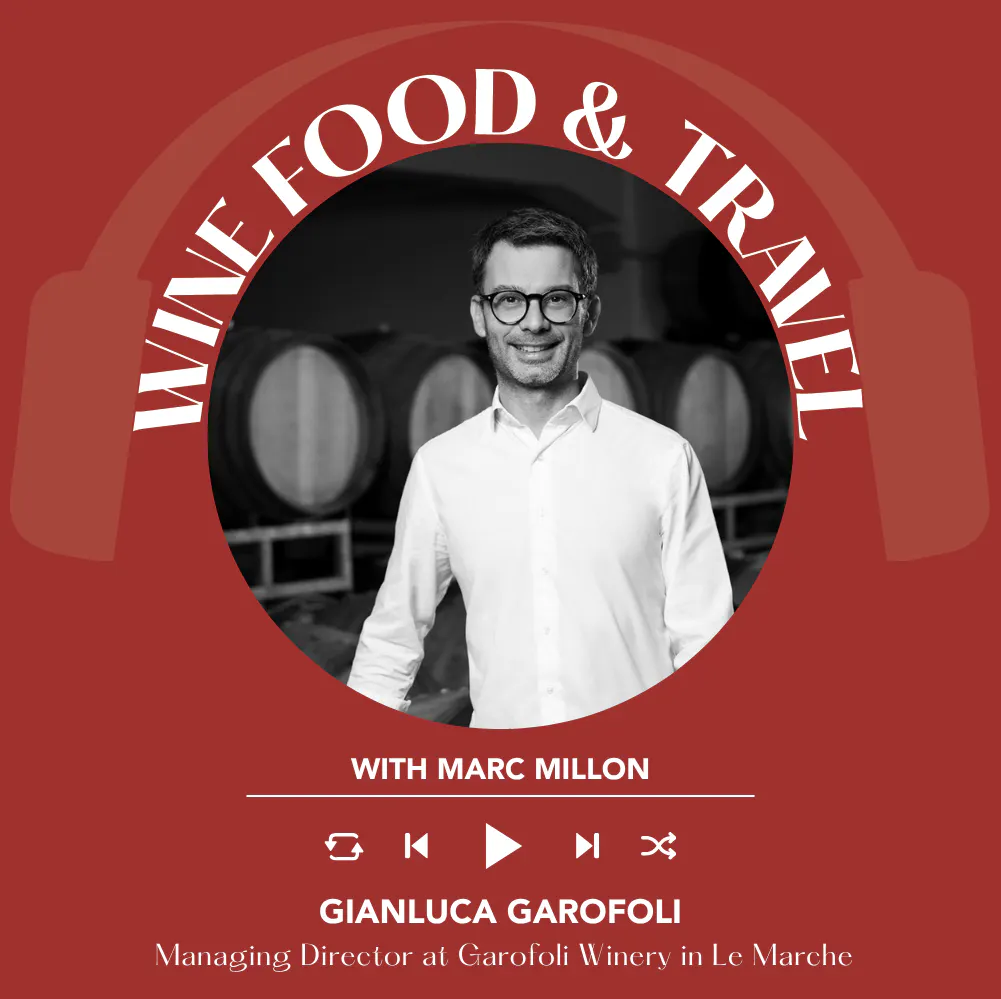
Ep. 2767 Le Marche: Verdicchio and the Wines that Shape the Region with Gianluca Garofoli of Garofoli Vini | Wine, Food & Travel with Marc Millon
Episode 2767
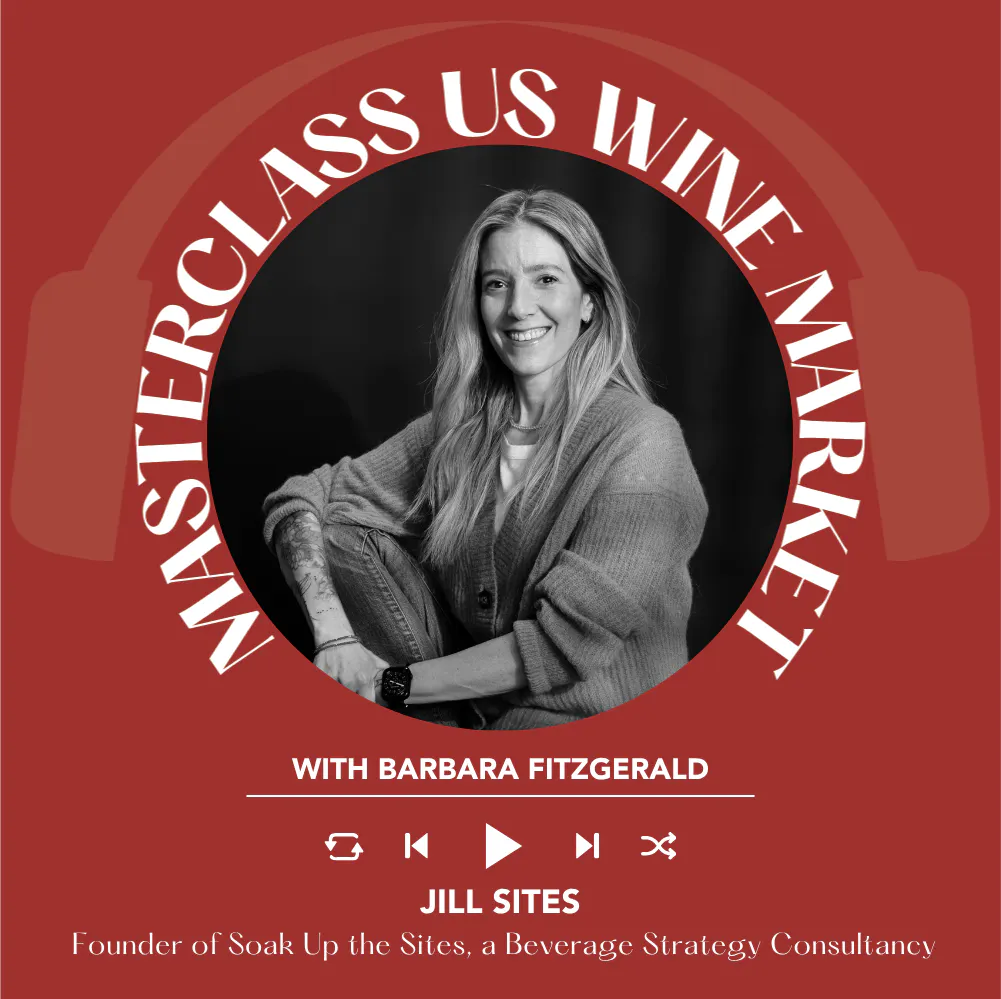
Ep. 2766 Inside the U.S. Non-Alcoholic Wine Market: What Wineries Need to Know with Jill Sites | Masterclass US Wine Market
Episode 2766
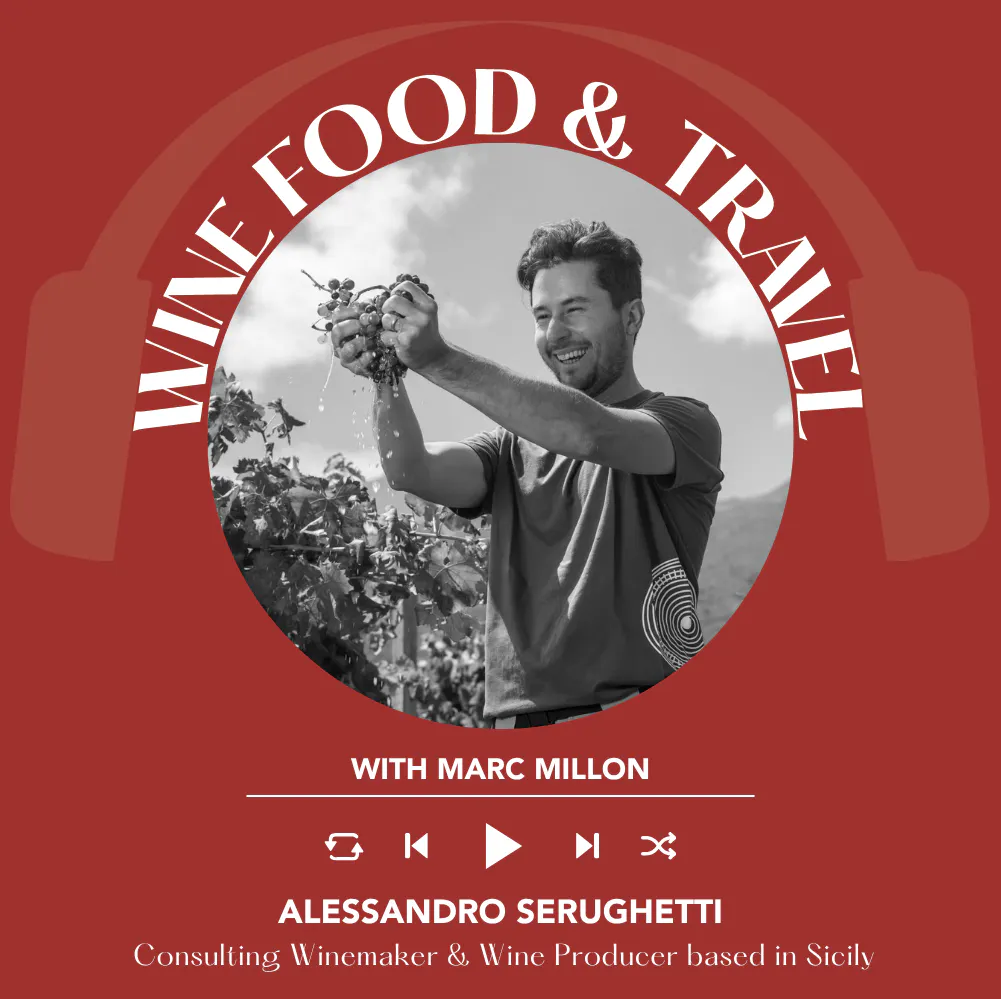
Ep. 2761 Winemaking and Consulting Across Sicily with Alessandro Serughetti | Wine, Food & Travel with Marc Millon
Episode 2761