

Ep. 2059 Sara D'Ambra of Casa D'Ambra Vini D'Ischia | Wine, Food & Travel With Marc Millon
Wine, Food & Travel
Episode Summary
Content Analysis Key Themes and Main Ideas 1. The unique volcanic terroir and historic viticulture of Ischia. 2. The pioneering legacy and family history of Casa Dambra winery. 3. The characteristics and importance of Ischia's indigenous grape varieties. 4. The strong connection between Ischian wine, local cuisine (especially seafood and rabbit), and cultural traditions. 5. The development and offerings of wine tourism experiences on Ischia. Summary In this episode of the Italian Wine Podcast's ""Wine, Food, and Travel"" segment, host Mark Millen journeys to the island of Ischia to interview Sara Dambra of the historic Casa Dambra winery. Sara vividly describes Ischia as the largest volcanic island in the Bay of Naples, highlighting its unique green tuff soil, diverse microclimates, and rich history. She traces Casa Dambra's origins back to 1888, noting its pioneering role in bottling wines and its family's instrumental part in establishing Ischia's DOC in 1966, making it one of the earliest in Italy. The discussion delves into Casa Dambra's focus on indigenous grape varieties such as Biancolella, Forastera, and Per 'e Palummo, emphasizing their commitment to preserving the freshness and aging potential of their wines. Sara also paints a picture of Ischian cuisine, detailing its strong seafood tradition and the island's renowned *coniglio all'ischitana* (Ischian-style rabbit) from its unique mountain culture. The interview concludes with an invitation to visit Casa Dambra, which offers wine tours, tastings, and a new wine resort, showcasing their dedication to promoting Ischian wine tourism. Takeaways * Ischia is a distinct volcanic island in the Bay of Naples, characterized by its unique ""green tuff"" soil. * Casa Dambra, established in 1888, is one of Italy's oldest wineries with a significant pioneering history in bottling and advocating for regional DOCs. * Ischia received one of Italy's earliest DOCs in March 1966, underscoring its historical importance in Italian winemaking. * The winery primarily focuses on indigenous grape varieties like Biancolella and Forastera (whites) and Per 'e Palummo (red), emphasizing freshness and aging potential. * Ischian cuisine uniquely blends coastal seafood traditions with mountain-based dishes, most notably the famous slow-cooked rabbit. * Casa Dambra offers immersive wine tourism experiences, including vineyard tours, winery visits, tastings, and a recently opened wine resort. * Ischia's volcanic soil provided some natural resistance to phylloxera, allowing the island to maintain significant wine production when other regions struggled. Notable Quotes * ""Ischia is, the biggest island of, Naples Bay, between Capri, Procida, and Ischia, as I said, is the biggest one."
About This Episode
The speakers discuss the history and characteristics of Italian wines made at a historic winery in Spain. They discuss the use of local varieties and the importance of mix in the creation of their wines, including their use of local varieties and the use of local varieties on the boat. They also discuss their love for fried fish and their preference for traditional methods of cooking. They offer a wine tasting and event meeting, and encourage their audience to visit soon.
Transcript
Who wants to be the next Italian wine Ambassador? Join an exclusive network of four hundred Italian wine ambassadors across forty eight countries. Vineetly International Academy is coming to Chicago on October nineteenth is twenty first. And while Mati Kazakhstan from November sixteenth to eighteenth. Don't miss out. Register now at vinegary dot com. Welcome to wine food and travel. With me, Mark Billen, on Italian wine podcast. Listen in as we journey to some of Italy's most beautiful places in the company of those who know them best. The families who grow grapes and make fabulous wines. Through their stories, we will learn not just about their wines, but also about their ways of life, the local and regional foods and specialties that pair naturally with their wines, and the most beautiful places to visit. We have a wonderful journey of discovery ahead of us. And I hope you will join me. Welcome to wine food and travel with me, Mark Millen, on Italian wine podcast. Today, we travel to Campania, to the beautiful island of ischia to meet my guest Sara Dambra of the historic Casa Dambra winery, which has been in operation since eighteen eighty eight. Monjourno, Sara, many, many thanks for being my guest today. How are you, and is it a beautiful day in Eastia? Yes. Today's a beautiful day, sunny, like a summer day. Yeah. I'm just trying to imagine Eastkia. It's an island I've never been to, Sada, but I've it's somewhere I've always really wanted to visit. So I'll try to do so as soon as I can, but Our listeners are located all around the world. So for those like me who haven't been to iskia, can you describe iskia? Can you take us to iskia? Tell us what's special about about this wonderful island. Yes. Esca is, the biggest island of, Naples Bay, between Capri, Prochida, and Esca, as I said, is the biggest one. Isca has a organic by even marine region. So it's completely different from uh-uh the coast and from the other two islands. Ishka has, the mountain is no more than eight hundred meters above the sea level where we also grow the vines and where we also, people grow the rabbit. You also wanna know about food. Right? Yes. Definitely. So, this car is a forty two square kilometer and has a six six pound all around. And when, my family actually started to make wine in nineteen fifty six because before we started as a spy duo with my great grandfather, the surface of a vineyard was much bigger than now, almost double time. And now the vineyard are especially in the middle. The coast we have beaches. Also, they've built all around the coast. Yes. The climate is pretty good. Actually, there is a difference between the east and west side because of the the mountains actually in the middle. So you can divide the island in a in a two different climate. It's the side where we have, around one thousand millimeters, of rain per year compared with the west side where we have a six hundred. So it's completely different. This side is much more humid. The west is a is a is a is a struggle. A special thing of the island is a rock called, two for the green, two for And, it makes a difference for us also in the wind. It's very unusual because, too far can be white, black, yellow, but on the island is green. Because part of the island during this confirmation has been underwater. Then, we had direction, and that's why then you came out to the wall. And especially, especially on the west side of Islamra. If you go on the east side or already on the south, the south the the the soil is completely different. It's much, black, and also the the consistency is different. It's like the vineyard that I can that we have on the west side. They need the, like, just the understandability difference of the soil. If you go on the west side, you see the drywall because the soil cannot be cultivated with no terrace. Okay. If you go on the east side, you have the terrace, but there are not drywall because the soil is more compact. And the terrace can be also standing with the wrong with the rocks. Okay, Sarah. You've given us a a really, good description. The main feature, this volcanic island rising out of the Iranian sea actually part of the regional park of the Campi flagrae. Is that correct? C s r p s r p. But as I said before, the soil is completely different and also the original completely different from the rest of the coast and the other two islands. Okay. And a a very historic island. The Greeks, the etruscans, the phoenicians, the Romans have all passed through East here. But today, it's very much a tourist island. Is that right? Yes. Yes. It is uh-uh. It started actually, you know, especially in the nineteen seventy because before the island was not at noon. And when, tourism arrived, actually, we got a big change because if you think that my grandfather made one million and a half bottle only with the local grapes, now we do half a million bottles. This because for the tourists, we start to move a lot around the around the course. So, Bob, we are the one that we still want to keep for, like, the the main viral IT on the island. And every year, we try to recover, I think the green side of Ireland, that's what we take care of. The main variety is not, yeah, they are calling for us there and for everyone. Okay. So, that's really interesting that the vineyard area has diminished, since your grandfather began the winery, and you're trying to recuperate it now. Tell us a little bit about the history of Casa Danbara then going right back to the beginning. Okay. As you said, we the winery was born in eighteen eight eighty eight with the my great grandfather, Francesco Lande. And, he's carried only with the wine business. He bought wine from Ireland, and then, he shipped the wine to Naples, Northern Italy, and also building France. And especially white wine because the island is still now as a higher production of wine. After my grand three grand father, there were, was my grandfather. Sabatori was the winemaker, and his two brothers. We can add in Mario. And in the only nineteen fifty six, they decided to make wine for the first time. So that's why also they build a new winery and a new place for one million and after both. So the wine was very deep, where we still now is very big. And, my grandfather debottling wine, which was a very unusual thing, especially to be in the same south south of the island. Because before people just, had wine in the eight barrels, is a reduction with barrels. Also another thing he did. So the bottling was very unusual, especially on the island. And, also, he put the he brought to the name of the variety on the boat. So he started with the for Esther and Perverluma, which are still now the main variety and the main wines. And he also, as I said, he wrote on the bottle. So it was very also unusual to give the on the bottle the name because people only knew the wine was a black or white was a blend of varieties. In that case, we decide to give importance to the the variety. And the variety hundred percent. Even in some books, we can find these like, as a couple of one years in Campania, where they, gave important to the the indigenous part. He also studied the rights because isca has also around the nine, ten, kind of griefs by scheduling the the best of the wine making. That's why the most important that is a tree, but we also use a repland, other variety which are not the best for the for the wine production. Oh, that's really interesting, Sara, to hear this background because, you know, you're really talking about how Casadambra has been a pioneer a in bottling the wine at, you know, many, many years ago when as you say wine was either purchased by the barrel or demijohn or spousal rather than actually going into a bottle and also to be proudly putting the name of the local native grape varieties on the bottle. Yeah. So that's that's a very interesting development. Well, let's talk about, your wines. Let's talk about some of these native grapes that are make the wines of iskien unique. Let's talk about Bianco Lella Forrestera and Peri Paluma. Yes. I forgot to say important step. The mix also is very important. In nineteen sixty six, the second generation of Casa, created the the DOC for the island in March nineteen sixty six. So we are between the first four zero five DOC in Italy. And the family decided to use it instead of the name of the barite to see his brain, he's a one of his case. So they use it the the name iska, iskakyanko, and iskkarosso. So they decided for White is Kavyanko with fifty, and fifty for Astera. And, for the rest, fifty very familiar and fifty were not. So in this case, the lane just wanted Keeper, make lights on the name of isca because that time was not a female historian. The grapes, so as I said before, we still, prefer the indigenous variety So the most of the production is, with that. We only buy from the mainland, like, one percentage of plates, like, for a there. For some reason, we don't know why, actually. But they both are very mini mini the many are wide with activity. They have good violence, but what I see, they definitely you can, they can also age very well in the, in the bottom. We decided not to walk the wine, especially the wine, because we wanna keep the freshness of this wine, especially, for the Aqualay that they have very good activity. So they get they're very good for the the aging. Most of our production as I said before is eighty percent is white. And are there any way why they look at, like, match also with the local food, definitely, with the seafood. So they, like, respect anybody in the tradition. And we wanna first of all respect the the grapes. That's why also we decided not to work this wine. Especially wine for us is a frostedale. It's the name of the place, and it's a crew of Biankolilla. It's a historic vineyard that we all owe us into the second generation of Casadangas around the nineteen and seventeen. And is a a vineyard on the top of the mountain at six hundred meters. About the sea level. And, it's a special place because first of all, of the altitude. So we have a better acidity. The soil is completely volcanic with the two for verde, which drain very well the water because we cannot water here on the island for the the vineyard. And also, it did a different taste to the wine. And this is a crew of Biancolela. They actually the wine that my father made for the first time in nineteen eighty five. So it's a trusty tailwind. And it's a cool of Baya Dankula. It's our, our best white wine. And it's a white wine in the gross age for, like, fifteen years. And we like matching this wine with the local rabbit. Okay. So with the local dish, because, isca, even if it's an item as more, like, more time tradition instead of, like, tradition from the city. Oh, that's really fascinating. Yeah. Yeah. Well, we've discussed the food in more detail in just a minute. Can you, give us broadly the different profile tastes between, say, your, Eastkia made from biancolella and the ischia bianco made from forrestera. The two different grapes. Yeah. Biancolella is more, fruity. As I said before, first of all, they both are very fresh with the food activity. So they both are very, suitable for the aging. The Colena is more fruit inside and is very dedicated. That's also why we also keep during the fermentation, the, the temperature very lower. And the forestera is more, more floral. And, as a little bit of a red fruit, but also a bit of a paper, even if we don't know in the wrong place. Okay. What does that name mean? It's the pigeon feet. The pigeon foot, the red foot. Yeah. It's also called, but, Perricaluma has a big difference in her DNA. And also, it's a different from that one because of the soil. So it's very related to COVID with the soil, on the island. And it's a wind day even in this case, we don't walk. And we also like you can drink, a chill that be chilled in the summertime. And, actually, if it matched with, some, white meat or even with, some plate of fish. Fine. That's great. And what about, the, reserve a Mario dhambra? Yeah. Mario dhambrais, yeah, the skaro suit that I mentioned before, a fifty percentage, were not which in another local variety, they will only use as a blend because it's very strong red and fifty percentage of very valuable. In this case, was a personal wine that my father dedicated to me as a grandfather. Because, at some point, my grandfather left the winery to go in an ordinary in the winery search. And, it was my father was the winemaker, and, Nikkele was already passed the way. And, so well, only my father with with mine. That's why they dedicated him this wine. So, anyway, this wine, we just they decide for this blend, even because they wanted to open this wine. So before we use it, my father uses the barrel, now he's using the cask just to give a bit of a less, of, touching the barrel. It's the barrel of twenty five actual liters. Is a stronger red wine. You can definitely make sure we, with any like the red meat, is is perfect. And, we every year sell, the previous to harvest. So this year, actually, we have no actually four because This year, we're selling the our best two thousand twenty. All of this red and another one we sell like the previous, the all the all the business. Okay. That's a really good overview of your wines. And I just want to recap a few of the important things. You mentioned Sara. You mentioned that Eschia received the DOC in nineteen sixty six. That's incredibly early. Dan definitely one of the very earliest. Wines in in all of Italy. And it's interesting as well that east the Eastkia wines have traditionally always been the wine of Naples. So the originally with your great grandfather, this wine would have been making that short distance across the Bay of Naples to Naples to be sold in the bars and restaurants of Naples. Is that right? Yes. Yeah. It's right. And also, actually, we've been pretty lucky because we got the Veloxera. When I arrived in Italy, Miska, we got much later. So that's why also my great grandfather sold the wine, most of my wine all around Italy because all around Italy, they had very few liters of wine in the east coming with a lot of wine. So it was even, like, like, after wide for that, and they exported the, all around the Italy because we got I'm not sure. Maybe, like, five or six years later or even more. Okay. I'm amazed that the philosopher was even able to survive in this volcanic soil. No. Unfortunately, because it's, the soil is send it by even place. Okay. So that's why we had to also replant all the binds even in Italy. There are no place where you can find the the binds with the noise or in in Estoma. Now, I'm really interested, you know, you're producing eighty percent white wines, but also twenty percent of the red wines. And you mentioned that the cuisine of ischia is not simply just the seafood from the coast, but also a mountain cuisine. Let's talk about the the cuisine of ischia and how it pairs with your wines. Going back to the white, like, is very good even with, fried, fish because it has a bit of a elmo, elmo taste at the end of the pallet, and we clean your mouth from the oil that you have. For Astera, is a richer And, we actually like to taste with the, some seafood plate. Both of them are anyway good even as aperitivo, and we don't like serve to call these wines. Otherwise, you can lose all the taste, and especially the flavor. The even if it's not the the traditional course, like, like a raw witter. Anyway, yeah, we eat a lot of our fish because, most of the people who do fishing around the island, and most of the cuisine is open, like, during the summertime. It's any way part of the island is a picking fish. What are some of the most typical, like a per ounce. We call it also. I don't know the translation in English per ounce. The fisherman goes out to the fish, and it takes, like, even small different kind of fish that we have in this and we'd like, buying these in the early morning because of the boat to come by the harbor. And then which one I don't we fried. And it's, someone as with lemon, someone just with a bit of salt and pepper or just a sorta. And, it's a mix of different, of different fish. Even, three. I don't know the name in English, but it's more delicious. Three is red red mullet. Yeah. Okay. Okay. Also, we love, the, fried calamaro. Or we like also, like, the fish with the, with the salt or grill, the the the Yeah. Yeah. Or even Adigi. We like, doing fry, beef fried, the guests. Small anchovies. Or even, even the marinato, the marinato with, vinegar on. What about pasta? Pasta, we have, like, everyday pasta. In the summertime is a pesto. We make also with the, all the basil there. Every single person I think has in the house, and also saw with the fresh tomatoes. Okay. Even, even with the seafood, it's very common. Okay. Going at the restaurant and having a spaghett with the seafood, with some seafood, or even there is another one with the rice. It's called the result is a mix of seafood here in this way. It'd be different from the spaghetti tour. Okay. The main the main pasta or just one of a rice course, very common this time of the year. In the wintertime, we are more uh-uh rabbit to the east. Tell us about this famous rabbit of ischia. He's actually has, there was an old way to grow the rabbit. And it's called Corinio Daphosa. In this week, a few taller day glua, someone still does it. Then the rabbit is in a smaller, older, dipped in the soil. So the rabbit was basically free to move find his own food. So the master was good of the ride. So the meat then was much better. And even the food, he had only, the food from the nature. So everything he he likes from there. Now it's a just people can do the house, but it's no more allowed to sell the, the rabbit in this way. But if you, someone of the family does it, like in most of the house. As I said, it's no more allowed to sell. So if you go to the restaurant, it's a local rabbit, but good in a different way. Okay. And how is it prepared? How do you prepare the rabbit? We depend with a bit of oil, the wall, the entire garlic in, and, we put in, the all the pieces of, of the rabbit. And we use the, a special, potter in, ceramic. He's in ceramic and he goes straight on the fire. He's a ceramic pot. We I could do it smaller like a fried. And then, we add the wine, white wine. Some tomatoes, but just a few tomatoes, and local herbicide. One of the most common herbus, you see these are the, it's called Piperma. Which is a kind of a time is, wilder on the island. It's very similar because the the flower is a purple instead of white. Okay. That sounds delicious. It's almost, it takes almost an hour to be good. Okay. And with the fracatella Yeah. We love the fracatella. Yes. It's a I need to go to the best place. Someone does, also with the peribalum. Okay. If you like that, the red. Now, so our final question, if our listeners travel to iskia, if I travel to iskia, can we visit Casa Danbra? Are you open for wine tourists? Oh, yeah. We, open for that. We do a, wine tour where we show the vineyard, our best vineyard, the facility. We show the wine, so we explain all the process of our wine. And then as the last thing, we do a wine tasting of our four, five wines, and we explain all the grapes, the history, how the vineyard also was born. So most of the important things of, the one that actually, I said even before. We just opened, we just worked seven hectares a year ago. Where there is an older building where we're opening the wine as well. So we need also the wine butter. And also, we are open as a wine resort to win the room, sir. And so we also are open for a event meeting. Another things that we'll do on the wine is, our raw mushrooms. We take the red skins, from a very bare metal, a yaniko, and, from there, we make lotion. Because they are good for your for the skin and for the aging. They are very good. Okay. So you actually have a wine resort where listeners could come and stay and also have some spa treatments as well as drink the wine and eat the rabbit. We don't do a cooking but on reservation sometime when people ask, do a wine tasting. Also, we'd we'd drop a rabbit. We have, personally, we fix rabbit in the local But we are like, you know, have the the restaurant we just opened with wine tasting. Also, we do a lot of wine tasting. And as I said, when people like to taste something local, because we like also to serve with the local food, We prefer yes or to the the victims. Okay. That sounds wonderful. Sara, it's been a pleasure meeting you talking to you. You've taken us to Eastkia, a place I've longed to visit and hope to someday soon. So thank you for sharing. Sharing EastKias. Thank you for sharing the story of Casa Dombra. Thank you very much. Your client brought you on the island in the best way. Yeah. Definitely. Anytime you want to come, just and be on this. For paying. Okay. Thank you very much. And I hope you have a good summer, and have a great day. And I hope to see you soon. We hope you enjoyed today's episode of wine food and travel with me, Mark Millen, on Italian wine podcast. Please remember to like, share, and subscribe right here, or wherever you get your pods. Likewise, you can visit us at italian wine podcast dot com. Until next time.
Episode Details
Keywords
Related Episodes

Ep. 2787 Prosecco Superiore by Dr Susan H. Gordon | Book Club with Richard Hough
Episode 2787

Ep. 2784 The Other Side of Valpolicella: Volcanic Soils & Sparkling Wines with Francesca Marcato of Talestri Winery | Wine, Food & Travel with Marc Millon
Episode 2784

Ep. 2780 The Bridge between the Past and the Future of Wine with Serena Costanzo from Palmento Costanzo on Etna | Clubhouse Ambassadors' Corner
Episode 2780

Ep. 2773 Trento DOC: one of Italy’s finest sparkling wines with Alessandra Caroni of Maso Martis | Wine, Food & Travel with Marc Millon
Episode 2773
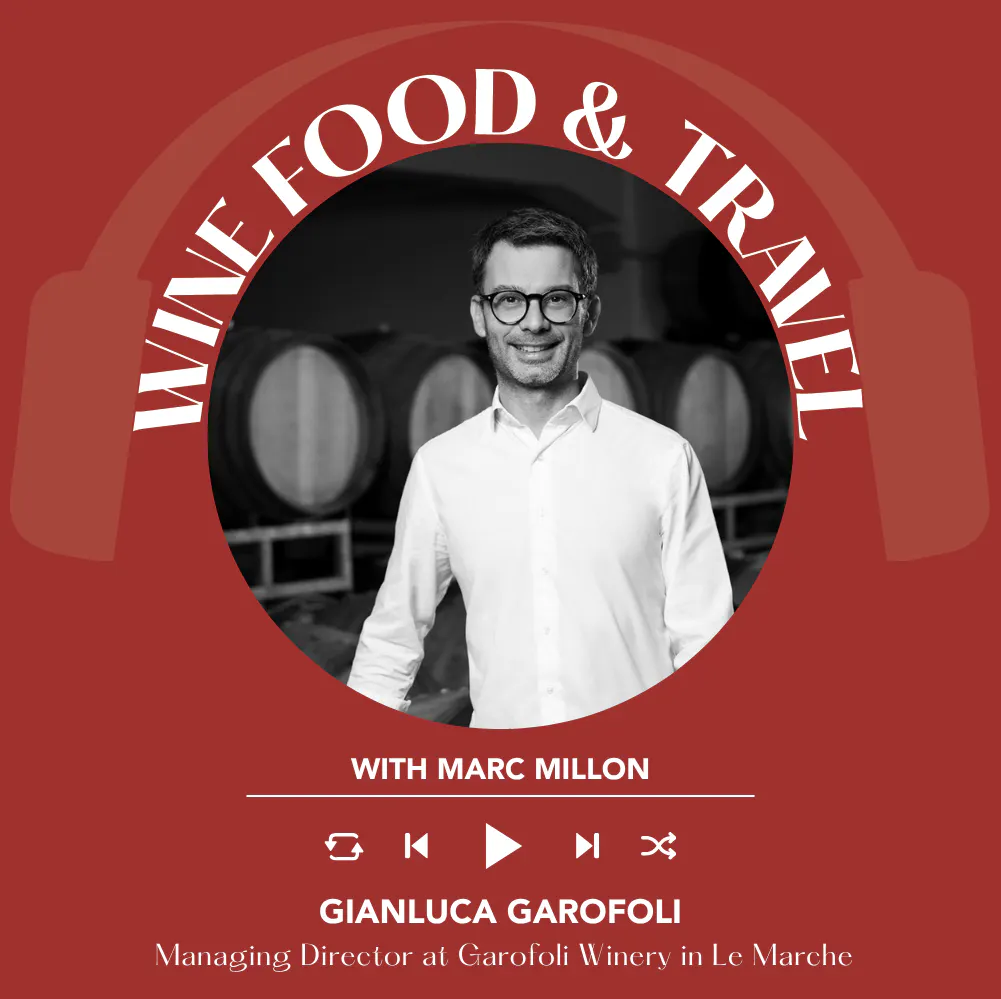
Ep. 2767 Le Marche: Verdicchio and the Wines that Shape the Region with Gianluca Garofoli of Garofoli Vini | Wine, Food & Travel with Marc Millon
Episode 2767

Ep. 2749 The Many Faces of Etna: Climate, Contrade and the Art of Volcano Winemaking with Federico Graziani | Wine, Food & Travel with Marc Millon
Episode 2749