
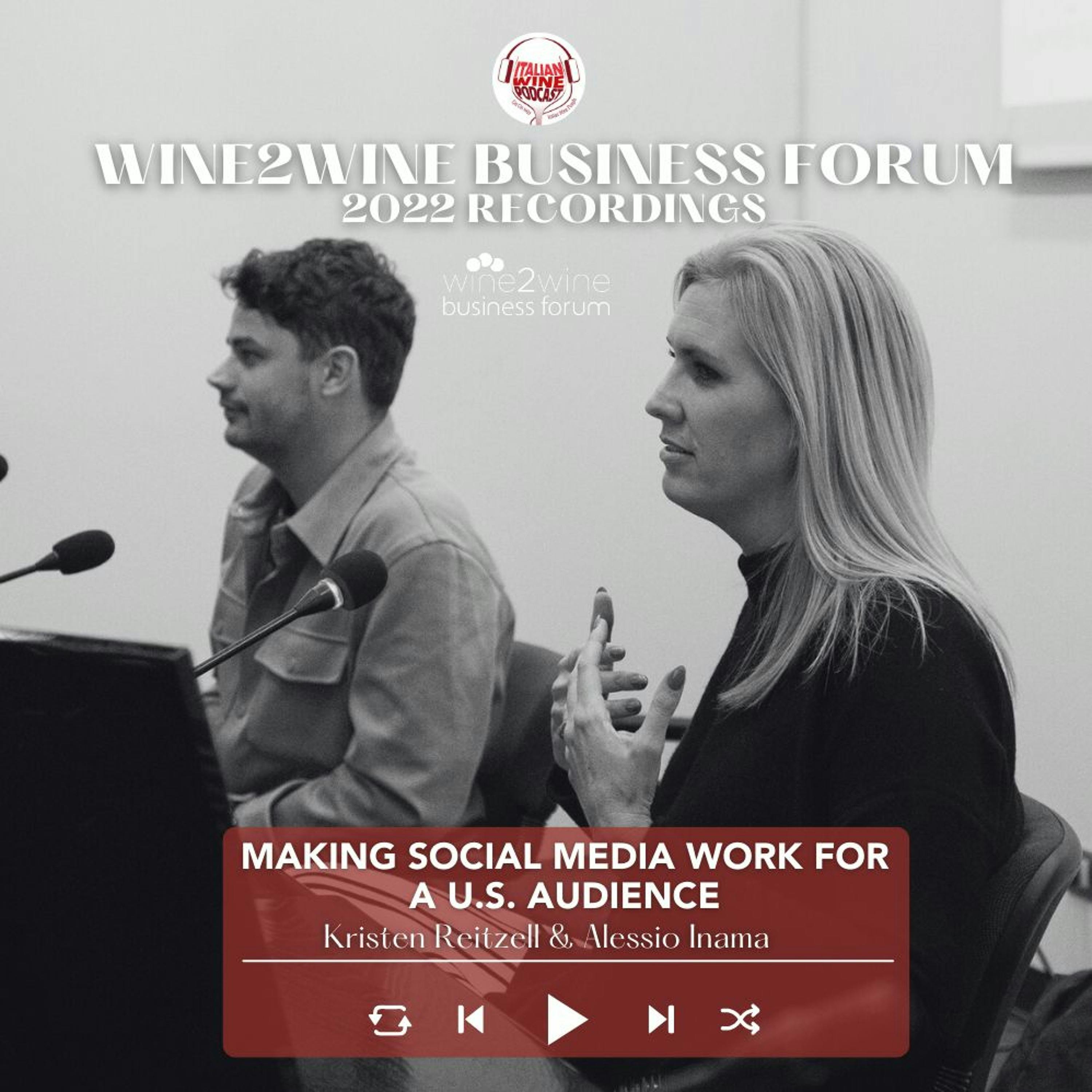
Ep. 1659 Making Social Media Work For A U.S. Audience | wine2wine Business Forum 2022
wine2wine Business Forum 2022
Episode Summary
Content Analysis Key Themes and Main Ideas 1. Strategic Approach to Digital Marketing: The ""Four C's"" framework (Consumer, Content, Community, Conversion) as a holistic strategy for social media. 2. Understanding the American Consumer: Insights into generational differences (Gen Z, Millennials, Gen X, Boomers) in media consumption, buying habits, and digital savviness. 3. The Imperative of Paid Advertising: The critical role of paid promotion on social media platforms (especially Meta) to achieve visibility and reach beyond limited organic reach. 4. Content Strategy and Authenticity: The importance of creating relevant, varied, and authentic content, including leveraging the ""Italian dream"" and local assets. 5. Leveraging Influencers and Partnerships: Utilizing content creators and like-minded brands to generate content, validate brand messaging, and tap into new audiences. 6. Conversion and Sales Funnel: How social media influences purchasing decisions and drives sales, with emphasis on making the path to purchase easy for consumers. 7. Adaptability in a Dynamic Digital Landscape: The need for constant monitoring, testing, and adaptation to the rapidly changing social media algorithms and trends. Summary In this segment, Kristin Rietzel, an expert in communication and PR for over 40 wineries globally, discusses effective social media and digital marketing strategies, primarily focusing on the American wine market. She introduces her ""Four C's"" framework: Consumer, Content, Community, and Conversion, emphasizing the consumer as the core of any strategy. Rietzel delves into American consumer behavior, highlighting how different generations consume media (up to 13 hours daily) and purchase wine, noting the increasing digital comfort across all age groups, including older demographics post-pandemic. She stresses that platforms like Meta (Facebook and Instagram) and YouTube are dominant due to their targeting tools. A key takeaway is the critical need for paid advertising, as organic content provides very little visibility (<1% reach typically). Rietzel advises creating authentic, relevant content, utilizing assets like the ""Italian dream"" for Italian wineries, and engaging influencers for third-party validation and content generation. She concludes by emphasizing that social media directly influences sales, fosters loyalty, and requires continuous adaptation to the fast-evolving digital environment. Takeaways * The ""Four C's"" Framework: Effective social media strategy should center on Consumer, Content, Community, and Conversion. * High Media Consumption: US consumers spend approximately 13 hours daily on traditional and digital media. * Generational Nuances: Understanding the distinct behaviors and motivations of Gen Z, Millennials, Gen X, and Boomers is crucial for targeting. * Paid Adverts are Essential: Organic social media content alone has minimal reach (often <1%), necessitating paid promotion to gain visibility and impact. * Influencer Marketing Works: Collaborating with influencers is an effective way to generate content, gain third-party validation, and reach new audiences. * Authenticity Sells: Leveraging unique assets like the ""Italian dream"" (culture, landscape, lifestyle) and being authentic resonates strongly with consumers. * Digital Influence Drives Sales: 78% of sales are digitally influenced, making social media a powerful conduit for purchase decisions, even for offline sales. * Follower Count is a ""Vanity Metric"": Focus should be on reach, engagement, and conversion rather than just follower numbers. * Simplify the Path to Purchase: Make it easy for consumers to find and buy your wines, whether online or through traditional retail. * Continuous Adaptation: The social media landscape changes rapidly, requiring constant learning, testing, and strategy adjustments. Notable Quotes * ""Social media is really where you find your consumers. It's where there's engagement. It's where the social part of social media truly is."
About This Episode
The Italian wine podcast has been a successful social media platform for the past two years, with a series of highlights and presentations highlighting the success of the brand. The podcast emphasizes the importance of engaging with the consumer, creating unique and engaging content for the brand, and being a good winery in order to avoid being bombarded with irrelevant and off-the- cuff content. The speakers stress the importance of brand awareness and goal-setting for social media plans, emphasizing the importance of organic content and advertising on various platforms. They also discuss challenges in the US due to restrictions on commerce sales and the importance of building audience through paid content and engagement with social media.
Transcript
Since two thousand and seventeen, the Italian wine podcast has exploded. Recently hitting six million listens support us by buying a copy of Italian wine unplugged two point o or making a small donation. In return, we'll give you the chance to nominate a guest and even win lunch with Steve Kim and Professor Atilio Shenza. Find out more at Italian One podcast dot com. Italian wine podcast is delighted to present a series of highlights from the twenty twenty two White wine business forum, focusing on wine communication and bringing together the most influential speakers and the sectors to discuss the hottest topics facing the wine industry today. Don't forget to tune in every Thursday at two PM central European time or visit point to wine dot net for more information. And today I have the pleasure to introduce Kristen Rietzel. When I heard this name, I was very curious about what she's doing. And I realized that she does so much And today, we're gonna talk about just a little part of what she does. Right? We're gonna talk about social media in the American market, and the American market is already many markets. And she does communication and PRs and strategies for many brands. And so there's so many layers of what she does. It's interesting because, in my family, I manage also marketing and communication, and I do it worldwide, but I have a very simple message. It's one winery, few wines, many markets, and we know how to to talk about it. But when it comes to different levels, different wines, different stories at that point, I guess, you have to tailor everything. Right? So let's start. Thank you for it was a good introduction. It reminds me of the many things I have to do when I get home for this week. But, no, I'm I'm really excited to talk about social media. I think that coming from a traditional PR background and having communication as my foundation for everything I do, it was very natural that publicists and PR people find themselves also managing digital marketing, by nature of that e commerce, communications, basically in the digital space. And I think that, digital can include a lot of things. It can include email, it can include websites, but I think social media is really where you find your consumers. It's where there's engagement. It's where the social part of social media truly is. And so, I was excited to get to focus on a topic, and I was even more excited to get to focus in a marketplace. The US is obviously where I'm from. So I know a little bit about it. And I learn I like to do a lot of, I like data. I like insights. I think that you can't rest on those laurels for too long. Because it's always changing, but at the same time, you know, you really have to make sure whatever you're doing is really paying attention to the consumer, where they are, what they wanna do, what they wanna see and ultimately, like, how your brand fits into their life and meeting them where they are, and the expectation has really shifted of, like, you have to meet them a little bit more where they are, and they're they're expecting that you. They're not gonna always come find you, but they're definitely looking and they're always interested in discovery. So having managing a portfolio of over forty wineries worldwide, everything from very large wineries like Kendall Jackson, which is was founded forty years ago and the foundation of the Jackson family portfolio, all the way up to, La Coia. We have a winery, here in Tuscany. But we are in the northern and the southern hemisphere and very vineyard based company. We have a lot of stories to tell. And so when you're looking at how do you manage that, we, one, take a very holistic approach to that. And we kind of break it down by the three c's. And I felt like it would be a really good way to talk to everyone about an approach to social media, particularly focused on how to really activate and drive impact in the US. And the three c's, it's reasonable. It's the consumer. Can't do anything without the consumer. You know, this is where the strategy is based. This is what we want to activate against, and this is who we want to talk to. It's content. I always say it's very hard to post something on social media if you don't have anything to post. So this is when I say the word content, I'm talking like photos, videos, text, copy pretty much anything that can be a visual or written piece of content. So we're doing a lot of content. As you can imagine, if you can't post something without a piece of content, imagine how often you're creating new, unique, interesting pieces of content, everything from, like, beautifully stylized pieces of content to, like, off the cuff, way more laid back, really getting real, and, kind of what I like to say is, like, getting a little gritty. As someone said yesterday, I was very much, like, yes, you gotta go a little more gritty nowadays. Community, Again, that's the social part of social media. This is anyone. This can be your local wine community. This can be the trade. This can be media. And then ultimately, yes, it can also be your consumers. And then conversion, and I think that conversion has come up in a topic around social media so much more particularly in the last three years as there was this huge shift throughout the pandemic of people moving and being a lot more comfortable, discovering, engaging, and buying, particularly buying wines online. And there's new avenues opening up with that every single day. So Where are we going next? Wine to wine business forum. Everything you need to get ahead in the world of wine, supersize your business network. Share business ideas with the biggest voices in the industry. Join us in Verona on November thirteen to fourteen twenty twenty three. Tickets available now at point wine dot net. So let's just talk a little bit about the consumer. They're at the center of our strategy. We can't do a lot without them. So we're gonna start here. And what I think is really important is to take a step back and almost think about yourself as someone that digests probably a lot of content on social media every day, be it outside the wine industry with like maybe you're really into shoes, maybe you're really into fashion, you're into watches, whatever you're into, and like, think about how you resonate with brands like that, and, you know, where are you coming from as a consumer? What kind of content do you like to to receive? When you receive information that's really irrelevant to you, you're like, why am I getting this? How you have that reaction? Just think about that as you're also putting content out for your winery because relevancy is really important, followed by authenticity. That being said, let's talk a little bit. It wouldn't be a marketing presentation without some, like, some stats, some graphs, some charts. Don't worry. The graph is coming later. But just with some stats, I think that when you you're looking at the American consumer, they're consuming thirteen hours of traditional and digital media every single day. So when you think about that, like almost every waking hour, they're digesting some type of media. And so different generations to digest it differently. They look it more differently. But that's a lot when you think about it. And now you're probably thinking to yourself, is that me? Like am I digesting that much media on a regular basis? You probably are. It's gotten to be a little subliminal at times, but You're probably doing it. So knowing that people are being bombarded with content, it's also important to keep that in mind. Like, how do you stand out? So these are all kind of questions. I'm gonna ask you a lot of questions that hopefully you're starting to ask yourselves. But then There it is. So yeah. Thank you. But let's look at the consumer landscape. So you've probably heard a lot about gen z, millennials, gen x, and boomers. These are all the four primary generational groups, and they're all still these are all active wine buyers. Okay? So like gen z is getting into it. They're very young. Millennials, very important group. They just surpassed rumors as the largest group, most active buying wine. But you know, they're all motivated differently. And as generations age, some of their behaviors change, but they're usually rooted very much in how they were raised and what was going on in the world. Around them. So there's always these differences with generations, but there's also a lot of commonalities. The little things that we like to pay attention to is like gen z, on average, apparently, it takes them eight seconds to decide whether or not something is worth their time and whether or not they're gonna keep diving deep into that. So that's really fast. And social media is very much set up to like be quick and quick and easy for them. They also really right now are very focused on they wanna have a positive impact on the world around them. So do that through paying a little bit more attention to like, what's that product that I'm buying doing when, like, I'm not looking. So this is where you might see a lot of that. Remember in the US, you have to be twenty one to buy wine. So we're we're kind of always looking at that twenty one year old and above. Like I said, gen z, quite young still. But it's never too early to start talking to someone about wine, knowing they're gonna be around for a lot longer. And eventually, they're gonna become your primary buying audience. Millennials are the digital generation. They are the most equipped to basically look for brands online. Eighty five percent of them buy online. They have no uneasiness here. And they're also, you know, come two thousand and twenty. They basically are the highest represented group in this generation that is buying wine and buying everything. As a matter of fact. So we talk about millennials a lot. A lot of it has to do with the fact that there's just a lot of buying power there. And Genex and boomers, I think what's nice is that, you know, you can read all the different ways that they like to consume media and where they like to play. Again, that mix of traditional and digital still is really important. But I always look at gen x and boomers. And in two thousand two, when this thing happened against the work across the world, and it was the pandemic, we also made a lot of miss, like, a lot of assumptions. They're like, oh, they just they don't wanna be online. They're little uneasy on social. They don't wanna buy one online or, you know, boomers are never gonna buy online. To be honest, like, that really did change because they had to adjust and you're starting to see like growth patterns with boomers on social media buying more wine online because they got comfortable with it, and they're not gonna abandon something that was easy for them. That was like, why wouldn't I do this? This is actually really convenient for me. So you're seeing a lot of that. What I think is nice about that, we don't have to use that as an excuse anymore. Like you can actually digitally go after like older audiences, because they are getting they're savvy now. They know what they're doing. You know, they buy a little bit less, but, they're still they're still available us from a social media perspective. So kinda jumping down into the actual digital platforms. I get asked this a lot, like, where do I start? Where do I play? Where should I spend my time? To be honest, it's no surprise. The majority of that is on meta, which is basically Facebook and Instagram. And then YouTube, they have the most tools. They're very set up like a media company. They want you to spend your money there. They wanna give you tools to target the audiences that you feel like are gonna be the most effective for your brand. They wanna make it easy on us. Like, we are in their eyes, like, we're a meal ticket. People are not seen as that. And so we, you know, we kind of play in more of that ad space and I'll get into a little bit more on that in a couple slides. But there's also other platforms. So, like, Twitter. I did this presentation like a week ago. Lots to happen with Twitter lately. I jokingly was like, yeah, this is great. It's like media, critics. It's where you can have, like, quick conversations. It's really good for trade. And then I'm like, if you're not on Twitter, I just think you should sign up for an account and like get some popcorn and just watch it like whatever's gonna happen there. It's crazy. But you know what? Like, What happened six months ago and was like a presentation I gave six months ago on social media has completely changed because things have changed very fast in this industry. Not at like a richter scale of this guy that made electric cars and sent people to space, buying a kind of older platform for, digital communication, but, hey, I'm like, I'm ready for it. Let's go. Pinterest. I don't know how many people are on Pinterest in this room. Yeah. It's like a few. It serves like a very specific purpose, right? Like, it's inspiration, it's ideas. There's actually a really great place for brands that have maybe more rich culinary programs or have some like a lifestyle play. Does a lot of like holiday promotion. This is where people like get ideas for that. So if that's something like fits into your brand. Pingers is actually a really cool niche y place to be that not a lot of wine brands plan if they because you have to kind of have that that lifestyle angle to your brand. LinkedIn, this is it's a business platform, but it absolutely serves a purpose. You can you can do paid ads on LinkedIn fun fact. There's and so if you have a big strong B2B business, like people ask me about corporate gifting all the time, that's somewhere you can actually, really drive a lot of impact in sales. And then TikTok, I hope everyone was able to see Amanda's presentation yesterday. Around TikTok. This is an area as a winery is is a little harder for us. So we are currently I just talked to my head of legal yesterday. He said, I have bad news for you. No. You can still not be on TikTok as a winery. I was like, okay. Call you next week. But this is really important platform because I think if you listen to kind of the the feedback Amanda was giving, it's fast growing. It's really digestible content. There's a lot of opportunity here. So I think it's really important to pay attention to this and be, you know, willing and able and ready because if you look at the way Instagram's responding to that through Reels, Reels has become the most basically favored piece of content on Instagram to compete with TikTok. And you can really grow a lot of organic content through reals. So reals are a good thing. But if you look at that, like, it's really trying to mimic what's working somewhere else, and we're finding a lot of his success there. So, like, the second it's a green light. I think winery should jump. And really get on there. But if you aren't able to do that yet or if you're not quite comfortable kind of taking that leap from some of the restrictions and some of the guidelines that you saw, and you can read it on their their website. I do think you can still play in this world through influencers. And through content creators and through your winemaker, through your brand ambassador. I'm like Alicia, like, just get on there, stand in the vineyard, just say, hi. This is my vineyard, and everyone will eat, like, education will be eaten up. Yeah. You're good. Get on TikTok. And so I do think you can. You can play there. Many people ask me, I'm not capable of doing that. I said, just start. I mean, it's not that difficult. Just stand there. Talk what you have to talk and tell your story. Yeah. It's just talking. Just tick talking. Just do it quickly. So that said, the other question I get all the time, and I I I like to throw out the I always like to throw out the pushbacks I get most often in my job, people just don't people really aren't influenced digitally. Like, people not in wine, like, they're gonna they need to go to the vineyard. They need to go to the tasting realm. Like, who's finding wine on social media and actually converting? Well, the good news is the wine has the biggest opportunity to it. And seventy eight percent of, sales are digitally influenced. And I think if you look at a third of all Americans, you know, bought wine online in the past six months, not the past like twenty years, but in the past six months, we're seeing just slow upticks of more people playing here. And I think when I say that we're digitally influenced, like, we're talking about social media. We're talking there's other ways to do that, but like social media is this huge opportunity to digitally influence people, to discover your brand, to engage with your brand, purchase it online, but also purchase it in a restaurant, kick it off the shelf at a retailer. And so I do think social media can also serve as a conduit into, like, traditional places that we all know people buy and enjoy wine. Be that at a wine bar, be that a retailer. And I think that's where it's really important to know that, like, people are learning and discovering wines in this place, and it is absolutely driving their purchasing decision because it makes them feel more confident about that decision. And like beer has like a lot of work to do, obviously. So I'm actually really wanna dig into why it's so low. So next slide is have a goal always a really good place to start too. So we just say this is kind of the backbone of, like, your social strategy. So this is when, like, all my digital marketers get in a room, they're like, what is our goal? Most of the time it's brand awareness because brand awareness can really drive a lot of things, that lead to, you know, club recruitment, e commerce sales, event, ticket sales, evergreen engagement, just discoverability. So these are all different, like, goals that I would put on a social media plan for a brand. And I think what's really important is, like, this is it's not in necessarily order, but I would say like awareness is a big part of that. Your head of finance might, like, hate that phrase because they're like, but where's the ROI? And I'm like, just wait for it. I don't have it right now. And it's hard sometimes to connect the dots. And but you have to believe that, like, if someone doesn't know anything about your brand, it's very often, like, they're not probably gonna pick that one out of all the other brands. And so being able to influence them in that digital space where seventy eight percent of people are influenced digitally to then go buy a new wine or try something, this is where it's like that brand awareness piece of it is really important, and it's okay if that's your primary goal. With that. Remember I said that I have a fancy little graph. Well, here you go. So the budget conversation. So I mentioned to everyone earlier that Meta, which is Facebook and Instagram, is a media company. And we're a bit we're brands are their meal ticket. This is how they monetize. This is how they make money. They are not hiding this secret. People spend billions of dollars a year on advertising, with Facebook and with Instagram. You can advertise across all the other platforms too. This is obviously the big one, but like I said, you can do ads on LinkedIn. You can you can do ads on Twitter. I've maybe see how that always goes for a little while. But organic content, and it breaks my heart to say this. Like, it's just it's not enough. You can't if you're just doing organic content, you're doing a lot of work for very little visibility. And for me, that's why I say it breaks my heart because I know how much work it takes to create content, because we create it all day long and every day. And it is really sad. When I see all of these pieces of content that aren't getting the reach that I know they could get, if you just put a little bit of behind it. And so there's a lot of brands out there that put millions of dollars behind advertising, right? So a lot of people I think like I can't afford to advertise on Facebook. I can tell you right now that I have run campaigns with like the equivalent of hundred euros just to get that little extra umf to reach ten, twenty, thirty, fifty thousand more people, and it works because I can see them going to the website, I can always have that call to action. Like, what do you want them to do with this piece of content? Like, do you wanna send them somewhere so you can track a little bit of it success? But it is really important. That's why I always tell people I'm like, even a little bit can go a long way because if you look at sort of this trending chart, this is the chart of a media company that wants to make money. Organic content performs poorly year after year because they want brands to spend money. And so if you look at this, unfortunately, you know, less than one percent. There always are exceptions to that particularly on, Instagram. You can get up to like eight percent reach on your, organic content. But for the most part, like, it's pretty small. I think what's great about adding a little bit more oomph to your content, even if it's a little bit of money, you're reaching new consumers. It's not your follower base. Followers is vanity metrics now. We don't even use it in our measurement of success when we're reporting how our social platforms because you really don't have to have someone follow your brands to see your content now, because of the way the algorithm works. And it's gonna start feeding content that they think they're interested in and sometimes that like little sponsored content piece will get someone engaged, and then the organic can hopefully do its work and kind of work its way in there as well. Alright. Moving on. I'm gonna give you some examples. I think examples help. I was jokingly saying you should just get on TikTok and start talking. Americans will eat it up. But we I grew up in wine country in California. I take advantage of that every day, but I also kind of forget how special it is. I think that it's a dream and I think that the number the number one thing that Italian producers have at their fingertips is like this this like gift that you can give people is like making one of the most beautiful places in the world this like virtual re like virtual dream come true to consumers, like simply showing them the landscape, the winery, who your people are, letting them, like, learn a little bit more about you, Americans have this like fantasy about the Italian wine country and the Italian lifestyle. And whether that's like exactly how it is or not, use it to your advantage And I think that the one thing we have the opportunity to do is really bring this like dream alive for consumers. I always tell people in California, the top two visited places in the state are Disneyland and Napa Valley. Those are very different experiences. For very different reasons, people coming to the state of California. And I think it's because, like, people save their whole life to visit wine country, and to see other things like the Taj Mahal and, like, wine country. You know, these things, like, big Ben and wine country. And so I think it's really important to, like, remember that asset that you have that is quite literally out your front door. And if you don't know where to start, like, start there. And so this is just a good example of, like, this is just evergreen engagement. Right? This is just what we have at our fingertips every single day, and it's it's gold. So don't think it's don't think it's like, oh, no one wants to see this. Everyone sees this. No, they don't. They wanna see it. Like, it could be a leaf, like, blowing in the wind. They'll eat it up. Your your Italian accents are very popular in America. I'm just gonna say it. Be okay. It's okay. So anyway, so this is also a little bit about markets. I think if anyone attended, Bruce Anderson, he him and Alison talked about like those big markets. They like to see if you're you import to those markets. That's a big plus for submissions towing Spectator. So, you know, that's like California, Texas, New York. I think Illinois, Florida. Am I missing any? Yeah. It's like the same like five to seven every single year forever. But it's really okay if, like, even with a budget, we call it geo targeting. If you don't have a big budget, it's also okay to, like, really focus in where you feel like you can make those most impact. So if you're importing a tiny amount of wine, and you're only sending that to Texas in California, that's okay. Like, we actually they give you the tools to just focus on some sponsored content in those markets. And I think that you can have it be you can have it be just really specific to, like, what are those wines that are there? Right? And so I think, like, that kind of focused content can really go a long way because it's so hyper targeted to what you're trying to reach and what you're trying to activate against. And letting people know we're in this market, you can find our wines, showing them the label so that if you maybe you are on a retail shelf that, like, some starts to become more recognizable to them, but you don't have to go after the hire American audience and I highly don't recommend doing that. Like, think about where you are, but then also like maybe where you wanna be or where you think your biggest opportunity is, to really drive awareness to help with that kind of follow through conversion. And then next, a little bit about kind of tasting room visitation, word-of-mouth, and like utilizing influencers to really kind of help that third party content development. So one thing that we realized with some of our smaller wineries. This is Maggie Hawk. It's in Anderson Valley, which is a pretty small region in California. Does a lot of Pino and shard more chardonnay now some sparkling wine. The one thing we realized is that we don't have a lot of content for some of our brands. And so we use influencers a lot for this to just just create content. And the double kind of benefit of that is that they're sharing that content to this like micro audience or this audience of people that really do believe in what they are saying and take their recommendation seriously. And it's a good double win. When we get to use that content, it helps us tell our story Influencers are not unlike the media. It's just a different platform with a different audience, where it might be a reader. It's a follower, where it's a journalist, it's a person. It's short form competent, maybe versus long form content. So I don't think, like, think, and when you build kind of these campaigns with them, like, just think about what you're trying to accomplish. If it's just showing them a region, showing them how to book a visit, if it's whatever it is, just, use them to kinda help tell your story, and you get that third party validation, and you get to take advantage of their audience. But a lot of this is really focused on aligning it with your brand, cultivating relationships, and this objective, we just wanted to drive tasting representation. And so we did campaigns with about six influencers we ended up booking probably fifty new consumers into the tasting room over our focus period, which was when it's like nice and sunny in their area. We had just opened our tasting room, so like no one knew we were there. So like telling them we were there was really helpful. But yeah, it was all new consumers. So it's people that had never heard of Maggie Hawk before. And then the last one is the thing that I get asked the most now, and that's e commerce sales. So we are a little bit challenged in the US because we're not allowed to just say, hey, buy one dot com or buy here, buy there. You have to list, like, all these different independent retailers. Usually, it's two or more. But there is this thing called drizzly. Has anyone has everyone heard of drizzly? An instacart and all that? The, like, marketplace? Yeah, it's like a delivery source. So, we kind of combine the power of these ads and we create this kind of path to purchase through people like Trisley to order now and it's kind of that instant gratification one thing you can think about doing if, like, you're not a larger distributed retail brand is, just thinking about ways to get, like, where to find our wines listed on your website. You know, there's different services that you can just list accounts. It's basically updating your sales information. If someone is in the US and they're like, I do I really I'm really into this wine. I've, like, found them on social media. I would love to try them. I wonder if they're in Chicago. Have a some way for a consumer in America to figure out whether or not you are in their market I think that's just like one step and you're allowed to do that. It's something you can have. And I do think it's we always making like kind of I use this joke, like, we've gotta make it easier for people to give us their money, making them jump through hoops to find out where you are to purchase, don't make it challenging for them. Like, lead them down that path, and typically they will convert. And then kind of the last little takeaways, social media and sales, do people that engage with a brand on social media buy the wine, they do, and they're more often than not going to buy it again. It creates a loyalty, it creates a relationship. It is community building, So yeah, so I highly recommend being on social I mean, I hope everyone's on social media, but, definitely get on social media in some way. Maybe not Twitter right now. And then measuring success, this is kind of where where does like all these impressions, everyone hears impression, awareness, engagement, creating demand, purchase intent, leading to them to convert. This is what we call the funnel. Like, right? Like, if you're creating awareness, you have people engaging. If you're going down that funnel, you are gonna create that demand, you are gonna create purchase intent. And ultimately people will seek out your brand. And I think that all of that can be done and we've shown improvement it can be done in a social digital environment. So I do think the opportunity kind of continues to be endless. Like I said in if you've if I'm back, in in a year and or even six months, this presentation will definitely be updated, because it changes sometimes in a weekly or monthly basis. So yeah, you gotta stay on your toes, read those articles, practice strategy, play around with stuff, test things out, carve out a tiny budget, but those are the three, the four c's, consumer content, community conversion, make the Italian dream a reality, like be just be who you are, be who you are is enough You don't have to pretend to be something that you're not. Consumers are open to a wide array of, like, wines, types of wines, varieties, particularly a younger consumer is what more willing to try less traditional wines and less traditional varieties. So don't shy away from that either. I think, like, I have to put up one of those, like, either Chardony or Cameron, so when you're on. Like, there is an audience for everything, and I think that's really important to remember. And then, yeah, if you even five hundred Euros promote your content, start small, start focused, and see how it goes. For what I know, you know, we have to, of course, build awareness about our projects. We have to develop contents. But the most challenging part, and sometimes So we don't stress this enough is to build the audience. Mhmm. Our social media, I mean, I can't post every day, but if there are only a hundred people following and it's not growing, one not going anywhere. Mhmm. So you you said that paid, advertisement can help to expand this. What's the best strategy in your opinion to kind of manage this, paid, Adi? In the right way to kind of build this growth of audience. Yeah. I think that there's a couple ways you can build your audience. Like, you can do a paid. There's a paid strategy to essentially just reaching more people. So what I like to call it, it's like a boost. Right? So when you're putting money behind a campaign, you're essentially just putting a little bit more muscle behind it. So you you do build that audience out. You you choose that. And that's where I think it's it's okay to start small. Like if you don't know where to start, like, stay focused, you know, like, maybe you just wanna boost within your own community, like your own followers. Because like I said, unfortunately, with organic content, even if you have a million followers, sometimes less than three percent of them are actually seeing your content. It's just the way the algorithm works. And we can't you will not win against that. I don't have fairy dust to sprinkle that says, like, we can beat it guys. Like, that's the government might be able to, but I definitely cannot. That being said, like, yes, doing sponsored content is one thing, but I also think working with content partners on those different platforms is another way to reach a new audience. So if you see a content producer and you're like, wow, I really like his or her content, I think this would really resonate with my kind of core audience. Like, we have some like minded ideas around wine. They seem to have a really engaged wine audience. Like, just reach out to them and just be and see what it would be like to work with them because like I said, like, they have a built in audience, right? That's a built in consumer base. That can be a really good way to also grow your audience. And that's where that's why I don't pay attention to followers anymore. Because I think that you can reach people and your followers can stay five hundred. And you can reach thousands of people, even millions of people in a given year through all these other ways to engage audiences, be that through paid cert or paid strategy, be that through content partnerships, which is influencer marketing, because there's a lot of built in audiences that are definitely untapped in social media. But yeah, I wouldn't recommend worrying too much about your followers. Because you can get I think I saw something we did. It was actually I think we got, like, ten thousand views on a video on one of our brands. We only have, like, two thousand followers. So I'm good with that. Yeah. Go ahead. Yeah. I mean, most of it's with, Facebook and Instagram. So kind of the, like, they're they're owned by the same company. So most of our money is centralized there. We probably we spend a little bit more on Instagram right now just because that's where we feel like our biggest growth audience opportunity is across our brands. We feel like we can we have a more, like, rich content opportunity. We can have a little bit more fun. There's multiple different content types. That's why I was joking. Like, stories were, like, the big, like, the hot kind of piece of content six months ago. Now it's all about reels is the preferred content method on Instagram. So they Instagram. It's weird saying it like it's a person. They prioritize certain content types because that's what they do. So yeah. So we're spending a lot more on Instagram right now. I just feel like you get more for your little more bang for your buck. It is all we count it as part of the digital marketing budget. So digital marketing budget includes three things. It includes our influencer budget. Which is all kind of third party content partners. It includes just content development. So we need to do a photo shoot, a video shoot, and then it includes kind of all the money that we will be spending against paid advertisements and sponsored. Posts. In addition to that, kind of going back to your audience thing, you can also find like brand partners and do a hundred percent digital campaign with them. So once again, that's kind of tapping into a new audience, but some of that would also kind of play into if that's a paid partnership. With a like minded brand, that would live in that digital marketing budget as well. Listen to the Italian wine podcast wherever you get your podcasts. We're on SoundCloud, Apple Podcasts, Spotify, email ifm, and more. Don't forget to subscribe and rate the show. If you enjoy listening, please consider donating through Italianwine podcast dot com. Any amount helps cover equipment, production, and publication costs. Until next time. Chichi.
Episode Details
Related Episodes

Ep. 2789 ColleMassari: a long-term vision rooted in Montecucco with Giuseppe Di Gioia | On The Road With Stevie Kim
Episode 2789

Ep. 2788 Ep. 14: Austria and Hungary | Study Smart for your WSET Level 3
Episode 2788

Ep. 2785 From Volunteer to Speaker at TEXSOM with Samantha Cole Johnson | TEXSOM 2026
Episode 2785
Ep. 2766 Inside the U.S. Non-Alcoholic Wine Market: What Wineries Need to Know with Jill Sites | Masterclass US Wine Market
Episode 2766
Ep. 2761 Winemaking and Consulting Across Sicily with Alessandro Serughetti | Wine, Food & Travel with Marc Millon
Episode 2761
Ep. 2759 Part 2 – The VIA Educational Program & Italian Wine | Heart-to-Heart Conversation with Sarah Looper
Episode 2759