

Ep. 65 Monty Waldin interviews Paolo Galassi (Terre Cevico) | Discover Italian Regions: Emilia-Romagna
Discover Italian Regions: Emilia-Romagna
Episode Summary
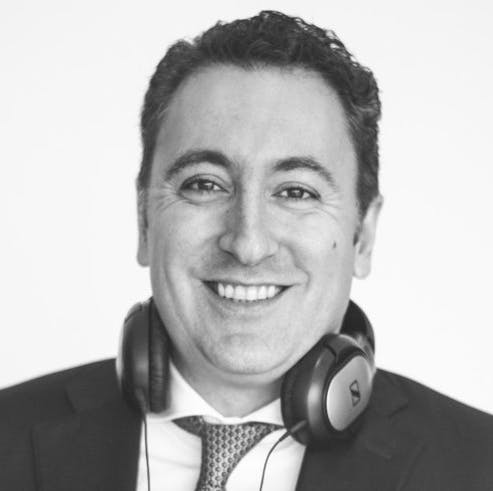
Content Analysis Key Themes and Main Ideas 1. The structure, history, and operational model of Cervico Italy as a leading wine cooperative. 2. The unique characteristics and viticultural significance of the Romagna wine region. 3. Challenges and opportunities related to grape grower demographics and succession planning in Italian agriculture. 4. Cervico Italy's diverse product range, market strategies, and extensive global export presence. 5. Commitment to sustainability and organic wine production through initiatives like the B.I.O. project. Summary In this episode of the Italian Wine Podcast, host Monty Waldin interviews Paulo Galassi, CEO for Cervico Italy, a major wine cooperative established in 1963 in the Romagna region. Galassi explains that Cervico is comprised of 20 wineries and over 5,000 associated growers, underscoring the dominant role cooperatives play in Italian wine, representing 70% of the industry. He discusses the challenges posed by an aging grower demographic but highlights a positive trend of young people returning to agriculture. Galassi details Cervico's grape sourcing strategy, which pays growers based on quality and vineyard location, and elaborates on their product diversification, from small bottled wines to bulk options like bag-in-box, where they are market leaders in Italy. He also outlines their dedication to sustainability through their new B.I.O. organic project and their broad international reach, selling to over 60 countries. The conversation touches upon the quality and diversity of Romagna's wines, particularly Sangiovese and Albana, concluding with a promotion of Romagna as an enticing tourist destination. Takeaways - Cervico Italy is a prominent wine cooperative in the Romagna region, established in 1963, representing a significant portion of Italian wine production. - The cooperative model is fundamental to the Italian wine industry, accounting for 70% of total output. - The Romagna region, historically important for Sangiovese and Albana, offers diverse wine profiles influenced by varying terroir. - Despite an aging grower base, there's a new trend of young Italians returning to agricultural work, which presents an opportunity for cooperatives like Cervico. - Cervico Italy is committed to sustainability, evidenced by its B.I.O. project, which focuses on entirely organic components from cork to wine. - The company holds a strong market position in Italy, particularly as a leader in bag-in-box wine sales, and exports to over 60 countries worldwide. - Cervico produces award-winning wines, including those under its Roccamaori Tastiani brand. Notable Quotes - ""In Italy, in this moment, people now is still working in the in the farm. So it's an opportunity for them to work in agriculture. So young people, they didn't find any job. So they went back to agriculture."
About This Episode
The Italian wine industry has created a unique culture with the creation of the Italian One and the role of the Italian market in the Italian market. The challenges of selling and marketing in the industry, including tailoring approaches and growth in the Italian market, are discussed. Speakers discuss their market leadership, involvement in sustainability projects, and involvement in a cooperative organization called b dot I. They express interest in working with other companies in the industry and plan for a new project called b dot I.
Transcript
Italian wine podcast. Chinching with Italian wine people. This podcast has been recorded during Vivete, an event organized by the Aleanza de recuperativita llane, the alliance of Italian corps. Hello. This is the Italian One podcast with Me Monty Warden, today I'm with Paulo Galasi. Paulo is the CEO for cervico Italy? What is Cervico Italy or Cervico Italian? Okay? Yeah. It's a a consortium of, coparities that was, established in nineteen sixty three. Nineteen sixty three. And who established it? What was the motive first step is to be cooperative. And call it Romagnoli. Which is in Noramana? The it's based in Romania, very close to bologna. Okay. We have three different plants. So the first one is based in Lugu. In what? Lugo de Romagna. Okay. Okay. The second one is based in Foli. Foli, which is Foli is between Lugu and rimini. Okay. And the third one is in Emilia in Regimilia. Right. So there's there's a very productive area of Italy in terms of food and wine and technology as well. Yeah. Yeah. To just give you an idea, Emilmani is famous for many brands, for eating, but also for machine, Ferrari, you know, Ferrari. I I think yeah. Hammigiano cheese. Parmigiano cheese and, of course, we are talking about wines. You're Romano. You're from Romania? Yeah. I was born in Romania. Yeah. Okay. So born and bred. Okay, very. So you're passionate of about, about this company. Yeah. It's a long time that they're still working in this company more than seventeen years. So what's your job then? What's your responsibility? Yeah. The Italian market. I follow all the companies, in the Italian market. I mean, companies because we are different kind of companies for each market of trade on trade after I will explain to you how does it work? Okay. So on the production side, where where all the grapes are coming from Yeah? Yeah. So what are your main wines? We're talking Lambrusco or San Giovanni. Romagna, the main grape is San Jose for the red wine. For the white wine, you have Cerviano. Okay. Cerviano is, very easy to to be drunk for, sparkling wine and also for steel wine. In Romania, as I told you before, we have three plants. We have, twenty wineries. More than five thousand association as sore associated. So that's the growers. He sausages the wine growers. Yeah. So five thousand people grow grapes for you. Yeah. So what what is the demographic of those people? Are they like old men? Yeah. Yeah. The problem we have with, our wine growers is one of the actors that they need is just two or one actor for each row. So you've got lots of growers with one very small hectares. Yeah. So, like, we call the weekend wine growers. It depends. These are the old one. The new one now are cooperating to have big companies. Big companies mean, they they work together and so they have twenty, thirty actors. So it's a different kind of job. Okay. It's not that what we can do. So what are the economics for them? Do they get paid by Hector or by by Kilo of grapes? It depends on the area. We pay for the quality of the product that you do. So if you have, on the hill, you have grades on the hill. We will use that kind of product for high premium quality product. If you are talking about, the plane, of course, there, you will have a big quantities and of course, low degree. So we will pay less than the hill. So when you say low degree, mean low potential alcohol? Yeah. Yeah. Yeah. About ten degree, eleven degree. While in the area, we are talking about, twelve, thirteen degrees. Okay. In terms of the demographics, I mean, if you have a lot of kinda old Yeah. Elderly growers, what happens when they're no longer around? Are you gonna survive as a business? Yeah. Because of the situation. What I mean is, in Italy, in this moment, people now is still working in the in the farm. So it's an opportunity for them to work in agriculture. So young people, they didn't find any job. So they went back to agriculture. They went back to Erika. Well, it's quite nice to hear that there is that return to the land. Yeah. Yeah. Because you would you would have thought that everybody would be going off to bologna or Milan to get a job. No. Not at all. They are very linked to our, regions. What challenges are there for you in terms of selling and marketing? We work, in a tailor made way. What does it mean? We target every market, and, we work on, the single region, a single, area with a different way, to give you the example. Talia Market, in the Italian market, Cherico, operate with, a company that is named Duetili. Boothill is one hundred percent owned by Cervico, and they work with, of trade on trade. The turnover of, Cervico, it's one hundred thirty million. So is that all in Italy though? Would you export as well? A turnover of all the business. So I mean, a broad market and the Italian market, the turnover is one hundred thirty million. While the Italian market focus about fifty two million zero. But is that market growing, or is it is it slowing down? For us, it's growing, but the market is, still. Okay. It's static. Yeah. Yeah. I think that's global at the moment there, isn't it? Yeah. So, I mean, you're talking about bottled wine or some bulk wine sales as well. We are talking for the market. We are just talking about bottle of wine. In the three plants, we have we have a different opportunity of size and of packaging. For size in the bottle, we have, from the two hundred milliliters until two liters. So is that for airplanes then? Two and put it? Okay. Capturing. Okay. While, for, larger bottles. So we have, drugs, twenty five liters. We have baggy box. We are market leader with baggy inbox in Italy. Seventy five percent of share. But can you I mean, you don't do Lambriscoe's bad in a bag in box or can you? No. No. We can't. Of course. Because it would explode. Yeah. Yeah. Yeah. Absolutely. We are market leader with, Ronco, Ronco, begging box. Seventy percent. We are market leader with Sanzois Romania, with the brand Galaxy. We have the second company for Italian Etabric square. SanJavezied around just for those of you that don't know is probably the real home of of San Giovanni rather than Tuscany. And if you're clever, you can find some absolutely brilliant San Giovanni's in the Romania region. Yeah. We can say nowadays, we can say that our San Jose is very close to San Jose to scam. You're gonna give me a job as your marketing, right, number two. I need a job. They're gonna fire me from this one, pricing. Why not? You have to come. Right? Okay. So that's the Italian market. Now what about sustainability, anything like that? Yeah. We are a lot still working on sustainability since, ten years with our wine growers. We have done a project in the biological market, organic market. And, three years ago, we have done a new project that is named, b dot I. Yeah. And, for us, b dot I means, b as good as borno, eo, something that is good for me and that that I can taste and and enjoy myself. Okay. It's a a very, new project because, we had a special cork. It's up sulu, organic, the cork, the bottle, the the one you have inside, and this, a project that we have, built together with some comparative and links our operative to also other cooperatives in the south of Italy and pool. Yeah. Okay. Do you think that's important that cooperatives really do cooperate? I know that your competitors, but Yeah. Does it make sense to Yeah. Because margins, margins are so small, aren't they? Because, our turnover is we are the tenth company for the Italian winemaker, and we are the third cooperative in Italy for the wine. To give you some details, in Italy cooperation means seventy percent of the Italian wine. It's cooperative. Yeah. We're to. Coparity wide. Okay. So we have the third cooperative in the wide. And, of course, we have big shoulder, and we can be present in all the countries. What I mean is that tropical cells in more than sixty two countries all around the world. Okay. And, probably the cooperative that give, an opportunity to us to sell, their products, specifically, they will never add the opportunity to working sixty two countries. Yeah. Sure. So for us, it's an opportunity, but also for them. Paulo Garcia, thanks very much for explaining, and everything today about your projects in, Romania. Yeah. I wish you every success, wish you all the ones grows every success, especially, you know, you know, I'm a I'm a bit of an expert in all organics. Actually, I didn't know that you're doing any organic one. It's quite a little discovery for me, actually. No. But we haven't because we are we are a big group, and we do different things. We have another in the Italian market, we have the TV that is the big one, the commercial big one. But we have also another company that is named the rock Maratestiani. It's an easy one to pronounce, isn't it? Yeah. Very interesting. I have a bottle of motoristianic this. Yeah. It's very difficult. I know. But, rocketistian is just, on trade. Okay. And, just two millions of euro that turnover. But, for the first year, we won the three glasses Gambarosa. Trebikieri. Right. Trebikieri. And, it's a job that, we have planned more than ten years ago Okay. To give you an idea as we work in the rimini region. So in about twenty kilometers of area. We have done information of the area, and, we take, a sanzobese grape in three different way. So you have, a sanzobese that is done in the hills two hundred meters, two hundred and fifty, and three hundred meters. These are three kinds of different Sansovasoza. So three different taste, three three different, degrees, and three different projects. So for us, Sanzoza, it's a big, word, but inside, you have, more than, ten or twenty kind of saturation. Okay. Okay. Anybody that doesn't know, what I mean is on the Adriatic coast is where a lot of Italian spend there some holiday. But, as I said before, around this area, it really is kinda like the home of, Sanjay. I think that in Germany, you have to visit our region because, it's very easy to to eat. It's very to drink. It's very easy to spend your time. And you can have, in twenty kilometers, we have the sea, the seaside, but you have also the hills. So, I think that, many people have to come, in Romania. Valle Galasse, thanks very much. Currently, you are CEO for Chevico group in Italy, but you will soon be working in the tourist industry for Why not? For the romagna too. Why not? I wish you every success of the future for both, both the potential careers. Thanks for coming in today. It's been a real pleasure to talk to you. This episode has been brought to you by Vin Italy twenty eighteen, taking place in Verona from April fifteenth to eighteenth. Vin Italy is the wine exhibition that helps you discover and get to know Italian wine and features over four thousand two hundred wineries. Follow Italian wine podcast on Facebook and Instagram.
Episode Details
Keywords
Related Episodes
Ep. 202 Monty Waldin interviews Vincenzo Ippolito (Ippolito 1845) | Discover Italian regions: Calabria
Episode 202

Ep. 194 Henry Davar (Vinitaly International Academy Faculty) on Verdicchio | Discover Italian Regions: Marche
Episode 194

Ep. 186 Monty Waldin interviews Sergio Solinas (Cantina Sociale Giogantinu) | Discover Italian Regions: Sardinia / Sardegna
Episode 186

Ep. 184 Monty Waldin interviews Ettore Nicoletto (Santa Margherita Group) | Discover Italian Regions: Trentino-Alto Adige
Episode 184

Ep. 180 Monty Waldin interviews Andrea Sartori (Casa Vinicola Sartori) | Discover Italian Regions: Veneto
Episode 180

Ep. 176 Monty Waldin interviews José Rallo (Donna Fugata) | Discover Italian Regions: Sicily / Sicilia
Episode 176