
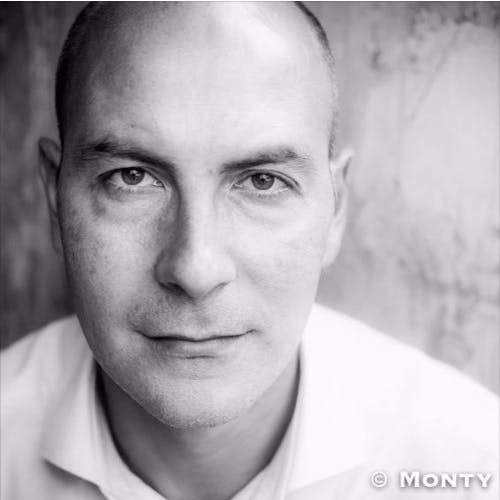
Ep. 58 Monty Waldin interviews Alessandro Fenino (Pievalta Winery) | Discover Italian Regions: Marche
Discover Italian Regions: Marche
Episode Summary
Content Analysis Key Themes and Main Ideas 1. The unique characteristics and versatility of the Verdicchio grape. 2. The influence of different soil types (sandstone vs. calcareous clay) on Verdicchio wines in the Castelli di Jesi region. 3. The philosophy and practical application of biodynamic farming in winemaking at Piavalta Estate. 4. The meticulous winemaking techniques employed for Verdicchio, emphasizing gentle handling and whole-bunch pressing. 5. The historical undervaluation and current perception of Verdicchio in the market. 6. The potential for regional branding, specifically ""Castelli di Jesi,"" to highlight terroir and history over just the grape variety. 7. The importance of ""real wine"" driven by terroir and balance rather than just aromatics. Summary In this episode of the Italian Wine Podcast, host Mark Millen speaks with Alessandro Fenino, manager of Piavalta Estate in Marche, about Verdicchio. Fenino explains how different soil types within the Castelli di Jesi (sandstone and calcareous clay) yield distinct Verdicchio profiles, even within the same vineyard. He is a strong proponent of biodynamic farming, detailing how it fosters vineyard equilibrium and produces ""real,"" age-worthy wines. Fenino emphasizes careful, whole-bunch pressing to avoid bitterness. He addresses Verdicchio's historical undervaluation, despite its aging potential, and advocates for promoting the ""Castelli di Jesi"" designation to better convey its diverse terroir and rich history, rather than just the grape name. Fenino also shares his long-term vision of a biodiverse farm at Piavalta, integrating animals and other crops. Takeaways * Verdicchio is a versatile white grape known for its good acidity, salinity, and impressive aging capability. * Soil composition significantly impacts Verdicchio's final wine style, with distinct differences found between sandstone and calcareous clay soils. * Biodynamic farming is crucial for producing high-quality, authentic wines and fostering vineyard health and longevity. * Meticulous practices, like hand-harvesting and gentle, whole-bunch pressing, are essential for crafting clean Verdicchio wines without bitterness. * Despite its quality, Verdicchio suffers from historical undervaluation and a lack of broader market recognition, particularly compared to other Italian wines. * Marketing Verdicchio as ""Castelli di Jesi"" could potentially elevate its perception by emphasizing regional identity, terroir diversity, and historical significance. * Verdicchio is best appreciated for its texture, minerality, and ""mouthfeel"" rather than solely its aromatic profile. Notable Quotes * ""It's a great grape because, as a good acidity is perfect in this area, and you can find it only here."
About This Episode
The speakers discuss the success of Vedicure decked wine, emphasizing the importance of age and the use of organic, biodynamic wines. They also discuss the use of prunker plants and sandstone in wood crafting, the use of animal wines, and the importance of the Italian media. The use of the mouth and tannins in the wine is discussed, along with the use of animal wines and the idea of a hybrid winery. The speakers suggest that the use of the mouth is important for the taste and salty taste of the wine, and that the use of animals in the wineyard is a good idea.
Transcript
Italian wine podcast. Chinching with Italian wine people. Hello. This is the Italian wine podcast with me, Montewooden. Today, I'm with Alessandro Fenino, who is the manager of the Piavalta estate in the market region of Italy, famous Fritz verdicchio. Alice, well, how did you how did you come to be working at Piavalta? I'm here because, I work when I were younger in Barona Pizzini, Franca Corta winery, that decided to invest here in Casa Diaz to produce, Verdicio de Casa, thinking that this grape, was the best Italian white grape. What makes Padicchio so special as a white wine grape? It's a great grape because, as a good acidity is perfect in this area, and you can find it only here. And it's perfect with these carcharos soils and, give, acid, fresh, and salty wines. What is Vodicchio like to grow? Is it an easy grape to work with? Depends. Depends the way you've planted this grape. In castellini, we have, two kinds of soils where you find the sandstone. You don't have, much problem to What? Is that because it drains quite? Because, the roots find more easy than the water and, grow well. A good, good leaf, and good grapes. When you find the clay, the calcutaro's clay, the soil is very, very compact and, and root can't go deep. And so it's more difficult, especially in a dry year, like, like this, we are leaving. But, this difficult give a different verdict. And it's very interesting So you have one one grapes, but in different sauce, the grape, give you different wines. And this is, for me, is the great terrarium that give this. So do you make different, bottlings from the sandstone soil and the more calcareous soil? Do you make two different wines? Do you bottle those separately? Yes. I try to to separate, to separate, always. I produce, a, San Paulo, from, stand stone soils, and, is the the other crew from clay clay soil. The Pia Valta is the the blend of the two two soils. Okay. So you make you make three Vedicure decastere daisy. Pia Valta is, like, the representative bottling represents the the most, is is the most bottled, the wine from Aza is, entry entry wines, and is the blend of the two of the two crew. So tell us again about the domain, which soil is that from? The main is from a Marillati Spuntini grapevine, and, from a clear soil. It's, verified in, in, in, stainless steel, with the ten percent of, Gerbelotto, big, big bar. And it's very typical from, the beclay soil, very mineral, very citrus fruits, like lemony flavor. Yes. Yes. More, it's it's very fine. In some power that is from from sandstone, you have more power and, and that power needs for me, for my base what they like times to to be to develop in, fine wines, okay, in the bottle in the bottle. So what's the age what is the aging window for the dominee compared to San Paulo. If I buy a bottle of dominee, long would I have to how many years would I have to wait before you think it would be ready and how many years would I have to wait for a Sao Paulo wine to be ready? I taste, last month, two thousand and eight of Dominet, that was good, very good now. Now it's more good than when, when in two thousand and nine, we we sell, that wine. That's nearly that's a wine that's nearly ten years old. Yes. Yes. Okay. And, from San Paulo, it's fainted to be a, a long gaging wine and I think it could be good also after twenty years. People don't, you know, the young generation don't wanna buy Vadicchio and think I'm gonna buy this today and I'm gonna drink it in two thousand and what would it be like two thousand and thirty six? So how do you how do you square that circle in terms of your Viticulture? What are you doing in your Viticulture to make the wines maybe more friendly, when they're younger? In Vineyard, we we we produce them by dynamic. And for the, these young people, we produce the good of Virdicio is and the Verdicchio grown in organic and biodynamic is that, is very good age. But if you taste, now, are very fresh and very drinkable wines because the the acidity of the or the grapes that give you good satisfaction. And also, if you work in biodynamic like we do, you have the second part of the mouth. You have the the salty. You have the mineral. You have the longness of the wine. And this fantastic with dishes, with the seafood, with, but also with the meat, the barbecue as the structure, to drink also with the, with the meat, with the seafood, and chicken, so So why did you decide to go biodynamic? I mean, you're near the sea, which is presumably quite a humid region. You're thinking, why would I make life difficult for myself growing a white wine grape with biodynamics? Why do you do it? By dynamic, is the opportunity to produce a real wine. If you want to produce terrible wine, you have to work in a biodynamic, organic, a good organic or biodynamic. It's not a problem if in France, they produce in a bad dynamic, why in middle, Italy we we can't, produce. The disease are not a problem here. Also because you work don't think it through disease. You you are working to head and, harmony in the vineyard and, in equilibrium. So, when you have the good equilibrium, you you stay well and the vineyard stay When you talk about an equilibrium, what are you talking about? Are you talking about just the soil or the leaves or the vine roots, the grapes? It's, in biodynamic, the first thing, is to watch and to see that it's or is in harmony? It's okay. Abservation. You can see. I see you are a good boy. Okay. I see you. No. I see people, the observation is the first. And, you see when when a a grapevine is, good, or is not good. When it's out of the plant. You can see there's the balance. The balance between the grapes here is on the on the on the plant. There, you can see the the the the kind of green of the leaves is not, dark green coral. You you find always new and, right green, leaves. You have to work the vineyard. When you work the soil, the soil is soft you can see difference of grasses in the soil and it's not a joke. It's real. If you have a difference, if there is a biodiversity, there is an equilibrium more then if it's all clean and the all is the monoculture, is similar to to death. Life is a difference. Life is a co life is a complication. Life is a casino. What if I go into a conventional Vadikia vineyard and I go into a biodynamic, vadicchio vineyard. What will the difference in the leaf color be? Will the biodynamic one have darker leaves or lighter? First of the confusion, you'll find the leaves everywhere. So more vigor. You're saying that there's a conventional bit more vigorous because of the fertilizer. Yes. Yes. For me, the the color, a different kind of green is, lighter green than the than the umbrella. And also the position, you see that the, the grapevine, the leaf are position it to take the the the much, light possible. So, basically, that what the idea, I think you're saying is that the grape punches can see the sun, but the sun can't see the grape grape punches so you don't get too much burning, steady ripe. Yes. Awesome. Yeah. Yeah. So so. Is it easier to prune a biodynamic vineyard? You're saying that if there's more vigor in a conventional vineyard, there's, you know, thicker shoots and many more leaves to have to deal with it. Is that is that an advantage? It's much easier for pruning? I don't know because I don't work in a conventional vineyard. And so I don't know. I think, but, depends. So just tell us a little bit about what is the name of the main river in, Vodicchio? So is there a difference between the left bank and the right bank? Like there is in Bordeaux? Because you have vines on both sides. I have the two bank and with two different sides. But, So what's the sword of the left bank? The left, I have the clay, Takaroos clay, and, on the right, on the right, the sandstone. But, you find a sandstone going Yeah. Steeper. Okay. If you go higher, yes. And, it doesn't depend on it from, left or right. So you can't say a Vadike from the left back will always taste like this. There are sun sensor in, if you go in Montecarotto in, Cerardi in and the highest part, you find sandstone too. You can see where is the sandstone watching to the old, house. If they are, with with the bricks, there there is a clay. If they are bought with the stones, there is a sandstorm. Oh, you should ride a tourist cart. Yeah. See what I give out the wine. How easy is Vodicchio in the winery? How easy is it to make a Vedicchio without causing your solve problems. Is, the, for me, the, the tannins and, schemes. And so you, you have to put many, many, many, many, again, attention to don't to done, broke the skin before you press. For this, we all the harvest is, by hand, and the in little boxes, and we don't use any other machine then press. So every box is put in, directly in the in the press. For me, it's a region. You have to to broke the the grape when the, they press best. So, I mean, so when you press the grapes, that these whole berries whole bunches, are you pressing very gently? Yeah. It's gently. And, it's easy to press ridiculous. It's not like a very gelatinous grape. What's it like? It's, it depends from the, well, sandstone. Is more difficult because there is, there is more, bigger grips. Yes. In clay, the the skin, is, the kind of thing. Yes. And so is, is a little easy. The the the first choose the the most of the the most of the the most of the is easy to take. It's more difficult to take the the other. And it is important to to to work separately, the flower, Jewish, than than than the other. Do you think the fact that Baroni Pitzini is famous for its sparkling wine at furniture quarter where pressing whole bunches as they do in Champagne is so important. Is that philosophy rubbed off on you, or did you always think that yourself? I take from, from them. That is my school, and they work with Cialbone. So that obsession they have, I have, for the, with Virdicca because it's, more difficult than Chardonnay, for this aspect. So what if in a good verdicca, what am I looking for? What flavors or textures will I look for? For me, it's the mouth. For me, it's the, the taste, the second part, the the salty, and the how how the acidity give you taste in the mouth. Okay. It's, it's the progression it has in the in the mouth. There are very few wines with this, taste. And if you work good without, bitter, without bitterness, if you work good in the impress, you have a more dispensation. So you have you have a clean, and this clean, these cleaners give you the salty, the minerality, because it's a real minerality, you you find in verdicchio mouth. For me, the the mouth, the wine to drink is not the wine to to sniff the aroma. Yes. The aroma, only aroma, and disagree with the, Macolique producer, they want to to find the sovignon aromas in Virdicchio. Why? It's not, that the question. The question is you have to work to have a, a tasty, a tasty wine. With the with the lovely, texture. Yes. So do you think Verdicchio is undervalued for the quality of the wine and the quality of the grape variety? Of course. Why is that? Is that the Italian media? Is it, journalists like me? Now, the media are, five years, they are talking very well about, Verdicchio. But, customer still, a bad reputation, give, give, Vedic as a a bad reputation to do some customers in, in North Italy, especially in North Italy, they think about Vedicke also now, still now, like the amphora, the the low price wine, and the the the great problem is that there is still few, few tourism in market and in Castaleesi and also. But I mean, you know, the market is is a place where Italians go on hold. If you think of the sandy beaches around rimini, they are packed in the summer with it. They stop they stop to rimini. Okay. And they and they reprise to, in abroad. So when they get out of it. But so they don't come inland, twenty kilometers inland to the cities of Yeezy and also Metellica. It's they're not curious to come in and and discover the wines, that's the problem. Yeah. Yes. I'd like to to say that, Now it's the moment of the native grapes, or we are talking about, Verdicchio, the grape, but, and I'm I'm very happy about this. But, I think we have to work to produce, not Verdicchio. Wines, but castellini is because, there is something, more also, than than the, only the grape. But to do this, is, and producer have to to work, organic, dynamic to work clean because the the the truth of the or the teruara, you have, the truth of the teruara, you have only for you producing a clean, group. So for those of you that don't know what custody the years, he means. It's city is castles, the castles around the town of Yayzee, which is inland from the Adriatic coast, which is the main area of production of the Vodico Grove, and it's historically just had lots of castles, as defensive, fortification. So so you think the idea of marketing the the Yayzee castle wine would be better than just calling Everdicchio. For me, yes. Also, because, there is the the history. And there is a marketing, there are marketing inside the name because, the village, every castle, we have twenty three castles, every castle, give a different verdict. And so in the name, we have a a donation zone. Yeah. It's a zoning like a zone area. Yeah. So you're saying every town historically had its own castle and obviously each town in the in the AZ area has a different wine, therefore, produces a different style of Vadicky or slightly different style of Vadicky. That's what I can hear. Many often is, so in the branding tasting, it's not so difficult to find the, majority, some from Staffo, from Cooper Montana where from. There is a strong move here for two to organics. Is that because of you? Another producers that pioneered organics that also don't come and tell you, but she's been doing it for a long time because people see it as a quality root or why people want more producers in the eighty going organic and biodynamic. There is in a young producer and there is a smart producer, but there is, still too many producer they, against the organic. So that's the older, maybe the older traditional. I think, you know, maybe if a customer, ask about organic, maybe they they change their opinion. Goes around the world now and start now to produce wine, produce organic. Because the word is asking, about organic wines. So if you didn't grow wine grapes, if I said to you, right, you can no longer work for Baroni Petini, and you can no longer work in wine, but you have to still be a farmer. What would you grow? Would you have animals or would you have vegetables fruits? What would you do? Allives? You could only have one thing. What would you grow? I do a biodynamic, farm. So with the oil, the grape, the olive, the the the cow, the chicken, the chicken, all. My idea is in the future to put the animals in the in the vineyard. In Cuba, where we have the the most of our vineyard to put, to to do also wheat. So is the people at Petini, they're happy with it. They they think hang on, I understand. You're such a dreamer, you know, with all these big projects, but what do they think? Actually, you know, this is really good for our our brand and our and our and the quality of our wine? Do they support you? They are, happy about this about pivot. And, and I talk about this idea with them. And, if you can, okay. If you do, okay. But step by step. Step by step. Yes. Of course. Everything. Our histories, so we didn't start, like a train. Pivarta is a step by step winery. We start with the vineyard and only after six years, we have our own seller. Yeah. You think about what you're gonna do, and then you do it, and then you go on to the next thing. Yeah. Okay. Aresandro Fernino Manager of the Piavalto winery in Nemarque, fascinating story about verdicchio and about, biodynamics. And I wish you every success with the creation of a of a very biodiverse farm full of chickens and cows and olives and fruits in the future. I'll leave us now. We produce a little bit of wine. I mean, we produce now. Okay. And it's time for funino. Thank you very much, for tonics about, Padicchio, the market about, Piavalta and about biodynamics, and I hope to catch up with you at some stage again in the future and see how your biodiversity projects are going. Thanks a lot. Thank you very much. Talk. Follow Italian wine podcast on Facebook and Instagram.
Episode Details
Keywords
Related Episodes

Ep. 202 Monty Waldin interviews Vincenzo Ippolito (Ippolito 1845) | Discover Italian regions: Calabria
Episode 202

Ep. 194 Henry Davar (Vinitaly International Academy Faculty) on Verdicchio | Discover Italian Regions: Marche
Episode 194

Ep. 186 Monty Waldin interviews Sergio Solinas (Cantina Sociale Giogantinu) | Discover Italian Regions: Sardinia / Sardegna
Episode 186

Ep. 184 Monty Waldin interviews Ettore Nicoletto (Santa Margherita Group) | Discover Italian Regions: Trentino-Alto Adige
Episode 184

Ep. 180 Monty Waldin interviews Andrea Sartori (Casa Vinicola Sartori) | Discover Italian Regions: Veneto
Episode 180

Ep. 176 Monty Waldin interviews José Rallo (Donna Fugata) | Discover Italian Regions: Sicily / Sicilia
Episode 176