
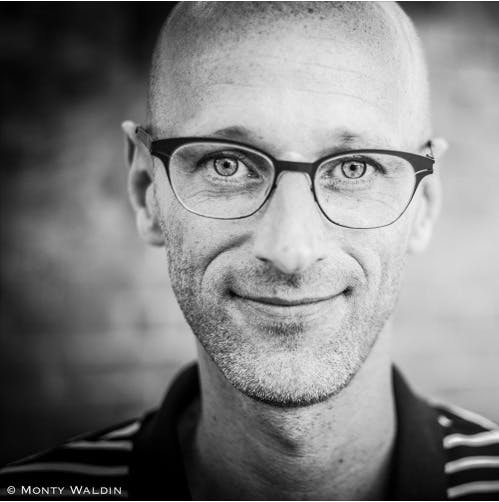
Ep. 42 Monty Waldin interviews Alessandro Ceretto (Ceretto Wines) | Discover Italian Regions: Piedmont / Piemonte
Discover Italian Regions: Piedmont / Piemonte
Episode Summary
Content Analysis Key Themes and Main Ideas 1. The multi-generational history and evolution of the Ceretto winery in Piedmont. 2. Alejandro Ceretto's personal journey in winemaking, including international experience. 3. The winery's commitment to organic and biodynamic viticulture and its impact on terroir. 4. Detailed discussion of specific Ceretto wines and their respective terroirs (Arneis, Barbaresco, Barolo). 5. Challenges in viticulture, particularly regarding climate change and soil erosion, and how Ceretto addresses them. Summary In this episode of the Italian Wine Podcast, host Monty Waldin interviews Alejandro Ceretto of the renowned Ceretto winery in Alba, Piedmont. Alejandro shares his family's rich history, detailing how his grandfather Ricardo established the business and how his father Marcello unified single vineyards, laying the groundwork for their current success. Alejandro recounts his international winemaking experiences in Australia, South Africa, California, and France before returning to lead the family business. A significant portion of the discussion focuses on Ceretto's transition to 100% organic and 50% biodynamic farming, driven by Alejandro's philosophy to better express the terroir and combat challenges like erosion caused by changing rainfall patterns. He explains how these practices contribute to low pH in wines and a ""salty, savory"" character. The conversation also delves into specific Ceretto wines, including their flagship Arneis ""Blangé"" from the Roero region, and their iconic Barbaresco crus (Azili, Bernadot) and Barolo crus (Bricco Rocche, Prapo, Bernate), describing their unique characteristics and aging potential. Takeaways * Ceretto is a third-generation winery with a long history of investing in prestigious Piedmontese vineyards. * Alejandro Ceretto gained diverse international winemaking experience before joining the family business. * The winery is committed to organic (100%) and biodynamic (50%) farming to enhance terroir expression and soil health. * Biodynamic practices help combat soil erosion and contribute to lower pH and salter, savory notes in the wines. * Ceretto produces a significant amount of Arneis, a white wine flagship for Piedmont, in addition to acclaimed Barbaresco and Barolo. * Different Barolo and Barbaresco crus offer distinct characteristics, from feminine elegance (Bernate) to masculine structure (Azili, Bricco Rocche). Notable Quotes * ""So I'm the third generation of a family that started airing in the early nineteen hundred with my grandfather Ricardo."
About This Episode
Speaker 1 and Speaker 2 discuss their success in the Italian wine industry, including winning a win with Alejandro C freightto Barolo and their philosophy of organic andretion farming. They emphasize the importance of creating a habitat for something not just fine, citing the importance of wines in winery wines and the Barolo area in the creation of a wine in Piedmont. They also discuss the history of the Barolo wines and the characteristics of their famous wines, emphasizing the importance of balancing the taste of the wine with its potential impact on climate change and climate health. They offer to taste some wines again and catch up in the future.
Transcript
Italian wine podcast. Chinching with Italian wine people. Hello. This is the Italian wine podcast. My name is Monte Walden and my guest today is Alejandro Ciretto from the Ciretta winery in Alba in Piamonte. We're gonna talk a little bit about Babresco Ambrolo. And even Biodynamics. Welcome, Alejandro. Hi. So just give me a little bit about family history of your very famous win win. So I'm the third generation of a family that started airing in the early nineteen hundred with my grandfather Ricardo. That moved from the region of Santos Stefan available. There is a mosquito area to Alba because of the depression during the two wars trying to find, you know, make fortune in another area. He started working for winery. Suddenly, he became, Negosian, buying wine and selling wine and buying grapes and selling grapes. So was he buying bread all in Bab Baranesco at that time or not? Yes. At that period, there was no difference between, what I, as you can say, today, between Barolo, Barbaresco Dulceto Barbala, Albonneville, Alba. So buying grapes from all the Langa area. What made the, how do you say, the success of the of the one. It was like the second generation. My father, Marcello, was unifying all the single vineyard that my grandfather was buying in a different way every year and trying to buy the vineyard that he was like in the most. Give me the names of some of these single vineyards then. We the first, vineyard we bought was Bricasile in Babaresco. Then we had Bernate in, middle seventies, followed by, Sarah Lunga Rapo, Bricorque. In the years, we also had chance to buy in Canoebe. So a lot of vineyards that today, they have a different price. So they are not at least approachable like there was in the seventies. So it's a very modest way of saying these vineyards are world famous, which is which is what they are. Yeah. Yes. We were lucky that my father and my uncle invested in a area, ten years before, twenty years before that this area became, what is Barollum, Nebraska? Today. So when did you start working here? And did you did you work abroad to get a bit of knowledge and learning before you started working with the family? Yes. I did few harvests, abroad. I did, Australia, South Africa, California, France. I work in France in Bordeaux, Chathamargo, Petaluma in, Hadalidey Hills, in Australia. Joseph Phelps vineyards in Napavalli and Boschindale in South Africa. After this experience, I came back. I worked and I cooperate with my father and the team. He graduated for ten years. After that, I started to try to make, my philosophy come through. So when you say your philosophy, you're talking about your philosophy in the vineyards, what are you changing? And I learned a lot about techniques where I traveled around the late nineties. So in that period, it was I think a lot of winemaking focus. I came back. I did my mistake. My mistakes are the turning point of, you know, improving and I understood that the only way to have success in a terroir zone is to understand the terroir and to make all the efforts to have these differences coming through every year in this, what are the single vineyards. So what are you doing? Are you organic? Are you biodynamic? Totally trust, Rudelsteiner. So I read his first book of Stein around two thousand and nine to twenty ten. And even if my background is scientific and I totally understood that for me, that was the best way of reducing an organic wine that gives you the real difference every year through the different single vineyards. So you're doing a bit of sort of organic and biodynamic farming. Right? Yes. Okay. Today, Chareto is a hundred percent organic, and fifty percent of biodynamic. This is because as you know Piedmonte has a lot of different varieties, different wines at different level of price. Of course the bidonomic has a cost is an impact on on the production that is close to I'm not saying zero but really minimum when your wine is above a price that is thirty four euro, where the impact is much stronger on a wine is around ten euros. Okay. So some of the what what effects have you seen with the organics? Why what was the main reason for it apart from for quality? What about in terms of erosion, your vineyards are generally on steep slopes? How's that helping? Well, a lot of the nicks, helped me to improve, or to save more that there are because today rainfall are not like in the past, long and slow, are really hard and fast So we had to understand that the erosion is one of the worst problem that we have to, you know, fight today. We understood that laboring too much the soil was probably the first reason why the erosion was taking over. We always talk about this soil that they have ten thousand, one hundred thousand, one million year of age. And then we don't understand that with one year, two reins can dig ten or twenty centimeters of your top soil. That is what you have to, you know, save two to three years. So what do you think? You're leaving more grass or wildflowers between the vineyards or what? Yes. We understood that we have to label less soil. And then, of course, planting different varieties, it makes you to improve a biodiversity that is in the flowers, in the grass, in the microorganism, and in all environments. I really think that in the past, the option was if you see in a vineyard only the vines, no competition makes everything goes into the mind, but we understood that it's not true because, an habitat has to be, a resume of microorganisms, of grass, of flowers, of plants, So you cannot have a vineyard and that's it on a nude soil because that doesn't help. That helps water to evaporate faster. It helps, you know, soil to be taken off by, rains erosion. Irrosion. We're starting to understand that in an area, of course, you plant a lot of vineyards, but you have to understand that you have to create an habitat for something that is not just fine. Okay. Tell us a little bit about your wines. You make a white one from the Arnie scrape. Tell me tell us a little bit Arnie's and why it's such a big, wine for you at this winery. Well, actually, yes, RNese, is our main, production talking about numbers. Because my father was, has been really smart, understanding the evolution of areas. So in time that the Barolo and BarBresco land were achieving really high price. He decided to invest on the row area. Sandy soil area just across the tunneler lever on the other side of the barolo and barbaresco area, investing on a wine that threw almost thirty years became today a flagship of a white wine in Piedmont, even if Piedmont is not a white wine region. Where does the name Blanger come from? Well, every wine has a geographic origin when we first bought the vineyard of, the two face was fifteen hectares. We had to buy from forty to fifty different owners because the fragmentization of the land here is really, really high And, we knew that in the middle of the vineyard, there was a owner that was the boulanger. As you know, France had a bigger impact on the history of Piedmont. Boulanger became boulanger also because boulanger Lange. It became a name that it was a really good solution, the geographic origin. So the discovery, the boulanger in French is the baker. So he's called mister Baker. Yeah. Probably it was the baker of of the town, So what is the, Arnese, blanchede? What are the typical flavors we'd find in that dry white wine? It's the one really fruity, really easy to drink. So, flowers, pitch, how do you say, aromas that are primary aromas that they come from either from the variety or the fermentation. It's a wine that ages really well, but his clue is when it's like one, two, maximum, three years old. Okay. Let's move over to Babadesco. You have two very famous Kruvie, Azili, and, is it Bernadotte or Bernadore? Bernadotte. Okay. Let's talk about Azili. What's special about Azili, the terwada? Azili is, probably one of the historical, single vineyards of, Barbara Escum. I can make the comparison be between two Azeli is famous because it has a lot of personality. This personality comes not really every year, but when, you have them coming out, gives you an expression of really masculine wine, tannic maybe yellow that needs a different ears, you know, to become, just a smoother and probably drinkable. Okay. And the burner dot. Burner dot is because it's a hundred percent south facing. It gives you more fatness, more roundness tannins that are a little bit more smooth. So it's a wine that is approachable when it's younger. Okay. Off into Barolo. You make a several cruise here. Bricoroces. What's special about Bricoroces? When I talk about Barolo, I normally started from Bernate. So the the wine in La Mora, between La Mora. La Bernate is a single vineyard between La Mora and Barolo. Barolo, from there, it gives you a silky, italian version, really feminine, easy to drink, and more approachable when it young, more thin, more elegant, where as you move to Brekorok, and then towards Sarlunga, you get richness in tanning, you get more tanning, and you get also more aromatics that gives you an expression of parole that probably behaves better through through the time. Do you think with the? Prapo is, I mean, you know, we always, harvest, really late. So it has being a little bit more elevated gives us the option to delay and to have, I would say, everything, the compound, that arrives, better and gives more time today that you know, delaying harvest in a period where the heat is more problematic, thing that we have to deal with, it's, it's a good, it's a good thing to own, you know, vineyard in Suralunga, or high, high, high places like that. Do you think with your change in how you manage the vineyards, your wines are getting a little bit more. I find them a little bit more sorted. They've got that lovely salty, savory character running through the middle of them. Is that a change that you've seen or am I just imagining it? Well, I think with this approach, the vines, they get more reactive to what are the pushes of, of the climate. They're becoming most sensitive. Yeah. I think they react better. So I can tell you that the pH are lower. Lower pH means a higher city than in a warmer climate bingo, producer, more salty. And then, we are also, you know, trying to fight the ripening, the fastness of the ripening that you normally get with this really, really warm weather that between either July or August and September, you get every year. And, Cassandra, should I say fascinating to talk to you here about all your hear about your family history, your wines, and your move to sort of organic biodynamic management? Look forward to catching up with you in the future. We can taste some wines again and chat again. Thank you very much. Thank you. Follow Italian wine podcast on Facebook and Instagram.
Episode Details
Keywords
Related Episodes
Ep. 202 Monty Waldin interviews Vincenzo Ippolito (Ippolito 1845) | Discover Italian regions: Calabria
Episode 202

Ep. 194 Henry Davar (Vinitaly International Academy Faculty) on Verdicchio | Discover Italian Regions: Marche
Episode 194

Ep. 186 Monty Waldin interviews Sergio Solinas (Cantina Sociale Giogantinu) | Discover Italian Regions: Sardinia / Sardegna
Episode 186

Ep. 184 Monty Waldin interviews Ettore Nicoletto (Santa Margherita Group) | Discover Italian Regions: Trentino-Alto Adige
Episode 184

Ep. 180 Monty Waldin interviews Andrea Sartori (Casa Vinicola Sartori) | Discover Italian Regions: Veneto
Episode 180

Ep. 176 Monty Waldin interviews José Rallo (Donna Fugata) | Discover Italian Regions: Sicily / Sicilia
Episode 176