

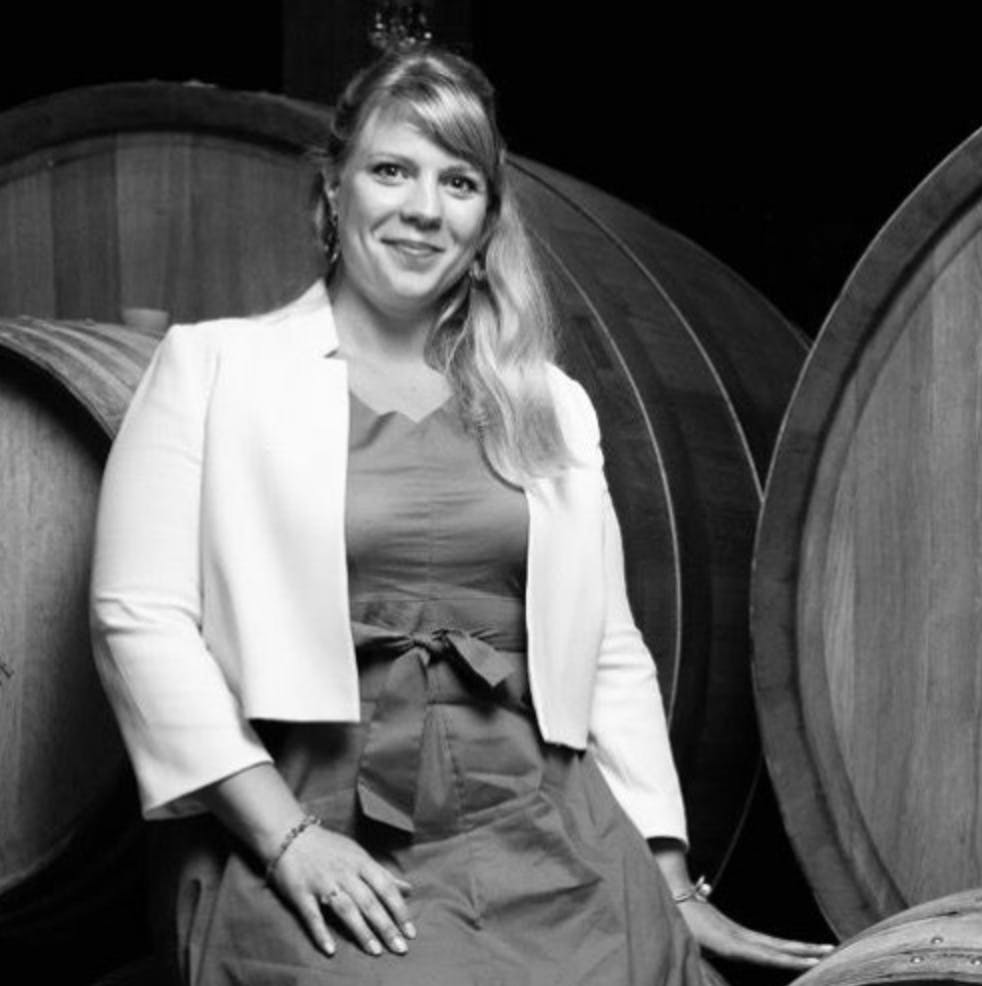
Ep. 187 Monty Waldin interviews Chiara Meloni (Tenute Olbios) | Discover Italian Regions: Sardinia / Sardegna
Discover Italian Regions: Sardinia / Sardegna
Episode Summary
Content Analysis Key Themes and Main Ideas 1. The profile and operations of Tenute Olbios, a winery in Sardinia's Gallura region. 2. The unique terroir of Northern Sardinia, particularly for Vermentino di Gallura DOCG. 3. The synergistic relationship between Sardinia's tourism industry and its wine sector. 4. Detailed discussion of Tenute Olbios's wine portfolio, including production methods and unique naming conventions. 5. Market strategies for Sardinian wines, balancing strong domestic demand with growing international exports. Summary In this episode of the Italian Wine Podcast, host Monte Ward interviews Kiara Malorni, export manager for Tenute Olbios, a winery located in the Gallura region of northern Sardinia. Kiara highlights how the winery leverages its location near the highly touristic Costa Smeralda to attract wine and food enthusiasts, viewing tourism as a significant advantage. She describes the estate's unique sandy, granite soil at sea level, which is ideal for Vermentino, Sardinia's only DOCG wine. The conversation delves into Tenute Olbios's specific wines: two Vermentino di Gallura DOCG wines ('Lupus in Fabula' and the oxidatively aged 'In Vino Veritas'), a sparkling Vermentino ('Semile Cimato'), two red wines from indigenous varieties ('Nesuna' and 'Kangrande'), and a rosé ('Cabay'). Kiara explains the mythological, historical, or personal stories behind each wine's name. She details the winery's market strategy, noting that while Sardinia itself provides a robust domestic market, particularly during tourist season, exports currently account for 35% of sales, with growing success in European, US, and emerging Asian markets. Takeaways * Tenute Olbios is a Sardinian winery in the Gallura region, leveraging its proximity to tourist hotspots like Costa Smeralda. * The winery benefits from the unique sandy, granite soils of Gallura, especially for Vermentino. * Tenute Olbios produces Vermentino di Gallura DOCG wines, including an ""oxidative"" style designed to complement specific foods. * The winery also focuses on indigenous Sardinian red grape varieties like Monica and Carignano. * Many of Tenute Olbios's wines carry unique names with cultural or historical significance. * While Sardinian wines enjoy strong domestic sales, there's a significant and growing export market (35% for Tenute Olbios). * There is a global trend towards seeking out ""original"" and distinctive wines, benefiting regions like Sardinia. Notable Quotes * ""It's actually an advantage because people are mainly coming or they used to come mainly for like the holiday season. But now it's attracting a lot of the wine and food lover because there is a lot of discovery about the wine and food culture as well."
About This Episode
A wine podcast host and his guest discuss the estate's famous wines and their use of wood and production process. They also discuss the use of wood and the length of the production process, which requires attention and space. The wine is a vintage, but requires space and attention, and is considered food-friendly. The demand for the wine is high, and the Italian market is discussed as a food-friendly market. The wines are made with overnight skin maceration and high demand for the Italian market. The guests thank the guests for their visit and mention a tour of a wine winery.
Transcript
Italian wine podcast. Chinching with Italian wine people. Hello. This is the Italian wine podcast. My name is Monte Ward. My guest today is Kiara Maloney, who's smiling very broadly. I mean Keara's, works for the which is in the northernmost part of Sardinia. In the region of Garlura. Welcome. Yes. Thank you. Okay. So let's, get a little bit about, well, first of all, what's your role in the estate? Are you part of the family, or are you just, a lowly believe. Yes. I'm not part of the family. I'm working between the audience since a few years now, and I take care of the expert says. And where are you from in Philadelphia? I'm from suscany, which is about one hour, driving from, from all of you still in the north side. Okay. So you're in Northern Northern Northern Ireland Islands. So, yeah. Okay. So just tell me a little bit about the area in general. This is known a lot for its tourism, obviously. Yeah. So it's known. So, actually, Olga, it's very close to the Costa Meralda, which is known worldwide for the, turquoise, Walter for the amazing beach, but, studying in general everywhere is very famous here for the coast, but there is, also a lot to see on the inside of the island. It's also famous here as well. For Alagosto as well. For Alagosto as well. Which is English. Lobster. So we help the fact that the wine is in a touristic area, was it a hindrance? Would you get a day trip is coming? Or It's, no. It's actually an advantage because, people are mainly, coming, or they used to come mainly, for, like, the holiday season. But, now it's attracting a lot of the, wine and food lover because there is a lot of discovery about the wine and food culture as well. But obviously being, on such a touristic place, has been an an advantage for us. Okay. So tell us a little bit about the estate. How many hectares of land do you have and how many hectares of vineyards? It's a sixty, actors, vineyard. It's all on the sea level. It's all on the same, area. And, it's basically So the altitude or roughly would be on the sea level. Oh, right. It's quite low. Yeah. Yeah. Yeah. Yeah. We are literally, like, one two kilometers away from the coast. So we can actually see Cabalara Island, which is just in front of us, and is, a sandy soil, may of, granite, basically. You decompose granite. Yes. It sounds like a nice tell what, though. Yep. It's very nice of wire, and you see, let's say the ideal to wire for the, fermentino, which, the OCG, which is also the only DOCG while we have, in Cylvina, and it's not by accident because, Duvermentino producing alura is, developing girl, lots of, minerality, salinity, and, so it's producing wine with a highly distinctive character, let's say. So you make two wines under the docG, the Valentino de Gallorder docG. We we make no. Exactly. We make two two No. We make two, two, two, garmentino, decolura docG. Okay. So what are they called? What does that mean? Means the wolf in the fairy tales, has got several, connection. So first of all, lupus informal, it's a Latin expression that, we use in Italian, as the equivalent of, I'll speak of the debut when we are, talking about someone, and then this person suddenly appear, but it also refers to the, story of the boy crying wolf, because it's a little bit like the story, of, our wild lupus in Farbola. So is that oak tour on oak to that one? It's on oakton. So it's a fresh drinking It's a fresh drink Kinga. So it's, a Vermentino, Vineified and age entirely stainless steel tank. Okay. The next one is in Vino Veritas. In Vino Veritas, it's actually Vermentino, DeSardena, DOC, and it's also so every material produced with the grape from our own vineyards. In particular, we make a selection, from the, grapes coming from the oldest, vines. So this has a little bit more density compared to the Lopez in Fabolam. Yeah. It's a particular vermetino. It's variable. Of the it's actually Vermontino, which is aged, for seven years prior to bottling, seven years. Yeah. So is it a dry wine? Or is it a dry? It's a dry. It's a dry So is it sort of slightly oxidized or not? I also. Yeah. So it's What would you call that? Is that a special word for that on the it's, But is it, are there, is it aged in barrels that are topped up, or is it aged in barrels that are not topped up? So it doesn't have, like, a floor of yeast on the top? It's aged in barley without a top, without topping. So it's an oxidized Yeah. We play with the control oxidation process. So it's dry and very savory. Yeah. Yeah. And also it's a late harvest. It does, a overnight skin maceration. And then, it's a mini find in a stainless silk tank and then the last two years, a small percentage, does the controlled special process in, in barrels. So is that bottle as a vintage wine, or is it bottle as a blend like a non vintage, like a is a it's a vintage. Yeah. Okay. So how long in wood does it stay? Two years, twenty four months, but only a small percentage. But so it's just like an okie white wine then. Yeah. But you said it's got that oxidative term. Yeah. So I'll say that, since the oak is not the new, oak. So the flavor of the oak is not too intense. It's just more for the exposure to the, to the air. Yeah. Okay. So it's a very, I imagine, very savory and with what you've probably called tertiary aromas. No. That's not too technical. Exactly. What do you what do you eat? So what do you eat with that? Do you eat like, some of your, sheep cheese, macarino? Or It definitely requires a specific food matching, but, combination is with the blue cheese or very mature spicy cheese, or with, bottarga, for instance. What is bottarga? Bottarga is the, fish roe, which is, trying reserved, and then either braided or sliced and, served on his own or with pasta. Okay. So you have one more white wine called but it's a, it's actually sparkling wine. It's a fully sparkling, it's full sparkling, it's full sparkling, it's partly made in our own cellar. You must have a very a quip seller then to do that. Yeah. It requires lots of space. So the, the salary is growing year after year. So now we have, increased a little bit, the, the production, but it's obviously a wide radius requires lots of space, lots of attention. And I say If you're ready, semile Cimato, it's a Tuzajucera. So it says there is a dose, not, dosed, and it's a single vintage or not vintage? Sorry. Single vintage. Yeah. Does it help the fact that you've got a the area that you're in is is in be well known for tourism, and you'll have people that are it's got a luxury area for tourism, isn't it? So making this kind of wine is an indication of the area. It's quite well known for its wine, and customers have got the money to pay for it. So true. It also is like a jet set area, but it's not far off, is it? Let's say that, we are relying, of course, on, our closed area. But for instance, we sell all around Sardinia, even in areas which are notes. So, let's say Posh, if you, want to use these terms. So because Sardinia, yeah, it's quite touristy, but there are all kind of tourists. So there are the tourists which are searching more the luxury and tourists which are searching more the nature and the, outdoor experience. So what's your rough split in terms of exports and domestic market roughly in terms of either turnover or bottles? Let's say a thirty five percent export, at the moment. Yeah. The main export market is what America? Yes. We're exporting, California, in Australia, in several European countries, Sweden, in Germany, Salanda. So Europe is quite, well covered. Yep. Okay. So what about other wines? Red wine? Red wines. We make two red wines and one rose wine. And for the red, we, use, two octopus grey variety, so while Talk to have been, Maristel, I guess. Yes. Like, Maristel is saying, typically, Beauvalle, but it's also known as, Mauristelor Bobanetto because it grows with smaller various in our area. And the name of the wine is? One wine is a Nesuna. Which means nobody? Nobody. Why do you call it nobody? Nobody. So, Nesuna, and it refers to the character of, Olisei, in the Odisei. You season? Yes. So there was when the wine was presented a lounge for the first time. There was a new, book, which was from a Selenian writer, which was, highlight highlighting how some of the landscape, which were described in the Odis could refer to Sardinia. So, it was, sort of nice to use this, character, the name of, Nizuno because, actually, it's quite, a tricky character, when he presented himself, he listened to the cyclope, and, he presented himself as in Suna, and when, the cyclope was hired by by Lisa, and they asked him who who who's done that. They say Nissuna, Nissuna. So, this wine is also, or, like, was presented like this as a wine which presents himself quite, in a humble way, but in the end, it goes straight to the, despite, like I say, food body, structure, red, wine. So it's a It's very long. We've gone Vervantina to Ulysses Yeah. And the Odyssey. And you have another, red wine cord. Is it called kangrande? Kangrande. So what does the what does the name mean and what's what's the blend? So kangranda dot seventeen, it, reminds, price, and our words that uh-uh, Daniela, who's the, the owner and then winemaker, got it, in Italy, two thousand seventeen. So she was awarded with the premium, Kanranda, which is a, an award to price which is, given every year to one producer per region, and that, something she got in twenty seventeen. So it's quite nice when you got this, sort of, awards because you remember it on the first year, second year, and then the year passed, and you sort forget. So it was nice to sort of fix this, this moment, with, with the wine. But was that the first vintage of Kangrondi or not? It was the first vintage. It's been presented these years. But it was it was labeled as Kangrondi when it was presented because one of the is if in Italy, if anybody's been to Italy, it's a little bit of an expert, huge info. One of the entries is called Kan Grande, or people say I'm a little bit lost. Where do I go to get my ticket? And you have to go to the I go to the Kan Grande entrance. So that's a bit of a coincidence, isn't it? Yeah. Yeah. It's a coincidence. So what does Kang is it does it translate to that? I've always wondered what it means when I walk in to Vinice here. What do I want to go to? Okay. Candante is, is a famous person, of the, of the Verona area. Right. Okay. So they've obviously changed. Yeah. Yeah. Yeah. Right. Okay. So, we've done all the wines, we have a rosette. Okay. Let's talk about the rosette. What's that called? Rosette is called cover, and this is a fantasy name, so it doesn't, refer to, to anything. All the names are fancy names. Yeah. They they all have, sort of, of a history, but, So you tell us a little bit about this one then? So Cabay, it's a rosette wine of coronavo Mouristello grapes, a fifty percent, a fifty percent. So imagine that's bled off the red wine. Yeah. It's, no, it's, rosette wine, which is made with, overnight skin maceration. So it's a macerated, rosette, and it's called, in fact, is it? It's dry. Do you make does that did you get a big demand for that for the tourists as well or not? No. Actually, I mean, there is a big, thing in our winery is that, so, of course, we produce, the wine for market, but, there is also a person on the Daniela, the owner behind, and, she really makes a wine that, she likes to drink. So, obviously, there is a higher demand for Jose at the moment, but, the wine, this wine was already in in progress since, two thousand, two thousand thirteen was the first, vintage year that it was, presented. So overall, I mean, how are studying in producers in general, what they targeting for exports? How big is the Italian market? And how how how big is the the export market for Sardinian wines? If you know that, if you don't know, if you're just for your winery, you can just sell us just for your winery. Well, I can, you'd at, for sure, like in Sardinia. I hope we drink Sardinia wine, most of the time. So there is a big market for Sardania wine in Sardinia and considering that in the summer, the, number of people in visas. So it's it's a good market, but obviously we have to to look at the foreign markets abroad in Italy. We have a a good market in Milano in Rome or in other area there's plenty of restaurants or wine or they wine shops? Both. Both. Yeah. Restaurants and wine shops. And then, export. There is a higher demand at the moment, for, Sardinia wine, either in, countries and the in area where there is a good knowledge of, of Sardinia, like in Europe, for instance, it's easier to, to explain Sardino markets, Sardino wines because they know already the territory is. And then we go in areas like, in Asia, where they don't know much, about the sardinia. So Isn't isn't that quite nice that you can explain? Yeah. Yeah. It's, it's not is it's a good challenge, and there is, a higher demand for original wine, at the moment. So it's, it's a good and positive trend for us. Yeah. I imagine your wines are very food friendly as well on that. Yes, sir. Okay. So we'll say thanks to my guests today. From Tennu Tay. Olbios from Sardinia from the northern part of Sardinia, very beautiful area. Thanks for coming in and telling us about your wines and the family winery. Thank you so much. Thanks. Follow Italian wine podcast on Facebook and Instagram.
Episode Details
Keywords
Related Episodes
Ep. 395 Milena Pepe | Discover Italian Regions: Campania
Episode 395

Ep. 306 Monica Colangelo (Nativ) | Discover Italian Regions: Campania
Episode 306

Ep. 190 Monty Waldin interviews Federica Capobianco (Silvio Carta) | Discover Italian Regions: Sardinia / Sardegna
Episode 190

Ep. 189 Monty Waldin interviews Renzo Erasmi (Cantina Arvisionadu) | Discover Italian Regions: Sardinia / Sardegna
Episode 189

Ep. 188 Monty Waldin interviews Luca Fontana (Cantina Mesa) | Discover Italian Regions: Sardinia / Sardegna
Episode 188

Ep. 186 Monty Waldin interviews Sergio Solinas (Cantina Sociale Giogantinu) | Discover Italian Regions: Sardinia / Sardegna
Episode 186