

Ep. 188 Monty Waldin interviews Luca Fontana (Cantina Mesa) | Discover Italian Regions: Sardinia / Sardegna
Discover Italian Regions: Sardinia / Sardegna
Episode Summary
Content Analysis Key Themes and Main Ideas 1. Carignano Grape and the Sulcis Region of Sardinia: The podcast's central focus is the Carignano grape, particularly from Sardinia's Sulcis area, and its unique characteristics, historical perceptions, and future potential. 2. Cantina Mesa's Journey and Identity: The discussion covers the family winery, Cantina Mesa, its origins, its acquisition by the Santa Margherita Group, and its role in promoting Sulcis Carignano. 3. Sardinian History, Culture, and Terroir: The episode delves into Sardinia's unique geographical, historical, and cultural identity, emphasizing its distinctness from mainland Italy and the specific terroir of Sulcis that influences Carignano. 4. Challenges and Opportunities for Sardinian Wine: The conversation highlights the struggle for global recognition for Sardinian wines (especially compared to Sicily or Piedmont) and the potential for greater promotion. 5. The Evolution and Perception of Carignano: A significant theme is the historical criticism of Carignano as a ""high-yield"" blending grape versus its potential to produce quality, expressive wines when grown in ideal conditions. Summary In this episode of the Italian Wine Podcast, host Monte Gordon speaks with Luca Fontana, whose family founded Cantina Mesa in the Sulcis area of Southwest Sardinia. Luca shares how his family, previously involved in advertising, established the winery in 2004, which was later acquired by the Santa Margherita Group, known for their Pinot Grigio. The conversation centers on Carignano, the flagship grape of Sulcis. Luca passionately defends Carignano, often criticized for high yields, explaining how the unique sandy soils, hot climate, and traditional bushvine training in Sulcis ""tame"" the grape's vigor, resulting in wines with softer tannins and acidity, and complex aromas of licorice and balsamic notes. Luca emphasizes the historical isolation and distinct culture of Sardinia, particularly the Sulcis region, which locals call ""Marreduce"" (meaning African) due to its proximity to North Africa. He discusses the challenges of gaining global recognition for Sardinian wines compared to more famous Italian regions, advocating for a concerted effort to brand Sardinia as a prime wine and tourism destination. Despite Carignano's past use as a blending grape, Luca asserts its potential as a standalone, quality wine, expressing confidence in its future, especially with the support of a large group like Santa Margherita. He also touches upon the long history of invasions and colonization that shaped Sardinia's unique identity and its undeveloped but beautiful coastal tourism. Takeaways * Cantina Mesa in Sulcis, Sardinia, was founded by Luca Fontana's family and is now part of the Santa Margherita Group. * The Carignano grape, especially from the Sulcis DOC, is central to Cantina Mesa and the region's identity. * Unique terroir (sandy soils, hot/dry climate, bushvines) in Sulcis helps produce high-quality Carignano, despite its reputation for high yields. * Sardinia has a distinct culture and history, often isolated from mainland Italy, which impacts its wine industry's global recognition. * There's a strong belief in the Carignano grape's potential to produce age-worthy, complex wines, debunking its ""rough"" and ""blending"" grape image. * Sardinian wine, as a whole, needs more strategic promotion to gain international recognition akin to Sicily or Piedmont. * The Sulcis area offers wild, beautiful landscapes, clear waters, and traditional meat-based cuisine, making it an appealing, yet underexplored, tourist destination. Notable Quotes * ""I'm very proud to be part of this, big group because, they can improve our future, our vision, our mission."
About This Episode
Speaker 2 introduces a podcast called "The Italian Grape Odyssey," which is an educational project funded by the European Union to promote European wine in Canada, Japan, and Russia. Speaker 3, the host, talks about her past experience as a copywriter in an advertising company and shares her experiences as a copywriter in an advertising company. They discuss the meaning of "carignano" in Italian wines and the characteristics of the drink, with Speaker 2 expressing confidence in the future of Cariniano. They also discuss the use of Tuscany in blending wines and the pressure on blending in the industry. Speaker 2 thanks Speaker 3 for their work with Tuscany and Speaker 3 thanks them for their work with Tuscany.
Transcript
Italian wine podcast. Chinching with Italian wine people. This podcast is brought to you by Native Grape Odyssey. Native Grape Odyssey is an educational project financed by the European Union to promote European wine in Canada, Japan, and Russia. Enjoy. It's from Europe. Hello. This is Italian wine podcast. My name is Monte Gordon. My guest today is Luca Fontana, Luca's family winery is the Cantina Mesa in the Solches area in South West Sardinia. Welcome. Hi to everybody. My name is Luca. Yes. I'm part of the family who established the winner in the two thousand four. Actual the winery has been bought by Santa Margarita Group of Inicolor. So they're based in the north of Italy. Yeah. And they're famous for their pinot grigio and their own wineries throughout Italy. Yeah. I think the build the best, brand for the pinot gris all over the world, the Italian pinot gris. And, I'm very proud to be part of this, big group because, they can improve our future, our vision, our mission. Okay. Tell me what were you what was your family doing before you founded the winery? Were you a great grower selling to a cooperative? Not at all. So what did you what did you do? Everything but the wine. So my uncle, Gavino, he went to you say in the seventeenth when he became woman of the best, most known, creative director in advertising company. And me too, I started as copywriter in a advertising company in in Italy or in the US. No. No. Me only in Italy. Sorry. Then Italy and Europe, anyway. And when Mr. Sarah Gallino retired himself, he choose to invest, he needs a homeland. Between the Sardinia and their homeland, there is a very strong link. Something that I found on lin, Brazilian with the sodaja or, Basko people in, in Spain, they're very, very proud to be Sard. So that cut that comes from Saudi's history, which in brief, obviously, it's an island nation almost. Yeah. And the central part of Saudi is very rugged and, people that are incredibly attached to their land, shall we say? Yeah. Sabine is the second biggest highland in Mediterranean Sea. After city. But it's, yeah, half of Sicily, about is, like, continent. It's really complicated to understand. There is a huge difference between the north and the south, in terms of a folder, way to think. So when you say it with a way of thinking, so what are you talking about in this? How do you think in the southern then? Is it what's the difference between Southernians from the south where you are and the north? Oh, wow. Just to understand. You more you more influenced by Africa. Is that what you're saying? Yeah. It's not far away. Yeah. Yeah. And, just to understand, we in the Suchis area, we are called by the other people in Sardinia. Marreduce. Marreduce. Yes. Means, you can translate in Africa because, this is, our name for the other, people from, Sardinia. What does it mean? Term. If I if you if I say that to you, is that a is that a friendly term, or is it a rude term? Wow. So they're saying that you're kind of almost like the north northern Southern, you're obviously furthest away from the continent of Africa. So when they use that term, it's like, you're almost like you're part of Africa in the south. Is that they're saying. To be honest, I prefer to believe that's a a friendly word. Okay. Just to understand that the people from Calyar, they have been called, since a long time, the people from the castle because, Castle was the name of Calyar that's down the very south of, Sardinia. Yeah. Yeah. We are we in Santana Reze where the one area is located in the valley of Portopino. We are, I think, the southern point in Sardinia. We are Southern London carriers. Southern than carbonia. Southern then, Saint Peter Island. Between my winery and the North traffic and coastal area, I think there are just, one hundred and fifty. One after sixty nautical mice no more without anything between us and them. That's very important referring to the climate. Summer in our areas, very long, very hot. And, to the carignano, the carignol, then. That's your that's your flagship grape varieties, isn't it? Yes. Much criticized. I've made a carignol wine, and I loved it. And someone worked wine writers, and we're not gonna name names. No. Really don't like carignol, but I'm a big fan, and I just guess you are too. All of the word carignano means just healed, healed for it. A very general, you mean? Healed. Yeah. Oh, yield. Yield. So high yields. So high yields in spot. Very high yield. But, in terms of wine, usually, wine are rough in terms of, tannins. Tannins. Very highnessidity. That's if you overcropper, isn't it? If you presumably where you are, you have fairly low yields. Do you have bushvines? I bet a lot. Yeah. Busvine. There are a lot of element starting on the chlamydia to the training system that, improved the carignano in our area. And that's the reason why the doc in the wall, Italy is just linking in the not very largest strip of Suchi's area. Okay. So, basically, in the the doc, there aren't many docs in Italy that actually have carignans. It's the main variety that you're stealing. No. The only doc is, Carignana of Such France, Suchis, DOC, the only one. What about your soils? What makes the carignan special apart from the fact that you're near Africa, it's a very hot climate. Well, the it has been a mix of element that, made the the Carignano of Such is the best Carignano over the world, not me, is the copywriters from mister Robinson. We can start from the soil, sandy soil, sandy gray soil, very poor, very fertile. And then the extreme condition, very hot, very dry, droopy, Mahara can be from six to ten months. All this condition tame in the niche vigor of this grape. In that way, we don't have a very high heel for actor. In that way, element push down the tennis and the acidity. This is a problem from, of the Karignana Griippel or the war. Isn't one of the contradictions though. People always criticize Carignon and yet historically, Carignon wines have been bought by wineries in other parts of Italy to add a bit of structure to red wines. Yeah. So they kind of, on the one hand, it gets criticized, but secretly, it has been used to, quote, improve much more expensive wines, isn't it? So it's a cheap blending wire, but it actually has a fantastic result or fantastic effect some of these other wines. Yeah. Is that frustrating for you that you know how good it is, and you can see that traditionally it was bought by big merchants. Yeah. Yeah. Publicly, it's, oh, Karen yours rubbish. It's no good. It's not a really good grade. It doesn't make very nice wine. That must be really annoying for everybody in the Surchase area. More than for rating. I'm very proud because, we had the chance, an unbelievable chance to grow to show to the world that the Carignano can be can be easy, a nice grape that can give you a rich result in terms of wine. Tell me about the characteristics, is it Is it soft? What's a good food pairing? What do you what do you eat with it locally in Surchis? We don't have to use any carbonic maceration method to soft the wine. The one that you That's like carbonate maceroses is like making a beaujola style with whole berries that go into the vat. Keep to try and soft tenants? In a in our era, you have a red wine crispy with a lot of salt inside that help you to have this kind of particular and delicious crispiness, soft, well with it. With the some aroma that go outside from the typical red berry, you can reach also licorice spices, also balsamic note. That's very astonishing from our line. Okay. So what about ageability. I mean, if we buy Katigna from the Solches area, how when when should we drink it? Should we drink it early? Should we give it a couple of years? Would it age twenty years? Well, I wanna adjust, eleven years old so I can say something about a twenty, forty, six year. To be honest, I suggest a medium major, recently in the New York Times, mister Asimo wrote an article, really interesting about how do I have to open my bottle? How long can I keep in a cellar? There is any age that you can give to a consumer. You can have an average of time. I think that, for simply carignano can be five, six here. For a more complicated, you can reach also ten. Then, here after, get out of the bottle from your cellar, open, and taste it. That's the best way. What about tourism in the Surchis area? Has it been obviously so is a very well known for its incredibly clear waters around its coastline. Yes. We have to start. My area is one of the last wild area in Sardinia. And that's saying something. Oh, if you if you love white sandy beach, sea shore, if you love Emerald sea, if you love good food, gorgeous wine, and, peace, that's your place. You made the main meat dishes though with you in the Southern areas, we're talking pig, suckling pig, porchetta, lamb, three softy cooked. Mainly, our traditional food are only received from meat food, lamb, pork, sheep, seaside for the Sardinian haven't been traditionally a very friendly place to to stay. You have imagined that the Suci series is very particular. It has been one of the first to be navigated by people. Finition came to us in the eighteen ninety century to get some spot on the coastal area. That's before Christ, by the way. Yeah. For sure. I beg your pardon. And then, we came back to stay in the searches area only after the part of the nineteenth century when the French stop the pirate Muslim invasion, but it's a place to discover. It's something fantastic. Yeah. I mean, basically, sits out in your being as strategic honors was invaded by various peoples. There's obviously the Spanish, French, Phoenicians, barbarians, maybe. That's why the people would hide in the center of the army. Yeah. That's the reason why. But, to be as an invasion, it's not at the right time. Colonization. Cool. But they never been inside the sardinia, as well as they stay in in Sicily. That's the reason why Sadin has been quite isolated. That's the reason why they speak their language, it's not telling. It's not something like, I am I am prominent. It's not like, my language in Lombardia. It's something pretty different. It's like a different language. Yeah. Okay. So you're confident about the future of Cariniano? Well, to be honest, I'm very confident. I'm sure that, alongside the Devermentino can be one of the Sardinia grape that, are able to have a very, very, very shining future. But I think that before we have to make a brand new need not only on the Carignano, on the Sardinia Island. To be honest, all over the world, Sandinia is not, known as well as a CC or, Piedmonor, for sure, okay, Tuscany and, and Veneto. We have to make a serious work, serious work to explain people where is Sardinia, which is the best of Sardinia then we can speak about the Karignano or the government. It's true though, isn't it? I mean, everyone talks about so, sorry. Everybody talks about Sicily and Aetna and Neda no Maschalese and all this kind of thing. They're very, so then it really doesn't get a fair shout, does it? It's not really very well known at the moment. No. Probably is that because it was dominated by corporatives rather than individual estates apart from a few shiny examples? And maybe it's a little bit later to develop these private estates, estate wineries. Next question. Yeah. I can see. I think it that's right. I've seen, in my opinion, personal opinion was a resurrection of a Sardina wines. Sardina, style making wine starting from the nineteenth. When some private family start to make a very serious and, and gorgeous job. Okay. In my area, if I can, in my area, has been one comparative with the collaboration of mister Takis. Checking with Takis? Yeah. He's it, they stop it to make, wine just to cut, just to blend. Just to blend other wine. And, so based on what you're saying, Jacob Petek is he's no no longer with us, but he was a very influential wine maker in the seventies, eighties, nineties, and even more recently and, his blending skills were legendary. So we put it that way. Okay. I I think that everyone knows the style of mister, Takis. He always say that, blending was the best of his, skillful. The best of his skills. Yeah. But, but haven't you gotta get away from that? Haven't you gotta make Carignon instead of being used in blends by mainland wineries? So basically, we're using Carignon from Sardinia in very expensive wines. And on the one hand, making profits from the Sardinian and then almost like, oh, Sardinian and Caldiniano, it's not very good, blah, blah, blah, I'm keeping you guys down. That's really what happened there, wasn't it? Sorry for the Lisa, this is bullshit. Cariano is our area is, mainly used at one hundred percent carignan only. Because in your area, yes. Yes. Outside of my area, if you pay attention, all the best red wine from Sardinia are made with a blend of a carignano. Carignano from Sucis is, crispness is, softness, is, also some time, velvety tenants help to improve the other one. I don't know about the mainland, producer. I know that there is a production in, Tuscany, umbriel Artio, etcetera, etcetera, but, I know very well that the grip that, they can get is not the same over switch, but also in, I visited some, carignanovinos on the top of the north in Sardinia. I've spoken with a a grand minister, and they told me that because you work also in the Southwest and part of Sardinia, the the result is good, but not so good as well in, Suci's area. So what is the altitude in Suchesstan? So you're right, Melissa. Yeah. Maizmoat Santanares is, seventy meter above sea level. So, Davinia, so first of all, the old vines are placed facing the sea on the sea shore, in the sandy dune. And, when I have to ask about the altitude is, sea level. Yeah. Karen, you know, kind of like sandy granite and that kind of soil, produces, yeah, Sandy granite. Our sandy soil are made by the the corruption during the last five, six, hundred million of year. It's a very thick, a sandy soil. It's decomposed, decomposed ground basically. Yeah. That's very important because, in that way, the roots can get cool, can go deeper and they're reach humidity when the, the dry time is, very, very long. And that allows the caron you want to get some of its natural vigor to express itself underground, some of that energy, rather than expressing itself too much of background and creating really, really ridiculously high yields. Luca Fonta, I just want to say thank you very much for telling us about, Karina del Sochis and Cantina. Mesa, and, hopefully, your collaboration with Santa Margarita, which is a very big, it will be a great call hopefully, though, hopefully they'll be able to help, Karen yor, develop some kind of, market and a bit of, and a bit of fame. They've done it with Pinaigrisier. Why not with Karen yor? Justice Robinson, by the way, is not a big fan. I'm not a big fan of Karen yours. So if you can convince Jack says. Okay. So, you know, if you come back to Tetsavo Cariniano. Yeah. That's your goal. You've convinced Chantas to get a carousel, she's, this is a really nice carigna. She's a little bit of a skeptic of Bec. I'm a big fan of Carinna. Anyway, I just wanna say thanks, thanks for coming in. Thank you. Bye. This podcast has been brought to you by Native Grape Odyssey, discovering the true essence of high quality wine from Europe. Find out more on Native gripodicy dot e u. Enjoy. It's from Europe. Follow Italian wine podcast on Facebook and Instagram.
Episode Details
Keywords
Related Episodes

Ep. 190 Monty Waldin interviews Federica Capobianco (Silvio Carta) | Discover Italian Regions: Sardinia / Sardegna
Episode 190

Ep. 189 Monty Waldin interviews Renzo Erasmi (Cantina Arvisionadu) | Discover Italian Regions: Sardinia / Sardegna
Episode 189

Ep. 187 Monty Waldin interviews Chiara Meloni (Tenute Olbios) | Discover Italian Regions: Sardinia / Sardegna
Episode 187

Ep. 186 Monty Waldin interviews Sergio Solinas (Cantina Sociale Giogantinu) | Discover Italian Regions: Sardinia / Sardegna
Episode 186
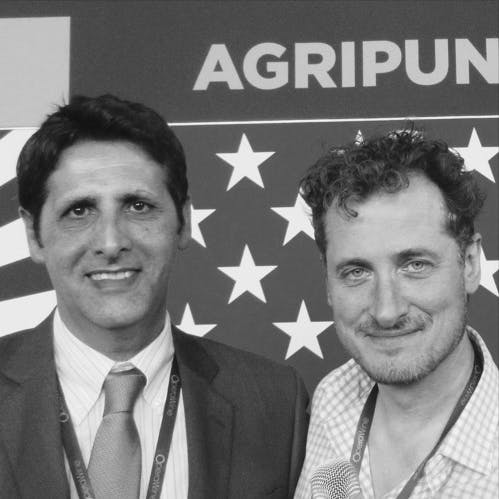
Ep. 123 Monty Waldin interviews Salvatore Santus (AgriPunica) | Discover Italian Regions: Sardinia / Sardegna
Episode 123

Ep. 25 Monty Waldin interviews Valentina Argiolas of Argiolas Winery | Discover Italian Regions: Sardinia / Sardegna
Episode 25