
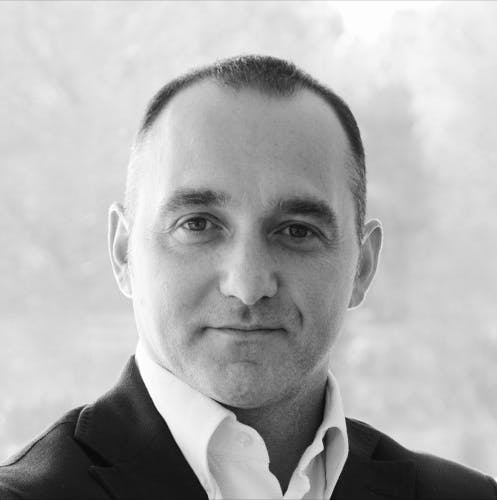
Ep. 179 Monty Waldin interviews Giovanni Mazzoni (Podere Forte) | Discover Italian Regions: Tuscany / Toscana
Discover Italian Regions: Tuscany / Toscana
Episode Summary
Content Analysis Key Themes and Main Ideas 1. Podere Forte's Philosophy: Building a self-sustaining ""Cortes Romana"" (polyvalent farm) integrating diverse agriculture and livestock. 2. Biodynamic Farming: The practical application and scientific validation of biodynamic principles. 3. Soil Health and Life: Emphasizing the importance of improving and measuring the vitality of the soil. 4. Water Management and Conservation: Strategies for collecting and efficiently using water in a dry climate. 5. Sustainable Winemaking: Gravity-fed processes, indigenous yeasts, and careful wood aging for elegant wines. 6. Integration of Animals: The role of various livestock in the biodynamic ecosystem and nutrient cycling. 7. Technology in Biodynamics: Utilizing modern tools like drones for vineyard management and monitoring. 8. Brand Building and Market Strategy: Focusing on the domestic Italian market for high-quality wine positioning. Summary This episode of the Italian Wine Podcast features Giovanni Mazzoni, manager of Podere Forte, an acclaimed biodynamic estate in Tuscany's Val d'Orcia. Founded in 1997 by Pasquale Forte, the estate was envisioned as a ""Cortes Romana""—a polyvalent, eco-sustainable farm. Mazzoni explains how Podere Forte, organic since 2004 and fully biodynamic, integrates vineyards, olive groves, ancient wheat fields, and diverse livestock, including rare Cinta Senese pigs, Chianina cattle, and sheep. A key focus is the scientific rigor behind their biodynamic approach, collaborating with leading soil scientists like Claude and Lydia Bourguignon and employing advanced internal laboratories to monitor and improve soil life and enzyme activity. He details their comprehensive water recovery system, collecting rainwater from all surfaces, and the innovative use of drones for vineyard mapping and experimental biodynamic treatments without soil compaction. The winery itself is a five-story, gravity-fed facility, emphasizing indigenous yeasts and minimal intervention to produce elegant, Sangiovese-based wines. Mazzoni highlights that their primary market is Italy, where brand building is achieved by positioning their high-quality wines in top restaurants and specialized shops, asserting that the wine's ""pure quality"" is its main selling point, with biodynamics as a recognized, complementary aspect. Takeaways - Podere Forte is a biodynamic estate in Tuscany's Val d'Orcia, aiming for a self-sustaining farm model (""Cortes Romana""). - The estate was founded in 1997 by Pasquale Forte, who sought to return to agricultural roots. - It integrates diverse elements: vineyards (12 hectares in production), olive trees, ancient wheat cultivation, and various livestock (Cinta Senese pigs, Chianina cattle, sheep, guinea fowl, bees). - Biodynamic practices at Podere Forte are rigorously scientific, involving soil analysis, enzyme activity monitoring, and collaboration with experts like the Bourguignons. - Water management is critical; the estate has a total rainwater recovery system and avoids irrigation for mature vineyards. - The winery utilizes a gravity-fed, five-floor design, indigenous yeasts, and careful wood aging (larger, thicker-stave barrels) to produce elegant, un-oaked wines. - Drones are employed for vineyard mapping and experimental spraying applications to minimize soil compaction. - The estate's priority market is Italy, focusing on brand building in high-end channels. - The core philosophy is to continuously improve the soil's health and life. Notable Quotes - ""His desire was to recreate and build up his, his dream estate because of family reason... to go back to the roots, to the back to the soil, to the herd."
About This Episode
The Ultra Valley region of Tuscany, where pod rushed was founded by the manager of Tuscany, Giovanni Matzoni, to create vines and cattle. The approach is to improve the soil, which is a fundamental job for them, and they use internal laboratory of analysis and sector of the sensible crystallization. They use animal nutrition and the use of water to recover the vines and wines. The company uses artificial intelligence to identify fruits and avoid overbuilding, and they have a natural refreshing system to prevent overbuilding. The demand is tied to the products pulled from the market and the company has restructure the Batecala, which is a recirculating system of water that works like a natural humidifier of the cellar. The company uses natural refreshing systems and the use of artificial intelligence to identify fruits and avoid overbuilding.
Transcript
Italian wine podcast. Chinching with Italian wine people. Hello. This is the Italian wine podcast with me Montewood. My guest today is Giovanni Matzoni. Giovanni is the manager of Poderri Forte in the Ultra Valley region of Tuscany, which is sandwich between the Montalcino region and the Vino Noble de Montepulciano region. Welcome, Giovanni. Thank you very much. Very welcome yourself as well, in Poderre forty. Okay. So just give us a little bit about the history of the estate because it's quite a new estate, isn't it? Yes. It is, has, been founded in nineteen ninety seven, from, Pasqualiforte. His desire was to recreate and build up his, his dream estate because of family reason because he used to live his childhood in south of Italy in Calabia. And then, after his success in a in the in the electronic equipment for, automotive, he wanted somehow to to go back to the roots, to the back to the soil, to the herd. And so he Well, did his family did his family have farming background there. Yeah. He has in Limbadi that is, Calabrio close to Vivo Valencia. Yeah. He owns land, livestock, and, but suddenly for family reasons, he was obliged to move and he was seven years old in Camo Lake area where he managed to build up his own, entrepreneur success in the electronics. Yeah. Exactly. Exactly. And, more than twenty five years ago, he said, I won't he felt the desire to go back to the roots the family to the soil. And so he has been looking for a place to do his own state. Up to the moment where he found this beautiful, piece of paradise that is Valdorchard, this beautiful valley protected by UNESCO worldwide heritage since two thousand one. And, and he found a very ancient two hundred years old, estate. It was called podere Petruci. Everything started from there. It was at the time only four, five vectors and he fall in love with this podere, and he decided to, first of all, to to give his name to the podere. To podetti. Pouderi Forte? Exactly. And then I started, the the the foundation of the report together with Donato Nati, which the consultant, winemaker? Veronelli. Luci Veronelli was that moment of the foundation and professor Artilio Shenza. So Artilio Shenza is a, Italian wine professor, with various areas of expertise. And Luci Veronelli. So Regi Verineli is one of, Italian wines. He's now, no longer with us, famous, journalist, and he, his preferred style of wine was sort of traditional wines, not wines blasted with oak. So that was the the beginning the report has been expanded to more than, four hundred hectares. See, but that isn't all vineyard. That was it? No. No. No. Absolutely not. Because in the in the desire of Pasquale, he always said, I want to rebuild the so called Cortes Romana. So it's the it's the polyvalent farm. It's the agricultural garden when many elements are between them, link the four integrated to be eco sustainable. So, basically, vineyard, which isn't a vineyard. It's a vineyard part of a larger farm with animals, fruits, vegetation, divals, herbs, etcetera. Exactly. And wild areas forest. Exactly. Exactly. Exactly. Today, Venus represents only twenty hectares planted of which only twelve in production. Then we have about thirty five hectares of, olive trees, fields. More than two seventy hectares are reserved for cultivating ancient variety of wheat. This ancient variety gave us flour to make bread and pasta. I have to say that Forty since the very beginning, has all been managed in an organic way officially from, two thousand and four. And after that, we decide to make an even more important steps towards the, the life in its general meaning that is the approach and the conversion of the whole production too bad dynamic. So we to daily produce, wines, olive oil, honey. We have, as I said, wheat, lots of field to produce wheat, and animals, livestock are part of the farm. We have the, the It was almost extinct thirty years ago. So that's a pig. It's called a chinta. The chinta is mean to belt. It's got a black stripe across its tummy. Exactly. That's a, obviously, yeah, it's a pig, isn't it? This is a pig that is a some taste on the classical pink one. It's more complex, and then then it might taste better. Then, we have a livestock of Kianina, cattle, and, you know, these are these are beef cows. Yeah, the beef, the the biggest white cows with horn, which was used in the past like energy or really as a tractor force in in the fields. It's not a milk producer. It's just for the meat, and, it's famous for the Churyntina steak. The tea bone. Exactly. We need, these cows because we, out to produce our own compost. So we combines the manures from the cows, toning and canoping from the vineyards, the marks from the cellar, only some types of wood from the forest, and these things are used to create, our compost area that mustered for more than fifteen months before been, be give been given back to to the soils, to the fields, to the vineyards, to the olive trees, and so on. So the idea, what, it would be being told is that you're trying to, with biodynamic vineyards, right away and farms, you're trying to close the farm gate, create your own sources of fertility. So by having a mix of animals and and plants, one of which of course is vines, basically recycle everything and compost it and check it and then put it back on So some people say, oh, you're sort of biodynamic, head in the clouds, but there's a lot of science behind what you do. Tell us about the work of Claude and Lidee Voganyo. Well, these are two fundamental, person for pottery forty. We have always had a had a demo like consultants. They are considered to be the best word, scientists for the for the life in the soil. And I have to say that input that referred to any decision concerning the use of each tested, pre tested soil is driven from them. They sides, the best we'll talk, if the best variety, if the soil is located for Venus planting, with Venus planting. Otherwise, we use that for other purposes. Olive trees or fields, whatever, and not Fornias if they say no. So, their job is a fundamental. They are here two, three times every year. They drill, they test. The approach is to have, the most modern means in the laboratory that we have. A scientific approach, thanks also to Lydia and Claude Bogino, so to verify that what we do is correct. So this is very important because often biodynamics are seen as unscientific, and there are, let's be fair, some iron, unscientific as specs to it. But the idea of analyzing your soil before you plant and actually getting it right, having the correct rootstock and the correct cultivar, whether it's a sangiovese or another grape, it just means that your job as a wine grower is easier because you're not constantly having to try and take the stone out of your shoe. And this this is a real logic to what the approach has been taken here. Yes. In the end, the goal is to, as Pasquale Ford always said, is to increase, to improve, to make the soil better than when we both. That means to increase the life in the soil. And this is not only a huge amount of work and, and time and energy, but is also an approach that we want to give because we measure the quality, the life, the use, the enzymes activity in the soil is measured. So the so that we know that every year, we are increasing. We are on the right way, the right path to improve the the life in the soil. The better is the is the is the soil in the life, and probably the better are the fruits that grows on this soil. What water, we're in quite a hot area. Yeah. Twenty seventeen teach us something about lack of water. And, this is this will be one of the key problem in the future. We have to recover as much as possible water resource and consume as less as possible in this way. That's water from the air. It's rain. It's not. Exactly. We're not talking about irrigated water. Exactly. We are not allowed to irrigate. We don't irrigate only this the the younger vineyards before they enter into production So we have a system of, total recovery of the whole raining water possible from the vineyards, we have the channels from their roads, from the roof of the cellar. Everything has been recovered in three different lakes. One following the other one in a in a sort of geodetical step And, and you are trying even more to consume less water, approaching a system and, treatment that are more efficient. So, I mean, how how are you actually sort of connecting the water? Are you doing what the Romans did and and digging little, having little channels where the water drains without eroding the soil? Yes. It's such like that. We have had some really difficult veneers because they are planted in very slow in it like a sort of terrace, and each of these steps has its own channel to recover the water from that specific terrace. And by recovering system is collected altogether into into into lakes. So it's a it's an ancient way of recovering the water exactly as I said. And do you use that water when you're spraying to dilute your sprays? We do use this water for treatment. We use this water younger vineyards, especially the fifth five years when they are not in production when, in like in two thousand seventeen, we we had to give them some, water. Otherwise, we would have could have lost many of them. And for gardening for the animal, we have animal animal, Chintas and Esoport, Karina Keto, they consume a lot of water, and we have to give them water possibly from what has been reigned before. But your pigs, they're living in a little pig pen or they they their natural habitat is the forest where do they live? They, they they live in, and, and, in, in sector enclosed, sector where we divide it by age or even even sex, as far as I know. And they are in a sort of place where they are, close. It's a they are closed in the in the forest, exactly. There is a gate where they can go in and out from this place, which means they are free to go in the forest, which is also the forest closed, but it's a very wide and and and wide area. They are feed it two third of the yearly food from natural outside. So that means that we only give them one third of bird dynamic food to complete their needs. And what about any other animals? Well, it's, it's a collection of, the biggest one, as I said, that are, are, canina kettle? The weather is wet than the canina. Canina cattle, they are free in our fields too. They are born here because we have about twenty of them. And, each year, some, some, some new bird happens. We keep them and we change the park of this animal, only two trees per year. And they are really kept like only for the manure. We don't need that because of the meat. We need their manure, so we treat them as better as possible. They eat in the the the grass in the fields. They are also them able to to stay and I'll pass color, like we say in Italian. In the pasture. And then there are some other animal like the sheep. We need sheep. We have about twenty of them that we use after the harvest and let them free in the vineyards. They clean, really everything. They bites every single battery left on the ground. That would cause problem if left. So, yeah. So, if so being if a grape is left on the ground, it will attract fungus and act as an incubation point for fungus that will then carry over to the season and create problems. And the whole idea of organic by name is prevention rather than cure. So you get the sheep to clean the vineyard up. Exactly. Exactly. And hygiene is the is the is the keyword all over for the report, intervenas, in the cellar, during the all the process. So how are you measuring this success in, obviously, your biodynamic, you have all these animals running around. It all looks very nice, but what about some science behind it? There is a a centrifugal approach. Yes. We have internal laboratory of analysis that is really extremely advanced. And, I would divide it in, entry branches. There is the classical science with the most, modern and performing units and technologies. There is the, sector of the sensible crystallization that is related primarily to the biodynamic approach We should sensitive crystalizations. It's a bit of a strange one. It's where you get a petri dish of crystal space. You drop some wine in it and the crystals form patterns, which may or may not show you if quotes your wine is happy or not. It's just the the way that the crystals form. It's and we have expanded it to not only to wine, but to many things to the, to to to several aspects of the, to leaves, to solids, to compost, to even to the chicken breast that we grow because we compare this with the other ones and the so evidence, the difference. It's a set of sites, it's interpretational science that, help us as a complementary to the classical ones. And there is a third part of the laboratory that we started, two years ago, that, is called a circular chromatography of soil and compost. These allows us to measure to measure the enzymes activity. And you know very well that if you if you don't have water, air, oxygen, and enzymes activity, the soil is almost dead. Because this, because we really invest a lot in time and energy with a goal to improve the life in the soil. But then in the end, always because of the centrifugal approach, we have to verify if what we do is correct. So these exams allows us to say, for example, a two meter deep if the density of enzyme that TV is a number and the following year, this number is increased. That is a confirmation that we are doing well. Tell us a little bit about the wine range from your, entry level wine to your top wine. We produce, today, three red wines based on San Jose. Two of them, we are in Tuscany, the kingdom of San Jose. The first one is Petruccino. That is, a blend of, primarily San Jose. Olbes, eighty five percent is San Jose fifteen in Merlo. The flagship wine is petrucci. There's a pure San Jose Grosso that represents our maximum expression for for for for care, for love and passion, and wine production. Then there's a third wine that is very different because it's not based on sangiovese, but it's based on carbon and franks. It's more on a borderless style. Total production today is around forty thousand bottle when everything is doing well. Well, that's nothing for the and the size of your vineyard is the size of our Venus is in production. In twenty eighteen, there was twelve vectors. Yeah. So you could actually make double the wine because you're so stringent. The yield is very low. The yield is very low because of, tension selection, because of all process that are driven by quality. We are talking of an average yield of thirty hectoliters per hectare. Twenty five hectoliters per hectare for the ground crew soil and thirty five for the primary crew soil. Which is about, or it's less less than half what you could make Exactly. The goal in the future, and we are testing a leading club reviewing are still testing new chance of finding a new soil, vacated for the vines. We would like to arrive to about forty, forty five hectares in the future, so to have a maximum of a one the one hundred and twenty thousand bottle. I forgot to mention that you actually use drones as well to save water. How do you how does that work in the vineyard? It's very important because the the wing drones are already used since a couple of years. They are used to mapping, to map the VIGro or the VINas or other problems. So very useful to have that, that view, that angle from from from the sky. So you photograph the vineyard and you can see if there's a weak spot. Exactly. Exactly. So everything stays. But there are, software able to to to to to analyze the size of the of leaves, the color, and therefore, understands different kind of problems. Another use, but is still experimental is the use of drones with, a nine impeller able to leave, to leave about twelve liters of treatments, treat by dynamic treatments that then will be prepared on the vineyards without touching the soil. If you don't compact the soil, the oxygen, the water is better absorbed by that, and therefore it'll be easier to maintain from the from the life point of view. Okay. And the advantage of that is if it rains, you can just go back the next day without again doing any compaction. Exactly. Tell us a little bit about the winery, the the barrels and the concrete tanks that you own, and the the the levels, the the gravity level. The the the the winery is, is five floor. Only one one and a half far outside, and, all the process happens by gravity. Natural falling. There is the arrival, the upper floor is for the selection of the sort of all the fruits. We arrive to have, a selection by battery. So all the best can go into fermentos at the lower level by gravity. You're fermenting in the mix of We are fermenting in a in a in a wooden tank, different sides. Of course, we don't use any we use all indigenous leaves, and, we don't inoculate anything, and fermentation had pens by hydraulic pressure. So we start this fermentation by hydraulic pressure because we obtain, a milder extraction of the tannins and working with cabernet franc, in tunnels. We want to have a wines that is definitely elegance. After the fermentations are, are happen at, by gravity, we go, in the lower level where there is the aging level, the barrel agent area. That is a combination of wood. It's not barrique. It's not to know. It's not wooden tank. It's a mix of them. More and more we are going in in the larger size, I have to say. And, highly attention is given to this aspect because, you might identify all the previous job and, to obtain an elegant, refine it, wine without, an over body not okay. So we don't want this sort of, style. So we pay a lot of attention in the wood. As I said, is a is a combination of sides. And as far as concern, the the the barrique. We use only the Taransault and from software producer, they are considered to be the best, and with a very higher tension in the selection of the wood, with higher ticker, and we are with with bigger thickness so to have even less interaction between the wood and the wine we don't want. The thick thickestave. Instead of twenty two millimeter, the the the the the the the the body has twenty seven millimeter. That means less oxygen in him and therefore less interaction between wood and wine tokens. We don't want. Even even toastiness is, is something important because they are dedicated for our wine. So we don't we don't want to have impact in the wines. So how do you keep the, obviously, you're underground? What about, keeping it nice and humid? Do you have like an electrical system? It's used only for ten, fifteen percent of the yearly consumption. So we had just restructure the the the one wing of the of the Batecala where we had there's a recirculating system of water that falls from the from the roof into into stones that is that works like a natural humidifier of the of the of the cellar. Moreover, the whole cellar has been, somehow hidden in in the hill. And all around the perimeter, there is the exchange for the waters, for the for the air. So also from thermal point of view, we we benefits of a natural refreshing system, limiting, as I said, that the use of conditioning, only to fifteen percent. And when you can actually hear the water running around, can you? Yeah. It's, the winery, it's like, being in It's a natural sounds of the water that you feel in the in the in the cell. Okay. And then finally, you go to bottling, which is the lowest level. Exactly. The lowest level is, is bottling, where it is the final, work of the of the products, and then the aging, and the rest of the wine in the special lower cellar. So what are your main markets? Main markets is Italy. Really? Yes. Main market is Italy. In twenty seventeen, we had fifty one percent of the volumes distributed in Italy and could be even more. The demand is tied. It's really the products are pulled from the market. I also believe that we will never be, an exporting company in terms of ninety plus percent exported. The brand building is something that you start doing in the domestic market, being positioned in the best ambassador like specialized wine shop, top restaurant, Michelin Star restaurant. We have to be in the one list where the great wines are. And this is Brent Billy. Then we start to export. If I should make a ranking of the foreign countries or a part of Italy, I would say, United States, the historical Europe. So the central part of Switzerland, Benelux, Scandinavia were doing very well, French, Spain, going east in some, Middle East countries, Russia. But is the wine sold as being a really good red wine or really good really good quotes by dynamic wine. What's the sales approach? Well, I think that in this moment, it's, primarily because of a good red wine, really good wine. Biodynamics is made, recognizable in some country. In in in all country, like, Scandinavian, Italy, it starts to be important. I know that there are some action even from the system in Sweden, which says that more share of the biodynamics wine have to be important in the country. That's the monopoly in Sweden. Exactly. Other other monopolies are similar as well. In Norway and in the organic ones. Makes sense, which is a good approach. But I believe that today, if I'm, should say why it's, positioned to the level is because of its, pure quality. So we missed anything. The invitation, please, so advise that, you deserve a visit whenever you're passing by too skinny. Okay. You, what's your favorite animal? You can only take one with you on the farm? Which which would it be? I love the guinea flower. The guinea fowl. Yeah. He didn't tell us about them. Yeah. What do you get any fowl have you got? To be a farm, you know, also not big animal, also the small one, the the chicken, the rabbits, the the guineaflo, the the the docks, so all these things are part of the livestock that is integrated in the system. You've got beehives as well. We got be houses. So how did you how did you are the bea the beehives are at the bottom of the hill. Yes. And the food is that the the food that they like is at the top of the hill, they're kind of pollen. And they're like, why did you do that? Because bees needs water, bees needs flowers. And, so while they go out the early morning to live, so they live near a little lake as well. Their own private lake. Exactly. They they have the water. They have a little lake just close to the to the bee houses, and they wake up in the morning and they go out empty. So they start eating and and and and collecting all the treasure that they can pick up from the hours, and it's easier for them, the evening when they are heavy and full of these elements to fly back to the house. Down. Which means less energy. Otherwise, they couldn't do the the opposite will be too heavy. So, basically, they have to they wake up with them when they're nice and light, they're hungry. They've who light enough to fly up the top of the hill where the food is, the problem they like. They eat it. They get a bit heavy, and then they just wanna fly back home and watch TV. Exactly. Yeah. That's okay. BTV. Okay. Alright, Giovanni. Thanks very much for the, explanation of what is going on in Podele forty in the Orcher Valley. As you mentioned, right at the start, it's a UNESCO World Heritage heritage site, and I think this is one of the most outstanding Viator vineyards on the planet, simply because the quality of the wine is so important. People can talk about biodynamics all they want, but you gotta you gotta produce a product that really shows why this farming system can work, but really it's about this estate being incredibly biodiverse. And there's a real coherency to what they're doing backed up with quite a lot of science as well, not just with the bourguignons, but, others as well that will help them with the sword and stuff. So you can't do a good farming job. If you have a stone in your shoe all the time, you've got to get things right first time. And I think this is one of those estates where they've really set everything up in a in a super way. So I want to say thank you to my guest today, Giovanni Mazzoni from podere Forti in the Orchard Valley. It's been great talking to you and hearing about all the biodiversity here and all your animals, and, look forward to coming back. Follow Italian wine podcast on Facebook and Instagram.
Episode Details
Keywords
Related Episodes
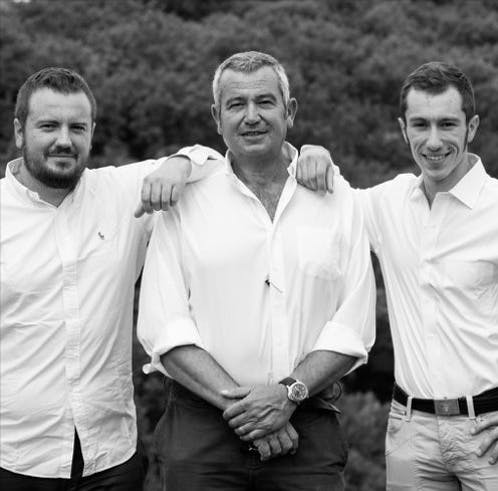
Ep. 293 Gianlorenzo Neri (Casanova di Neri) | Discover Italian Regions: Tuscany / Toscana
Episode 293

Ep. 174 Monty Waldin interviews Caterina Dei (Cantine Dei) | Discover Italian Regions: Tuscany / Toscana
Episode 174
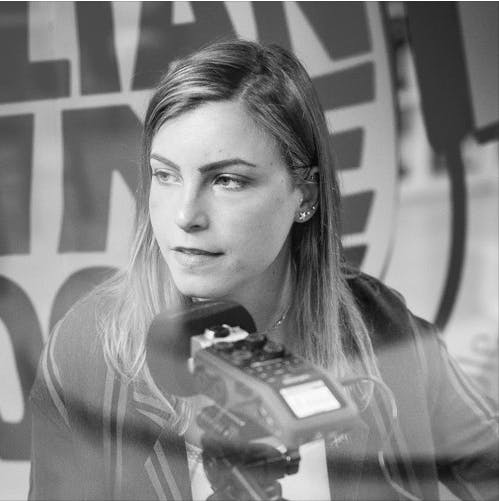
Ep. 164 Monty Waldin interviews Bianca Ferrini (Podere Giodo) | Discover Italian Regions: Tuscany / Toscana
Episode 164
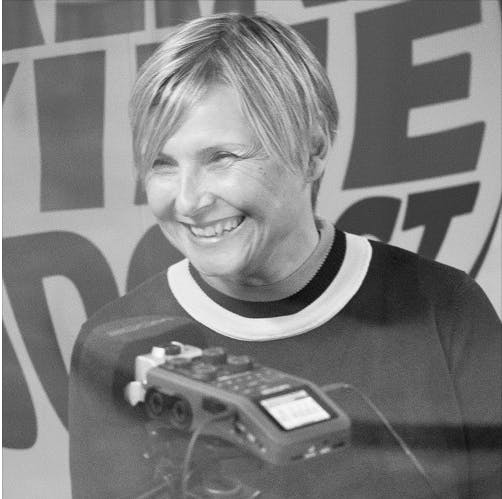
Ep. 158 Monty Waldin interviews Jeanette Servidio (Campo alle Comete) | Discover Italian Regions: Tuscany / Toscana
Episode 158

Ep. 157 Monty Waldin interviews Elisabetta Geppetti (Fattoria Le Pupille) | Discover Italian Regions: Tuscany / Toscana
Episode 157

Ep. 154 Monty Waldin interviews Michele Manelli (Salcheto Winery) | Discover Italian Regions: Tuscany / Toscana
Episode 154