
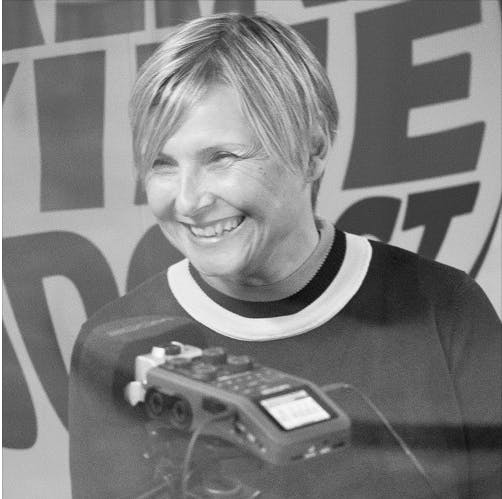
Ep. 158 Monty Waldin interviews Jeanette Servidio (Campo alle Comete) | Discover Italian Regions: Tuscany / Toscana
Discover Italian Regions: Tuscany / Toscana
Episode Summary
Content Analysis Key Themes and Main Ideas 1. Introduction to Campo La Comete winery, its ownership, and CEO Jeanette Cervidio. 2. The unique terroir and historical significance of the Bolgheri DOC wine region. 3. The dominance and success of Bordeaux grape varieties within Bolgheri's production. 4. Strategic investments in winery infrastructure, vineyard management, and visitor experience. 5. The strong collaborative spirit and shared commitment to quality among Bolgheri producers. 6. The dynamics of direct-to-consumer sales versus traditional distribution in the Italian wine market. Summary Host Mark Millen conducts an interview with Jeanette Cervidio, CEO of Campo La Comete, a winery located in the prestigious Bolgheri region on the Tuscan coast. Ms. Cervidio explains the winery's evocative name, its acquisition in 2016 by the Campanian Ferodilio family (Felli di San Gregorio), and the subsequent enhancements to its facilities and vineyards. She details the Bolgheri region's unique soil conditions, which are highly conducive to Bordeaux grape varieties like Cabernet Sauvignon, Merlot, and Cabernet Franc, and highlights the region's historical importance, including the pioneering role of the Sassicaia family. Cervidio emphasizes the strong sense of community and non-competitive collaboration among Bolgheri's relatively small group of producers, all striving to uphold the region's esteemed image and quality standards. The discussion also covers the winery's approach to welcoming visitors for tastings and sales, noting the distinctive challenges and opportunities for direct sales within the Italian wine distribution landscape. Takeaways * Campo La Comete is a Bolgheri winery acquired in 2016 by the Ferodilio family, known for their focus on quality and strategic investments. * Bolgheri is a highly exclusive and high-quality DOC region in Tuscany, characterized by its terroir similar to Bordeaux, favoring Cabernet Sauvignon, Merlot, and Cabernet Franc. * The region's international renown was significantly boosted by pioneering wines like Sassicaia and Ornellaia, which established Italian wines on the global quality map. * Despite being competitors, Bolgheri's 50 producers (40 in the consortium) actively collaborate to maintain the region's premium image and quality standards. * Winery tourism and direct sales are growing, with Campo La Comete aiming for 10% of sales from the cellar, considered high for the Italian market due to its extensive sales representative network. * Wineries are adapting to modern tastes, with a more relaxed approach to professionalism, moving away from overly formal attire in the wine business. Notable Quotes * ""Bolgheri is a so-called DOC of Italy. And here, effectively, the best growing grape varieties are the Bordeaux grape varieties."
About This Episode
The CEO of a wine winery in Tuscaloosa coast discusses changes made since the last meeting, including the addition of new equipment and the use of a new technical and economist. The winery is a blue chip and attracts tourists, with a hybrid drink called Cabanis Sav scoring. The company is open to customers to make appointments and try their wines, and has a small but real possibility of selling up to ten percent of their production in the winery. The company is working on a new project with Jeanette Aligomene, and is working on it with the help of their new CEO.
Transcript
Italian wine podcast. Chinching with Italian wine people. Hello. This is and you're the CEO of Campo Alekomete which is a winer in the bowl Vody region on the Tuscon coast. On the Tuscon coast, a quite new project. Kampo La Commee, it means, field of comments. And we found this, very nice and evocative, name for the winery in history books in Bulgaria, and it was, so now nice soundings that we, decided to take this name for the winery. You talk about this. So the field of comets. Yes. So when you talk about medieval literature, what what the the it was a play that you could see comments from or comments landed there? Or We presume that some saying fall down from the heaven at a certain point. Okay. It's an ancient, top name of the of the region, which you cannot find any longer on the maps, but in history books. So toponym just means a name with the the toponym is a place when an area with a with a special historical name, and they are strictly controlled in Italy. If you're gonna use the name of a place, it has to be registered on the Catastro, which is the land registry obviously, in this case, it is. So you are allowed to use the name. So now who owns the the winery? Is it you? It's not me. The property is Ferodilio, the secapaldo family from Campania, and effectively it's a very first, salsa winery, investing in the north. So normally, it's the other way around, isn't it? It's normally tuscans with lots of money. Absolutely. It is, the world's oldest bank, and they go down and they buy lots of, going out to Sicily and Campania and place like that. Correct. At this time, the tables are turned. I turned around. This because Felli di San Greg audio, producing mainly white wines in Campania, they were looking for several years in order to by something in an important red wine region. And so when, this, project come up in Bulgaria, Antonio Capaldo was very, very proud to to buy this winery. So that was in two thousand sixteen. Two thousand sixteen in February, and it was an existing winery, from, the family Gucci, who, did in San Jimiano. Yeah. Yes. Right. In in San Jimiano, and they made the investment in Bulgaria at the beginning of the nineties. Effectively, the vineyards have been planted between ninety three and two thousand seven. So you've got nice mature vines? Yes. Absolutely. The everything is in a in a full production. So we are very Kiwikos beside us is fifteen hectares, which have been planted in, in former times. We have also, a completely good working functional, mind cellar facility. And so from the beginning, we were able to start with the production. So what have you changed since then? We changed, first outfit of the winery because, which at Inistrotsi built up the wine cellar, but they didn't had the the financial opportunity in order to give a nice outfit. So the outfit is very close to the image of, of February, San Gregory, with a lot of Corten. Corten Wilson. Corten is it's, iron, which is, has a color of Rugenie. Yeah. Rusty color. Rusty. Yes. What do you want for the fermentation tanks, not? No. The fermentation tanks we had already everything, in steel tanks. About the the external. External. Yes. Right. And we, completely renewed the the villa where we can host people and automate tastings, lunches, and so on. And then, obviously, also the yet management be involved, a new, technical, a new analogist, and economist who is taking care of our winery. What have been the main changes in the vineyard in terms of pruning, or plowing, or just general management? Any big changes? Did you take any vineyards as well. There have been hours that weren't on the right rooftop that you replanted or We we haven't replanted right now. There's a project to to pull out, three hectares of medlo in order to plant it in a different, air area where we are renting right now in a higher place. Good area. Very good area. And, we are planting then in this place where the Melo is right now, some whites, like the Valentino. And we already changed the destination of, Alicante, which is not very interesting for my, for myself and for my, idea of the wines of Bulgaria. We changed it into vignon. So when you say alicante, do you mean alicante Bauche de Santurier, or do you mean alicante the old name for Karat Granesh? No. No. Alicante, the the first one. The Tanteria, the the red, the grape that produces rather than the clean pulp, a red up. Yes. And you're replanting the Adakante with? No. We we Well, what would you replace it with? Yes. We replace it with Cabanis Savignon. Okay. So, you know, when we think Bulgaria, we think it's, it's a little bit of border almost on the Tusing Coast. Is that right? Bolgari is a so called dock of, Italy. And here, effectively, the best growing grape varieties are the botuk grape varieties. Why do they succeed then? What makes it special? The soil conditions are very, very similar Bordeaux, but not so distinctive, separated like in Bordeaux. In Bordeaux, we have the left hand at the left bank of the river and the right bank of the river. So left bank mainly cabinet, right bank, mainly Merlo? Yes. And in Boingery, we have, the same, or very similar soil conditions, which are split at, all over the territory, and, effectively, in Chisadilla Oceta, when he married into this, story in, during the second world war. Sasekaya family. Yeah. Sasekaya family. You are very well prepared. He saw the very similar condition and introduced for the first time in forty fourth, company, in in Bulgaria, and nowadays for the disciplinary of Bulgaria, the three main grape varietals, a company, sovignon, where we have forty percent of of the whole territory planted with. Then we have Metlo and have Governor Fran. So the next question, obviously, the Tuscon coast is that part of the Tuscon coast is touristy, but it does tend to attract tourists that are well-to-do. Shall we say that like fine dining and they like fine wine, when few DD Sangerogori decided to buy this, was there one eye on also making a destination for tourists. Is that do you have like a fancy restaurant? Could people come up by the wine direct? Do they get a tele tour? Do they get a five star treatment? You know, massage? I mean, is that is that what the idea was? The idea was for sure to have something in a very, very important, the wine region like Bulgaria where everybody nowadays would like to be, That's a blue chip. When you say, yeah, it's an exclusive region. It's a very exclusive region and very important wine makers like, I came into, alegrini, and a lot of other producers from all over, Italy. So for for Ferrini, San Gregorio, it was a place, and it was a potential. Obviously, we are doing also. We have a shop in our winery. Unfortunately, actually, we don't have rooms in order to host the people, but we are our doors are open in order that everybody can come in, with an appointment, then we take a lot of time in order to to feel people, comfortable and to learn about Bolgari. Without an appointment, you can stop by in any case six days a week, in order to taste our our our wines and wine shop and to make a a brief, seller tour inside the the finery and might also some wines if you like them. So what what is the communication like in Bulgaria? Cause I I spent a lot of time in Bruno land in Montalcino, and there were about two hundred and fifty producers. So it's quite a big herd of animals that you have to every day into the barn to try and get them together to talk, which isn't always easy. In Bulgaria, it's a little bit, it's even more exclusive, we could say, and you got a smaller, it's a smaller pack, a smaller herd. How how well do you guys get with each other. I mean, obviously, you're promoting it as a five star area, luxury accommodation, five star dining, premium price, super premium price wines in the main. How do you how do you make sure everybody's on the same page? Bolgary is to expand expensive and too small in order not to be on the same page. So, effectively, we are fifty producers on the on the territory of this fifty producers forty are into in the, the consortium of Bulgley, and we are working really, very, very together in order that everybody is keeping very high. This quality standard and the image of BOGory because, the whole, planted vineyards are one thousand three hundred heck us. This is quite small. Very small. It's half of Pronello, area. And so, we are promoting Walgley altogether because we are neighbors, we are friends, we are not competitors because everybody has their own personal style and their own personal, soul condition and terroa. So we really don't feel competitors. So we are very friendly each other, in order to figure out and to work out Bolgari because effectively, Bolgari is not so well known, even if the most well known wines of Italy are coming from, Bulgaria, like on Alaya and Asicaya, which made, Italian wines well known all over the world. Yeah. It gave them a a stamp on the international market, didn't it? Of super premiumization and aspirational, aspirational red wines, which kind of cool other regions, into the, mostly in the twentieth century, but pulled other Italian regions, to aspire to reach those, those heights. Yeah. Absolutely. Yes. And to make a Italian wine were, known as quality wines on the on the international market. Based on the quality we can have in Bulgaria, obviously, then other producers came in and, would like to be on this territory in order to show what, what can be can be done here. Okay. Final question is just the main market. I mean, well, how much do you sell? Do you sell from the winery if I drive in and make an appointment? Can I drive from the win? So what roughly what percentage of sales are direct from the winery? You know, actually, it's, quite small because we started only a year ago in order to market our wines, but, I think in the future because Bolguri is very attractive and the the tourism, is high level tourism, we can, sell up to ten percent of our, our of our production in inside the, the binary. This is a very, realistic, preview. Actually, obviously, we have to work in order to to arrive to this. Yeah. I mean, ten percent doesn't sound is actually quite high for direct sales, in in in this level. In Europe, in Italy, yes. Because, you know, in in America or in in as a country, in in Australia, the distribution is completely different. So, maybe for, in America, you can also sell fifty percent of your production in the winery. But in Italy, ten percent is quite a good number of of sales because, you know, we are we are we're having more than hundred sales reps in Italy selling our wines directly to to restaurants and shops. So these are obviously very, very, strong on the market. Yeah. It's funny you mentioned California. One of my early jobs in Wyoming is working for California I was the little guy in the wine shop and on Saturdays, you know, we had obviously Americans mainly would come in and ask to taste the wine. So I got a good experience of, of working in a winery wine shop. And, and it's what I did learn the wines that I often like, they people wouldn't like, but the wines I didn't like so much they would buy. So what it teach taught me was, everybody's taste is different and nobody's taste is is right. Yes. If you like it. I absolutely agree with you. Do you think I get a I need to smarten up a bit. I'm not I'm a bit scruffy today. You have our our color, so I think it's good. Yeah. But no genes, I guess. Yeah. No. It's not necessary. Tye? No. Or get better formal. You know, wine business in meantime is not not any longer business only for for high level and only occasional drinking. It's, everyday drinking, and so enjoying, and it makes the day becoming more beautiful and, more staying. So, tie and, and so on. It's not any longer necessary in in the wine business. Okay. Well, I'll I'll stick an application in the post to you as soon as you're the CEO of campo Aligomene. A lovely French Italian mix? It's a lovely French Italian mix in the name, but in reality, it's a lovely, German Italian mix because my mother is German, my father is Italian. Yeah. Okay. Alright, Jen. Thanks very much for telling us about Campo Ali Cametino in particular about what's going on in Bulgaria right now. New project, I think a very exciting project and is a very dynamic young man, and you're gonna do some great stuff, both for your company in particular, and it's anyone in general, I guess, because you make a lot of noise, but what you the noise that you make, it's always nice to listen to. Thank you, for for taking the time to talk with me, the, our, projects for ambitious, and we will, for sure be a new upcoming star in the in the task and and Oh, upcoming star. The comet, we caught it. It's that's synchronicity that we're getting ideas fantastic. Stick. You know, that's that's great. You shouldn't if you listen if they fire, you could write scripts for movies or something like that. You'd be great. It'd be fantastic. Okay. She'll say, thanks very much. Again, to Jeanette Cervidio, CEO of Campo Ali in Bolgari on the task and coast. Great to talk to you. Very, very entertaining. And I look for to see you in the marima. In the marima. You and everybody else who would like to Oh, I wouldn't invite the crew here. They'd be drinking. They'd empty the whole wine shop and the cellar within about three seconds. Okay. Then only you. Okay. Nice to meet you. Bye bye. Thank you. Follow Italian wine podcast on Facebook and Instagram.
Episode Details
Keywords
Related Episodes
Ep. 395 Milena Pepe | Discover Italian Regions: Campania
Episode 395

Ep. 306 Monica Colangelo (Nativ) | Discover Italian Regions: Campania
Episode 306
Ep. 293 Gianlorenzo Neri (Casanova di Neri) | Discover Italian Regions: Tuscany / Toscana
Episode 293

Ep. 190 Monty Waldin interviews Federica Capobianco (Silvio Carta) | Discover Italian Regions: Sardinia / Sardegna
Episode 190

Ep. 187 Monty Waldin interviews Chiara Meloni (Tenute Olbios) | Discover Italian Regions: Sardinia / Sardegna
Episode 187

Ep. 179 Monty Waldin interviews Giovanni Mazzoni (Podere Forte) | Discover Italian Regions: Tuscany / Toscana
Episode 179