

Ep. 29 Monty Waldin interviews Thomas Bar of Antico Podere Gagliole | Discover Italian Regions: Tuscany / Toscana
Discover Italian Regions: Tuscany / Toscana
Episode Summary
Content Analysis Key Themes and Main Ideas 1. The historical legacy and evolution of Galliore Winery in Chianti Classico. 2. Thomas Peire's journey from law/banking to pioneering winemaking. 3. The significance of the Sangiovese grape in Chianti Classico. 4. The pioneering role of the Pansano ""Conca d'Oro"" sub-region in community-driven organic winemaking. 5. The intersection of Chianti Classico wine, food, and cultural tourism. 6. The challenges and dedication involved in maintaining a historic, organic winery. Summary In this episode of the Italian Wine Podcast, host Monte Walden interviews Thomas Peire, owner of Galliore Winery in Chianti Classico. Peire shares his unique journey from a career in law and banking in Zurich to purchasing Galliore in 1990, an estate with a history dating back to 994 AD. He discusses the challenge and reward of respecting such deep heritage in winemaking. The conversation highlights Galliore's growth from five to nineteen hectares and their acquisition of a vineyard in the famous Pansano ""Conca d'Oro."" Peire emphasizes Pansano's unique terroir and microclimate, which is ideal for Sangiovese and fosters a strong community of organic producers. He proudly notes that Pansano is a leading example of a near-total organic zone in Italy. Peire discusses the importance of Sangiovese as the core grape of Chianti Classico and shares personal food pairings, including the unique Tuscan dish ""ravioli aperthi."" He also addresses the role of tourism, describing how visitors to the Chianti Classico region seek not just wine, but also history, culture, and the distinctive countryside, exemplified by Galliore's ancient dry stone wall terraces. Peire concludes by expressing his family's commitment to producing one of Tuscany's best wines and preserving their historical legacy for future generations. Takeaways * Galliore Winery boasts an exceptional history, dating back to 994 AD, deeply influencing its winemaking philosophy. * Thomas Peire's transition from an international banking career to becoming a dedicated winemaker highlights a passion-driven pursuit. * The Pansano ""Conca d'Oro"" within Chianti Classico is a unique terroir renowned for its Sangiovese and is a pioneering region for community-wide organic winemaking. * Sangiovese is considered the foundational grape of Chianti Classico, capable of producing exceptional wines on its own. * Tourism in Chianti Classico is multifaceted, attracting visitors who desire a blend of wine tasting, historical exploration (Florence, Siena), and cultural immersion. * Maintaining historic estates like Galliore involves significant dedication to preserving unique features like ancient dry stone wall terraces. Notable Quotes * ""It's quite undertaking to pursue winemaking on this older state."
About This Episode
The speakers discuss the history and success of Italian wine culture, including the acquisition of Galliore winery and creation of a small vineyard in the Concord in tetano. They emphasize respecting heritage and local culture for winning winemaking, with the traditional Italian terroir and surrounding areas being important for sang-weightese wine. They also discuss the characteristics of Canti Clasico and Sanjuvasi, their success in winning winemaking, and their desire to make a better wines. They mention a document about a Langobard King giving Gal us the stage to his son on the occasion of his marriage.
Transcript
Italian wine podcast. Chinching with Italian wine people. Welcome to the Italian Podcasts with me, Monte Walden. My guest today is Thomas Peire of the Galliore, winery in Chianti classico. In Castelina. So, Thomas, where are you from originally? Originally, we are from Zurich Switzerland. I started out as a lawyer and then was, banker. And in my third life started to produce wine, we were able to buy Gallur in nineteen ninety. The estate itself dates back to nine hundred and ninety four after Christ. So, it's quite undertaking to pursue winemaking on this older state. So when you say it's an undertake do you mean respecting respecting respecting the heritage and the tradition? We try to put the heritage and the tradition into our bottles. How were you received when you first arrived in nineteen ninety? You were probably like the second wave of of, say, non Italian stuff. That's right. We were always received very kindly, and the local producers always were very helpful sharing their experiences with us. And gradually, we started out with five hectares, and now we have nineteen dollars. Well, that's a nice size, nineteen. In two thousand eleven, we were able to buy a small vineyard in the famous Concord in Pansano. So what's the Concord or why is it so famous? The Concord is famous for its terroir and for its location. It has a singular, a terroir, and a singular location. So is it is it flat? No. It's a it's a shell like the name says, and therefore it reflects the sun beautifully. And with the earth that is there, it absolutely makes an amazing wine. How are you dealing with all about? Obviously, it's the Concord is a very sunny, warm microclimate, and that's important for sangiovese wine? That is very important for sangiovese wine. We have about ninety percent sangiovese grape in, Pansano, and, the grape quality there is absolutely ideal. We also started out making, biological wine and grapes in Pansano as all our neighbors also are because Pansano has a special microclimate, which lends itself very well to biological winemaking. So in the Pansano group, it's you're sort of one of the leaders in Italy for producers getting together talking to each other. And and you've got like a almost a total organic zone that haven't you? That is correct. There is a very close, relationship in coordination among the producers in Pansano. So the idea was that insects that might eat grapes fly around and don't respect boundaries. Right? Exactly. That makes it much more, much easier to make biological wine in Pansano than it is in Castelina, where first of all, the microclimate is diff is different. And second of all, the neighbors are not all as biological as they are. In Ponzalo. Do you have other producers coming to you from other regions to say, to look at Kianti? Cause Kianti's such a complicated wine sometimes in a complicated region, and people think it's a bit stuck in the mud, a bit old fashioned, but this is pioneering, isn't it? This organic project? I think, it's pioneering in the biological way. I think, the way we are doing it is, is very much state of the art. So let's talk about the taster. Your the main grape is Sanjay. That's right. So what makes Canti Clasico and Sanjuvasi such a good man? Well, Canti Clasico a rich is Sanjuez, and only more recently where other grape variety is added. So I think the out of stone grape of Canti Glassico is Sanjuez, and I think especially if you have a good terroir and a good location you should be able to make an exceptional sangiovese which can stand alone. So what do you, when you have dinner after a long day talking with your organic neighbors, when you go home, what do you, what do you make for dinner to have with your with your key and classico. We usually have, red meat, but occasionally also pasta, depending on the year, on the vintage of the sangroveza that we drink. So when you say pasta, what pasta with what, but just come up with a tomato. We have a special in our house, ravioli aperthi. Go on. What's that? We have a Tuscan Cook who, has a specialty ravioli aperthi. These are very, very thin ravioli that are not closed and are usually filled with spinach or ricotta. Do you get a bit of pressure from, Mrs. Bear about eating more vegetarian food and avoiding the steak? That's true. That's true. So how is tourism affecting Canti, both the plus, the positive side and the negative side? I think it's starting to come back again. It used to be or the past few years was a bit weak, but, we're seeing a influx again of, tourists coming from all over the place. The Kianti Glasgow region is situated between two of the most famous cities in Italy, Florence and Sienna. That's correct. So how is the type of tourists that you get, what do they look for? Do they just want to taste wine, or do they want a bit of history in culture? No. They want to be of history. They want to, of course, see Sienna. They want to see Florence. And, they also, they want to see the countryside, especially our estate, is is worth a trip because, RSA in Caselina is characterized by these dry stone wall terraces that you don't very frequently see nowadays. So where did the stones come from? These are local stones that came from where this where the terraces are really made. So they came out of the soil when the They came out. Exactly. Were being created and being worked by the pine boxes. And they gradually decay over time and turn into sand, and that may the territory what it is. Okay. So just looking at you now, you're not a young man, but when I look at you, you are a young man. You sort of made your smile and, your enthusiasm. And, so what keeps you going? Well, I think we want to, on behalf of the family, my children and grandchildren take a keen interest in the progress of the winery and help us, and, we try and, want to make one of the best wines in Tuscany. And just go back a little bit to the history. You think your your history or six goes back to nine hundred? Nine hundred and ninety four. We have a document in the historical archives of Siena, where a Langobard King gives Galulae the stage to his son on the occasion of his marriage. So you're the you're the modern day king about to hand over the next generation. That's right. Thomas Bear. It's been a delight to talk to you. I hope to come and see you in, Kianti sometime in the future. Thank you. You're more than welcome. Thank you. Follow us at Italian wine podcast on Facebook.
Episode Details
Keywords
Related Episodes
Ep. 968 Map 13 Alsace | Jumbo Shrimp Maps
Episode 968
Ep. 942 Map 3 Bordeaux Right Bank | Jumbo Shrimp Maps
Episode 942
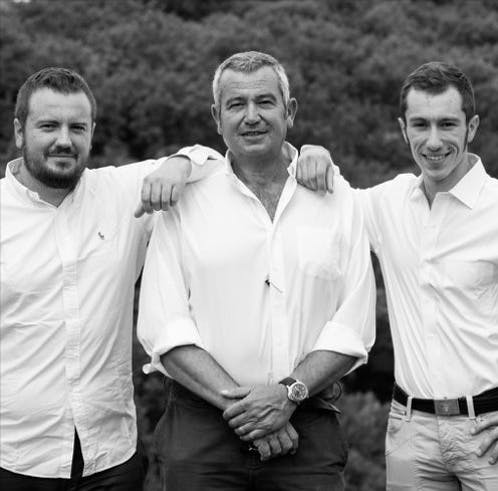
Ep. 293 Gianlorenzo Neri (Casanova di Neri) | Discover Italian Regions: Tuscany / Toscana
Episode 293
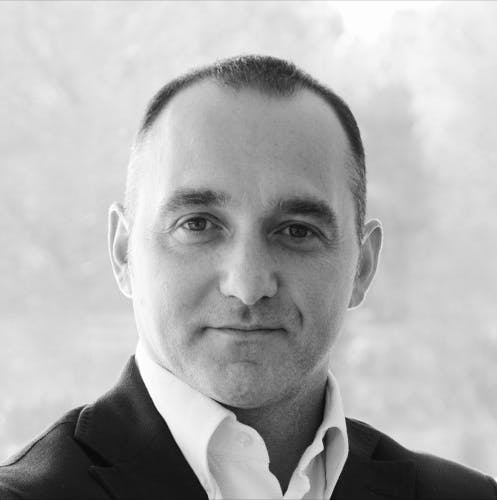
Ep. 179 Monty Waldin interviews Giovanni Mazzoni (Podere Forte) | Discover Italian Regions: Tuscany / Toscana
Episode 179

Ep. 174 Monty Waldin interviews Caterina Dei (Cantine Dei) | Discover Italian Regions: Tuscany / Toscana
Episode 174
Ep. 164 Monty Waldin interviews Bianca Ferrini (Podere Giodo) | Discover Italian Regions: Tuscany / Toscana
Episode 164