
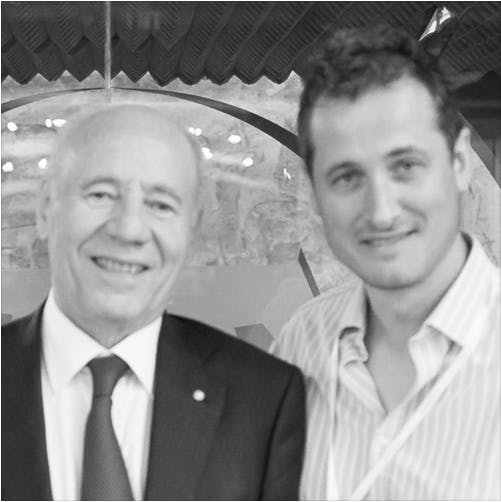
Ep. 34 Monty Waldin interviews Alessandro François (Castello di Querceto) | Discover Italian Regions: Tuscany / Toscana
Discover Italian Regions: Tuscany / Toscana
Episode Summary
Content Analysis Key Themes and Main Ideas 1. Family History and Legacy: The podcast delves into Alejandro Francois's French ancestry, his family's move to Tuscany, and the multi-generational ownership of Castello di Querceto since 1897. 2. Traditional vs. International Varieties in Chianti Classico: The core discussion revolves around Castello di Querceto's commitment to Sangiovese and other ancient Tuscan grape varieties for their Chianti Classico, contrasting with their production of ""Supertuscan"" wines using international grapes. 3. Winemaking Philosophy and Experimentation: Alejandro details his grandfather's foresight in planting 100% Sangiovese and his own passion for experimentation while upholding traditional Chianti Classico standards. 4. Impact of Climate Change on Viticulture: The episode touches upon the current favorable effects of climate change on high-elevation vineyards in Chianti Classico. 5. Family Succession in the Wine Business: The positive aspect of Alejandro's children and their spouses all choosing to work within the family winery. 6. Historical Significance of Castello di Querceto: The winery's status as one of only 21 Chianti Classico estates with over a century of continuous family ownership. Summary In this episode of the Italian Wine Podcast, host Monty Waldin interviews Alejandro Francois of Castello di Querceto in Chianti Classico. Alejandro shares his unique family history, tracing his French surname to ancestors who arrived in Tuscany with the Grand Duke of Lorraine in the 18th century. He then recounts how his grandfather acquired Castello di Querceto in 1897, establishing a deep family legacy in Tuscan winemaking. Alejandro highlights the winery's historical commitment to tradition, noting his grandfather's pioneering decision to plant 100% Sangiovese vineyards for Chianti Classico, a practice now highly valued. He explains their current winemaking philosophy: using Sangiovese and other traditional Tuscan grapes (Canaiolo, Colorino, Ciliegiolo, Malvasia Nera) for their Chianti Classico, while also producing ""Supertuscan"" wines from international varieties like Cabernet Sauvignon and Merlot, which are not labeled as Chianti Classico. Alejandro discusses his personal journey into winemaking, leaving an engineering career at 45 to join the family business. He also touches on how their high-altitude vineyards are currently benefiting from climate change and expresses immense pride that his entire family, including his children and their spouses, are actively involved in the winery, ensuring its future. Takeaways * Alejandro Francois's family, despite French origins, has a long and significant history in Tuscan winemaking, owning Castello di Querceto since 1897. * Castello di Querceto is one of only 21 Chianti Classico wineries with over a century of continuous family ownership. * The winery maintains a strong traditional focus, using Sangiovese and other indigenous Tuscan grapes for its Chianti Classico. * They produce distinct ""Supertuscan"" wines using international varieties, deliberately not labeling them as Chianti Classico. * High-altitude vineyards (400-550 meters above sea level) at Castello di Querceto have so far found climate change beneficial. * Alejandro Francois made a passionate career shift from engineering to viticulture in his mid-40s. * The winery possesses a remarkable collection of historical vintages, demonstrating the aging potential of their Sangiovese. * Family succession is a strong point, with all immediate family members actively involved in the winery's operations. Notable Quotes * ""My family name is French because my ancestor came from Lorraine in the eighteenth century..."
About This Episode
Speaker 1 asks Speaker 2 about their role as a minister of Grand Duke of Lorraine and their family history as a wine and family tale. They discuss their wine style, traditional vines, and their involvement in French grapes, including their experience with international varieties. Speaker 1 asks about Speaker 2's clients' preference for traditional varieties of SanjGenerationza and international varieties over their own. They also talk about their desire to avoid climate change and focus on their own vines. They discuss their success in reducing climate emissions and their love for history.
Transcript
Italian wine podcast. Chinching with Italian wine people. Welcome to the Italian wine podcast with me Monty Walden. My guest today is Alejandro Francois, of the Castello de Quercitta winer in Canti Glasgow. Welcome. So first question has to be, you have a French sounding name? Yes. My family name is French because my ancestor came from Lorraine in the eighteenth century, exactly, in the seventeen forty five, when, Tuscany was, started to be governed by the grand duke of Lorraine. Of course, when the grand duke moved the front seat of Florence, he decided to bring together some of the most important collaborators. So do you know what your family was doing there? Were they lawyers then or were they advisers to the the the Duke or what what was their role? No. My ancestor was only a minister of Grand Duke of Lorraine, but only when, he became older, he was called the Invin. Invin, because in the meantime, the grand duke of Lorraine married with Maria Theresa de Austria Azurgo, and they became also not only grand duke of Tuscany, but also imperator of Sacramento Romano impero. And then for this reason, he moved it to and they lived in VIN. And when my ancestor arrived to the at the end of his work in life, it was called in VIN, and the there, the imperator gave it to my ancest that the detail that they use it in this period, the Marcus Titol. Oh, so are you a Marcus as well then? Yes. Yes. Because I'm, I'm on the same family. Marquezi. Yes. Yes. Yes. Yes. So did you did your family family estate, the Castella deco to be in the in your neighborhood? Not immediately, but, after three generations, my grandfather decided to buy Castello decoerceto because it was the very passionate and they the culture and the mail in the wine field, and they bought this property in which year? In the eighteen ninety seven. Eighteen ninety seven. Eighteen ninety seven. Eighteen ninety seven. And, consider that in the Canti Classic region, there are about a six hundred agricultural company, but only twenty one, they have the same money from more the hundred deal. We we are one of the twenty one. Then Castalo Cercetos must be considered a really very historical company in the in the region. In terms of the way that you work, obviously, talk about history and tradition as a wine producer, would you describe your wine style as modernist, traditional, or a between the two? At the beginning, my grandfather was very passionate about the wine. And, quite frankly, he decided to plant a specialized veneers in the in the last years of the nineteenth century. And he planted the Evinias with San Giovanni hundred percent against all the use of this period when everybody was planting Venus with mixed different varieties according to the the blend in the side of the bay, Betino Ricales. But, my grandfather planted these vineyards called it the La Corte, and that we produce we still produce La Corte, like a a wine, but the reason was that he want to produce a wine to drink for his family because everybody was selling only wine, with the the blending of Matinore Castle. And then we are very happy now and very lucky because we have a collection of the wine produced from La Corte Venus. And, when we celebrate the century of the property twenty years ago, organize the vertical testing of the wine from this Venus, and we tested sixty different vintages covering ninety years of story. And it was fantastic. And the many, very important journalists of that time, they wrote some, article where, they described the the testing note of this, this vertical testing among the sixteen vintages. The oldest one was ninety three years old. We found the twelve still perfected and everybody was very astonished about this. And the the oldest one, ninety three I saw that was one of the best. So you talk about tradition and San Jeveza, which is the grape that's synonymous with Tus and wine in general and Chianti Clasico in particular. What about the arrival of French grapes from Bordeaux? Where after I started to be involved in this family business, it means about thirty five years ago. I liked it to do many experiments because I like to do experiment. And I planted many international varieties, but we decided to continues to use in our county classic, all the traditional varieties. We don't use our county class who has ninety five percent of San Giovanni about and the small percentages of all traditional grapes of the valley, like canagiolo, Colorado, chile giolo, Malvasianir, but no international variety. We produce four, five wines with the threshold variety, but I don't use canned don't call Kianti Glassico, them. They are the one that everybody in the world is calling Supertuscan. And then now they are officially I GTf, from Coli Delatosca Machentrada. Do your clients tell you that they prefer the traditional varieties of Sanjuveza and the ones that you mentioned over the international varieties over myrlo or cabinet. Is there a division in what people say? Of course, they are. It's difficult to to tell if it's, I prefer one on the other because, in the wine field, every, everyone has his personality, his character, everyone produce different emotion to the people they test them. I'm not able to answer if I prefer one on the other. They are different one. The hardest question I have received that many many people give to me is what is the wine you prefer. I have different emotions. When they test one, maybe chignale is one of our super tuscan wine. So what's the what's the plan for chignale then? Chignale, it's, it's a blinding is eighty percent of cabernet sauvignon, twenty first at Omer law. And what is in terms of your your traditional Canti classico, you have all the local grapes in that, like, Kanayola, you mentioned them? Yes. Yes. So what if what if you just tell me the names of these Nate grapes some of the dominant flavors of them, obviously, sangiovese plus Mavazianera, can Iolo? Quite frankly, in my opinion, perhaps, that canticrada should be produced only with sangiovese. But I don't want to lose this traditional variety, and then we continue to have a very small, very small area with canayola, with, Colorado, and, we continue to use about a very, very small percentage. How are you dealing with climate change? Well, for us, I think, until now, it's, it's good this change, ma'am. Because, our valley is at the high elevation above the sea. Our vineyards between, four hundred to five hundred fifty meters above the sea level. That means that, maybe if you had in the past some problem was because it it was not enough food. For the moment, it's, for us, it's favorable. This is the change. I don't know what will happen in the future, of course. So who will who's going to succeed you in your fa is it gonna be a family succession when you retire? Who's going to succeed you? Well, I consider me very, very lucky because, without ask anything to my son, my daughter. Everybody decided to work in the company. Not only my son and my daughter, but the wife of my son, the husband of my daughter, everybody work in the company. And then, of course, I consider that it's not, not often happened. This Just the names of your son and your daughter, what do they do? My son is Simone. My daughter is Leah. The wife of my son is is Stefan. The husband, my daughter, is Marco. Between your son and your daughter, who does the vineyards and who does the winemaker? The winemaker was, made by me for a long time. Also, if I never study study analogy, but, I was out to deduct down the neurologist because I started to be involved in this family business because I had a big passion. My profession before was completely different. I live at the Milan. I work at the engineering field, And, in the middle of my life, I decided to start a new life. And then when I was forty five years, I abandoned my profession, I moved to Castero De Cortredo, and, because of the big passion, I wanted to be in, first line, And then, I started to to make the analogies for a long time. Of course, now I have an, analogist in the company because, the majority of my time now is traveling around the world to explain to the all the people in the world, what is the emotion that my wife can produce. And if and if talking about wine doesn't work out, you'll be an excellent history teacher telling us about Napoleon and the French history in Tuscany. Alejandro Francois, thank you very much for coming in. I hope to see you at Castelladique Cortcito sometime in the future. Thank you very much indeed. Thanks. Follow us at Italian wine podcast on Facebook.
Episode Details
Keywords
Related Episodes
Ep. 968 Map 13 Alsace | Jumbo Shrimp Maps
Episode 968
Ep. 942 Map 3 Bordeaux Right Bank | Jumbo Shrimp Maps
Episode 942
Ep. 293 Gianlorenzo Neri (Casanova di Neri) | Discover Italian Regions: Tuscany / Toscana
Episode 293
Ep. 179 Monty Waldin interviews Giovanni Mazzoni (Podere Forte) | Discover Italian Regions: Tuscany / Toscana
Episode 179

Ep. 174 Monty Waldin interviews Caterina Dei (Cantine Dei) | Discover Italian Regions: Tuscany / Toscana
Episode 174
Ep. 164 Monty Waldin interviews Bianca Ferrini (Podere Giodo) | Discover Italian Regions: Tuscany / Toscana
Episode 164