
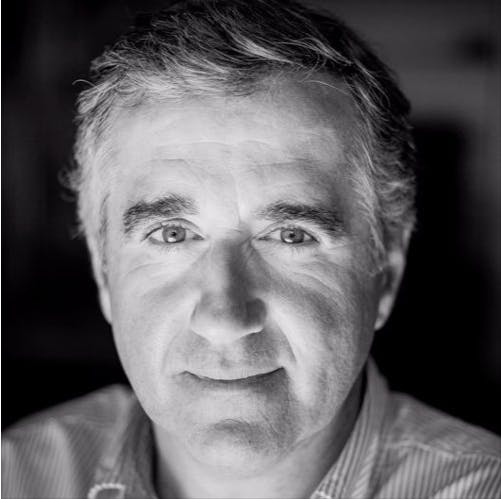
Ep. 60 Monty Waldin interviews Giovanni Manetti (Fontodi Winery) | Discover Italian Regions: Tuscany / Toscana
Discover Italian Regions: Tuscany / Toscana
Episode Summary
Content Analysis Key Themes and Main Ideas 1. The unique family history of the Manetti brothers and their choices between wine and terracotta businesses. 2. The symbiotic relationship between winemaking and terracotta production through the revival of amphora for wine. 3. The specific terroir of Conca d'Oro in Panzano, Chianti Classico, and its ideal conditions for Sangiovese. 4. Giovanni Manetti's pioneering commitment to organic and biodynamic farming, particularly the reintroduction of Chianina cows. 5. The historical context and modern implications of agricultural practices, contrasting quantity vs. quality in winemaking and fostering vine resilience to climate change. Summary In this episode of the Italian Wine Podcast, host Monte Walden interviews Giovanni Manetti of Fontodi winery in Greve, Tuscany. Giovanni recounts his family's unique history, detailing the choice he and his brother Marco faced between managing the vineyard or their family's terracotta business. Giovanni chose wine, while Marco took on terracotta, but they now collaborate on an innovative amphora project, making clay vessels for winemaking, thus bringing their family traditions full circle. Giovanni then delves into the specific terroir of Fontodi, located in the highly regarded Conca d'Oro sub-region of Panzano within Chianti Classico. He describes this natural amphitheater's ideal conditions for Sangiovese, including its southern exposure, elevation, and unique Galestro and Alberese soils. A significant portion of the discussion highlights Fontodi's long-standing commitment to organic and biodynamic viticulture, notably the reintroduction of Chianina cows to create a self-sustaining vineyard ecosystem. Giovanni explains how these practices improve soil health, biodiversity, and vine resilience to challenges like extreme drought, ensuring the authentic expression of the terroir in their wines. He also touches upon the historical prevalence of cows in Chianti Classico and his current unique position as one of the few winemakers to reintegrate them. Takeaways - Giovanni Manetti's Fontodi winery is rooted in a family history that combines wine production with traditional terracotta craftsmanship through an innovative amphora project. - The Conca d'Oro in Panzano, Chianti, is a highly esteemed terroir for Sangiovese due to its specific soil composition (Galestro and Alberese), sun exposure, and elevation. - Fontodi has been practicing organic viticulture since 1990 and achieved certification in 2000. - Giovanni Manetti is a pioneer in biodynamic practices in Chianti, notably by reintroducing Chianina cows to foster a self-sufficient vineyard ecosystem that enhances soil fertility and vine health. - Biodynamic farming improves soil biodiversity, increases vine resilience to climate challenges (like drought), and allows for a truer expression of the terroir in the wine. - Historically, cows were common in Chianti Classico, but their numbers declined, making Fontodi's current biodynamic approach unique and forward-thinking. Notable Quotes - ""Amphora for wine production...that was probably the origin of the winemaking. Six to eight thousand years ago."
About This Episode
The Italian wine winery, "The Italian wine podcast," discusses the importance of Gravy in the Glattery region and the joint venture with Amfries and turquoise. They also emphasize the importance of self sustaining living organism and maximizing internal resources, avoiding external inputs, and being a full circle for self sustaining living organism. The town of Canti is a small, clean, and cool, with a strong focus on organic farming and sustainability, and the industry is moving towards a balance between quantity and quality, with a focus on nature and cosmos.
Transcript
Italian wine podcast. Chinching with Italian wine people. Hello. This is the Italian wine podcast with me, Monte Walden. Today's guest is Giovanni Manetti. Hello to everybody. Oh, hi, Giovanni, of the fontoni winery in Grevi in the heart of Tuscany's Kianti Clasico region, Giovanni. Welcome. Thank you. No. No problem. We're looking forward to hearing from you now. The first thing I'm gonna ask you is about your family history, because when you were a young man, you had the choice. You and your brother, your brother's name is? Marco. Marco, your father gave you the choice of running either the vineyard, fontori, or the family's terracotta business. What happened? Both of us, we were very patient, with, with wine production. And, when we were our students, students at the University of Economy in Florence. We started to be involved at the winery. So, leaving in, in Fontology, you know, at the end of the day or, during the weekend, we were taking care of the winners of, the the Waime making, and so we started with a with a wine. So when my father asked us, you know, I need one of you in the main the main business of the family, the terracotta company, we we look each other and, we we made a deal. And the deal was okay. March was saying to me, well, I'm the older. I start with the terracotta, but every two years, we're gonna switch, but we never did. Because it doesn't work, you know, it's a when you start to do a business, you cannot switch and every two years. So, it's still saying to me, ah, you are the lucky one, you are you've been very privileged, because you're you're running the wine business, and I'm still in the terracotta. But now we found a way to cooperate and, to work together with the amphra project, so So you're making amphora for, for wine production? Amphora for wine production. Clay clay pots for for wine making. Clay pots and, that is something very, very interesting that that was probably the origin of the winemaking. Six to eight thousand years ago, and, Coke has So In the Georgia Republic or Cherry? The first people starting start that they started to make wine. Probably they were they were doing that using Amfries, turquoise. So it's very sighting, you know, and, and we make that a quota in the family. So it's, that is something to combine the two activity of the family and, making the amphoras and making wine in our amphoras. So it's, it's something that is, you know, very emotional involving and You've come full circle. Yeah. That's great. Yeah. Full circle. Okay. So listen. Tell us a little bit about, your vineyard Fontori. So I'm always confused between Greve in Kianti, which is a town. It's written Greve, by the way, g r e v, but it's said gravy in Italian, Panzano in Kianti, and the Concordoro. What is going on? What is that? What do all those words mean? Gravy is, one of the main communal in, in the Kianti region, one of the eight different communes. So it's quite large. And, almost percent of the surface of gravely commune is, represented by Pansano, which is, is the southern part of, gravely, and, the shape of the hills, the the morphology, very different. So since, centuries and centuries, they're always been considered two different wide regions, two different areas. Graeme on one side on the north and pansano on the south. South of the village, open a beautiful valley called the Concadoro. It's like a natural amphitheater. So like a bowl with a full southern exposure. So there is, lots of light, quite, you know, warm during the day because of the southern exposure, but, but cool at night also because of the elevation that is, to how high are we talking, Joanne? Between three eighty to five twenty. Meeters of us. Yes. It's meters above the sea level. So the average elevation is around four Okay. So what does that mean for your sangiovese wines, the sangiovese grape that you grow there in the Concord? Yeah. That is, since centuries, the Concord has been considered one of the, you know, cruise, county cruise for for San Luis. And, that is considered one of the best locations for Sanjay in Canti, but not only Canti, but, you know, Tuscany. Is that because it gets the mix of a very hot days for ripeness, and then there's cool nights for aromas and freshness? Is just a part of the the, complexity, but also, you know, the soil that is, like, a mix between Galesto and Alberts, that are the two main, soil of a county region. So Galesto is, like a shale? Galesto is a calcare clay schist. So in origin, it was a clay. And then, we received a compression by the movement of, of the surface and, transforming in a in a rock, but it is a fiber rock. So the roots can go very deep. It is able to allow very good damage. It is a very important fact for the sangiovese because sangiovese like varieties but hates too much humidity close to the roots and, also in in the environment, in the air, you know. And the Alberosi, what does that do? Alberosi gives, you know, a lot of calcare and So limestone. Limestone, and, there's a little bit more clay. So percentage of clay is a little bit higher. And, giving a lot of finesse and, sort of, depth and, you know, structure. So a combination of the two is a is a is a something magic. Okay. So you get that brightness in the white, but brightness and then that lovely texture as well that the best candies have. Yeah. So you got a pretty etcetera. You wouldn't swap where you are for anything else in the world, would you? I'm, you know, I'm very, very happy to be there. And, I consider myself privileged to be there. So when you say this Concord is like a sort of a, almost like a bowl, it's a sun a sun trap what are you doing in the vineyard to make sure your Sanjay Vines are nice and balanced with global warming climate change? Yeah. First of all, we are organic since, long time ago. I started to experiment organic methods in nineteen ninety and, in ten years after all the farm was transformed in organic certified. And, but not only in, in two thousand, I also reintroduced the Camina cows. So, I'm trying to apply the the most principle of, biodynamic. So We're just trying to have a self sustaining living organism where you're creating your own fertility with the manure from the cows. Yeah. Yeah. Yeah. Yeah. So it's like, like, a full circle, you know. So I feed the cows with hay and barley that they grow in the middle of the vineyards. And they give us back the manure to make the compost. So, self sufficiency, I think, is a is a one of the key principles because, it's sort of, you know, maximizing the internal resources, avoiding the external inputs and that is much better to underline, the the sense of place, the the through our characters. Of the wine. Yeah. And, more and more quality regarding mine will be, you know, means there are, you know, means transferring the flavors, the characters of the territory into the bottle. But you're one of the very few people that has cows in Canada. Do you think people I'm not saying copying you, but they look at you, you know, you're a really famous winery anyway, and the fact that you've now got these cows. Do people think you're a little bit little bit crazy or do you think actually, you know, this is a pretty good idea? You know, I receive a lot of visits every day, my colleagues, and everybody, they they enjoy very much to see my cows, and, they, very curious. And they say, oh, what a great idea? I want to do this saying, but that, you know, I'm still the only one doing that. I don't know why we have to ask to to to the other people, to micro leagues, but it's very easy to to manage, a cow cater farm. So, it's not a big, you know, but it's an easy view because you're such an organized guy. You know, I I first of all, I live there. I live in the middle of the vineyards, you know, I don't I don't live in Florence in, the beautiful palazzo, but I live in the right in the middle in a farmhouse, right in the middle of the vineyards, and that that helps to be connect to be plugged with your with your place, with your business. And you when you open the the window in the morning, early in the morning, you can see what weather is and, how to arrange, how to organize, the work of the day and, because winemakers often speak about having a connection with their VIN yard and their vine. So you do you feel you've got a very strong connection with your cows? Yes. Yes. It's just like a system. You know, it's, the cows are playing a very important role in, giving fertility to to the soil and, trying to, let express more and more the the the sense of face. So the type of of agriculture that I that I do is something balanced with nature and balanced with the cosmos, trying to, you know, assist mother nature to give us back their gifts. Yeah. So when you put some compost on your vineyard, you obviously put it between the rows, this is your fermented cow manure that's gone back to something, smelling something sort of earth like. What's that why is that actually helping your your vineyard, your vines, their vine roots? Yeah. If you you can see immediately, you know, after, you know, a couple of years that you this cubute compost, and you just plug a little bit the the soil. Life is going back into the soil. We have more worms in the soil and things like that. A lot of, you know, different different animals. So you can improve the biodiversity. You give, energy to the to the vines without, you know, too much production of, leaves or fruit is, is something very useful to reach the balance. And the vines are more and more, you know, resistant, more and more capable to to to face, you know, the The challenges. The challenges. Yeah. The challenges. You know, we were talking about global warming, you know, so the the weather conditions are more and more extreme. Last year, we had no rain for one hundred ten days. Something that we never seen. And the device didn't suffer at all. We made two thousand sixteen was one of the best vintage ever made, you know. So that means that the wines are capable to resist. We live well even if the the weather conditions are not, you know, perfect. And, and I think I think that is the recipe for for the future. What happened, after the big frost in nineteen fifty six, where lots of vineyards are not just in in Italy, but all over the all over Europe were were killed off by this frost. And, ten thousand people living in Canti that time, but you've got data saying they're even more cows. Is that correct? Is that period of time? Yeah. At that time in nineteen, fifty seven. So the the year after, the consortium of Canti classico and organized a a big convention with all the the top, you know, agronomists, in, from all around Italy to discuss the future of the territory. And, so they made like, like, a photo of the economy of the territorial at that time. And, and I have the book of, with the older results of the convention. And, and at that time, there were twelve thousand carrying cows with, ten thousand citizens. So one point two cows per per person that was, in Kianti. In Kianti in the Kianti classico community. So it's a it's a huge number. And then, and when I was, a child, you know, talking about, you know, end of the sixties, you know, a sister to to take away the count? Yes. Yes. Yeah. In the just in few years, they completely disappeared. Because the land was being rationalized almost, wasn't it? Yeah. First of all, that and also the goal of the that time, there were quantity and not quality and, you know, they they increased. Everybody increased the space between the rows to to use bigger tractors in order to reduce the cost. And, you know, and that was away. Giovanni Menetti, thank you very much for coming in for today's Italian wine podcast. You're welcome back anytime. Thank you for having me. Follow Italian wine podcast on Facebook and Instagram.
Episode Details
Keywords
Related Episodes
Ep. 293 Gianlorenzo Neri (Casanova di Neri) | Discover Italian Regions: Tuscany / Toscana
Episode 293

Ep. 202 Monty Waldin interviews Vincenzo Ippolito (Ippolito 1845) | Discover Italian regions: Calabria
Episode 202

Ep. 194 Henry Davar (Vinitaly International Academy Faculty) on Verdicchio | Discover Italian Regions: Marche
Episode 194

Ep. 186 Monty Waldin interviews Sergio Solinas (Cantina Sociale Giogantinu) | Discover Italian Regions: Sardinia / Sardegna
Episode 186

Ep. 184 Monty Waldin interviews Ettore Nicoletto (Santa Margherita Group) | Discover Italian Regions: Trentino-Alto Adige
Episode 184

Ep. 180 Monty Waldin interviews Andrea Sartori (Casa Vinicola Sartori) | Discover Italian Regions: Veneto
Episode 180