

Ep. 130 Monty Waldin interviews Valentino Valentini (Bocale Winery) | Discover Italian Regions: Umbria
Discover Italian Regions: Umbria
Episode Summary
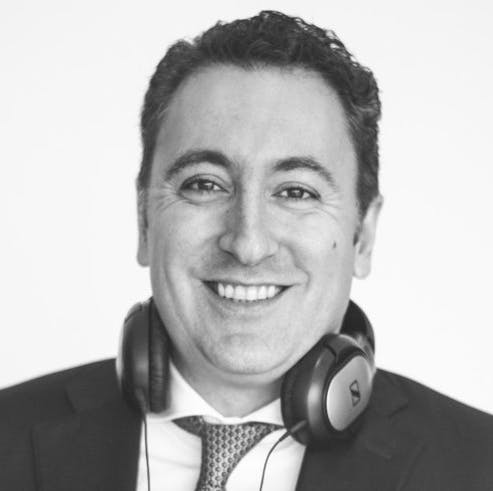
Content Analysis Key Themes and Main Ideas 1. Valentino Valentini's Dual Career Path: The unique journey of the interviewee from a prominent public servant (town counselor, mayor) to a winemaker. 2. Bocali Winery's Family Legacy and Evolution: The history of the winery, founded by Valentino's grandfather, and its transition from a mixed farm to a specialized, modern wine producer under the current generation. 3. Montefalco Sagrantino Winemaking Trends: Discussion of specific techniques like long maceration and the use of large barrels to refine Sagrantino, aiming for smoother tannins and more approachable wines. 4. The Indigenous Trebiano Spoletino: Introduction to this unique Umbrian white grape, its characteristics, and how Bocali approaches its production. 5. Commitment to Sustainability and Natural Winemaking: Bocali's practices, including solar power, no chemical products, indigenous yeasts, and organic fertilization. 6. Montefalco's Regional Development and Investment: The significant growth in the number of wineries in Montefalco and the influx of investments from outside the region, enhancing its status as a wine destination. 7. Driving Export Markets: The critical importance of international sales for Montefalco wines, particularly in North America and Asia, and strategies for expansion. 8. Wine Tourism and Cultural Enrichment in Montefalco: The strong historical and artistic heritage of the region, which complements its wine offerings and attracts visitors. Summary This episode of the Italian Wine Podcast features Valentino Valentini, owner of Bocali winery in Montefalco, Umbria. Valentino shares his remarkable transition from a successful career in public office, serving as both town counselor and mayor of Montefalco, to becoming a dedicated winemaker. He recounts the history of Bocali winery, founded by his grandfather in 1927, and how he and his brother have revitalized the family business, evolving from a mixed farm to a focused wine estate. Valentino delves into their winemaking philosophy, emphasizing a move towards longer maceration and the use of large wooden barrels for their flagship Montefalco Sagrantino, aiming for more rounded, drinkable wines. He also introduces Trebiano Spoletino, an indigenous white grape, highlighting its distinctive characteristics. A key focus is Bocali's strong commitment to sustainability, utilizing solar energy for all operations, avoiding chemical products, and employing indigenous yeasts. Valentino discusses the rapid growth of the Montefalco wine region, driven by both local and external investments, and stresses the crucial role of export markets, especially in North America and emerging Asian markets, for the success of Sagrantino. He concludes by detailing Montefalco's rich artistic and historical appeal, which significantly contributes to its burgeoning wine tourism. Takeaways * Valentino Valentini had a notable public service career, serving as mayor of Montefalco for ten years, before fully dedicating himself to winemaking. * Bocali winery, named after the family's nickname, has a deep historical root dating back to 1927 and is currently run by Valentino and his brother. * Montefalco Sagrantino winemaking at Bocali has evolved to include longer skin maceration (40-45 days) and the use of 1000-liter barrels for up to two years to produce smoother, more approachable wines. * Trebiano Spoletino is highlighted as a significant indigenous white grape of Umbria, producing full-bodied, floral white wines, which Bocali is starting to produce. * Bocali winery operates with a strong commitment to natural and sustainable practices, including being 100% solar-powered, using no chemical products, and relying on indigenous yeasts. * The Montefalco wine region has experienced remarkable growth, increasing from 8-9 wineries to 70-75 in about fifteen years, with a focus on high-quality production. * Export markets are critical for Bocali and other Montefalco wineries, with significant success in North America (especially the Midwest for pairings with grilled meats) and emerging interest in Asia. * Montefalco boasts a rich cultural heritage, including important art (like frescoes by Benozzo Gozzoli in the San Francesco museum), and ancient historical ties to wine production, dating back to Roman and medieval times. * The area has recovered from mid-20th-century rural depopulation, now leveraging its landscape, art, and agriculture for tourism and economic development. Notable Quotes * ""I was elected the mayor... for two times. The first time in nineteen ninety nine, and they finished in two thousand and nine."
About This Episode
The speakers discuss the history and complexity of their Italian wine winery, including their mixed-spec family farm and the use of hybrid and hybrid wood for their wines. They also discuss the importance of tour options and local sales for tourism, as well as their plans to increase the market in North America and Europe. They mention their investments in wineries and infrastructure to promote Montefalco and Montefarcos Argentina, as well as their plans to increase the market in the South of Asia. They also discuss their plans to start a winery in Switzerland and their interest in increasing the market in North America and Europe.
Transcript
Italian wine podcast. Chinching with Italian wine people. Hello. This is the Italian wine podcast of New Montewood. My guest today is Valentino Valentini from the Pocalli winery in the town of Montefalco in umbria. Yeah. Welcome. Hello. Hi. Now listen, you have, let's let's let's forget about wine for a second, Valentino. You have an incredibly interesting story. You're obviously a high achiever at school. What was your first public office and how old were? Public office. Yeah. When I was in the the the the chief of the classroom? Okay. That was in school. It's the secondary school. Right. So you were the head of the school. Then then when you left school, what happened to you? What did you do? You stood for election, and you were voted? I started it when I was twenty three during the New York City time. I was a counselor of the town on Montefalco. So you were a town counselor last and then in the when I was twenty seven in nineteen ninety nine, I was elected the mayor. You elected them, for two times. The first time in nineteen ninety nine, and they finished in two thousand and nine. And now? Now, I work with, with my wife. I work with my family. It's a family farm. Okay. So the Valentini one. So where does Valentini come from? Is that your dad? Your granddad? Grand dad. Okay. What was he called? It's a Giuseppe Valentini. So when did he found the winery? In nineteen twenty seven. He went from, want to Catano is a town near Montefalco. He's in the San Antonio area, and they buy the Montefalco, and it starts the bocale winery. So you had what vineyards, animals, cows? Yeah. No. Cows not, but we have some animals. We have, a lot of cereals. The only trees for olive oil, and five and a half hectares of vineyard. So it's like a mixed farm still. Yeah. Are you happy that you still have a mixed farm like your grandfather had or would you rather just have a monoculture of just vines? Yeah. Yeah. We changed it all the vineyard because the vineyard of my grandfather was, with the cereal, the grape was with multiple channel, the brusso with sangiovese with, some of the piedmont grape. Like, it's like, it's like, and we're changing the end of nineteen ninety or the vineyard and we restart in two thousand two with a new name. It's Bocali, but it's a new name of the winery, but this is the old name of my family because Bocali is the nickname of my family. What does it mean? It's the jug, it's in the local dialect, it's the the jug, the mug, of two liter, and people went to buy olive oil and wine in, the winery of my grandfather, and they perhaps start to, to say, we will go to, to buy one, two, three Bocale to Valentini Farm, and then they said, we will go to Bocale to buy wine or olive oil. So in two thousand and two, became our name. So bukali is a is a container for Yeah. Liquid. Yeah. Oil or wine. It's the unit of two liter in the local dialect, exactly. Two liters quite a lot of wine. In those days, in the old times, people No. We don't use that one liter. And the zero seventy five bottles, of course. Okay. So how complicated is it? Obviously, you're very good at organizing stuff. If you're if you've been a mayor, how complicated is it working with the different crops you have on the Bocconi farm? When I was mayor in these ten years, I restore on the vineyard. The winery. So it was not the the the period of the market of the winery because we we start to sell the vintage two thousand and five because the first winter with the in the first service with a new vineyard and the new building of the winery starts in two thousand and five. The market and the the selling of the wine starts in when I finish the the mayor time. Was that when you started bottling your wine for the first time rather than selling it in a shop? It was in two thousand seven, two thousand eight, and I finished it in two thousand nine. In this period, I was also the president of Italian YNC. This and, with the Montalcino, with the barolo, with Marcella, five hundred thousand, you know, leader. So, and we start with a new market, not with Italian market. And now we have the seventy five, seventy, seventy percent of our market is an export Right? Right. So you've been very international Yeah. In your Outlook. Yeah. From United States, North America, not Europe, a little bit also in the UK and, in Asia. How easy is it to sell Sacramento? That, I guess, is your main wine. Yeah? It's main it's a lot my main wine, but we produce about six, six, seven thousand butter every year. It's quite small. All butter are numbered. It's very important for us. So it's not so difficult to sell, six, seven thousand butter. We produce at all twenty five, thirty thousand butter, six thousand bottle of Montefarcorosa, Sanrentino. It's eighteen, nineteen of Montefarcorosa. It's a sangiovese blend. And then from two years, we are starting to produce also Tribuneos Palitino, like my grandfather, we produce about five thousand five hundred five five five eight hundred bottle every year. So the Turbiano Espolitino, what is that? It's an indigenous grape. It's very different kind of Tribunebiano clones. It's different than a Tuscany and a Bruccio clone. It's a very strange system of, of grow up because in the past, we we used the my grandfather use a system that is called marriage system because they use one elm on other kind of plants and the terbillonobites grow up on the on the other trees. On the trees. Yeah. So promiscuous, promiscuous, culture. Now we use the Guoyo or cordo spools, but in the past, we used this kind of system. It was a very, very strange system. Did you like seeing that when you were small, seeing vines the trees. Yeah. But this is very difficult to produce because there is a lot of production for plants. So our production is a high high level production quality, and so we use now Guyo are the kind of system that we have less production for for plants. Okay. So let's start with the Trebiano Espolitino. When you make the Trebiano Espolitino, you make it as a dry white wine? We have a right now with a vineyard in Espolito to try because my watery haven't historically red gr all the red grapes. And so we start with Urbiano from two, three years, and we will plant the next spring, one actor in, in Montefalco in our winery. So what does it taste like, Trebiano's Pollitino? It's a fantastic feast with the flowers. It's, I think it's one of the greatest white wine in the in the center region. Is it full bodied? Yeah. It's a full bodied. It's a strange white wine because we have maturation with the skin, like, red grapes. They are the kinds of white grape. The they hasn't had the maceration with the skin. So we're very structured, very flower. I think is a good way for the white, wine in this area. But are you making your caribbean or Espolitino in, like, amfa? Are you doing skin contact? In amfa, are you looking to make, like, an orange wine, a deeply color no, we have, not long, very long maceration, so they became an orange color, but we have forty eight to the two, three days of maceration. So it's a very, very yellow, and, it's not orange like the long period of maceration. But are you doing that in normal tanks or in in Tampa? In normal tanks. No. We use normal tanks. We use, we changed it in last year, the boots of the aging, but for the red wines, we changed from two thousand nine all the boots in the winery because we start with the Barig, hundred percent of Barrick. And now we use one hundred percent of big barrel for, Sanrentino, for Montefaca, Sanrentino, Montefarcoros. When you say big, what? Five hundred days? Well, we we use one thousand liter, usually. And we increase the timing because before we use Barrick for twelve months, We use now one thousand liter bottle for two years. Yeah. We changed all the woods in the wine because we don't like a lot of smell of wine, the over over food in the in the wine. So we we like the original characteristic of the wine. So making using open making the wines less okay. Is that is that a general trend in the region as a whole, or is it just you? There is a lot of wine that they are changing. This we have changes to two things. The timing of maceration, before we we had a very short maceration for Argentina because we we on the skin. Yeah. On the skin. Yeah. Because we we don't like a lot of extraction for tannins. It's a wine available. There's a lot of tannins, but we understand that the longer maturation, there is less tannins. So we change it two tanks, long, very long maceration, about forty, forty five days, and the big wood. So we have a more drinkable Saarantino when when we we sell the we start to sell the new vintage. Is the idea with the long maceration to polymerize the tannins to make them taste smoother. Yeah. Yeah. So how does that work? Because there is two time in the maturation. One time that there is the the tannins go out of the skin, and then there is the second time that the skin keep the the tannins. So we have more drinkable, more, rounder. Rounder was, Sacramento like in the past. In the past was very difficult. Test one the new image. Today, we are testing the new image two thousand fourteen. Ten years ago, was very, very difficult to test one Sacramento in the winters that is going in the market. So what are the trends in the region as the whole? Obviously, you're very well connected. You know everybody. And what are the trends do you think are for Argentina? For Argentina? I just maybe, great growing winemaking. We we had a very difficult period because, we lost the, we had in Italy a very difficult economic crisis, but many, many winery in Montefalco as a a gig spot market, like my winery has the most of the harmful production in the export market. This kind of one that has a problem because they sell in United States, in North Europe, in Asia. The one that sell only in Italy, they had very big problem. Because the market in Italy is very, very slow. And it is starting now in the in the last year in the seventeen. And, I think there is a is a good period for San Antonio because we had a very important investment from all Italian, wary, big Italian from Tuscany from, friuli, from, very important, the winery from, umbria. So you're saying wineries from outside the, the region coming and buying wine is investing. Investing in Montefalco. They buy the, the building in the historical town in Montefalco and Bevania, they made a very important winery, not simple winery. Some of these winery made a very art, this contemporary art of, they not use Argentina for a slow short time, but they make a very important investment. Is there a risk, you know, say winemakers from Tuscany or you said friuli or even say from the south of Italy, we'll check try and change the style of second Antina will poser, so like a Tuscan style or a Southern Italian style on it. Is there a risk of that? No. I think, no. I think San Antonio now is one of the ten most important wines in Italy. Tivo and there is sure there is one of the tenth best Italian red wines. I think it's contamination with other kind of wine from other kind of of a part of Italy is is important for, for us, for our experience. In this period, we have a lot, investments from other country or for other region of Italy, but we have a very important increasing over the small wineries in Montefalco. When I start, I was was made during the first time, we had the Montefalco eight nine wineries. So that was fifteen years ago. Yeah. Fifteen years ago. And now we have about seventy, seventy five, wireless choice. And the the medium level is is a very high quality. So I think we had in the past a very important work of the municipal time, of the Italian government, the regional government, and some important wineries that made the history of the the seventeen of the last twenty years. If there's one thing that you could add or change now, what would it be? What is missing? Is there any ingredient? The missing is increasing their work exportation, I think. Exports. Yeah. There is some wineries that have some difficult because they don't sell in the the export market. Why is that? Because they are historical wineries that historically have the Italian market. Usually, the the one with the youngest owner, they have a prop that will travel a lot. So they they can have a connection with the other market. The oldest winery is more difficult to sell in the export market, and they they start to to try to sell in the in the Asia market, in the North American. So we must invest to promote Montefalco and Montefarcos Argentina in the export market. How important are local sales, you know, tourists coming? Obviously, Umbria is called the green heart of Italy. Is there other way? Because we have the Serrano know, from two thousand, I was one one of the promoter when the two thousand, when I was mayor. And, it's it's the other way to to to sell. Most the worry that, that have a export market, they have the twenty percentage of the in in the wire directly. So it's very, very important for us to organize all the system of Montefalco, Bevania, Gualdo, and to have increasing the tourists and the visiting in the wire area. So what when tourists come to the region, what do they what is there for them to see apart from vineyards and all over the place? Yeah. We have vineyards, only trees, only olive oil factory. And then we have one of the most important museum in the in in Uumbria, which is Italy is much conferences. Some francis is a is that same process of a CC? Schuch museum is in the in the old town of Montefalco. And this is, it's very important because it's the start of the rhino sense inumbria. The first frescoes inumbria with a prescriptive is in, you know, is in a Montefalco painted by Benosogothri is a Florentine painter in fourteen fifty two. And, we have about thirty, thirty five thousand people that buy a ticket to see this very important picture. And then we have, we have been Toricu. We have a lot of history of art. Montefalcone Bevania, we're very, very small town by a very rich of art from the Roman period to the Rhana spirit. Why did the artist come here? Was it the? Ah, well, come here because there is very important monks, different Syscan Morse and Augusta monks, They had a very powerful in the and they are very rich. So they have the money to to care to call, important, like, a Perugino, like Bernazzo Godry, from France, from Peru. So they could pay for it artists to come and face frescoes. It was the first wine production in Montefalco. Because we have the historical documents in the town hall historical library with, a lot of documents that the monks was the first watery in Montefalco. You can you can visit the watery in the museum and the there is the system before the screw, the mention of the screw with the with the system, the the price system, to to make, to make wine. So the town hall of Montefalco in, fifteen twenty makes the rule of the start of the of the harvest. So they decide when people can pick their grapes. Yeah. So we have a very, very low to reach documents of historical from the medieval time to to renaissance that Montifalcoev is a very long story of the of of wine production from Roman period to the medieval and to the renaissance. Then we have a very strange stop in the last century because Monte Fargo was called the most important town of wine production still in, nineteen twenty five. Mhmm. When there is the the most important exhibition in, in Montefalco, of all umbria. And, there is a strain that we find in this, catalog that, still in this period, we produce two kinds of Argentina, and dry. And we think that San Antonio's dry starts at the end of seventeen, say, seventy nine starts of eighty. But it's not really because we produced, since of the start of nine in the century, Argentina into kind of. Then we have the first war, the world war, and the second war, we have a stop of the production. The area of Montefalco was very pure, like all the center of it the countries in the second leader. Many family went to the, to to to Germany, to France, in the big town in the north of Italy, and we restart to production of San Antonio in the high level in the in the eighty, nineteen eighty. And, San Antonio became one of the most important wines, I think, in the end of 'nineteen, in the starts of two thousand. Yeah. Interesting to to hear that such a beautiful area, you know, the green heart of Italy that there was this big rural deep population. Yeah. And now people are coming back. No. People are coming and we haven't a big way, bigger industry. This is the reason of our poor past, but now is our resources. It's our resource, and we can increase tourists and, and the development of our area with a arts with the landscape and the agricultural products. Do you feel very proud that your family stayed? Yeah. Of course. Of course. My family lived in Montefalco for twenty years. And, I was born in Switzerland. So, well, for me, for my father was very, very important to restart the the the wiry on migrant father. In Switzerland, were you in Ticino, the Italian part? No. I was in the Switzerland in the Swiss, Switzerland, and I can speak some, Switzerland. Alright. So you're in the German policy. In in Shaffa thousand. I was born in South Africa. Yeah. Okay. And so when I when we come back, I start to make public, work with them, with the municipality. I convinced my father to restart the winery on my grandfather. So we replace it on the vineyard, we rebuild the winery, and we start with a with a new name, with a nickname of my grandfather Bocalli. How easy was it to convince your father to invest in winery? It's not what's not so easy because my father less Montefalco, leave Montefalco when he was fourteen. Which year was that? So where was he born? Forty four. So he left in the mid fifties. Yeah. In the mid fifties. So it's not not so easy to ended, we must make, and so big investments. But now it's very happy. For me, for his father, for my brother. You went with your brother as well? My brother worked with me in the in the water. So what are your responses? What's he called your brother? Sorry. I'm the expert man manager and the the owner of the wiring. And my my brother is the the chief of the field of the wiring. So he's he's opinion. He likes, the tractor, the the hard work of the of the field. He don't like so travel. Time we went together in a trip after two days, he will he will come back to home. Okay. What about the future? We talked a lot about the past. What about the future for your winery in particular and the zone as a whole my worry, we have a project to to increase our, the vineyard because, my dream is a rebuy, a part of the worry of my of the of the farm of my grandfather and the brothers of my grandfather. My grandfather had the five brothers and twelve nephew. So we have all the hail of Alsatura where we will stay that was settled by the accusing of my father. So we start to rebuy some from some cruising and my dream is have not the biggest winery because my my grandfather has a big farm, fifty actor. Now we have ten actors, but we will we will increase two reactors or vineyards and all it freeze and make a good wine and good and good olive oil. And then my object is, increase the market in, North America, North Europe. Now we we sell in twelve state in United States. So we have a lot of state in United States. That we we must start to sell. Our opportunity of course is the south of Asia because now we sell in Japan and South Korea. Sometime in Chienham is not the easy market and we will start in all the south of Asia like Singapore, Hong Kong, Malaysia. Why do Asian markets like the Sacramento wines and the Trebiano Spolitino, the white wines? They like, Montefalcros. So that is best in the in the Asia. In North American, they like very well Sagrentino in Tribune's Palatino because they are strong wines. They like very with meat. We sell a lot of Sanrentino in California, in the Midwest. In the Midwest, they made a very good barbecue and they like the combination with Sanrentino grapes, with the Sacramento wines, and and barbacoa meet. So I think it's a very, very important market in the was in the past, was in the in the present, but I think in the future will be the the most important market for my wiring and for Montefalco wines. Interesting. The middle of wine from the middle of Italy is getting drunk. The middle of nowhere. Next week, I will go in the the Midwest in, Sal Louis and Kansas City. So in terms of, your wine growing, are you, what are you organic, biodynamic, conventional, or natural? We produce natural wines. So what does that mean? We don't use chemical products in the field with our news herbicide. We use only indigenous seeds for fermentation. Our wines, is not microfiltration, and, there is no thermal, stabilization. We use in the field, only organic, fertilizer. So green manure or, organic fertilizer. It's a green, green, yellow. Our object is a product's natural wine with any chemical products inside. All the the energy that we use in the water come from us. Solar energy. So we are a very sustainable winery. So you're fully solar powered. Yeah. Did people object? Did you put the panels on the roof? No. It's in the in the field, but, we are in the eight years that we don't buy energy. We produce energy from the solar energy. You can sell some back to the, we call it the grid. Any any energy that you don't use, can you sell back? Yeah. We can we the the energy that we don't use, we sell back to this, national energy system. Very good. Okay. So your energy self sufficient? Yeah. Yeah. From eight years And then we have the analysis of our products, and we haven't received a lot of chemical products in our wines. So this is our object. So it's the neighbor winery and natural wines. Perfect. Okay. I just wanna say thanks very much for my guest today, Valentino Valentini. Do you do so like a nineteen fifties actor, though, with that name, oh, okay. That's real. So I wanna thank you Valentino Valentini from the Bocalli winery in the town of Montefalco, umbrier in the area of the Secondantino, Yevaca, being a interview. I'm a man of many talents with your solar power and your natural winemaking and your former career as a mayor and your trip to the Midwest where you have to eat lots of grilled meat. Very nice to see you, and I hope you and your winery with your brother managed to rebuy some of that land that your grandfather had, and you can piece together back a little bit of history, bit of family history. Thank you so much. Follow Italian wine podcast on Facebook and Instagram.
Episode Details
Keywords
Related Episodes
Ep. 202 Monty Waldin interviews Vincenzo Ippolito (Ippolito 1845) | Discover Italian regions: Calabria
Episode 202

Ep. 194 Henry Davar (Vinitaly International Academy Faculty) on Verdicchio | Discover Italian Regions: Marche
Episode 194

Ep. 186 Monty Waldin interviews Sergio Solinas (Cantina Sociale Giogantinu) | Discover Italian Regions: Sardinia / Sardegna
Episode 186

Ep. 184 Monty Waldin interviews Ettore Nicoletto (Santa Margherita Group) | Discover Italian Regions: Trentino-Alto Adige
Episode 184

Ep. 180 Monty Waldin interviews Andrea Sartori (Casa Vinicola Sartori) | Discover Italian Regions: Veneto
Episode 180

Ep. 176 Monty Waldin interviews José Rallo (Donna Fugata) | Discover Italian Regions: Sicily / Sicilia
Episode 176