
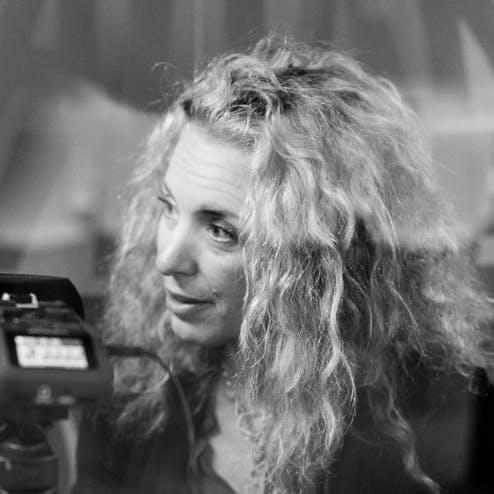
Ep. 153 Monty Waldin interviews Maddalena Pasqua di Bisceglie (Musella Winery) | Discover Italian Regions: Veneto
Discover Italian Regions: Veneto
Episode Summary
Content Analysis Key Themes and Main Ideas 1. The philosophy and practical application of biodynamic viticulture at Mosella winery. 2. Madelena Pasko de Biscielene's personal journey and commitment to biodynamics. 3. Specific biodynamic practices: integrating trees, soil aeration, and using raw cow milk for disease prevention. 4. The concept of a vineyard as a self-sustaining ecosystem (""garden"") and the importance of biodiversity. 5. Addressing skepticism and proving the efficacy of biodynamic methods through tangible results. Summary In this episode of the Italian Wine Podcast, host Monte Gordon interviews Madelena Pasko de Biscielene from Mosella winery in Verona. Madelena shares her transformative journey into biodynamic viticulture, which she began in 2009 for her family's 37-hectare vineyard. She describes how the vineyard has evolved from a conventional planting to a thriving ""garden"" teeming with diverse plant life, insects, and animals, emphasizing the importance of creating a balanced ecosystem. Madelena details her innovative practices, such as planting trees within the vineyards for psychological and ecological benefits, prioritizing soil aeration like breathing for humans, and remarkably, using raw cow milk as a natural fungicide against common vine diseases like powdery and downy mildew. She explains how the milk's microbes colonize the leaves, preventing harmful fungi. Despite initial skepticism from her family, she proved the resilience and superior health of her biodynamic vines, even during challenging vintages like 2014, where they outperformed chemically treated vineyards. Madelena also touches on the role of lunar cycles, biodiversity (including bees and animals), and the ultimate goal of fostering a self-sufficient and vibrant vineyard environment that produces wines of enhanced quality and vitality. Takeaways * Mosella winery in Verona transitioned to biodynamic viticulture in 2009, led by Madelena Pasko de Biscielene. * Biodynamic farming aims to transform vineyards into self-sustaining, biodiverse ecosystems rather than monocultures. * Innovative practices include planting trees within vineyards for shade and ecosystem benefits, and treating vines with raw cow milk for fungal protection. * Milk's microbes colonize leaves, creating a protective barrier against diseases like powdery and downy mildew, offering a natural alternative to conventional fungicides. * Biodynamic vineyards can demonstrate greater resilience and health during difficult vintages compared to chemically treated ones. * Soil health, aeration, and water retention are critical under biodynamic principles, mimicking natural processes. * Family skepticism towards unconventional methods can be overcome by demonstrated success and improved wine quality. * The overall philosophy is about nurturing life and balance in the vineyard, rather than sterilizing or killing. Notable Quotes * ""Now I no vineyards anymore. It's a garden. It's a garden full of, colored flowers, different flowers, vegetables. Lot of insects going up and down."
About This Episode
Speaker 1 and Speaker 3 discuss Italian wine wines, including Balicella, which is a garden with flowers, vegetables, and animals. They also discuss the use of biodynamic, the benefits of hybridization, and the use of various ingredients for various crops. Speaker 1 and Speaker 3 discuss the benefits of protecting vines with microbes, including using milk and various ingredients for various crops, and the importance of plants as a fundamental part of their existence. They also talk about the challenges of dealing with family and the importance of self sustaining organism and the cycle of life of wines.
Transcript
Italian wine podcast. Chinching with Italian wine people. Hello. This is the Italian wine podcast with me, Monte Gordon. My yesterday is smiling because I'm gonna get her name wrong. I'm gonna do my best. Mhmm. Madelena Pasco de biscielene. That's perfect. Perfect. And the winery is called Mosella. Mhmm. Where is the winery? It's in Verona. It's in the East part of Verona. Okay. And the wines that you make, the main ones? The main one is Balicella. Amarrone Repasso. The local wines, actually. Okay. How big? How many hectares? Thirty seven. Okay. And is family owned? It's a family owned. And in which generation are you? Actually, I'm the first or better the third depends. The project started with my father in nineteen ninety five. And so, Emilia, so my father was already involved within a wine business, but differently. So I wanted to be a wine grower. Mhmm. And when I was, there in twenty three years old sort of. He asked me to join him in this adventure. And I said, I don't know if I'm interested. And then he said, come to see the place, of course. And when I arrived there, I said, This is my life. This is my future. I love this place. That's why I started immediately. I was studying contemporary history, so really not, wine stuff. But, Mozilla is such an amazing place. He's, noisy is a sort of national park. Makes it special then? Whereabouts is it? It's east of verona, west of verona? East of verona. Exactly is. And, is, forest, hills, little lakes, paradise, full of animals, and all the vineyards are surrounded by forest. And so How how big the estate in total and how much Five hundred hectares. It's huge. Yeah. To be Italian, in in Italy is quite big. Yes. And how much is vineyard? In total, minus thirty seven, then there are other in the flat area, but I don't know that much because I try to stay quite far from there because I I do biodynamic, and I really cry when I see the spray, something chemical because it's such a pity in the car. But you don't do that on your your part, though. On your bid is all biodynamic. Yeah? Yes. Absolutely. So how long have you been biodynamic make for? Yeah. Two thousand and nine, so it's almost ten years now. And what changes did you see between before being biodynamic and going biodynamic in the wine and the vines? What were the changes that you saw and tasted? The Venus is quite evident, and now I no vineyards anymore. It's a garden. It's a garden full of, colored flowers, different flowers, vegetables. Lot of insects going up and down. So, basically, you think it is still a vineyard, but you've got, plants growing between the rows Yes. Wow. And now I'm planting trees in the middle because I think it's very important to be back on the trees in the middle of the vineyards. Why? Because, there is a communication. And so the wine is carbati for example, but Voricalia is authorized being very close to the cherry taste. And since the beginning of the history, cherry trees were around the vineyards or into, or they used the trees to, to put the the divines on, to climb up. Yeah. Yeah. Yeah. Yeah. And, and simply this. And, also, when you are working into the vineyards, because we mostly work by hand, you know, to have, a target. Okay. I'll get to the tree and then I can relax a bit under the under the shut condition of the the shade. And, it's different. Even psychologically make you happy and more your birds going there. And You can hear them singing and Yeah. It's completely different story. Do you provide water for the birds of get thirsty? Not anymore because, they don't need it. The soil change is such an amazing place. Wait. Sorry. There's a lot of people who say hang on, you know, they can't see you today, but, you know, look at you got, you're not like hippy, but you got kind of long hair. And the way you talk about the trees with it, oh my god, she's off with the fairies. I said, she's completely crazy. But, so many biodynamic producers I've spoken to you, and you also have another one. Love putting trees in their vineyard and conventional girls say, what are you doing? You know, gonna get birds, you're gonna eat your grapes, but you're gonna tell us there's a reason why they don't eat the grapes when you go by anemic and you put all these trees. Why is that? What are they what are they replacing the water with all the grapes with? What are they eating in this in the soil to keep? I do. Thing. There is so many things to, to, to heat and to have. So worms. Burms, insect, vegetables. So we have, now, a lot of vegetables coming out by the Do you mean wild ones? Yes. Because at the beginning, I put a lot of green manure. Cover crops. Yeah. To feed the soil. Yeah. I feed the soil plus to create to aerate this soil. What is very important to me is air in the soil, not the food. Because we consider our soil, everything like a human being. So it's sort of our sun. So they can breathe. The most important thing for you, what, is air. You can stay weeks without food, days, without water, but just few seconds without air. That's the first things we have to provide with. Doing this, the soil became absolutely more reactive, and less, is more humid, full of humans, and is able to keep more the water. So when it rains, the water can infiltrate very slowly, you don't get any erosion. And when it's hot, because there's residual water in the subsoil, the vines can find what they want when they want it. Yeah. Exactly. And so giving no water anymore, you all also reduce the fungus problem. I'm not treating the vines, not everywhere, but, in some spots, just with the cow milk, raw cow milk on your vines. Mhmm. So that's, you're using that for Oyidio, Oyidio, and a mildew, and from Oscar. So basically, sounds a bit crazy. It is, but if you think Using milk using milk to treat the two main threats, the three main threats to vines are botrytis or Greyrock, and then oedium, which is powdery mildew, and pyranOSpora, which is downy mildew, and what we're hearing is that milk based products are actually very effective against these without using things like copper or sulfur. Yeah? Yeah. Because the the idea, the concept is important. We don't want to kill anything anymore. And so even the copper, if if it's, it's a lighter way. It's not going into the vine. It's something that's killing, and it's heavy, and it's still metal. So I'm still experimenting, but this just makes me very happy, a lot of fun. And when you pass through, when you smell this, yogurt But do you not have any moments of real kind of stress? People say, hang on. If it what what happens in a really difficult year, a difficult vintage. Surely, your vineyard is just gonna be annihilated by fungal disease, and things like that? This is the the funniest part. In two thousand and fourteen, when we had very difficult vintage. Very wet. Yeah. We had less problem than the the chemical vineyards. And so my father was finally very happy because my own list is, I'm going a bit faster than the other, so to convince them, then we are doing the writing, and they have to take from their mind everything they had in the past because I know it's difficult. This is a way for me. It's easier because I studied contemporary history and not agriculture or or, analogy. And so I have not these information options there. Yeah. You didn't get, I mean, in in in inverted commas, everybody indoctrinated. I mean, there's only one way to grow wine that you need for the weeds, you have herbicide for pest, you have pesticide, and for fungal diseases, you have fungicides. So you kind of avoided that. Yeah. And you a complete that's why you have an open mind to have a completely different view. Yeah. Exactly. I mean, how much do you get into the kind of lunar cycles? Are you really into that, or do you not that much or better? I do it a lot with lipids, so filtration, eventually, we do. We we filter a couple of wines and, a bottling, or when we move the wines, not yeah. I watch the moon, the phases. What about, atmospheric pressure, but it's on a post vertigo. Excellent. Well, just like, if it's a cloud a sunny day or a sunny day? Never. Yeah. We we try to do in, in a sunny day always. But according with that, the rest in the in the in the vineyards is more difficult because I do it in my vegetable garden, but for the vineyards, it's too big to follow that, and, and honestly, I can't, unfortunately. What what are your main markets? Your main markets, New Orleans? Yeah. At the moment, is Scandinavia is both, Sweden and Norway. Fantastic clients. Do they buy because your bio, or do they buy because they like the wine, or they just buy it? They're both. They're both, and now they are buying more and more because it's biodynamic. So I I was just there to ask them to to stop because I need, yeah, I wanted to, to sell everywhere else also. Scandinav, rest of you, up on Canada. Do you have any animals like cows or horses? Yes. I have, a chicken going around in One chicken. No, no, maybe. Chicken. That's poor little chicken all in there. Poolly. Pullleen. And then I have a donkey's, a cow it's not mine. At the moment, I'm renting a cow. I have a cow. I have a guy having a lot of cows close to me, and he's the guy who's giving me the, the, the, the milk. Oh, the milk. Yeah. Yeah. And so Oh, so it's totally, it's just our from the cow. Oh, fantastic. I go in the night and I leave uh-uh one night if I have time to separate the cream from the Laticello, you see? That is full of bacteria, and then I spray in ten liter, Hector. So do you dilute that taught us are just pure. You're just a very fine spray with the milk. Yeah? Yeah. Yeah. Why is like the copper? Yeah. Like the the same same, spray? So how does it work in getting in protecting the vines from down milligieg perinox perin. How does it actually work at the mill? Is it just something? Works that you feel the the the the environment of, bacteria of life. And so you leave less space to the fungus. Yeah. It's a sort of, stay away because this is my spot. Then I'm stronger and So you can do it when you are really, really in balance with that. So you have to have a a very live situation. You can't spray milk after the pesticide. Yeah. So, babe, what you're saying is the the microbes in the milk. They because they're a living organism, they stick to the leaf, and they colonize it, and they don't allow the bad guys like the Perin hospital to arrive. Exactly. Thank you for explaining. So, what happens in conventional, Viticulture is you actually with the conventional fungicide, you actually sterilize the leaves. That's the idea they were, Hey, listen. I'm a pesticide, I'm gonna sterilize the leaf, and nature hates a vacuum. So as soon as you sterilize that leaf, and don't forget your only spraying part of the leaf canopy, so you always a bit at the top where there are already the fungus disease organisms that are trying. So when it rains the next time, they dribble down, they occupy, they totally colonize your vine, and then you're gonna be chasing your tail for the rest of the season. So this approach, we're using milk. These Michael orders are actually the beneficial ones from them actually stick to the leaf. And so when it rains, some of them get lost, but most of them stay there. So it's a far more efficient way of of protecting your vine without spraying something that is potentially poisonous or or whatever getting into pedemics about that, but so very logical. It seems absolutely bonkers this system. Yeah. Exactly. But if you think about it, I'm saying all the things that you should be saying about, but you're you're you're not creating any MRs. You're going to your local neighbor who has a cow. There's no technology there. You're getting the milk with you have bare hands, there's no technology there. You're walking it back to your vineyard, no technology there. You're spraying it on the vine without any plastic packaging or or plastic containers, you gotta throw away or dispose of or bend up in the sea, getting some city or some poor defense this whale. And your your springs on no MRs, and it's very, very all joined up and very healthy. And it works. That's the point. Yeah. It didn't work. Yeah. In fact, it was a little bit, worried at the beginning because, okay, I'm the witch and always the crazy one and so on. And I had to convince everybody that I was working and it's, so I was a little bit of sweating, but then work it. And the grays were safer than others because even for the rot, no rot in all the vineyard. I mean, I'm not I'm I want to extend a bit to this, just doing in a couple of vineyards that are close to me, and, and it's working. Do you have any bees? Yes. I have. And the story with the bees is a bit complicated because unfortunately, I'm allergic. Uh-huh. That's why I went to the hospital a couple of times. Okay. And so now I delegate that. And he's a guy who's, is having his own bees on my property, but yes. Okay. So you get you get anaphylactic shock, do you? Yeah. That's pretty dangerous? Yes. So my mother asked me, please, and the bees are not. I'm sure. But another thing about why bees are important, apart from the fact that they're fundamental. Yeah. The fundamental actually to our existence. The reason that they're important apart from the fact that pollination and the rest of it is overwinter in their tummies, they incubate wild yeast. So if you really wanna start making wines with a wild wild yeast fermentation, bees are a great team to have around. So Exactly. It's a great team. So what we're we're gonna talking about is, is having a really joined up, it's biodiversity, isn't it? Yeah. So important. So important. So, I mean, your your family think that, you know, you've got long hair and you you think, oh, you know, another hippie kind of, you know, heads in the clouds. Yeah. Yeah. But your feet are very firmly on the ground, but how do you deal with your family when they are very skeptical about what you're doing? Because obviously, if it's a family business Yes. Exactly. And you lose grapes and they say, hang on. We're losing money, we can't pay the bank and all the rest of it. Exactly. You had the point. Yeah. It was very difficult. It took lot of time, ten years. On the other hand, I have a I'm a I'm the daughter. And so I can talk with my father in some way, and he let me couple of actors free to experiment in my theory I didn't know anything about biodynamic at the time. So when I discover it, I said, yes. I learned that there is something I can do properly and start to study study study. So I always say that that in some sense, it was better that I waited so long because I I arrived, I'm very prepared. And then I did it properly. I had the help of, also a consultant at the beginning, more for my father than for me, but, it worked. We didn't, we didn't do any mistake, and we didn't lose any single grape. The wine is better. My father is extra happy now. And So you can see that on the analysis, when the grapes come in, you can see, like, things like acids, pH ratios, and extract extractability of tannin and all that. Everything is better. PIP color, PIP a browner, I guess. And taste is so crunchy, so so fruity, so cherry, taste, and it's so alive. I always jog and say, look at this wine, he's jumping out of the glass. He wants to run, and, and to see the satisfaction of my other now is a great gift for me because it was hard at the beginning. I said, it was sort of, it was open, that was some problem because it, you know, to confirm his theory. But on the other hand, he was a great man, because because even if he was quite nervous, shut up, went away, you know, he understood that it was important. And so, big respect, great respect for my father. I don't think he's very easy to let the kids go even if, you when you are not so convinced about that. Is he here today? Yes. Okay. Oh, he's not I don't know where he is, but, he's shame he's not here. Do you speak Italian? Yes. Okay. Well, anyway, that's okay. Alright, Madelina. Very much. Thank you. Madalena, it's a very long name, Bascue de Biscilla. No, Madalena is fine. Madalena, it's just to speak by Dynamics. Yeah. Yeah. So I just wanna say thanks to Melena. Thank you. Tell me it's all about Musela, and the chain of biodiversity you've established right from the tiniest infinitesimal little microorganism that's come out of a cow's udder that ends up on the leaf to all the bacteria and fungi. And it's always been what what's, yeah, what's, wine made from it's made from yeast, fungi and bacteria, so it's made from. So, without those guys, you can't make wine. So, and it's great that you're that you've got that cycle of life that you've created. Yeah. There were so many things to do because, yeah, then we didn't talk about preparation, the five the manure, the All the biodynamic. Yeah. All the all the all the sorcery and all the rest of it that goes into biopsy. Yeah. Exactly. But the nutshell in the back biodynamics, you're that you're trying to create a self sustaining organism, which is self sufficiency, which is what you've got with your animals and all your friends on earth, and your saying that plants are shaped by substance, solid stuff, nutrients, you know, middle elements, etcetera, and by forces that pull vines up to the sun, and then he pulls No. No. Exactly. Vines down to the down to earth with gravity. If you think about that, a nice taught by it's got a strong tummy, very fit like it's worked out, and it's gonna be stronger to pester to resist pests and diseases. Yeah. That's what we're talking about. Yeah. Yeah. You spoke very well. I'm sorry. I could've spoken a bit too much, but, I love your way of explaining, the kind of the cycle of life. No. When you do look kinda hippy ish, I mean, we can't see that on the radio, but, you know, yeah, I know. But, you know, we saw you. Hang on. If we'd outside the studio, people go into the video and say, okay, which one's the binder now? Why it's like, okay. It's It's it's gotta be you. You know, it's not like, you know, we're gonna lose a bet. Right? Yeah. So, but it's, but it's all about being coherent and, and you most certainly have been. So thanks very much for coming in Malena. Thank you. Anybody that's interested in biodynamics and you wanna get try a really good biodynamic one, get a bottle of music. Well, thank you. Follow Italian wine podcast on Facebook and Instagram.
Episode Details
Keywords
Related Episodes
Ep. 968 Map 13 Alsace | Jumbo Shrimp Maps
Episode 968
Ep. 942 Map 3 Bordeaux Right Bank | Jumbo Shrimp Maps
Episode 942

Ep. 180 Monty Waldin interviews Andrea Sartori (Casa Vinicola Sartori) | Discover Italian Regions: Veneto
Episode 180
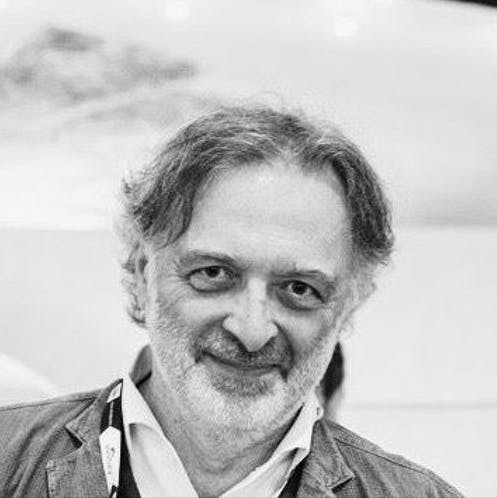
Ep. 171 Monty Waldin interviews Angelo Peretti (Consorzio Bardolino Chiaretto) | Discover Italian Regions: Veneto
Episode 171

Ep. 166 Monty Waldin interviews Angela Maculan (Maculan Winery) | Discover Italian Regions: Veneto
Episode 166

Ep. 162 Monty Waldin interviews Leonardo Ricci (Leo Ricci Winery) | Discover Italian Regions: Veneto
Episode 162