
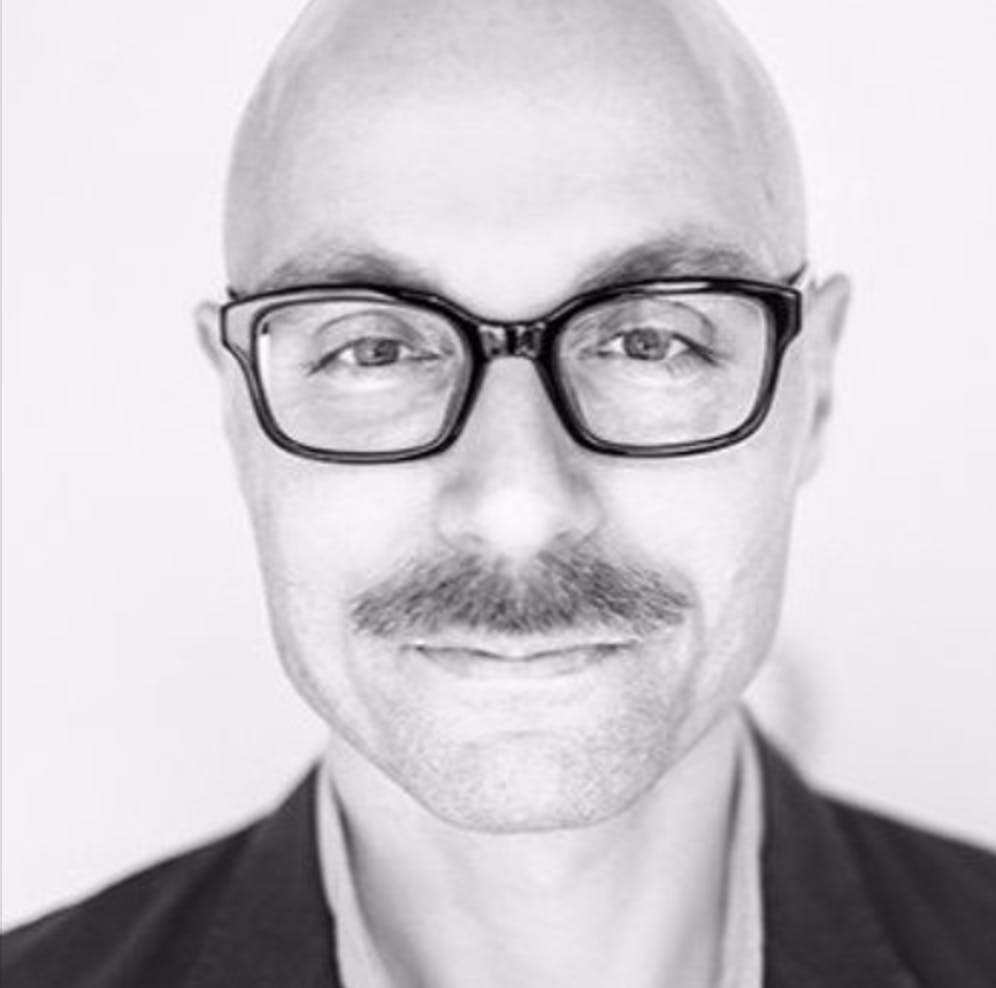
Ep. 23 Monty Waldin interviews Henry Davar (Vinitaly International Academy Italian Wine Expert) | Education meets Business
Education meets Business
Episode Summary
Content Analysis Key Themes and Main Ideas 1. Henry Duvard's personal journey into the world of wine, particularly Italian wine. 2. The role and philosophy of a wine educator in making wine approachable and exciting. 3. The unique characteristics and regional diversity of Italian wine. 4. The historical evolution of Italian gastronomy's influence on wine appreciation in the US. 5. The welcoming and community-driven nature of Italian wine producers. Summary In this episode of the Italian Wine Podcast, host Monte Walden interviews Henry Duvard, a wine educator and business development manager based in Las Vegas. Henry shares his personal story from being a Russian immigrant in New York to becoming a passionate advocate for Italian wine. He explains how his connection to wine began in college and solidified with his first encounters with Italian varieties like Taurasi (Aglianico) and Amarone, drawn to their complex yet approachable nature. Henry discusses his role in educating and exciting people about wine, moving beyond transactional views to appreciating the ""livelihoods"" involved in winemaking. He highlights the significant shift in Italian gastronomy, influenced by figures like Mario Batali, which moved Italian wine beyond stereotypes to a celebration of regionality and native grape varieties. Henry emphasizes the ""tension"" and ""counterpoint"" found in Italian wines, making them uniquely special and food-friendly. He concludes by expressing deep gratitude and admiration for the Italian wine community, which he describes as uniquely embracing and welcoming to those who engage with it. Takeaways - Henry Duvard is a wine educator in Las Vegas, focused on making wine approachable and exciting. - His personal entry into wine was significantly influenced by Italian wines like Taurasi and Amarone. - Italian wines offer a unique ""tension"" and ""counterpoint"" (e.g., ripe fruit with nervous acidity) that appeals to new drinkers and pairs well with food. - The evolution of Italian gastronomy, particularly in New York, helped to broaden the understanding and appreciation of regional Italian wines. - Italian wine is not monolithic; its regionality and vast array of native varieties are its true patrimony. - The Italian wine community is notably welcoming and inclusive to those who engage with it. - Effective wine education requires interaction and moves beyond mere lectures. Notable Quotes - ""It's more about exciting people and, getting people talking about wine, getting people comfortable with wine. That's the first step."
About This Episode
Speaker 1, a wine educator based in Las Vegas, discusses the importance of wine in her company's work and how it is a collaborative environment. She explains her responsibility for communication and media, her love for Italian wine, and how learning about it has become more difficult for people to understand. She discusses how learning about Italian wine is a great way to do it, and how learning about it is a collaborative journey for them. She talks about how learning about Italian wine is a great way to do it, and how learning about it is a great way to do it.
Transcript
Italian wine podcast. Chinching with Italian wine people. Hello. My name is Monte Walden. This is the Italian wine podcast, and today with me is Henry Duvard, who is a wine educator based in Las Vegas. Welcome. Thank you. Pleasure and an honor to be here. So does a wine educator do in Las Vegas apart from educating people about wine? It's more about exciting people and, getting people talking about wine, getting people comfortable with wine. That's the first step. Why is that important for you? For me, it's important because of the staff that we're responsible for more than training. He's keeping exciting about wine and understanding that wine is more than just a transaction. There are many levels of care and livelihood that go into making any given bottle of wine. And for me, most of those livelihoods happen to be Italian or at least my connection to wine started with Italian wine. So just describe how your connection began. It started over a bottle of wine. Two bottles of wine. Torazi in this case and Amaroni. To Tarazis from Vasiliicata, south of Italy made with Primativo. Yeah. Alianiko from Sorry. And then Amarone from, the Veneto, but both styles of wine theft to my palate at the time were very, very approach and they gave me, they pushed the right button so to speak. Okay. So what's your job title? I'm a wine educator and business development manager. So my role overlaps education for not just our wine sales team, but the community at large, but also as a communications manager, really putting out effective communications and media that, gets people at least talking about wine. We work in a large company that sells not just wine, but spirits and beer. And, in a town like Las Vegas, driven these days by night clubs and pool parties. Sometimes wine gets lost in a shuffle. We wanna bring the conversation back to wine. So you're you're a wholesaler, are you an importer? What's exactly how does it work? What's the mechanism by which you're you're reaching your customers? My company is both. We import wines, and we wholesale wines as well. Where did you grow up? I grew up in New York City. K. And with your parents, my parent, we came over. We were immigrants. We were Russian immigrants. So I was born in Moscow. My dad drove a cab. My mom was a stay at home mom. So when did they move over. We came over in nineteen seventy four. And how old were you then? About a year old? Right. Okay. And did you have wine at the table in, at in the family home or not? No wine at the table. Wine came later. Wine came about the time about college where most people get introduced to new things in their lives. And I went to college with few folks who were interested in wine, and we've all attended the same wine classes. I got to go to my first wine class at Windows in the world with Kevin's Israeli. And, after a few more wine classes, I eventually entered the restaurant business. And I got invited by my first wine director, master Somebody, Roger De Gorn, to a tasting with his front of house team. And I was a pastry chef at the time, and they were tasting wine and swirling the wine and pulling out all these wonderful flavors in wine, and I was still nosing the wine saying, oh, it smells like wine. And, that made me realize I needed to go study a little bit more. So how did your love for Italian wine in particular develop? Obviously, when you were studying, I'm guessing you're getting, like, mainly French wine, maybe some Californian wine. Started with French wine in California wine. I guess because I was so young, I couldn't afford the good stuff. So when I finally was able to afford something delicious, and it happened to be Italian. And it just loved it for sight. Where was the love coming from? I think as a young wine drinker, the wines that I'd selected at that particular day, we just, like I said, push the right buttons with Amaroni. You have luscious texture that a lot of new wine drinkers are often seeking and, tension, Alianico specifically has this wonderful tension of sometimes ripe flavors undercut by this nervous acidity that grounds the wine, and it makes you it makes you think a little bit more than you might otherwise. So the wines aren't necessarily simple. There's always counterpoint. And this this counterpoint, this tension is very, very intrinsic to a lot of Italian wines. And I think when people taste Italian wine for the first time, they they stop to think a little bit because they've never experienced sensation like that. To that combination of lovely juicy ripe fruit and that sort of tight backbone to the wine, which makes the wines great with food. Right? In the case of Amaroni at that moment, it achieved something that I'd never experienced before. Amazing. You're gonna go, like, real, like, real conversion, immediate, immediate, and then, you know, at that that same time, there was a change in It's italian gastron and gastronomy in New York. That was the time that Mario Batali was just started becoming famous in New York and changing the scope of Italian wine, changing the reach of Italian wine, and what he's achieved in the last fifteen years speaks for itself. So what do you mean by making it a bit more ambitious or making things more more easier easier for people to understand just normal consumers? I think it moved Italian wine away from, Red Checker tablecloths and Strflask a chianti to a more regional Italian wine, especially his cooking was a very lust the cooking. It involves a lot of braising, a lot of, you know, that quinto cuarto movement. I think that begins with Mario batali in New York. And, we caught on to that. Once you taste italian food, that's like that, you start wondering about what is this other Italian food that I'd never heard about. And then you start understanding or at least exploring regionality and Italian food and it's the regionality in Italian wine. That makes it so special. And it's whenever I teach about Italian wine, and people ask me, well, what is Italian wine? Oh, Italian wine is not one thing. If you wanna make simple. You start by talking about twenty different things in twenty different regions. And there are people who've come along the way who sent that same message. I think it begins with waverly root. I think he wrote his first book in nineteen with nineteen fifties Food and wine of Italy. David Lynch followed in those footsteps up with Joe Bastiana's writing Vino Taliano, and they broke down Italy into twenty regions that just by reading the book, everybody wanted to visit and read, then drink those wines rather. And I was one of those people and, you know, now comes Ian Daghata who's written the manual for the next generation of wine lovers. So sure. We have the internet now. We have a lot more information. We as wine lovers, the food lovers understand about the twenty regions of Italy. Now we're really starting to celebrate the the true Italian patrimony, which is its native varieties. So I think that as as the end consumer has evolved, there's been a need for deeper exploration and a celebration and a protection of what Italy does does best when it comes to food mining. Well, what a great enthusiasm and knowledge also of, of Italian wine. I also come to one of your Italian wine classes. I mean, the people that turn up, are they curious? They just listen to you, or do they ask questions about Italian wine? Hey, listen. I didn't understand what you said there about Primitivo or about Gaurico. I haven't taught specifically about Italian wine. It's a separate story, but the conversations that education has to be interactive because otherwise it's just a lecture and it's never fun. Okay. So when you when you started out at college, when you were a teenager, did you ever think you'd end up in the wine business as you are today? I was a career changer, so no. I didn't know what I wanted to do. When I went to college, I thought I wanted to do quote, business, end quote, and I had no idea what that business was going to be. I thought I wanted to go as as a as an immigrant, I was pushed encouraged to go out and do something I was going to make a good living for myself. So I never really got to thinking about what I wanted to do. And sometimes I still think about what I what I wanted to do, but I think that at this point in my career, I want to do something to honor one of the passions that I have, but also to honor the people that have gotten me to to where I am and to celebrate the things that I enjoy in my life. And I think, to give back to the Italian wine community that's really embraced me with open arms is a great way to do it. And we we try to set out on this journey five years ago when my wife and I first left New York to to travel into the end of the day to try and look for that opportunity. Didn't come around at the time, but there's certainly a relationship I spoke about earlier on with the graduates here, the Italian wine producers are unique in the world from my experience and that they embrace you with open arms. They they let you into their lives. And once that happens, you don't let go of that. And you become a member of the Italian wine community for life. Henry Divar, you're considered a fully paid up member. Been great to talk to you. Thank you very much for coming today. It's been a great pleasure. Thank you so much. Follow us at Italian wine podcast on Facebook.
Episode Details
Keywords
Related Episodes

Ep. 199 Monty Waldin interviews Bernardo Pinto (Zahil Importadora) | Education meets Business
Episode 199

Ep. 195 Monty Waldin interviews Sue Tolson (Freelance Writer and Editor) | Education meets Business
Episode 195

Ep. 193 Monty Waldin interviews Niklas Bergqvist (Sommelier at Vinkallaren Grappe) | Education meets Business
Episode 193

Ep. 192 Sarah Heller MW (Vinitaly International Academy Faculty) on tasting | Education meets Business
Episode 192

Ep. 185 Sarah Heller MW (Vinitaly International Academy Faculty) on Barolo | Education meets Business
Episode 185
Ep. 159 Monty Waldin interviews Michaela Morris (Vinitaly International Academy Italian Wine Expert) | Education meets Business
Episode 159