

Ep. 628 VIA DAY 1 Part 3 | #everybodyneedsabitofscienza
Everybody Needs A Bit Of Scienza
Episode Summary
Content Analysis Key Themes and Main Ideas 1. Geological Foundation of Italian Wine: The central theme revolves around the distinct geological formations of Italian soils and their profound impact on viticulture. 2. The ""Fire, Water, Ice"" Soil Analogy: An accessible framework (volcanic, marine, and eroded/glacial soils) for understanding complex geological processes in wine regions. 3. Regional Soil Diversity: Detailed exploration of specific regions like Soave (basaltic volcanic and marine/alluvial soils) and Etna (volcanic soils formed by tectonic plate movement). 4. Soil Influence on Grape Characteristics: Discussion of how different soil types contribute to unique flavor profiles in indigenous grape varieties, exemplified by Garganega. 5. The Role of Scientific Study in Viticulture: Integration of geological and flavor studies to enhance understanding of terroir. Summary This ""Everybody Needs a Bit of Shenza"" podcast installment features Professor Shenza's advanced wine seminar, focusing on ""the ten must-known Italian soils"" through the analogy of ""Evinidal Foco, Evinidal Marre, and Evinidal Gacho"" (fire, water, and ice), representing volcanic, marine, and eroded/glacial soils. The discussion delves into the geological history of specific Italian wine regions. The first part highlights the Veneto region, particularly Soave, explaining how volcanic activity, marine sedimentation, and significant erosion shaped its basaltic and marine sedimentary soils. It details how these varied soils influence the characteristics of grapes like Garganega, noting differences in aroma and persistence based on soil type (e.g., banana aromas from alluvial, spicy notes from basaltic, floral from limestone). The second part shifts to Sicily, focusing on Etna, explaining its formation due to the African plate pushing against Europe, resulting in a very young, active volcano with unique viticultural conditions. The episode emphasizes the deep connection between Italy's diverse geology and its rich winemaking tradition. Takeaways - Italian wine terroir is deeply rooted in diverse geological formations, categorized by volcanic (""fire""), marine (""water""), and eroded/glacial (""ice"") influences. - Soave's unique soils are a product of initial volcanic activity, followed by marine sediment deposits, and extensive erosion over millions of years. - Etna's volcanic soils are a result of ongoing tectonic plate movement, making it a ""very young"" and active viticultural area. - Different soil types demonstrably impact the flavor profiles of grapes; for example, Garganega's aromas vary significantly between alluvial, basaltic, and limestone soils. - Italy possesses a wealth of ancient, ""founder"" grape varieties like Garganega, which have adapted to specific geological conditions for centuries. Notable Quotes - ""Seminars were on the ten must known Italian soils, Evinidal Foco, Evinidal Marre, and Evinidal gacho. Just think fire, water, and ice. Very game of Thrones. But way more nerdy."
About This Episode
Speaker 0 promotes a podcast in Italian language while Speaker 1 gives a recap of Venvente International ambassador's seminars and mentions a sponsor. Speaker 2 gives a brief recap of the Italian environment, highlighting the volcanic activity and marine soil. They also discuss the history of the Italian environment, including historic and current examples of historic and current varieties, as well as the use of pressure systems for volcanic rocks and the Italian pepper industry. Speaker 3 explains the differences in soil between geology and geophysics, as well as the history of the Italian pepper industry and the use of pressure systems for volcanic rocks.
Transcript
Warning warning. This podcast contains information in Italian language. This podcast contains information in Italian. Welcome to another installment of everybody needs a bit of Shenza. Class is in session. Follow the professor Sore in his advanced wine seminars during the Venetal International Ambassador Certification course flagship edition in verona. Seminers were on the ten must known Italian soils, Evinidal Foco, Evinidal Marre, and Evinidal gacho. Just think fire, water, and ice. Very game of Thrones. But way more nerdy. And of course, starring our very own superhero, professor Shansa. Oh, and for all those English speakers only in the house, Shansa's sidekick Francesco Marcio was there to back him up all the way, translating all the material on the spot. Chinchin wine nerds. Before the show, here's the shout out to our new sponsor, Feroine. Feroine has been the large just wine shop in Italy since nineteen twenty. They have generously supplied us with our new t shirt. Would you like one? Just donate fifty euros and it's all yours. Plus, we'll throw in our new book jumbo shrimp kite international grape varieties in Italy. For more info, go to Italiancoin Podcast dot com and click donate or check out Italian One broadcast on Instagram. To take restipaterially volcanic. Wendy Sopra is the opposite to Urcanico. Just have to undeposit to important the merino. The If you would talk, in the army So that was the first part. Then the, of course, they see coming coming in, to the lugian plane, he left the deposit, a lot of fossil. And this is the, the second biggest, part of, the material deposit that we have in this area. Then when, this, the sea went away, so retreat, what happened, erosion started? So it started to rain. And when we say, oh, it was raining, but it rains actually for one million years. That's a bigger erosion that we had. So it was a big rain. So that's, that is the third, important, step in the creation of the soil of this part of Italy. The master in in tegra. Burkhanica, poi, chi, Laparta, marina, a, b, la parte de la memento, when the tre there's any mental diversity that Yes. What, it's what I just said. Basically said that, the first was the volcanic activities, on the water. The second, step was the, marine sediments with the water of the Adriatic sea coming in. And the third one, and and the accumulation of deposit. So, and the third one was the mix of the two. The the rain basically clear the top of the, volcanic area, and all the erosion bring the material down and it start to mix with the the fossil, marine origin soil. So this is, we're talking, but this is the the B, the limestone Alugil soil. Okay. While the marine soil is at number c. That's a marine sedimentary soil. Diversity, Lunita, geographic, Juneteenth, Yeah. And, which is interesting more in, in our study, was the creation of the UGA, Unica, Juntiva, in Soave. They are thirty free. And, every producer that has, vineyards in that part of soil in that land can put to the name of the UGA, you know, on the label. So this is, was a great work they done connecting, with the culture and and geology. Prazioso, the the question of the agreement on the porfide, the traditional basality. So, yeah, these are the, column, Basel column, the typical of the area, and, this was from an explosion happen under the sea as we just, talked minutes ago. The Yeah. This is a picture of the, how the buzzalt actually disintegrated and, it become agricultural soil. So this is our tough, and we are in Monte for the, dalpone. These are the type of fuzive rock. So form from lava erupted under the water. Questa, the positive of the volcano is the positive merino. La carneita, the original merino. So I took the deposit. Okay. Yeah. This is the picture where it clearly shows the, basalt, volcanic soil. And then on top of it, there is a marine soil. And then we are you have the agricultural soil, which is always a mix of of the two. The property the this is the shape of a hill in soave. And, this kind of shape is a gentle eel, and it's the reason why is because it's basaltic soil. So in the basaltic soil is only, it's it's our soil and cannot be, fracture. There is no fracture here, like, you can have it in, another type of hills. So the the only way to shape the soil is the erosion, and it only can do on in the in the surface of the of the hill. This is, interesting because here the the erosion removed the marine part. So what we can actually see is the basaltic soil. That's the red the red color that we see. So this type of yields, are straightforward for a geology to understand how they are formed. So this is, again, And the professor just introduced a great variety. Garganaga is one of the, father of Italian varieties. It's, it's a founder Italian varieties. We have in Italy ten, twelve different variety, like Arganaga, so very, very old. And, he was first mentioned in, fifteenth century. It's surely basilatici volcanissi, and it's surely in Salcari marini. Lourdes in geological depression. This is a study, very interesting. They made the old soy impact on, gardenica flavor. And, there are three different types of soy they are quite similar, but there are some some difference. For example, alluvial soil in blue. You they they they they found out there's more banana aromas coming out. The the basaltic volcanic soil in gray is more spicy. It gets a cinnamon, and also more persistent. And, the the orange wine, the limestone soil has more, white flour, and violet, and finesse. In Nevada, in Nevada, in Nevada, in El Paso, the this is Syria, Napate de la cecilia, in Elanta, Calabria, in Mexico, called Nenube, Elustreito, this is actually stop. No. I'm joking. No. No. No. No. Of the top. I don't know about Tuta. No. This is it's not looking at, you can see also the Calabrio straight to the Messina from here. So it's a beautiful picture. Echo. Periodontological. Yeah. So this is, Etran was formed by a different eruption And, every single Russian, every single layer is actually a different geological, geological time. But you can read in details there. So the the material. Letna is strichamento de la Espinta del Africa in Australia. Total Astricia, Northern the the region, Africa, typical South Africa. A a multi animali, Srivatici, Africane, Erronopraziente, Incicidia. So, Ethan, yes, was form, again, from the push of, African plaque to Europe, and, basically, part of Sicily is, it's part of Magreb. So it's a African plaque, actually. It's now, I started five hundred thousand years ago, and they're still ongoing. That's why the reason is so is so hacky. It's a very, it's a very young volcano. The two hundred thousand, years ago was the time when the, finally, the Aetna came up from the water before it was an underwater volcano. The the the the the the the Yeah. So the Viticulture on Aetna is, on the shape, but you can see here the semi circle shape, and, it started from three hundred meters above sea level up to one thousand. Listen to the Italian wine podcast wherever you get your podcasts. We're on SoundCloud, Apple Podcasts, HimalIFM, and more. Don't forget to subscribe and rate the show If you enjoy listening, please consider donating through Italian wine podcast dot com. Any amount helps cover equipment production and publication costs. Until next time.
Episode Details
Related Episodes

Ep. 2789 ColleMassari: a long-term vision rooted in Montecucco with Giuseppe Di Gioia | On The Road With Stevie Kim
Episode 2789

Ep. 2788 Ep. 14: Austria and Hungary | Study Smart for your WSET Level 3
Episode 2788

Ep. 2785 From Volunteer to Speaker at TEXSOM with Samantha Cole Johnson | TEXSOM 2026
Episode 2785

Ep. 2766 Inside the U.S. Non-Alcoholic Wine Market: What Wineries Need to Know with Jill Sites | Masterclass US Wine Market
Episode 2766
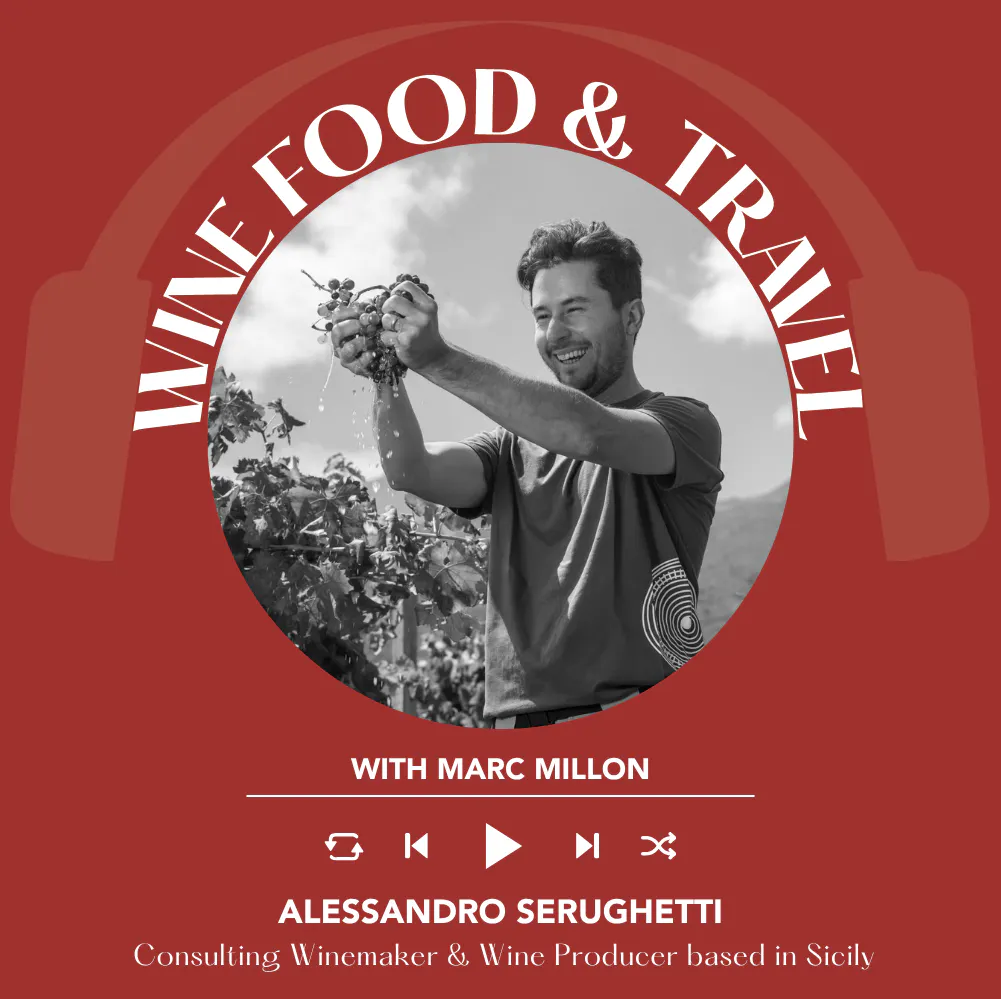
Ep. 2761 Winemaking and Consulting Across Sicily with Alessandro Serughetti | Wine, Food & Travel with Marc Millon
Episode 2761

Ep. 2759 Part 2 – The VIA Educational Program & Italian Wine | Heart-to-Heart Conversation with Sarah Looper
Episode 2759