

Ep. 678 VIA Day 3 Pt. 3 (ITA/EN) | Everybody Needs A Bit Of Scienza
Everybody Needs A Bit Of Scienza
Episode Summary
Content Analysis Key Themes and Main Ideas 1. The crucial role of soil types in defining wine characteristics, with a focus on the Lugana region. 2. Professor Chienza's advanced seminar on Italian soils and their impact on viticulture. 3. The specific characteristics and effects of three distinct Lugana soil types: fluvial glacial, white clay, and sandy. 4. The concept of ""vine struggle"" in challenging soils leading to higher quality, concentrated wines. 5. The increasing importance of detailed soil studies for wine producers. 6. The growing popularity of Lugana wines, influenced by tourism and investment from larger wine companies. 7. The emergence of single-soil wines in Lugana and their potential for distinguishing terroir. Summary This segment from the Italian Wine Podcast features Professor Chienza's advanced seminar, delving into the impact of diverse Italian soils on wine, specifically focusing on the Lugana region. With assistance from translator Francesco Marcio, the professor explains three primary soil types found in Lugana: fluvial glacial, white clay, and sandy loam. He details how each soil's composition, particularly its drainage and water retention properties, influences vine growth and the resulting wine's aromatic profile. The discussion highlights that while some soils (like certain clay types in summer) make it difficult for roots to penetrate, this ""struggle"" can lead to weaker vines producing smaller berries with concentrated aromas, ultimately yielding better quality wine. The seminar emphasizes the importance of producers understanding their specific soil types and notes a trend towards making single-soil wines in Lugana. It also touches on how increased tourism and investment, particularly from Venetian companies, are boosting Lugana's popularity and enabling more extensive soil studies, further refining its winemaking potential. The episode concludes with a call for listener support for the podcast. Takeaways - Italian wine seminars provide in-depth knowledge on specific viticultural elements like soil science. - Different soil types within a single region (e.g., Lugana) lead to distinct aromatic profiles and wine characteristics. - Challenging soil conditions can paradoxically result in higher quality wines due to vine struggle leading to concentrated fruit. - Understanding soil drainage and water retention is critical for successful viticulture. - Producers are increasingly focusing on detailed soil studies and exploring single-soil expressions in their wines. - Tourism and external investment are significant drivers for the growth and recognition of Italian wine regions like Lugana. Notable Quotes - ""The divine struggle, but the result is better as, you know, it's happening very often."
About This Episode
The speakers discuss the differences between loamy and loamy ingredients in various soil areas, with the loamy soil being more difficult to grow vines due to a dry, low-flowing limestone deposit. The wines are generally not the same from each other, and the mix of different biomass in the wines can affect their characteristics. The importance of knowing the vines and how they are planted is highlighted, along with their commitment to bringing free content every day. They also mention their use of a wine podcast and their regular show every day.
Transcript
Welcome to another installment of everybody needs a bit of Shenza. Class is in session. Follow the professor, in his advanced wine seminars during the Venetal International Ambassador Certification course flagship edition in verona. Seminers were on the ten must known Italian soils, Evinid el Foco, Evinid elmare, and Evinid el gacho. Just in fire, water, and ice. Very game of Thrones, but way more nerdy, and of course, starring our very own superhero Professor Chienza. Oh, and for all those English speakers only in the house, Chienza's sidekick Francesco Marcio was there to back him up all the way, translating all the material on the spot. Chinchin wine nerds. This episode is proudly sponsored by Vivino, the world's largest online wine marketplace. The Vivino app makes it easy to choose wine. Enjoy expert team support door to door delivery and honest wine reviews to help you choose the perfect wine for every occasion. Vivino. Download the app on Apple or Android and a cover an easier way to choose wine. So these are the the picture of the two soils. We can see, they're very different. On the left side, you have the soil from originated from the fluvial glasian origin. So, yeah, it's very present, the stones. And, it's a a coarser soil. So we have a glacial, but we have a big influence, from Bardolino area. On the right side, instead, there is the white clay soil that we mentioned close to glacial deposit, close to the lake. So again, once again, this is the the last the soil number is free. So these are, is the soil which is a richest in limestone and a loamy soil, and that are very difficult to grow vines here. And they're on the blue color. It's on the blue color on the map. Eventy. The reason that I I would not be able to see. Yes. These are the, the section of the three different soil. And, the picture are showing the the first part of the section, which is the one that explore when you actually plant mines, is at the top forty centimeters. That's where they make it, the picture representing that part. So this, unexpected is very important. This area is the drainage of the soil. The first soil, the the the the loam, loam, and, clay soil, they they retain water. So the some of major people started with this oil. No. I don't know if you got time to start. Okay. No. We're just saving you a short question to professor, he said that, I, you know, I mentioned, but if there is a clay soil, then there must be some water, you know, retain more water. And it's actually not because the the roots cannot go deeper. So in winter, it's okay. There is water because it's raining. In summer, if it's not raining, then the roots cannot go deeper and they suffer in summer, even if the soil is, is a clay soil. So it's really difficult for the root to dig in this type of soil. Just below the lake. We're just next to the lake. The plant reaction that is that it's weaker. The vines are weaker, and that they have, much smaller batteries. Lavita, conserve, and less skin because, you have the con the cause all the concentration of the aromas in the pulp because it's more pulp and much less skin. The divine struggle, but the result is better as, you know, it's happening very often. Should be known. So, yeah, the free types of soy give different, aromatic profile to the wine. They are similar, but there are some, a small difference between, one and each other. On the vineyard, a, you are more citrus and vegetal and, but not there's no ticket. This is the b one. This is the most difficult one. And instead, the c one is the one more which more sandy soil quest to chop this area. And the a is more, marley, and more, coarse stones. The more citrus fruits and vegetal persistent one. Yeah. So the lugana can make three different wines in a free different soil. There is this big variation of a new noise of per noise and terpens. It depends on where the, the vines are planted. So the, the, this is a nation. There's a study on the soil. It's very important for the producer to know where the the vines are. You you notice this. The big difference between this wine, especially after a bit of aging, after three years. Professor said, so you you really start to notice the wines are different from each other. And of course, it also was mentioned that the the states, they don't have, vines planted only in one soil, but have different, vineyards planted different soils. So often it's a mix of everything, the the final result. The last few years that someone already started to do instead free for different wines from different soils. So a wine grow in a specific soil. It's a touristic. Yeah. I I ask if he he knew the the name of us any states doing that. Okay. Lugana became more popular. Thanks, and also to the tourists. And, now there is some investment investment coming from Venator region. While the majority of, lugana, lens are in Lumberdy. And so he said that we will see more and more, you know, the big companies have, the power and the resource to do this kind of study. Before was more not so fashionable wine and more fragrantated. We have more investment coming this area. And you know, the the, you know, the people from Veneto, from Verona, they have experience with, amarone, with their wines, so it's easy for them just to buy the vineyards and, you know, do, marketing, a proper marketing campaign, and then promote to the wines and sell the wines. Listen to the Italian wine podcast, wherever you get your podcasts, we're on SoundCloud, Apple podcasts, Spotify, email ifm, and more. Don't forget to subscribe and rate the show. If you enjoy listening, please consider donating through Italian wine podcast dot com. Any amount helps cover equipment, and publication costs. Until next time. Chichi. Hi, guys. I'm Joy Livingston, and I am the producer of the Italian wine podcast. Thank you for listening. We are the only wine podcast that has been doing a daily show since the pandemic began. This is a labor of love and we are committed to bringing you free content every day. Of course, this takes time and effort not to mention the cost of equipment, production, and editing. We would be grateful for your donations, suggestions, requests, and ideas. For more information on how to get in touch, go to Italian wine podcast dot com.
Episode Details
Related Episodes

Ep. 2789 ColleMassari: a long-term vision rooted in Montecucco with Giuseppe Di Gioia | On The Road With Stevie Kim
Episode 2789

Ep. 2788 Ep. 14: Austria and Hungary | Study Smart for your WSET Level 3
Episode 2788

Ep. 2785 From Volunteer to Speaker at TEXSOM with Samantha Cole Johnson | TEXSOM 2026
Episode 2785

Ep. 2766 Inside the U.S. Non-Alcoholic Wine Market: What Wineries Need to Know with Jill Sites | Masterclass US Wine Market
Episode 2766
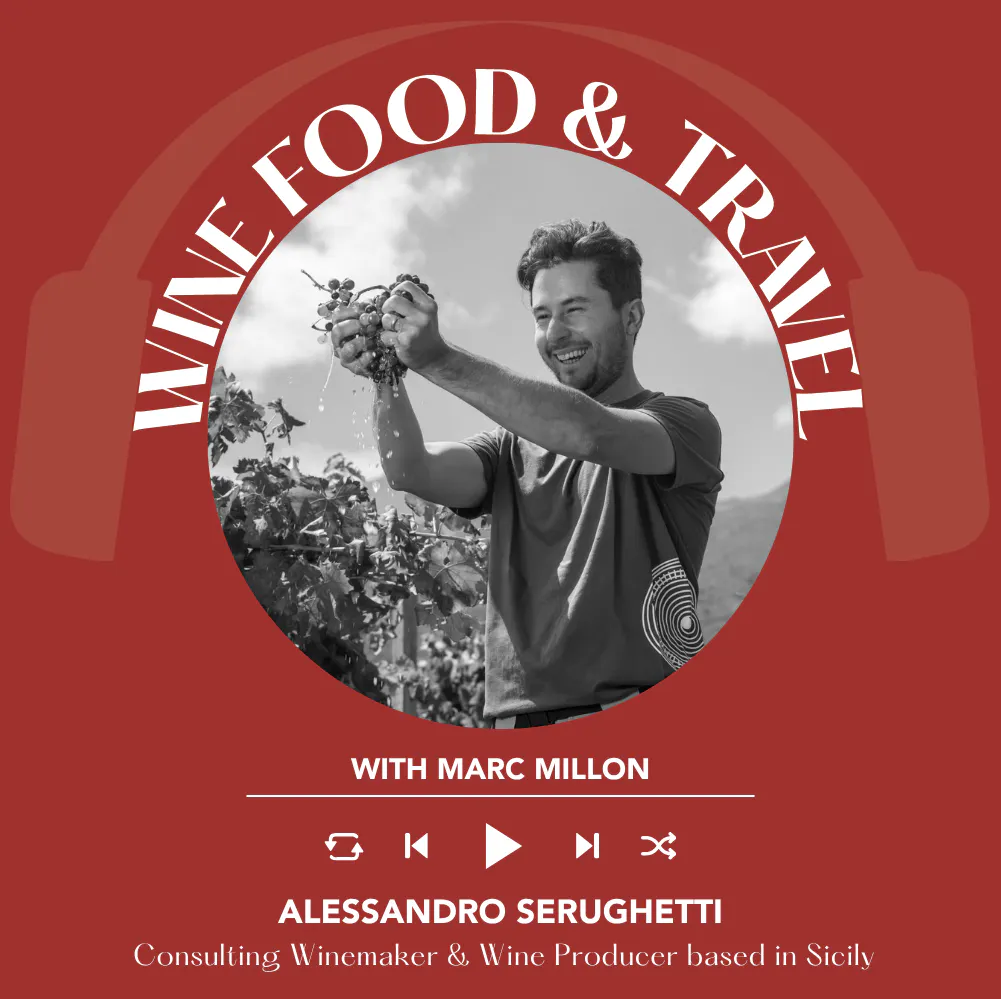
Ep. 2761 Winemaking and Consulting Across Sicily with Alessandro Serughetti | Wine, Food & Travel with Marc Millon
Episode 2761

Ep. 2759 Part 2 – The VIA Educational Program & Italian Wine | Heart-to-Heart Conversation with Sarah Looper
Episode 2759