
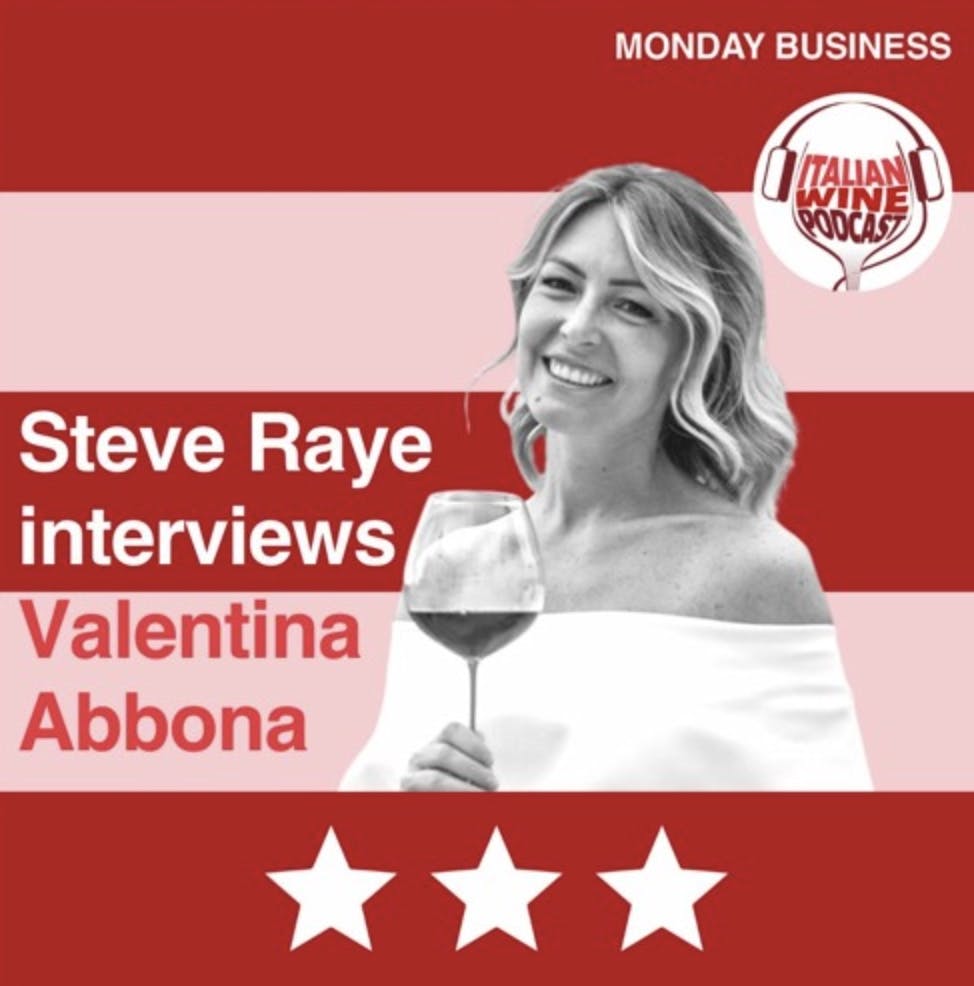
Ep. 1003 Valentina Abbona | Get US Market Ready With Italian Wine People
Masterclass US Wine Market
Episode Summary
Content Analysis Key Themes and Main Ideas 1. The historical evolution and significance of Barolo wine and the Nebbiolo grape. 2. The legacy and operations of Marchesi di Barolo winery under the Abbona family. 3. The impact of *terroir* on Nebbiolo and other Piedmontese grape varietals. 4. Challenges and adaptations in the wine industry, particularly due to COVID-19. 5. The role of family succession and new projects in traditional Italian wineries. Summary In this episode of the Italian Wine Podcast, host Steve Ray interviews Valentina Abbona, President of Marchesi di Barolo. Valentina shares the rich history of the winery, detailing how the Abbona family acquired the estate of the original Marquises of Barolo in 1929. The discussion largely centers on the Nebbiolo grape and its iconic wine, Barolo. Valentina explains Nebbiolo's historical transformation from a sweet, unstable wine in Thomas Jefferson's time to the dry, powerful ""king of wines"" it is today, largely credited to the efforts of Juliet Colbert in the 1800s. She emphasizes the profound influence of *terroir* on Nebbiolo's diverse expressions, even within the small Barolo region. The conversation also addresses the challenges posed by the COVID-19 pandemic, with Valentina surprisingly noting an increased demand for high-end wines like Barolo, attributing it to increased consumer curiosity and the rise of e-commerce. Other Piedmontese grapes like Arneis and Barbera are also discussed. Valentina outlines the future of Marchesi di Barolo with her brother David, including a new Barbaresco project, and touches on the value of industry events like Wine2Wine for knowledge sharing. Takeaways * Marchesi di Barolo, though not owned by nobility, carries the name and legacy of the original Marquises of Barolo, with the Abbona family acquiring it in 1929. * The Nebbiolo grape and Barolo wine underwent a significant transformation in the 1800s, evolving from sweet and unstable to the dry, noble wine it is today, thanks to figures like Juliet Colbert. * Terroir plays a crucial role in shaping the diverse characteristics of Nebbiolo-based wines, leading to varied expressions even within a small geographic area. * Despite the COVID-19 pandemic's impact on on-premise sales, premium wine sales, particularly Barolo, saw unexpected growth, partly driven by consumers' increased engagement and e-commerce. * Nebbiolo's sensitivity to *terroir* makes it difficult to cultivate successfully outside its native Piedmont, Italy, explaining its concentrated presence there. * The new generation at Marchesi di Barolo (Valentina and her brother David) is actively pursuing new ventures, including a Barbaresco estate, while maintaining tradition. * Barbera is the most widely cultivated grape in Piedmont, offering more accessible and versatile everyday drinking wines compared to Nebbiolo. Notable Quotes * ""Barolo is known, not just as the king of wine, but also the wine for kings."
About This Episode
The hosts of the Italian wine podcast discuss the pressure on people's names to avoid minor errors and the history of the estate and wines made by members of their family. They also touch on the success of their own wine craft and the challenges of selling wines in the US due to the shortage of production. They express their interest in participating in promotions and events, and discuss their plans for the end of their time in the US and their commitment to bringing free content every day.
Transcript
Welcome to the Italian wine podcast. This episode is brought to you by Vinitally International Academy, announcing the twenty fourth of our Italian wine Ambassador courses to be held in London, Austria, and Hong Kong. From the twenty seventh to the twenty ninth of July. Are you up for the challenge of this demanding course? Do you want to be the next Italian wine Ambassador? Learn more and apply now at viniti international dot com. Thanks for tuning in to Get US Market Ready with Italian wine people on the Italian wine podcast. I'm Steve Ray, your host, and this podcast features interviews with the people actually making a difference in the Italian wine market in America. Their experiences, challenges, and personal stories. And I'll be adding a practical focus to the conversation based on my thirty years in the business. So if you're interested in not just learning how, but also how else, then this pod is for you. Hi. This is Steve Ray, and welcome to this week's edition of Get US Market Ready with Italian wine people on the Italian wine podcast. This week, my guest is Valentina Abona, who is the president of Marquese Dibarolo. We met at the, wine to wine, pink tank event that, Stevie Kim and her team held in Verona in October. And I was really impressed not not only with her and the things she had to say, but also the way she carried herself, it was very noble. And I think we're gonna hear a little bit about that nobility in in a moment. So Valentina, welcome to the show. Thank you, Steve. It's very exciting to be here. And as American, we're kind of like, we love the the concept of, lords and ladies and dukes and girls and all, and don't know the the relative, level of a Marquese, but could could you tell us a story of how that name came about in the history of the estate itself? Well, I don't wanna, because they, get a permit of a name, which is not, which is not mine, but the winery is called the Marques de Barolo, because it was original estate of the Marquises of the town of Barolo. So just noble family that was reigning over, the village in the region of Barolo back in the eighteen hundreds. The line ended with, carlo, a French noble woman that arrived in Barolo because of love, and my family bought it later in, nineteen twenty nine. So, we started, making wine following the example of the Marquisis, Wendy was still alive. And then at, fourth generation in our family, board the state. So my family is among the historical producers in the town of Barolo, but we are not noble. Well, thank you all for listening to this. And I hope you say, nobility and, a temper, which you mentioned comes from the heritage of the winery and in breathing this to air and living here allowed me to be so Okay. My my apologies on that. Wait. Actually, the concept the reason why I even mentioned that was, the concept of noble varietals. You know, the world kind of has these international varietals like Cabernet sauvignon, Chardonnay, San Giovanni, and so forth. But Nabiolo, the grape of, Barolo, was never really part of or considered that. It's got this incredible history dating back to Thomas Jefferson, and you can fill us in on that. But it's only recently, not only come into its own, but become one of the noble wines, noble varieties for sure, in the world. So can you take us back, you know, understand how your family got involved in it, but kind of the history of the estate and the history of Barolo as a region, the types of wine that they produced, and and where Nebulaolo, and Barolo fit in today's world. Well, today surely there is more awareness, about the and about the wines made. From this noble grape. But but it wasn't like this in the past. In fact, when you mentioned the, Jefferson, who in the seventeen hundred used to visit the region of Piedmont, which was not in Italy yet because Italy was not unified as a country. At the time. That happened only hundreds of more than one hundred years later. He used to describe the wine made out of Nebula, sparkling as a champagne, a steer as a burrito, and, sweet as a moderator. So free elements, free characteristics, modern elements, which are very much in contrast, one with the other. I can't even imagine of a wine like that made today. And this was a the result of a non completed fermentation of the wine that was made in the region. Because, of course, here in the north temperatures get quite, cool in winter time. So our guess is that with the arrival of winter, fermentation, stop without anything because the temperature became too low to allow fermentation, and then restarted again after bottling in springtime. So, probably the result was this truce that Jefferson, used to enjoy and who, and which he was very curious about. In fact, he asked to send some, bottles when he went back to United States bottles which never made it to the America because during the during the transportation, they exploded. And here is our proof of the, non stability of the wine and, this fermentation, which restarted eventually with a rise of temperatures. Things changed only in this eighteen hundred. Thanks to Juliet Colbert. A French noblewoman. She was noble for real. She was part of the, family of, Colbert, finance minister of the king's son. And Juliet fell in love with Carlos and Crady Foletti, the last Marquee of Barolo, who was at that time, indeed, last last years, of the, seventeen hundreds and beginning of the eighteen hundreds. So the assistant to Napoleon. And, in one of the events, the royal court, Juliet met, Carlos, and after getting married, she followed him in Barolo, this, place who was, to her completely It it was a total surprise to her when she arrived in Barolo. She was, in fact, fascinated about how rural it still was there were no paved roads. And, even though the castle, which is still here today, was their home, decitration was not the same that she used to, that she was used to in France. Yet, so the wine, which the use to make in the region made her very curious, and she did all of what she could in order to improve it and to make her real wine out of this grade, Nebiolo, which was locally from the area. She introduced for the first time barrels, barrels, which, by the way, we still use today at the winery, and they date back to the eighteen hundred basu, worked perfectly for their original purpose, allowing the wine to finish the com the fermentation and finally become still dry and so preserved that austerity, which always distinguished wines made out of the umbrella grades. And Juliet had the intuition of making for the first time excavating underground sellers so that the temperature down was more stable compared to the opener where they used to make wine prior to her arrival. And in this way, she was able to make a wine, which became symbol of this region and, of our lands. Wine does she named the barolo after the town where she moved with, with her husband, and in which she used to live. And this wine became so iconic for the for the region that even the king of Savoy, who was living in terrain, of course, that was the capital. Of the region and the city, which later became the first, capital of Italy as Desavoy family became the first, kingdom of Italy. Was so curious about this mind that asked for some, some of it, as Juliette, and she sent three hundred and twenty five barrels, one per each day of the year for the king, unless the forty days of length, because she was very Catholic. So only counted the drinking days for the king. But since then, but all is known, not just as the king of wine, but also the wine for kings. And the name Nebula is a familiar word in a lot of romance languages relating to mist. How did you get that name? Well, mist in Italian is Nebula. So surely, there is a connection. And this is due to the fact that Nebula is the latest scraper, to be picked. So it used to be picked with the first fox, and also because, there is the skin of nibiano is never clear. There is a sort of waxy bloom on it, which can, make it somehow foggy. In Italian, we say that the grape itself is So Nebula with the both Nebula between the hills and the Nebula on top of it, justifies the the name of the grape. Much like, brunello is a little brown one and and ergo the name. Yes. Something like that. But the wine it produces is something unique. And I I I had an an experience with it that I imagine shared with everyone who's ever had barolo, which is the first time you tasted it. You go, wow. Never tasted anything like that. Now it was a long time ago for me, but I don't remember the experience. And now it, Nebula, the grape, Barolo, the wine, and all of the famous producers your company included are considered at the top of of of the stack, if you will, of world wines and, are collected and all that kind of stuff. How does that compare and contrast with wines that people can drink every day. It what kind of production do you have and who's drinking it and how accessible are the wines, both in terms of being able to purchase, and also appreciate. A lot of questions. I realized that, please. A lot of questions, but they're all interesting questions because I think that's today, we are living a special moment for what concerns, important wines. First of all, there is, as we were saying, more awareness, so people have the opportunity of understanding better both the varietal and the wines made out of this varietal. A varietal, which is very sensitive to the place in which it is grown up. Let's, talk about Touora because Torora is what makes every Nebula wine special. In fact, we can't even speak about one barolo, but we speak about barolo in general as a region. It has so many different shades, just in this little corner of the world. If we move just a few kilometers and we, go in Barbaresco or in Rioo, we would have different expression of the same grape, which are even called, I mean, the wine made of the same grape is even called in a different way. So, of course, these are the elements that impact on the expression that the wine has, and that makes it more or less accessible. In terms of, importance and austerity and also proferences. So on Sandier soil, I would say that Nebula shows more freshness, more accessibility, while a more compact and stony ones in, places maybe where there is a more, obviously, to war, then we would have more closed, long lasting and severe vertical expressions of it. So the accessibility of the wine itself depends on the onto to war. So on where and when, so dependent in which, the grapes are picked up. So the vintage of the harvest. And, of course, this is very personal. It changes from person to person, but the more, we study about these wines, the more we taste them, the more we have your to a need of drinking them. Then the more we will become familiar with them, and they will become more accessible. Fair enough. In terms of quantity, however, Barolo is a very tiny area. There are just around two thousand actors on divine, which translates into fourteen million bottles of four day old world in one year, more or less. So, of course, it is a rare wine to be fined. There is not so many. The production is so tiny that, of course, is not super accessible in this sense, but in terms of, I mean, besides the, quantity, I would say that we can find occasions in which Barolo can be, enjoyed more than more than what it was used before. Today, we have the opportunity of addressing this austerity, which is typical of the grade. So the tannins and acidity, which we were mentioning earlier, and address it in a way that we can make mine, which are understandable and pleasant, already in their first years of youth. So just as anyone, I think that the evolution that that we that we have and the opportunities that we have today, both in terms of vignet management and winemaking allow us to have wines which are more accessible even in the first years of youth compared to how it was before. So the opportunities of enjoying Barallo of enjoying generally speaking. Madeulo made wines that are definitely greater today than before because of the greater experience, because of the greater knowledge, and because of the also of the different recipes, which we can make today, which earlier we're not even, known or people were just, more locally eating. So we can have more occasions for our important and noble wines nowadays. Face. Thank you for listening to Italian wine podcast. We know there are many of you listening out there, so we just want to interrupt for a small ask. Italian wine podcast is in the running for an award. The best podcast listening platform through the podcast awards, the people's choice. Lister nominations is from July first to the thirty first, and we would really appreciate your vote. We are hoping our listeners will come through for us. So if you have a second and could do this small thing for us, just head to Italian wine podcast dot com from July first to the thirty first and click the link. We thank you and back to the show. So, two points on that. One, difficult grape to work with, very sensitive to its location that makes it similar in some contexts. To Pino noir. And yet, we've seen a dramatic, growth in almost shift of Pino noir production big in Oregon, Washington in the United States. Who would have ever thought that? I mean, I traveled to those states back when they were just growing weak in those fields. The rolling hills and now there's vineyards in the middle of them, making really great wine. Why is Nipiofozo not grown anywhere else? Well, we do have, expressions of Nipiolo, of course, from Pima, not just from Barolo, but generally speaking, also from, the north of Pemonte. So these are all expressions of Nebula from the north of, of Piedmont. We have some in, Lombardy in Baltimore specifically, but the clone is already different, and it's called the cabinasca. So the local, expression of Nebula deira is different from the one that we have here. We can find a little bit in, Balidaosta. And also in Sardinia, not many people notice, in Sardinia, there is some, some Nipiola on the And the my guess is that probably this grape used to travel with the king of Sukhoi, who was the king of both Pemont and Sredenia. So he brought with him some outside of Italy, little Nebriela's grown in Mexico. Some, and I I had some Nebula from Australia, also from California, actually. I should say, however, that expressions are so particular and so different from the ones that we are used to. Here in the south of Beaumont because of the terroir of all these different places. In Mexico, for example, the expression of Nebriolo tends to be very salty because of the roots going down close to the, to the sea, to the ocean. So because of this, peculiarity of Nebula being so sensitive to the tour, it's more difficult to to find it grown in other places rather than the one in which it became very famous. Okay. So you're not at risk of, dealing with issues like the people from Prosecco, did in having to change varietal name and it being grown in a lot of different areas and made in a way that is, repeatable, Charmai Paul. So let's get into the business side of the issue. By nature then because of not just the price but the limited production, you, Barolo, in general, and your wines, I believe, are very on premise oriented. Have been. Now we're living in a world of COVID, which is, you know, completely decimated. The man from his business, bars, and restaurants. How have you guys reacted to it and your importer is Frederick Wildman, I believe? Yes. How are you guys dealing with with COVID? Are you? We still are. Yes. Very much right. We thought we were at the end of this, but it doesn't seem like that. Luckily, however, even though business, of course, I'm from business. I've suffered a lot. I think that the reasons behind the success that we still had in the past months is, there are many, many reasons. First of all, I would say the curiosity of the of wine lovers and, and connoisseursa, which finally had more time of studying about it. And they were they were as anyone. We were all stuck at home, so we could only follow our passions in order to forget what the craziness that was outside. And, for sure, for many people, this translated into greater studies about wines. I personally carried out a lot of virtual tastings and, this, long distance seminars in which we were discovering the peculiarities of Nebula from the different areas having different single vineyard in front of us from the same vintage, maybe even from the same town. So to really discover what terroir means and how many expressions we can find from such a small area. So this extra time that we had at disposal could translate into this greater knowledge, which today allow us to have even a greater public compared to before. Well, that's a that's great, but that's a reach. Yeah. The the the the joke in the industry is I get asked this all the time. I'm sure you did too. What's the best bottle of wine? And the answer is the one I just sold. Okay. We're in a a commercial world where money has to be transferred. And if people aren't drinking it there, it becomes a challenge. A lot of the bigger players are doing well because they've shifted towards, lower priced wines necessarily or more mass market oriented wines, but you've got limited production of a high end wine, that's gotta be a challenge. One of the areas I see, and I don't mean to put words in your mouth, but just kinda to move this along is, a shift in, the where and how people buy wines So while on premise might be down, we're seeing e commerce grow so dramatically. And all of a sudden, it's less of an issue of what's on the shelf than what it is you want or what you're looking for. So we think about e commerce as the infinite aisle if you hold a multitude. And this is exactly the point that I was Oh, okay. Great. Touched you before. So people are more aware today. So they have more they're more cautious about what they wanna drink. And even though I agree with you, they're generally speaking because of the difficult moment that we are all facing, you know, wines which are cheaper should be growing more. We experience exactly the opposite. So we've been seeing a greater performance of our single vineyard Verado, rather than the every day? Well, every day. For you guys, every day, Barbara. I used to work for the the company that imported Charetta wines. And I learned everything I know about Barolo from Philip to Bellardino. You probably knew him. He was a mentor of mine. He's he passed away a few years ago, but he would tell stories and use Italian so that we understood what, like, Rico Orooke meant and so forth and where it was on on the hillsides and so forth. And one of the wines that I discovered that I fell in love with that is really hard to sell in the US we're finding is Arnaisse. And you tell us a little bit about that. And it's more Lenge, right? That's kind of the the root where it's grown? Well, Arne is actually, is, find its home in Roero, which is just on the other side of the townaro river. So, this, major region of the south of Vermont is divided in Langeiro from the Tanaro. On, one side, red wines are made mostly on the, which is language. So the region in which, are located on the other side. So in the, north, west of the river in Noro, is where specifically white varietal and Arnese specific, more even more specifically are grown. If we can divide a little bit in, in two, we can say in Rivera, for sure, Arnese, in Delanga, mostly Nebula and Barbera. Even though there are great expressions of Nebula, in Rioo as well, would say that what identifies the most is surely Arnese. Arnese, which is also difficult to pronounce. So I understand that this can be a, I can say, one of the reasons why it is not so of appeal. It's not not as hard as grungeville cleaner. As I mentioned, I always redemention everything to pee monitors. So it's among all of our grace for Sharadnees is a little bit complicated. But this is the how can I say it's the DNA of the grape? Arnese in our dialect means little rascal because it was one of the most challenging varietals to be to be grown. In fact, Arnese, until forty years ago or so, was just grown in order to, I'm gonna say, attract birds and animals in sex, to bite on that grape and allow the other grapes, to be grown. But then it became the icon of the, of the region of Rioo. So it's an important white, wine made of an important, white varietal, which has a very thick skin, which allows a sort of creaminess. Into the wine. So even though usually it's a non oaked, white wine, it stands out for its complexity. So probably is the unexpected white wine. And this is one. This can be the reason why it's not so That could be a bad thing. Yeah. I mean, you have to pay a little bit of attention before appreciating. Anese? One of my favorite restaurants is E truly in New York. It was around the corner from my office there on twenty sixth Street. I think it's twenty sixth Street. And they have a great rabbit dish there. I forget what they call it, but that was Arneza. Perfect. Yes. Yeah. It's spectacular, but, normally, I would think of, you know, getting a a burrito, Barbara, or something from the north. So, it it's an interesting one. Okay. So there's a new generation running the winery. You and your brother. You've been a very visible part of it. What is the future of the winery? Where are you guys going and what are some of the new projects that you're working on that we can look forward to enjoying here in the United States? Well, it's very exciting to have my Broad onboard Davi did join the officially, the winery last year, and he's in charge of all the vineyard management, even though unofficially he's been working with us since ever. Both my brother and I since we were little, used to help mom and dad with everything that we could do, even because we were forced by our parents to assist them. So we had really no choice. But the reality is that we both enjoy a lot what we're doing. We have two very different personalities and therefore approaches to the business. David, as I mentioned, is the head behind things. He's the hens, and, all of the heart, inconvenience, and in the cellar. While I take mostly care of, sales and, communication marketing. So we're very complimentary in this. Of course, mom and dad are still a very important presence the winery. And, altogether, I would say that we that we make a good team. And, this is another nice aspect. If I can say of, of COVID, which allowed us to be together than what we used to. As before, we were always gone. And, the the ideas and the enthusiasm for the years to come is even more now. We bought, a little estate in Babaresco, which is, David is a jewel. And, he will show us all of the potential of is one of the most famous vineyards in the Appalachian area. And ideas for him to, test and, and and show himself through that wine specifically while continuing, of course, to to maintain and, preserve all the history and the tradition at Marques de Barardo. So one of the other you've you've also produced we've mentioned earlier, Barbara and Delceto, I believe. Right? How important is that in your export business? I love the wines, but Boy, it's really hard to find. But barbera's everyday drinking wine is wonderful. I know you do it in Italy, but nobody does it here. Why? You know, I would I would also say that, does quite well in United States. And so it is a I was wrong. That's good to hear. It's different from for everyone, I believe, but I would say that, because of the accessibility of the grape, Barbara, but also of the shade to grape, these are wines that you can enjoy on a more daily basis. Also, the fact that are producing larger quantities compared to Nibialo allows greater accessibility. In fact, Vibera is the most widely grown grape here in, in payment. Despite the fact Nibiala is more famous, surely, Barbara is produced in larger quantities. And, Barbara two can be quite sensitive to the term Warren, which is grown. So mainly, we have free expressions of it. Most dear to one as it is the most, local production for us is Barbera Alba. And, specifically, our Barbera Albera Albera, it is made with a little blend of, of Nebula, which probably makes it a little bit more healthier and a little bit closer to to our Nebula wines. So it's, probably because of this, personality of the wine it's self is more easy to be enjoyed in different situations. It makes it very versatile. So what kind of, activity do you guys have planned for the US? Are you gonna be, traveling to the US? I know we're we're recording this a kind of the beginning of January when things are looking pretty bleak. Hopefully, we will pass this, crest by the time we come back. Are you planning on coming to the US? Will you be doing participating in promotions here? And so I hope so. I really hope so. Because they used to travel to United States, at least, every other month until twenty twenty, of course, and I'm missing coming to, the different states of United States now. My plan for next month, so end of, February to be in Miami for the sobe. We have very nice, program there with a little vertical also. Let's hope that will take place and let's hope to see each other overseas in, in different parts of the states. I I take that the same way in in Italy. The one last point, question I would ask, you went to one to one. Tell me what you think about that event. How much of, have you participated in the past? I don't remember meeting you at at earlier ones, but, it doesn't mean you weren't there. What do you think about as as an event and how valuable it is to you who's produced Well, I always thought that wine to wine was one of the most interesting events and activities in the wine industry in Italy because it always gave the opportunity of, meeting people who are on on your same page from which you can learn a lot from. So the way it is, it has always been programmed with lectures, before in presence, now virtual or half and half as it was this year. I was always been, really interesting and stimulating, and also the fact that I feel like we are all at the same level somehow. So there is very short distance between who is giving lecture and who is listening. Oh, I get that a hundred percent. It it's yeah. It's like it's like being in college again. It's like you're all in one place together and all at the same level. Hungry to learn, but having something to contribute there. So learn everyone. And there is so much enthusiasm them. And, I I miss when we were there in presence because it was even more, you know, like being, as you said, in college during the break, and it was just Yeah. Beautiful. Beautiful, and he's very enriching. We're coming to the end of our time here. I'm gonna surprise you with the question that I end all my interviews with, is is there a a big takeaway from the conversation that you've had? Is there something that most of the people who are listening to the show are in the US trade, also some in the UK. It's not Italian producers. It's it's Americans, so distributors, importers, salespeople, and whoever else out there listening, send me an email. Let me know who you are. It'd be great to hear from you. Steve at bevologyinc dot com. But in any case, thinking about big takeaways is is there anything that we've talked about that you think is particularly useful or helpful for anyone who would might be listening to this broadcast that they can put to use immediately. That's in terms of in the business of international wine. Well, I think that just, you know, every time we listen to other people living the same situation in which we all are and, in making our confrontation with someone else in the business is always, I can say, is always a great lesson for for each one of us. And, I think that the positivity with, which we faced all this COVID situation can be a good, a good lesson. As I mentioned, the my way to get out of this was to, do, virtual tastings and to meet constantly, of course, virtually with many people. But I think that the greatest lesson for all of us and for me too is that the power of, of wine, the enthusiasm that is behind wine really allow us to travel constantly. We can be physically in one place, but we rather imagination. And thanks to a glass of wine, we can be anywhere we want in the world. And, this sentence was never let us down. So I'm sure that with a great glass of wine, we can face every situation, and I really hope to be able to cheer in person soon with most of the people who are listening to us today. Okay. So to put that into American commercial speak, drink all you want, we'll make more. Oh, like I stole that from an old serial com or no Laze potato chip commercial. Anyway, this is Steve Ray. Thank you all for listening to, Italian wine podcast today. Get US market ready with Italian wine people. Thank you too. Valentina for sharing her time with me today. It was great to meet you in Italy, and I I hope we'll have the chance to meet again soon, like at, in Italy coming up and that the world will, if not return to normal, that we'll be able to recommence all of the things we do that that make a career in the wine industry so valuable. So thank you very much. Thanks for listening to this episode of Italian wine podcast. Brought to you by Vineetli Academy, home of the gold standard of Italian wine education. Do you want to be the next ambassador? Apply online at benetli international dot com. For courses in London, Austria, and Hong Kong, the twenty seventh to the twenty ninth of July. Remember to subscribe and like Italian wine podcast and catch us on Sound flat, Spotify, and wherever you get your pods. You can also find our entire back catalog of episodes at italian wine podcast dot com. Hi, guys. I'm Joy Livingston, and I am the producer of the Italian wine podcast. Thank you for listening. We are the only wine podcast that has been doing a daily show since the pandemic began. This is a labor of love and we are committed to bringing you free content every day. Of course, this takes time and effort not to mention the cost of equipment, production, and editing. We would be grateful for your donations, suggestions quests and ideas. For more information on how to get in touch, go to Italian wine podcast dot com.
Episode Details
Keywords
Related Episodes
Ep. 2790 Italian Wine in the US: Building a Narrative and Reaching Asian American Consumers with Susan R. Lin MW | Masterclass US Wine Market
Episode 2790
Ep. 2783 The Suburban Gold Mine: Insights into New Jersey’s Wine Market with Brittney Abell | Masterclass US Wine Market
Episode 2783

Ep. 2777 VIA Advanced Tasting Sessions with Sarah Heller MW | Masterclass US Wine Market
Episode 2777

Ep. 2772 A Surprising Partnership between Japanese Sake & Italian Wine with Monica Samuels | Masterclass US Wine Market
Episode 2772

Ep. 2748 Florida Wine Market & Vinitaly USA with VIA Italian Wine Ambassadors Stefano Campanini & Daisy Penzo | Masterclass US Wine Market
Episode 2748
Ep. 2742 Wine Marketing Insights: Positioning, Occasions & New Consumers with Molly Bossardt | Masterclass US Wine Market
Episode 2742