
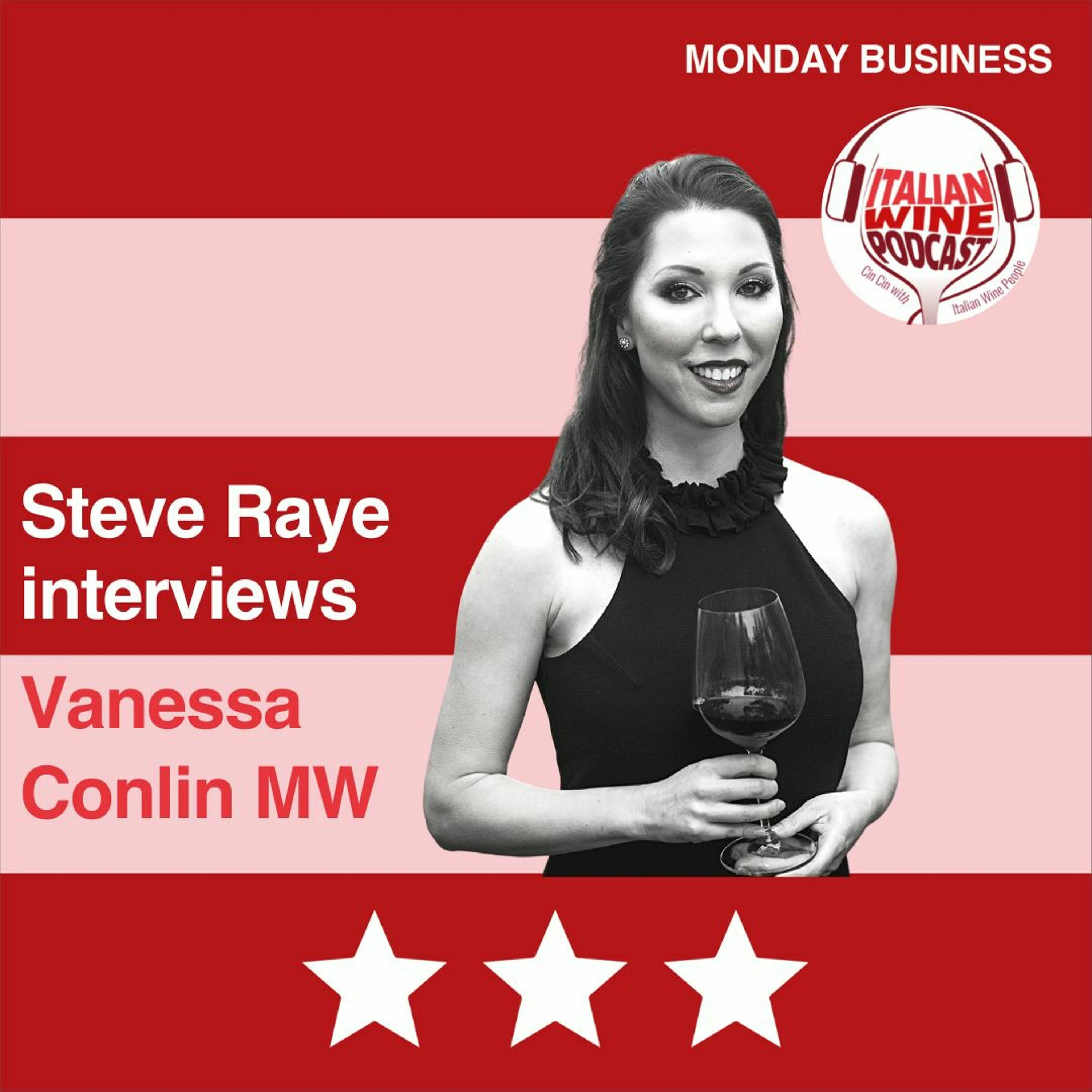
Ep. 1203 Vanessa Conlin | Get US Market Ready With Italian Wine People
Masterclass US Wine Market
Episode Summary
Content Analysis Key Themes and Main Ideas 1. The unique career journey of Vanessa Conlan from opera singer to Master of Wine (MW) and Chief Wine Officer at Wine Access. 2. The business model and philosophy of Wine Access as a premier online wine retailer, emphasizing curation, provenance, and customer trust. 3. The critical challenge of elitism and intimidation in the wine industry and strategies to make wine more accessible and comfortable for consumers. 4. The importance of compelling storytelling and clear communication for wine producers and retailers to connect with consumers. 5. The evolving landscape of wine e-commerce, consumer shopping habits, and risk mitigation in online wine purchases. Summary This episode of the Italian Wine Podcast features host Steve Ray interviewing Vanessa Conlan, an accomplished Master of Wine and Chief Wine Officer at Wine Access. Vanessa shares her unconventional path from a professional opera singer to a leading figure in the wine industry, highlighting her mid-twenties career pivot sparked by a foundational wine class. The conversation delves into Wine Access's mission to democratize wine by curating exceptional bottles, ensuring perfect provenance, and providing unparalleled customer service. Vanessa passionately discusses her commitment to combating elitism in wine, akin to her experiences in opera, by simplifying complex terminology and fostering an inclusive environment for all consumers. She outlines how Wine Access mitigates purchasing risk through rigorous tasting, detailed content, and a satisfaction guarantee. The interview also covers the impact of e-commerce growth, the nuances of online versus in-store shopping, and practical advice for wine producers on effectively communicating their unique story to a global audience. Takeaways * A career in wine can be accessible from diverse professional backgrounds, as exemplified by Vanessa Conlan's transition from opera. * Online wine retailers like Wine Access prioritize curation, provenance, and customer service to build trust and enhance the consumer experience. * Combating elitism by making wine knowledge accessible through clear communication and relatable concepts is crucial for industry growth. * Wine producers and marketers should focus on articulating a unique and compelling story rather than just technical specifications. * The e-commerce sector has significantly grown, changing consumer shopping habits and offering new avenues for wine discovery and purchase. * Mitigating consumer risk (e.g., through satisfaction guarantees and detailed information) is vital for online wine sales. Notable Quotes * ""There's so many elements to wine that I didn't realize it connects people in a way that I hadn't really, understood prior to that."
About This Episode
The speakers discuss the importance of trust and sharing experiences to avoid embarrassment and avoid risk in the wine industry. They emphasize the need for easy communication and sharing to avoid misunderstandings and avoid risk. The speakers also discuss the importance of understanding the wine taste and the value of private label wines. They suggest creating a curation process and a satisfaction guarantee for wine sales, building trust with retailers, and being interested in the podcast to learn about the brand and how to sell more wine.
Transcript
Some of you have asked how you can help us while most of us would say we want wine. Italian wine podcast is a publicly funded sponsor driven enterprise that needs the Moola. You can donate through Patreon or go fund me by heading to Italian wine podcast dot com. We would appreciate it Oh, yeah. Thanks for tuning in to Get US Market Ready with Italian wine people. On the Italian wine podcast. I'm Steve Ray, your host, and this podcast features interviews with the people actually making a difference in the Italian wine market in America. Their experiences, challenges, and personal stories. And I'll be adding a practical focus to the conversation based on my thirty years in the business. So if you're interested in not just learning how, but also how else, then this pod is for you. Hello, and welcome to this week's edition of Get US Market Ready with Italian wine people. I'm your host, Steve Ray, and I'm pleased to have as a guest this week, Vanessa Conland, who's an MW, and also formerly a opera singer. And the the combination of wine and opera kinda go together, but why don't you explain how we get into the whole business of wine? Tell us a little bit about your background and welcome to the show. Thank you so much. It's a pleasure to be here. Yeah. So I, I grew up in a family that was not, wine savvy by any means. They really love why now because I bring them good bottles, but my my parents were are both classical musicians. And so I grew up with with that as my background. My mother was a singer, and she taught voice lessons. My father, is a symphony, an opera conductor. And so I, you know, spent my childhood just sort of surrounded by music. I never really considered doing anything else with my life. It's just what I knew, and I love music, and not just class school music. I I really love almost all forms of music. And, I went to New York City to pursue that as my degree. I went to the Manhattan School of Music and, performed professionally for many years. You know, I got my master's degree and traveled to Europe around the United States performing with opera companies. I spent a year on Broadway. And all of this time, I still just had this, sort of very peripheral knowledge of wine. You know, it was something that had always kinda piqued my interest, but I never studied it. I really never looked into it. And, Opera is really, not a very steady job in a way. Most of it is you go to a particular opera company. You perform your role that you've studied. You you form it there, and then you would move on to a different opera company and do a different role there. A lot of times, it doesn't line up perfectly where you're going directly from one to another. And it was one of those instances where I had maybe a couple of weeks in New York where I was just there kind of waiting to travel to my next gig. And I thought, you know, I've just always been intrigued by this topic, and I wanna learn more. And so I signed up for just sort of a, you know, very basic wine one zero one class. And it honestly changed my life. I was just absolutely blown away. There's so many elements to wind that I didn't realize it connects people in a way that I hadn't really, understood prior to that. So essentially, kind of, you know, mid twenties, I did a com just a complete change. I started at the very bottom. So I worked for a minimum wage at a retail shop on the upper west side just so I could be around the buyer and hear her talk and sit in on her tastings and really learn. And I worked on other parts of the business. I worked in restaurants. I worked for an importer for a period of time. And then all this time, I was also studying. So I was, doing all of the Wyman Spirit Education Trust class that went to international wine center. And so just really this became part of my life. And I eventually became the buyer, and manager for two wine shops and a wine bar on the upper west side of Manhattan. Do you want me to give a shout out to them? Sure. Harlem vintage, which I think is called vintage Harlem now, which had a sister business nectar, the wine bar, and then core, like, p o u r on the upper west, which is still there. And, sort of, at a time in my life where I was prepared, I was ready to kind of leave New York. You know, I realized I actually do need sleep and money is kind of nice to have sometimes. So New York was not the my long term solution. For either of those things. And I also had never worked around vineyards in production. And so the perfect place that I could think of to move to continue pursuing this love of wine is Napa Valley. So I've been in Napa since twenty ten. I moved out here. I've I've worked, running the mailing lists for a couple of, kind of, luxury properties. And then I've been with wine access since twenty seventeen, which I'm sure we'll talk about more, but, I'm the chief wine officer at wine access. And I, became a master of wine in twenty twenty. So all this time while I was, you know, pursuing different parts of the industry, I was also still studying. Wow. And that's I've I've talked to a number of people who are in the process of and have it. And, the way they describe it, it's it's an extraordinarily challenging goal to attain. So congratulations on that. Thank you. Well, you you mentioned wine access. So tell us about that. What is wine access? And where does that fit into our conversation? So we're based in California, but we are a national, online retailer. So we're the premier online destination for discovering the world's most inspiring wines. So our mission is to connect people and place through wine. And we do that through curation. So, I have a team of amazingly credentialed wonderful wine professionals, and we spend our days finding the absolute most beautiful bottles of wine with great stories to tell both from small producers, which you may have never heard of before to some wineries that that may be familiar to you, but ultimately our goal is to really tell their stories. So every wine that we offer, not only are we writing our own tasting notes, our serving recommendations, food pairings, etcetera, but we also write original content. So contact curation is a very, very big part of wine access. Each wine has about a five hundred to one thousand word, write up that we create that is, beyond what you might find on Google. So we're actually, you know, talking to the people really telling their story, why we love the wine. And, and then addition to that, we offer a perfect provenance guarantee. So we don't offer any wines that we bought off the gray market. They are all direct from the source. Wow. Okay. So one of the, the points you made when we were doing our initial conversation, to prepare for this podcast was one of your goals is to take elitism out of the equation because it's a a a real barrier for a lot of people. We know that that's preventing people from getting into the industry. And sometimes we're our our own worst enemy. Tell me a little little bit about that. I'm so glad you asked because this really is is a passion of mine and something that is is sort of one of the reasons why I feel especially drawn to the wine industry. So this this concept of elitism, this is something that I grew up with being around classical musicians. So my parents are two of the just most lovely fun down to earth people you'll ever meet, but this was a really, to a common topic of conversation on our dinner table was because they're both classical musicians. There's a high perceived barrier to entry. To opera. And you mentioned you, you know, I know you've been to LaScala. It may not be for you, and that's fine. It may not be your personal preference, but it it's it's ultimately has a lot of things that can seem exclusive. So it's often in a different language you know, there are there are people singing in words that you don't understand. And there's a there's almost a protocol, like, when do I applaud? When do I not applaud? When am I supposed to be quiet? When am I allowed to not be quiet? You know, all these things, what do I wear? It's it's there's a lot of unknowns that keep a lot of people from trying it in the first place. And again, maybe they love it, maybe they don't, but, you know, at least having the ability or the opportunity to try it without feeling you know, embarrassed or afraid was always something that was really important to us, in my family. And this is something that I brought to wine because I think there's a lot of similarities. Again, you might be looking at a bottle of wine, not know a single word. Have no idea what is in that bottle. And then maybe it's intimidating or afraid to ask. Are people gonna think I'm stupid? Because I don't know or, you know, I wanna describe a wine, but I don't have the right word. So I'm afraid to ask for it. All these things, you know, that that that makes me really sad. Because Why is meant to bring us together. Right? It's supposed to inspire conversation. We don't have to agree. We don't have to, like, the same things, but it's meant for us to be able to share at least an experience together just like you would share an experience if you went to theater. So this is something that that I try to do in all of my interactions with consumers or with the trade, which is we never want to sort of, you know, quote unquote, dump down this beautiful, amazing, magical product of wine, but it doesn't have to be explained in a way that as anyone on any level is gonna feel excluded or, like, it's not a place for them. And yet, it still exists. We see articles in the trade press all about that. I I see people all the time get caught up in our language and the structure of, you know, on the nose, on the palate, and the finish. And there are and all that makes sense when you're doing it. But to people from outside, it looks like a whole bunch of Mhmm. Now there's a whole bunch of websites out there. You know, it used to be in my day, you had print publications. You know, magazines is not something that people read anymore, but you have a number of public, electronic publications out there too in what I'm thinking of. One is Vinepere, and the other one is Vivino. There's some other sites that people can go to for information like wine searcher, as well as, you know, wine spectator wine enthusiasts to canter and all the rest. But that's how these new generations, new younger generations gen gen z and millennials find information. They find it online. We all trained ourselves to search. How does the way you provide information online access compare and contrast with the information as it's presented in, let's say, vine there. I'll tell you what what we do and what what I do specifically is try to bring people in at a very high level of knowledge, but without using words without blaming what they are or connecting the dots. So for instance, if we're gonna say something about, this wine, you know, went through full malleactic fermentation was aged in, you know, eighty percent new friendship. So what? Like Right. What does that mean in the glass? So what does that provide? So what am I what does that mean you're gonna taste? Or what is how can I describe it? So you know, yes, I wanna buy this or no, I don't wanna buy that. Also, things, like, if it's a wine, let's say, a grunerveldingerner. Let's say there's someone who's never try to Grenerweldinger before. We'll try to throw into our content that we create, you know, if you like crisp, high acid, unoaked wines, like saucera, or like, you know, insert, you know, albirena so that we are trying to just bring people in and make them comfortable. Oh, I've I've had sunser. I like sunser. Like, that's you know, this this is a wine I might take a risk on. So just trying to really explain all the if we're gonna use words, that that are, like, wine terminology or about wine making, we're gonna explain why you should care. You use the really interesting word. And, it it's a something I pay a lot of attention to, particularly on trade side that, you know, my point of view is that the industry is trying to avoid risk. The real question they're asking is how do I know it will sell when it's a new brand and say it is a gruner. And, you know, it's not like every person walking into a store has heard of it can pronounce it or or wants to buy it. How does risk play for newbies in the wine world? One of the issues we we can all recognize is wine generally comes in seven hundred fifty ml bottles, and you're not buying wine by the glass. You're not getting a taste. If you spend twenty dollars for a bottle of wine, and then you decide you don't like it. Well, that's twenty bucks down the drain. How does risk fit into the whole thing? And and is risk what we're really talking about here or, lack of knowledge? Well, I think I think for any person who's gonna shell out cash, on anything. Of course, there's a level of risk if you haven't tried the product. I mean, that is something that we, at least at one axis, what we we try very hard to mitigate in a couple of ways. One's is we do actually taste all the wines that we offer. So there are plenty of retailers online or otherwise out there that might take advantage of a great deal, whether it's a great wine or not. That's not something that we're in the business of doing what we taste every ryan, and we do write our own tasting notes, which I think is important because It's not a marketing tasting note. It's not what the winemaker or the winery wrote. It's what we're actually tasting. And particularly if we're talking about something that has a bit of maturity to it, it's not gonna taste the same as it did on upon release. So we're tasting it now, and then providing our own original notes. Also, we offer, a satisfaction guarantee, which I I know some other folks in the market do as well, but I've I've found that that really helps people, you know, as as comfortable as we try to make it as risk free as we try to make it with all of what we write about it. You know, I do a lot of videos, tasting videos about our wines as well, where I'll talk about them and break down what's in the glass. But still, you know, if you buy it and you don't like it, we don't ask questions. We don't ask you to ship us the bottle back. So whether we can analyze it in the lab, if you just say, hey, you know what? This isn't for me. Okay. We give you a credit. Because ultimately, I think trust is the is the most valuable thing we can offer. You talked about risk. And, yes, how can we mitigate that? It's building trust. I think a a good example of that is is watching the dynamics of people when in in a restaurant when you get served a wine that is not obviously corked. But may have some bread or some other barnyard smells that may disappear as it airs, but, you know, it also may mean the thing is undrinkable. I don't have a problem doing it. It does embarrass my wife when I say, oh, gosh. He's doing that again. Yeah. Well, you know, as far as I'm so I'm I'm gonna turn send it back in this undrinkable. Most people I'm with is oh, I would never do anything like that. Mhmm. Was at some seminars last week, and and people were talking. The one of the wines was was court. And he's going on doing his descriptions about the wine. I'm tasting it. And and what happened was there was one bad bottle being poured, and it wasn't his. Was the one I got. He and I were tasting two completely different things. So that I think that's a big issue, but there's this fear of people saying, Hey, this is what I taste. It doesn't sound doesn't taste right to me. There's something wrong with this. How do they get help? You're an MW? I mean, education is is your thing, making people people feel comfortable of with their own sensory value. Promoting the world of wine. Yes. Yeah. I mean, I think I this is how I liken it is, you know, if you went to a restaurant and you ordered a dish, and it came out, and it wasn't at all what you expected, and it wasn't to your liking. I think most people would feel fairly comfortable or more comfortable I would wager sending that back than sending back a bottle of wine. But not a whole lot more, but I I think definitely But the same thing applies. It's just, oh, man. Do I wanna be that person, that diner? I will say I I don't know if you've noticed this, but I've I've noticed a a lot more it seems, so many a's or, you know, servers are actually tasting the wine prior to serving it at the table. So I don't know if you've noticed this, but I I've had way fewer, let's say, actual flawed bottles served, I'd say, in recent years. It just seems to be a trend where they actually are trying to at least be sure that it's not, you know, obviously worked or flawed before they before they served at the table. Yeah. Okay. And that that takes out the takes out the the scary moment of of do I say something or not. Well, let's dig a little deeper into wine access and and tell me how wine access differs from some of the other ecomm options that are out there. Yeah. I think, you know, there there are a couple pillars of our business, curation. So, of course, but the wine team, actually tasting the wines writing about them, the perfect provenance guarantee. This is something I think is really important, because there are a lot of bottles out there. You might say, you know, if you go on wine searcher, let's say, there might be some bottles out there that are less expensive, than others. And in some cases, maybe they have a different margin requirement who knows where but I mean, the same bottle, same brand Right. But at a significantly lower price. And and, of course, this, you know, people can term on their own pricing. But in some cases, I would say, particularly if it's a bottle that is a collectible bottle, is where is it from? How do you know that it was stored properly? How do you know that you're the first owner of this bottle? You know, has it changed hand, six times as I've been sitting in the window, you know, of someone else's shop for ten years. So this is something that we don't play around with at all. You know, we we buy only from the source, and we guarantee how it's been stored. So you were the first and only owner of that bottle, and we guaranteed that it's coming from the seller. Of the property, you know, through our hands to yours. And there's there there are no other stops along the way. I think I mentioned earlier we have a satisfaction guarantee, but we also have a, a NapA based customer service team. So these are live people who who live here in Nava, they love wine. They've studied wine. They can actually jump on the phone and and and help you and provide sort of the highest degree of of customer service, that I think is in the wine market anywhere. So Well, it's like a so it's like a super retail store with some really, really knowledgeable and, people who can make decisions about taking things back and suggesting alternatives. Absolutely. And we we put everybody in the company through a leased wine and spirits education trust level two. So that's whether you are on the accounting side, you know, you're on the operations side, operations and logistics. Obviously, the wine team is all credentialed, but we want everyone in the company to have a comfortable working knowledge of wine and the wine and the wine business. Define wine curation. It means certain things to me, but I don't know that my definition is the same as yours or that people listening to this, understand it. So how do you define it? So so I define it in the way we do it, wine accents is that we actually We actually taste every single wine that we offer, and we're searching out the best quality to price ratio wines that we can. And I say this just the wine business is romantic and Lovely. And, it's also a business. And so, you know, there are many ways to make money. Of course, just finding great deals no matter what the wine tastes like, and then pushing it out to consumers is a way to make money. Is not the way that we make money. You know, we actually put our reputations behind each wine. So I actually just earlier today came from meeting with the wine team, and we really do have this motto of, like, would you stake your reputation on this wine? Meaning if we put this out there, if we put this on the website, our faces are on this website. Do you stand behind this point a hundred percent? And if one person in the room says, I don't think so, then we're like, alright. You know, we're not we're not offering it. So to me, it's sort of a level of this very, very high attention and care to what is in the bottle to that will surprise and delight the consumer. Okay. How do the customers of wine access differ or do they from someone who walks into a a a good wine shop, whether it's in Napa or New York City or in debut, Iowa. I think that I think there's a lot of similarities. I think a lot of people learned during the pandemic that having wine delivered to your door is an option. You know, pre pandemic, the United States under indexed in, home delivery of wine compared to other things like home goods, electronics, you know, fashion. We offer we also under indexed against other countries in terms of home delivery of wine. And so, if there's a silver lining for the wine business, there's a lot of not great silver linings of the pandemic, but one thing was people realized, oh, wow. This is actually something that I can that I can order online. I think the customers are are are probably have a lot of similarities. I think that there are, you know, we have people who know a ton about wine who are big collectors. We also have a lot of people who just wanna discover something and want someone that they can trust. And so that's kind of the way that I picture. At least what it where I let's say was a buyer in New York, people would come in and say, like, I don't know. I just went to fairway. I've got fennel, you know, arugula and some chicken breasts in my bag, like, what should I buy? You know? And so having someone, you know, that you can talk to, of course, that, you know, we're on the online space, but we try as much as possible to be that person, you know, to to become that trust person where you go to for advice to find wines you'll love. Do you think people shop differently online than they do in a retail store? Italian wine podcast, part of the mama jumbo shrimp family. I think it depends on the channel. So we have a couple of different channels. One is the, what we call the, daily offer. So that's why it's sold by email. We have an online store, and then we have a number of clubs. So I think they do shop differently in the daily offer. I think that when people get something by email, it has to really grab your attention to make you kind of pull the trigger, you know, to say, I get so many emails a day. What is it about this? You know, and so I think it's things like icon producers, you know, a big discount off of SRP, a big score, something like that, which I I think differs from our online store or a physical retailer where you can really kind of browse or you would specifically walked in the store, whether you navigated to our site or you walked in your local wine shop, you walked in and said, I'm here to buy wine. I went here to buy wine. Whereas I think the daily offer is more it's a little bit more opportunistic, and it's a little more fickle of consumer, I think. So the type of inventory that you carry, I'm I'm guessing, that wine access is not where you go if you wanna buy m Maomi or Josh or cupcake or some of these mass produced or widely distributed wines. We I mean, I would say I I would say you're you're you're correct just because people can easily buy those wines on their, you know, wherever they wherever they live. I I will say we we don't shy away from big brands. I mean, we've offer came as we've offered silver oak, you know, as long as the quality is there and people are really excited about it. But, yeah, to your point, you know, if it's it's something you can easily, you know, stop it safely on your way home, there's no reason to shop from us. You can just throw it in your carton. Keep driving. Of course, that's a California perspective coming from New York. Well, originally, I live in Connecticut now, but you can't go to a supermarket and buy wine. If you're gonna buy wine, you're going to a dedicated wine store in in New York. It's single ownership. So most of the the people who listen to their show are trade. So one of the questions I would imagine they would have is how do you find the wines that you decide to bring in And once they're in, do they stay in? Do you keep them in inventory or do things flow through when new things take their place? Okay. No. Great question. So, we find ways a number of different ways. The team has amazing long term relationships in the industry. So we're very familiar with a lot of brands and people in the industry already that we have, you know, already existing relationships with. We also travel, around the country, around the around Europe. I'm leaving, you know, next week for Spain. So we're always looking for new wineries, and we also import directly as well. So we're out seeking these. We also get inward, inquiries all the time where someone says, like, hey, I would love for you to taste my wine. Where do I ship it? And, you know, so it's kind of a combination of those. And then beyond that, you know, the the way we select it, obviously, we we taste the wines. We look for price to quality ratio. Can we be competitive in the market? Does that have story to tell? All those things. But a way I would say that someone can get a leg up is I I find that just sort of basic tools that could help with, let's say, a new winery, whether they're Italian or otherwise getting the market can make a big difference. So having a website that I can read in English where there's actual technical information about the wine, I wanna hear your story. Is there a trade section where I can download a text sheet? You know, it's it's it's When people there are so many wines these days, your wine may be the best tasting wine in the world that I've never tried, but if I can't understand it or find any information, it may fall by the wayside because there's a lot of other wineries and brands that are that are investing that time. So I'd say something as easy as that, and then really understanding what is your story? So we when we're creating content, we we sometimes say this or we we read something about the winery and say, well, okay. But so what? So so what? You know, like, oh, I'm a I'm a family owned property, you know, and we've My grandfather founded the winery three generations go after World War did, but mixed agriculture, blah, everybody's got that. That's not a story. It's not the it's not your story. It's Exactly. Exactly. It's cool. Your story is different from everybody else's because nobody can make the same wine that you do, even if they're right next door because they're not there from your ground. And whether you're a tarwar oriented producer or or not, it is a it's agriculture. It's different. Exactly. Exactly. So really learning how to to hone in on that and then be able to communicate that, I think, is is really key. And then just to close the loop, and I think the the last part of your question was do we how often do we change or, you know, do we do we keep things? I mean, it depends. Sometimes things are really small production and we get a small allocation and we offer it and then it's gone until next vintage. Some things are, you know, customer favorites, and we'll we'll keep them around. But what we do is we members are allowed to rate the wines. So we always look at our member ratings. So I always wanna be listening to the consumer. So even if, let's say, I sent out this this particular wine, it sold a bunch you know, it did it did really well, but then it's been a couple weeks. People have had the opportunity. They've maybe opened up a bottle or two, but they've tried it. They've rated it. If it doesn't have a high rating, I'm not gonna offer it again. So the way the it has to it has to actually deliver to our customers and show that they they love the wines well. I was at a seminar on Wednesday. It was, talking about, if asolo Prosecco. So different region than Kanigliano Valdo Viadene, but kind of unknown, and he was explaining the differences and and so on. And the the, challenges of talking about sparkling wines, the words that we use in terms of brute, extra brute dry, extra dry, demi sec, all that kind of stuff, which don't mean dry because the opposite of dry is wet, but means sweet, and that's because that's the way champagne has always done it. So everybody's kinda stuck in the same miscommunicating thing. Well, now we have two generations, gen z and millennials who probably aren't aware of that stuff and don't know that an extra dry is going to be sweeter then a brute and all all the way down. How does how do you communicate things that don't make sense? How do you explain it in ways that customers can understand, don't feel That's part of the challenge. Right? Gee, I don't understand this. Right? Cause it doesn't make sense. Yeah. I think I know you're right. And unfortunately, I there's no super easy way to do that other than continuing, I think, to try to explain what's in the class. Again, it comes down to, like, Yeah. I can say this wine is brewed, but so what? Like, how do if I'm a consumer, I don't necessarily know that too, but I think the extra dry is is a perfect example. You know, I always try to say it, like, well, think of it as outside of dry, not more dry. But, but yeah, it doesn't make any sense. So I think it's it's just something we use in industry. We have to try to Oh, yeah. It's easy to talk amongst ourselves. It's harder to talk to consumers, and it's and it's it it takes more time and effort, but it's so worth it in the long run. So I I think just, again, it's it's consistency of of messaging of just never throwing something out there without a a reason for saying it or for backing it up with what's gonna be in the glass. So one of the biases I see is, the most I think the most popular prosecco in the US is probably Lamar by Gallo. It's it's, I think it's an extra brute. Right? But you have to look real hard on the labels to find it. I think it's got whatever it is, whether it's twelve or seventeen grams or residual sugar. And when I bring my wife other proseccos from other regions and other styles, generally speaking, she doesn't like them. And the reason why is because she likes sweet. And, it's not called sweet. She does, you know, but she likes that prosecco and the reason why is because of the sugar. And that's fine. Okay? But so there's this thing that Americans talk dry, but drink sweet. We see a lot of the popular wines coming from California. And I'll use Naomi as an example. Tend to have a lot more residual sugar than corresponding wines from Europe. How do you guys adapt to that? I would say, well, in general, with the exception of something, let's say, like riesling, we our customers tend to be a little bit more traditional. We don't offer a lot of wines with with residual sugar, then again, other than let's say maybe, you know, we're we're talking German riesling. However, as an MW, of course, like, we have to study all consumers and understand all numbers. And so I I it's I was actually I was on a trade trip very recently and with a bunch of so many days. And, you know, they're just saying, like, I don't have anything against this trend for sweet reds. Who cares? Like, if it gets people in the market, and, hey, there's a there's a food pairing for that, Shirley. So, you know, we don't we don't personally have never carried a a a sweeter style red, maybe Lim bruce, who obviously is an exception. But, we've never carried, you know, a sweet red at wine access. Will we ever probably when we start seeing that our that our members are are interested in asking for it, but I have nothing against that. Again, it's, you know, it's easy for some ways, you know, or or wine professionals to to promote what they like. Right, would they wanna drink? But that's not what everybody wants to drink. And so I say as long as it brings people into the fold, I'm all for it. Well, where I was going with that, the international riesling federation had come out with this graphic image of, like, almost a meter. I've seen it. Go. Try sweet meter, which I think is great. I love it. I haven't seen anybody else really pick up and run with it, but that one of the challenges, especially for imported ones, is there's so little information on the back of the label. So someone shopping at a retail store, they're kinda helpless. Now we have, label recognition technology on a number of these apps. It sounds like what you guys are providing is the kind of information that people are interested in but maybe a a little bit more in-depth. And and here's my point of view on that. I tell people, look. Or, I think consumers are looking for two things. What does the wine taste like in words that I understand and that means something to me? So hints of sauteed gooseberries you know, does nothing for me. And then you get into the flowers and all the rest of it. Yeah. They're descriptive, but it doesn't tell me what it tastes like as wine. The second piece, is it gonna go with what I'm having for dinner? And generally the answer to that is if I'm working in the store. Kinda really just Oh, I was gonna say, I I love you mentioned the scale for sweetness, which I love. So I know this is a, this is a podcast. So only you can see this, but this is something so we include something like this in every shipment. I don't know if you can see this, but we actually do have a scale for food intensity, open intensity body, acidity, and cannon. Oh, yes. And then we off we also do serving temperature, decanting time, and food pairings. So my point of view on this is you're gonna have a much more if not in, Ultimately, it's gonna be enjoyable, but informative shopping experience on a site that isn't limited by the real estate on the back of the label. And so that people, I suspect, people who are shopping online, can take their time to do the research and look at. And if they're interested in that kind of information, they can find it. If they're not interested in it, that's fine too. And I I I personally think that the people who shop online, I know I was pushing you for this answer. And get it back. But that's okay. The people shop online differently than they do in a store simply because there's more information available. One of the criticisms leveled at wine ecom sites that are that are selling wines that people are not familiar with. Are that they're getting gray market goods, they're getting private label stuff, they're getting, wines that are produced just for them only available through that particular entity and aren't really we go out and scour the globe to find these gems and so forth because those are two sides of the same coin. I mean, we've all visited wineries and said, wow, this is wonderful and they don't sell it commercially in the US. So what's the difference between that and a private label? Mhmm. I mean, we have private labels. So, Explain. Tell me. Yeah. I mean, often, you know, there are I live in Napa Valley, you know, as you know, some years, there are wines that sometimes don't fit into the overall profile of the winery. Maybe younger vines, maybe it's little excess. It's more than they wanna have on their books. So, you know, we are able to oftentimes buy really, really high quality wines that you would you would recognize these names, you know, if we could disclose them, which can't because it's NDA. You know, these bottles cost, you know, upwards of, you know, three digits, but we can offer them for two. And so I would just say, like, I I agree. I think that there's a lot of, sort of private label stuff on the market that is I certainly wouldn't wanna drink it. Our private labels all go through the same, you know, tasting panel and and stringent, process that any other wine would do, but they're often able to provide really great value too. So someone, let's say, who really wants, napstab is expensive. As you know, you know, but if it's if I can provide the opportunity for someone to drink, you know, a thirty dollar an epic hab that's really delicious and they love it and they can buy a case of it. Absolutely. You know, it's I'm still gonna I'm still gonna taste it and determine if I wanna put my name behind it or might, you know, have my face on the on the website and offer it and it has to be a yes. But it can offer great value. And, you know, we, as I mentioned before, like, we, you know, we direct import some wines from Europe, and They are exclusive to us in the United States. I mean, there's a wonderful champagne that I discovered. Exclusive is a nicer way of saying private label and and all the that that makes it and I'm not I'm not dis disparaging private label at all. If it's high QPR, that doesn't really matter, at this point in time. I think you're making a good point. I I would say, I think the difference is that some businesses will kind of try to skew people towards the private label because they make a higher margin. I would say if you look at our website, there's gonna be a much smaller percentage of wines like that on the site than not because it is part of our portfolio and allows people to to, you know, drink in from regions that are, you know, would traditionally be more expensive, but it's it's not the bulk of our business by any means. We're running out of time. So, it's a fascinating conversation, and I look forward to the opportunity of meeting you somewhere around the wine world. Yes. So we can sit down over a glass of wine and and and go a little bit deeper. But for this podcast interview, one of the things I like to do is to end end it with, what's the big takeaway? You know, most of the listeners are trade mostly in the US. And I like to think from a business perspective that people can walk away from listening to a podcast and have learned something practical that they can put to use immediately to help them sell more wine or make more money. What do you think is the big takeaway from what we've talked about here today and and don't be afraid to be commercial? Fine. Yeah. I think what what I hope it is, we I referenced this sort of in terms to, you know, Italian wineries or or wines from Europe, but it's dead. It actually goes the same for for domestic, is what's your story? I mean, why should it honestly, like, why should I care? You know, there's a lot of wines out there. What's gonna make me pull the trigger? And so I think really honing your message and making it make it easy for people to discover. And it easy doesn't mean that you have to be simple. It just means help me understand. I wanna I wanna because the more I understand your brand and feel like I know you, the more loyal I'm gonna be. And then I'm gonna be your biggest advocate. And guess what? You're not paying me to market your wine. Right? I'm gonna take it to a party and be like, look at this wine. I love this, and let me tell you their story. And I'm gonna have this piece of social currency that's gonna make me feel empowered in this crowd because I say, oh, I found this really cool thing. This is their story. And then all of a sudden, ten other people are like, oh, that's a cool story. I wanna know more about that. So it really is being able to distill your message. Ask yourself so what? Again, so what? Yes. So this is, you know, this is a organic producer, you know, second. Instead of just ticking off boxes, you know, organics sustainable, and the the the the the the I think that's brilliant. I'm I think that kinda gets to the heart of the thing. People tend to over complicate this, but at the end of the day, people wanna discover something. You used that word earlier before and share. And that's what the internet and web enabled mind sales, I think, are all about. But it's like asynchronous conversation. Because you're not talking directly with someone. Their communications going back and forth, but it's not like, you know, I absolutely applaud what you had said. And It's also one of the hardest things that I find I have to do is to help the wineries that I work with articulate their story because that's not their business. Their business is growing grapes Of course. And making wine. My business is telling stories. And I wanna thank, you, Vanessa Conland, m w, for being a guest on, get US market ready with Italian wine people on the Italian wine podcast. Thank you so much for sharing your your time. Oh, it's a pleasure. I hope that this is enjoyable for you and your listeners, and, look forward to meeting you in person sometime. Thanks again for listening. This is Steve Ray with Get US Market Ready with Italian wine people. On the Italian wine podcast.
Episode Details
Keywords
Related Episodes
Ep. 2790 Italian Wine in the US: Building a Narrative and Reaching Asian American Consumers with Susan R. Lin MW | Masterclass US Wine Market
Episode 2790
Ep. 2783 The Suburban Gold Mine: Insights into New Jersey’s Wine Market with Brittney Abell | Masterclass US Wine Market
Episode 2783

Ep. 2777 VIA Advanced Tasting Sessions with Sarah Heller MW | Masterclass US Wine Market
Episode 2777

Ep. 2772 A Surprising Partnership between Japanese Sake & Italian Wine with Monica Samuels | Masterclass US Wine Market
Episode 2772

Ep. 2748 Florida Wine Market & Vinitaly USA with VIA Italian Wine Ambassadors Stefano Campanini & Daisy Penzo | Masterclass US Wine Market
Episode 2748
Ep. 2742 Wine Marketing Insights: Positioning, Occasions & New Consumers with Molly Bossardt | Masterclass US Wine Market
Episode 2742