
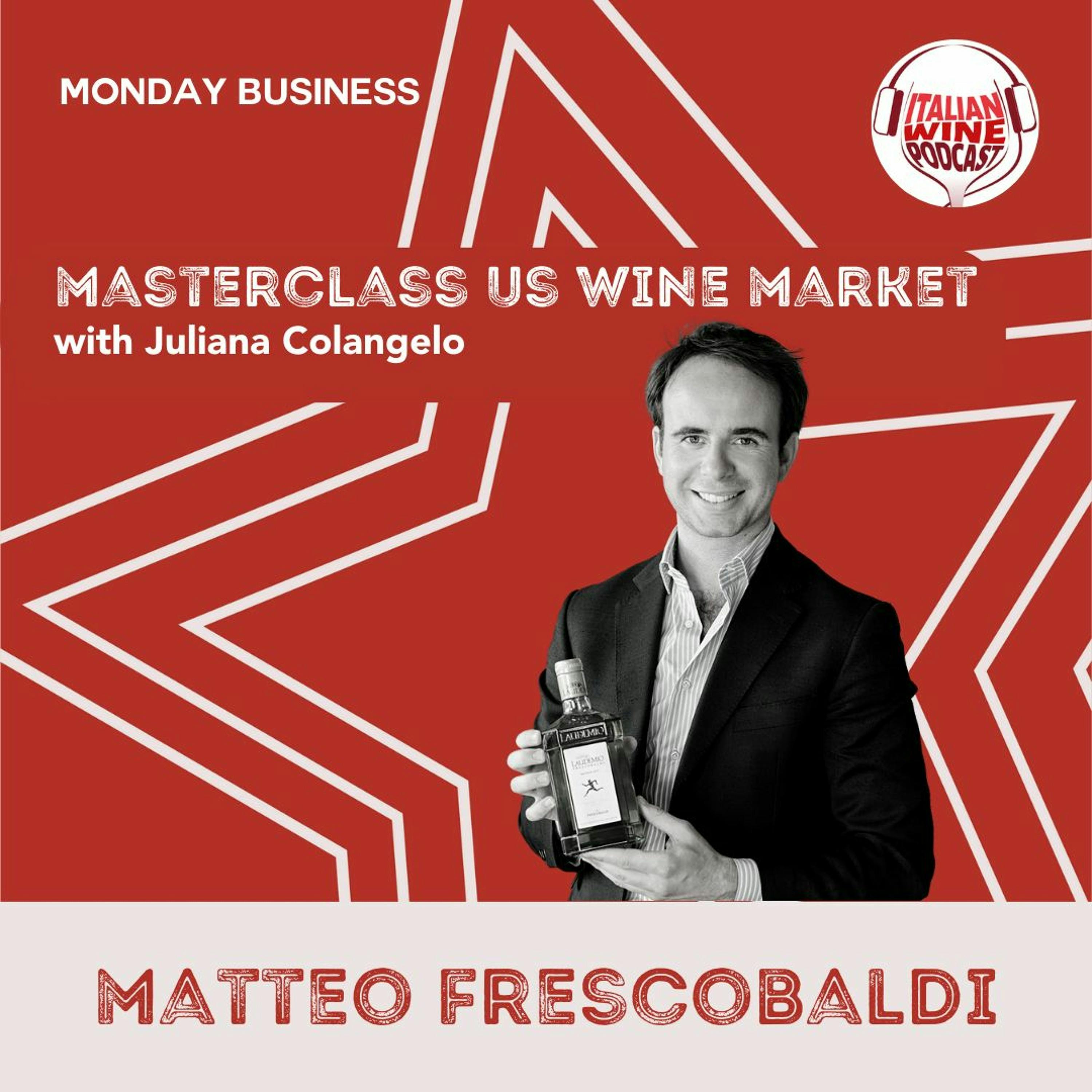
Ep. 1493 Matteo Frescobaldi | Masterclass US Wine Market With Juliana Colangelo
Masterclass US Wine Market
Episode Summary
Content Analysis Key Themes and Main Ideas 1. The 700-year legacy of the Frescobaldi family in Italian wine and agriculture. 2. The innovative creation and global development of Laudemio, a luxury olive oil brand, alongside a major wine business. 3. The application of wine industry concepts like ""terroir"" and specific origin identity to the olive oil sector. 4. Strategies for brand growth, including business planning, maintaining quality during expansion, and differentiating a product voice. 5. The importance of authenticity, heritage, and responsible land cultivation in a multi-generational family business. 6. The integration and differentiation of distinct product lines (wine and olive oil) within the same company. Summary This episode of Master Class US Wine Market features an interview with Matteo Frescobaldi, the 30th generation of the Marquese Frescobaldi family, renowned for their 700-year legacy in Italian wine and agriculture. The discussion primarily focuses on Laudemio, their luxury olive oil brand, which Matteo has led since 2018. He explains the brand's unique origin in the 1980s, born from a devastating winter freeze, and how it pioneered a ""terroir""-driven, high-quality approach to olive oil, directly inspired by fine wine marketing principles, predating official DOPs. Matteo details his role in building Laudemio into a global brand, emphasizing the long-term commitment required for agricultural expansion and the importance of continuous quality improvement. The conversation also explores the integrated nature of production and logistics between Frescobaldi's wine and olive oil businesses, contrasting it with their distinct sales and marketing strategies. Ultimately, Matteo underscores that the family's enduring success stems from their loyalty to authenticity, heritage, and a deep commitment to responsible land stewardship, advising against chasing fleeting trends in favor of focusing on core strengths. Takeaways - The Frescobaldi family exemplifies a multi-generational commitment to Italian agricultural heritage (700 years). - Laudemio olive oil successfully applied ""terroir"" and specific origin identity concepts from the wine industry to elevate olive oil from a commodity to a luxury product. - Matteo Frescobaldi's strategic leadership fostered significant global growth for Laudemio, particularly in the US. - While agricultural production and overheads are integrated, sales and marketing for wine and olive oil often require distinct approaches due to different distribution channels and buyer demographics. - Long-term success in agriculture and luxury branding demands patience, continuous investment in quality, and a stubborn commitment to vision. - Authenticity, loyalty to product identity, and responsible land stewardship are crucial for sustained brand relevance and market differentiation. - Forgoing the pursuit of every trend in favor of mastering one's core product and communicating its unique origin can be a powerful business strategy. Notable Quotes - ""The reason that we that we decided to do that was because we had learned from the wine industry that to add value to a product in order to be unique is to give the product a specific character and identity coming from the land, coming from the territory."
About This Episode
The Italian One podcast has hit six million listeners by the end of July, and members of the international Italian wine community will receive an opportunity to nominate future guests and enter a price draw. The master class is about building a luxury food brand like Laudemio olive oil in partnership with the wine business, and the three key takeaways for today are maintaining product quality, increasing production, and establishing a unique product voice. The company created a brand called Laudaimo because it had a high quality, specific identity, taste, and a specific taste, and was designed to give the product its own identity and taste. The company is expanding into new markets, including Japan and the UK, and is sharing market insights and language with the Mamojeshi shrimp family. They are remaining true to their identity and heritage, and plan to stay ahead of trends in the food industry.
Transcript
Since twenty seventeen, the Italian One podcast has exploded and expects to hit six million listens by the end of July twenty twenty three. We're celebrating this success by recognizing those who have shared the journey with us and giving them the opportunity to contribute to the on success of the shows. By buying a paper copy of the Italian wine unplugged two point o or making a donation to help the ongoing running costs, members of the international Italian wine community will be given the chance to nominate future guests and even enter a price draw to have lunch with Stevie Kim and Professor Atigioshenza. To find out more, visit us at Italian wine podcast dot com. Chinchin. Welcome to Mastercost US Market with me, Juliana Colan Jelo. This show has been designed to demystify the US market for Italian wineries through interviews of experts in sales and distribution, social media, communications, and so much more. We will quiz each of our esteemed guests at the end of each episode to solidify the lessons that we've learned to sharp your pencils, get out your notebooks and join us each week to learn more about the US market. Hello. Welcome to Master Class US wine market. Today, I'm thrilled to welcome Matteo Frisco Baldi to the Italian wine podcast. Mateo is the youngest member of the thirtieth generation of Marquese frescobaldi, a family company with seven hundred years of history producing fine wines in olive oil and tuscany. Since two thousand and eighteen, Mateo has led the olive oil side of the business combining his family's traditions with innovation and creativity as La Demio Frisco Baldi's brand manager. AESCP business who alum in twenty twenty four is Italian, a hundred under thirty recipient as well. Very impressive. Welcome to the show Mateo. It's great to have you here. Hi. Thank you. Thank you very much. I'm glad to spend time talking with you. Absolutely. Okay. So today, we're gonna talk about running two different businesses side by side as a family olive oil and wine. But before we dive into today's discussion, Mateo, tell us a little bit more about your family's legacy in Tuscany. I'm sure many of our listeners know about First Bookaldi, of course, but they might not know all about the rich history. So just just give us a quick intro about Prescobaldi? Yes. Prescobaldi is a historical, family in Tuscany. Our family history starts about a thousand years ago, in Florida. As such, the flexibility as most noble families, in Florence were merchant and bankers during, the beginning of the renaissance and throughout the renaissance. At the same time, since the year one thousand three hundred, we began, owning land, in Tuscany, near starting from Florence and then expanding throughout Tuscany, which then started our seven hundred years of history, focused in wine, in the wine business, but also, you know, in general agriculture, but now it's mainly wine, and the olive oil. Got it. Okay. Fantastic. And today, we're gonna really focus on the olive oil, which maybe our listeners are not as familiar with. So in this episode, we're gonna talk to you about how do you build a luxury food brand like Laudemio olive oil in partnership with the wine business and what are some of those differences, with the wine industry and and building, you know, a a luxury food brand. And both companies have received international recognition. So I'm really excited to to learn from you about how you carried your family's vision from the vineyards and the cellar to the olive groves. So our three key takeaways for today's master class and what we're excited to learn today from you Matteo are number one, building a business plan for commercial product growth. How do you how do you go about doing that? How do you start that process? Number two, how do you maintain product quality while also, you know, increasing production and becoming an national brand. And number three, how do you establish a unique product voice to stay relevant in today's food and beverage, trends? And, you know, what can we maybe take away as a wine industry from what you've learned in the end of food business? So to start you know, Mateo, you you're the the brand manager for La Demio. Tell us a little bit about the history of Love Demio and how the olive oil evolved alongside the family's wine business. Yes. La Demio, started in the 1980s as a brand So the Brand La Daniel has about thirty five years, of age. But our family has been doing, olive oil, tuscany, for all of the centuries that we previously said. So the reason why, we started lockdown in the, 1980s is because in nineteen eighty five, in, Tuscany, as well as the the other central and northern Italy, a very cold winter led, to a winter frost that lasted several weeks. And, in Tuscany specifically, near our, our, let's say, states where we have our olive groves, temperatures were so cold that we lost all our olive trees, because they all froze. So it was, definitely like a tragic event, but it led us to wanting to launch, as you said, a prestigious luxury brand of olive oil for the first time, not only for us, but for the history of extra virgin olive oil. The reason that we that we decided to do that was because we had learned from the wine industry that to add value to a product in order to be unique is to give the product a specific character and identity coming from the land, coming from the territory. So when you think of a great wine, even if you don't recognize it, but you're always, thinking directly or indirectly to a specific territory. Think of, Bruno de Montanschino, or, I don't know which wines you are familiar with, but by saying that name, you are referring to a specific origin where the, grapes come from and of course, very good production techniques in order to, add value to those grapes. On the other hand, the olive oil industry partially also today, but definitely in the nineteen eighties, instead was a com a commodity led by commercial brands that used to buy, olives and now olive oil, from everywhere, in the Mediterranean area, blend them together and make, let's say, a low cost product that is called the extra virgin olive oil full without a sense of place or without a denomination, like, we, we see it wide. Right? That's what was happening in the eighties. Exactly. Exactly. And it often still happens today, you know, for the most, of only boy. So in the 1980s, we thought of making a brand that like the brands of wine would have a high quality, a specific identity and taste because of the origin of the olive oil, the the olives. So, because, first of all, we are an agricultural company. So both for our wines and for our olive oil, we own the land. We own the vineyards, we own the the olive groves, with which we make the oil. So we want to have a product that we we can see that it's taste. It's great quality comes from evocated the land. So the so called teruar of our, olive groves. We chose the name, Laudaimo, because we wanted to give this product it's own identity, like you would call, a wine champagne, a vanilla, the monsoon and so on without saying olive oil. So we don't want to say I make oil. What do we want to say, I make love then? The first things were were to you know, write a specific production policy, say that the the olives come from a certain area. They are harvested in a certain period, of the year. They are produced in a certain manner and the organoleptic characteristic this and that. And and that was not olive oil, but that was Laudenio. So this was the philosophy behind the the launch of this product. Very interesting. So you've really modeled it after what your family was doing on the wine side and what was happening in the wine industry with denominations and regions of origins to create, a higher quality, more distinguished product in that embryo. Exactly. Okay. Very interesting. And we chose the word love Demio, because it comes from the Latin word, loud, which means with praise, excellence. Okay. And in the medieval ages, in Tuscany, farmers used to call La Daniel, the finest part of the yearly crop. So in, in one word, in the brand name, we already have a feeling of something special. Right. Absolutely. And and were you the first Gabali is one of the first, families in Tuscany to create a product like this, or were there others doing anything similar? Did anyone follow you? Talk to us a little bit about, you know, the market in Tuscany for for all of them. Many people were doing good quality olive oil with their brand. But it was not so clear. So So, in fact, at the time, no, denomination of origin existed. In the olive oil sector, lovedemia. Still today, people who know about olive oil, they say that lovedemia was the for a full runner of the DOPs of olive oil because, the first DOP of olive oil was born about ten years after the London. So it was definitely, let's say, a first mover from that point of view. Yeah. You're definitely one of the first. Very interesting. Italian wine podcast. Part of the Mamojumbo shrimp family. So, Mateo, tell us a little bit about your role. And, you know, you came into, the leading love damn deal in two thousand eight. Seen after spending some time traveling and studying. So tell us a little bit about your role specifically and what inspired you to further develop La Demio into a global brand when when you started working with a company in in twenty eighteen. We have been making a them as I said for thirty five years, and it was well, launched in the nineteen nineties. And, and then it was sort of forgotten in a way among all of the wines that the company produces for about twenty years. So the, let's say, it was it had a good reputation. It had a good market distribution in some in some markets, but we thought that it had some great potential, to grow. And, this is why when I joined the family business, the company, and also my, I I was also very happy to do that. The company had decided to give you the role to make a business plan, to value the the growth potential and also implement the business plan, which is not only, related to increasing the sales, but is also related to increasing the production and making new olive groves because, we want to have a product that only comes from our olives. So at this, while we are increasing our international distribution, we are also, planting, new olive leaves. And, we have been doing that for the past five years, and we will continue to do that for the next five years. So it's quite a long term business plan. Unfortunately in agriculture, you have to be patient because when you plant a tree, it takes about three to five years in order to have a full production. We are used to making, long term business plan. Myself personally, before working the family business, I had, been working in a, finance consulting company. And then in a private equity firm. So my, core knowledge was more in fact related to business valuation and corporate finance, therefore, making business plans. So this is also why the company, decided to give me this this role in twenty eighteen. Right. That makes a lot of sense. And now as you said, you're focused on maintaining the quality while expanding the production, and similar to the wide industry, you know, planting, new trees is it takes time to come to fruition. But tell us a little bit, about the expansion of the La Demio brands, what are some of your top markets? How is the product performing globally? We have been working very well in the US for, since the very beginning, actually, since the 1990s. And therefore, our first idea was to grow, in the markets where we were already strong. And in fact, we have been growing steadily in the US, especially in the past three years. We have more than doubled our, our distribution, making the US the first market at the moment. In terms of export, the second, the second, and third largest markets are Japan and the UK. Italy for the whole of the first Cobaltic group, is the major market and, which accounts for about thirty percent of sales because we want to be strong in our home market so that, you know, this I think gives a lot of, reliability of a brand. If you, as most Americans travel to Italy, and you see a brand that you find at home, you think that that is a reliable brand. So our major markets where we have been concentrating are Italy, US, let's say UK, but the the rest of Europe as well. And Japan, as I said, is one of the, major markets, but we are growing also another Asian Pacific countries like, Singapore, Hong Kong, and South Korea. Very interesting. And, you know, it obviously selling olive oil and food products is a whole different, system and selling wine, but how closely do you work with the wine side of the family's business, the Fluid Damio, is there any collaboration? Is there any collaboration between the two companies, or is it is it run pretty separately? Tell us a little talk to us a little bit about that. It's quite integrated in in terms of production. So, given the fact that we are a agricultural company, in in certain areas of Tuscany where we make where we have both vineyards and olive groves, the production is well integrated because when, in different periods of the year where you're not pruning a vineyard, you are pruning an olive grove. And when, the harvest, finish the wine, the grapes harvest finishes, the olive trees harvest begins. So production is quite, integrated as well as, let's say, most overheads and, back office of of both of both businesses, wine, and La Demia, then the sales is actually pretty much differentiated because as you said, wine distributors do not distribute olive oil and vice versa. Exactly. Okay. So on the production side and logistics, there's a lot of integration, but what comes to the marketing and the sales, it's it's really separate. It's two different businesses. Lovedemio goes with, let's say, fine food distribution. Right. Is there anything that you're learning from one another though in terms of the sales and marketing? Like, you know, the wine team is telling you about market trends and those are impacting any decisions you're making for an Odenio or vice versa? Like, are you sharing any market insights? Or do you find that they're they're really different in terms of how the sales and marketing is run for each different category? We do share, and it's always interesting to share. At the same time, the buyers are different and they speak different languages. The buyer I'm talking for example, the sommelier of a restaurant and the chef. So the the sommelier advised the wine that the chef would find the lovedemia. What has been giving us, I think, a lot of strength and uniqueness is that most marketing, communicate and communication of Blood Daniel speaks a language, of a language that is of high quality wines, that is the one that I was saying before of terroir. So very few food companies really stress the, vocation of the territory where the raw materials are made. Usually food companies they talk about, the artisanal production. So there is, artisanal pasta. There is balsamic vinegar that somebody has been aging for a hundred years in a barrel. So there's the food sector that is more communication regarding to how you how you process a raw material because often often they buy the raw materials. So there's, the producer is not really inclined to talking about something that he does not do because a producer of pasta usually does not cultivate the wheat or or other things like that. Instead, since we, in a way, is a crew of olive oil. We have the same type of communication that you would have in a in a in fine wines. So when we present and we communicate La Daniel, we talk about first the whole of the of the yearly, let's say, climate, changes, yearly climate, conditions that then you find on the final product in the organoleptic taste just like you have in different vintages of wine. Right. But that's unique to La Demio and in in many parts of the food sector, we're still not seeing that language communicated as as broadly as it might be communicated in the wine three. It sounds like. Yes. But if I had to do a if I had to give a, recommendation for for the future, I think that that if you're able to do that, that gives a lot of uniquenesses. Because I am not saying that Londonia is different, than it's better than this or better than that. I am saying that Lavia is unique because of the unique territory of my olive groves just like a wine is a crew of wine is unique because of where the vineyard is. And other people can do a great wine, but they are they are all going to be different. Absolutely. No. It gives you something quite unique to stand out in the market. It sounds like. You know, so, Mateo, you're fairly as we mentioned when we started. Thirty generations. Incredible. And and I've heard that you just had a baby. Congratulations. So thirty one generations. That's so exciting. Thank you. Thank you. But then I also have many cousins who had already had kids. So the thirty first generation is quite well, well off. It's growing. It's growing. That's exciting. So tell us what are some of the secrets that you think are the key to the success of your family's business over so many years? It's difficult to say over seven hundred years. I must say that, we there has been a very different factors that leads us to today, but coming to the recent history, I think our family, married, our credit was be was being very loyal to our identity and our heritage. And being, first of all, agriculture. And if you pass me this term farmers in a way, because we have we have inherited lots of land from our ancestors and our, let's say, daily strive, our daily commitment is to do the best to cultivate responsibly this land to make the products that respect the the land and add value to this land and we were lucky that the the the wine industry, but now maybe also the food industry goes, onto looking for products, that have this sort of characteristic and at the same time Tuscany offers great opportunities because it's one of those regions in Italy that many people, know, know it, and look for products that come from authentic products that come from Tuscany. So I think that ultimately, if I had to, summarize our, greatest think that we can pass on, on as a recommendation would be out of the authenticity, making authentic products and, of course, upgrade quality. And it's something that Frisco Baldi Family's been doing, you know, before that was a market trend. So you've you've stayed true to your identity, which I think is is really powerful and an important lesson for for all of us. So thank you for sharing that. So as we wrap up Mateo, we end every episode of this podcast with a rapid fire quiz where we'll review the key takeaways from, what we discussed. So I'm gonna ask you three questions. If you can do your best to answer just in a couple sentences, that would be great. Okay. So question number one, how do you successfully run a distinct business like Loudemio within a larger family company like, Marquesa Fris Cobaldi? So my, in in a few words, I would say that you have to be, patient. As well as, stubborn. Because, of course, the family has different priorities. The family business has even more different priorities. So you have to, you know, go on your road and trying to every year bring, good results in terms of all aspects. First of all, business aspects, but also of other valuable aspects that people can be proud of. And I think today, our family, that we're a company is very proud of the results of London. Fantastic. Okay. And question number two, we spoke about loud and embryo growing such as since you joined in two thousand eighteen. So what are some of your tips for ensure quality, as you grow a product and expand your market from that point of view, and I think our company is, very demanding. We always have to try to do the, the best. Every year, there's a lot of investment in terms of time in, looking how we can improve what we did last year. So it's really a never ending struggle to increase, the quality. Absolutely. Okay. And finally, question number three, We spoke about authenticity and sense of place and regionality as a trend that is emerging maybe more in the in the food industry, and that is already very successful in how wine is marketed. But what do you think are some of the most effective ways as a business to stay ahead or be on the lookout for trends in in the food industry? Will you have to avoid trying to capture all trends in a way that you would lose your authenticity. So I think that out authenticity is very important and doing very well what you're good at. In the olive oil, I see people that make olivores with the garlic, with lemon, with everything. And and those things, if you try to do that, you will never have enough. So at the end, you will use your your focus. So my greatest my greatest recommendation would be to remain loyal to your product, your brand, and always try to do best where you're good at. Okay. I think that's really valuable advice for for all of us. So that's a great way to end the episode. Thank you, Mateo, so much for being here today on master class US wine market on the Italian wine podcast. It was great to have you. Thank you so much. Well, it's a great pleasure speaking with you. Thank you for joining me today. Stay tuned each week for new episodes of Master Class US wine market with me, Juliana Colangelo. And remember if you enjoyed today's show, Hit the like and follow buttons wherever you get your podcasts.
Episode Details
Related Episodes
Ep. 2790 Italian Wine in the US: Building a Narrative and Reaching Asian American Consumers with Susan R. Lin MW | Masterclass US Wine Market
Episode 2790

Ep. 2789 ColleMassari: a long-term vision rooted in Montecucco with Giuseppe Di Gioia | On The Road With Stevie Kim
Episode 2789

Ep. 2788 Ep. 14: Austria and Hungary | Study Smart for your WSET Level 3
Episode 2788

Ep. 2785 From Volunteer to Speaker at TEXSOM with Samantha Cole Johnson | TEXSOM 2026
Episode 2785
Ep. 2783 The Suburban Gold Mine: Insights into New Jersey’s Wine Market with Brittney Abell | Masterclass US Wine Market
Episode 2783

Ep. 2772 A Surprising Partnership between Japanese Sake & Italian Wine with Monica Samuels | Masterclass US Wine Market
Episode 2772