
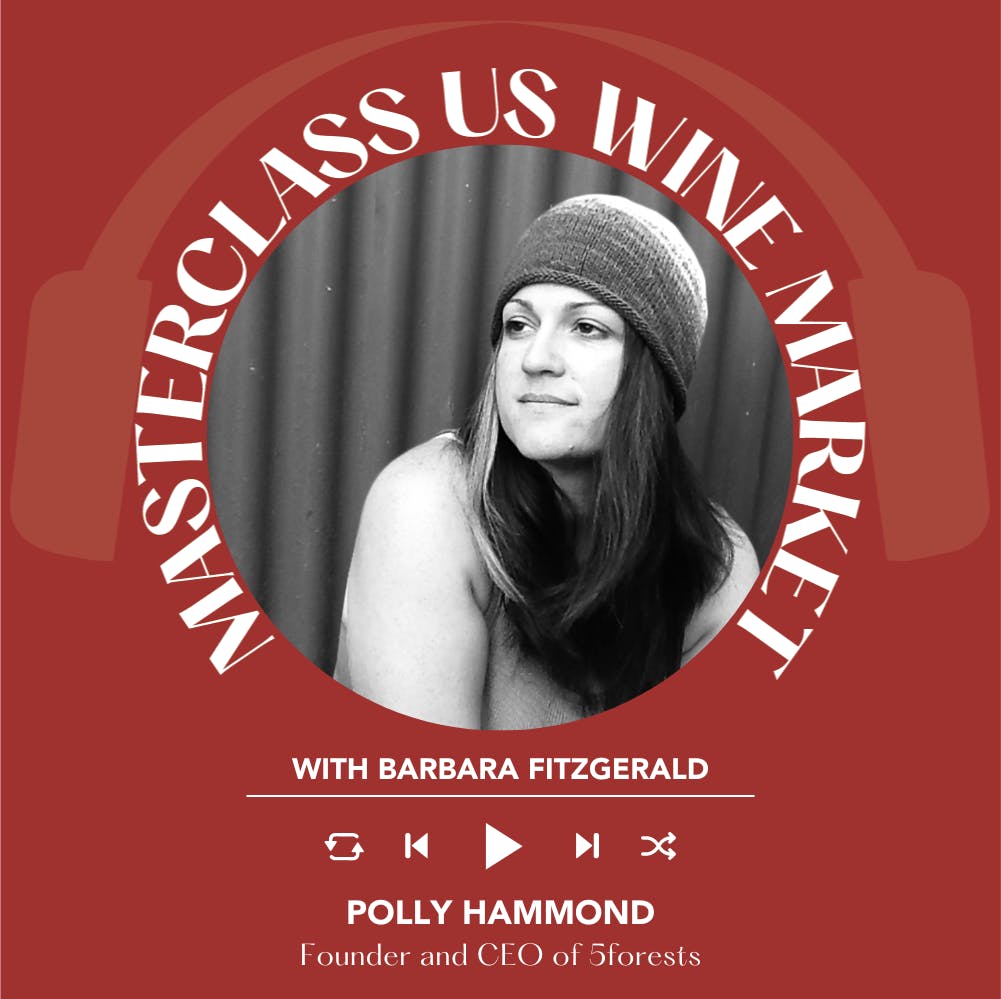
Ep. 2103 Polly Hammond | Masterclass US Wine Market With Barbara Fitzgerald
Masterclass US Wine Market
Episode Summary
Content Analysis Key Themes and Main Ideas 1. The shift from age-based generational marketing to psychographic segmentation in the wine industry. 2. Understanding and addressing the perceived disinterest of Gen Z in wine. 3. The importance of empathy and authentic connection in wine marketing. 4. Practical tools and strategies for wineries to uncover consumer psychographics. 5. Navigating the nuances of the diverse US wine market. Summary In this episode of Masterclass US Wine Market, host Barbara Fitzgerald interviews Polly Hammond, CEO of 5forests, a digital marketing agency specializing in wine. Polly advocates for a marketing paradigm shift, moving from broad generational targeting to deeper psychographic segmentation, emphasizing personality, interests, lifestyle, and values. She addresses the common misconception about Gen Z's disinterest in wine, attributing it more to industry intimidation and economic/health factors rather than a lack of desire. Polly provides actionable advice for wineries, from leveraging tasting room interactions to employing digital analytics, and underscores the critical role of empathy, authenticity, and hiring younger talent to genuinely connect with diverse consumer segments. Takeaways - Psychographics (personality, interests, lifestyle, values) are more effective than age-based demographics for understanding wine consumers. - The wine industry needs to make itself more interesting and less intimidating to younger consumers like Gen Z. - Gen Z's lower engagement with traditional wine may be influenced by economic pressures, mental health concerns, and the perceived complexity of wine culture. - Wineries can gather valuable psychographic data through observation in tasting rooms, digital analytics, and audience testing. - Empathy in marketing involves truly understanding consumers' journeys, motivations, and fears to create authentic connections. - Hiring and empowering younger generations is crucial for wineries to gain insights into their target audience. - The US wine market is not monolithic but comprises 50 distinct markets requiring segmented marketing approaches. Notable Quotes - ""Psychographics are the soft and cuddly side of customer research."
About This Episode
The speakers discuss the complexities of selling wine in the US and the importance of understanding the identity of customers and their interests in order to create marketing strategies. They also touch on the challenges faced by the alcohol industry, including the lack of knowledge of the language used to describe wine, the mental health crisis among Gen Z and the pressure on people to avoid drinking wine, and the importance of showing empathy and value in marketing campaigns. They also discuss the success of their partnership with the US wine market and the importance of investing in a good capsule wardrobe to stay up-to-date. They emphasize the need to show empathy and value in marketing campaigns and emphasize the importance of being mindful of their approach to marketing.
Transcript
Gonna so get myself in trouble here. Here is what I think happened. We have not made ourselves interesting to them, but that's that's the number one thing. When I interview sort of younger millennials, and gen z, and bear in mind gen z right now is like barely into drinking age. You know? A lot of them are still in college. Right? Like, they're they're in the the beer pong era of their life, and we're sitting around being like, oh, why are they not joining my wine club Welcome to Masterclass US wine market with me Barbara Fitzgerald. In this show, we'll break down the complexities of selling wine in the US by discussing the relevant issues of today with experts from around the globe. Each episode serves up three key insights to help elevate your wineries presence in the US market. So grab a pen and paper, and let's pave the way for your success in the US. Hello, and welcome to Masterclass US wine market. Today, I am thrilled to welcome Poly Hammond to the show. I should say back to the show because Poly was once a host of an Italian wine podcast series. Poly is the founder and CEO of five Forest. An award winning digital marketing agency specializing in wine, beer, and spirits. She splits her time between Barcelona, Bordeaux, and Napa consulting, writing, and speaking about the trends that impact today's lifestyle businesses. In addition, she's hosted over a hundred pot tests on the subject of wine marketing sits on the board of a really global think tank and serves as an advisor to regional bodies worldwide. As a graduate of the University of Southern California, Poly has a deep and abiding love affair with behavioral economics, and faces twenty five years of experience on insights all into the crazy irrational reasons consumers engage with brands. Holly, thank you so much for being here. It's such a great a great intro for you. Yeah. We're happy to have you. I am so delighted to be here. I'm so happy to be on this side of the interview desk. I just I can't wait for you to ask me questions and and me to just not have to think and answer. So thank you, Barbara. That's the sign of a true expert. Somebody that can just it's like, call and repeat to bring to bring forth all of this information that we wanna share with our guests. Well, we'll we'll see about that. We'll test that Alright. So before we dive into today's discussion, Poly, can you tell us a little bit more about your background and how you came to work with the wine business? Yes. So I've been advised the short short version. The short version is my father-in-law worked for Southern for thirty five years. And we had my husband and I had this moment when were we going to work in the alcohol industry, or were we going to do something else? We said no to the alcohol industry in California flew the coop left for New Zealand. And then over time, I ended up consulting to a lot of winemakers in New Zealand and a story that I love to tell, one Sunday afternoon. My husband and I were sitting on the porch drinking Rosay and thinking about what life looked like when our children left home, which has now happened. And I said, I think that I wanna work in wine. And I passed all of my existing clients to a colleague. I was doing a a very similar job to what I do now, but not in one. And I completely tanked my income for eighteen months trying to figure out the models, and I got things wrong, and You know? And and that was really that was when five four started. And this is the first time I will get to say this. We are about to start our tenth anniversary year in twenty twenty five. And that feels both like yesterday and a lifetime ago that that that conversation was had and that five fours was founded. So what a long strange trip it has been? What a milestone. Congratulations? I know I feel like I finally have a little bit of credibility and like my impostor syndrome can maybe start to go away. Yeah. We'll we'll save that for our for our psychoanalysis episode. Definitely. Thank you. That's right. Something we all work with, struggle with. Well, in this episode, we're not gonna talk about that. We're gonna talk to Molly about generational marketing and discuss whether segmenting consumers based on age is the best way for the wine industry to develop marketing strategy or three key takeaways for today's master us and what we're really excited to learn from Poly in this episode are, first, exploring how to focus on psychographics, values, and motivations rather than just age groups. Second, some insights into tailoring marketing strategies that re resonate with the lifestyle interests and values of younger consumers. And third, we'll learn the power of empathy in connecting with younger wine consumers by understanding their diverse life experiences. This is a really important topic right now. So I'm really glad we're we're having this conversation. I love that, and it's so funny. I'm gonna preface this by saying that as I was, as I was reviewing sort of the Q and A for this episode, I was like, oh, I did a Italian Podcast episode on that, and they can listen to that one. And, oh, we talked about someone else. So the fact that I'm gonna reference Italian Mind Podcast is only because they actually apply, not because I'm giving you a big old shout So here we go. Alright. Some good product placement. Exactly. Well, let's tick it off with the basics. So what are psychographics and why should wineries care about a consumer's values. Okay. So I always say that psychographics are the soft and cuddly side of customer research that honestly when you are someone who crunches numbers, which good marketers really are geeks, This can feel a little intimidating. It can feel a little emo. It can feel a little bit hocus pocus. But what they are is we're using qualitative or subjective information to better understand what matters to our customers. And there are lots of different breakdowns on it. I can only speak by the ones that we have found useful for the wine industry, and those are personality. So what kind of person are you? This actually had big media coverage because personality assessment and personality based segmentation is what Cambridge Analytica did a few years back in some very long and meaningful kind of ways. What are your interest what is your lifestyle? And and the difference between that is interest are I love tennis. Lifestyle is I have to pick my children up from soccer every Friday night at six o'clock. Right? So kind of the day to day. And then once that we use for wine, We use social status because that actually has a big impact not only on spending, but also on cultural inheritance in mind, and then we use what are our values. And we have found that, you know, I I I guess I guess I'm just a big old softy. I've always looked at it and said that the psychographics can help us actually understand who they are at heart. And tailor our messaging and content in a way that says we see you. Right? We understand how we're a part of your life or how we could make your life better or what problems you're trying to solve in a way that those like sort of tried and true true how old are you, you know, what's your ethnicity? Are you male or female? Like those are those are going to my end of the datto. And actually, I will say something on a very practical standpoint. Those pieces of information are being sunsetted. We just had notification, on several of our, data sources this week, that we are going to lose our analytics around age and gender. So we're going to have to rely more upon what do we understand about what's at the heart of these people? Yeah. That's so great. An example, I I actually one of my dear friends just called out to me recently that is so relevant is, I'm forty, but I don't have children. So you can't market things to me that are helpful for moms even though probably most forty year olds do have children. So it's so important like you said to pay attention to who they are. What is unique about you? What are your for your interests. Absolutely. And even, you know, latching on to that when we are developing personas from this, you know, you've got a whole category of of personas who do have the elements of parenting and how that impacts their lives and their choices and their spending. And then you've got the people who are choosing to, you know, not have kids or not choosing, but for whatever reason, don't have kids. And they have completely different lifestyle choices and even sensitivities around in America, we see things like how do you phrase a mother's day offer? Because that can be very hurtful to someone who is a caretaker and not a mother, or is someone who would love to be a mother and can be a mother, or you've got two dads. And so just really looking at where do you fit within the life of your customers? And so, yeah, super, super example you've given. Yeah. Thank you. So then going forward, now what tools can winery use to uncover these psychographics and helping they turn those insights into really great marketing strategies. Yeah. I I think that this is where you get to see the blend of the hardened soft, right, the hard data and and sort of those soft skills. So I do wanna preface this by saying that digital. So digital marketing, all of our analytics, all of our advertising reporting has made, collecting this information so much easier than it's ever been before. So we need to not feel intimidated the way that I think we used to be like, oh, focus group's scary. So the things that we use, we use both narrow and broad market research. So that can be local. It can be global. It can be pay. It can be free. And honestly, I've I've got a list that I'm happy to share with you for your listeners of all the places that you can go online. And you can start to collect information about any given population, what channels are they on, what is their purchasing criteria, you know, what are the values that we're seeing. So start with that. But then and I I think that that's something that a lot of brands do. Just put that out there as like, you know, that that's starting grounds. But then what we have in wine that I never understand why we don't take more advantage of this is that we have these amazing places that people love to come to and talk to us at why are they there? And how did they hear about us? Like, our tasting rooms, our cellar doors, our tourism experiences, they actually want to tell us the stories of how they found out about us and what they loved about us. And that is playing through observational research. Awesome. We're all doing it. Right? So you can put some parameters around that, but I would say that the starting point for any brand who's just tackling that is train your staff to listen. Next, the other side of that is we in marketing, you'll hear things not like customer interviews. Customer interviews suck super intimidating. So kind of put that language away. And literally just talk to the people in our spaces. Pay attention to what they're saying on social media. Listen to what they're telling you when they're booking their tastings or however it is that they come to be in your space. And and we will learn what what do they learn about wine? What was that first bottle of wine that made them fall in love with wine? You know, how how did they come to be in your space? Alright. So then we're gonna get into, like, the the totally geeky shit. By the way, my allowed to curse I always they always let me curse on my podcast. Is it okay for you or is that gonna get is that gonna edit it out? Okay. I'll be curious about that. Stevy, are we allowed to curse on on this podcast? I know. I actually don't know these. So yeah. So the geek shit. I audience testing. You can actually run audio, audience test through a whole slew of, services online. And this is great for things like testing labels, testing websites, testing ads, And it can cost you as little as five hundred dollars, which in the context of rolling a new label out to a foreign market, right, to an export market, that is money really well spent. You can use website analytics. And then I'm I have to mention this because otherwise the researchers in the room are going to give me a hard time. There's always the survey. Nobody likes them, but, you know, that exists. So that that's kind of that's the that's the synopsis of the tools that are available to you. Yeah. And thinking really specifically for Italian wineries that are seeing such, an emergence of you know, tourism of visits to tasting rooms. It's really important to understand when people come. You know, it's it seems like oftentimes we feel like when people come visit our winery, we have to tell them everything about us, but it's so important to let them tell you about themselves to make them feel part of the experience, but also to gather some of the psychographic data. Also, there is we have to put on our evil marketing hat every once in a while, right, which is where we understand that we really are marketers at heart. And we can tap into that with, a little bit of practiced Q and A. So be like, oh, what part of the states are you from? You know, we're looking at expanding to the US, but We're here. We're in Italy. It's really hard for us to understand what's important. And you you give these open ended spaces for them to just just like speak to you all the things that they think might matter to you. And, I I'm gonna go off a tiny bit of tangent. I'm always fascinated by the Italian wine relationship with the US versus the French wine relationship with the US because I'm a native Californian And if you look at the founding wineries in America, we've got Ribley, we've got what became, you know, Francia. You've got all of these. These were Italian winemakers. The heart of the California wine industry was founded by Italian brands. But because of the history of wine, Jasmine Paris, all of these things, we like to talk about, oh, all of the French wine equivalents, all of our Bordeaux blends and all of this. But actually, when you get to the heart of of of, you know, our relationship in America with wine. A lot of it comes more from an Italian heritage and Italian cultural heritage than it comes from a French cultural heritage. And I remember one time, crazy story I got a wrong number phone call on my US phone line, and it was this beautiful woman. Would have been seventy five. Her name was Doris. She just gotten a new iPhone. She was trying to figure out how to use it, except somehow she managed to call me from New York to New Zealand. And, and and I was like, you know, let's talk to Dorris. She's sweetheart. By the time I got off that phone call, I learned about the fact that George's family had come from particular region in Italy. They used to make wine on their front porch. The whole neighborhood did it. Like, I heard her whole story about her family, in this case, Italian, heritage of wine. And I was like, wow, that was just that was just this tiny moment in in my in my work life that was really beautiful to remember. You know, how but, you know, when we talk about things like what is the cultural inheritance of wine or food or anything, that that that does exist within so many Americans. And I think that's a really important call out because or specifically here talking about, you know, Italian wines being in the US market. And the the heritage is beyond even just production. It's, you know, Italians really started kind of the chain of distribution and, like, all built some of the oldest you know, importers, distributors, wholesalers are also Italian. So there's Italian culture kind of at every every stage of of the US wine market. Oh, absolutely. Absolutely. Yeah. So, yeah, so So I I think that and, you know, I will say I'm so grateful that you are focusing on, the needs of the Italian line brands specifically because so often, I mean, except for what you guys do and what Stevie does. I feel like that those are ones that often get overlooked because we're so busy talking about, oh my god, the Asian market or the French market or whatever, when Italian wine, you know, I can sell the pants off Italian wine in the states. So it's very, very drinkable. Well, let's shift a little bit to I wanna talk about gen z because it is true that during the pandemic and after, things have really changed with them. So they kind of came into legal drinking age, showing some real promise. And their interest really kind of wanes pretty dramatically, pandemic and post. So what factors do you think contributed to this change in their wine drinking habit? Yeah. So I think there's a lot to break down there, and I know that everybody is going to have a completely different hot take on this. So you're gonna have like, you know, flame email. She's completely wrong. What is she talking about? So first, we have to take everything that existed in twenty twenty and like throw it out because that's that's an anomaly that god willing will never ever happen again. So with that in mind, I'm gonna so get myself in trouble here. Here is what I think happened. We have not made ourselves interesting to them. But that's that's the number one thing. When I interview sort of younger millennials and gen z, and bear in mind gen z right now is like barely into drinking age, you know. A lot of them are still in college, right? Like, they're, they're in the, the beer pong era of their life, and we're sitting around being like, oh, why are they not joining my wine club? So so a lot of brands haven't chosen to engage with them, and the brands that are choosing to engage with them, the wider wine industry gives a ton of shit to. Like, they're just like, oh, industrial brands or, oh, you sell out or, oh, that sweet wine. Like, they're all of these sort of, oh, it's pineapple chili wine. That's, you know, instead of being like, oh, damn. It's double chili wine, and they love it. Wow. Who could have expected that? And so when we do these interviews, what we hear from a lot of them is, oh, we're drinking wine. We're just not drinking that wine. Right. So it's flavored flavored wine. I I think that the there's a little bit of us telling ourselves a story that we want to hear, which is, oh, they're not drinking wine, because it's a lot easier to say that they're not drinking wine than is to say, oh, I'm not able to reach them. I will say we're recording this on the fifth of September There is an excellent article that came out in the guardian yesterday fourth of September that is about gen z and why they are not drinking and some of their feedback about why they're not drinking. And one of the things that they said in that article is it feels just absolutely like they're going to say something wrong. They don't know the language of it. They don't understand how to talk about it, and that wine is so intimidating. So you have things like this one space that says, oh wine is so great because we get together and talk about it. And then then what you have is, you know, the the gins ears who are like, oh my god, I don't know how to talk about it. So I'm gonna, you know, I'm gonna talk about something that that I'm gonna drink something that isn't so doesn't have so much potential for me to get it wrong. Okay. So that's the first thing. But there are a couple other things. I have in my notes. I have money, rent, milk, eggs, student loans. I think that kind of sums it up. In this economy, there are a few really practical challenges that is other things are way more expensive. Like having a roof over your head. Then one thing that I'm not a healthcare practitioner, I'm not gonna get all of this right, but we have had to do the research for our own persona building. And that is there is a documented mental health epidemic amongst gen z. And if you go in and you look at the data around use of antidepressants and then you look at, you know, sort of the first things right off the bat that you're not supposed to be doing, You're not supposed to be drinking alcohol and antidepressants. We also have the Ozempic Monjaro era, and one of the first things they say on that is don't touch alcohol. So there are other concerns that are just outweighing boots? Yeah. I think it's a really important call out because most people have kind of always just said, oh, gen z is so health obsessed. They don't want to drink wine. But, yes, they're probably also included in that have these actual prescribed reasons why they shouldn't be. And and like I said, I'm not a shrink. I'm not a doctor. I can only rely upon the research I have, which comes straight from the American Association of a psychiatrist. That talks very specifically about the high numbers of mental health issues that we are seeing among among this generation. And that's heartbreaking. And what and and and it's weird to be, like, just to be a mom for a minute, is weird to me that we can know this thing about a generation and not care about it. Right. And kind of turn it back around on them and just say, well, they're not they don't care about this product rather than caring about what they're going through. Yeah. And I wanna call back really quickly too to that first point that you made that they're just, intimidate. Maybe intimidated isn't the right word, but they don't feel comfortable, being relaxed with wine because they think that there's so many kind of hoops to jump through. That's it seems also like a larger issue across the industry, and I wish there was a way to solve it. You know, wine industry seems to be really quick to put down people doing something different in the wine industry. More so than than other industries I've I've I've seen. And so I wish that we could just all kind of, you know, recognize when somebody is doing something different and say good for you, but, you know, not take it as a threat to what we're doing or what we love about wine. And and honestly, like, even the whole language of how we talk about it, what what do we call somebody who works in a tasting room in America? I mean, you're in Sonoma. What do we call them? We call them a wine educator their line educator, you know, in instead of being a server. And I get why it's done. I mean, I I work in, you know, in this like you all the time. I'm surrounded by this, but there are some days I'm like, why do we have to have any of this? You know? And and and even what the, you know, who are the people who were hiring? So I'm gonna go off on a little bit of TikTok tangent. Alright. So we've just we've just had the whole, and I actually have to give Mad props Steve because, like, her team in Italy has been on TikTok for so many years because they could and good on them. But we just had regulations change for TikTok advertising, and it was like, whoo, shiny new toy, right, that that We are now we we can now go in and we can sell them our wine on TikTok. And so I started asking people, they'd email us and be like, oh, what do you know about TikTok? And I'd be like, are are you on TikTok? No. Have you ever used TikTok? No. So you do you have any staff members who are in TikTok? Not that we know of. And I'm like, so wait, you wanna start investing in a platform. And by the way, TikTok is my number one favorite social media platform. I'm like, I love I love TikTok. But how are we supposed to go in as brands and resonate with the users on this platform if we have not even taken the time to, like, lurk and understand how the platforms work. And so it's that kind of thing is just saying, well, instead of just, like, talking about these facts that we know about them, we actually and this kinda ties into empathy, which I know you're getting to. We actually need to stop and say, wait. Okay. How how does this work and why are they making this particular choice to be in this particular space? Yeah. And that is a good a really good segue. A lot of the things that you've just mentioned also about Y gen z isn't isn't engaging with wine as much, as we'd like to see is all about empathy. The like you said before feeling seen. So how would you define empathy and marketing? And maybe what are a couple tips for wineries to build really genuine relationships and avoid pandering when fostering brand loyalty? Yeah. And you're right because a lot of what happens on the, like, marketing with capital m is is pandering. So I define empathy as being able to walk a mile in some issues, right, being able to understand what their journey looks like, what their motivations look like, what their fears look like. And it's actually a part, so we have a pretty unique way of developing personas at five Forest. And the first time you go through it with a client, they look at you, like you were just complete fashion crazy. Because you're asking things like, what are their hopes? What are their dreams? Who do they trust? But what what we found is that by being able to really get our heads into these characters, We can use those as filters for decision making and whether it's our spend or our comps or our tone or our brand design or product offerings. So that is I mean, like, that's really the broad stroke of how we use empathy in marketing, but this is one of those places where I'm going to say. When I was a host for the timeline podcast, I interviewed a woman named Diva Giles is actually in the book as well. And this was one of these interviews that I really, really wanted to do because I knew diva personally. She was twenty five, at the time, and owned a one of the top fifty wine bar restaurants in New Zealand and absolutely slammed with everyone from gen zers all the way to the oldies who'd lived in the neighborhood forever and they were eighty and they were popping in every weekend. And in that, it talked about how she ran her business so differently than what we tend to see in hospitality and in wine and This is a really good example where I'm like, well, I can I can give you all of my feedbacks to fifty year old, but I know for a fact that within the archives, there is an interview with someone who actually represents the audience? And that, you know, stop listening to me and go listen to Diva because it's amazing. Great. And what it came to is that they as a generation, and this is a, like, happy accident as a generation, they are more empathetic because they've grown up besieged by social media and thoughts and emotions. But along with that, you know, one of the defining factors of gen z is that they're the school shooting generation? Like, I'm not making this up. Like, there are all of these things that the pandemic generation. So they have a depth of empathy for one another that I think when you really sit back and look at them, you can see and that can really inform how we have to work with them differently. So what then would you say are like the the big, maybe, interests and lifestyles of younger of younger folks that the wine industry is really just missing? Like, where's the biggest opportunity to connect? Yeah. I think the number one opportunity to connect is to actually hire them. You know, I think that if you want, to under Dan how gen z feels about your brand, you need to have them represented at the table when you're making decisions about your brand. So get them in, pay them for our wages, treat them like knowledgeable. They are subject matter expert Right? And and we need to respect that. Other than that, though, I I think that we are jumping the gun possibly out of desperation. We've talked about that. They're still very, very young. So what we need to be doing right now is we need to not alienate them because they will grow into mature drinkers and somewhere along the way, they're going to make a decision. Am I a beer drinker? Am I a spirits drinker? Am I a wine drinker? Like, if they're a drinker at all, generally, they're gonna go down a path. And then they'll meander between those paths, but they'll identify themselves as, I'm a wine drinker. Right? What we want right now whether they're buying our product or not is we want these people who have an interest in alcohol to be deciding, you know what? I'm a wine drinker. That's that's super important. So even if they're not it it sits in a category in marketing that's called the relevant other. So these are people who can influence current purchases or have the potential to grow into free of the actual marketing word for it. Future something customer yada yada. Can grow into being our customer. And they've got long memories. And if we piss them off now, they're not gonna come back. Right? So I I think that that that's a big, big one. And the the next one that I wanna say so funny because I know we're supposed to be talking about ages. You gotta get rid of all of not you personally. Like, we, as an industry, have to get rid of all of this idea of age based cohorts, because what we're seeing in our data. So they like to present analytics in this way of, oh, look, you know, gen z uses TikTok more than than the oldies do. But when you actually start sitting down, with the data lies, damn lies, and statistics, you see that there are very negligible margins between how the different age cohorts use a lot of these platforms that you know, data is really trying to say you must be on TikTok or you must be on pick a social platform. Whereas values, what do we believe is important spans generations? So looking at values and look at values beyond sustainability, there's, like, been this big push, my, oh my god, didn't see it. They're all about sustainability. Well, you know what? They're also about equality. They're also about inclusion. They're also about language that makes a space for everyone. You know, like, there are all of these values that are important to them. Yeah. Absolutely. There's and then there's one other thing that I wanna add to this, because now now you've got me going. I'm so sorry. I'm so sorry. This is what happens. Great. This is why they're like, oh my god. Get her off the podcast. I I wanna put forward a story that I hope are Italian listeners. Either know about or be curious to know about. And it's best it's best told through this beautiful example of why do NBA basketballers suddenly love wine? So do you ask basketball? I do. Yes. Good warriors. So you know. Right. So the warriors. So you know, we've got all of these basketballers, right, who love wine. Like, it's it's just a thing. And this actually dates back to a coach in nineteen ninety six. Greg Poppovich. Pop. So Pop loves wine. You can go and please go and Google this. It's it's all over the internet. So coach Pops loves wine and he comes in first year coaching the spurs and he starts serving wines to his team. And they start bringing back unique wines to share with him because There's this gorgeous respect. There's a lot of trust. Right? Like, this man is single handedly given credit for making basketballers love wine now. And that means so much think about who your audience trusts. So if we're looking at your audience, right, Italian wineries, okay. Are these kids who've been dragged along with their parents on tours and winery tours and European tours throughout the years. Do they have great relationships with wine loving parents or siblings? Or are they looking for a wonderful place to go with their friends? So they're really out for the lunches and the brunches. You know, who do they trust? Because if we can appeal to the broader cohort of whom they trust, then we we gain a credibility that no amount of advertising or, like, as I say, marketing with capital m can ever accomplish. Yeah. Well, we have time here for one more question before we start to wrap up So I I I have someone in mind when specifically you're talking about the NBA, but can you call out, maybe a marketing campaign that you think has really nailed it in terms of resonating, especially with younger consumers? Yeah. But they're not wine campaigns. Okay. So I know I talked a lot. The the thing that's super interesting about this question, and I love that you, ask it, is there's not actually an answer. There's not a good answer because there's not a consensus around what campaigns work really well with this audience because they're not brand monogamous and trends move really, really, really fast. So to say that something is successful might mean that this week it was successful, not that, you know, it's got this like, broad success that I think my generation used to define. So the ones that came to mind, one pro, one con, snoop dogg and Martha Stewart at the Olympics, nothing to do with wine, absolutely nailed the interest and they did it because yes. They're living their characters, but they were living their characters of SnoopDOG and Martha Stewart. Martha Stewart was there because SnoopDOG doesn't like horses. Right? You know, like, the whole thing was that that they have this gorgeous relationship of just being who they are, and they brought that into the public space yet again. And then I've got one anti one that kind of gutted me as an alcohol marketer, which is Blake lively, AK, wife of former aviation, Jim, just absolutely like, panned her way through promoting her recent movie because She was publicly promoting a movie about domestic violence and using that as the opportunity to promote her alcohol brand. And I'm sitting here as an alcohol marketer like please. Why? Why did that happen? And man, she is just being canceled left right and center because of this. So I I think that what we have to look at is these these are not big cohorts. There are a lot of individuals who all have their own values, their own way of looking at things, and tapping into them in these huge ways. It's just no that's not even what we're looking for. Definitely. What's yours? What's yours? Because I've just talked so much. You know, I think that not necessarily gen z specific, but definitely not age, you know, when talking about looking at people and their interests. Like, I am very curious to see where this, Kendall Jackson NBA partnership goes because I think it's so important for us to show up in the places where we haven't been traditionally. And so I think that's a really, a really exciting one to see what comes of it and We'll see when we go to warriors games. Well, I mean, there's another one. Okay. There's another one that's even more crazy, which I think it's treasury. I think I'm getting that right. And UFC. Oh, my heavens. Like, right? I I saw that. And I was just like, whoa. Yeah. That's funky or to call out an Italian brand, Fedati is the wine of f one, which is so fun to see because I love this my favorite sparkling wine. So And and I love them. And, actually, they are such a good example of a brand that I mean, they're also so I'm here in Barcelona. I'm from New Zealand, you know, most recently. We've been involved with the Americas Cup for years. They are also one of the sponsors for the, Italian Americans cup team. And and I think what I like about that, and of course I can't speak for the lunellies, in this, is there are risks involved in doing this. Right? Like, when you begin a partnership and I actually have collabs in my notes, it's something that makes a really big difference right now. But when you enter into some of this, you don't always know where that's going to take you. So my understanding is that that f one partnership happened before there was a Netflix f one TV show and imagine how that changes the game. So anyway, like I said, that's your audience, and I'm not gonna try to be a master. Well, Holly, you have been so generous with your time, your knowledge. This has been so fantastic to hear all of this. But as we start to wind things down, it's time for our rapid fire quiz where we ask our guests three questions to help our listeners better understand the US market and cement he takeaways of today. So just try to answer in a couple sentences if you can. But number one, what is your number one tip from marketing to the US wine market. There is no US wine. How many times you ask that question you get the same answer? Yeah. There's always fifty of those. Yeah. They're all different. Yeah. There is there is no one US wine market and just like, we gotta kill that idea. Yeah. I think when I was on on the show as a guest, that was my same response as you're actually looking at fifty markets. So segment. I know. I know. I know. So, so I love that. It means, yes, there is there is consistent answers on one of the questions. We know what we're doing. Alright. Next up. So what is something you would have told your younger professional self about selling wine in the US? Yeah. Pay more attention to your customers than you do your neighbors. I think that there's a real looking over the fence tendency. We see this all across Europe. We see it all across America. We're so busy paying attention to what every other wine brand is doing that we're not paying enough attention to what our customers are doing. That's really great advice. Okay. And last, your base all around the world. We do a lot of traveling in this industry. So what is your favorite travel hack? Okay. This one's really funny because my team is convinced that my answer is fly business because I'm old and I refuse to sit in uncomfortable seats anymore. But I actually put a lot of thought into this one, and my answer is invest in a good capsule wardrobe that could fit and carry on. Love it. Oh my gosh. I am the queen of the carry on. Yeah. Yeah. So what's yours because you you do the same thing. You go back and forth. I do. What's your favorite travel hack when doing work at work? One of the things I find really important is when I arrive in my destination, I need unless I'm going straight to a meeting, but I need to, like, get physical activity, whether I go for a walk, a run. Like, it just kinda wakes me up, gets me on on the the time zone, and also just, like, especially if I'm in a new area, it's like I'm understanding the geography around me much better than I would if I was in a car or, you know, Nice. That's a good healthy answer. Definitely the the carry on. You should my husband jokes, like, I'm every time I go somewhere, it's like, I have my carry on, but in order to close it, I have to, like, sit on it or, like, you know, put on my weight on my kneel on it at but I make it happen. Honestly, you know what? I'm so bad. I buy the same clothes from the same people over and over. I feel like five of the same sweater in different colors because they fold down pretty well. Well, Polly, thank you Thank you. Thank you. Thank you. Truly so much for joining us here today. How can our listeners connect with you? Oh my god. Okay. So we're all over social media on at five Forest. So that's very nice and easy to find. And I am on TikTok. You can go find me on TikTok on at five Forest, and that's a great excuse for all of us to go in and play in a wonderful new space together. Otherwise, I'm online at five fours dot com. God knows there are enough Italian wine pod podcast with my voice on them. You can go back into the archives on that. And then Robert Joseph and I have just recommenced after a much needed break, the real business of wine podcast. So that will be online soon. And that is that's us just giving contrarian opinions and doing interviews about what's happening in the business. So on. That's great. I can't wait to give that a listen. So I'll be excited to hear about its, that's re release, we should say. Yeah, sir. Absolutely. Thank you, Mark. Well, yeah, Polly. Thank you so much. For your time for coming back to us here, and hope to see you in person soon. I know. Now wait, before you get off the line, isn't wine to wine coming up soon? Wine to wine is in November in Burona, November fourth and fifth. So will you be there while we see you there? I don't know if I'm gonna be able to make it, but I understand that you're doing AI this year. Yes. Very excited. Great. And they've changed the format this year. So there's no more overlapping sessions. So, as an attendee, you'll be able to go to all of the informative sessions. Yeah. So exciting. Brilliant. Brilliant. Glad we could get that plugin. Yeah. Alright. Thank you so much Polly. Take care. Take care. Bye bye. And that's a wrap for this episode of Masterclass US wine market. Thank you so much for joining us. If you enjoyed this episode and want to stay up to date with the latest street trends, remember to like, follow and share our podcast. And if you find value in our conversations, please leave us a review to help others discover the show and grow our community. Stay tuned for new episodes every Monday. Until then,
Episode Details
Related Episodes
Ep. 2790 Italian Wine in the US: Building a Narrative and Reaching Asian American Consumers with Susan R. Lin MW | Masterclass US Wine Market
Episode 2790

Ep. 2789 ColleMassari: a long-term vision rooted in Montecucco with Giuseppe Di Gioia | On The Road With Stevie Kim
Episode 2789

Ep. 2788 Ep. 14: Austria and Hungary | Study Smart for your WSET Level 3
Episode 2788

Ep. 2785 From Volunteer to Speaker at TEXSOM with Samantha Cole Johnson | TEXSOM 2026
Episode 2785
Ep. 2783 The Suburban Gold Mine: Insights into New Jersey’s Wine Market with Brittney Abell | Masterclass US Wine Market
Episode 2783

Ep. 2772 A Surprising Partnership between Japanese Sake & Italian Wine with Monica Samuels | Masterclass US Wine Market
Episode 2772