
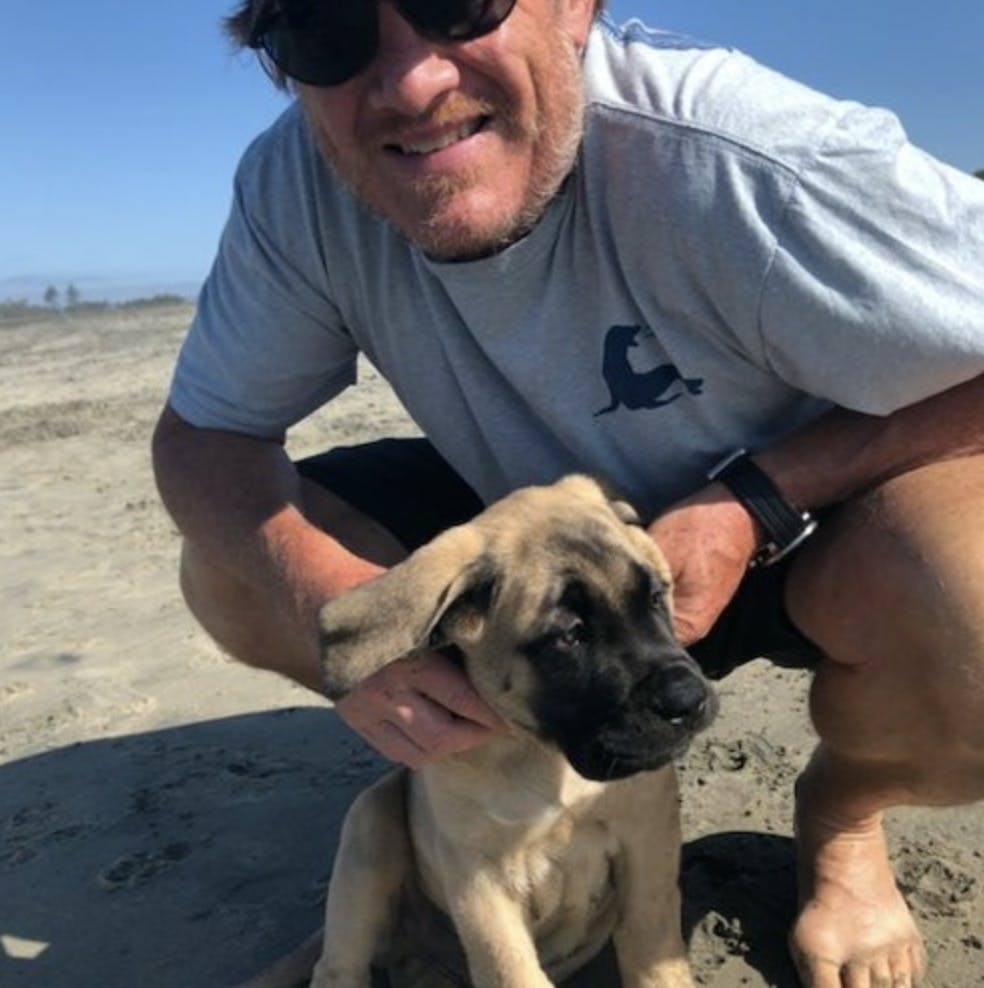
Ep. 549 Dan Kratzer | Get US Market Ready with Italian Wine People
Masterclass US Wine Market
Episode Summary
Content Analysis Key Themes and Main Ideas 1. The strategic importance and opportunities within ""secondary"" US wine markets, exemplified by Colorado. 2. The complex process of selecting and importing Italian wines into the US market from an importer's perspective. 3. Effective strategies for Italian wine producers to successfully engage with and enter the US market. 4. The critical role of storytelling, unique identity, and product quality in wine sales and consumer engagement. 5. The evolving dynamics of the US three-tier distribution system and changing consumer preferences. Summary In this episode of ""Get US Market Ready with Italian Wine People,"" host Steve Ray interviews Dan Kraasser, a specialty Italian wine importer based in Colorado. Dan, with 25 years of industry experience, discusses the significance of often-overlooked ""smaller"" US markets like Colorado, which offer substantial opportunities for Italian wines. He details his approach to building an Italian wine portfolio, emphasizing ""drinkability"" and how he evaluates potential producers, including unsolicited inquiries. A key focus is on how Italian producers should proactively understand an importer's needs and market fit, rather than solely highlighting their wine's quality. The conversation also explores the impact of wine scores, the intricacies of the three-tier distribution system in Colorado, and the importance of translating a wine's unique story to consumers. Both agree on the growing consumer trend towards discovery and the need to never underestimate the American palate. Takeaways - ""Secondary"" US markets (like Colorado) are crucial and offer significant untapped potential for Italian wine exports. - Italian wine producers seeking US market entry must research and understand an importer's portfolio and market needs rather than just presenting their product's quality. - ""Drinkability"" is a key characteristic sought by importers, indicating a wine that is enjoyable and approachable for consumers. - Storytelling about the wine's uniqueness (terroir, tradition, people) is as vital as quality for market differentiation. - While wine scores hold importance in large retail chains, ""hand-selling"" and direct consumer engagement are pivotal in independent bottle shops. - The US three-tier system (importer, distributor, retailer) remains fundamental, requiring effective collaboration and brand ambassadorship at each stage. - There's a growing consumer trend towards exploring new wines and stories, driven partly by increased home cooking and digital accessibility. - Never underestimate the American palate or the US market's capacity for growth and openness to diverse wines. Notable Quotes - ""There's huge opportunities for all wines, not just Italian wines, but certainly Italian wines too in these smaller markets."
About This Episode
The speakers discuss the potential opportunities for Italian wines in smaller markets, emphasizing the importance of finding a passionate importer and bringing the storytelling of the product to the consumer. They stress the importance of trusting customers and representing the brand to bring the story to the consumer. The speakers emphasize the need for trusting customers and bringing the story to the consumer, as well as the importance of brand loyalty and expanding the Italian wine industry. They also discuss the challenges of selling wines in small and independent stores and the importance of distributors in the industry.
Transcript
Thanks for tuning into my new show. Get US Market Ready with Italian wine people. I'm Steve Ray, author of the book how to get US Market Ready. And in my previous podcast, I shared some of the lessons I've learned from thirty years in the wine and spirits business helping brands enter and grow in the US market. This series will be dedicated to the personalities who have been working in the Italian wine sector in the US, their experiences, challenges, and personal stories. I'll uncover the roads that they walked shedding light on current trends, business strategies, and their unique brands. So thanks for listening in. And let's get to the interview. Hello. And welcome to this week's issue of Get US Market Ready with Italian Wine People. I'm Steve Wright. And this week, we're pleased to have onboard Dan Kraasser, who is specialty importer out of the Colorado market. One of the things we're trying to do in this podcast is to focus on a little light on markets that don't get much attention when people think about the US market. Oftentimes, New York, San Francisco, LA, Chicago, Houston, Dallas, get the most attention. But there's huge opportunities for all wines, not just Italian wines, but certainly Italian wines too in these smaller markets and recognize that we call them the smaller markets. That doesn't mean they are a small market. So someone for the intro, happy to have Dan Crafts right here. Dan, why don't you give us a little brief bio of your experience in the industry. Steve, thanks for having me. What a pleasure to be on from the snowy rocky mountains. We, thrive in this market considered to be secondary, but, I think everybody's realizing how important it is. To especially Italian wine. And what a pleasure to share the enthusiasm for Italian wine with you today too as well. I've been, in the industry for about twenty five years from restaurants, distributors, importers. And now fortunately, I can, do my own portfolio. I've got about twenty to twenty five producers that I'm working with all Italian and, really thriving in this market with them. Not just in Colorado, but, we're in key markets in the region and, expanding as long as the market is opening up more and more. We're really excited about, future of the restaurant industry, which at some point, we're really concerned about. So we're recording this in early to mid March. And, anticipated by the time this is broadcasting the world's going to be open up a lot more. Tell us a bit, about the portfolio and the kinds of producers you specialize in, whether you carry wines, and spirits, or just wines, and then from what countries and what type of producer Well, being in the industry for quite some time, I've forged quite a few relationships. And starting out on my own, it was quite easy to reach out for some old friends and, find their passions to especially, Tanuta Capelina and Casto Nueva Baradinga Cianti Clasico producer, a friend of mine, Alex, is the general manager and winemaker that I've known and had drink Barolla with, thirty years ago. And, so he's doing his passion project. So when when we connected, that was the first one that I brought to the US. As a small importer, it's kind of frightening to take on Kianti classico because there's so many fantastic historic brands in the market. And, when you're working with passionate people, it sure is a lot easier to go into the market and share the quality and the drive, if you will, or specifically San Giovanni. And from there, I took the portfolio and really focused on Sanjuvezi and then, of course, you know, meeting other other producers through Alex or some other friends that I've known. I've put together a portfolio that reaches all the key regions I always have had the motto of drinkability. And so I've found a portfolio that I feel just about every wine we have has a great drinkability, and I think that's really the trend in the marketplace. Interesting choice of word. I used to do a little bit in the beer industry, and that's a common word. I guess it means enjoyable to drink without having to think too hard about it. So so, Dan, how many producers do you have in the portfolio right now? Twenty two producers at this point. Obviously, we're talking to some some new people that are emerging, but I'm not restricting the portfolio to just Italy. It's it's always been my my first love, my first passion, but working with wine around the globe. I think it's important to seek out opportunity and and realize just the talent that's coming. A lot of the generations are are being passed and the sons and daughters are are taking the reins. And when you visit the wineries, it's really interesting because you tour the properties and you tour the wineries with the young guys, but always over the back of your shoulder, you can see, you know, the dad and the granddad checking out if, the next generation is showing everything properly. Interesting. So cut to the chase about what I think a lot of people are listening to this podcast. I'm sure you get calls from suppliers and a lot of them are what I would call uninformed cold calls. How do you deal with those and how do you figure out who you're interested in? Or do you consider the the cold calls that come in? Or do you only consider like when you go to in Italy or get referrals and so forth? How do you make decisions on what you bring in? Well, the the cold calls are now typically just emails. But, I think it's it's important to at least have a look at everything. I think there's there's such a cutting edge in a historic industry that's happening right now and people are trying new things, but at the same time, there's, an important renaissance, if you will, of of what's happening in the industry as far as that, that terminology we are using as far as for drinkability. And, I personally don't wanna feel like I pass up on an opportunity or, you know, find a a new discovery or even a revival of something that's been historic. So I always take a good look at it. Obviously, you know, you want something to fit the portfolio and sort of enhance and keep the portfolio alive, but at the same time, you know, some things just don't fit or some things don't, you know, make sense for me personally. I think there's a lot of a lot of us, you know, a lot of people say there's an army of importers out there, and and I think it's true. You know, if if it doesn't fit for me, I think it fits for a lot of people. Yeah. Well, okay. So the fundamental challenge, and I'm dealing with a couple of clients now that they're dealing with this is, you know, they're looking for an importer. And when you ask them, tell me about your brand, it usually starts out. I make really rate, whatever. And that's really not the initial issue, because the level of quality expected, these days is pretty high. What differentiates in my mind, people who are coming and talking to me, Do they have an understanding of the US market? Do they understand the person they're talking to and what their needs and wants may be? And so I always tell people, look, go on their website, at least look at where their portfolio They only do Italian brands and you're from Austria. Don't call them. And if you do a little homework and you come to that importer and say, okay, I see you've, you've got, everybody included, but you don't have any pulling in lines. Okay. Now you have a subject. That you can talk to the importer with. And you're speculating about a hole in the market, but it's also talking about their needs, the importer's needs, as opposed to the producer's needs to just find an importer. Can you comment on that? Yeah. I I would agree with that for sure. But at the same time, you know, if if, like, for example, I have quite a few SanJaveza specialists in my portfolio. And I've got some of the top winemakers, Carlo Ferini, which which is his personal project Jodaux. You know, he's a Sanjavezie, Lumineer, if you will. And if somebody came to me and said, well, you know, I'm I'm also making Sanjavezie. It'd be very difficult for me to take a look at. But on the other side, I've got, you know, someone I'm talking to now that doing Granache out ofumbria. And that that's quite interesting to me because Granache is very drinkable from France. Someone inumbria is trying to elevate the grape in the region because it's been there for quite some time. Unknown to me. I thought it was something new that was transplanted, but it has been there for quite some time. And that that's interesting as an addition to the portfolio. It, it's you make a very good point. You know, take a look at what people are doing and what their philosophy is as far as going to market and, you know, have the conversation. Instead of, you know, the cold call or the pushy sort of where our wines are great type of conversation, you know, talk about your own philosophy from the vendor. That speaks to me. Well, it's all about stories. Right? I mean, everybody's talking about that, social media, and everything else. And the beauty of really any wine, but certainly a Italian one is nobody else has the same story as you, if you're a farmer producing, you know, a state we're talking about state produced wines here. You know, these grapes only grow on this land and this land has this aspect in all of these characteristics, which are going to be different probably from even someone a neighbor. So there's a story to tell about the uniqueness of the product and then wrap that into the story of the land, the culture, and the people. That's what I want to hear about because I think when one of my philosophies of social media is to get people to tell their friends your story in their work, and you give them a couple of factoids whether it's on the back label, whether it's you know, through some, label recognition app, like, mind searcher dot com, of a couple of points that make this different. So those kinds of factoids that can then be subjects of conversations, even if someone's not familiar with the line that they can share that one or two facts. It isn't about how great the wine is. It's about how unique it is and isn't this interesting. I think that's what people are looking for. What what do you think? Well, absolutely. But at the same time, we have to have a product that is just stunning. There's, such a high level competition that if it's gotta be drinkable, and everybody asks me, you know, what, you know, how do you find your wines? How do you make your decisions? And and it I always go to to myself, and I tell myself, do I trust my palate? When I'm tasting this product, you have to trust your palate. And I think that's, you know, being in the industry, take it very seriously. There's a lot of hobbyists out there, a lot of people that, you know, have friends or family that they wanna be an importer. But, you know, as a sommelier from the beginning to distribution work, you know, I've really had to trust my palate when it came to pouring a bottle of wine for a buyer or even a consumer. And I think Steve, what's important is you know, you're us telling the stories and representing the wineries and their hard work is so key right now because we have to bring that to the consumer. We have to represent these stories, have it translatable. To the consumer. And during these this last year, during the COVID times, that that's been the biggest challenge for us. Well, you did say translatable, I'm assuming you're not meaning from Italian to English, but rather the, communications vehicle which he is. Absolutely. And and the story of, it deep in my vineyards, there's a seabed of seashells because it used to be under the under the sea and the vineyards really take on those nutrients and that gives it so much character. We have to be able to translate that story to a consumer. How do they understand that? You're in the middle of of Tuscany or umbria, and there's seashells in the middle of the country, and and that brings such good correct character to the wine. How do how does a consumer that hasn't been in the industry for twenty, thirty years understand their concept. He used the word stunning earlier, which I love. It's the kind of thing when you taste a wine and you go, oh, wow. This is within that is, this is unique. I've never tasted anything like that before, or it goes well with what if you're having dinner or so forth. Something that absolutely jumps out, but you're only talking about the liquid. So we we talked about the fact that you get these unsolicited emails, and you consider all, if not most of them, or most if not all of them, I'm sure samples come like would place a big role, but what are the other? What do I think separate one associated call from another? Well, I think it's a total package. You obviously first impressions or labels. But when you're talking to a producer, you read an email from a producer, you don't really see the label until afterwards. So back to the story, Steve, I think that's the really key factor is. Great. Yeah. An interesting story to tell or to listen to. And there's so many of them out there. Even even the young producers that inherit vineyards and are brand new to winemaking or brand new new to agronomy, they have such a great story based on generational understanding and growing up in in these areas. So I think that that's what's striking, you know. And then packaging comes towards the end to really, like, give you the Instagram of of the wine, if you will. Just a quick quick picture. And then we really, you know, have to dive into it. I think, it's it's an exciting time, and especially in Italian wine. They've always been innovators, a fashion, and it's portrayed in the wines as well. But I think, it's also one thing that I always go to is, you know, is this a timeless product? Can can this stand another generation or another few decades of of being what it is? Versus, you know, some, winemaker changing things because they feel like it's a trend. And, that, I think that's important too as far as building a portfolio. You have to have the the timeless brands. Okay. So let me switch over to, the purely commercial side. The first question I always get asked when I'm talking to anybody a new product or, you know, somebody in the trade, an importer, distributor, retailers, do you have scores? How important do you think scores are and is that the way to tell a story? In the old days, we could pick and choose. You could either focus on working with with scores or you could focus on, you know, working with, restaurants only. You could just focus working with just retailers. But these days, you have to have everything. And so it's difficult for me to say that a score is the most important thing because I don't think it is. But at the same time, when your brand is sitting on a shelf, and it's the exact same price as another Tuscan brand, two Ciantis side by side, exact same price. One's got a score of ninety two points. One's got a score of ninety one points. You're splitting hairs if you don't know what the labels are. So I don't know how many consumers would grab a bottle of each and try it, but I think in retail business, especially in the big box stores, we're not talking about our little bottle shops that are holding your hand through the aisles. I think scores are are wildly important. But at the same time, I think that the guy next door that didn't get the ninety two points, he got ninety and that Kianti classic o is is equally important and has a place in the market. I I don't think we're just one a one way market anymore. There's so many different aspects, and there's so many great little, bottle shops that will hold your hand and say, you've gotta try this. And I think those things are important. And as an importer, and that that's why I really believe in in being a classical importer working with distributors so that I can I can talk to them and tell the story? They can talk to their customer and tell the story. And then in turn, the story is told to the consumer. Let's dig down, more into the market. Explain how Colorado works. We know it's very different from New York and California. And what are the quirks of the market and what are the tips and tools and techniques that you, or that are important to telling stories about wines in the Colorado market? I think you you hit it perfectly. New York and California are two markets that don't operate much like the rest of the country. Everywhere else besides the two coasts. Let's say, has the three tier system almost exclusively by law, not not everywhere, but almost exclusively. So each state has to have an importer. Each state has to have a distributor, and each state has to have a retailer, meaning retail and restaurants. So we have the three tier system to to work with where where I live comfortably and really am a proponent of keeping a three tier system because I can go to my distributors and do the training for ten team sometimes even more with big distributors, and then they go out and feel empowered to be brand ambassadors as well. And they can represent the wineries to their retailers. Now, I I don't think it's it's just a a roll down effect You know, we don't just roll the rock down the hill. I'm equally in in the stores doing in store tastings or wine dinners. I'm talking to consumers as well, and I think it's just a really when it works well, it's a it's a great set of teamwork when you have everybody working together. And I think that is unique to Colorado because we we have quite a bit of resort business, and we have a lot of visitors. And I think that's why Colorado is really, becoming a a pillar in the industry for, for the market. And we have the opportunity to to reach really the whole country here. You know, when people come ski or they come to camp or, you know, come enjoy. In a way like Las Vegas, it's it's not necessarily about the people that live there, but the people who travel to and visit. Since it's such a resort. But in Colorado, particularly, are there chains, you know, the big, retail stores that kind of dominated Argonat is one that comes to mind. And, What's the role of individual stores as opposed to change? Well, I'm not an expert on the laws and especially since they continue to change, but at the same time, we've been an independent market for ever since prohibition, and that's slowly changing. When you say independent market, can you define that? Yeah. The independent market is basically you, in the past, you have one license per Social Security number, so to speak, per person. And some of the bigger stores have been here historically for decades. They've been really the only people that have have been able to sell alcohol. And then some of the the smaller bottle shops started to pop up. And, that just continued to grow. And so each person individually took on the retail business and that continued to grow. And then suddenly, there was introduction of the chain business where any retail license had the opportunity to expand and open up more stores. And so without going into the specifics of the laws, that that is gonna continue to grow. That law that was introduced has brought in some of the bigger national stores without naming names, Costco, Bevmo, total beverage. Some of the some of the retailers that are that are big across the country have been allowed to come in. And so that's stirring a little bit of the marketplace. But I think because we work so well in the three tier system, our independent stores have really maintained their specialty business. And I think, you know, and I've never underestimated the consumer and the quality of product Well, they walk into the big stores, and and they don't find the products that they feel. They want to purchase. And so they go back to their bottle shops and and have their hand held for some of these great products that a lot of us small importers and and distributors are bringing into Colorado. So I think that's particularly on point with what we're trying to talk about here that, while Colorado, as I said, maybe one of the smaller states, it doesn't mean it's small, still a huge market, and it's certainly concentrated in a couple of areas the ski regions in Denver or Boulder. But it's a very important market for estate produced wines to consider because the concept of hand selling wines and discovering and boutique type things there is pretty much part of the whoop and whoop of of how wine gets sold in Colorado much more so than in markets like California. Right? California. Absolutely. I'm also working in Arizona. There's another good example of how difficult it is for a small winery or importer to maneuver, you know, there's very few bottle shops compared to Colorado. Very few independent owned retailers. The the restaurant scene there is is, starting to lead the lead the way. There's quite a few independent restaurants that that are opening up. And that I think that's gonna also lead into a few more independent bottle shops to open up as well. So once again, that that allows me as an importer to go in with my distributor and hold events and and really talk to waiters and bottle shops and and tell the story so that if they do take on the products, they can also portray that to to their customers. You mentioned distributors. How do you decide what distributors to give a brand to to sell a brand to to how do you figure them the matrix of distributor options that you have in Colorado? Well, and that's like courtship when when you're deciding on marriage. It's, that's a tough question. I think, you know, with the fast pace of a of the market and the evolution, you know, is if I have a a pet net wine that's that I'm excited about or an orange wine, does does my distributor understand that concept? And do they wanna carry the pro appropriate inventory on specialty products like that? It that's that's a tough one. So how many distributors are there in Colorado? But you know, are active. Gosh, that's a great question. I'm gonna give you a little bit of the history. When I was a buyer in a restaurant, we relied on maybe a half a dozen, and I knew there was probably a dozen distributors back in the early nineties that were operating in Colorado. Now there's about a hundred and twenty, maybe more. I haven't even looked. So you can see how many distributors that are active in the marketplace. We still talk about the big three though. So I think everybody knows who the who those companies are. Breakthroughs Southern RNDC, those are still the big three that really dominate the marketplace. There's a better fit for smaller producers with smaller distributors, specifically related to, the amount of time. I mean, the goal is always to get a disproportionate amount of time from your distributor than brand would warrant on its own. And if you have a portfolio of brands that fit that quality, but that character, your portfolio becomes something it becomes an asset for the distributor because the products are unique. And I think what retailers are looking for is something that people can get only in their store as they're competing with other, you know, e commerce coming from all over the place, the big chains coming in and so on and so forth. That handshell thing and the relationship that the retailer has with both the rep and the importer. And, particularly, the consumer, is a really critical component. But, Steve, I gotta tell you, I'm, I'm proud to say that Having the experience that I I have built in my career, I am not just working with small boutique distributors. I also work with breakthrough and have, in the past, I've been Italian wine specialist at Southern wines and spirits, and I think there are great boutique y brands in these large distributors. And I think that's another key component to having a a versatile importer because knowing how to work with different types of distributors, I think is also key as far as, an importer is concerned. It it's back to in the old days, you know, you took one path and you've seen great success. Now we take all paths and and have success, not just with consumers, but also with distributors. Yeah. It seemed like the routes to market and the options have exploded and in computations opportunities, not just with e commerce, but with delivery within an hour. We're just seeing a million different facets of all the ways that the three tier system could be addressed in any given market. Absolutely. And I think also it's I think it's important to to realize that brand loyalty is somewhat still key key factor, but there's such an exploratory aspect that the consumers are taking right now, and they're they're really have access to just these great stories. You know, so everybody's willing to try and try new things all the time. And especially seeing new rest You know, people are exploring new recipes online right now, and there's so much cooking at home that they're also willing to try new wines. And I I think that's that's really key. I I think the big distributors and the good ones, especially, are realizing that they can't just have the historic brand that people are gonna be loyal to pick up, you know, their their Napa Valley chardonnay off the shelf. They're they're willing to take a look at Veneto Chardonnay. And, we're we're excited to work with Macalon up in the Vennito and because they make fantastic chardonnay. And maclons a historic producer that has always been, you know, an icon in the Italian wine world. And and, we're having great success with their chardonnay. It's very versatile. And I think that's what's what's great about some of this online, you always have to look at the positive things. Right? You know, being quarantined and cooking at home has really, you know, accelerated a lot of a lot of, you know, the consumer's open mindedness. I think that's absolutely on point. And what we heard was early on that people reverting to the, tried and true, and people have been reverting to the tried and true. I think that may have been true in the beginning of it, but we're also seeing, I'm seeing a lot of people going down that discovery route of looking for whether it's pet net, whether it's biodynamic or some other variation on the theme that's, you know, what's new, what's different. What is, the one thing that somebody who listen to this podcast can take away from this conversation I heard a few, but I wanted to hear what yours is. Well, I think, importantly, for me, it's never underestimate quality and never underestimate the the ability of the American palette and I think a lot of times, you know, we get a stereotype that people don't understand, you know, what they're drinking, which is fine. But at the same time, they have to like it. And I think sometimes we we underestimate our distributors. We underestimate our consumers. We underestimate estimate, you know, our our wine shop buyers and especially, you know, restaurants. So I think I think, there's quite a growth. That that that would be my my takeaway from having this conversation today is that I'd never wanna not trust my palate or underestimate anybody else's about? I think shout out. Thank you to Dan Kraasser of DMK Incorporated importer in Colorado for sharing your time with us. Thank you very much, Dan, and, we wish you the best of luck. Steve, thanks for having me. What a pleasure. This is Steve Ray saying, thanks again for listening. On behalf of the Italian wine podcast.
Episode Details
Keywords
Related Episodes
Ep. 2790 Italian Wine in the US: Building a Narrative and Reaching Asian American Consumers with Susan R. Lin MW | Masterclass US Wine Market
Episode 2790
Ep. 2783 The Suburban Gold Mine: Insights into New Jersey’s Wine Market with Brittney Abell | Masterclass US Wine Market
Episode 2783

Ep. 2772 A Surprising Partnership between Japanese Sake & Italian Wine with Monica Samuels | Masterclass US Wine Market
Episode 2772

Ep. 2748 Florida Wine Market & Vinitaly USA with VIA Italian Wine Ambassadors Stefano Campanini & Daisy Penzo | Masterclass US Wine Market
Episode 2748
Ep. 2742 Wine Marketing Insights: Positioning, Occasions & New Consumers with Molly Bossardt | Masterclass US Wine Market
Episode 2742

Ep. 2730 Wine Storytelling That Drives Consumer Engagement with Heather Daenitz | Masterclass US Wine Market
Episode 2730