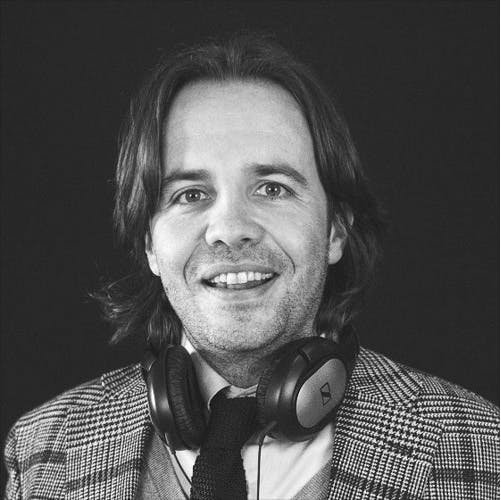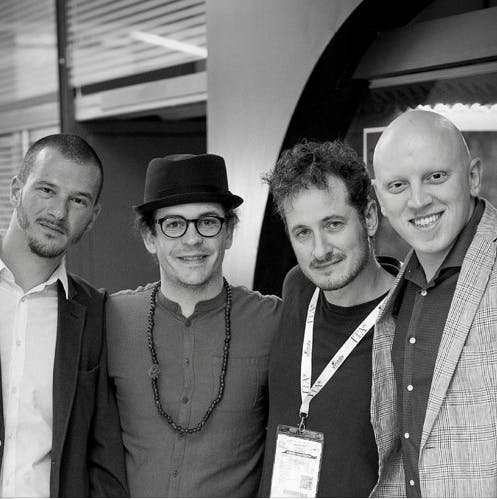
Ep. 115 Monty Waldin interviews @cantinasocial (Adriano Amoretti, Matteo Franco, John Murnane)
Monty Waldin interviews
Episode Summary
Content Analysis Key Themes and Main Ideas 1. Demystifying Wine through Social Media: The core mission of Cantina Social is to make the world of wine approachable and easy to understand for a broader audience. 2. The Power of Storytelling and Narrative: Emphasizing human connection and the story behind wine producers as a more effective communication strategy than technical tasting notes. 3. Integration of Food and Wine Culture: Highlighting the synergy between local cuisine (specifically Italian barbecue) and regional wines. 4. Content-Driven Social Media Strategy: Utilizing high-quality visuals and concise, engaging content on platforms like Instagram and Facebook to attract and inform followers. 5. Supporting Small Producers: Providing a platform for wine producers, especially those without large marketing budgets, to share their unique story with a passionate audience. 6. The Diverse Backgrounds of Content Creators: Showcasing how varied expertise (communication, culinary arts, architecture) contributes to a unique and comprehensive approach to wine promotion. Summary This episode of the Italian Wine Podcast features an interview with John Renain, one of the three founders of Cantina Social, a social media group dedicated to making wine approachable. John, an American based in Turin, Italy, with a background in philosophy, communication, and translation, explains how Cantina Social, along with his Italian colleagues Adriano (a ""pitmaster"" or barbecue expert) and Matteo Franco (an architect and interior designer), aims to simplify the world of wine for consumers. The trio met through a common friend when John needed a barbecue expert for a wine blog post. Their social media strategy focuses on creating engaging, content-rich posts and live streams, emphasizing the story and human element behind each wine producer rather than just technical tasting notes. They explain that this narrative approach fosters a deeper connection with their almost 70,000 followers. Cantina Social serves as a valuable platform for smaller producers who may not have the resources for large advertising campaigns, allowing them to share their complete package – from wine production to local hospitality (agriturismo) and other regional products like cheeses or salami. They stress that while visual appeal is important, their core value lies in providing genuine content and fostering curiosity about wine. Takeaways * Cantina Social is a social media group (Instagram, Facebook) dedicated to making wine accessible and understandable. * The group consists of a communication expert (John Renain), a barbecue expert (Adriano), and an architect/designer (Matteo Franco). * Their core communication strategy for wine involves telling stories and building human connections, rather than just providing technical tasting notes. * They utilize high-quality visual content, often captured with iPhones, to engage their audience. * Cantina Social offers a valuable platform for small or lesser-known wine producers to reach a wide audience. * Live streaming sessions are a key part of their engagement, where they discuss producers, their wines, and associated local experiences. * The combination of regional food (specifically barbecue, which Adriano excels at) and wine is a significant aspect of their content. * Their approach is ""content-oriented,"" prioritizing informative and engaging narratives over superficial imagery. Notable Quotes * ""Basically, our whole idea is to make the world of wine, create a very easy to understand and approachable friendly message, but at the same time, we try to give a lot of content with what we do."
About This Episode
Speaker 1 and Speaker 2 discuss their social media presence and goal to create a message that is easy to understand and approachable. They also talk about the secret to a good barbecue in Italy, including the use of a pit master and the culture of barbecue. They emphasize the importance of creating a focus on a producer who may not have the opportunity to put a full page ad in wine and emphasize the importance of understanding before creating a direct on social media. They also discuss their strategy of researching and creating a direct on Instagram, emphasizing the importance of connection and understanding before creating a direct on social media. Speaker 3 thanks everyone for coming and mentions a barbecue.
Transcript
Italian wine podcast. Chinching with Italian wine people. Hello. This is Italian White Podcast. My name is Monte Ward. And today, we're talking Cantina Socciale or Cantina social. Cantina social. And that was the voice of John Renain. And who are you, John? And what do you do? I'm John Renain. I am an American. I'm one third of Cantina's social. I work with, two of my Italian colleagues. We have a we have a group on Instagram and Facebook as well. And basically, our whole idea is to make the world of wine, create a very easy to understand and approachable friendly message, but at the same time, we try to give a lot of content with what we do. We try and tell the story, and we try and talk about the producer in a way that that people are excited about trying and doing something new. What is your backstory? And, your colleagues? What are what are their backstory? My backstory? Well, the first time I came to Italy was two thousand nine, I've always lived in Tarino turn. I've always done a lot of things from beginning, starting with kind of just teaching English like any mother tongue person does when they first come to Italy. And then after that, I started getting into copy, marketing, and communication, and translation. When you said you started getting it, that wasn't just by chance. You had some kind of background in that, I guess. I studied philosophy. So Oh, no. Well, it's nice to meet you, John. Thanks very much. That was the Italian wine podcast. No. And, obviously, when you study philosophy, the thing that philosophy I always say that gave to me was was curiosity. City. It made it made me really interested in everything. Wanted to get I wanted to always have more of an understanding of something. And in terms of communication and marketing, I love words. So being able to find the right words to tell the right story that for me is exactly what I love to do. So right from philosophy, Amerra, turing philosophy teaching. How did what was the next step? I actually worked for a blog, consulted the the Arvesty Munferato in Nisa. So you're working for a wine, growing region producer group, which is Catortia. Exactly. On that communication, Exactly. I worked with them and I wrote for the blog and I translated an Italian somarie. From then, I actually wanted to do a post about, Barrera Diasti and Barbecue. And so Adriano, another member of Cantina's social. He is a pit master and does a lot of things. A pit master. So how does a pit master? That's what they call it in Italy. When you're actually really good at barbecue for us, it's normal. For us, it's normal life in America. You know what I mean? But for them, they're that he's a pit master and he he's got a he's done a lot of a really, really good work in barbecue. And so from there, I wanted to do a post about Barrera Diasti and Barbecue. So you met by chance. It wasn't that you knew this guy before? No. We we had we had a kind of a a common friend in between the two of us, and I needed someone as a kind of point of reference in Italian to talk about barbecue. And he had actually done a, a recipe which was ravioli stuffed with, smoked rabbit that was cooked down and reduced in a in a Barrera diasti kind of sauce. And from there, we, we went on. So what's the secret come in a little bit. Come in a little bit closer, mate. What's the secret to a good barbecue then in Italy? Try to mix, what is our flavor with the typical recipe and the kind of cooking method, like, slow cooking and Crazy, things like that. Yeah. Like, eight hours, down degrees, like, eighteen, eighty. Sorry. And try to take the taste from the meat in a different way because, we are more dedicated as taste as a DMA American. So we try. I'm also familiar, so we try to match up this, true kind of, culture, and we try to it to make it. So you're from Piamonte? Yep. Piamonte is. Yeah. Exactly. Okay. Was your family involved in wine? No. No. No. How did you get into food then? I mean, you like the pyromaniac when you're in case of a society park. Yeah. It it was, a a strange word. I'm always felt in love with the food because I started cooking for myself and my wife, like, eleven years ago and then I grew up and I start to make a decision path. Then I opened my first, home restaurant. I was at the third home restaurant in the in in the military, and we made some some food pairing with wine. And, I always been in this world, but now this is our job. Okay. So Cantina, so you're partying. So you're the communication guy. Yeah. Correct. Right. And you're the food guy. Yeah. If he's the wine, food food and stuff. He's coming with. He's the number three. Mateo Franco. Yes. Working in the corner. You're a big lad. Yeah. So she obviously likes it. When you like to do a barbecue, to see if you eat all meat for your fries. Right? Exactly. And that's and that's kind of how that's of how Cant one of the ways that Cantina's social started from from them to kind of meeting up and I'm pretty sure it was when Mateo went to Adriano's house and and had a nice dinner and they said, alright. Let's, let's try and do something with this. Mato, where are you from? I'm from Doreen. We live very together near me and and and and the one who's getting fun because he he does barbecue. He does. John does the communication. Yeah. Exactly. I just drink and eat very well all day. What about your family? I mean, did you have what was your family background? Were your family working in factories with a winegrowers, food, experts, farmers? I'm an actor. An actor. Yellow. Architect. Oh, architect. I'm interior designer. And we start this project, me and Diana first, thinking about private seller to design some piece of furniture. Oh, so we're building private sellers for people in houses? Yeah. Yes. Yes. We we thought about that first, step. Then we realized that we need, just in tour just in Turin or Milan? Just in Turin. Tourin. So it's it's it's Turin fifty years ago. It's the of one of the key industrial heartlands of Italy after the the it more of go to Italy after second world. What's it like now? Are you all the wealthy people there? Is it mainly middle class? Or is it poor people? What's going on? People that are gonna pay you to to build a a a seller under their house or in their house? Yeah. Okay. Turing, there is a great place to leave. There is a good people, you know, it is not like milan or maybe Just like it's like a small city. A small city. Tosey. Yeah. Yeah. Yeah. Yeah. Yeah. And it's really nice to live. And we we live outside of of touring, but in twenty minutes, we can get everywhere. So in terms of the social media aspect, you when you have like billions of followers on Instagram, and Facebook. I mean, what are you communicating? Why would I wanna follow you on a social media platform? Any of you? What are you gonna tell me that's different that I don't already know and how how am I gonna engage or how are you gonna engage with me? I think that's that's one thing that we really try and do in terms of communicating the message that that that the that the producer, whether it's a producer or consortium that they really wanna transmit. Contortia just means the growers group, all the white growers have a a consortium where they sort of share costs in terms of publicity and then organizing tastings for journalists. Yep. So what our whole idea is really to be able to take their story and be able to try and submit it in a way. Obviously, Instagram, no one's writing a story underneath it. We wanna we wanna kind of keep it condensed, but at the same time, we wanna we wanna make it really attractive. So that The image is approaching me important. So who's the photographer amongst you? Yeah. Exactly. Are you doing it on an iPhone or are you doing it with a proper camera? We tried both. Yeah. We do a little bit of both. Obviously, thanks to technology. Obviously, we don't wanna give too much publicity to to Apple here, but having an iPhone X really the pictures that you can take with it. Are absolutely absurd. So you've got like an Apple t shirt. Apple socks. No. But the truth the truth is when you when it comes to Instagram, obviously, you don't actually have to have an incredible high quality. I mean, it's not that you need, you know, a canon for, you know, you don't need that to just put a nice picture up on the screen. What are you saying there? You you setting the kind of romance, the sort of backlit, beautiful landscape, autumnal, to be honest with you, to the ground. Honestly, what we try and do is we when I said before, we try and give content. That's really what we try and do. From Adriana who's able to do a proper analysis of a wine. And actually, all of this is a learning process for us, learning about the terroir, learning about the regions, learning about the producers, the different varieties of grapes. Trying to put all of that stuff really in a short text that again, we're trying to create interest. We know that that the passion for wine is out there and a lot of people want to know more. But and we wanna be a point of reference for people to be able to information. If I was an attorney and wine producer, why would I hire you guys and trust you guys to do any kind of form of and take any part in my my communication strategy? Well, to be honest with you, You don't know why. No. I mean, To be honest, if I was honest, there's a level of, we ask ourselves every day. How did we get here? How did we get to almost seventy thousand followers? You know, what was the thing? But but to be perfectly honest with you, we're able to create really, really high quality images in our own little studio that we on top of that, obviously me being a native speaker and a person who loves words and loves to create a story and tell a story. I think we do a really, really good job of being able to mix the technical aspects that can exist in a wine, which a producer wants to talk about because that's their livelihood. That's what they put everything into, but we know that at talking to a larger public, all of that information isn't exactly the first thing that you need to tell them. You have to really enchant them with the story in a small way. And Instagram for us is one of those means. We also do, live five directs. So every Tuesday, we do we do a direct on, on Instagram. Live streaming. Really? Yep. That's like video footage. Exactly. So you're talking, either of you are talking? We we have. You're talking about barbecues. There's no. I I speak them up line. Yeah. So he does he does the Yeah. So So what we do is the three of us kind of like, as we are around the table right now, we sit, we open a bottle and we go through the entire story of a producer. We're gonna research it. Exactly. So we talk about, you know, where they're located? What do they have? Do they have a a burritoismo? So kind of like a bed and breakfast around there? Do they do other production? You know, do they do salami, for my cheese's? Whatever. What else do they do? Tell. It's a complete package, man. Exactly. And and what we wanna do there is obviously give a focus to a producer who probably more than likely doesn't have the opportunity to put a full page ad in wine spectator. Again, we have almost seventy thousand people who love wine. And we and we try and give them a message and also give a platform to the producers that, I mean, that's the beauty of social media. Obviously, we all know the pros and cons. It's very interesting world out there. But one of the positive things is we live in an information age, and this is a vehicle to transmit information. Really, we're not interested. If you look at our pictures, there's not too many selfies. There's not too many pictures of trying to dress nice. I mean, that's that's not exactly what we're trying to do. We're pretty content oriented people, and that's our strategy. Why is narrative? I mean, it's everybody's talking about why is narrative stories? Why is that story then? Why is that becoming so important in wine? Because are we bored of tasting To be honest, I think tasting notes, people don't have the ability to understand them. In my opinion, you have to enchant somebody with the story. We all have a story. We have to connect on a human level first. And once we do that, now I can get into some specifics. And at the same time, if I give tasting notes with the story, I have the opportunity now to to kind of be encouraged also to find those. You know, to be a so many that's that's difficult. I listen to him when we're doing a tasting and and I learn something new every single time. And I'm able to Oh, when I taste something like, oh, that's dark raspberry. Oh, that's cinnamon. Oh, that's and if you don't have, a relationship or if you don't have Italians would say, if you don't have a good feeling with the person, that becomes a little bit more difficult because again, you're kind of you're just a little bit more it. Yeah. You're not there connected in the same way. So once you trust somebody and you listen to somebody, definitely things can change. Cool. So I'll say thanks to my guest today, Adriana. I'm moretti Matteo, a John Murnane. Murnane. Murnane. Murnane. Murnane. Is that right? No. No. Murnane. However it goes, it works. John my name. John my name. Exactly. John my name. Thanks for you guys for coming. Cantina's social. Yes. Billing to follow us on Instagram and Facebook. Good luck to you guys. Thank you very much. We appreciate it. Having a barbecue. Hey, whatever you want. Hey, by the way, also since you're in a really nice area too, and they they typically have some nice meats and you guys they do tuscany. Yeah. You guys grill quite a bit. Yeah. Don't come to tuscany if you vegetare. And we'll we'll come we'll come find you and, we'll see if we can have a good time. Cool. Cool. You guys. Thank you. Nice to meet you. Nice to meet you as well. Thank you. Cheers, mate. Follow Italian wide podcast on Facebook and Instagram.