

Ep. 369 Steve Raye U.S. Market-Ready | Plan Your Work, Work Your Plan Part 2
Plan Your Work, Work Your Plan
Episode Summary
Content Analysis Key Themes and Main Ideas 1. Strategic planning and preparation for wine and spirits brands entering the US market. 2. The critical importance of defining an exit strategy from the very beginning. 3. Learning from past failures and continuously educating oneself about the US market landscape. 4. Developing a pragmatic, fundable budget that accounts for long-term growth and sustained investment. 5. Setting realistic objectives for volume, market traction, and triggers for market expansion. 6. The dangers and common mistakes associated with premature expansion into new markets. 7. The brand owner's ultimate responsibility in building and supporting their brand in the US. Summary In this episode of ""How To Get US Market Ready,"" host Steve Ray, author and seasoned veteran in the wine and spirits business, shares crucial lessons for brands aiming to succeed in the US market. He emphasizes the core principle of ""plan your work, work your plan,"" breaking down four key areas. First, defining an exit strategy at the outset, as it dictates the entire brand strategy. Second, learning from the mistakes of others by actively educating oneself through trade publications, shows, and direct observation. Third, setting a pragmatic and fundable budget, stressing that growth cannot be funded solely from initial profits and requires sustained investment, along with negotiating cost-sharing with importers and distributors. Finally, he advises setting realistic objectives for volume, time to establish traction, and clear triggers for rolling out to new markets, warning against the common and often fatal mistake of expanding before a brand is truly ready and supported. Ray concludes by reiterating that brand building is ultimately the responsibility of the brand owner. Takeaways - An exit strategy must be defined early, as it fundamentally shapes brand development. - Learning from the failures of others and self-education (trade shows, publications) are crucial for market entry. - Growth requires significant, sustained investment beyond initial profits; a fundable budget is essential. - Negotiating cost-sharing for marketing programs with importers/distributors is vital and should be done upfront. - Realistic volume forecasts should be built from the ground up, not based on market share assumptions. - Do *not* expand to new markets before quantitative readiness is proven, as it's a common cause of brand failure. - Brand building is the primary responsibility of the brand owner, not solely the distributor. - Continuous learning, adaptation, and reforecasting are key to long-term success. Notable Quotes - ""Experience is what you get when you don't get what you want."
About This Episode
The speaker advises the audience to not make the same mistakes others have made and exit strategy by educating themselves on the US market by subscribing to trade magazines and industry newsletters, attending trade shows, and doing personal sleuthing. Clients typically come to the speaker with volume forecasts based on market share, but the speaker warns that unrealistic assumptions may lead to unrealistic outcomes. The speaker gives advice on setting realistic objectives for volume, establishing traction, and triggers for rollout to new markets. Clients often come to the speaker with a volume forecast based on market share, but they should be investing in new markets. The speaker gives caution that estimates will be wrong for both methods and emphasizes the importance of building the brand.
Transcript
Thanks for tuning in. I'm Steve Ray, author of How To Get US Market Ready. And in this podcast, I'm going to share with you some of the lessons I've learned from thirty years in the wine and spirits business, helping brands enter and grow in the US market. I've heard it said that experience is what you get when you don't get what you want. My goal with the book and this podcast is to share my experience and the lessons learned from it with you so you can apply those lessons and be successful in America. So let's get into it. Welcome back. Today, we continue with plan your work, work your plan. Specifically, we'll explore the following ideas. Exit strategy. Don't make the same mistakes others have made again for the first time. Set a pragmatic and fundable budget and set realistic objectives for volume, time to establish traction, and triggers for when to roll out to new markets. Number five, exit strategy. It's an often overlooked or assumed factor that absolutely needs to be incorporated at the very start of planning. If your exit strategy is to rapidly grow the brand in a limited number of markets and then catch the eye of a multinational and flip it for millions, that's going to dictate an entirely different set of strategies. Than for an estate produced wine that you'd wanna keep in the family for generations. Our point of view is that it is better to learn, fail, correct, and refine in less visible or difficult markets. It's sort of like having World Cup aspirations. It's a noble goal, but don't forget you have to win your league title first. Now in the book, I have a chart, which I can't read to you on the podcast, which shows size of the prize, and some recent sales for brands that have been sold. And the way we look at it is we look at what was the reported price paid, how many cases were actually being sold at the time of the sale, and convert that into a dollar per case ratio. And that gives us something to compare to. Very interesting. I have it both on my website. W w w dot bevologyinc dot com in the blog, and of course, it's also in the book. Number six, don't make the same mistakes others have made before you again for the first time. And so number five, exit strategy. You know, there's a ton of information readily available on the key factors that made some brands successful. Some of it's actually true. But just as importantly, if not more important, is to analyze the failures and learn the hard lessons that they've learned from their experience. Valible thought to keep in mind is is this phrase. Experience is what you get when you don't get what you want. So we recommend that new brands educate themselves on the US market by subscribing to trade magazines and industry newsletters and read both of them regularly. Also attend trade shows and do your own personal sleuthing. It's amazing what you can learn by just walking and talking at a trade show and visiting stores and bars and restaurants. You can find a list of important US market trade shows, trade magazines, and newsletters in chapter two in the book. And I would also point you to the w w w dot bevology inc dot com website And if you click on blogs, they're the first two listings there. It's a comprehensive list of all of the industry newsletters, most are free. Some do charge, and also a list I keep updated of all the upcoming events. Now, note wasn't in the book on COVID nineteen, which has certainly interrupted a lot of industry events. I do imagine that they will come back perhaps in some different form for sure on a, virtual basis initially. But keep your eyes on that list and get out there. There's nothing that can substitute the opportunity to talk to somebody face to face. Number seven, set a pragmatic and fundable budget. I mean by that beat discipline and set a real budget, not just for the intro period and the intro markets or the first year, but also covering the cost to maintain that level of support and what it will take to expand. Here's why. You cannot fund growth from profits of existing business. Let me repeat that. You cannot fund growth from profits on existing business, and that's because there won't be any profits for the developmental period, which can be measured in years. There may be revenue but don't confuse that with profit. Also, make sure to negotiate with your importer and or distributor so that they contribute to the marketing programming. Getting them to share costs is critically important and must be discussed and agreed to in the initial negotiations. This is a very common mistake. We see people are so happy just to get a deal. They'll say yes to whatever the importer or distributor has to say when, in fact, it's the best time for them to negotiate for things like monthly reporting, accounts sold reports, depletion and shipment reports, and so on and so forth. The thought here though is recognize it takes more money, not less to keep your business growing. So as sales grow, they per case spend might go down, but the actual out of pocket investment will go up. Most programs should be structured to pay out on sales. No sales, no spend. We like things like depletion allowances, which are paid basically when somebody delivers the goods as opposed to discounting the product upfront. And one thing to keep in mind, a lot of people do this. If they're successful in one market, they'll pull funding from that market and start investing in another market. You can't do that, or you shouldn't do that because what happens is you'll destroy the first market just because it started and working well doesn't mean that you can pull funding from it. In fact, you should be investing more if it's successful. So anytime you roll out, you're gonna need additional funding to grow that business. Number eight. Set realistic objectives for volume, time to establish traction, and triggers for when to roll out to new markets. Clients commonly come to us with a volume forecast based on market share. If the Vaca market in the US is seventy five million cases, then I ought to be able to capture one percent of that. So my target is seven hundred fifty thousand cases in year one. Well, that's not only bad planning. It's based on unrealistic assumptions. It's far better to start from scratch and build up a forecast using factors such as how many accounts can be called on by what number of people, whether they're brand ambassadors, market reps, distributor sales, how long it's going to take to scale up to a run rate distribution, and a reasonable and repeatable reorder rate at retail and on premise. Using different rates for supported and unsupported accounts, and then factoring in an estimate of per case spending for new distribution on top of those that you're already in. There's a relatively simple way of doing this with an Excel spreadsheet But it lays it out in logical form, so then you're not gonna make any simple mistakes of trying to do basic math and imagine that you're gonna be at hundred percent distribution on day one, not gonna happen. Which is why I like to say, look, chances are your estimates will be wrong for both methods. But the second one at least allows you to learn, apply, and reforecast in the process. That's much better for long term utility and forecasting and strategy development. One of the things I like to say is you're not gonna get it right the first time. Maybe fifty percent is a good target, but you can continually make it better. One huge caution that applies to everyone reading or listening to this book. Don't expand to new markets before you're ready. I'm gonna repeat that one again too. Don't expand to new markets before you are ready. This is probably the most common mistake that people make and the one that often destroys a brand. And define ready with quantitative parameters that are measurable. This is a common mistake too, and often the primary reasons for failure. They expand beyond their capacity to support the brand or equally important, cut funding and intro markets to support rollout markets, as I talked about before. At the end of the day, building the brand is your responsibility. You cannot rely on the distributor to do it for you. It'll be nice if they help. And that's an ideal situation, but you cannot rely on them to do it for you. Your responsibility is to build the brand. Well, that's it for today. I don't wanna take up any more of your time. Next week, we'll continue with working your plan. Join us then for how to get US market ready presented by the Italian wine podcast. Hey guys. This is Steve Ray. One of my favorite quotes is experience is what you get when you don't get what you want.
Episode Details
Keywords
Related Episodes
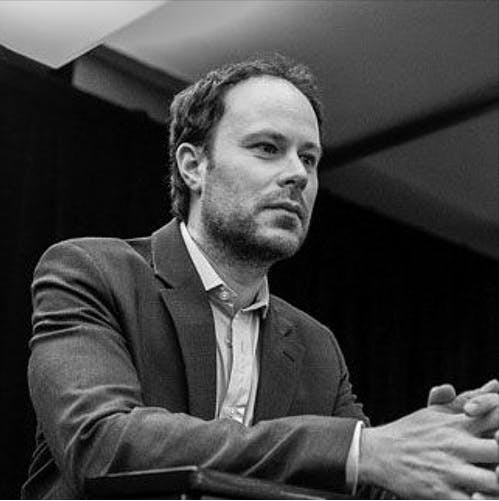
Ep. 544 Ryan Malkin | Get U.S. market-ready with Steve Raye
Episode 544

Ep. 509 Giuseppe LoCascio | Get U.S. Market Ready with Steve Raye
Episode 509

Ep. 504 Stevie Kim Interviews Steve Raye | Steve Raye How to Get U.S. Market Ready
Episode 504

Ep. 454 Steve Raye U.S. Market-Ready | Scores Matter
Episode 454

Ep. 389 Steve Raye U.S. Market-Ready | Find the Right Import Solution Part 1
Episode 389

Ep. 374 Steve Raye U.S. Market-Ready | Plan Your Work, Work Your Plan Part 3
Episode 374