
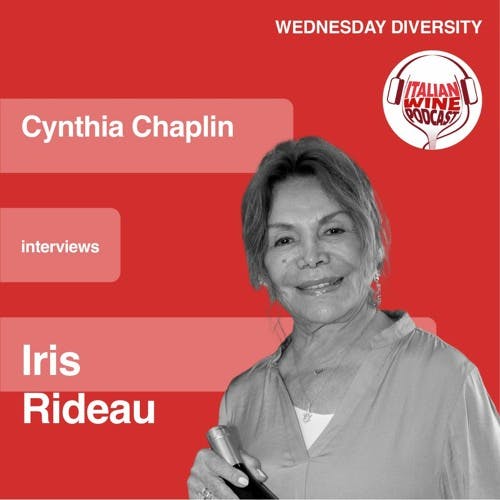
Ep. 1076 Iris Rideau | Voices With Cynthia Chaplin
Voices
Episode Summary
Content Analysis Key Themes and Main Ideas 1. The personal journey and trailblazing achievements of Iris Rideau as the first Creole American winemaker and first Black woman to own a winery in the US. 2. The impact of Jim Crow laws, segregation, and racial discrimination on individuals in the American South during the mid-20th century. 3. Iris Rideau's resilience and determination to overcome significant personal and societal challenges (poverty, teenage pregnancy, lack of education) to achieve success. 4. Her significant contributions to activism and human rights, particularly in establishing affirmative action programs in Los Angeles. 5. The transition from a career in insurance and politics to the wine industry, and her unique approach to wine tourism integrating Creole culture and hospitality. 6. Advocacy for diversity, equity, and inclusion in the wine industry, and encouraging women and people of color to pursue their passions despite barriers. 7. The power of personal narrative and memoir (""From White to Black, One Life Between Two Worlds"") in shedding light on historical injustices and inspiring future generations. Summary In this episode of the Italian Wine Podcast's ""Voices,"" host Cynthia Chaplin interviews Iris Rideau, a pioneering Creole American winemaker recognized as the first Black woman to own a winery in the United States. Iris shares her profound life story, beginning with her childhood in segregated New Orleans under Jim Crow laws, detailing the pervasive discrimination and a shocking experience of traveling ""as white"" and returning ""as black"" on a train. She recounts her struggles as a teenage mother working in a sweatshop, which ignited her drive for education and a successful career. Iris transitioned from being a prominent businesswoman and activist, instrumental in establishing affirmative action programs in Los Angeles, to founding Rideau Vineyard in California. She describes how she infused her Creole culture and genuine hospitality into her winery, creating a unique and successful wine tourism experience. Throughout the interview, Iris emphasizes her commitment to breaking down barriers for women and people of color in the wine industry, drawing on lessons from her recently published memoir, ""From White to Black, One Life Between Two Worlds,"" and offering empowering advice to those facing adversity. Takeaways - Iris Rideau is a groundbreaking figure, being the first Creole American winemaker and the first Black woman to own a winery in the US. - Her early life was profoundly shaped by the harsh realities of Jim Crow segregation and racial discrimination in the American South. - Despite facing significant personal and societal challenges, she pursued education and built a highly successful career in business and politics. - She was a key figure in establishing affirmative action programs in Los Angeles, demonstrating her commitment to civil rights. - Rideau Vineyard, her winery, differentiated itself by integrating Creole culture, food, and genuine hospitality into the wine tasting experience. - Iris actively champions diversity, equity, and inclusion within the wine industry, especially for women and people of color. - Her core message to aspiring individuals is an unwavering refusal to accept ""no"" due to gender or race. - Her memoir, ""From White to Black, One Life Between Two Worlds,"" offers insights into her journey and the historical context of race in America. Notable Quotes - ""The law read that we were separate, but equal? But there was no equality for people of color. Absolutely not. None."
About This Episode
Speaker 0, Cynthia Chaplin, talks about her past struggles with education and how it affected her writing. She discusses her involvement in the political and financial world, including her own insurance company and involvement in a black community. She also talks about her success in the industry and her desire to empower women. Speaker 2, another woman in the industry, talks about her success in the industry and her desire to encourage young women to take initiative. They also mention a new wine to wine business forum and suggest donating and suggest ideas for future episodes.
Transcript
Welcome to the Italian wine podcast. This episode has been brought to you by the wine to wine business forum twenty twenty two. This year, we'll mark the ninth edition of the forum to be held on November seventh and eighth of twenty twenty two in Verona Italy. This year will be an explosively in person addition. The main theme of the event will be all around wine communication. And tickets are on sale now. The second early bird discount will be available until September eighteenth. For more information, please visit us at wine to wine dot net. Welcome to the Italian wine podcast. I'm Cynthia Chaplin, and this is voices. Every Wednesday, I be sharing conversations with international wine industry professionals discussing issues in diversity, equity, and inclusion through their personal experiences, working in the field of wine. If you enjoy the show, please subscribe and rate our show wherever you get your pods. Hello, everybody. This is Cynthia Chaplin, and today I am thrilled to welcome Iris Redo to voices. Iris is a French creole winemaker, a businesswoman, and an activist, but most importantly, she's the first Criole American winemaker to own and operate a winery in the United States, and she is widely celebrated as the first black woman to own a winery in the US. She's just published her memoir from white to black, one Life between two worlds, and we'll talk about that later. So Iris, thank you for coming today. I really appreciate your time. Well, thank you, Cynthia. Yeah. This is wonderful, and it's wonderful to join you on voices. I've been anticipating this for a few days. Maybe a couple weeks since we last spoke and I'm really anxious to be able to be a guest on your show. Thank you very much for that. Me too. So let's get down to business. You were born in New Orleans, and you're a descendant of a Frenchman who sailed to America in seventeen seventy seven and established a plantation in Baton Rouge, and then a couple of hundred years later, there you were, growing up in a creole ward of New Orleans in the forties. And you've said there was not a great emphasis placed on education in your community, especially with creole. What was that like for you as a child? Being being in a place where education wasn't a big deal, and you were in the deep south, Tell me about that. Well, you know, first of all, in those days, we were under Jim Crow rule. And, which meant, the law read that we were separate, but equal? But there was no equality for people of color. Absolutely not. None. We, you know, we suffered suppression, hardships, lack of a good education, as you mentioned, all of these things. And the stories go on and on. So I grew up in a catholic school, which kinda helped a bit. And but again, of course, we got the hand me down books and and the nuns did the best they could. I loved going to Kaufman School. It was primarily a creole school. There were some black kids, and I hate to make the the difference of the distinction, but unfortunately, that's the way it was in the cells. The segregation was so harsh and so severe. I mean, it meant that if you had one drop of black blood in you, you were considered a negro or colored. I think it's really hard for people right now to realize what that felt like and to remember that, you know, that was the forties. And that seems a long time ago, but it's, you know, there are still a lot of people like yourself with those living memories of what that felt like. Exactly. I mean, that's something that never leaves you. You get to push it somewhere back deep inside your mind, but that little girl is still there. And I have to remind her from type to type that she doesn't have to save me anymore. I've got this, but it, it does stay with you. And so I feel like it's given me an opportunity to write this book, a story that is seldom told in this country. And and in fact, we're getting more pushback on educating our children as to the history of America. And I always say, how can you solve the problems if you don't know what the problems are? That's such a good point. And we're still stuck. You know, to some degree, we are still stuck. And and again, I just I believe in the fact that we will one day be one all looking like me, a mixture of everything, and there won't be any difference, however, it won't be in my lifetime. But we're all going to work hard to establish that and make that happen. Well, you have. You've been working seriously hard at this. And I have to say for all of our our listeners who haven't seen Iris, you need to have a look on social media because if everyone looked like her, the world would be a beautiful place. Believe me. Oh, thank you. But you you said at that time when you were that little girl that you hated the south, and you couldn't try on clothes, and you couldn't look at white people, and you had to put your head down and step off the sidewalk. And you decided you wanted to go live near your father because he was in California by then. Yeah. And so you and your mom moved to LA when you were twelve, which is an enormous change from deep south New Orleans, you know, in those days. How did that change affect you? What was it like in LA in those days compared to New Orleans? Well, you know, my father, as you said, lived in California. They separated when I was two, but he came back to New Orleans, throughout lived for Christmas throughout my years, and he would always tell me about California, and how much better the living conditions were there. And at ten, I finally convinced my mom to let me visit him one summer. And I did, so Actually, the book opens with the story of my travel from New Orleans with my grandmother there, who always passed for whites. So we, took the train from New Orleans to California, and we traveled as white, and we enjoyed all the luxuries of the beautiful dining cars and a bed to sleep in for those two and a half days and nights. And my grandmother decided to stay and, in California. And I had to come back with my mother's black girlfriend. She could not pass for white, unfortunately, and I came back in the new girl car. And it was such a shock to me because there was no dining car for us. We had to eat and sleep. On those hard wooden benches that didn't recline. And I really believe by the time I got off that train, I had suffered some form of PTSD because I couldn't even talk about it and didn't talk about it until I was an adult I didn't even realize it kinda had denied it happening for so many years that I finally told the story. And I went, oh, my god. To my friends, I'm, like, in my twenties. I can remember it, like, it was yesterday. And I said, You know what happened to me? This is what happened. I traveled as white to California and came back as black, going back to New Orleans. So it was it was those kinds of things that caused me to write this book. I think it's great that you're, you know, strong enough now and and will get to why you are because you're so amazing to to talk about that whole period of time where passing as white was something that, you know, a lot of people did. It wasn't uncommon. And it's just, you know, looking backwards, you know, in the rear view mirror, it seems so horrible. But as you said, it was something that that gave you a benefit on the way there. And then as you returned in the black car, it was you know, a completely different story, which is just shocking. Yes. I know a lot of people listening to this won't remember that time. And it's it's difficult to imagine that. And, you know, so you you got back to New Orleans and Yeah. You you you ended up deciding to move to LA? Correct. It took me two years to convince my mother that we needed to move to California and get out of the south. She hadn't visited California yet, so she really didn't know how beautiful it was and how much easier living conditions would be. But, anyway, I did convince her. And, We moved to California, and I had some somewhat tumultuous years growing up in California. I suffered from sexual abuse, which caused my grades to go down. I found myself pregnant at fifteen. I was running with the wrong kids, and I had my baby at sixteen years old. And with very little education, My mother, who was then a single mom herself, said you've gotta go to work, and she was working in a sewing factory. So she put me to work in a sewing factory with her. Well, that day was literally the turning point in my life. It truly was. I looked at those poor tired women having to suffer through this, way of life sewing on a pocket for five cents, a zipper for ten cents, whatever. It was called a sweatshop. And, I made so little money that that first paycheck, by the time I paid for my babysitter, I had very little money left over to even eat. Thank god I was living with my mother. So I went back to school immediately. I marched myself back to the first junior college I could find in the neighborhood, is I didn't even have a car at the time. And so I took night classes and worked in the sewing factory until I finished my education. And, fortunately, the first job after finishing my business courses, was working for an insurance agency, which literally launched my career. I stayed there for years, went back to school, I started studying principles of insurance, development, UCLALA taking classes. And ten years later, I opened my own insurance agency. So that was the beginning of my years in Los Angeles as a businesswoman. And that was in the late sixties when you opened Redo and Associates Insurance Agency. Mhmm. I'm I'm assuming that by then, you weren't having to pass as white anymore. A huge relief. I I guess. Well, actually, I did have to pass, unfortunately. Even in the sixties. Yeah. Well, this was in the fifties when I first went work for the insurance agency. Sixties is when I opened my my business, but in the fifties, this would have been fifty five fifty mid fifties, I'll say. There were no front office jobs for blacks, even in California. And it's just shocking when you think of, you know, all the black soldiers that fought in World War II, all of the black women that worked in factories, to to to think that even ten years after the war, there were no positions available of any kind of power. I know. I mean, but there was also, segregation. There was also separation, you know, black people had had their own in in the wars, you know, they had their own stations. You remember the Cheeskeee fighters that that flew planes in the war? They were black soldiers, not allowed to be in the same stations or, housing with whites. So it took a while for this country to move because Jim Crow actually affected the whole country. It was worse than this house. For sure. For sure. But not, not the, I mean, certainly the the rest of the country was also affected to some extent, to some degree. Italian wine podcast. If you think you love wine as much as we do, then give us a like and a follow anywhere you get your pods. Well, you you did, as you as you started to say, you did manage to get to the point where you were ready to open your own insurance agency in in sixty seven, and you became really actively involved in seeking some some better rights for all kinds of minorities. And you got appointed to the chairman, you know, the Mayor's affirmative action committee in the seventies. So times were changing. What what what was it like then? How did you make the move from insurance and activism and human rights into wine. I mean, it doesn't seem like a very clear path, Iris. I'm telling you. It doesn't seem like a very clear path to me. It wasn't quite as easy as that or as quickly as that, you know. No. I when I started my agency, it was shortly after the arthritis, and as a people, in the neighborhood, in the community could obtain, insurance or loans. It was called redlining in those days. So it gave me an opportunity to ensure thousands of homeowners, which launched my career. And from there, I branched out into commercial insurance. However, there were very few black owned businesses in the sixties, late sixties and early seventies. So I began ensuring non profit agencies, urban league, NAACP, through medical school, those kind of agencies. And, and then shortly after that, the Johnson Administration created a, warren poverty program, whereby his intent was to elevate the living conditions of disadvantaged people throughout country. So cities throughout the country received grants, City of LA received a fifty million dollar grant for this program. Unfortunately, I was able to write the insurance specifications, and I was granted the contract. So I caught the eye of the mayor at that point. So from there, I began to assist him with other business people in the community to to establish the affirmative action program for minorities and women. And that was really the beginning of the highlight of my career. I was now involved in politics and that I went into the financial world and started my own securities company providing pungent planning for employees of major corporations. And that was the nonprofit agencies, I should say. And and then I was awarded, the contract to provide new best bud opportunities and advice to the thirty thousand city employees. So that was a deferred compensation program, a supplemental pet paycheck program, and it was strictly volunteer but I did that for the next twenty years. And in total, I ran my two companies for thirty years. And then it was time to go to go north. And I had it for the valley of Santa Perez and Santa Barbara County. And that was my second chapter. What on earth took you there? What on earth, Iris, honestly. I mean, the the the the path that you were leading, you know, sort of making waves and and driving paths through industry, through politics. What on earth took you out to the San Anez Valley, you know, in nineteen eighty nine, you know, you started off with just six acres What on earth inspired you to decide you were gonna go from all of this to wine? Maybe you needed some wine by then. Well, I was drinking. I was drinking quite a bit of wine by then. I really, you know, seriously, I always love bringing wine. And the only thing really to do when you have acreage, and I purchased twenty two acres adjacent to my home property after the six acres where I built my home, I however, I was still commuting from the valley to Los Angeles. So I would go to my beautiful home in Sanones, which I built on the six acres. And during that time, I commuted for another five years. I thought I had an exit plan for five years, but it actually turned out to be a total of nine. And during that time, I was I would go wine tasting on weekends. Of course, obviously. So I was in the valley on weekends. What else do you do? You go wine tasting. I come well with the whole process. And I wanted to open my own wine ref. Why not? Well, it's pretty funny because, it's been said that you're success in the sort of very competitive world of vines and vineyards was super surprising because you didn't know really anything much about wine before you set up. What made you choose that, you know, sort of particular place and you were making kind of Roan style wines with Sara and more Vadrin, Vionier. What why did you choose those wines? How did you create such a successful vineyard? I mean, obviously, you're quite unstoppable, but what on earth? How did this happen? Well, you know, I was one of those evenings when I was here on weekends. I I made friends with the winery owners and the tasting room staff, and someone had invited me to their home, and they opened a bottle of nineteen eighty nine Chaginous de Pomphe. And, of course, as you know, that's a Saramma Vedra Granache blend, and I fell in love with it. And I had never had a chef in theftop before then. And, of course, it was a perfect year for it. And so I just said, you know, I said, I am going to when I open my winery, I'm going to plant all roan's rydal because I wanna make a chapter of DuPont. As a matter of fact, they even had a label that was called chapter Nuf du Top. But the French put an end to that, and they said we couldn't, as Americans, use their name. So I called mine Chateau de Posay, which is my family name, and I made the I planted all the same rome varietal, Saran, Mavedra Granace. Oh, I love vignette, which is a white rome varietal, as you know. I love vignette too. Do you? I do. I do. Have a soft spot for that. Well, we'll have to share some. I do too. I planted six acres of it on the front of my vineyard, and so we're up on the hillside, and then the Grenashia Bovedra and Russo at Granite also. By Russo, by the way, took best white wine and wines of the world in two thousand by two thousand four. That's incredible. So you created a little Roan Valley up in in Sanenez. Yes. And my vines came from, Bocastell, France, south of France. So at the time, Douglas Creek had formed, a partnership with them. And up in Casa Robles, and they start interdursary. And by the time, I was ready to plan. The vines were ready. Exact synchronicity. So I'd call that my god given right, my guidance, my direction. It was it was I I call it my higher self. It's not a a god per se. It's not a he or she It's an energy force. I I love that. I love that. And I I do think vineyards lend themselves to energy sources too for sure. Oh, they do. Oh, you couldn't get me out of my vineyard. I mean, my vise was still in the grow tubes, and I was still walking the vineyard waiting to see when they were gonna pop out of that grow tube. That is a gorgeous image. I mean, and it's funny because since you started, you you've managed to grow to seven thousand five hundred cases of wine per year and you won best in show in the Los Angeles International Wine competition, but it it's interesting because I I read a great quote from you where you said you brought your own culture to the valley with gumbo and Marty Grab beads and the blues and Jack has. So what were you doing once you got going up there? Oh, such a good question. You know, the property I bought had a a historical, Santa Barbara County Historical landmark on it that was built in eighteen eighty four. It had been abandoned for ten years. When I bought the property, I actually, the house was really what convinced me. I needed to buy it. Nobody wanted it, but me. So it took me two years to restore it. And while I was doing that, I built a kitchen, a French country kitchen on the back of the house. And I put in a five star range and just everything I wanted, you know. And finally when I opened my doors, yeah, I started cooking. I loved to cook, and I started making creole food, Just on weekends, the Saturday I'd make a jumbo higher, gumbo, red beans, and rice, and I would pair it in the kitchen with a bottle of wine that I selected for the day, for the pairing. And it was an immediate success because back in the day, tasting rooms were just pouring wine, you know, and not a lot of atmosphere I hate to say, but it's true. Some of them are still like that, unfortunately. Yes. They are, but I knew that I wanted my guests to have the full experience of the life I was living and had lived as a child in the mornings with with my family cooking all these wonderful dishes. And I always loved to cook. I was always at the kitchen with my grandmother, and Leah Chase, the famous chef from New Orleans. And so, anyway, that was, That was my marketing plan. And by the time they finished having a taste of something I had made, and and sometimes they had drank a a bottle of wine by the time they waited for me to finish cooking. They were standing in the kitchen, waiting, and I would hang Mardi gras beads on them after they purchased their wines to take on the wine trail. Amazing marketing ploy. Cook something that takes ages to cook so that they all have to drink wine while they're waiting. And that's exactly what happened. And I put in a beautiful country fireplace. And in the wintertime, I had the fireplace going. Can you imagine? And they're standing around the fireplace watching me cook, which I loved. Because I could cook and talk at the same time and, tell by story. So I think this is amazing. I can see it in my mind's eye. Can you? Yeah. I really can. And I think the fact that you brought your culture there is is such a testimony to how, you know, inspired you were to leave the South, but you didn't really leave it. You took it with you. I love that idea that it didn't get you down, and you brought the best of it with you. Yeah. I really did. It's it's interesting because you you also spent your wine career sort of seeking out other women and other people of color in the industry. And you said when you started, you couldn't find one single wine maker color, and you couldn't find any women. And you eventually managed to hire a woman winemaker. Yes. And then you attended the Hughes Society, third annual wine culturefest in Atlanta, and you were an honored guest, and they've named an award after you. Yes. So I wanna hear a little bit about this because you weren't just hanging out by your fireplace cooking iris. That's way too humble. You were clearly doing some other things. I was doing other things, and I really have to extend my gratitude to the Hugh Society and Tahira Habibi for recognizing me as the first black woman to own a winery in the country. And so with that, I have decided that I am going to be one of spokespersons for the black wine community, and especially young women of color, I want to encourage them to know that it's a tough pill to break into. Because it's always been the exclusive purview of wealthy white men. And that's changing. And women are taking a stronger role today. In the wine industry. And, you know, I still hear stories being mistreated or neglected in tasting rooms when they see a person that has darker skin than mine. And, I never experienced that. So I appreciate being their support, their trailblazer, and the one that's going to tell the story for them. And lead the way. So what sort of advice would you give to a young woman of color who wants to go into the wine industry now? What would you suggest? Well, I have been suggesting to those that's already in the wine business. That you can't ever let anyone tell you no. That's to start with. No is not the answer. No because you're a woman, no because your skin's too dark, No. That's that is not going to happen. You are not going to let that stop you from doing what your catch and tells you you must do. And so you have to be strong. You have to take the ups and downs. And there's always ups and downs. For sure. There are definitely, especially in this industry. Yes. Yes. It's not an easy industry, by no means. It's always been snobbish, you know, And, that was one of the things that because of my personality, I refused to allow anyone to work for me that was going to be a stop. I was on the floor as a matter of fact from day one until twenty years later, teaching them how to go about being, hospitable, loving, accepting, and, and they are like that to this day. Well, I'm so sorry that you sold this winery because I'm telling you get on a plane right now and come work for you. Well, you can come and have wine with me because I'm there all the time. Absolutely. So whenever you get here, we're going to do that. Absolutely. We'll start with a glass of vigner. Yes. And and with a sato du flauche. Perfect. I've I cannot wait. I I know that you recently published your memoir just a couple months ago, and I'm so dying to read it. It's it's very hard to get here in Italy, but we have a team now working on that for me. And as I said, at the beginning is called from white to black and one life between two worlds. So what's next for you now? You've written your memoir. You've had an extremely successful career sort of three different times. Yes. Let me hear the big plans. You know, I don't see a life force like you sitting down in a rocking chair. I really don't see that happening. What's coming up? No. Never. Never. I will I will drop that doing what I would love to do. No. I've never been in a rocking chair. As a matter of fact, I'm now on a book signing circuit. Fantastic. I mean, I'm getting calls from liners from bookstores. I'm reaching out to them. Everybody wants to hear my story. And, so it's I'm that's what I'm doing. And I can't I can't move fast enough these days. It's crazy, but I love it. Do you feel like you really smashed some of those barriers that you felt when you were a child? Oh, absolutely. I really do. You know, I saw it happening in my tasting room when, people would cross my tasting room, a white couple to go and speak with a black couple and vice versa. And I would listen to That's incredible. Yes. And the people that didn't like it didn't come back. So what, you know, Exactly. Their loss. They're lost. Exactly. Well, I I just cannot thank you enough for coming on the show today, Iris. It's such a pleasure to talk to you and to hear this story, which is you know, such a valuable and important piece of American history and wine history. And I love the fact that, you know, despite all these challenges, and they were great You know, you you are this wonderful generous soul of success and and wanting to pass that on, and that makes me really happy. And it makes me hopeful. And I think we all need that particularly coming up on our fourth of July weekend when things don't look that great for for our country, I think someone like you is a leading light, and we need to celebrate that more in the wine world and in our political world too. We have to stick together as women especially now because there's no there's no certainty here. So we have to be strong, and, we have to continue in our drive for success and to be on top. I'd like to close with, a Bob Marley quote. Oh, please do. He says, emancicipate yourselves from mental slavery. None but ourselves. Can clear minds. That's that's a great quote. And I say in my book, and so I did, and so can everyone else, so can every young woman, woman of color, young men, Manner color. Thank you so much, Iris. I'm I feel inspired on a, you know, on a late Friday night. I really feel so happy to have spoken to you, and I'm so grateful that you came on the podcast. I really appreciate your time. And I'm looking forward to reading your book. And I hope that others really, take notice of the example and the high bar that you have set for people in our industry to keep moving forward. As you said, keep going. Keep going. Thank you so much, Cynthia. It's been a pleasure, a real pleasure for me indeed. Thank you so much for inviting me on your show. We hope you enjoy today's episode brought to you by the wine to wine business forum twenty twenty two. This year, we'll mark the ninth edition of the forum to be held on November seventh and eighth twenty twenty two in verona Italy. Remember, the second early bird discount on tickets will be available until September eighteenth. For more information, please visit us at wine to wine dot net. Hi, guys. I'm Joy Livingston, and I am the producer of the Italian wine podcast. Thank you for listening. We are the only wine podcast that has been doing a daily show since the pandemic began. This is a labor of love, and we are committed to bringing you free free content every day. Of course, this takes time and effort not to mention the cost of equipment, production, and editing. We would be grateful for your donations, suggestions, requests, and ideas. For more information on how to get in touch, go to Italian wine podcast dot com.
Episode Details
Keywords
Related Episodes

Ep. 2769 The Younger Wines from the Volcano with Giulia Monteleone & Darya Nagornyak IWA | Clubhouse Ambassadors' Corner
Episode 2769

Ep. 2745 Discovering the "Rive" of Conegliano Valdobbiadene with Lucia Fragoso IWA & Alessandro Favaro of Rivaluce Winery | Clubhouse Ambassadors' Corner
Episode 2745

Ep. 2683 Alberto Rivera IWA interviews Andi Punter of Franz Haas winery in Alto Adige | Clubhouse Ambassadors' Corner
Episode 2683

Ep. 2660 Elena Barattini IWA interviews Ondine de La Feld of Tenuta di Tavignano in Marche | Clubhouse Ambassadors' Corner
Episode 2660

Ep. 2651 Diversity in the Wine Industry and Wine Tech Innovation with Jeremy McCarty | Voices with Cynthia Chaplin
Episode 2651

Ep. 2645 From Cheese to Wine: A Food Scientist’s Role in the Wine Industry — with Rebecca Siefring | Next Generation
Episode 2645