
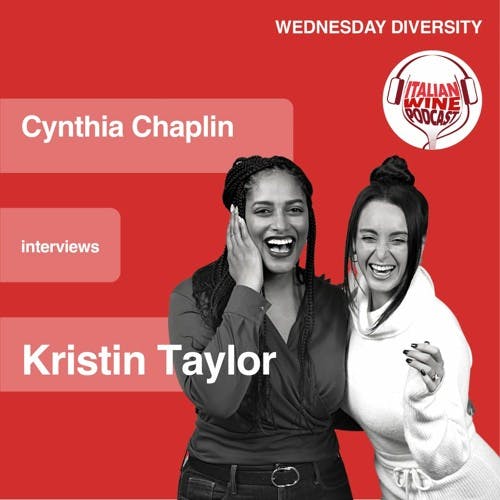
Ep. 1143 Kristin Taylor | Voices With Cynthia Chaplin
Voices
Episode Summary
Content Analysis Key Themes and Main Ideas 1. Diversity, Equity, and Inclusion in Wine: Challenging traditional wine culture by promoting accessibility and representation for underrepresented groups, particularly women of color. 2. Entrepreneurship and Innovation: The journey of launching and scaling a wine business from the ground up, with a focus on modern branding and digital strategies. 3. Accessible Winemaking: Producing wines with specific consumer needs in mind (e.g., low sugar, vegan, gluten-free) and a commitment to transparency in sourcing and production. 4. Brand Building and Marketing: The importance of approachable branding, digital communication, and narrative storytelling to connect with new consumer demographics. 5. Community and Empowerment: Fostering a welcoming wine community and empowering consumers and professionals through shared experiences and knowledge. Summary This episode of the Italian Wine Podcast features an insightful interview with Kristen Taylor, co-founder of KT Winery, a black and Asian American-owned wine company. Kristen shares the inspiring journey of establishing KT Winery with her best friend Macy Mincey during the COVID-19 pandemic, driven by a vision to revolutionize the wine industry. She emphasizes the goal of making wine culture more inclusive and accessible, particularly for women and people of color, a segment often overlooked by traditional marketing. Kristen details her personal motivation, rooted in her mother's influence, and the challenges she faced as a woman of color entering the wine world. KT Winery distinguishes itself through its approachable ""Mom Juice"" label, transparent winemaking practices (low sugar, vegan, gluten-free, influenced by Kristen's own allergies), and direct relationships with top-tier growers and an acclaimed winemaker in Napa. The conversation also covers their innovative use of digital marketing, social media, and podcasting to build community and tell their story. Kristen openly discusses their fundraising efforts, starting lean and now seeking significant investment for national distribution, with an ambitious goal for ""Mom Juice"" to become synonymous with accessible, quality wine for mothers across the US. Takeaways - KT Winery was founded by Kristen Taylor and Macy Mincey with a mission to shift wine culture towards greater diversity, equity, and inclusion. - Their ""Mom Juice"" brand aims to make wine accessible and approachable, particularly for new and underserved consumer demographics. - The company prioritizes transparent winemaking, offering low sugar, vegan, and gluten-free wines, partly due to Kristen's personal allergies. - Digital communication, social media, and storytelling are crucial tools for KT Winery's brand building and community engagement. - Despite starting with lean funding, KT Winery has achieved significant growth, producing 20,000 bottles annually within two years. - The founders are actively engaged in fundraising, seeking to secure $2 million for national expansion and realizing their vision. - Their ultimate goal is national distribution and to empower women in the wine industry, challenging traditional marketing and making wine more welcoming for everyone. Notable Quotes - ""A black woman in wine is kind of unheard of, especially when I was, you know, in the nineties, like, not something you saw."
About This Episode
The Italian wine podcast discusses the challenges of the industry during COVID-19, including the lack of women in the industry and the need for women to be informed about their struggles. The CEO and COO focus on the wine product and brand, while the success of their winemaker and partnership with growers is a focus. The company is constantly trying to make it approachable and engaging, and they are trying to be transparent with growers. They plan to launch a new product in the fall and expand into Target, Target in any city. They are also focused on empowering women through their work and their personal lives.
Transcript
Welcome to the Italian wine podcast. This episode has been brought to you by the wine to wine business forum twenty twenty two. This year, we'll mark the ninth edition of the forum to be held on November seventh and eighth of twenty twenty two in Verona Italy. This year will be an exclusively in person edition. The main theme of the event will be all around wine communication. Tickets are on sale now. So for more information, please visit us at wine to wine dot net. Welcome to the Italian wine podcast. I'm Cynthia Chaaplin, and this is voices. Every Wednesday, I will be sharing conversations with international wine industry professionals discussing issues in diversity, equity, and inclusion through their personal experiences, working in the field of wine. If you enjoy the show, please subscribe and rate our show wherever you get your pods. Hello, and welcome to voices. This is Cynthia Chaplin. And today, I am delighted to welcome Kristen Taylor. In twenty twenty, she and her best friend, Macy Mincey, founded Katie, which is a black owned and Asian American owned winery in Denver, Colorado, with the goal of shifting wine culture and increasing access and shareability. So, basically, they are self described champions of cutting the BS out of wine. So Everybody who listens to me knows how important this is to me. I'm an educator, and I'm very, interested in growing our communications and growing our community and changing the language we use around wine. So I'm excited to talk to Kristen today. Thank you so much for coming on. Oh, thank you so much for having me. I'm so excited. I'm not sure if we got to talk about it at all, but I am obsessed with Corona in Italy in general, so I was thrilled. Absolutely thrilled. Oh, well, that's wonderful. We'll have to get you here. Yes. That's great. That's good to know. I will write that down. Fantastic. Well, just to kick this off, I have to say the best part about KT winery in my humble opinion. Is that your label is called mom juice. So I am beyond in love with this. I have six children of my own, so I I love this concept. And I'm wondering how the two of you got started. What what sort of lit the fire for the idea of KT winery and at mom juice. How'd you get going? Yeah. I would say the fire was lit, originally because my mom got me into wine. So part of it is an ode to her. And she was actually a sailor in the US Navy, so she would come back from these countries of all these beautiful bottles of wine from different parts of the world. Actually, one of her favorite places. She was ever stationed with Italy. So she'd come back with all these beautiful wine, Sandra Vases, and She was in Paris, you know, she come back with a beaujolais. And as a kid, I saw these beautiful bottles being brought over from everywhere. And getting older, he realized that not only is it harder to connect with people, but to make friends, you kind of have to feel comfortable in the only way I was ever comfortable was in the kitchen cooking or pouring wine and telling someone about the wine. And I realize it comes a lot for my mother's travels. That's so great. Yeah. So as I got older, I really loved wine, but I didn't think it was an industry I could be in. Let's just be honest, a black woman in wine is kind of unheard of, especially when I was, you know, in the nineties, like, not something you saw. And then you started to see women like the mcbride sisters, and I heard about the Brown estate in California. And I started seeing figures that look like me, and I was helping other people in the in the alcohol industry make their mark. And everyone looked at me and said, why do you not do this for yourself? Like, you have all to know how you have the knowledge, go do it. And of course, I was terrified, but Once I got some back phone to me, I called Macy and asked her if she would consult with me to help me figure out how to set it up. And somehow, I don't know if it was the wine or the business, but she said yes. And she decided to get crazy. And we got what we like to call Mary through the business. I love that. I love it. It's it I mean, what we're sort of stepping away from here was that, of course, it was in COVID. So this was this was more than just, you know, let's talk about a business together. This wasn't the best time to start a business. So that's that's really, you know, that's a good friend for you. You've got you've got the passion and she came on board to help you out. So I hope one of my daughters someday makes an ode to her mom and the wine teaching that that I gave them all. I like the idea that, your sort of passion started in the kitchen with your mother. I think that sort of background is so important in what we give to, you know, not only our own children, but those people who we bring into our wine community with us. Passion for food and wine together is something that's really special. So I'm I'm happy to hear that story. But I'm I'm wondering now what's going on with the two of you because I know the power in the decision making is really shared between you, and you're both chief operating officers at KT and Macy's the head of strategy. So you've described wine culture as we know it as a challenging social experience propelled by access and knowledge. And you just alluded to the fact that, you know, being a person of color in the wine industry was not easy at the beginning. I I am hoping very much that this is becoming easier. We have people, as you said, like the Mcbride sisters and Julia Coney, and Iris Reado, and other people to thank. But, I'm just wondering, you know, explain to our listeners what you mean, you know, in terms of when you started out and you didn't see people who who looked like you or who looked like Macy, how are the two of you gonna break down these barriers for your new wine consumers? What kind of wine community do you hope to create together? Yeah. So slight slight change there. So I'm actually the CEO, and Macy is the COO, and she focuses mostly on our team operations and then strategy, so investors, etcetera, whereas I focus more on the wine product and the brand. So we bear we are still very much I have to say I like your job better. I think so too. I think it's way more fun. She negotiates contracts with her lawyer a lot, and I get to, you know, figure out how I want to adjust the line with our wine maker, Brian. So I think one of us does get the better end of that deal. But we are very much partners that we have the same vision. Right? We're very aligned with our vision around. Being a person of color either in in ton of both ways, not only in the industry, but as someone who wants to be a consumer in the industry, there's still the same barriers there. Of wanting not being expected. So you're it's not something that's taught to you or something that's even available to you as knowledge unless you go seek and find it. Right? There are these amazing educators out there, huge society being another one where you can go and you can learn. But the amount of those educators versus educators geared towards, well, bald white men are vast. Right? It's a huge difference. It's tragic but true. Absolutely. Tragic but true. And do I consider myself a magical wine educator? No. There's so much skill in nuance. I mean, you're obviously very familiar with all those nuances. Great growing and all of the things, but what I like to think we really find holden is making it approachable. Right? It's not only making great wine, but it's making it something that you feel like you can smile about, and you can pick mom juice up on the shelf without feeling like you have to know everything about wine to enjoy it. And as you start to shrink it, then you start to read our notes and you start to understand what we say when we say high acidity. And you start to read what we say when, we're saying give it a little gurgle, get that spice. Right? It becomes more of a journey of knowledge versus a fear factor. So not only do we try to make sure that our photos and videos are inclusive and vibrant fun, very funny, but also that our label, when you pull it off the shelf, you kind of feel like you have a friend next to you saying it's gonna be okay. Just grab the slide, and let's go from here. I I I really love that. I mean, I'm I want to point our listeners to your website because your labels are great. You know, the the wines are called mom juice, and and it's a great font kind of in your face. It's it is what it says, which is fabulous. And and on your website, you say that you're targeting the people who power digital and the wine drinkers who love branding and innovation and a hilarious joke, like you just said. So I wonder how are you selling? I mean, clearly, you've got some in stores. Are you selling online? Are you doing hospitality? Who are your main consumers? Obviously moms, but how are you spreading your message and targeting these sales? Yeah. So we've been technically launched since September twenty twenty one. It was the first time you could buy our pinot grigio Mom juice. And we sold that originally only online. And then we quickly realized that that, you know, COVID was shifting and people were going outside. Right? And we realized that we had to also shift with that as businesses are constantly pivoting and turning and shifting. And we decided to sign with the distributor another black female in North Carolina. So that was our first distribution into a state. Then as time through. We realized we were getting more requests in Denver, Colorado, where we're based out of in Washington, DC. So we've now grown into a combination. So I would still say This year, seventy percent of our sales are online delivered to your doorstep, through k t winery dot com. That's our website. And now we're having that shift of being in stores, and we're in restaurants, and we are in a few hotels as well. But our big focus is where moms go. Right? So if you're going to have brunch or afternoon drink, where are you going? If you're going to go grocery shopping, what's convenient for you, So those are those are the stores we're trying to create partnerships with to make it easier and also, kind of a no brainer that that's where you go pick up your mom juice. So we're in that shift right now. That's really cool. I mean, I I know you're doing a lot of social media too. You know, you've got only mom's Facebook and podcast and KT winery on Instagram, and you've got a YouTube channel, which I love because you're utterly transparent about your entrepreneurial process. I the two of you sitting in your hotel room talking about the night before bottling is is definitely something anybody who wants to go into the wine industry should watch. What's the feedback been like for you with all this communication and and clearly a lot of digital communication? You're a really young company. Both of you are young women, what's going on with communication for you now? How did it change since you started? As you said, your your sales changed from all online to a distributor and and moving into more in person things, but how's the communication changing? So I think communication has been honestly our biggest toolkit. Right. Mom juice, if you're a wine producer or someone who sells wine, the name can either make you very excited or turn you off completely because you think it must be a white labeled wine, it must be out of the box, and they just you know, through it on the shelf or in words bad, right? If you're in the wine profession, you're used to the more serious names, the better. And that's just how it needs to correlate. Right? So it's been actually this whole battery pack for us to explain our process and just show what we've been going through and show honestly the labor of love to make this wine. So it's been helpful both in the sales process, but I think also credibility wise, right, when you realize that our winemaker has a huge, resume of making some of the most world renowned wines like Free Mark Aphi and Opus One and has this great catalog, but signed on to work with us because he believes in it. Right? So social media is also, if we're just gonna be honest, the cheapest, investable kit for a young business. It's the easiest to make a splash on, and it's easiest to tell your message without any interference. So That has been amazing. The podcast has not launched yet, but we're recording it now. Macy's actually the host of that podcast as the mom and the group, and it's so funny. So I'm really excited for that to come out and hear just more about the woman who love our wine. And what they think about when they're dropping their kids off in school or heading to work in the morning, like who those women are. So it's been a great storytelling platform for us for sure. And I recommend that everyone get on it. Well, while we're on the topic, I'm gonna I'm gonna send out congratulations from Italian wine podcast to Macy because I know she's expecting a new baby, so that's exciting. We're so excited. I keep telling her how when we're having a baby and grabbing her other kids, like, we're all having a baby. It's like I'm not involved at all, but it's just been really fun for me. Hey, it the saying it takes a village is not a saying for nothing. It's true. So that is so funny on the back of our pinot grigio bottle. We say they say it takes a village, but we say it takes a vineyard. So that is like what we're known for saying it. Yeah. Oh, I love it. Yes. I love it. I haven't seen that. That's awesome. Okay. Great. Well, let's talk about the winemaker Brian for a minute. I know you're sourcing your wines in Napa because clearly Denver is not really known for wine production. So you've said you've got a pinot grigio. I know you've got a cab sauvignon. And a rose, which really doesn't have an ID card, so I don't know what grapes are making it. But your website is describing your wines as crafted by minority women with low manipulation, low sugar, vegetarian, and gluten free. And this is all, like, key for young consumers, you know, these sorts of issues are are really important in getting new consumers to the wine table. So let's hear the backstory about the wines. How did you hook up with Brian and how did you choose these wines? Italian wine podcast, part of the momo jumbo shrimp family. Yeah. Cynthia, honestly, it was the hardest thing ever to find a winemaker. I can believe that. It was one of the most challenging and well kept secrets. Right? It was I would say that this was one of the biggest hurdles we experienced getting into the wine industry without knowing anyone, in the production side. Right? It was a lot of, no, we can't produce your wine here. And then finally, someone explained to me why that I couldn't rent a facility. I could use their tanks but I need I couldn't tell them what I wanted. I needed to find someone in between both the facility and me, who, aka a wine maker, to help me craft this recipe correctly. So once I finally figured that part out, then I went on a whole another calling spree. And if I was calling more vineyards and just asking them if they knew anybody. And finally, I got smart and I just realized I should just call a bunch of women that seem awesome. And They led me down the right path, which was great. And one set me down and it's like, okay, here are three winemakers I know. Call them. They may be busy, but they have friends. All the winemakers are friends in Napa. And so Finally, this guy, his name is also Brian. He was like, you have an interesting personality. I know exactly who to put you in touch with. He put me in touch with his good friend, Brian. We laughed on the phone for thirty minutes about all the crazy stuff. And I was like, oh, I love him. His he's so light and energetic and just no b s and has a very similar ethos to me about wine drinking and wine making and that. I didn't wanna add a bunch of stuff to our wine to make it taste good. And, we both love Italian reds and, a tempranillo for some spice. And so we had a very similar palette as well. So it was kind of a love connection. We Also, we consulted with Brian for about six months and then realized that, to be honest, it didn't feel fair that he would help us build this beautiful business that we know we couldn't do without him without making him a part of the business. It just didn't feel like something I didn't we didn't feel good about that. Macy and I wanted to make sure that he would also experience what he built and experience the result of what that will be eventually. So we made him a partner in the business, and it's been the best decision. Absolutely. Getting people vested in what you're doing is always is always a good, idea for sure. And yes, and let's be real though. I also have I cannot do what he does. The chemistry behind it. I'm learning, of course, but it is years of studying practice in Nuance, and he is just one of the most talented men. So as far as all of the things that we do in our winemaking our ethos around gluten free and vegan, It's truly because I am allergic to all of those things. And what I wanted to be able to do was to drink our wine. So part of it was we had to go lower on the sugar because I'm allergic to a lot of sugar. I'm very allergic to gluten. And the more I started drinking wines, the more I realized that that is not kind of a it's not a given that wines will be gluten free or wines will be vegan. And I learned a lot about filtering and all of that. How we get to low sugar is we choose a higher quality grape. Yes. Being in Napa gives us a lot more opportunity to choose from all over in California. Our Rosay was a really fun collaboration between a grower named Mari and Ryan, they have connections over working together for years. So those grapes are gonna be from central coast, California. So it's like it's fifty two point nine percent, Grenache, ten percent infundale, and the rest is Sarag. Grapes actually. Oh, fantastic. Yes. Great blend, light, delicate. It's like someone threw strawberries in your face. It's delicious. Absolutely delicious. So we really try to know who our grower is regardless of if we source them through a broker and then we've taste their grapes, then we've become friends with them because I wanna make sure that we can create quality products over and over and over again. And, you know, we've had to get into the door through a lot of introductions, but now that we are it's been an amazing process. I'm fascinated to hear that you, you know, that you make the effort to to meet your growers and know your growers, and, you know, you're not the only person with a lot of allergies, especially, you know, these days, people are much more aware of things that they're sensitive to Do you talk to your growers about, you know, how they're managing their vineyards about, you know, chemical use and pesticides and herbicides and things like that too? We do. So I will say we do not necessarily require biodynamic or organic farming practices. However, there is an integrity level that I like to see to even consider working with our growers. Most of our growers, which is really great, are just people who like to grow grapes. Right? It's not for them, it's actually not even about the profit margin. It may not be how they make their money is through selling grapes to smaller people like us. So it's been great to partner with people who are just excited to see us grow, but we do have that conversation. Right? I do get on the phone. Hey, before I buy this, one, I'm gonna run a chemical panel. Right? That is my requirement. I'm not buying anything without chemical panels being That's awesome. I wanna make sure there's nothing hidden. And also, I don't wanna claim that, you know, this is going to be produced a certain way if I can't promise that's true. That's that's fantastic. I'm so glad that you're doing that research. I think it's really important going forward, you know, that we're as transparent as we can be about wines that we're producing, especially, you know, when you're producing them for moms and people who are, you know, having babies and, you know, breastfeeding and things like that. I think that's really, really important. So I'm I'm impressed. Just out of curiosity, how many bottles are you producing a year? You know, I feel like it changes. Yeah. I imagine. Well, it does change every quarter. We pretty much bottle once a quarter. So right now, we are at We're about producing about twenty thousand a year right now. Oh, wow. That's good. Yeah. So, I mean, you've only been going two years, and even really only one year since your first, you know, vintage wasn't launched. So that's great. Yes. Yes. Our Colorado audience has been amazing and has been purchasing it by the armful recently, which is amazing. So that's also why it's really important to be friends with your growers because I'm I'm going to have to call them later this week and say, hey, I know that my projection was way lower. Now I need you to set aside all those grapes you just crossed and stick them in a sealed bat for me because I need to take them. You know? Exactly. Hey, there's worse problems to have. So You're worse problems. Yet. Just going back to what you said, you got into the wine industry without knowing anybody. So I'm wondering, you know, how this all started. Where was the money? Because I read, you know, about KT winery that you're raising the bar and challenging traditional fundraising efforts. So fill me in. I know you've been looking for angel investors and venture capitalists. How's it going? What's the process been like for you and Macy getting getting funding? So, Macy is my secret weapon here. And in reason being, everyone needs one, everyone needs one. And Macy's line because she actually had a tech startup that got sold. So she sold that. I wanna say maybe four years ago. So she's been through the process before of fundraising, and she's also an investor. She was actually our first invest our first both of our first investors were two women, Macy, and, Olivia Steel. And which has been awesome that women were investors, but we opened around. Right? So the first process is figuring out how much money you need It's an interesting thing of you don't wanna take too much money. You wanna make sure it's what you need, and it's gonna give you some what we call runway. So how many years can you run off of this money? If it's not years, is it months, that normally happens for things like bio, bi biological things or tech. Of course. Right? You have a short runway. And why you want to be able to survive at least a year to two years on whatever you're raising. So we came up with our number, which for us is two million. We're very transparent. I'm happy to say, raising two million. Yeah. That's not a huge number when you think about it. It's really not in wine, and what it gets us to do is be very strategic and we will end up phrasing again, as mom juice was our first launch and we have another product that we're working on right now as well, which will be bigger, and we're gonna launch it even crazier and harder. And we'll be all hopefully distributed through the US. But yeah. So we're raising the two million. We are currently a quarter of the way through. We took a pause when we launched the brand to really focus on that, but now that is Macy's main focus. So We pitched two investors at least once to twice a week. We're back in the swing of it now of pitching almost consistently and constantly, and it's, oh, honestly, it's a lot of having your ducks in the row. And once you've launched a product, it changes everything. If you're pre launch, everything's kind of a pie in the sky of hope in the dream, and people are willing to cut checks based off of just what you're like. But once you launch that product, now you have to show figures, and you have to show growth and sales, and you have to back up everything you're saying with data. So it just becomes just that much harder to pitch and to get people to write checks. So Of course. It's been a process. Yeah. It's been hard. And you're but you're heading you're heading forward with it. A thousand percent. And like we said, if this isn't a generational business, we did inherit this. So we're building it. Me I did some initial funding with what I had. Macy came in, and we started to run with it. We launched Pina Grisha with only a hundred thousand dollars, which sounds like a lot of money, but after the licensing and everything. That does not sound like a lot of money in wine. In wine, it's like having two pennies rubbing them together. But Yeah. Yeah. So the Pina Greeze launch after you get through licensing and regulations and finding people and paying people. I mean, you know, it it was it was a lean business. So we're hoping to close it by the end of the year, though. That is our goal, December thirty first, to celebrate the New Year funded. That's awesome. And I I we wish you all the best with that because it sounds like you guys are really on a, you know, upward trajectory with us. So and as I said, that's not a huge amount of money that needs to be raised. So, I'm sure that the two of you will drive it forward like you've been driving everything up. Like, I just wanna ask what you're doing with all the results that you've had so far. I mean, you I know you've got data and consumer insight and, you know, you're using some intuition and you're producing some really well branded and, you know, really well marketed products. I cannot emphasize enough that label just grabbed me. So so what's the strategy? You said you've got a new product coming. Where do you see you guys in sort of five years or or ten years? What's the ultimate dream for mom juice and KT winery? For mom juice, it is national distribution. I want you to be able to go to Target in any state, any city, and pick up your wine. I want you to, honestly, the way Kim Crawford is known as a Soviet lump I want mom to be synonymous with what mom's drink. That is truly the goal. We are not a small potatoes dream dreaming company. Very big ambition here. And honestly, it feels very low based off the trajectory we're on. So in for KT winery, I have two goals. One, I want mom to use a course to just explode, but two, both from a team perspective to everyone who's made this possible. I want everyone to get a little bit of vacation, but also just to see their hard work and see the results of it and see the impact as well as being a female minority owned company that imprint we can put into not only our communities, respectively, but also into the winemaking community, and hopefully encouraging that shift of not just educating to typical consumers as we think of them in wine being white men, which is fascinating because they buy twenty percent of the wine consumed in the world. It's crazy. Women have much more wine buying power these days over sixty five percent. Exactly. Right? So not only do we hope we see the shift from marketing to women more and letting them be seen in average, advertising and editorial content, but also making it more open and honestly making the community more welcoming is our goal. Wine culture is such this economically powerful industry. And it also has the opportunity to open up so many more possibilities and opportunities for people who want to elevate in their career, want to, elevate their home, want to experience new cultures, and I just want our company to help with that shift in what it means to be a wine lover and not for it to be as we like to call gatecapped, right, not something that's a secret. It's really something we all should be able to enjoy. So that is our goal to be a part of that change, be a part of the shift we're seeing like this podcast where you have these conversations. It's all part of that equation. So, yeah, I hope you see impact all across the board. Well, as you know, I'm I'm utterly one hundred percent on board with that as a philosophy, change is what we need and and supporting new people coming into the wine business and making it more accessible through everything we do. Just wondering, do you ever see yourselves with a premises someday? Is there gonna be mom juice or k t winery place that we can go to? You know, we've talked about what that would look like in some of our, fun cities that we have a lot of customers in. It's definitely not off the table. I will say that. Yes. Awesome. Alright. Well, I'm gonna tune back in and keep my eyes on you guys because, I think what you're doing is really modern, it's accessible. Let me ask you, what's the price point of just let's just say the pinot grigio, your first wine? What's the price point, you know, retail? Nineteen ninety nine. Oh, yeah. That's so accessible. Totally accessible. It's a Tuesday wine. It's perfect for Tuesday at a four thirty PM open, get a nice refreshing glass, right, that it was the whole goal. Exactly. Drink sensibly people do that after you've picked up your children from school. Yes, please. Please, please. Yes, please. No. I'm I'm I'm so happy to hear this. It's I it really it inspires me to keep doing what I'm doing when I hear about people like you who, you know, started off just with a love for wine and a love for a community and really wanted to make wine more available. And I I wish you all the best. I think that's fantastic. So thank you so much for coming on today. I can't I can't thank you enough. I hope our listeners will get in touch and hunt down mom wine. And give it a go. Thank you so much, Cynthia, and I'm just gonna do the little plug, but find us on Instagram at mom juice wine, or at k t winery dot com. And honestly, this was a honor, and I love what you're doing. And anytime you need someone to help you and Verona, you just give me a call, and I will be on that plane. Okay? My huge pleasure. Absolutely. We hope you enjoy today's episode brought to you by the wine to wine business forum twenty twenty two. This year, we'll mark the ninth edition of the forum to be held on November seventh and eighth. Twenty twenty two in verona Italy. Remember, tickets are on sale now. So for more information, please visit us at wine to wine dot net. Hi, guys. I'm Joy Livingston, and I am the producer of the Italian wine podcast. Thank you for listening. We are the only wine podcast that has been doing a daily show since the pandemic began. This is a labor of love and we are committed to bringing you free content every day. Of course, this takes time and effort not to mention the cost of equipment, production, and editing. We would be grateful for your donations, suggestions, requests, and ideas. For more information on how to get in touch, go to Italian wine podcast dot com.
Episode Details
Keywords
Related Episodes

Ep. 2651 Diversity in the Wine Industry and Wine Tech Innovation with Jeremy McCarty | Voices with Cynthia Chaplin
Episode 2651

Ep. 2627 Regenerative Winemaking, Mentorship & LGBTQ+ Perspectives with Terah Bajjalieh | Voices with Cynthia Chaplin
Episode 2627
Ep. 2545 Building Inclusive Wine Spaces Through Storytelling with Amari Collins | Voices with Cynthia Chaplin
Episode 2545
Ep. 2531 Winemaking Journey from Mumbai to Napa with Priyanka French | Voices with Cynthia Chaplin
Episode 2531

EP. 2517 Sarah Looper | Voices with Cynthia Chaplin
Episode 2517

Ep. 2505 Ren Peir | Voices with Cynthia Chaplin
Episode 2505