
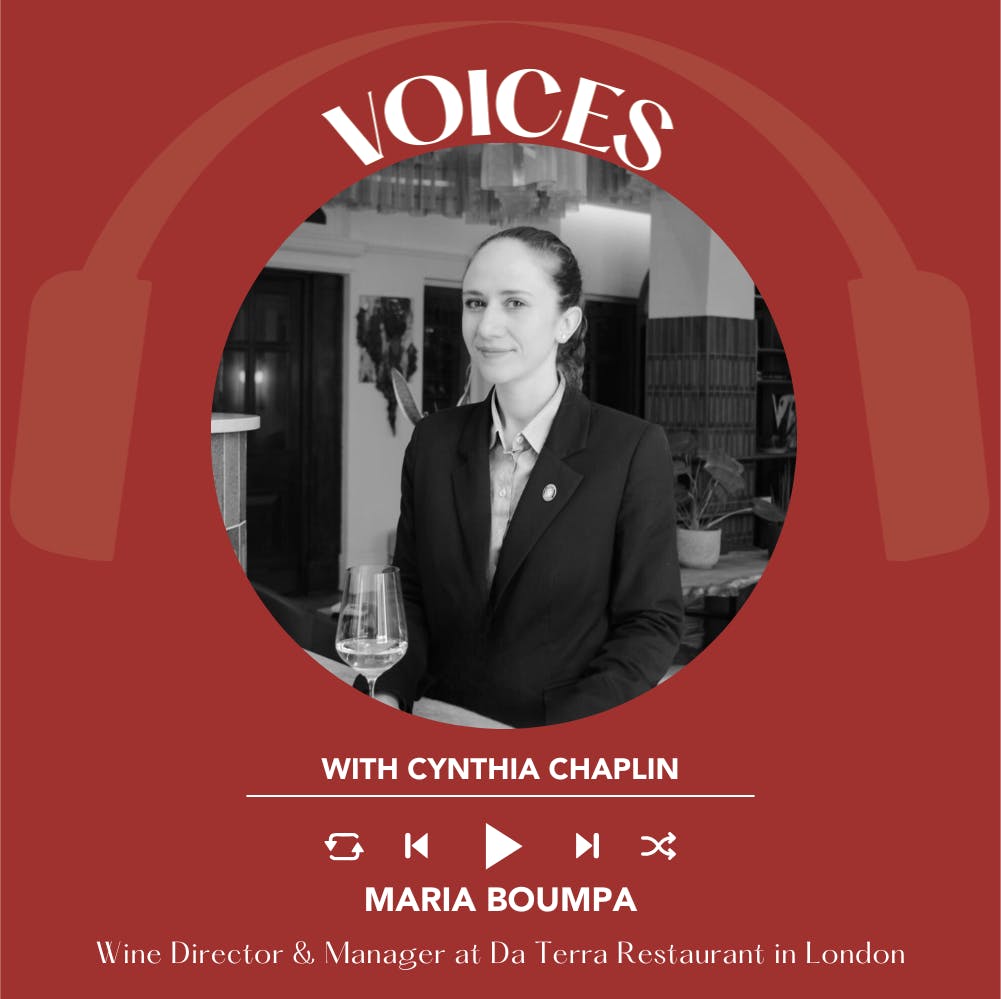
Ep. 2443 Maria Boumpa of Da Terra Restaurant in London | Voices with Cynthia Chaplin
Voices
Episode Summary
Content Analysis Key Themes and Main Ideas 1. The rapid and unconventional career progression of Maria Bounmpa from economics to Sommelier of the Year. 2. The increasing prominence and success of women in professional sommelier competitions and the industry at large. 3. The fundamental importance and debate surrounding formal wine education (WSET, Court of Master Sommeliers) in building credibility and knowledge. 4. The evolving landscape of gender diversity and mentorship within the global wine and hospitality sector. 5. The integration and significance of low and no-alcohol beverage options in high-end dining establishments. Summary In this episode of the Italian Wine Podcast, host Cynthia Chaplin interviews Maria Bounmpa, the recently crowned IWSC Sommelier of the Year and Head Sommelier at London's two-Michelin-starred Daterra. Maria recounts her journey from studying economics in Greece to achieving significant success in the wine industry within a decade, attributing her rapid ascent to passion, continuous learning, and self-improvement. The discussion highlights the strong female representation and success in recent sommelier competitions, including Maria's win, which she believes will inspire more women to pursue careers in wine. Maria emphasizes the crucial role of formal wine education in providing a strong foundation and credibility. She also details Daterra's innovative approach to non-alcoholic pairings, reflecting a growing consumer trend towards moderation. Looking ahead, Maria shares her aspirations to become a Master Sommelier and contribute to industry education and mentorship, aiming to be a source of inspiration for newcomers. Takeaways - Maria Bounmpa's career trajectory from economics to IWSC Sommelier of the Year exemplifies non-traditional pathways to success in the wine industry. - The 2024 IWSC Sommelier of the Year competition showcased significant female representation and success, indicating a positive shift in gender diversity within the industry. - Formal wine education (e.g., WSET, Court of Master Sommeliers) is considered essential for establishing foundational knowledge and professional credibility. - The wine and hospitality industry is becoming more inclusive for women, with increased respect and opportunities, as evidenced by Maria Bounmpa's experience. - High-end restaurants are actively incorporating sophisticated low and no-alcohol beverage programs to meet evolving consumer demands for moderation. - Top industry professionals like Maria Bounmpa aspire to further certifications (e.g., Master Sommelier) and aim to contribute to industry betterment through mentorship and education. Notable Quotes - ""I feel the impact will be very strong in the future. Because seeing five female doing really well, it's a good motive for other female to compete or consider it more as something which is a career that they can follow."
About This Episode
Speaker 0 discusses their journey from Greece to London and their interest in learning more about wine. They emphasize the importance of formal education and the importance of two perspectives in the industry. They also discuss the challenges of women participating in the industry and the need for more female representation. They express their desire to become a master's familiar and work in a restaurant, while also expressing their desire to be inspired by others. They plan to visit Datera in London and continue to grow in their team.
Transcript
I live with this competition, especially this year with a strong female representation. That was a very good sign for a other female, and I feel the impact will be very strong in the future. Because seeing five female doing really well, it's a good motive for other female to compete or consider it more as something which is a career that they can follow. So definitely We haven't realized the impact of it, but it's quite strong. Welcome to the Italian wine podcast. I'm Cynthia Chaplin, and this is voices. Every Wednesday, I will be sharing conversations with international wine industry professionals discussing issues in diversity, equity, and inclusion through their personal experiences working in the field of wine. If you enjoy the show, please subscribe and rate our show wherever you get your pods. Hello, and welcome to voices. This is Cynthia Chaplin, and today I am so happy to welcome Maria Boompa to voices. Maria is the head, Sommelier, and wine buyer at renowned two Michelin starred Daterra restaurant in London. And just four weeks ago, she was crowned the international wine and spirits competition Sommelier of the year. So first of all, huge congratulations. Thank you so much for talking to us today. And thank you for having me, Cynthia. I am glad to be here with you. It's a pleasure. What a great accomplishment. So well done you. I I am so happy to talk to you today. I really wanna get the backstory of this. You're from Greece and you studied economics at the University of Eanina, and you're young, and you really only started your career in Food and Wine sort of ten years ago. So how did you go from being a young economist in Greece to becoming the IWSE Sommelier of the year in London. What made you go into wine? How did you how did this happen? Well, that's a very interesting journey and not very conventional, let's say, either. So I was studying economics in Greece where I'm from, and, I was working in the same time to support my studies. And I started working in a bar first, and then I ended up in a five star hotel, which is where I'm from in Mexico. So it's a mountainous region in Greece. And I liked it a lot, and I felt that it's very interesting, very diverse, every day is different. So I decided to make it a full time career. And I was not very keen to work in economics because I was very good with studying. I found it a bit boring. So, yeah, I completed my studies. I was fine with that. I had good grades, but it was not for me, let's say. I needed something a bit more exciting. I thought. So I started working in this five star hotel, then I ended up in mykonos doing two seasons because I wanted a more international, let's say, career and mykonos is very popular with tourists, of course, and it's the pineapple of hospitality in Greece. And then it was two thousand seventeen, and I decided to do a stowage in Denmark in a restaurant called Co create, which was one Machine Starback then. Just to gain a bit more experience and see how this level is. So I went to Denmark. I spent a couple of months there, and it was a very eye opening experience because that restaurant was having just the tasting menu, which was twenty courses, with, six different wine paints and non alcoholic paints. So it was very overwhelming, but it was very eye opening. And I realized that if I want to grow in the industry, I need to start studying wine because that was the next logical step, let's say. So I went back to Greece and I started the WST courses, level one and two. And from then on, in twenty eighteen December, I came to London because I thought I need this international exposure. And if you speak English, London is the place to go. So I've been in London ever since since two thousand eighteen. Yeah. Well, it's it's a really short time. You know, you've had all this really excellent experience in hospitality at at a very high level, as you said, you know, in Copenhagen and meekanos, you were at the Beaumont for a while in London, and now you're the head sommelier and the wine buyer at Tata. So, what do you think really contributed the most to your success? You know, such quick success at such a high level in the food and beverage sector. To be honest with you, I think if it was intentional, it would never happen. So I think it it was it came through the process really. And because I really like what I'm doing, so I'm always trying to improve in any workplace I am or learn more things, and then it's paid off eventually in a way. So, I started in the moment here in the UK that was my first job, but I left after the first lockdown. And I started then in that era because I thought I like hotels, but it probably it's not the right place for me at this stage of my career. So I thought the restaurant would give me a better exposure to wine and also different style of service. So I started in the third in two thousand twenty, and I've been there ever since, so almost five years now. And I grew through, let's say, the ladder. So now I'm looking after the wine buying, the wine program, I'm a restaurant manager as well, but we are small restaurant. So it's quite doable, let's say. And we'll have two other restaurants. So I'm looking after the wine lists there as well. And I mean, it's been pretty exciting so far in that there because I grew in and with the restaurant because we're a very new restaurant. So we opened in two thousand nineteen, so I joined straight after the first time, and I was part of the team that got to the second storm. So we've been thriving ever since. That's amazing. It's it it's you can see your hard work, like, your dedication to it. I love to see people who are, you know, really at the top of what they're doing, and they still love it. It really shows in everything that you say. So you know, you said you're you're a serious blind student too. You got your diploma from WSTT in twenty twenty two. You got your Advanced Sommelier from the Master Court of Sommelier in London in twenty twenty four. So you've been working hard and studying hard for the past few years. So I'm I'm interested because how important do you think this kind of formal, wine education is these days? You know, there's a big debate around the world at the moment about the relevance of traditional wine education and traditional wine language, where would you like to see sort of formal training go in the future? Well, I think it's a big discussion, first of all, but I think it's really important to get educated because that's a base of everything. And as long as you get this education, then you can build on this passionately. And of course peers and education. When they come together, that's the perfect match. Right? Because you have the strong base and then through your experience and through learning, you think you can, grow and learn and build more things. And of course, it's a big discussion in the industry because, especially in the wine world, I feel we have the chameleons that, have experienced, but they don't have any formal education. Then we have the chameleons which are very educated, but probably lack a bit of experience. But then you have this perfect mixture when you combine it. It's a very good, let's say, level to be and it's what it's needed really. Because to be honest with you, you need to know what you're talking about. And when you have a wine, when, you have a wine certification in either diploma, WST, or, the Court of Master, Amelia, or the acid diploma, This is something that certifies that you have this knowledge. You passed an exam so you know this base. And after that, of course, you can do whatever you want in your job, but at least you know the basics. And I think it's very important, definitely. Yeah. It gives you credibility. I think. Yes. It it makes me happy to hear you say this because you're young. I'm a WSTT educator and, you know, my colleagues and I talk about this a lot. You know, how are we still relevant? How can we you know, be more relevant and keep it going. But I'm I'm glad to hear you say that because I do think that some of these really fundamental, courses like WSTT or Quarter Master Sommelier are they do. They give you credibility, and you need credibility to get experience as well. So I think I I agree with you, and I'm really happy to hear you say that. Yes. We need see it's the reality, and I haven't finished my diploma yet. I started it in two thousand twenty two. But I've been combining it with my Court of Master Shamlli advanced exam in the same time, which I would probably not recommend to people doing this. Because it's two very different exams, and while you're working, it can be very demanding. But I think those are different aspects that, get you understand the wine world because WSTD sees the market from this different aspect in Court of Massachusetts is more focused to a restaurant service, but technically you're talking about the same thing from a different way. So it's a very, very strong foundation to have definitely. Absolutely. Absolutely. I couldn't agree more. I think I'm a sommelier too. It's certified here in in Italy. And I think combining those two different perspectives is really useful to people who really want to go into the industry. Maybe if you're just a wine lover, you don't need them both, but, I think if you want to be in the sector, it's useful to have two perspectives. Yeah. Exactly. And, those are both two very, highly recognized as well. Let's say, certification. So even guests in restaurants understand what it is about. I very often get questions. Oh, tell me more about your pin because I wear my advanced smiley pin at work. And people are interesting, and this gives them more, confidence to trust you also with their wide choices. And you can have a more open conversation as well. And their moments is gone. Yeah. And their money. Of course. Yeah. I mean, at the end of the day. Exactly. Exactly. Well, let's talk about the I WSC for a minute because, I did a little bit of research. I'm a big stalker, in the broader context of the IWSE UK Samalia of the year competition, they don't really say the exact number of past women winners. But we know that this year, in twenty twenty five, just last month, two out of the three finalists were women, yourself, and another woman, and five out of the ten semi finalists were women. So this made me really happy. You know, it it points out a growing trend of of women participating and especially six seating in the competition. So tell us a little bit about your experience coming up through the Sommelier ranks as a young woman. You know, did you did you find it challenging to be a woman in that environment? Did you have any great mentors? How did it go for you? I mean, I've been working in the industry in different, let's say, sectors throughout my career, but always on the floor and in relation to wine and beverage. And, yeah, definitely there's less female in the industry, hospitality, and wine industry. And I guess there's a few reasons behind that because it's not an easy industry to be in in the first place, being a male or female. So that's why we see less and less people overall choosing it as a career field. And then of course, wine industry was always mainly dominated. And that's a cultural thing probably, but it has changed a lot to the past. I would say like five ten years at least. And then in the UK, you can see a lot of initiatives like, curious vines by Queenawan, who is supporting openly, females that are studying for exams, competitions, master y, master Shamelia. So that's a good thing to happen, of course, in the industry. But personally, I don't think I found any particular struggles myself. In the industry, and I've been always very respected by my colleagues. But of course, it depends what type of character you are, I guess. So we're all different. So it's hard to talk about everyone. But to be honest with you in, in that there, I'm the only female in the team at the moment, and I've been the only female for a while, not on the floor, but in the whole restaurant team. And I don't believe find it challenging, to be honest with you. You need to gain this respect. And as long as you gain this respect, it doesn't really matter, I think. This is really good news. This is great news. Obviously, I started in the wine sector a lot earlier than you a long time ago. And it was it was a lot more challenging. I think there were a lot fewer women in the room at the time. And it's I see it changing here in Italy as well, which is also a good sign. There are a lot more, young women in the, in the Sommelier courses, also in the WSET courses that I work with. So I'm happy to hear that as a trend. And I think you're absolutely right. People like Queena Wong, do a little bit of mentoring for her. She has had a huge impact, and her big survey about women in the industry had an impact. And it's it's nice to hear that, you know, someone at York age and stage in the game is very comfortable. You feel respected. It's important. I think going forward, this is gonna be something that the more we see of women like you, the more we will see of women in our industry because more women will feel safe and comfortable you know, deciding to get into it. So I hope we will see more people, you know, sort of following your path. I wonder, you know, what would you say to a young woman who wanted to get into the the food and beverage sector, you know, aiming for a high level like you have achieved. What sort of advice would you have? I feel it's like any other sector, really, because when you go to a workplace, you need to try and prove yourself, and then you gain this respect and become successful if you want to become successful in growing any industry. And I agree with this competition, especially this year with a strong female representation. That was a very good sign for a other female. And I feel the impact will be very strong in the future because seeing five female doing really well, it's a good motive for other female to compete or consider it more as something which is a career that they can follow. So definitely we haven't realized the impact of it, but it's quite strong. Yeah. Absolutely. I think young women will see that it's achievable. They can do it. You know, other other young women are doing it. So, it was great to to to watch the video playback of the end of the competition and to see, you were super cool, calm, and collected, so it's nice to see you, you know, having that presence on a stage, you know, presence at your work. And I think it does. It makes people feel that that's something they could achieve too. So, again, huge congratulations on that one. Thank you. I mean, I looked very calm and collected, but, of course, I stress out a lot. I probably don't show it that much, I guess. But, yeah. That's the key. That's the key to success. I think so. Well, the the whole, you know, the the recent few years have really been a big tribute to all your hard work and your skills and your, you know, knowledge that you've gained and and your professionalism that you've gained. And you were in the top a hundred UK sommeliers in twenty twenty three already. And ranked in the top five female UK sommeliers. And in twenty twenty four, you were runner-up at the UK Reubenau Sommelier Challenge, and you came third in the I WSC. And this year you won, obviously. Yeah. So so what's next? You've done everything. What's, what's Well, the thing is I feel I did everything very fast, I think. So it didn't give me a lot of time to process the whole journey so far. But, yeah, it's be actually, as you're describing it in twenty twenty three, I think I was ranked number forty seven in the top hundreds of my list. And I thought, oh, wow, that's a big achievement because I'm quite new in the industry. I don't have a lot of experience, and it's very exciting. And then the year after in twenty twenty four, I'd like to say I was number twenty one, but I want the non alcoholic low, no and low, alcoholic drinks award, the innovation award. And that was really good because we do a lot of nonalcoholics in that area and it's quite, good to show this aspect of our industry as well that it's something diverse. And then this year, to my surprise, I came second, So in three years, it is very doable to move up the ranks if you're consistently improving and trying, let's say. But, yeah, even with the IWC competition, last year was my first time competing. And the only reason I competed was because I passed my advanced family exam, and I thought it's a good motive for me to keep studying. So I thought, okay, maybe I can see where I stand next to other people, which I look up to, and then I ended up on stage, which I was a bit unprepared for. So it came as a shock me, but it was a very eye opening as well. So this gave me a motive to go back and try again. And this year, I tried to approach it a bit differently because I thought that I need to be more myself a bit more relaxed. I have the knowledge, so I just have to go and enjoy it really. And it worked out. So, yeah. Yeah. It worked out well. Yeah. So so what have you got? And you tell me the top three kind of goals and aspirations you've got, you know, if when I call you up in five years in twenty thirty, what do you wanna be doing? Well, I'd like to say I want to be a master's familiar by then. But I haven't, started yet with that because this is an invitation only exam. So you need to be invited as a waiting list for it. But I think in five years time, that would be something to to be done with. And I don't really know, to be honest with you there is because I I try to take it slowly and do one step at a time even though sometimes the steps kind of overlap each other. But I really like my job, and I'm happy with being in a team that is very passionate and and is growing. And we open new restaurants, and it's very exciting to be part of it and grow with the team and in the team. So definitely, I still want to be working in a restaurant in five years time. But I want to be more involved in, education in a way because it's good to give back to the industry and I feel when I started, I was always and I still do, actually. I I look up to people and, I'm going to master classes. I want to be inspired by other people, their paths, and I always take the good things and trying to improve myself. And I want to be this type of person for somebody else who's new to the industry as well. Because it's it's really difficult. Sometimes it's you need to find your way in the industry. Nobody comes and takes you and explains to you how it works. So it's good to have people to look up to and be inspired. That's a really good point. Yes. This not this is not an industry where somebody is going to hand you anything. You have to find your own way. I like what you said about that. Let me cycle back just for a second about what you said about the low and no alcohol because that's a, of course, another big, debate within our our sector. What are you doing at Daterra with, with no and low alcohol? Have you got many on the list? Or, you know, how how are you addressing that? So the day is a tracing only main menu restaurant. So wine bank and non alcoholic bank is very popular. But then we have non alcoholic options that somebody can order a la carte. So on the one pain on the non alcoholic pain, we are trying to have everything bespoke and made in house. So it's different infusions, thieves, kombucha, sparkling this now. So we don't really pour any non alcoholic wine by itself. And I don't list any non alcoholic wine at the moment. And let's say I haven't been very excited about any product so far. And I think the price is a bit restrictive probably. So it makes the bits difficult because they're very expensive wines and an understand it because of the process of making them is even more complex than making a conventional line. So that's one reason. And then from the non alcoholic option select, we have a quite quite a wide selection with different infusions against packing these, oximals. So there is something for everyone to choose from. And I would say it's quite popular and it's popular, not only with people who don't drink at all, but with people who want to drink a bit less. So you can see nowadays people who would go for a glass of champagne as an operative to something non alcoholic four, they do the wine pairing because everyone brings a bit less, a bit more in moderation. So I feel it is a trend. Yeah. It's very interesting, especially in a two Michelin Star restaurant. That, you know, you're addressing the the low and no alcohol concerns of consumers at a very, very high level. Do you see no alcohol wines ever appearing on, you know, some of the top lists in London? Obviously, not on yours at the moment, but are they Well, not in mine, but not in my mind at the moment as you said, but definitely I can see them being listed. But then it's a bit difficult because there's a lot of product out there And actually this year, I did a judging with IWC for a low and non alcoholic wines. And it was really interesting to see the diversity and the spice but I still feel there's more to be done in that sector to make them even even more popular. Let's say. Yeah. I agree with you. And I think the price issue is definitely something that, is affecting the the uptake at a high end on on, no alcohol or low alcohol wine. So so interesting to get your perspective. I I'm really grateful for you to sharing all of this with us, and and your time, of course, today. I know you're a very busy woman, so I won't keep you. But congratulations again, and we wanna wish you all the very best on everything you do. And next time I'm in London, which will be October, I'm gonna have to come to Datera and see you. Well, please do. I'm sure I will be there because I do every service. I'm always on the floor. Alright. Well, you take care. Thank you. Thank you. Thank you. Have a good day. You too. Thank you. Bye. Bye bye. Thank you for listening and remember to tune in next Wednesday when I'll be chatting with another fascinating guest. Italian wine podcast is among the leading wine podcast in the world and the only one with a daily show. Tune in every day and discover all our different shows. You can find us at Italian wine podcast dot com, SoundCloud, Spotify, Himalaya, or wherever you get your pods.
Episode Details
Keywords
Related Episodes

Ep. 2651 Diversity in the Wine Industry and Wine Tech Innovation with Jeremy McCarty | Voices with Cynthia Chaplin
Episode 2651

Ep. 2627 Regenerative Winemaking, Mentorship & LGBTQ+ Perspectives with Terah Bajjalieh | Voices with Cynthia Chaplin
Episode 2627
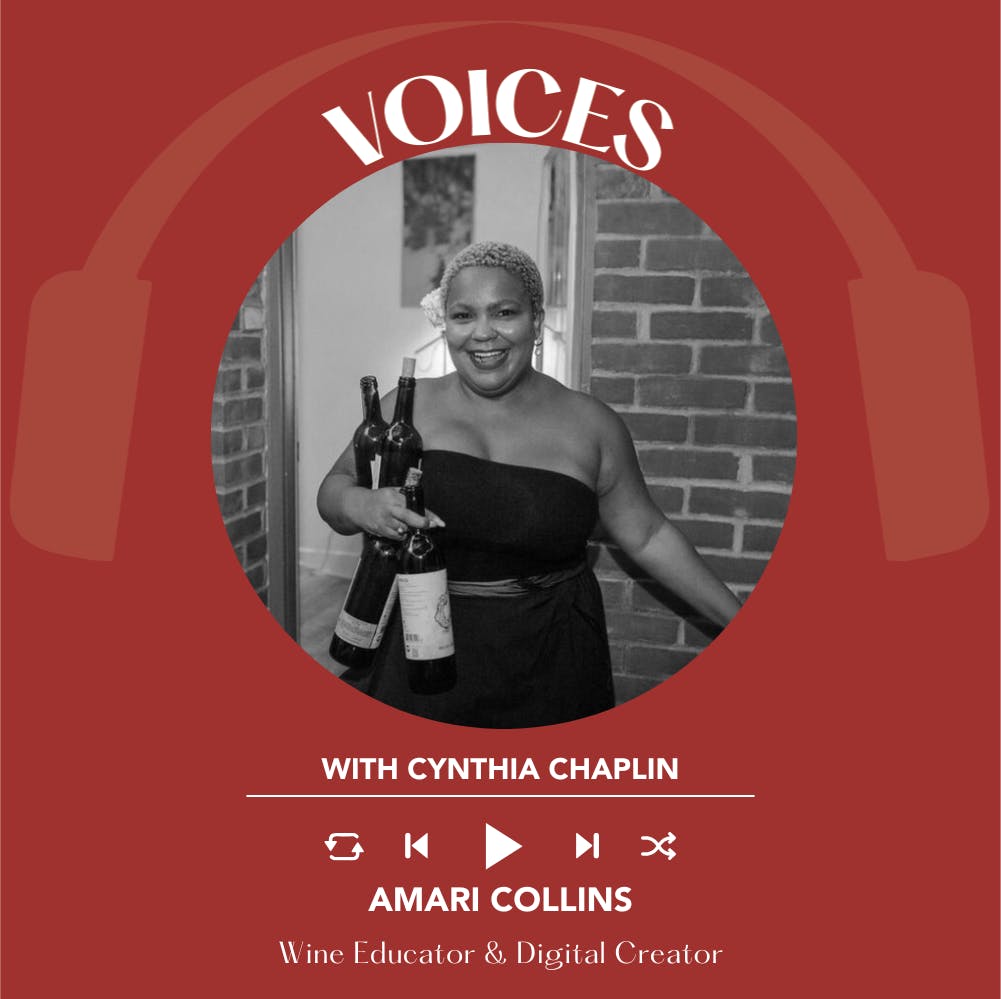
Ep. 2545 Building Inclusive Wine Spaces Through Storytelling with Amari Collins | Voices with Cynthia Chaplin
Episode 2545
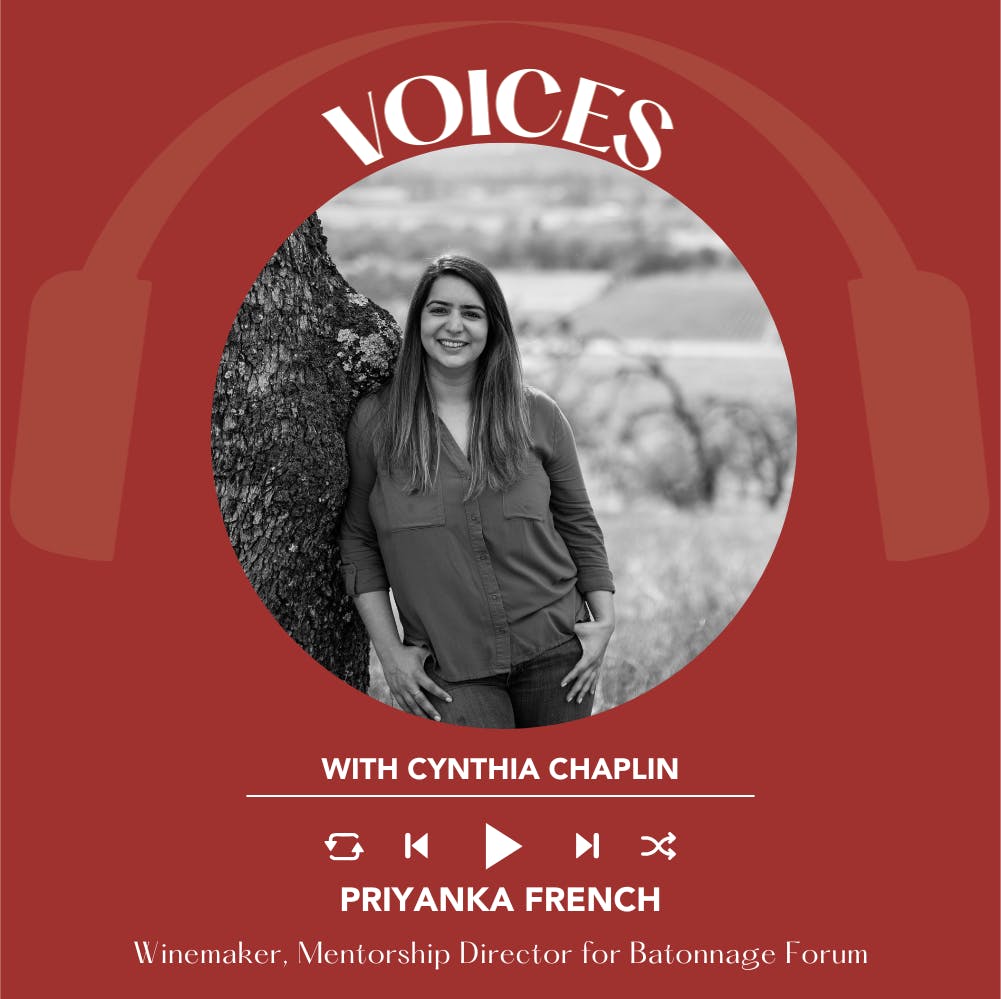
Ep. 2531 Winemaking Journey from Mumbai to Napa with Priyanka French | Voices with Cynthia Chaplin
Episode 2531

EP. 2517 Sarah Looper | Voices with Cynthia Chaplin
Episode 2517

Ep. 2505 Ren Peir | Voices with Cynthia Chaplin
Episode 2505