
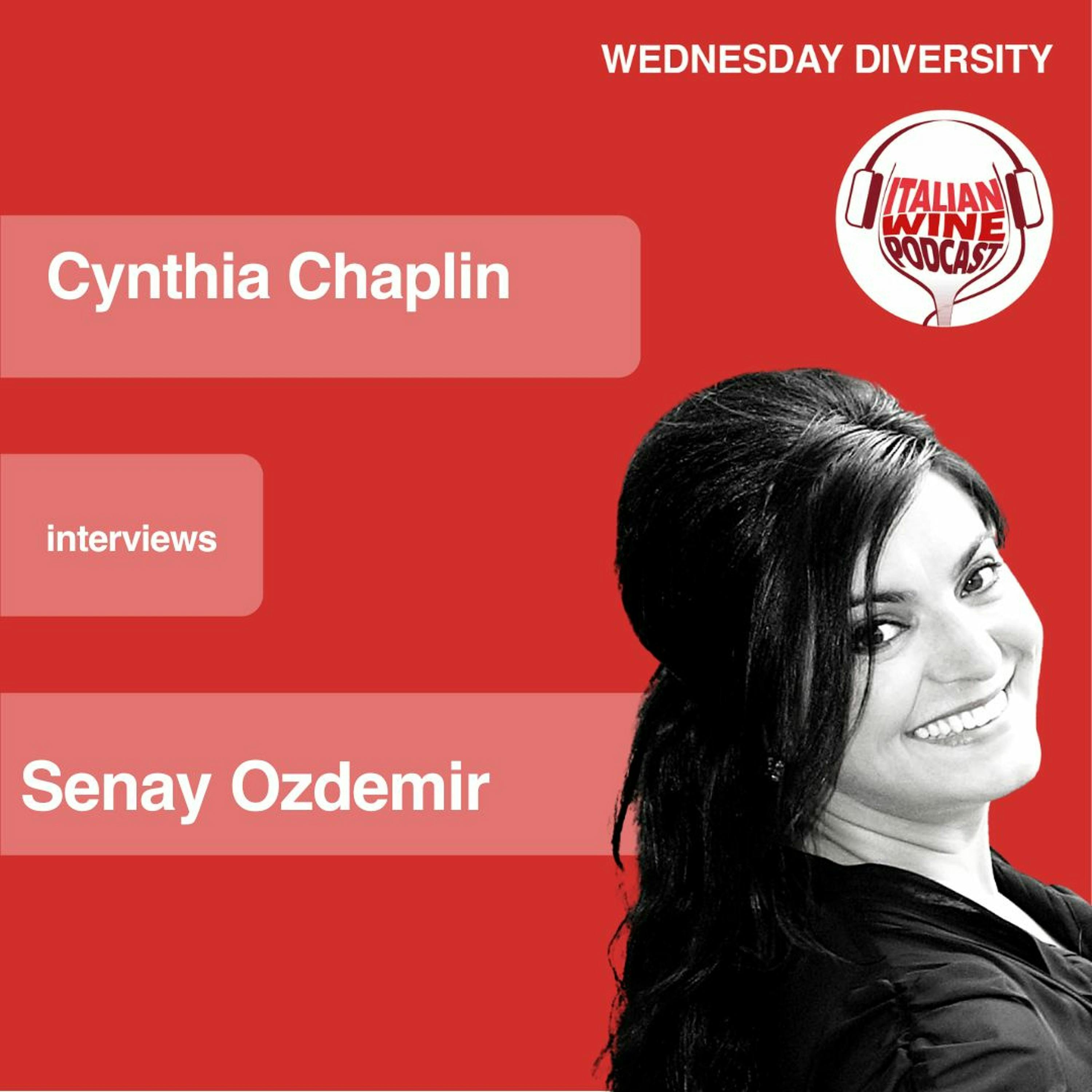
Ep. 1237 Senay Ozdemir | Voices With Cynthia Chaplin
Voices
Episode Summary
Content Analysis Key Themes and Main Ideas 1. The personal and professional journey of Sene Ozturk, a Dutch-Turkish journalist and advocate, into the global wine industry. 2. The origins, mission, and impact of the Women in Wine Expo (WOWE) as a global platform for female wine professionals. 3. The unique challenges and opportunities for wine production and promotion in Turkey, including the significant role of women winemakers. 4. The broader issues of diversity, equity, and inclusion, specifically focusing on gender equality, within the international wine sector. 5. Exploring emerging wine regions (e.g., UK sparkling wine) and markets (e.g., India) and their female leadership. Summary In this episode of the Italian Wine Podcast's ""Voices,"" host Cynthia Chaplin interviews Sene Ozturk, a Dutch-Turkish journalist, women's rights advocate, and founder of the Women in Wine Expo (WOWE). Sene shares her unique upbringing in a secular Turkish family, which fostered open-mindedness and a passion for justice. She recounts how her journalism career led her to explore Turkish wines while living in Austin, Texas, ultimately discovering the challenges faced by Turkish winemakers due to domestic promotion bans. This investigation revealed a surprising number of women in the Turkish wine industry, inspiring Sene to create WOWE. She explains WOWE's core mission: to connect women in wine globally, share their stories, address gender equality issues, and help establish local women-in-wine organizations. Sene highlights past expos in Rotterdam, Brussels, and particularly Georgia, emphasizing the importance of showing solidarity in challenging regions. Looking ahead, she discusses the upcoming London expo in May 2023, which will focus on the UK's burgeoning sparkling wine industry, the potential of India as an emerging wine market, and the continued empowerment of women leaders in wine trade and tourism. Takeaways * Sene Ozturk's background in a secular Turkish family significantly shaped her open-mindedness and commitment to fighting injustice. * The Turkish wine industry faces a notable challenge due to a government ban on wine promotion within the country. * A surprisingly high percentage of winemakers in Turkey are women, challenging traditional perceptions. * The Women in Wine Expo (WOWE) is a unique global organization dedicated to connecting, empowering, and advocating for women across all sectors of the wine industry. * Creating local ""women in wine"" organizations is crucial for building collective power and driving change (""numbers count""). * The UK is emerging as a significant sparkling wine producer, a positive outcome attributed in part to climate change. * India is an important and growing market for wine, with increasing influence from Indian women in wine leadership roles. * All-female professional spaces can foster safety, effectiveness, and accelerated progress for women. Notable Quotes * ""Turkey is a secular country."
About This Episode
Speaker 1 and Speaker 2 discuss the importance of learning in one's religion and culture to be respectful and safe. They also talk about the challenges faced by women in the wine industry and the challenges faced by men in promoting their industry. They discuss upcoming events and the importance of creating a support base for women in oneip. They also talk about the rise of Indian wine and the potential for India to become a wine tourism event. Speaker 1 asks Speaker 2 about their favorite Italian wines and Speaker 2 recommends a Turkey wine. They also discuss the importance of language barriers and the need for language barriers to be addressed.
Transcript
Coming soon to a city near you, Vineita Lee Road Show. Have you ever wondered how to attend Vineita Lee for free? Are you a wine trade professional interested in a sponsored trip to Vienie to the International Academy, or Vien Italy, the wine and spirits exhibition. Coming soon to Princeton, New Jersey, Harlem, New York, and Chinatown in New York City, Cardiff in Wales, London, in England, and Roost in Austria. We'll be giving away our new textbook Italian Wine Unplug two point zero. Find out more about these exciting events and for details on how to attend, go to liveshop. Dot com. Limited spots available. Sign up now. We'll see you soon. Welcome to the Italian wine podcast. I'm Cynthia Chaplin, and this is voices. Every Wednesday, I will be sharing conversations with international wine industry professionals discussing issues in diversity, equity, and inclusion through their personal experiences, work in the field of wine. If you enjoy the show, please subscribe and rate our show wherever you get your pods. Hello, and welcome to voices. This is Cynthia Chaplin. And today, I am so very happy to welcome Senea Osteynir to the show. Sene is a Dutch Turkish journalist and a women's rights advocate and a two time award winning international journalist as well. She founded the women's magazine send and has written for and edited so many prominent international magazines. I can't list them all here. She also taught journalism and online publishing at the University of Texas, as well as researching for women and gender studies. Sunny is a passionate person about wine, and she founded her PR agency called house of white and red in two thousand and sixteen, and she followed on by creating the Women and Wine Expo in twenty nineteen. The most recent edition of which was held in Georgia in twenty twenty two, and the one will be in London in May this year. So thank you so much for making time to get together with us today and for bearing with us through some little technical hitches. Welcome to the show. Thank you for having me, Cynthia. It's a great pleasure. It's a great pleasure. So before we get into the nitty gritty about the women and wine expo, which I'm very excited to talk about. Let's get a little background to your story. I know you were born in Turkey, and you live in the Netherlands now, and you have a lot of travel in your life. Which is wonderful post COVID for all of us. You're a journalist by trade, and you're a Muslim woman. So how in the world did you get into wine? What was that journey like for you? How did that happen? Well, thank you. For asking me that question, Cynthia, because, it's it's a long story, of course, but I will try to make it short. So whenever people, you know, think about Turkey. They also think it's a Muslim country, but many, many people forget that Turkey is a secular country. And, Maersnada was a secular teacher. And, I think a lot of people would know Turkish people have, grown up in Turkey by secular parents know what I, what I mean by that. That means that we really had to separate religion from the state in everything. And the teacher's responsibility was that, you know, to teach all the Turkish, you know, a long generation that Turkey is a secular country and that you are free to believe in whatever you want to believe. Of course, ninety eight percent of, you know, Turkey is, is Muslim has a Muslim background. But that also means that, until I think, a recent, you know, gain of ATP party, Turkey was really a secular country. And, you could see all these things that, you know, that that had to do with religion or it had to do with, you know, the states. The re the Republic state that they were they were separate and people would also really respect each other. It was not and I know a lot of people would also probably, you know, comment on what I'm saying now is sometimes it was not even, something really strange when somebody would pray and, you know, and have, have a glass of wine later. And I'm talking about the Turkish population living at the agency. They have, you know, they are Muslims, but they also have a very strong Greek Christian background. So they are used to, you know, drinking wine and making wine. That is also why, you know, Turkey belongs to one of the, one of the regions where wine was initially made. So and I'm happy that I was born, you know, in a family with secular roots because my father taught me and, taught, you know, all of his pupils to feed what was, you know, important for me, in my religion, between me and Allah. And, whenever I have questions about my religion, it would be always open to answer them. So I was born in Turkey at the Black Sea, and my father was a teacher, and then he got his invitation, to come and teach in the Netherlands. And you have to understand that in nineteen seventies, the, Northwestern country, the northwest European countries, they had a lot of immigrants coming from Italy, Spain, Turkey, Morocco, And by then, their policy was that these immigrants would go back. They would go back to their countries, to Turkey, to Morocco, to Italy and Spain because they were only needed temporarily. And there was a European human rights, policy also, but also a human right, and especially for children that they should be taught in their own language. Because, you know, children have to be protected. So be so that's why the German and the Dutch government have the policy. Okay. We have all these immigrants here. Their children are, you know, they are expected to go back to their country. So they also have the right to be taught in their own language and culture. So that's why they invited people like my father who was a teacher to come and teach in the Netherlands. At a certain point, I was going to a Dutch school, which was a Christian school with all, you know, these Dutch blonde haired, blue eyed, you know, classmates. And it was a Christian school. So every Friday, we would go to church, to pray. And I, of of course, I was like seven or eight. And I told that, to my parents, and my father said, you know, he can just go. And, I will arrange that you don't have to pray you know, they they can't make you pray there, but you can just go and sit in a church and and and and be respectful and listen to them. This is what is what is happening. Senator, I think we need a lot more people like your father in the world not only as teachers, but as leaders. It sounds like you had a very, gifted childhood being brought up by a man who was thoughtful and, even handed and open minded. Which is is something that we really need to appreciate and value more in our world. Yeah. So so this this this experience of growing up this way clearly did not impede you. Your face didn't impede you. You were you were able to do and explore and try all kinds of different things, including praying with your blond colleagues in Christian school. Well, it it taught me to be respectful to other people. It taught me to be respectful what what they are eating and drinking. But also it taught yeah. And it also taught me that, you know, Like I say, my father was secular. We were a secular family. My mother would pray five times a day. My my father didn't, but my mother did that. And so I was and and then my father had his you know, teacher friends come over in the weekends, and they would celebrate. And there was whiskey, there was, you know, other, you know, cognac, Brandy, wine in our house, and Rocky, you know, the Greek, the Turkish drink. So I'm I'm raised, like that. And of course, you know, you also gain interest in that certain lifestyle, whenever we went to Istanbul or, you know, go back to our family in Turkey. It was the same. It was and people would just live side by side and respect each other. And, I'm I'm very happy that I'm, you know, I, I experienced that part of Turkey. And whenever I read that's, you know, that lifestyle is diminishing in Turkey, it yeah. I feel ache. I it hurts. Because Absolutely. I I ate and fear. Yeah. I it sounds as though I I we're probably very similar in age. You were growing up in the in the seventies. Your your childhood was really kind of a a very brief bubble in time between, more strict, views of how people should behave before and and then again now heading that way again in so many places in the world. So it you it's it's very clear why you became the woman you became, having that kind of open minded parental background and exposure to so many different things with no judgment. So lucky you. Yes. I feel lucky. Well, it it turns out that, of course, you know, you are also now well known for your own advocacy about the importance of open and free speech and freedom of the media. It sounds like It's very clear that that came from growing up at your father's knee and and no judgment on, you know, people's views and people's religion, and you you've spoken out a lot about hate speech and fake news and propaganda. So What was the connection for you between sort of your career in journalism and your life there and and you're campaigning for women's rights in the wine sector where you've sort of moved into today? I mean, I can see I love the history. Of your Turkish background and the history of of wine there, even though you were growing up in the Netherlands, but with a teacher for a father, you you were really at this very rich cultural vein as a child. So How did you move from your journalism into your campaign for women's rights in the wine sector? Where did that come from? Yeah. Well, it was it was really naturally. It it, it was organically. So you know, I started in my, in my television career when I was twenty three. And, I I happened in the media since then. And I know a lot about media, you know, and and I started as a TV presenter and as a TV producer. And, that was that was huge because I had a lot of responsibilities And people also saw that responsibility in me. I was a first Turkish TV presenter in Europe, working for a large Dutch broadcast in organization. So that meant that a lot of, you know, women with a Mediterranean background would, you know, write me letters. We didn't have email then, but they would write me letters. They would say, Hey, you know, I see you on TV, you're my role model, you're this, you're that, And, so I I I I was given that responsibility to be a role model. But I also saw that with my father. He was role model too as a teacher of the Turkish community in the Netherlands. And what I've always, you know, seen is that you always have to fight for, you know, or against injustice. Injustice is bad. That's what I've been taught. And and justice, you know, with, gender, you know, with gender or, you know, with, a background or with race. That's I I agree with you. Doing. We should all get that on a t shirt. Injustice is bad. You're absolutely right. It's just that simple. You're just you're Yeah. So it it it started green yearning, you know, when I was like ten, twelve, I saw that, you know, injustice was bad. And, that was also what because we were speaking at home, about it, So when I started in TV, you know, all these women, you know, sending me letters about, how they, you know, wanted to work on their career or get, you know, get rid of their bad husband or whatever, I I I would, you know, write them back, but I felt that, that role so much more when, when I was asked to write pieces. You know, opinion pieces. So it was big news when I started my media career in the Netherlands. And then I picked it up. I I could handle it. That's, you know, I was lucky to handle it, to be able to handle it. Because I had a very, you know, solid, foundation with, you know, parents like that. And, and then I I was like, you know, this is my mo this is my responsibility. And then it doesn't It it doesn't you you don't need to, you know, be highly intelligent to, you know, see that I'm doing that also with the women in wine sector. My wine journey started in Austin when I started teaching at the, you know, school of journalism at the University of Texas. I was invited to come there and teach how to publish online and make money, you know, publishing online. So I went there with my nine year old boy. And, I wanna you know, I I I love food. I love wine, and I love Turkish wine. And I couldn't get any. So as a journalist, I was really surprised why wouldn't I get any Turkish wine if, you know, wine was if if if, you know, the wine has started here. Oh, now in Texas, I can I I could go into why you couldn't get any Turkish wine there, but we'll just let you carry on? Well, in in, you know, Texas, and many people are looking at New York or California when it comes to, you know, wine in in the US, but Texas is probably one of the largest joining quarters, states, in, in the US. So if some state had to have, you know, Turkish wine, they should have it in Texas, And I could find, but in Houston, not in Austin. So I had to drive four hours, and then I had to drive four hours back because I really wanted my Tex and Friends to enjoy the Turkish wine. And I did. In the days before e commerce, they didn't bring it to you back then. No. No. Not at all. Not at all. And, and, but I I was surprised and then I was happy that I could find this Houston importer. And, So that made me think. I was like, ah, what is happening now? And what is my role in this? So I went to Turkey. I, you know, made appointment with Turkish wine producers. Just just to chat with them. And and then, you know, I I I I got intrigued more and more when I met a lot of Turkish women in wine. And that was a story that I also didn't No. Uh-huh. Here's the uh-huh moment. You mentioned Turkish women winemakers of which there can't be all that many. How many are there? Turkish women in wine. Well, you, you know, you will be really surprised when I say that Of course, I don't have the data because we we don't have the data in Turkey. No. Unfortunately. But but I think, Turkey is one of the countries where probably half of the one makers are women. Wow. Fifty percent. That's interesting. I think so. And, it, and and Turkey has a very interesting story because It is some some elitist thing, you know, wine. I live in Italy, and I I know about, I know about elitist wine. Believe me. Yes. So it it's the same in Turkey. So you can guess that, you know, all the the major wine producers are, you know, the more prominent elitist families that, you know, made these wines for the elites with elite Turkish people, and then, you know, they hand over the the property to their children. And, and if it's a, if it's a daughter, the daughter gets it. So it's it's a it's a it's a circle that you enter into. And now you also see, a lot of boutique winemakers, who have had their career in, you know, in other, parts of the world, like, US or Europe. They made money there, and then they come back to Turkey, where they want to retire, or they're they have a passion for wine, or they want to develop you know, some land, into, into wonderful grapes. So, yeah, it's it's it's the latest thing, to do. So this this sounds like you know, as I said, this was your aha moment. You met these women making wine in Turkey and sort of bucking the elitist, kind of structure in in wine in Turkey at that point. So is that what gave you the idea of starting the women in wine x vote. I mean, it's not every day that you wake up and say, I'm gonna organize an international conference. You know, what what what made you decide that this was the right step and the appropriate next step to, support the Turkish women winemakers. Yeah. Well, first of all, I'm I'm a doer. I'm I'm really, you know, I I'm I'm a practical person. When, when I see something when I read something, I'm like, how does that go? What can I do about it? And, you know, how can I use my role to, to to to to improve it? And, one of the struggles, of course, the Turkish winemakers have is that they can't promote their wine in Turkey. There's a law that prohibits their, you know, the the promotion of their wine. And, and I was like, well, I did not know that. What's Oh, yeah. And it's it it in in Holland, we have a saying it breaks their neck. That that is what their, you know, what what the winemakers are strumming with. They can't promote wine in Turkey. And, that law started in two thousand thirteen when I was doing my investigation. In the wine industry. So I talked to all these winemakers, and I said, well, I am in the Netherlands. And, you know, I am, you know, attached to Dutch Law and the European law. So let's try how you know, let let's let's see how I can try to promote Turkish wines, which I did. And I I always believe in doing things to be able to understand, how it works. So I So I was like, okay. What do I do to import Turkish wines into the Benelux? And I did that. I started importing, three brands, high end brands from Turkey into the Vanelux. And you have to understand that while I was doing all these research and traveling, a lot of people that I know were asking like, Hey, where did you go? What did you do? And, you know, what is this again? So I started talking about Turkish wines a lot in Texas in the Netherlands and in Turkey. And then they also wanted to try it. So I started importing these wines to the benelux, and then I created a lot of wine tastings with these high end Turkish wines, for embassies and diplomats. And then I started writing about it. And then I met a lot of other women in wine from other parts of the world. And they would say, oh, I wanna meet these Turkish women. I wanna meet these, you know, Dutch women and Belgian women and and Texas women. And then I was like, okay. Let's see how we can, you know, how how we can get together. That is the idea of the women and wine expo. Are you enjoying this podcast? Don't forget to visit our YouTube channel, mama jumbo shrimp. For fascinating videos covering Stevie Kim and her travels across Italy and beyond, meeting winemakers, eating local foods, and taking in the scenery. Now back to the show. I love it. Well, I wanna meet these Turkish women. I'm very excited about this. Let's talk about the x vote, as I said before, you know, I was so disappointed last year not to be able to attend in Georgia, but you still had a really good turnout, despite all the challenges of COVID and the war, in Ukraine. So who attended? Who are your who are your attendees and and what are the hot topics? What are you discussing in your, you know, sessions? Yeah. So what we're trying to do with the women in one expo is really connecting women in one from East to, you know, women in wine in in in the west. And and I have a spe a special reason to do that because, you know, all these women are making wine and they want to export it. They want to be connected. To the women who want to buy it or who can promote it for them. So they'll have to meet each other. And, so that that is our main mission. Next to that, we also want to make we also want to hear their stories. What are what are what are the problems of, you know, women in Hungary? What are the problems of women in Turkey? What are the problems of women in Belgium? Because we're we're, you know, we're not only talking about problems in, you know, the the cradle one or, you know, other parts of of the world, but also, you know, in Europe, we're facing a lot of problems. No. You're completely right. I mean, the the challenges in terms of gender equality for women and wine are, you know, still rife throughout our industry, not, you know, just in what we would call sort of lesser known wine regions. Yeah. But also, you know, we're like but also like a winemaker in Belgium. I know, you know, a woman winemaker. She's she's from Holland, but she lives, in Dina. And you know, one of the biggest problems Belgium is the, the French, speaking, you know, Volonia, and the flemish speaking. So they are also facing a lot of, you know, for their country problems. And It's nice to get all these women facing with their own issues together, and that also makes you so much more creative, so much more productive. It brings you, ideas. And many, many women, you know, they're very busy with their daily life. They, you know, they they try to make, you know, of course, wine. They try to educate themselves, but it also helps to just create a platform. Yes. Absolutely. Absolutely. Absolutely. And then you have you have to visit it. You have to visit the country to understand what the problem is. I visited Georgia two times before the expo took took took place, and then you understand what's happening. You know, it it it it it is really under Russian, power. It is still feeling, you know, the the the Russian power and the Russian connection. Of course, it's border to Russia. And when we plan to have the women in one expo there, you know, people yeah. Of course, they're right to be scared because Russia is not far. But I feel that we shouldn't let them down. We should be there to to show them that we're there that they're not alone. And, so we did that. And, of course, we work together with organizations that know the field, that know the women, you know, to to create a support base so that he can, you know, have a good conference. So that's what we did at the women in one expo, and we had, I I believe, like, seventy six women coming from, I believe, like, sixteen countries. And and they yeah. It it's it's a three day event. They brought their wines from their country. They shared it with, you know, the Georgia women. On the third day, the Georgia women could, you know, have their own, wines tasted. We discussed about topics that are important to discuss. Many women that I am speaking in the countries are trying to form some organization, like a woman in one organization. But some countries are ahead of that. Like Vineissima in Germany is the oldest women in one organization in the world. Yes. And then we have L'udona Delvino, of course, in Italy. Yes. So we can share, you know, all our knowledge, knowledge, with these women who are trying to be to form an organization in their country. And that is also, you know, that that is also what I'm really proud of, with the women in one expo. I'm I'm proud when even, you know, the women in wine from no New Jersey, are saying you inspired us to come together to form a network, to form an organization. I think that's one of the best things that women do. Get a room full of women who are like minded and ambitious and, you know, focused on what they're doing, and they will be creative and supportive, and they will walk away from the conference carrying a network, carrying a piece of it with them. It's not just over because the three days have ended. They're taking they're taking something away that's really valuable that they can continue to grow. So I think that's the act of doing something amazing. Yeah. You know Cynthia, what always counts in this, you know, in this world, in this society is numbers. So if you come with numbers, you know, with significant numbers saying all these women want change, then there has to come change. But if you say, oh, like, two, three women are, you know, complaining about no, we just have to make numbers. That's why it's good for an organization because that means you can say, oh, you know, the New Jersey group has now two hundred and twenty members. The way the new line is bad now, this number the the the women in wine industry in Georgia has now so many members because that is how you create change. Absolutely. And I don't think that, you know, complaining is is not what women in these sorts of organizations tend to do. They they actively do get things done. And I think I think you're Sorry. Yes. Yes. Yes. Yeah. I think you're completely right. You know, two women complaining is not, going to make enough noise in the world. And if you get a bunch of smart driven women, they will make a lot of very serious noise and and suddenly become, you know, able to to affect change. You're completely right about that. So Absolutely. So that's what I'm trying to to create also, like, okay. And the women in one ex thirty is the only global women in one organization. There are, of course, a lot of women in one organization in the country. But There are no women in wine organization that connect globally. And that's what I'm trying to do. And It's interesting too. I think we're overlooking another side of this that, you know, I judge a wine competition in Paris every year called feminism, where all the judges are women, and also, women and wine spirits awards in London, where all the judges are women. And it is quite interesting how a roomful of women with no men to, break up the conversation can achieve things in a in a space where they feel safe and heard, and effective. Yes. So it's, you know, I I think it's not about excluding men, it's about exalting women. Yes. And then I have a question for you. What is it? What is it that makes us so much more comfortable in a room with women? Oh my goodness. We're not going down that street today. We don't have time. I think that's that's a very long conversation for another day, but I I do think it's important to acknowledge that, groups of women especially women who share the same occupation, or the same intellectual interests do tend to succeed when they aren't hampered by, you know, the interference of men. Yes. And and interference can be well meant. It doesn't have to be all nefarious, but, yeah, at this point in time, I think we're we're watching this happen in places around the world where women are more successful in achieving their goals oftentimes when there's not interference from men. So it's an interesting topic. I I have four daughters, so it's a topic that is Oh, wow. But I'm I'm very much looking forward to the third edition of the expo now, and it's on deck for May this year. Yes. And it'll be in London. So what are your goals for this third expo this year? What topics are you gonna address at the conference and what activities are surrounding it? What kind of turnout are you hoping for? You must be excited because we're in a different place in the world than we were last year. Yes. Absolutely. And that is also the concept of the women in one expo. One year, we want to do it you know, in the in the regions where they buy wines, you know, they, and they know how to make wine, and they know how to educate people. And then the the, the other year we want to go to a region that we don't know much about. That we don't didn't read much about. It's a new balance. Yeah. So, you know, Rotterdam and Brussels were very interesting to start, the women in one expo because, Rotterdam is the logistics hub. Everyone that comes from America, you know, North and South America, or even South Africa comes through Rotterdam, which is, you know, the largest it has been the World Port City for decades. And then it goes to Germany, Austria through the Rhine. So Rotterdam where I live is very important for wine, logistics. And then Brussels is, of course, it's the capital of Europe. So I thought, you know, these women should really, you know, get to know Europe a little bit better. And, and Brussels, and Belgium is also one of the largest, wine importers, wine imported countries. So that was very interesting. And then we went to Georgia, the cradle of wine. I think every wine professional, it doesn't have to be a woman. Every wine professional should be, you know, should have gone there. To see. I completely agree. Yeah. So that's why we wanted to do in Georgia. But, of course, also because, you know, I want these women, to to have their voices heard. And now we're going back to the west to the west. Which is London. London has been, of course, the wine trade hub for centuries since, I think, thirteen hundred. And it's, it's the financial capital of the world competing with New York. And, and what is also interesting about the UK is that it's it's since, I think, twenty, twenty five years, it's started, to become, oh, you know, why making a region? They are making one of the best sparkling wines in the world now. One of the very few benefits of climate change? Yes. Yes. So it's it's also very interesting to to see to to learn about UK. What they're what are they doing? How are they going to, you know, to to to to do that? And, London is, of course, great. I love London. So you know, we we we want to create an event where people get to know London or, you know, and they'll like London that they can, you know, explore London more. We are going to start with a very nice meet, greet, and dance night in a, in a, in an original English pub. And, the next day we're going to visit Kent, which is the Garden of England, I had a wonderful, at Methadoclassico sparkling wine from Kent on New Year's Eve this year. Oh, really? Absolutely. So a very exciting time there. It was it was from the Royal Collection. Uh-huh. And it was the queen's Jubilee wine, which I hadn't been able to ship to Italy. So I had someone hold on to it for me, and I happened to be there on New Year's Eve unplanned and was able to share it with one of my daughters, and it exceeded my expectations. So I'm very excited about the opportunities that climate keeps giving us a spin to south of England. I can even see Pito noir eventually doing well there. Yes. Yes. Absolutely. So, all day, you know, the second day is gonna be all day in pent, at Balsa winery, which is which has a beautiful view, but also the perfect location. To undergo two master classes, which is a master class about sparkling wines, and we're now trying to arrange a master class about cider. Oh, fantastic. Very interesting cider is is so up and coming in the alcoholic beverage sector Yeah. Yeah. And, and then the the the third day is gonna be all about conference, about speaking discussions. We we have, several speakers coming over from New York and Germany and the UK about wine trade. So women leaders in the wine trade are going to speak. We are also talking to women in India. You know, UK, of course, has a very strong history and connection with India. And a lot of people are focused on China as an emerging wine region, but I think, you know, India has, has has a good potential Absolutely. There are some Italians who are starting or or collaborating with vineyards in in India now. Yeah. Yeah. And, and, and, and, of course, the rise of Indian women and white. I love it. Absolutely. Absolutely. So now hold on, you know, the first master of wine in India. She's doing so great, you know, teaching, you know, she has her own wine school, her her own TV show, but she's teaching the Indians also about wine. And of course, you know, amrita Singh, who's now in Bordeaux. She left everything in in India to teach to to to educate herself. And become the second master of wine. And of course, you know, we have also the women in in the UK, Indian women, in wine leaders. We will be discussing also a wine tourism. I think that is always a very, good subject that Especially now that we can all travel again. Yes. Yes. And, of course, we're gonna taste. We're gonna take it. But what we're going to taste? I'm not gonna tell you yet. No. That would be giving too much away. Well, this has been so positive and so, enlightening. I'm I'm so glad I've been able to talk to you today Before I let you go, I I know obviously how much you love Turkish wines. And I also happen to know you love a good sancerre, which I agree with. But I just have to ask you since we're on the Italian wine podcast, what is your favorite Italian wine? And which Turkish wines do you think are the most similar to Italian wines? Like, what what attack what Turkish wine should I buy this week? Uh-huh. Okay. So when I started importing, Turkish brands, so Ola is one of the brands that I have here. And, they they make blends, and most of them are Italian grape varieties. So I have. Very interesting. Yes. I have Ola Lexus, and, which is from Melo, carbonate Frank, and Lero Davala. Okay. And, that is one of the most popular wines. It's it's really good. And if you like, do you like meat? Yes. Absolutely. Oh, well. And I like Narodavala. So this is very exciting. Yes. So the Ola Next is I would recommend for a very good, you know, nice, red Turkish wine. If you were gonna drink Italian, what would you drink? Well, you know, I was in iskia. Oh, I love iskia. The island in the days of Naples. How lovely? Oh my god. You know, I was like, is there heaven? Yes. There is heaven, and it it's called Eschia. And I went there and and my, my friends from Texas, they had rented. Two months, perfect, you know, apartment, overlooking, you know, company and Vasubias. Every day, we, you know, we woke up at the sea view. And and iskia, iskia's, the the island's main dish is rabbit. Yes. Yes. So we Googled and we were like, where can we get, you know, the best rabbit? Because I love me too. And so we found this wonderful restaurant. I think it was Cantinando, and there, this, you know, one of the, the owner, the the lady she recommended us, the Pera Palumo. I don't know if I say this. Pera Palumo. Yes. It's a red grape, for for our listeners who don't know iskia, the island of iskia in the Bay of Naples was the first permanent Greek settlement, way back thousands of years ago. And so the grapes that are on ischia are some of the most, you know, ancient varieties that we have in Italy. And Parapilloumo, yes, is wonderful. Yeah. P. Pierroso. Pierroso. Pierroso is a yes. Is the grape, and it's talking about Pierroso means a red foot. So the little stem that attaches the bunch of grapes to the vine is actually red. So that's why they call it a community. Because of the pigeons, because of the birds. Yes. Mhmm. Yeah. So I love that story. And and later, you know, with the earthquake in iskia, I was I was so, you know, sad. So I I reached out to them. I was like, is, you know, are you okay? And, they had to close the the restaurant. So I hope that they can open up again. Well, my my favorite vineyard on ischia is called Casa Diambra, with the wonderful Diambra family. And I was the same when ischia had that terrible disaster. I called them to make sure they were alright as well. I think ishia touched I've been there. Yeah. I visited Casaadiambra. They have, yeah, she she's lovely. She's perfect. Wonderful paragon there. Yes. Sarah and Lucia. Yeah. Sarah and Lucia. Yeah. Yes. And I I cannot thank you enough for such a joyful conversation. And, you know, really digging into some of the nitty gritty that is affecting women in our industry, you know, not only in countries where, you know, the wine industry is is just sort of finding its feet again after thousands of years, but all over the world. And I'm so impressed at your ability to connect these women and your open spirit, obviously, given to you by your father, to embrace everyone and welcome them all. So I I hope to be a a very happy attendant at the third expo in London in May twenty twenty three. Thank you so much for joining us today. Thank you for having me, and thank you for your time. And thank you for the for listening. You're very welcome. Thank you for listening. Remember to tune in next Wednesday when I'll be chatting with another fascinating guest. Italian wine podcast is among the leading wine podcasts in the world and the only one with a daily show. Tune in every day and discover all our different shows. You can find us at italian wine podcast dot com SoundCloud, Spotify, Himalaya, or wherever you get your pods.
Episode Details
Keywords
Related Episodes

Ep. 2651 Diversity in the Wine Industry and Wine Tech Innovation with Jeremy McCarty | Voices with Cynthia Chaplin
Episode 2651

Ep. 2627 Regenerative Winemaking, Mentorship & LGBTQ+ Perspectives with Terah Bajjalieh | Voices with Cynthia Chaplin
Episode 2627
Ep. 2545 Building Inclusive Wine Spaces Through Storytelling with Amari Collins | Voices with Cynthia Chaplin
Episode 2545
Ep. 2531 Winemaking Journey from Mumbai to Napa with Priyanka French | Voices with Cynthia Chaplin
Episode 2531

EP. 2517 Sarah Looper | Voices with Cynthia Chaplin
Episode 2517

Ep. 2505 Ren Peir | Voices with Cynthia Chaplin
Episode 2505