
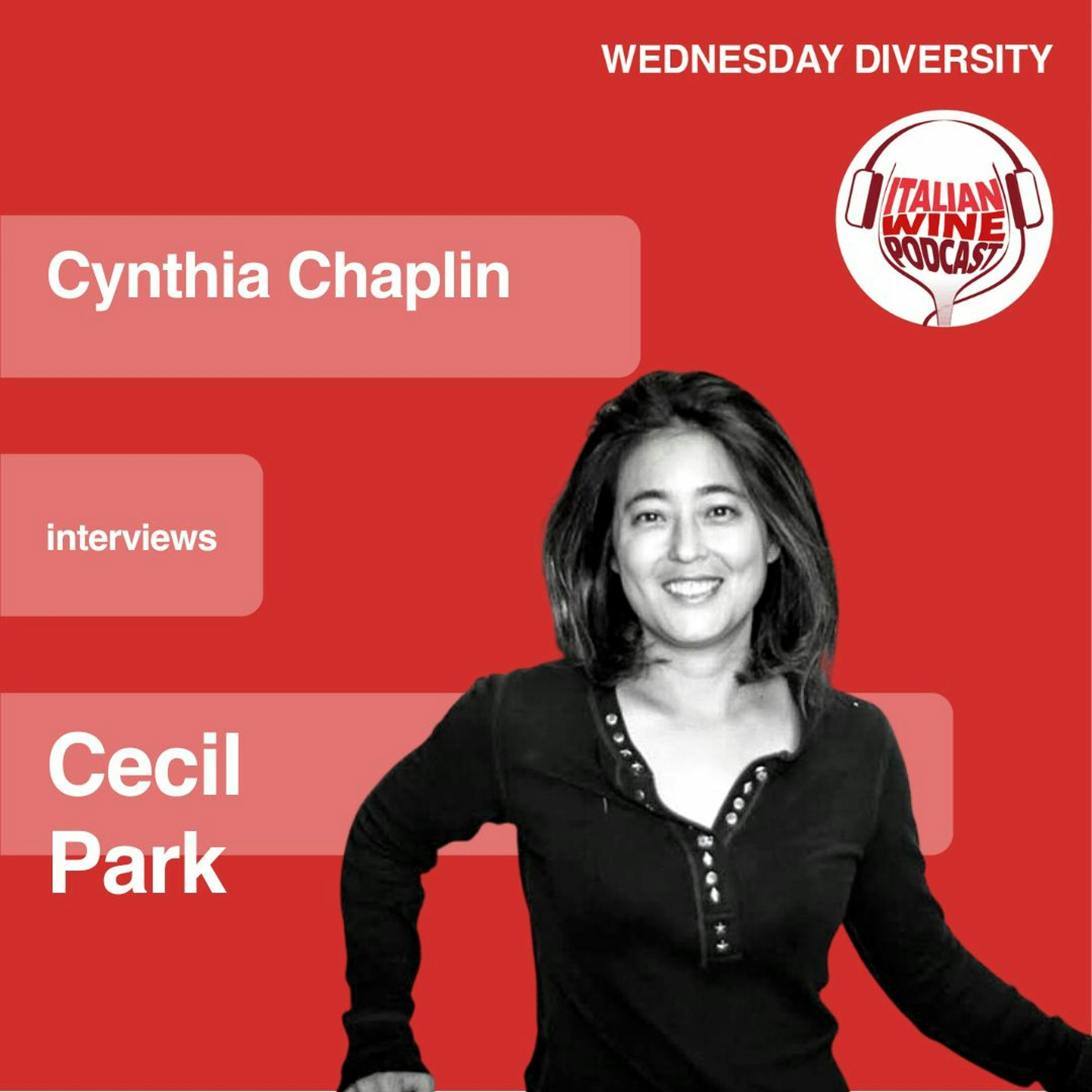
Ep. 1326 Cecil Park | Voices With Cynthia Chaplin
Voices
Episode Summary
Content Analysis Key Themes and Main Ideas 1. Overcoming Adversity and Breaking Barriers: Cecile Park's journey as a pioneering Korean American female winemaker, navigating cultural expectations, language barriers, and a personal health crisis to achieve success in the wine industry. 2. Innovation and Entrepreneurial Spirit: Her unconventional path, founding Winefornia to create personalized wines, and her unique approach to winemaking, exemplified by her Innovatus blend. 3. The Transformative Power of Wine: How wine evolved from a scientific interest to a profound source of healing, self-discovery, and connection after her breast cancer diagnosis. 4. Holistic and Sustainable Viticulture: Cecile's vision for applying an ""oriental approach"" to vineyard health, focusing on overall wellness of the land rather than just precise remedies. 5. Cultural Exchange and Global Bridging: Her aspiration to connect Napa's winemaking expertise with Korea, fostering the development of a local wine industry there. Summary This episode of the Italian Wine Podcast's ""Voices"" series, hosted by Cynthia Chaplin, features an insightful interview with Cecile Park, the first Korean American female winemaker in Napa, California, and owner of Winefornia. Cecile shares her remarkable journey, from growing up in Korea with limited opportunities for women, pursuing a biotechnology engineering degree, to immigrating to the US in 2001. She recounts her unexpected entry into the wine industry after falling in love with its complexity, beginning as a lab technician, and later pursuing a Viticulture and Enology degree from UC Davis. Cecile openly discusses the significant challenges she faced, including inner struggles with insecurity, language barriers, and being a minority female producer in a male-dominated field. A pivotal moment in her life was a stage three breast cancer diagnosis in 2019, which led her to re-evaluate her life and deepen her philosophical connection to wine as a source of healing and self-discovery. This experience shaped her unique winemaking philosophy, inspiring creativity in her work, including her signature Innovatus blend, a daring combination of Pinot Noir and Syrah. Despite managing over eighty vineyards and a demanding business, Cecile highlights her coping mechanisms like daily meditation and using drive time for reflection. Looking to the future, she envisions applying an ""oriental approach"" to vineyard management in Napa, focusing on the overall health of the land, and acting as a bridge to help Korea develop its own wine industry. Takeaways * Cecile Park is a trailblazer, being the first Korean American female winemaker in Napa, California. * Her initial career in biotechnology and marketing unexpectedly led her to discover a passion for wine in the US. * She founded Winefornia in 2007, specializing in personalized and private-label wines for corporate and special occasions. * A breast cancer diagnosis profoundly reshaped her winemaking philosophy, viewing wine as a means of healing and connection. * Her signature wine, Innovatus, is an unconventional blend of Pinot Noir and Syrah, symbolizing Napa's entrepreneurial spirit and her own unique journey. * Cecile advocates for a holistic, ""oriental approach"" to viticulture, focusing on the overall health of vineyards. * She aspires to serve as a bridge, bringing winemaking knowledge from Napa to cultivate a wine industry in Korea. Notable Quotes * ""I didn't really think I had a big ambition for my career or life, but, you know, I am the third generation of Korean War. So we were pretty poor. And then we didn't have a much opportunity to pursue a career, especially as a woman and a girl."
About This Episode
The podcast discusses the challenges of working in a diverse culture and the importance of creating a community of exotic and balanced lifestyle. They talk about personal experiences and challenges in their current job, including insecurity and fear of loss. They also discuss the importance of creating private label wines for special occasions and the importance of being part of the Napa Valley. They emphasize their passion for innovation and their desire to create a community of personal and healing wines for their clients.
Transcript
By now, you've all heard of Italian wine Unplugged two point o. The latest book published by Mamma jumbo shrimp. It's more than just another wine book. The fully updated second edition was inspired by students of the Vin Italy International Academy and painstakingly reviewed and revised by an expert panel of certified Italian wine ambassadors from across the globe. The book also includes an addition by professor Atilio Shenza. Italy's leading vine geneticist. The benchmark producers feature is a particularly important aspect of this revised edition. The selection makes it easier for our readers to get their hands on a bottle of wine that truly represents a particular grape or region to pick up a copy, just head to Amazon dot com, or visit us at mama jumbo shrimp dot com. Welcome to the Italian wine podcast. I'm Cynthia Chaplin, and this is voices. Every Wednesday, I will be sharing conversations with international wine industry professionals discussing issues in diversity, equity, and inclusion through their personal experiences working in the field of wine. If you enjoy the show, please subscribe and rate our show wherever you get your pods. Hello. This is me Cynthia Chaplin at voices. And today, I'm so excited to welcome Cecile Park to voices. Cecile was the first Korean American female winemaker in Napa, California, and she is the winemaker and owner of Winfurnia. Her wines have won numerous prizes at competitions like the San Francisco Chronicles wine competition. James Suckling and Shanghai International Wine Challenge. Her signature wine Innovatus was featured at the two thousand and eighteen Crazy rich Asian film premier and is now the official wine for Orpheum Theatre in San Francisco. Cisele is also a breast cancer survivor, and without missing a beat, she is now managing over eighty vineyards in Napa, as well as her own successful business. So we are so grateful to have you here. We know that you're giving us your time and it's a pleasure to welcome you. Hi, Cynthia. Thanks for having me over here. I'm so excited, and I am very honored to be here today. It is completely our pleasure and particularly mine since I get to chat with you personally. I love that you always say you grew up in Korea as a typical, quote, unquote, Korean girl, but you had big ambitions and you earned a degree in biotechnology engineering at the elite Yonsai University, And then you immigrated to the US and you got involved in wine. So what was it like for you growing up in Korea pushing against, you know, a big tide of tradition where women didn't have this kind of ambition? Well, you said it right. Actually, you know, I didn't really think I had a big ambition for my career or life, but, you know, I am the third generation of Korean War. So we were pretty poor. And then we didn't have a much opportunity to pursue a career, especially as a woman and a girl. And I thought, you know, I I want to have some profession, but for that, maybe, you know, I I've been thinking about, well, what, kind of query I can get, but, I didn't know what is available, actually. So Just thinking about being more professional, I thought having a engineering degree might give a opportunity to explore a little bit better in the position that I can be, pursuing career in later life. So I decided to study engineering, and then I got the degree. That's, that's how I got it. Well, it's so interesting, you know, that what you just said, I didn't know what was available. You know, it's it's, interesting, I think, to a lot of our listeners, to connect with somebody who came from a different culture as a young woman, you know, I'm much older than you. And you know, when you were, are you? You're not very young. Almost like a little little girl, a very friendly girl. You won't say how old I am. But it's it's interesting about that, that concept of not knowing what's available in other cultures. And I think a lot of our listeners are American and, you know, European and British and Canadian and Australian. And they don't really, you know, remember often that there are a lot of cultures where still women don't have that opportunity to really think about what is available. So the fact that you went after, you know, a biotech degree. That's not something that women did. Right. So biotech, actually, the, Yonsei University that, that I went. The biotech engineering was initially it was a food and biotech. So, when I was choosing the major, in engineering, I thought at least, you know, food is a little bit closer to women's profession or women's area. So that's why I chose, food and biotech, and then they changed the, measure, the name of the measure, from food and bio to biotech engineering. So I ended up you know, graduating, biotech engineering, which is it's kind of like a a happy accident that this so I have four daughters, which people Wow. Yes. Very lucky me. It it's that idea of food is close to women. And it's funny because so many of the major famous chefs in the world are men, but I think in daily lives, food is close to women. And it was a way to stick with a culture, but find a degree that nobody could argue with you about. That's very interesting. I like that story. Yeah. Yeah. Food and food and bio. They're I mean, it's really close to our daily life, but at the same time, it's more academic. So, engineering side, which is a lot, you know, a lot different from, the cooking and nutrients. It's more like, you know, biotherm, you know, that's, that's that's very, like, chemistry and then, you know, even though more, like, you know, biology and then, biology plus chemistry, they And mathematics and other things. Right. So you ended up moving to the States in two thousand and one. What What prompted that move? And, you know, what was it like for you moving to the states? You were far from home and dealing with a completely different culture. And I think probably fearful and free at the same time. How did that work for you? Yeah. It was I didn't really plan, to stay here for this long, but I had a round trip ticket to come to United States. But, when I was planning to come, you know, I my first job, I have to tell you about my first job. My first job was a, marketing product manager at coffee company. I I you know, I've been thinking about being, more proficient in science field as engineer, my first job was a little bit shifted, from my, original thought and plan. The company, coffee company, you know, hired me as a product manager in the marketing side because I have a science background. I'm a woman who understand the coffee products. So they kind of choose me as, the very first, female product manager in the marketing side. They're kind of experimenting. They're, you know, in their, like, half have century history. They never had any women, marketing manager. So I was a very first one. This was a very important company, so let's just say who it was. It's a craft, you know, a Maxwell house company, but it was yeah. In Korea division. Yes. This was a big company, and it was a big deal for you to be the first female. Yeah. And I was I mean, like, when they hired me, I said, Oh my god. I don't know anything about the marketing and business side. Please please move me to the, you know, research center or the production side because I I don't know anything about it. But the company said, why don't you try? We'll provide, you know, education and everything. So I became the first product manager at the company. And then and then I, I I worked for, three years at the company as a product manager, but I didn't really see myself, with this marketing side for long because I always my my, you know, since you're the desire was more towards the production still and the, the science side. So, but it was kind of like, I was confused. Like, where should I go with this career path? So should I get a MBA degree to pursue this side, as a more professional, professional way, or, should I go back to the science side? So that's that's how I went to the United States. Think about, you know, marketing the MB program or whatever. So that's how I got, how I came to the United States. Two thousand one. It's it's super risky. You know, you you yeah. Super risky. You came, you know, doing something for, you know, craft and Maxwell, you know, coffee, know, things that weren't exactly what you wanted to do. You wanted to do production and science, as you just said. It's, you know, coming to the States at that time must have been incredibly difficult. And at some point, you got into the wine industry. As a lab technician at Napa wine company, and you went on to get another degree in Viticulture and Annology. You know, how on earth did you get involved with wine. So I when I came to the United States, I for the first time in my life, I I chased a wine. So I I was surprised to find this amazing juice that makes me happy and make me curious. So I I fell in love with wine, and, I just liked it so much and not just liking it there. I was curious about the production side. It's behind the taste. So, I was thinking, you know, maybe, you know, I run that time, you know, Korea, the wine market is slowly growing. So I thought, you know, if I if I go back to this, you know, wine, maybe production side, I can make it to work somehow to live, you know, it's a work and life together. So, I I decide to give it a try to start working as a lab technician at Apple White Company and see if, you know, if there is any chance for me to, continue and then maybe find my, you know, like, a career back in the science, in production size. So that's how I got into the wine. And then, I worked at Napa wine Company. Napa wine Company is, you know, one of the oldest, cool up place for, various winemakers. There there were Heidi Bear was, like, making wine there, Rob Lawson and, the Aaron pod, and there are many, many winemakers were making wine. At the, at the winery and outgoing company. And I I found that, you know, the winery system, you don't really have to own the facility win winery and then you don't have to own the vineyard. So it was very, you know, surprising and to see, that you actually, can can become a winemaker without owning the place. So that's how I started my career in winemaking, by learning about the system in NapPA. So I started making wine from two thousand seven And then later on, I went to UC Davis two thousand twelve, I think. Yeah. And Yeah. It's interesting that that that's such a big part of what I think a lot of people don't understand. Becoming a winemaker in in a lot of countries, but particularly in the US, you don't have to own the vineyard. You can buy in grapes. You can experiment. You can do a lot of winemaking without having your own vineyard. And as you said, you know, you you got a degree in Viticulture and analogy from UC Davis. And that was sort of a whole decade of your life. You know, What were the challenges like for you? You you were one of very few female minority winemakers in California at that time. It was ten years ago, if not more. And you've you have excelled and, kind of broken a lot of barriers plus your own mental barriers from, you know, your childhood in Korea. It's interesting how you got to where you are. What was that like for you? Oh, it's more like it's, struggling, inner struggling is the most challenging part for me. I mean, I know. I mean, I had I have known anybody in the industry. I have no background, basically, in the wine country, in the US. So, my language, was still back coming still I'm learning English. English is way better than my Italian, so don't worry. So I didn't speak the language in the industry either. So, although I kind of you know, got to start my career in the industry, but, my, confidence level was really low. So I was as insecure on every aspect of winemaking, every aspect of, communication. So I was just, like, super super shy and, introvert in the industry, just doing whatever I could do, and then just come home and then hide myself basically. And, that was the biggest hurdle, throughout, my career until, you know, ten years of winemaking, of my career. And, so the reason I mean, I was now, you know, like, I was able to make a wine, but at the same time, I wanted to, communicate with other, but I really needed to know the the exact meaning of, each vocabulary where the industry people are talking about. So That's why I went to the H. C. Davis to to pick up the of February and then, gradually, fill fit in, the, the network of the industry. So, that was kind of the most biggest challenge that, you know, I had. I mean, internal, struggling or insecurity was the big thing, but the outer, obviously, it's some, you know, like, outer, challenges are pretty much a common thing that, you know, you your small producer, your female, and then small producer, you really didn't have a chance to get their time or, you know, attention on their on your production. So it's very challenging to have any vendor to work for you. You have to really work it hard to get a time slot. You know, to make it work. And also female, I I think of being female is a, you know, same thing. You didn't really get the attention to to make it your, production going. By, you know, by Lou or whatever. I mean, there is some kind of, I don't, I think it's more manner of, speak. I think that is a way as a minor, as a female, nobody really care about you. That's that was a challenge. Well, no. That's I mean, and that's that's so true. You know, we we laugh about it, but it really is so true, you know, as as a young woman and, you know, a woman who wasn't American and coming into Napa and coming into California and coming into UC Davis, you know, you had this amazing scientific biotech background, you know, you had all of the education and all of the credentials. But breaking into that is just not that easy, but, you know, and you say, you know, you're shoe you're super shy. And it's I think that's part of, things that hold us back. So you were studying and you were in California and you were working doing different things. And in two thousand and seven, way before you got your degree from UC Davis, you started wine fornia. And you were studying, and the business is focused on creating personalized and customized wines. So Okay. Super shy. I get it. But what gave you this idea? And, you know, you you put this business up and going before you even finished your degree. So you've got more confidence than I think you're admitting to because this is a good business. Yeah. I, you know, I didn't have any, foundation to start with, but I, I I thought I only had an idea that, you know, I can create some private labeled wine for, special, I mean, special occasion. Especially, you know, the corporates that I'm, known from my previous, work career, they do they were doing some big event like a PGA LPGA tournaments, and then you know, over there, they they're looking for the, gifting item for, their VIPs and, you know, the chairman's dinner, things like that. For our listeners who don't know LPGA and PGA, are the laney pro golf association and the pro golf association in the United States, which are, yes, huge, huge, you know, businesses for pro golfing competitions. Yes. They are. So, you know, like, so I thought, you know, I since I, I know the con I mean, I know, what they need. So it it was more like a niece finding I knew they're they're looking for something special. And then, I was in the industry that, you know, I I I wasn't ready for my own label yet. So I thought, you know, maybe I could do something with that, you know, as a, as a winemaker, who can create it a private labeled wine for a special occasion. So, Waifornia, when I first started, I say it is, your own wine from California. So that was Waifornia that, you know, I can create something for your, your own special occasion. That was, the idea that I couldn't start, and then build my production career and also, you know, develop my skills to, make a wine as well. Well, it's amazing what you've managed to accomplish because you know, as I said, wine fornia started in two thousand and seven, and you did wines for the LPGA and the PGA, and you started taking on private clients and corporate clients and making individual wines. And you've ended up cultivating this incredible reputation as an award winning winemaker, a Viticultress, a wine negotiator, and you're widely regarded as one of the most creative winemakers in Napa. You've said that you're determined to make wines that heal and restore and connect us to the land and the vines and to each other. So I just wanna ask you, you know, about your philosophy for winemaking. What inspires your creativity? And what sets your wines apart. Are you enjoying this podcast? Don't forget to visit our YouTube channel, mama jumbo shrimp. For fascinating videos covering Stevie Kim and her travels across Italy and beyond, meeting winemakers, eating local foods, and taking in the scenery. Now back to the show. So I think that I, you know, I I should share some of my personal story. So I was very, you know, I I was, I I came from, Korea, and then I was kind of, like, focused on, you know, just keeping my ground fit grounded in the industry with whatever I could do. So I've been working so hard. And then I I if when I found something, you know, needed or, you know, opportunity, I was gonna just take on do and then do my best, to to accomplish or to com complete the the project. So I've been working really hard. And then I found this you know, a problem internally. It was a physical problem, and I I I got diagnosed with, with breast cancer stage three. And then I didn't realize until then, I how much I was in thinking about the meaning of life or, my happiness or, my family and then my community. So, it was a two thousand early twenty nineteen, not long ago, but, you know, I completely stopped my, you know, working lifestyle, for a year, and then I didn't drive anywhere. So I walk everywhere or take the public transportation everywhere. And I just been thinking about my life again and again and see, you know, what's what was more meaningful for me to do in my life and future. And, And then so far, I mean, I realized that wine was a very important piece still, because I it gave me a lot of opportunity to, explore more, internally and then, more also in every aspect, like, economies and then, you know, philosophy and then culture and arts and all. And I wasn't really, you know, able I wasn't able to really enjoy or feel it. It was just more, like, going moving forward and forward and forward. So I stopped on hold, and then I I thought wine is meaningful for me because it it is a connection to, to healing and then just, you know, opening and then, kind of finding finding yourself. So that was, you know, there was of the philosophy behind about the wine for me. It's so interesting. I I love that. Story. And I'm so glad you're well, first of all, after your cancer diagnosis, but it's it's interesting how wines that touch you, I'm not a winemaker, but I do seek out wives that touch me in an emotional way and give me a visceral response. And they do have the the potential to take you out of yourself, especially when you're telling the story to others like you are today. And I'm really glad that you're sharing this with us because it's so important for people to hear, you know, how much being part of the land, being part of wine, being part of that creation, the chemistry, you know, your background is chemistry. And I'll even say alchemy, is so crucial to the experience of of what people have in their glass ultimately. And you you launched your signature wine before your diagnosis, you know, Innovatus was launched in two thousand and fourteen. And, you know, it's it's been talked about so much and people have said that that is your soul in a bottle of wine. So tell us a little bit about innovators. Yeah. I totally, you know, bought this, but, the The wine, I launched two thousand fourteen. And, that time, I, you know, the name of Innovatus is, Napa's entrepreneur's period. You know, that reflects some of my, you know, I mean, the Napa culture because the Napa wasn't the original wine, you know, wine region compared to, you know, Italy and friends and other old European countries. But, you know, Napa's entrepreneur spirit will develop the, line, Napa as as they are right now, as it is now. They're, really now, you know, top, top quality, wine producer. And that in order to do that, they really pour their heart and soul and then, you know, sweat. So I thought that's very, inspirational. And also at the same time as a immigrant, I came here, and then I I pour in my perspective, and then my endeavor to, just you know, try, something different, and then something, you know, unique about it and then make it a contribution to the, Napa, Napa as well. So That is the soul of, innovatus. And, and, yeah, I since then, I've been, you know, grooming and then growing along with the innovatus label. Of my audience. So happy, Innovatus is is inspirational, and I think it's important for for people to hear. So what's the blend? First of all, let's hear. Yeah. So at the the coupe, the red blend has a very interesting blend. So, it is a pinot and a sera, you know, on the, gray spectrum, you know, sera is a thicker side. It's a lot the bigger grapes and darker skin, and then, you know, and then the pinot, the other side, it's a very thin skin, small cluster, and then, you know, it's very delicate grape. So when you combine these two grapes together, you created something very exotic, you know, nuance to it. And then also at the same time, it's a balance too. So I was a super surprised that I want this combination actually, can do well. And nobody's done it and, you know, as a outsider of the wine country, I I dare to try something different. So that's how It sounds like it represents you exotic and balanced. I really like. I think that's so nice. And Pino and Syra in California, as you said, that's really not a traditional or normal or, you know, very accessible blend. So I I love what you're doing with that, and I love what it means to you. So, you know, these days, you're managing, you know, eighty vineyards in Napa and Winefornia has become a huge community of Vintners and you're crazy busy, and you've had a life threatening illness. So at the moment, how are you holding this all together, you know, between a demanding career and a family and your health and your philosophy of making an exotic and a balance wine, and also wines for your clients, which are very bespoke. What what gets you out of bed in the morning? What what's making you feel creative? So creativeness, it's I think, you know, it really I mean, it's a it's just a daily life. Two things are, very beneficial and very helpful for me to go this life. You know, one is, yeah, meditation or, writing journal. I mean, I I wake up in the morning, and I I try not to watch any screen. And, I focus on, my thought or my, my vision in the morning for, you know, half an hour. It's a short time, but it really helpful. And then, just, you know, and then after that, I I plan for the day or for for a week. And also I drive a lot. So during, during driving, you know, I I actually, it is my own time. I can just, think myself, and then, just, reflect to what I what I've been doing. So that was really helpful. And also now, you know, I've been working in the industry for sixteen years. So now I have a lot of, I mean, not, like, I have a good, group of people who is really supportive, including my family, but, you know, people in the industry as well. So they are super supportive. I really owe them so much. So they're helping me with my idea. And then, you know, I I still I I I'm still growing, but, you know, this with this, people around and even nature around I am, I think I'm managing it, pretty well. I really love that idea of your drive time as your own time. I remember when my I had six children, when my children were small, when I was in the car alone, that was my my only time to myself. It didn't happen often, and I got some of my best ideas then. So I I relate to that a lot. Exactly. And, you know, you said you you met a hey, you take a half an hour every day, which I think is so crucial to our well-being right now. And I'm just wondering what are you dreaming of for the future? I know you have children, and you have Waum, what's your dreams for the next five years? Next five years. So it's related to work as well, but, I I really wanna do something that, you know, meaningful for, the land, healing. Because, you know, nowadays, the practice in the vineyard side, it's very, technical and it's very precision, driven, but I think it's more oriental approach, which is, you know, have you done any acupuncture or, you know, more arbor medicine? It is kind of general over a health of the, the body. So I wanted to apply some type of a rental, vineyard, a farming practice to the, napa vineyard so that kind of try out, more you know, approach to more, overall health and that, the pinpointed, you know, precise remedy. So I wanted to, see if I can, create something in, with this You know, some different scope of, you know, practices onto the soil and land. And that's one side of it. And then, so another side, you know, in Korea, there is no I mean, not like, wine, you know, actually producer in Korea yet. So I can kind of, bring my, skill set or my knowledge to Korea so that Korea can have some type of their own wine as well. So I wanna be a bridge between Napa and Korea. Somehow. That's incredible. I I have to say I'm very fortunate to have a very close friend who introduced me to Reiki. So that has been something that, was useful to me at at various times. And I like that approach to overall health, but taking it to the next level and taking it away from just humans and applying it to soil and to agriculture, I think it'd be something, completely innovative considering climate change and the challenges that are our earth faces. I love that you're looking that way, and also finding a way to make wine happen in Korea is, completely outside the box. And I really wish you well. I know that all of our listener due to. I'm so grateful, Cecile, for you coming on tonight. Thank you so much. Oh, thank you so much. It's been great, and thanks again. Thank you for listening. And remember to tune in next Wednesday when I'll be chatting with another fascinating guest. Italian wine podcast is among the leading wine podcast in the world, and the only one with a daily show. Tune in every day and discover all our different shows. You can find us at italian wine podcast dot com SoundCloud, Spotify, Himalaya, or wherever you get your pods.
Episode Details
Keywords
Related Episodes

Ep. 2651 Diversity in the Wine Industry and Wine Tech Innovation with Jeremy McCarty | Voices with Cynthia Chaplin
Episode 2651

Ep. 2627 Regenerative Winemaking, Mentorship & LGBTQ+ Perspectives with Terah Bajjalieh | Voices with Cynthia Chaplin
Episode 2627
Ep. 2545 Building Inclusive Wine Spaces Through Storytelling with Amari Collins | Voices with Cynthia Chaplin
Episode 2545
Ep. 2531 Winemaking Journey from Mumbai to Napa with Priyanka French | Voices with Cynthia Chaplin
Episode 2531

EP. 2517 Sarah Looper | Voices with Cynthia Chaplin
Episode 2517

Ep. 2505 Ren Peir | Voices with Cynthia Chaplin
Episode 2505