
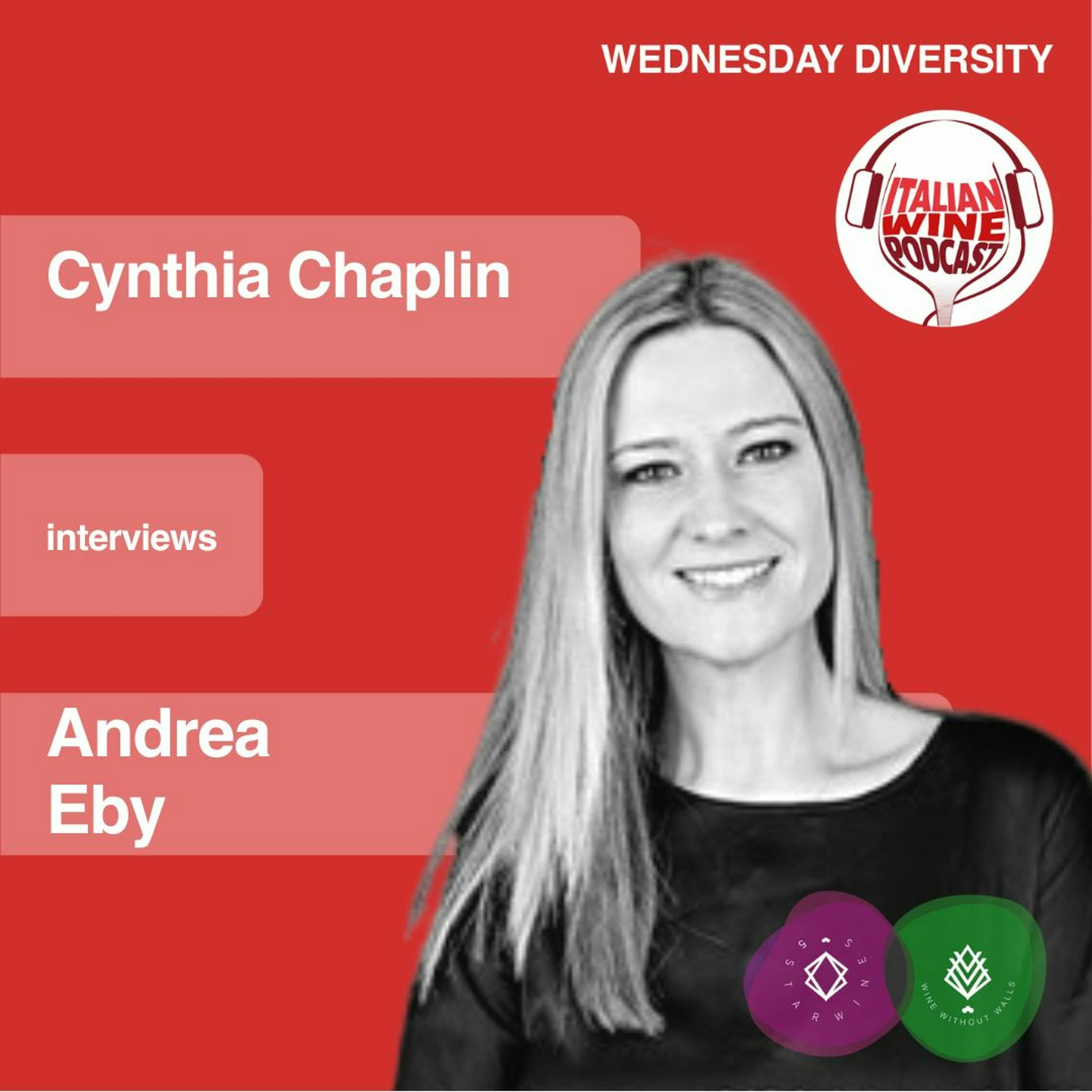
Ep. 1335 Andrea Eby | Voices With Cynthia Chaplin
Voices
Episode Summary
# Content Analysis Key Themes and Main Ideas 1. The Italian Wine Unplugged 2.0 book: its development, contributors, and significance as a study/teaching tool. 2. The Vinitaly International Academy (VIA) community: its role in fostering connections, mentorship, and lifelong friendships among wine professionals. 3. The Master of Wine (MW) program: insights into its rigorous structure, challenges, and the dedication required for completion. 4. The Five Star Wines and Wine Without Walls competition: its unique judging structure and value for wine professionals. 5. The evolution and challenges of wine education in a changing global landscape. 6. The Canadian market for Italian wine: current trends, cultural ties, and future prospects. Summary This episode of ""Voices"" features an interview between host Cynthia Chaplin and Andrea Ebbington, a fellow Vinitaly International Academy (VIA) Italian Wine Ambassador, Italian Programs Director at the Wine Scholar Guild, and a Master of Wine (MW) student. The discussion primarily revolves around the new ""Italian Wine Unplugged 2.0"" book, to which Andrea contributed by rewriting grape descriptions. Andrea expresses her deep appreciation for the VIA community, highlighting its role in building professional networks and personal friendships. She praises the new book, particularly its inclusion of ""benchmark producers"" for accessibility to international students, and discusses her experience as a judge at the Five Star Wines competition, valuing its unique roundtable discussions with winemakers and Italian enologists. The conversation then shifts to the broader landscape of wine education, where Andrea shares her insights on attracting new students amidst changing health guidelines and generational shifts in wine consumption. She emphasizes the importance of inclusivity and making wine accessible to everyone. Finally, Andrea recounts her challenging but rewarding journey through the MW program, detailing her study methods, the impact of COVID-19, and the financial and personal sacrifices involved. She also discusses the Canadian market for Italian wine, noting strong cultural ties and a recent trend of consumers ""drinking less but better,"" which benefits premium Italian wines. Takeaways * ""Italian Wine Unplugged 2.0"" is a newly revised book, co-created by VIA Italian Wine Ambassadors, serving as a foundational text for the VIA Italian Wine Ambassador course. * The Vinitaly International Academy (VIA) fosters a strong, supportive, and international community among wine professionals. * The Master of Wine (MW) program is an extremely rigorous, multi-stage qualification requiring extensive study, tasting, and often significant personal and financial investment. * The Five Star Wines competition offers a unique judging experience by including Italian enologists on every panel, fostering intellectually stimulating discussions. * Wine education needs to adapt to changing demographics and health perceptions, focusing on inclusivity and demonstrating wine's cultural value. * The Canadian market for Italian wine is boosted by strong cultural ties and a trend towards higher-quality, albeit potentially lower-volume, consumption. Notable Quotes * ""The sense of community that Via has managed to somehow foster and create... it's just, you know, the connections I've made with people through via that have become like yourself, sort of lifelong friends and, you know, colleagues that have turned into friends because of this."
About This Episode
The Italian wine Unplugged two point o edition of the book, released in January 23, is a foundation for the Ven Italian in International Academy, Italian wine Portuguese course and has fostered connections with people and the Italian wine community. Speakers discuss the value of the book and its potential for students to write new educational materials, as well as the importance of word-of-mouth in the industry. They emphasize the need to be mindful of the "weird" in wine education and emphasize the importance of educating consumers on the value of wine before they want to be students. They also discuss the challenges of the global wine industry and the importance of marketing and communication to customers. They express excitement for Speaker 1's success in their master wine studies and their plans to provide more information on the master wine program. They also discuss the importance of learning about wine in the industry and how it can improve one's career.
Transcript
By now, you've all heard of Italian wine Unplugged two point o. The latest book published by Mamma jumbo shrimp. It's more than just another wine book. Fully updated second edition was inspired by students of the Vin Italy International Academy and painstakingly reviewed and revised by an expert panel of certified Italian wine ambassadors from across the globe. The book also includes an addition by professor Atilio Shenza. Italy's leading vine geneticist. The benchmark producers feature is a particularly important aspect of this revised edition. The selection makes it easier for our readers to get their hands on a bottle of wine that truly represents a particular grape or region to pick up a copy, just head to Amazon dot com, or visit us at mama jumbo shrimp dot com. Welcome to today's episode part of another new mini series on voices about the Vienna International Academy Italian wine ambassadors, who contributed to the new addition of Italian wine unplugged two point zero. This new Mamma jumbo shrimp publication was released in January twenty twenty three, and it provides a foundation for the Ven Italy in International Academy, Italian wine Ambassador course, listening as Cynthia chats with the personalities who made this revised edition possible, and remember, you can also tune in each Saturday afternoon to hear narrated installments of this new book, or head to Amazon dot com to pick up your copy today. Hello, and welcome to voices. This is Cynthia Chaplin, and today I'm very happy to welcome Andrea Ebbington voices. Andrew is a fellow Vignet to the International Italian wine Ambassador and the Italian programs director at the wine scholar Guild. She's a stage two master of wine student with over a decade of experience in the wine trade as a buyer in retail and as a drinks educator at one of Canada's top wine stores. And Andrea now runs wine education classes in Winnipeg, and she's worked as an assessor at WSET's educator training program. And she's a Sommelier instructor with the Canadian Association of Professional Sommeliers. And in twenty twenty, she founded Vincanity, Consulting and Vincanity School of Wine in Winnipeg. So she's joining me today to chat about all things Vinietly Marathon, and welcome to the show. Thank you, Cynthia. Feel great to be here. I'm so glad to have you on. It's it's lovely to have, you know, a friend and a colleague on the show, makes a change, and and we can be a little bit more, relaxed and a little more personal than maybe I would be otherwise. So very grateful for your time. Well, thank you. You've been such an active member of Vin Italy International Academy community for so many years, and as an Italian wine Ambassador, and most recently, you contributed to the new addition of Italian wine Unplugged two point o where you rewrote some of the grape descriptions for the must know grapes. Aside from the fact that I nagged you into doing it, we are very happy to to have your contribution. And I just wonder, what is it about Via that keeps you so involved? Oh, boy. You know, there's so many things that I love about Via, but I really, for me, I think if I had to, like, prioritize size. Number one, it's really just that sense of community that Via has managed to somehow foster and create. And, yeah, it's just, you know, the connections I've made with people through via that have become like yourself, sort of lifelong friends and, you know, colleagues that have turned into friends because of this. And, you know, I always feel like wherever you go to a wine event anywhere in the world, doesn't matter where you are somehow you run into somebody who is also a Italian wine Ambassador, and, you need to just have that instant connection, and it's opened a lot of doors in in my career. And I hope I've, you know, also opens indoors with people through those connections as well. Absolutely. I'm sure you have. I mean, I I feel the same about it. It's such a good mentoring and networking community, and and it is a very warm and welcoming community. And we as you said, we've all made friends that are, you know, friends for life, not just friends for, you know, for one sort of period of time taking exam, and I think that's pretty special. So Exactly. Yeah. Absolutely. Well, let me ask you, what do you think of the new book? You know, as a study tool as a teaching tool. I know you've got it in your hand now because we personally sent it to you. As soon as it came on, I don't know, Amazon or whatever, and I ordered a copy, right away. And then I got that really lovely note from Stevie saying, hey, we'd love to send you a copy. So I'm super excited because that means that I can write all over one of them and how sticky notes all over it. And, you know, we have my little reference cards in here, and then I can keep one, you know, that looks nice as well. So I'm definitely using it, every day. And, you know, in my role as, the lead educator for the Italian programs at the Weinskeller Guild, you know, you're always writing new educational material, creating new content for students. And so this is a great reference for me to have at my fingertips. And, you know, just have all that, you know, we know in in Italy, one of the you know, the blessings and the curses for for students is the grapes. Right? Because it's amazing that there's so many a talk that is grapes, but when you're trying to cram all that information into your head, that can be a challenge. And so to have all of those great varieties in their descriptions and things updated in one central places is fantastic. I'm really glad to hear you say that. What I just wanna ask you, what you think about the benchmark producers. This was a new thing for this new addition. We wanted to add some benchmark producers for our students and and people who love Italian wine, but don't live in Italy. So they could find some wines that are pretty readily available around the world and, you know, might not be the absolute best, might not be our favorite ones in Italy, but wines that we know are excellent quality and that people can get outside of Italy. Did that seem like a good idea to you? Is it useful for you when you're talking to, you know, students clients in Canada. Absolutely. I mean, I think it's, as you say, it's it's really difficult when you start to attempt to put a list like that together because there are so many great producers out there. But I think it's really nice that you've really carefully kind of curated this list that, is not only sort of showing great, usually great tipicity for the great variety or the appletian that you're talking about. But it's also, you know, kind of more, like, commercially available in a lot of places as well, because I think it's, you know, as a student, it can be frustrating when there's all these, you know, great producers that are listed and and, you know, recommended, but then you can't find the wines anywhere outside of Italy. So it's, it's really nice to have those kind of recommendations as a starting point for your kind of exploration into the different great varieties and appalachians. Yeah. I think it's a great great addition to the to the book. I know you're gonna be coming here very soon. I'm happy to say, for five star wines and wine without walls as a judge from March twenty eighth and twenty ninth. For the wine selection that's held in our offices here in Verona in advance of Vinitally. So, again, all part of our our community, that we've grown through our events, and I just I wonder why you keep coming back for five star wines because you're you're a repeat offender judge. Why is five star wines so special to you? Yeah. Well, you know what? I well, so many reasons, but I think, I I really do kind of really appreciate the way that the judging has kind of been organized at Five Star with, you know, you kind of have your little pod of people that that you're with, and you very quickly start to kind of, you know, just develop that sort of rapport with one another and kind of pick up on each other sort of tasting styles and, you know, the conversations that you have with those people around the table. And often you have the winemaker, a winemaker in your group, and that's such a great effective to have, I think, that you just don't get that often in other competitions that I that judge at. And so, yeah, I think it's really that kind of roundtable discussion that happens that really I find intellectually stimulating and then also just the chance for myself, you know, with the job I have, it's really important to kind of try and stay current, on all those great varieties and appletations that are out there. And, you know, where else can you go where you can taste such a wide selection of great varieties and styles and operations. So, yeah, I think it's, you know, on the personal level, it's very fulfilling and also on the professional side of things as well. Yeah. It's interesting to that point that you've made. I think We don't talk about this as much as we should, but we do have Italian analogists from the Asenology association, and one Italian analogist sits on every panel. So You do get that perspective of of somebody who really lives and breathes the vines every day. I know I have to break up a lot of arguments that that they have. That's kind of my job. I I I liked break up the arguments that the analogies get into with our international crew of judges, very different perspectives, but it does develop conversation. And I think, it keeps it very fresh. And that's a very good point. We don't talk about that. Very much. And I think it is special. Pretty I don't judge at any other competitions where we have analogists there. So, maybe we ought to be talking about that more. Yeah. It is something that I really do appreciate, you know, having that perspective on the panel and because sometimes there are things maybe going on with the line and, you know, you're maybe your first thought is oh, there's something. You know, maybe I I'm not quite sure about what's happening in this line and and and then you have that professional there that can say, oh, no. This is just you know, ABC, and it it lets you assess the line in a different way than maybe you would have done so without that other kind of, perspective into it. So and as you say, great conversation that sometimes gets a little heated, but you know, those are those are fantastic, as well. So Exactly. And I think for the producers, it's it's very valuable to have that element of knowing that Italian andologists were part of the judging process. You know, it's not just a bunch of international people. No matter how experienced they are, you know, might not know as much about their Italian wines as they would like. So having that analogous there does kind of balance that out, which is kinda nice. So Yeah. Absolutely. Well, your background is, you know, huge as a wine educator, you know, over ten years long. And I think this is part of where we got to be good friends. I just wanna ask you how you feel wine education is heading right now. You know, do you think it's going in the right direction? What do you think we should be doing to attract new students and and keep them engaged with learning about wine? Oh, that's a big question. It was one of the it kind of wine education was one of the theory questions I chose to answer on my paper five examination last summer for the MW. So I've thought it quite a bit about this. Obviously, we're we're both working in the field every day. And, you know, I think there's great potential for wine education. Obviously, you know, we have some challenges in the kind of the global sort of, you know, marketplace in terms of, you know, there's a lot of pressure from, I'm just speaking from, like, the Canadian perspective, you know, these new health guidelines and things that are really sort of making people question, you know, should alcohol be part of their lives? And so I think we have to, you know, really be aware that that is out there and work hard to give people, you know, the the sense that wine can be a wonderful part of a culture and, you know, your sort of your your life. And so I think we have to be aware of that as something that could impact the number of people that are coming to look for for courses. And I think also, you know, just the general sort of generational shift in wine drinkers, is something as an industry, a, you know, wine education industry we need to be aware of that a lot of the people that have historically been taking classes, and really spending money online are kind of aging out of the the the category in some ways. Sad but true. Yeah. Exactly. I'm, you know, I'm I'm edging up on that, but I won't give up why. It doesn't matter. But you know what I mean? It's like, how do we attract new consumers into just the category of wine. Right? Because we need them as consumers first before they're gonna wanna be students of wine. That's so true. I think, you know, just making sure that we're always trying to make our educational opportunities as inclusive as we can. And, you know, really making sure that we're not putting any barriers to entry, in terms of, you know, sometimes wine is seen as a very sort of exclusive product. And I always try to work really hard to, you know, help people understand that that's not the case. It's, you know, in in many cases, it while in all cases, I think it was, you know, something that was a peasant's beverage initially. Right? And, yeah, and so it's, like, it's accessible to everybody, and we don't wanna be putting any barriers up to it. So when I'm teaching, I'm always trying to make people feel as comfortable as I can with kind of, you know, the skill set that they're coming with and and giving them the confidence to build upon that. So, yeah, I think it's just enabling people to believe in themselves because sometimes you look at people who are masters of wine or master sommeliers, and you think, oh my gosh. Like, how do these people do those things? And, you know, you have to step back and say, nobody started there. Everybody worked really hard to get there. And everybody has the potential to to get there if they want to, but not everybody has to. Right? It's like not everybody has to stand up as a master of wine or master sommelier. There's lots of directions that education can take you, you know, along that way. Are you enjoying this podcast? Don't forget to visit our YouTube channel, mama jumbo shrimp for fascinating videos covering Stevie Kim and her travels across Italy and beyond. Meeting winemakers, eating local foods, and taking in the scenery. Now, back to the show. That's that's a really good point. Not not everybody has to get to, you know, sort of these pinnacles of of knowledge, you know, a lot of times getting as far as you want to go and then taking your career in another direction is important. I think know, when we're advising, you know, young people coming into the wine industry, I know myself when I started off, I didn't ever really think that wine could be a career and all the careers that are part of the industry, and, of course, growing all the time with social media and different things like that, you're you're absolutely right. There's there's a lot more that one can do in the world of blind beyond, you know, carrying on studying to sort of dizzying heights of knowledge. Exactly. Yeah. There is I think that, you know, people that have developed kind of skills through wine education can be really useful parts of, you know, a team in a lot of different fields. So I I certainly when I teach, classes, you know, when you see people who are very young kind of just thinking we might want to know a little bit more about about wine. You have people that are kind of, you know, mid life and they and they're contemplating some sort of career change and thinking that wine could be could be that. And, you know, there's people that are ready to retire, and they wanna retire to working in a tasting room somewhere. Right? And so there's just, you know, to me, it's just this journey that can start from very young and and take you, you know, into kind of old age and keep you, motivated and excited about learning. So, yeah, I think it is a a really great field to to study. Well, as you know, I completely agree. It it it's nice because your own career reflects a lot of that. You know, you've been a buyer and an importer of Italian wine for many years and importing into Canada. You know, you've done a lot of different things as you've gone through your own wine journey. And I'm I'm just wondering what you think about how the market is today in Canada, for Italian wine, what changes you've seen over the past couple of years in light of COVID and economic difficulties that everyone's facing. You know, do you think Italian wines are gonna grow in market share in Canada. Italian wines are quite at least I won't say across Canada, but in, particularly in in the province I'm in, and I do know in some of the other provinces as well. Italian wines are quite almost uniquely positioned because I think we have, in a lot of instances, some very large, kind of cultural ties to to Italy, a lot of immigrants that have moved from from Italy at some point. And so we have quite thriving Italian communities in a lot of our cities. And I think that really helps, that, you know, marketing to to Canada. You know, a lot of Canadians as well when you say where would you like to go for vacation? Italy is definitely near the top of the list. So we have this real kind of love of the Italian culture as well. And I think all of those things bode well for for Italian wine in in Canada. I would say since COVID, I I definitely have noticed some some trends that I'm I think I'm starting to see a little bit of reversal of some of the trends, but definitely during COVID and kind of, you know, the year, year and a half after, I I definitely noticed more of a focus on real sort of value products. So the overall spend was probably less and maybe people were, you know, they were drinking, you know, more sort of, like, fifteen to twenty dollar versus, you know, twenty to twenty five, thirty dollar kind of bottles. And, but I think I've slowly started to see now people, and maybe it's partially in reflection to some of this kind of pressure from government in terms of alcohol. Right? People kind of choosing to maybe drink a little bit less, but drink a little bit better quality. Right? And so you see, some of the stores kind of dipping their toe back into slightly, higher priced lines and and, you know, kind of looking to order, some sort of more premium products again. And Italy is definitely kind of at the top of of that list for a lot of people in in terms of like what they're willing to kind of do a little bit of a splurge on. That's really good to know. I'm glad to hear that. You know, I I'm always happy when I see Italian wines outside of Italy, you know, have their profile raised and and their value kind of exalted. So it's good to know that people are looking to Italian wine as more of a luxury product, you know, willing to, as you say, spend more, drink less, and drink better. So that's that's fascinating. Yeah. I think there's still, obviously, we look to Italy particularly here, you know, to fill that sort of value as well. So it I think there's there's both ends of the spectrum being addressed, which is probably what a lot of, you know, Italian wineries want to hear because we we do love our you know, sort of value pinot grigio and, you know, there's a few bottles of prossecco sold in Kavanaugh. So, you know, but I do see even some people asking me, can you find me an asolo prossecco? Can you find me a Cartice prossecco for the store. So I think that's a great, you know, sort of indication that that people aren't just seeing that these kind of traditional value oriented products that they're noticing that there are some kind of premium options within those categories. That's excellent. And and that points to education too, you know, better marketing, better communication, and and people are are getting the message. So that's that's exciting. That's that's actually really hopeful news. So Before I let you go, as you know, you know, personally, I am so thrilled for you and very excited about your recent success in your efforts to complete your master wine studies. I was with you when you got the call, when you had past your most recent paper. So that was really big news. Let's talk about this a little bit. I know so many people, myself included, are always curious about the master wine program shrouded in mist, you know, tell tell everybody who's listening. What what is this very particular wine adventure like? You know, what how long have you been studying? When when do you hope you're gonna be done? You know? What are your words of wisdom for people who are considering embarking on this, you know, adventure? Be aware is, run. You know what you're getting into. No. I mean, I I'm I'm not alone in the fact that I've probably had a fairly unique journey because of COVID kind of as, you know, a lot of people in their lives. Things maybe didn't go exactly as they had sort of envisioned them happening because of of COVID. And so I had entered the program, I guess, two thousand nineteen, kind of that fall of two thousand nineteen, and, was kind of thinking, okay. What is this? What have I done? Right? You know, how do I do this? It was kind of this thing where Originally, I I entered the program because being based in Winnipeg, it's a very isolated I mean, it's isolated in terms of wine, but it's isolated just even geographically. Right? And so I was feeling like I had done my diploma a few years before, and I wanted to keep developing professionally, and I wanted to keep kind of networking with people. And I felt like, okay, this program allows me to kinda do a lot of self study but still be kind of part of a group of wine professionals and people. And so I thought, okay. I'm gonna I'm gonna enter the program and so applied and was accepted. And So really, what I'll tell you when you first get into the program, they say congratulations. You're in, and and you think, okay. Now what? Like, you know, what do I study? How do I even begin to kind of tackle this? And so you have, your stage one. They call it stage one seminar week, where you release the first time where a lot of the kind of, you know, rigor has introduced you. You you work with masters of wine that week. You have all your other students in stage one. And so my stage one, happened kind of the last part of January twenty twenty. And then a few weeks later, the world basically shut down. Right? And so you were kinda I felt like, okay. I maybe kind of have an idea what I should be doing here, but then, you know, just getting access to wines and everything was just really difficult. And so I there was an opportunity to write, my stage one exam that year which I did and passed. So with that, you're doing kind of like, one day of exams with tasting component and theory papers. And, I moved into stage two, and you know, I kinda thought naively that the world would be back to normal by the time. Didn't we all honestly? And so, you know, that next year kinda was comprised of them mailing know, my little samples and doing everything online. And it was just really yeah. I just felt like it wasn't what I needed to prepare for that exam. So in twenty twenty, One, I deferred writing the stage two exams because I wasn't even sure if I'd still be I'd be able to travel when the exams were scheduled. So I, yeah, last year, kind of, resumed, I would say, semi normal kind of, you know, studies and I was able to go right, the stage two exam for the first time in in Napa, in July. And, yeah, I was really thrilled to pass an exam itself. It's composed of four days, three of which you do, tasting papers all morning. And then in the afternoons, you do essays essentially on topics that they have chosen for you that are a surprise that day. And so, it was a huge relief to pass the theory part. So now I've been really diligently trying to taste as much as I can, which, again, is a challenge, being in Winnipeg. So I'm, spending a lot of to of April in in London, trying to kind of do some judging as well as, you know, judging at five star just being able to be more exposed and tasting kind of a wider range of wines again. So, yeah, it does involve some travel, I think, if you especially if you're coming from a more sort of a remote area or, you know, a more of a minor wine market. You do need to kind of factor in some travel into your your budget for sure. Yeah. Definitely. I I think, you know, the the travel and the the wine is probably the most costly side of it rather than the actual cost of the of the course over the couple of years that it takes to finish it. Yeah. You can budget for the, you know, the tuition and that sort of thing, but, you know, the the travel and how much you're gonna end up spending on the wines is really something that at the beginning, I didn't maybe understand how much I was going to spend on it, which, my family has, you know, been very kind to, forego a few things so that I could, try and, you know, kind of complete this. So I I'm keeping my fingers crossed and working very hard to to pass the practical portion, which I'll write again in, June this year. And then, after that, if I'm successful at that, then the last stage is to do your research project. And, yeah, I'm I'm soliciting anybody for ideas what what I should study for my research project because I would like it to be something, that revolves around Italian wine because that definitely is my my passion. And I have just so many ideas in my head about what I might do. But, yeah, really trying to kind of, nail down a topic that, I want to to put that kind of years' worth of, research and, energy into. Well, I think having said that your your soliciting ideas on the Italian wine podcast, you might find that you are flooded with all kinds of things, but That's good. I'm I'm happy to I'm happy if, people do send some ideas. That'd be great. Well, I I can't thank you enough for coming on today, and I know for sure that you will always be a good friend to the Via community, and we're looking forward to having another Via Italian wine Ambassador who becomes a master of wine. And we're looking forward to having you here at five star. And thank you again for your contribution to the book, which was very important. It was really a a community project, and it was very, very fun for me to sort of pull everyone's thoughts and words together and to to see everybody's enthusiasm for the book. So I'm really grateful and glad that you're enjoying the book and sticking your sticky notes on it. I can't wait to see your beat up coffee. So, Thank you so much and safe travels, and we will see you in Barona soon. Well, thank you so much, Cynthia. Thank you for listening, and remember to tune in next Wednesday. I'll be chatting with another fascinating guest. Italian wine podcast is among the leading wine podcasts in the world, and the only one with a daily show. Tune in every day and discover all our different shows. You can find us at Italian wine podcast dot com SoundCloud, Spotify, Himalaya, or wherever you get your pods.
Episode Details
Keywords
Related Episodes

Ep. 2651 Diversity in the Wine Industry and Wine Tech Innovation with Jeremy McCarty | Voices with Cynthia Chaplin
Episode 2651

Ep. 2627 Regenerative Winemaking, Mentorship & LGBTQ+ Perspectives with Terah Bajjalieh | Voices with Cynthia Chaplin
Episode 2627
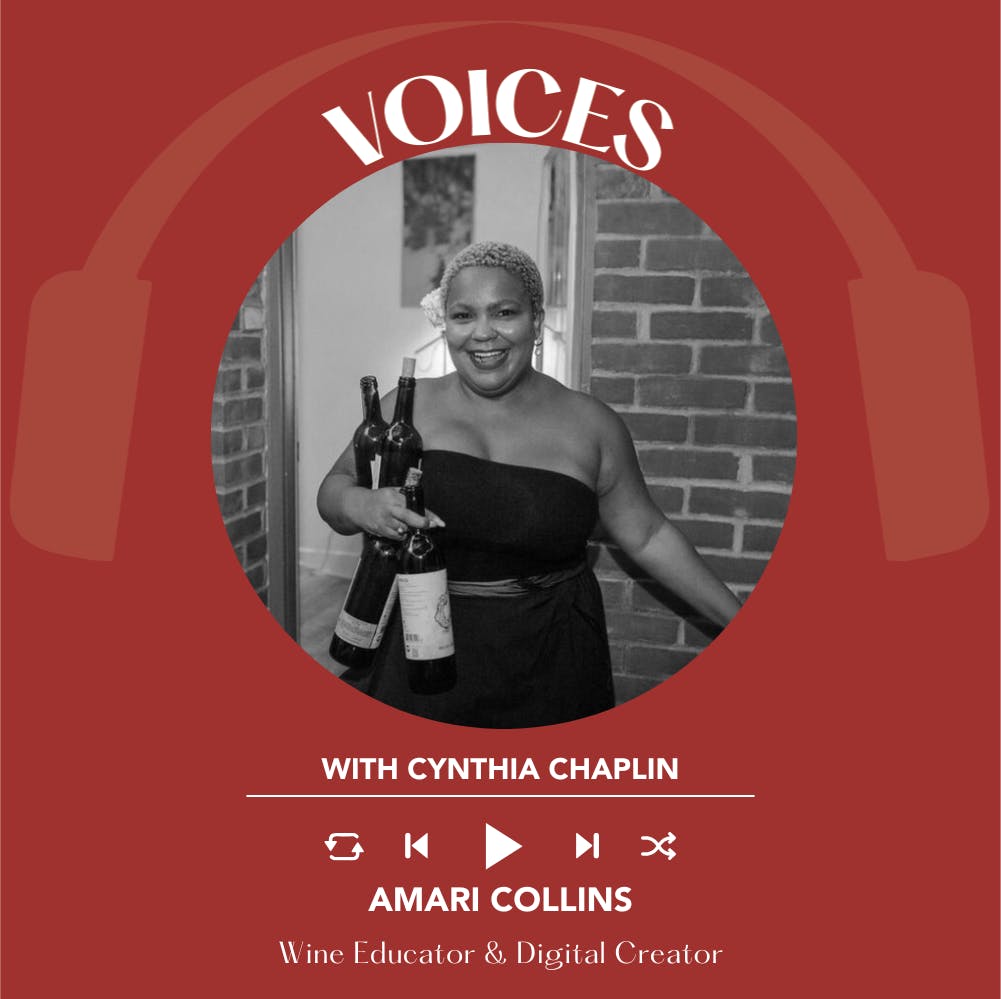
Ep. 2545 Building Inclusive Wine Spaces Through Storytelling with Amari Collins | Voices with Cynthia Chaplin
Episode 2545
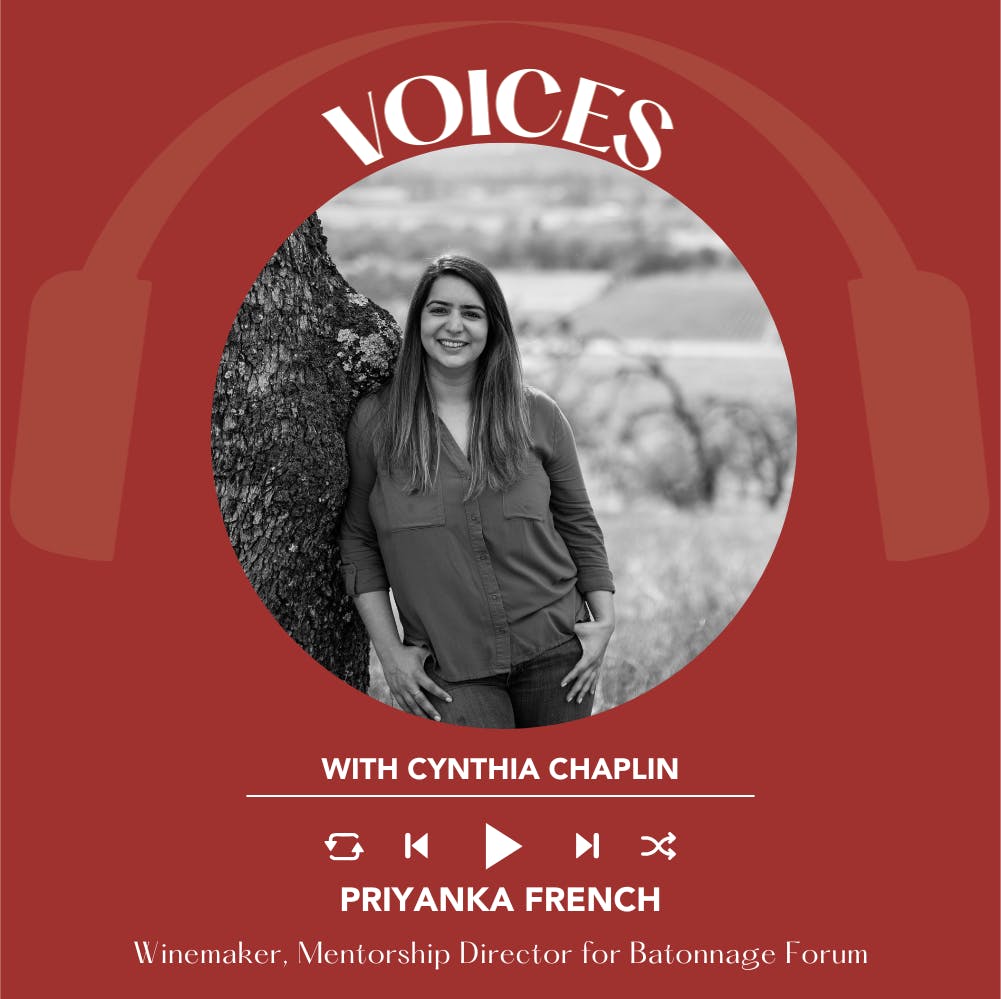
Ep. 2531 Winemaking Journey from Mumbai to Napa with Priyanka French | Voices with Cynthia Chaplin
Episode 2531

EP. 2517 Sarah Looper | Voices with Cynthia Chaplin
Episode 2517

Ep. 2505 Ren Peir | Voices with Cynthia Chaplin
Episode 2505