
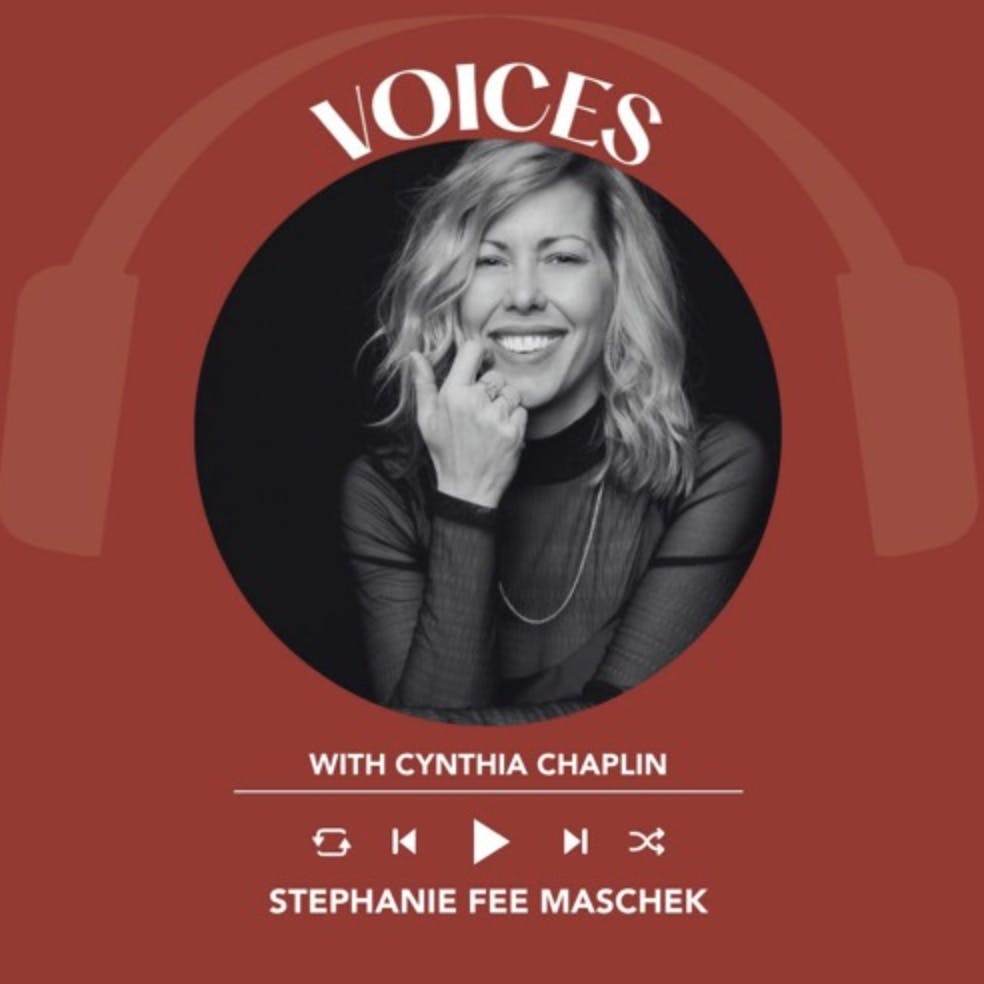
Ep. 1668 Stephanie Fee Maschek | Voices With Cynthia Chaplin
Voices
Episode Summary
Content Analysis Key Themes and Main Ideas 1. The personal journey from professional burnout in the wine industry to founding wellness ventures. 2. The concept and implementation of ""sustainable wellness as a service"" for companies. 3. Mindful drinking: its definition, increasing relevance in the US, and cultural contrasts with Europe. 4. The role of pleasure, quality, and presence in consumption habits. 5. Challenges and opportunities for wineries in adapting marketing to new consumer attitudes (e.g., mindful drinking). 6. The definition and importance of ""conscious leadership."
About This Episode
Speaker 1 describes the concept of sustainable wellness and how it helps to create positive emotions for employees and clients. They explain the three-piece process of mindful drinking, which is restricted in the US, and how it is a big topic. Speaker 3 discusses cultural differences between the US and Europe, and the importance of overwhelm and confusion in the US and Europe. They also discuss the importance of understanding pleasure and learning to pay attention to quality. They emphasize the need for leaders to confront the truth of drinking alcohol and address the need for a combination of entrepreneurship and well-being. They also discuss the potential for plant-based medicine to be used differently by people and the importance of creating positive stories to help people create them.
Transcript
The Italian wine podcast is the community driven platform for Italian winegeeks around the world. Support the show by donating at italian wine podcast dot com. Donate five or more Euros, and we'll send you a copy of our latest book, my Italian Great Geek journal. Absolutely free. To get your free copy of my Italian GreatGeek journal, click support us at italian wine podcast dot com, or wherever you get your pots. Welcome to the Italian wine podcast. I'm Cynthia Chaplin, and this is voices. Every Wednesday, I will be sharing conversations with international wine industry professionals discussing issues in diversity, equity, and inclusion through their personal experiences, working in the field of wine. If you enjoy the show, please subscribe and rate our show wherever you get your pods. Hello. Welcome to voices. This is me Cynthia Chaplin, and today I'm really pleased to welcome Stephanie fee Mass check to voices. Stephanie is a wine industry professional with a serious focus on wellness and health. She's the founder of Wild Larynx, where she's a ghostwriter specializing in personal memoirs and psychedelic plant medicine transformation storybooks for conscious leaders. She puts together storytelling and leadership and wellness coaching to help leaders express themselves more authentically and make a better impact in the world. And she's also the founder and CEO of Knox, sustainable wellness, where she created the original habit building methodology framework that serves as the base for all of her work going forward. So thank you for spending some time with us today, Stephanie. It's great to have you. Thank you so much. I'm so excited to to be using my voice on a platform for wine industry professionals? Well, it's my favorite part of my job doing this show. So it's always fun for me to talk to interesting people doing interesting things, and you certainly are. You were working in the wine industry for fifteen years before you started knock. So let's talk about knock for a minute. What was the impetus for for sort of the change of track in starting this business? Tell us about it. Yeah. So in in the thick of my work, in the wine industry, about well, it was in two thousand and fifteen, and I started in the industry around two thousand and five. Two thousand and fifteen, I had a basically just a collapse of my well-being. So I physically, emotionally was destroyed, and no one knew it. I woke up literally on the floor of my new apartment extraordinarily hungover after moving out of my house, the day before getting a divorce. And I honestly I picked myself up off of that floor and no joke. I was like, what have you become? And on the on the forward facing side of my life, I was getting promotions. In fact, I had just gotten a new job, which was a much bigger role. And I was really good at putting on this face, or at least I thought I was really good at it. And so a lot of what I was experiencing was completely, you know, or at least partially hidden, to the point where, you know, it made it worse to hide so much. And so At that point, I started the process of I had I had had a history of self development. I worked with entrepreneurs at a very young age with a company that focused a lot on self development, but also on entrepreneurship working on anything from, you know, developing teams getting through plateaus with very, very successful entrepreneurs. So I knew that I had a toolbox of a lot of useful techniques that in the context of the industry I was no longer using that really caused me to have this, you know, collapse if you will of my well-being. So I started looking around, like, what could I do? Who could help me? What solutions are out there? And I realized I had virtually no support and nothing spoke to me because I didn't want to be prescribed a a rigid system. A very spontaneous person, and I need freedom in the things that I do. But I I also am very disciplined, which is sort of a strange combination. So I started basically dismantling everything my my mind first, which then led into a physical transformation that then led into all of these things in life opening up that I had battled for so long and tried to force for so long. I was using my strengths to to my greatness rather than, you know, showing up just with this really high level of distress packed up in my system. So I I confronted all of these things. And I did it I did it very quietly because nobody else was seeming to do it around me, and I didn't wanna answer any questions. And as I started peeling back layers of myself, started showing up differently and people started asking me what I was doing. And I created a framework that I thought could really be useful for myself with the ultimate or for anybody. With the ultimate goal of of bringing it into the industry to make the industry better and more well. But to be honest, I I felt really defeated in two thousand and twenty. I had maintained the results and had kept growing as a human being. But with the job that I was tasked with and the lack of support culturally in every single way in the industry, my health and well-being are priceless. And I decided that it was time to go because I recognized that it wasn't a priority for the industry and that if it was going to be I needed to get outside of it to be able to then come back in with a different perspective to help the industry change for the better. So it's it's been quite a process. So that's why I left. No. It sounds like it. So you you developed a, you know, a format, with knock. So tell us about the format. How does it work? Yeah. We call it sustainable wellness as a service. So serving as your in house wellness resource team incorporating our app with group high impact coaching that really helps companies build a culture of well-being through what we call high impact habits that we can do together in five minutes or less every single day that helps create a positive emotional contagion So emotions are contagious. This is studied. This is researched. And by creating a positive ripple effect emotionally throughout the organization, then that translates into the actions that that people take. So there's many, many problems that are solved with a very simple process. So it's actually a three step process starting with the leadership team and, building into these high impact sessions that then create this this ripple effect. That sounds so fascinating. And I came across your work when I was researching Veravino, an Italian wine importing company, and I know you worked with them on the concept of mindful drinking. So let's just talk about mindful drinking for a minute. What is that concept? And why is it such a buzz topic, especially in the US right now? Yeah. Well, mindfulness really, you know, hit its stride and became a western, you know, very well accepted, and obviously everyone talks about mindfulness, mindful meditation, sort of, started that. Right? And mindful drinking is is simply about paying attention to physical and emotional sensations so that you can understand your consumption habits so you can understand what's gonna serve you and what may not all about everything everything in mindfulness is about paying attention to the physical and emotional sensations that arise. With mindful drinking, I believe that it's become this this buzzword and this big topic because we've gone so outer limits, especially in the US, the culture is, has gone so far to the the overconsumption side of things based on I believe the fact that, you know, we have prohibition in our history. It's restriction that that that prompts people to binge. Right? It's hiding, like, when I was a teenager, it was like, parents are going out of town and and we can do something bad. So let's, you know, get a bunch of alcohol. Right? This is kind of the culture that the United States has around drinking. It's very it's very restricted. And with that, then I think we've just gotten so outer limits, coupled with the fact that the latest research in science is all pointing to the negative side of drinking and how that negatively impacts our health and our our well-being. But what what we have is also you can look at Europe as like sort of a counter to that where you know, the happiness levels and the health and well-being are higher than than us in the US, and they're still drinking. Yeah. Well, it's it's interesting. I mean, you've made some really interesting comparisons between, you know, the the meal time and drinking habits of Americans versus Europeans, including the fact that in the USA, people are stressing about, as you said, overconsumption. They're opening up their health coaching apps at the table. You know, there's a lot of pressure on you know, being seen to eat and drink the right things at the right time in the right amounts, or to avoid certain things, sort of publicly avoiding certain things. So in Europe, it's really not quite the same. You know, people are more present at the table. You don't see people on their phones. They they're talking to each other while they're eating and drinking. They tend to have their meals together at a table, you know, not sitting on the sofa or or whatever. So Do you think these habits are so divergent right now, you know, for certain reasons? You know, what do you make of this cup cultural contrast regarding eating and drinking in the US versus in Europe? You know, how did this come into being and what do you see as the positives or negatives of either perspective? Yeah. Well, I think I think in the US, I can just I can speak from my own experience and then also on behalf of the, basically, thousands of people who shared their story with me is that there's so many opinions that there's so much overwhelm and confusion that your attention is everywhere that it shouldn't be. It's completely outside of yourself. You're looking for these solutions everywhere on the app. All the other people at the table are giving you their opinions or what they're doing or what you should do or what you shouldn't do. And meanwhile, we've forgotten this this mindful aspect. Right? What about what about what you feel and what you think? And what about what where your attention is going? And so when you sit down at the table, and you leave that stress behind starting with before you even, you know, leave for dinner as an example or before you even open that bottle of wine, then where's your attention going? Is is so important and we give our attention away to all of the things that just further distract us overwhelm us and take us away from the present moment. While in Europe, I think just because of the history and the culture, you know, the the the the culture is so different. The familial aspect, the gathering of communities, and not just in Europe and in many other cultures. I'm in Mexico right now. The families are very strong in the US. We have a we have a different type of, you know, daily routine, if you will, that that has left a lot of that behind, but that's not to say that I I think this is a huge opportunity this this place and time to get our attention back. Because, I mean, I know my my grandma, she she paid attention at the table. Right? They didn't have all the technology. They didn't have all these options. There was nobody, you know, giving her an app and telling her it was gonna solve all of her problems? No. Of course not. And, you know, I I come from the age when there were no mobile phones. There were no video games when I was a kid. And when you were at the table, you were at the table. There wasn't something to distract you even if you wish to that there were. So I think definitely that that technological aspect and that notion of overwhelm, and confusion has come into play particularly in the state. For for whatever reason, and I I won't go into my personal opinions of what those reasons could be. But, yeah, I think there is this very different view of what meal time or, you know, drinking wine time should look like in the States versus what it looks like in Europe. I'm wondering just, you know, where do you think the concept of pleasure comes in to this whole conversation? You know, eating and drinking sounds like it's become a minefield in the US. I have friends still in the US. One of my daughters is living in the US, and it's really not that way in Europe where I've lived now for over thirty years. Where does the idea of pleasure go in all of this? You know, pleasure in eating or drinking How does that sort of hang together with this idea? Oh, it it's it's completely, you know, synonymous. Right? There's such a kind of stigma around pleasure now. That it's almost like hedonistic or something in some way to sit down and and actually taste things and enjoy things is like a luxury experience. In in and I'm again speaking in the US culture where if I sit down with, you know, I'm, like, a piece of fruit or a glass of wine, or a piece of really great cheese, and I just sit with it and I pay attention to it. And then I also pay attention to who's at the table in social situations. I mean, the pleasure aspect rises, and your experience sort of, you know, transcends that sort of binging mentality, right, or the the vastness of everything. Pleasure to me is about sensory, you know, experiences and paying attention to all of all of the things that are, you know, at the table in your glass and who's around you. And I think that again, just that distracted mindset And and to be fair, I get it. I mean, I get it. I I've I've been there. I still find myself like, oh, no. You're distracted. Put that down and pay attention and and enjoy this moment. It is not a luxury to enjoy your life. That should just be a life, you know. Well, and life is short. So I think that's very good point. I mean, you you've talked a lot about this concept of paying attention and not only attention to who you're with and what you're eating and and focusing and taking the time just sit with that, but also learning to pay attention to quality and lessening quantity, especially when you're drinking wine. So tell us how people can get on benefit from, you know, from this kind of an attitude? What are the challenges to this kind of a perspective of trying to pay attention to quality, lessen your quantity, focus more on what you're actually drinking? Yeah. Well, For me, wine, the experience of wine and the art of wine and the reason why I ever started drinking wine was purely about all of the the history science, the learning, what's in this glass? It's a time capsule. Who made it? You know, all of that goes into up up appreciation. And I think what's happened, like, in the in the article that I wrote for Sheila, you know, we talked about appreciation over inebriation. This saves you money, and it saves you time and it saves you energy because you're not wasting your moment on like an alcohol delivery device. I remember a client of mine once said that to me. He said, some people in here just want an alcohol delivery device. Do you have anything like, you know, five dollars wholesale? And I didn't. And then I said, no. But I have this. And he bought it. He bought a lot of wine from me, but I didn't have the alcohol delivery devices. And I think everybody is scrambling to deliver that somehow some way, and that's why I loved I loved that Sheila wanted to do this. Together because I was like, she wants to actually confront a real issue and make something beautiful out of it and get people back to like, why why drink wine? Why drink wine? There's so many other options out there. Line is something extraordinarily special. And I and I believe that the new the latest drinkers or the up and coming generations, what we know. Right? They're not collecting it. They they don't know about it. You know, they're learning from the wrong people too, by the way. Yep. Absolutely. Absolutely. And there's a lot more option out there in the market for people who are new to alcohol or, you know, young people coming in, new to alcohol. There are a lot more options available. It's not just sort of wine or spirits anymore. There's a lot more options but I I've got one question that I think is kind of important from the other side of the coin here. How do you think wineries can incorporate these ideas into their marketing and messaging? Cause it's gonna be pretty hard to convince top producers of, you know, expensive fine wines or even little producers of lesser known artisan wines to promote mindful drinking because actually they want people to buy a lot of their wine and drink it. So how can they incorporate this into their message? Are you enjoying this podcast? Don't forget to visit our YouTube channel, mama jumbo shrimp. For fascinating videos covering Stevie Kim and her travels across Italy and beyond. Meeting winemakers, eating local foods, and taking in the scenery. Now, back to the show. I think that for me, when I watch a very successful company rise above the the current climate, they're able to confront the truth. And there's a truth out there and it's happening. And smaller fine wine companies, even larger fine wine companies, there's a huge opportunity to differentiate and it is here now and it's all about these obstacles, all about confronting the truth. Honestly, that's a big part of what my mission is is to is to speak with leaders of companies to understand what's really holding them back because what I know to be true is that there's just a lot of fear packed in there about doing something different after so many years doing the same thing. And honestly, someone like Sheila coming in from outside of the industry is really to me what the industry needs. There needs to be a combination of entrepreneurs who can get with the people who's been in the industry to help them innovate and think beyond the same way that they've been doing things for so long. Is that working anymore? You know, there's a lot of questions to ask yourself. Is it working to keep doing things the way that you're doing? Are you constantly having the same problems? If you are, confronting the truth is actually it's do or die in some way. Right? Alcohol, there's a lot of there's a lot going on out there that's that's saying don't drink alcohol. We've gotta meet those messages with with solutions. But there has to be on the eye end from leaders, and that can only really come from them answering some really good questions for themselves and for the companies that they need for the well-being of their their for the longevity. I know that that's generally speed that's general, and it speak. But truly, like, truly leaders are responsible for for asking themselves good questions or challenging, you know, challenging themselves to confront the truth. And I think that's the number one issue. That I've always seen is, like, let's go away from that truth and just keep just keep plugging along and, like, we gotta ignore that. Sheila confronted it. How cool is that? You asked me to be here because of that. You know? It well, this is this is a good point. I I wanna talk to you about who your clients are. You know, who who comes to knock for a consultation, you know, who is your primary audience? How do they find you? You know, what what types of programs are you developing for them? How are you engaging with you know, how do you find them? How do they find you? How's it working? Yeah. Leaders in human resources, executives who are just exhausted of trying to find a well-being solution for their teams. They've run out of options. They've tried all the apps. They've invested money over and over again, and they haven't gotten the return that they need on their investment. Those are the people that, that we work with and also those who already have an impact statement. So if you if you're making a statement on sustainable Viticulture as an example, but you're not making a statement on the health and well-being and the sustainability of that for your team, we help you align your your what you do and what you say, in every area of your company because that one gap that's missing in the industry as I see it, there's a lot of statements, slow food slow wine. Beautiful statements being made of sustainability. What about well-being? It's it's absent. So that's where we come in and help you take that big heavy burden off of the leadership. Being a leader is hard. You need to be freed up to put your time, energy, and resources into inspiring people to do great things for your company. Not solving this burnout crisis because you're not a specialist in it. We are. So that's how we partner. Those are the types of people that that we partner with or people who already they they believe it. They're just not exactly sure how to get it done. Right. Okay. Well, I'm curious about a couple of other things while I've got your attention here. One of them is about this notion of psychedelic plant medicine transformation story books. I have got to ask you, what the heck is that? You know, who is creating this kind of material? And, you know, who is the audience for this kind of material? And what exactly is a conscious leader? You know, you've you talked about you're engaging with leaders to to work with knock and to come up with well-being, you know, kind of manifestos for, you know, for their teams. So what's a conscious leader and what is psychedelic plant transformation storytelling. I am dying to know. That's such a fun question. Conscious leaders. So consciousness is being aware and being responsive. But then how do you respond? Right? So It takes a, it it it takes a a person who has committed to self development to then work with those responses and and not get clouded and overwhelmed. So a conscious leader is very aware, very responsive. And of the current climate confronting, you know, the truth as I said, and also heart centered. Let's not forget that, you know, that's that's also been lacking in in leadership, and it's important, especially now that's what workers are calling for. So those are the people that I work with, at the wild larynx. I write, wildly authentic business books and memoirs with them. Go straight. And, the plant medicine experience sort of came into my life very naturally. What I use storytelling for outside of and inside of the the writing process, the ghost writing collaboration with my clients is, is to really integrate your experiences So all of those things that you've learned along the way use them for really great change in the world. And people who, as you know, probably psychedelic, medicine is now more well researched than ever. There's huge, transformational change that, people experience in in guided experiences, therapeutic experiences. And I just thought They have all these journals. What if what if they could further integrate the work that they've done on themselves and have sort of a time capsule of the experiences that they've had when they go on these these really extraordinary retreats that help them them transform. So we're actually, just starting the second season of of the Wild Learning's podcast with, our first our first I guess I say use case that's on so business, but our first story about client, so she's going to be audibly telling her story. And then I work with a brilliant artist, an illustrator, So, we'll be we'll be showcasing her her extraordinary storybook. And for her, she she said she's never experienced this type of of work before in her life. And, we're not therapists, we're not claiming to, you know, be integration coaches. It's just storytelling. It's just the power of storytelling. And when you work with a collaborative partner who can guide you through it, it's it's quite something. So with psychedelic medicine, I think that's something that's much more, in the mainstream in the US than it is here in Europe. So just give me a brief outline for people who are listening who are not in the US and want to know exactly what is psychedelic medicine so that they understand what where your storytelling is coming from. Our focus is on plant medicine mainly in psilocybin or One might call them magic mushrooms and, Ayahuasca. So these are very ancient and traditional, administered plant medicines that have then made their way into the western world because of the healing that takes place and the transformation that takes place And it's grown so substantially in the last couple of years, I think due to the mental health crisis and emotional, health crisis in the United States. So there's just a lot of traumatic experiences that these medicines, seem to help people. They're they're there's actually a lot of science about the brain and and neurons or how the brain opens up, in a way that it it doesn't, for in our regular daily experience. So these are sometimes quite intense experiences, that people use, and I'm not I'm not I I don't feel, you know, super comfortable to talk about all the science or anything like that, but basically it's to dig deep and get to the root of a lot of the the the issues that are holding people back from from being well, mentally well. I'm so intrigued. I am absolutely so intrigued. Particularly because you know, this concept of of plant based medicine, and, you know, magic mushrooms and things like that. I'm I'm just trying to sort of figure out in my mind, what went wrong or not wrong, but, you know, wine is also plant based. It's grapes. And so, you know, wine is, you know, at the moment, I I hate to go as far as saying being vilified, but know, somewhere in that region, in the US, particularly right now. It is moving to Europe a bit, but particularly in the US. And on the other hand, plant based medicine, you know, with with psychedelic plants like magic mushrooms. And again, I'm not a therapist, and the science is beyond me with that. I know wine science, but definitely not psychedelic medicine science. I'm just wondering Do you think there is an opportunity for people to misuse plant medicine in the way that they misuse wine? Absolutely. I mean, I think that that's, That's what's really interesting about what's happening now is that, there's there's very highly trained people and also organizations who work with, Maestro's or coronados or shamans the the the indigenous people of different areas to actually, you know, really teach how this should be, taken and, and so My my opinion is that anything that we do, in excess and without, you know, awareness and and attention and mindfulness to the process is, yeah, is, you you can overdo a lot of things. You can overdo anything. Right? You can overdo exercise. You can You can drink too much water to the extreme. I mean, that's, you know, kind of kind of a silly comparison. But, absolutely. I think that and that's the thing too is that, this isn't what we're doing isn't working with people that are doing this recreationally at a party or getting their friends together and, you know, taking psilocybin. This is actually people who who are doing some very serious, work with very highly regarded retreat centers and and professionals and the injured, in respect, and with, the the indigenous people. So so yes. And it's it's very new. Right? So we're not seeing the they'll confront their own obstacles just like cannabis. Exactly. Exactly. And that's I'm just fascinated by the the whole concept. You know, do you see ultimately sort of courses developing for plant based medicine like wine courses developed, you know, where people can get interested, take a course, learn some things. I I know that's happening with cannabis already. It's a good question as far as a appreciation goes, or training. But professionally, yes, there's there's already so much of that going on. Maps is is training, you know, psychotherapists and, and creating a lot of psychologists are becoming trained in in psychedelic medicine. So professionally speaking, absolutely. Yes. It's already happening on a huge level. Consumer. I don't know yet, and that's actually I think something really important is, is consumer education or, you know, patient education or whatever term you're gonna use. Yeah. Yeah. Well, I'm just I'm I'm just so curious about it all. So where do you see yourself heading, you know, in your work in the next four or five years, you know, what would you like to accomplish? What sorts of trends? Do you expect to see as you move on in this sector? Where do you see yourself and and knock and wild larynx in, you know, say five years from now? Yeah. I I've been thinking so much lately about The fact that what I think we're living in is a storytelling economy. And every single day when I'm writing books for leaders or I'm telling somebody a story, I think the the What what my my real mission is is to help people tell better stories, help people tell better stories about the companies that they work for even. Right? I can relate to that. I I work with wineries and help them to tell their stories. No. And I I get that. And I think building a positive story is important too. That's what that's exactly it. It is a story that's that's em empowering and used for change. Used to create the changes that you wanna see in the world and, and pass that on to everyone around you. And so, you know, this is present in every single aspect of the work that I do, but, you know, my end goal is to just, to help other people tell their stories and, and to get on stages and really, help people confront these truths that they're very scared to confront. Because it's so much scarier not to. It's so much harder not to. And, when we make bolder moves, that's how we create change, not by talking about it. Talking about, it's beautiful, but when you can help somebody actually do something and call them to action, that's where change occurs. Well, I don't think it's gonna get any better than this. I think that's an amazing goal to have. And storytelling is a big part of what I do as well. So I'm very on board with, this kind of philosophy of wanting to educate and wanting to tell positive stories and help people create positive stories. So I can't thank you enough for coming on, Stephanie, today. This was such an interesting conversation. Thank you so much for your time. Thank you so much for having me. Thank you for listening, and remember to tune in next Wednesday. I'll be chatting with another fascinating guest. Italian wine podcast is among the leading wine podcasts in the world, and the only one with a daily show. Tune in every day and discover all our different shows. You can find us at Italian wine podcast dot com, SoundCloud, Spotify, Himalaya or wherever you get your pot.
Episode Details
Keywords
Related Episodes

Ep. 2651 Diversity in the Wine Industry and Wine Tech Innovation with Jeremy McCarty | Voices with Cynthia Chaplin
Episode 2651

Ep. 2627 Regenerative Winemaking, Mentorship & LGBTQ+ Perspectives with Terah Bajjalieh | Voices with Cynthia Chaplin
Episode 2627
Ep. 2545 Building Inclusive Wine Spaces Through Storytelling with Amari Collins | Voices with Cynthia Chaplin
Episode 2545
Ep. 2531 Winemaking Journey from Mumbai to Napa with Priyanka French | Voices with Cynthia Chaplin
Episode 2531

EP. 2517 Sarah Looper | Voices with Cynthia Chaplin
Episode 2517

Ep. 2505 Ren Peir | Voices with Cynthia Chaplin
Episode 2505