
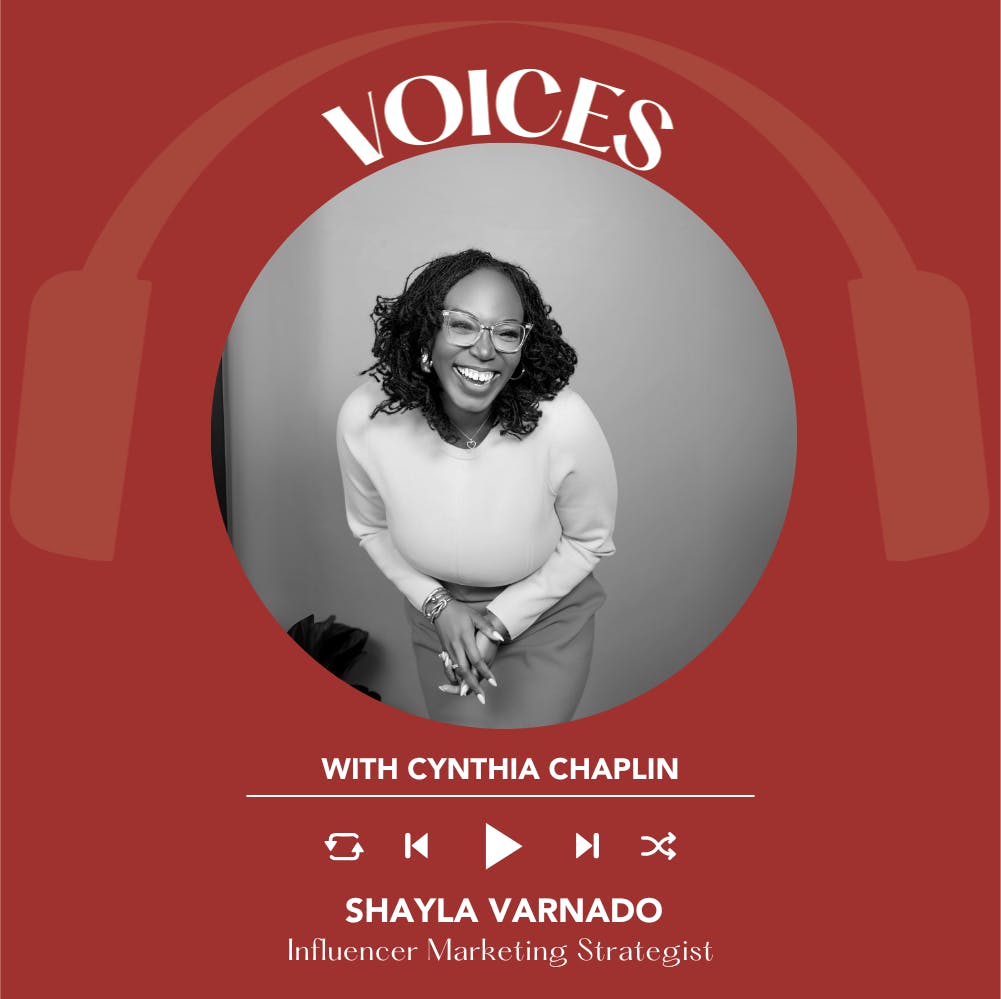
EP 2323 Shayla Varnado l Voices with Cynthia Chaplin
Voices
Episode Summary
Content Analysis Key Themes and Main Ideas 1. The critical importance of diversity, equity, and inclusion (DEI) within the global wine industry. 2. Shayla Varnado's pioneering journey in creating safe and inclusive spaces for Black women and people of color in wine. 3. The challenges and experiences of underrepresented groups in the wine sector, including lack of visibility and marketing. 4. Strategies for wineries and the wider industry to effectively engage and attract diverse consumer bases. 5. The impact of current sociopolitical trends and anti-DEI movements on efforts towards inclusivity in wine. Summary In this episode of the Italian Wine Podcast, host Cynthia Chaplin interviews Shayla Varnado, founder of Black Girls Wine and COO of Black Girls Social Club. Shayla recounts her unconventional entry into the wine world, from a fashion marketing background to recognizing the significant lack of diversity at wine events. This realization spurred her to create Black Girls Wine, a platform and society dedicated to building safe, relatable communities for Black women passionate about wine. She discusses the growth of her initiatives, including wine retreats, and how they adapted during the COVID-19 pandemic by transitioning online, which unexpectedly expanded their reach. Shayla also elaborates on her current role at Black Girls Social Club, extending her mission of creating safe spaces beyond wine. A central part of the conversation focuses on how the wine industry can better engage with diverse communities, emphasizing the untapped economic potential and advocating for targeted marketing, relevant events, and the inclusion of diverse voices in decision-making. Shayla expresses concern about the current political climate in the US impacting DEI initiatives and underscores that inclusivity benefits the entire industry, making wine more enjoyable and accessible for everyone. Takeaways - The wine industry historically lacks diversity, particularly in representation and marketing towards people of color. - Shayla Varnado's Black Girls Wine and Black Girls Social Club are pioneering examples of creating inclusive, safe, and relatable communities for Black women in wine. - Direct, relatable communication and education (e.g., in contrast to overly academic WSET language) are crucial for engaging new and diverse audiences. - Diverse consumer groups, such as single Black women and the LGBTQ community, represent a significant and often untapped market with high disposable income for wine. - Wineries and the industry should consider hiring ""trending consultants"" and host culturally relevant events (e.g., R&B concerts instead of bluegrass) to attract diverse consumers. - The current sociopolitical climate, particularly anti-DEI sentiment, poses a threat to progress in inclusivity within the wine industry, potentially impacting sales and customer experience. - Inclusivity is essential for the future growth and relevance of the wine sector, benefiting both the industry's bottom line and the overall consumer experience. Notable Quotes - ""People of color feel welcome. Not just black women and black men, but people in people of color in general that they feel welcome, and they always have a seat at my table."
About This Episode
Speaker 0 discusses their experience in the wine industry and their desire to create a safe space for people of color to come together. They also discuss their involvement in a social club called Black Patient Social Club and their focus on promoting their brand. Speaker 2 talks about their involvement in a virtual membership for their own brand and their desire to create a community for people to connect with and participate in virtual events. They also discuss the impact of the pandemic on their business and the importance of being inclusive and thought leaders in the industry. They express their desire to relaunch the industry and create a safe space for people to be able to experience the virtual world.
Transcript
Those experiences and the experiences that I continue to have in the industry just make me mindful of the space that I'm creating and cocreating with others in the industry to make sure that People of color feel welcome. Not just black women and black men, but people in people of color in general that they feel welcome, and they always have a seat at my table. Welcome to the Italian wine podcast. I'm Cynthia Chaplin and this is voices. Every Wednesday, I will be sharing conversations with international wine industry professionals discussing issues in diversity, equity and inclusion through their personal experiences working in the field of one. If you enjoy the show, please subscribe and rate our show wherever you get your pods. Hello, and welcome to voices. This is me Cynthia Chaplin, and today I am so delighted to have Shay La Varnado with me on voices. She is the founder of Black Girls Wine and the COO of the Black Girls social club. She is also the founder of Elias's digital marketing agency a very diverse team of women who specialize in multicultural marketing. So this has been a bit of a journey to get this, interview to happen. So, Shailen, thank you so much. I'm really, really pleased that we could happen make this happen and get this going today. So, well Thank you. Listen. Thank you for having me. I love doing wine podcast and talking to other great people. I always say the best people are wine lovers, so I'm a pleasure to make sure we make your acquaintance. Absolutely, Troy. I one hundred percent agree. So, I know you're based in Virginia, and you went to Old Dominion University, and you got a bachelor of science degree in fashion and marketing. So not exactly like the traditional root into wine. So what made you get out of the corporate life and how did you get into wine? This is always an interesting little story. This usually is. So I graduated from college, and I couldn't find a job in fashion, and I landed in the insurance industry. So throughout my look, it was it was awful. We won't even rehash that experience that decade, but What I did acquire, in my corporate career was some really great friends. And I feel like those memes that are, like, when you're in corporate, you'll have a friend that's, like, fifteen and a friend that's, like, forty. That was me. And they turned out to be my really great friends, and they're the ones. Who introduced me to wine. So we would be getting together and they'd be like, hey, Shayla, one of my girlfriends would be like, can you go by the grocery store and pick up a pinot grigio? No. At the time, I couldn't even pronounce it. Right? Like, I was just like twenty three fresh out of college and, like, made these great older friends. And so it was just like, what? Get pick up what now, girl? And so that really kind of began my journey. And then the more I drank it, the more curious I was. And it really was, like, the nerd in me because I would go down the wine aisle and be like, there is a lot here. Like, there there has to be a process involved. Right? And so I kinda started exploring, And and that's kinda where that's how it all started. But that that's the best story. I think, yeah, having a group of friends that are, you know, all over the place, you know, you've got all this different input coming at you that's the best way to go. So and and my wine friends who have I've been acquiring them, like, little vintage pieces over the years, they are still my my best, best best friends. So I completely get that. It's interesting because I know I'm I'm a serial stalker. So I I have stalked you. No. I mean, listen, you were very prepared. Very prepared. You've said over time, you realized that none of your friends were into wine. The way that you were. And when you went to wine events, you would be, like, one of five black people walking around in a sea of everybody else, which I I love that image. That's a direct quote from something you said. I love that image. I have been part of that sea, so I know what you're talking about. How did these two experiences shape your view of the wine sector? Like, friends who weren't into wine and then go into wine events, and there was no one like you there. You know, my friends that aren't into wine, I just have kinda thought of it. Like, wine becomes a hobby and a lifestyle and everybody. One thing I learned, the more I explored the wine industry was that Okay. You really gotta be into this because it's not only, like, a financial commitment of exploration, but there's also, like, you gotta you there has to be a level of nerd. Like, you gotta be into it. Like, I care when a winemaker is like, this is what we do. This is what we do to the graves. This is what I did differently in the winemaking process. Like, I'm fascinated by that. And I feel like winemakers are geniuses. Right? And, like, some people just aren't into that. So that's what kinda led me into, like, exploring. And then it's interesting because I was just in an event last year. And I will have people comment on my post. I got a lot of comments on a post I made, or something I said in another interview about that, and they were like, oh, the wine industry has gotten better. And it's like, I don't know where you're located, but no it hasn't. Oh, I can't speak for your experience. Maybe you're in one of our cities here in the US that has a larger black population. That could be a thing. But in Virginia, where we have over three hundred wineries, it is highly likely nine out of ten times that if you walk into a wine event here in this state, you're gonna be one of five in a sea of hundreds of other wine lovers. It just made me want to create that safe space for people who desire to learn more, for people who may not feel comfortable in that room. Right? That's part of what made me start my show. So that there could be someone relatable providing relatable references. Right? You and I talked about w set, and while I have my level too, I don't often use a lot of the words or descriptors because I want it to be relatable. I want it to be conversation that people can really connect with. And so, yeah, it just is those experiences and the experiences that I continue to have in the industry just make me mindful of this space that I'm creating and cocreating with others in the industry to make sure that people of color feel welcome. Not just black women and black men, but people in people of color in general that they feel welcome, and they always have a seat at my table. I I am so grateful for you and and people like you that I've met, you know, in the past four years that I've been doing this podcast because I'm a lot older than you. I've been in the wine industry longer than you. It is better. Now diversity wise, but that that level of bitterness is just so tiny, you know, at least you're one of five back in my day. You you were one of none. So, you know, back on my day, actually, I was one of five women of of any, any kind of women. So I understand that feeling, even though, you know, my, obviously, my privilege is very, very different. And I am so on board with everything you're saying in terms of WSET. We talked about this a little bit before we turned on the microphone. I am a WSET educator. I hold WSET certificates myself I am, you know, very respectful of what they do and how useful they are globally, but, oh, my word. We have got to change this discourse. It is just not useful, for new people coming into the industry. And especially if we want to remain global, you know, we have so many young people, especially young women, people of color all over the world, coming into the wine industry who are very put off by that language and intimidated by that language. So I love what you're doing. This is how I found you because I I dive deep into finding cool people more charming and intelligent and, you know, passionate the way that I am about getting people in. So let's talk about this. You founded Black Girls Fine Society in two thousand and sixteen. And the goal was to build a community for women of color united by their love of wine. I love this. So tell me how it got started and how you promoted it and how you grew it. Yeah. So Black Girls wine, just my lifestyle platform, is twenty sixteen. And then the society was founded in twenty nineteen. So that three year period that I spent really building the brand building the community is how I launched it. I was very strategic. At that point, by twenty nineteen, I was going live on Facebook and Instagram. Then eventually adding YouTube. And so the more that my platform grew, the more women found out, the more people found out about it. And leading up to twenty nineteen, between twenty sixteen to twenty nineteen, I hosted a ton of wine events across the country. Mostly East Coast. Yeah. East Coast. So we did DC. We did Atlanta. We did Charlotte. We did Raleigh. I was up and down the East Coast hosting events. Leading up to the society. And I just I wanted this place where, you know, black woman could come together and feel excited and feel safe. And then also the interesting thing is there's so many communal references, even that relate to wine, that really help with that building of understanding and wine knowledge, right, that I knew would be a great opportunity to help more women explain their palettes. So that's kinda look, that's how it got there. And then eventually It's just it's so cool. I I love the idea of creating a a place of safety. I have four daughters myself who are all in their, twenties and and early thirties. And creating a place of safety for women and particularly women of color and, bipoc women everywhere is so important because, we are overlooked. It can be very intimidating even for me in certain times, after all this time in the wine industry, I still walk into a room that's all men. And, and and people look at you and they look you up and down, and and often you get the, what, you're sort of dismissing. Yep. Yep. They look at you. And it's almost like they ignore that you're even there, and you're like, no. Exactly. So I I like the fact that you called it a safe space. I think that's really important for any kind of learning. You know, we need people to learn in a place where they feel safe and comfort So that's really important. And then in two thousand and eighteen, you founded Black Girls Wind Retreat, which this sounds like so much fun already. I don't even know what happened at that, but I already wanna go. So tell us about that idea. How many people came? Where did you go? What did you taste? What did you do? What was the it sounds like wine can't. I wanna go to this. That's essentially what it is. I so I've been hosting those. This is actually the first year. I will not have done it in a while. We did I had two last year. And so the wine retreats are a lot of It really is just a weekend of wine. You need to be a wine lover if you ever attend one of my retreats. Like, you can't be anything else because that's all we do. We drink all weekend. But it isn't a structured, like, setting. And so I bring in a special guest all weekend who teach different things. And then we do other cool stuff too. So, like, I've had a cigar wine pairing. At every retreat, I do a five to seven course meal with wine pairings. And I partner with different black chefs depending on where I am to execute on that experience. And we do different, courses, or I shouldn't say courses. I guess there are many courses, right, throughout the day. Sessions that just kinda explore different aspects of wine. Every retreat is different in what's in what wines are explored and how they're explored. Last year, I took my retreat on the road to Charlottesville, so we for the Charlotte Trail wine region, Monicello wine region here in Virginia, and that was a ton of fun. Like, we just went from winery to winery, and it was a good time. Usually they've been hosted in Richmond though, my hometown and everybody's stationary, and we just bring the guests in and rotate them in. So it's it's fun. It's a fun week. I have a good time. Now the crazy thing is I have a good time hosting it. Like, I like seeing other people glow as they explore wine and have fun because I usually don't do a lot of drinking at them because I gotta, you know, orchestrate it. Well, it's interesting. And we talk a lot in you know, in in some of the places where I work in Italy about spreading the wine joy. And it sounds like that is exactly what you're doing. So I am I am completely on board with that feeling. I know exactly what you mean about seeing someone's face light up, have that light bulb moment or, you know, just taste something they really love and they think I'm gonna go and buy this right now. I can't wait to have more of it. So it is, I being a host, being an educator, being a presenter at a master class, or things like that, you really do get to see people's faces. And I think working in line, I do a lot of writing, which is really solitary, but those moments when you are face to face with people who are really engaged are are the best moments. So Unfortunately, like everything else, you know, in the world these days, there's a part of the story that goes, and then COVID. So your story is, you know, pandemic hit and you had to pivot away from in person events, like all the rest of us So how did you adapt? You know, what was the result of going online? Because I know you went online, and what happened? Yeah. So COVID hit. It's funny because we didn't have a retreat in twenty twenty, but our twenty twenty one attendance was through the roof. Like, we just went ahead and went outside, and I was pregnant at the twenty twenty one retreat. But we went ahead and had it because I was like, you know, I people I know people miss being out side. But in twenty twenty, we transitioned the membership, to a hundred percent online. Our chapters some of our chapters were still meeting in twenty twenty. Like, the ladies were just craving that connection. And so you know, they were really careful, really safe. We never had any incidences of, like, COVID being spread. But the online transition was huge. We launched our virtual membership, and that's really when membership skyrocketed because people were looking for community. So it it went well. Look. That's that's part of your story that I really liked when I was digging deep into your background because so many people, felt depressed and distressed when they had to move online. I had to segue from teaching university introduction to Italian wine from in person to online. And I I loved the challenge of it. We were talking about tech beforehand, and having to learn how to manage all the tech and then teach my Italian colleagues who were really against it was was fun, but being able to stay in touch with my young students who are the most vibrant of all my clients. It was great fun. So I understand, and and yours really blew up. I mean, you you suddenly discovered a reach across the country that you didn't really have before. Yeah. And it and it's it's interesting because COVID was good in that way, but then it also really impacted us when everybody went back outside. Because then people were like, okay, I'm sick of being online. I'm ready to get off. So we did see that dip in membership. And or a different sign ups, I should say because people wanted to get back out with their family and friends, but COVID was an unfortunate, you know, I guess, blessing. It was unfortunate that it was happening, but It was great for the organization and the reach and the community to be able to provide that safe space, especially in light of everything happening here in America, that is only amplified and escalated at this point. But Well, I think you navigated it particularly well. You know, it was it was one of those unforeseen, unprecedented things, that books will be written about. And, you know, you navigated it well. And then, you know, you moved on. You you shut down black girls wine in two thousand twenty two, but you're the CEO of Black girls social club. So the mission for this is to create that same safe space for black women and change the narrative about how black women interact with each other. You you are a modern day social club, like, determined to bring back the art of face to face communication. So you've gone, like, three sixty from before COVID to after. Trying to get people off their phones and off the internet and you're tackling mental health, physical, and emotional issues as a community, and you're trying to impact the lives of black women through this really elevated social interaction. So tell us more about the club and and how does it sit alongside what you were doing with black girls' wine? You know, what are you doing to drive this mission forward? Because I think it's such an important one. Yeah. Thank you. So I Look, like, where do I start? So when a a friend of mine, I've known her for oh, gosh. How old am I? I guess it's been almost twenty oh, over twenty five years. And when she launched Blackgirl Social Club, I thought it was really cool. At the time, I was still running this society. And, we were building alongside each other. We were building together. And so now being COO at her company, I gotta take I find so much joy in that in my everyday just knowing that this space is safe and being created. And my role as COO is I'm I am helping her lay the foundation operationally she was ready to hit the reset button and she brought me on because she saw what I did with this society. And for me, it is really just continuing that mission, while it's not a wine focused organization. It is the focus is kinda very different than black girls wine society, but also the same. Because mine was, like, the same, but with wine. So I am definitely look, I'm trying to get some tastings in there. Like, we need to do tastings, guys. Everything is better with really. Better with wine. Like, we just need to add wine into the conversation. So I'm trying to add some wine in there. But yeah, it's it's it's allowing me to kinda just continue to create to fulfill my purpose in creating safe spaces. Which has been really nice, and it doesn't interfere with, like, black rose wine and just my mission and vision for that. So I'm kind of working on, you know, simultaneously now, and just really enjoying the community there. And I actually it's funny because see, you said in person, but I have a thing about making sure that people can connect no matter where they are. And so we're actually pulling together and launching a virtual membership. In the next thirty to sixty days getting a chapter later there because there are areas where, like, a chapter may or may not make sense, like, depending on where you are in this country. And so it might be you know, it's still beneficial for you to be able to log on to a virtual community. So we are working on that as well. I love the fact that you are combining your, you know, your love for wine, creating a safe space for black women there. Now working with your friend, with the Black Girl social club and having this interactive sort of health and wellness based, you know, community that you're growing And I know that your your day job before all of this was alliance, which was your all female digital marketing agency, created all this impactful marketing campaigns to drive businesses and build more community, you are such a community person. Makes me very happy. So I am. I am. So you said one time when you walk into a wine store, do you ever see black people up on the wall? Do you ever see them in the ads? You know, what was the last time you went to a wine festival? Did you see more than twenty black people there? You know, I don't care if there were five hundred people. You never see more than twenty, and it's because it's not marketed. And I never see anything about wine festivals in essence or ebony magazines that I read. So how am I gonna find anything? This is one of the best quotes, because I feel your frustration in it, but also you know, you you have managed to figure out a way to take your frustration and turn it into marketing and communication. So, really interesting. I know this isn't something you're doing on a daily basis anymore, but it's so powerful. So you know, how do you think wineries and the wine industry in general, could engage better with with the black community, with black women, with young women, with people coming in, Now I know this is something you were looking at with Elias and you still do when when it arises. What what would you like to see happen to improve this problem? Yeah. Well, first of all, call me. I'm definitely open for consultations if a winery needs help with this. But some of the things that would really help improve this problem, like, now we do have some very black or African American centered wine experiences, the two up two down festival, hosted by universe in Charlottesville. The homecoming event is hosted in here in Virginia at a black owned resort, the woman who used to be. I think the CEO, BT hosted. So there are, like, some anchored events, but they're being hosted by black people. Outside of that, the wine industry as a whole, I think what they need to figure or what they need to be thinking about top of mind to be more inclusive is One, bring on somebody to your team, whether it's in a consultant basis. It doesn't have to be me. There's plenty of black people in this industry, and ask about what's trending. Ask about what is happening and then make it relative to the community. So for example, one thing I always say is I see a lot of Bluegrass concerts on the calendars for wineries. That's something you don't see in Italy for sure. Listen. The listen. Italians Italians are not even coming out for these Bluegrass concerts. So I don't know why y'all think black people wouldn't be there too. So and that's that's the thing. Like, it's just, like, come up with more relative, like, a lot of black people, especially who are in the Now I'm gonna turn it to a marketing nerd. So when you look at the audience, right, in the audience that has the money to spend, the disposable income on wine, the most disposable income in this country are, people who are in the LGBTQ community. These are facts. I just recently read a marketing book, so I'm telling you facts that are and then, single women, specifically single black women spend the most money. Right? And so when you think about those three audiences, what are they into? What do they want to be a part of? What tickets are they already buying online? And how can you bring that event? To your winery, or how can you take your wine to that event? Because that's what's gonna help increase the amount of wine consumption in younger consumers. That's what's gonna help increase the amount of wine consumption and engagement with African American consumers, like, there's a million RMB artists host the RMB concert feature a local up and coming local artist that has a really great and strong following. There you go right there. Right? Like, it's just that kind of stuff. It's like thinking out side of your own world. You created this wine, and I know you only have your world view. So you gotta step outside of that to plan something to expand your audience in your reach. And ultimately, this impacts your bottom black people spend more money on alcohol than anybody else in this country. So, like, you're missing a huge market. Yeah. I I love you. You're you are singing my song so much and it's it's not only in the US, but, you know, I see in, you know, in Africa, in Kenya, in other countries, where young black women for the first time in history have their own disposable income. They're not married. They have a job. They don't have kids. They and they're interested in wine. And they're curious, and they have money, and they wanna spend money at the same as happening in Asia. Young Asian women for the first time have their own money. So you you're so right, that wineries need to pay attention. I love this idea of hiring a trending consultant. That's, that's very interesting to me. I I didn't, put this in my little notes to you that I sent before this. So I'm just gonna throw it out there. It's a curve ball, but, you know, we're all very well aware of the new administration in the US. I'm American. I haven't lived in the USA for thirty four years, but I am still American, and we've got a new administration that is trying to crush every deI, you know, activity that is going on. Are you are you seeing that? Are you feeling that? How How is that impacting what you do and what you want to do? Well, I think it definitely impacts what I do. I noticed just some wine events that have that have been happening even locally that I used to get an invite to that I didn't get an invite to this year. Like, it happened as recently as last month or so, and just different stuff like that. And so seeing that kind of stuff is it's discouraging, honestly. I thought Not I thought. I'm gonna say I held my breath, but I I would have loved for my expectations to have been met of the wine industry, turning the other cheek. So to speak and continuing on the path to being more inclusive to being more thought leader with more with a little more thought leadership and making the decisions that are being made I mean, it impacts people who are gonna be hired in workplaces at a corporate level and that kind of thing. And I think it's unfortunate because, again, we look at sales and wine across the industry. They've never been super high for diverse communities. And when you think about just that potential untapped dollar, I don't think it's a wise business decision either. And so my hope is that more people in this industry continue to push the narrative forward that it is wine is better when it's inclusive, and there are people in various spaces from all around the world. Not just white men, but, having that everybody's voice at the table, it just brings a different level of experience, and it makes wine more enjoyable. So when you allow this current administration's decisions on deI to impact how you do business. I mean, it's gonna overall impact not even just your bottom line, but also your customer experience. Right? And I think that's that's the unfortunate part and that's that's what's missing. Yeah. It's distressing and it's discouraging. And as you said, you know, wine was creative to be shared. That's why it was created. You know, historically, traditionally over thousands of years, and to see doors starting to shut just breaks my heart. You know, I've I've spent years trying to push back, and I'll continue, as I know you will, but, it is. It's discouraging and it's distressing. So you know, I I know that that black girls' wine is really your heart, you know, where you really got going. You know, that's when your face lights up when we talk about it. So I'm gonna move on to to a happy thing. You know, you've said you wanna tell the story of what it looks like when people color incorporate wine into their life experience, which I think is a an awesome concept. I love that. And I know you wanna make people feel more comfortable and more safe as we've talked about. So fill us in on how you are sort of climbing up this huge mountain, to accomplish this magician. Yeah. Right now, my focus has been to continue with creating content. Going live and having this really engaged community on Wednesdays, letting people ask me questions and then offering also as much information as I can. Look at sometimes can't always remember everything off the top of my head that I had to study to get my level sent to me too, but, you know, I try I keep my books next to me, so that I can answer questions. Look, yes. Yes. I'm like, My recording setup is over here, and then all of my wine books are over here on the side of my desk. So it's always like, oh, I need to pull some books. So I try to, like, provide reference when I can and just also I really wanna kinda start a series of, like, you know, I can't I haven't quite figured out the name of it, but the direction and the point of it is to it's everyday wine, like my everyday, like, life, like, I'm drinking about, I tend to pouring glass when I'm cooking. I have a toddler at home so I don't drink that much. But when I'm cooking, I tend to pour a glass and kind of start to tell that story and, you know, this is why I'm choosing this wine. This is what I have for dinner, and this is what I'm making for dinner. So I kinda wanna build a little more into that. And then I don't know. I, you know, honestly, Cynthia, I have dreams of relaunching this society one day, and it being a hundred percent virtual, it will be hundred percent all in my community. But just relaunching it, and just creating that that engagement in that safe space again. I know it's needed and I really feel it, especially with our current administration. You're so lucky you're out of here. No. We're we're about to be slaughtered by this tariff thing, but I'm not gonna go into that. I'm sorry. We'll we'll talk about that. Well, we get that. But, yeah. So it's, you know, I I feel the need for the community. And so my goal is to continue to create content that people can connect with, eventually get back to hosting events when people want it. And are able to, you know, I'm trying to be mindful of where the community is, where the country is. But yeah. That's that's what I'm trying to do. Trying to create as much happiness and joy and bring that to the wine experience and let people see how easy it is to just incorporate it in your life and just have this moment just for you where you get to try something new. It's exploration on a everyday level, and it's good for your brain. It's good for your body. It's good for your mood. It's complete. And you don't even have to leave the comfort of your sofa to go exploring, which is weird. Yes. Like, I can go to Spain. Literally, that might be where I go this evening. Look, and, like, have some grilled trip I'm gonna enjoy. Right? So, like, getting in the habit of of sharing more of that. And I do a lot of it in my stories. I do do a lot of it in my store Instagram store Instagram and Facebook stories. Well, I'd love to say for everybody who's listening, you know, ins your Instagram handle is Black Girls, It is it you've you have really brought a lot of happiness into my day. It's the end of my day here. So I love seeing how, you know, really, really dedicated and passionate you are. Your face lights up when you talk about it. You know, I'm an old white girl, but I would still love to get involved and be an ally and support and help in any way I can because I think what you're doing is important. Also, you know, in terms of what's happening in the US right now and the atmosphere, But I think also for the future of wine, regardless of politics, getting young people fired up and excited and comfortable and happy, learning about wine, tasting wine, you know, not being intimidated is so important to the future of our entire sector, you know, which is something we really care about. So I cannot thank you enough for coming on voices today and talking to me and being so kind and open I'm really glad I got to speak to you today. Thank you so much. Yeah. No. Thank you for having me. I love having these conversations. I'm a people person, so I enjoy connecting with other wine lovers. And it's really joy. Thank you for having me. Thank you for listening, and remember to tune in next Wednesday when I'll be chatting with another fascinating guest. Italian wine podcast is among the leading wine podcast in the world, and the only one with a daily show. Tune in every day and discover all our different shows. You can find us at Italian wine podcast dot com, SoundCloud, Spotify, Himalaya, or wherever you get your pods.
Episode Details
Keywords
Related Episodes

Ep. 2651 Diversity in the Wine Industry and Wine Tech Innovation with Jeremy McCarty | Voices with Cynthia Chaplin
Episode 2651

Ep. 2627 Regenerative Winemaking, Mentorship & LGBTQ+ Perspectives with Terah Bajjalieh | Voices with Cynthia Chaplin
Episode 2627
Ep. 2545 Building Inclusive Wine Spaces Through Storytelling with Amari Collins | Voices with Cynthia Chaplin
Episode 2545

Ep. 2542 4th Anniversary Special | Voices with Cynthia Chaplin
Episode 2542
Ep. 2531 Winemaking Journey from Mumbai to Napa with Priyanka French | Voices with Cynthia Chaplin
Episode 2531

EP. 2517 Sarah Looper | Voices with Cynthia Chaplin
Episode 2517