

Ep. 2430 Jessica Summer of Mouse & Grape | Voices with Cynthia Chaplin
Voices
Episode Summary
Content Analysis Key Themes and Main Ideas 1. Jessica Summer's entrepreneurial journey from corporate life to founding Mouse & Grape, a luxury cheese and wine business. 2. The strategic importance of formal qualifications and credibility in niche industries like wine and cheese. 3. The multi-faceted growth of Mouse & Grape, diversifying from online sales and social media to tasting events and a physical deli bar. 4. The pivotal role of mentorship, industry accolades, and media exposure in fostering business success and confidence. 5. Mouse & Grape's commitment to sustainability, ethical sourcing, and inclusivity, balancing business growth with personal values. Summary In this episode of the Italian Wine Podcast, host Cynthia Chaplin interviews Jessica Summer, the visionary behind Mouse & Grape. Jessica shares her journey from a background in real estate to becoming a prominent figure in the cheese and wine industry, a pivot largely influenced by losing her job due to the COVID-19 pandemic. She discusses how her passion for cheese and wine, coupled with rigorous formal qualifications (WSET and Academy of Cheese), formed the bedrock of her credibility and business. Jessica details the evolution of Mouse & Grape, starting as an Instagram account sharing pairings, expanding into curated online hampers and events, and eventually opening a physical deli bar. She emphasizes the importance of diversifying income streams, seeking mentorship (notably from the Prince's Trust, now King's Trust), and leveraging media attention like her appearance on ""Saturday Kitchen."" The conversation also touches on her commitment to sustainability, eco-friendly practices, and offering inclusive options, concluding with her ambitious future plans for Mouse & Grape's expansion and balancing professional growth with personal aspirations. Takeaways * Personal passions can be transformed into successful entrepreneurial ventures, especially when combined with strategic planning. * Formal qualifications are crucial for building credibility and trust in specialized industries, enabling premium service. * Diversifying business channels (online, events, physical retail) is essential for resilience and growth, particularly in competitive markets. * Mentorship and external support programs (like the Prince's Trust) provide invaluable guidance and confidence for new entrepreneurs. * Awards, industry recognition, and media appearances can significantly boost brand visibility and market perception. * Operating with a strong commitment to sustainability and inclusivity appeals to modern consumers and builds a positive brand image. * Entrepreneurship requires a big vision, coupled with perseverance and realistic expectation management. Notable Quotes * ""Qualifications enable you to be credible before time gives you that credibility."
About This Episode
Speaker 0 describes their goal of creating a successful business and how they found a new opportunity in their online cheese and wine business after COVID-19. They discuss their background in PR and how they invested in PR through word-of-mouth and PR. They emphasize the importance of learning from successful entrepreneurs and finding mentors who understand their goals. They also discuss their success in the beer and wine industries and their commitment to sustainability and being a hundred percent recyclable. Speaker 2 expresses their excitement about their business and plans to visit Speaker 3's new home in London.
Transcript
The goal was always to create a a big business. So I knew that to have a a successful business, I'd need to have the foundations. And to one of the main pillars of the foundations is qualifications. It's it's being incredible. And qualifications enable you to be credible before time gives you that credibility. Welcome to the Italian wine podcast. I'm Cynthia Chaplin, and this is voices. Every Wednesday, I will be sharing conversations with international wine industry professionals discussing issues in diversity, equity, and inclusion through their personal experiences, working in the field of wine. If you enjoy the show, please subscribe and rate our show wherever you get your pods. Hello. This is Cynthia Chaplin. And today, I am so happy to welcome Jessica's Summer to voices. Jessica's in North London, and she started her professional life in fatality, and PR and real estate. And she is now the proud owner of mouse and grape, which is a luxury online cheese and wine business, and she opened her first bricks and mortar shop in November of twenty twenty four. She was a finalist for Harper's drinks thirty under thirty, the winner of drinks business social media campaign of the year for twenty twenty four, finalist for the IWSE emerging talent in wine and food, and a lot of other, great awards have been coming your way. So thanks for making time to for us today, Jessica. Welcome to voices. Oh, you're so you're so welcome and it's it's an absolute pleasure to be here and to chat with you today. Great. Well, the obvious first question in all of this is how did you go from a state agent to cheese and wine guru? Sure. A lot of people in the property business drink wine and eat cheese, but I don't see many of them rushing out to start up a business. So what was the critical moment for you where you decided this is what I'm gonna do next? Yeah. It's it's a great question. So I I worked in property. I was working in a family lettings business, like residential property. And I wanted to get more experience working in in the industry just working for another company. So I started a new job, for a central London letting agency, and my job started on March the ninth twenty twenty. So I lost that job on the nineteenth. I was only there for ten days actually before they let me go because of COVID. And ten days was enough time for me to realize that I would have absolutely hated working there, and it was a blessing in disguise. And it just basically gave me an opportunity to to reflect, and it was a really difficult time. I mean, obviously, there was lots of uncertainty going on anyway with COVID. But to make the move to leave a family business was really challenging in itself to then that opportunity to disappear. I was just not in, like, the best head space mentally. So I was listening to a lot of podcasts at the time, And one of the podcasts that I loved listening to was the Fern Cotton Happy Place podcast, and she interviews lots of celebrities and different successful people about kind of what's their happy place and mindfulness And one of the people she was interviewing, is a lady called Holly Tucker, and she founded Not on the High Street. And she has an ethos in a book, which is do what you love, love what you do. Creating a lifestyle business. And I was just having a chat with my my fiance, and he well, my husband now. I got married. I got married a lot earlier this month. And he just said, well, what do you love? What what's your thing that you love? That you just start a business in. And I just said straight away cheese and wine. And that's where it started. And he said, what would you call your business? I said mouse and grape. And he was like, that's really good. Like, should we see if it's taken on company's house and the domain names, and it wasn't? So I I bought it then and there. And then, I always knew I wanted to have a business. So I think I've always been entrepreneur, anyway. But, yeah, it's it's a it's a come from a passion, a genuine passion, and love of cheese and wine. And then obviously because it was COVID, I couldn't get a job in hospitality or in the wine sector because things had had slowed down and changed so much. So I started off on Instagram, sharing my favorite cheese and wine pairings and recommendations online, whilst also studying for my qualifications. So doing my WSTT up to level three and then the same in cheese as well. But it's amazing. I I love how first of all, congratulations on your wedding. Oh, thank you. But there are so many great stories that start with, you know, and then there was COVID. And so I had to find something else to do. Myself included. So, there's it's really nice to meet people who, you know, COVID was an inspirational time rather than a really depressing or, you know, very sad time. So good for you for taking that moment to to do something positive and proactive. So you you just basically started out with your Instagram account, you know, in in twenty twenty. And everybody was kind of, you know, in the in the dark days of COVID. So what happened on social media that eventually made you pivot into the online business? Because it kind of blew up for you. Yeah. I think for me, the goal was always to have a business, and the Instagram was a vessel to get further along. So it was a it was a space for me to do moral research to make connections, to do market research and to learn. And it just gave me time to really hone in on my USB, and my kind of niche within the wine world is pairings with cheese. So I'm a cheese monger and I'm a sommelier. So that's quite a nice, and that's how it it develops really from there. And I think in talking about and communicating about cheese and wine, then I got such a deeper understanding of it as well. And I just originally started off with Hamper's mouse and grape. So I started by, putting together a curated cheese and wine hampers together because I noticed that though there are lots of places you can buy, cheese and wine hampers from, they're not thoughtfully paired. You might have two great wines and then for very average wax coated cheeses or vice versa. And that was where I thought, oh, this is something that I could do really well. And it's all that thoughtful curation. Everything is there for a reason and put together. So I started selling hampers, and I built a website and did my photography and I'd my a level in photography came in very useful during that time, and then start I'd launched the business officially on the sixth of December twenty twenty one. And then from there, I actually, that Christmas was the first Christmas that I'd ever cut and wrap cheese. And though I had got experience at a wine shop in the run ups of that, I didn't have much cheese experience, and that first Christmas taught me that I really needed cheese experience. So I then got a job working for LaFramagerie, which are based in Marllebone, and I worked there for ten months as a cheese monger. Whilst building the online presence and the online business and then started hosting tasting events as well. So I hosted my first corporate tasting event in March twenty twenty two. So who are your clients now? I mean, how how did it how did the online business? Because it's an e commerce business online. Yeah. How did people find you? How did you get going? You know, how have you gotten corporate clients? Who are what's your client base like now online? Yeah. It's it's a great question because e commerce is it's notoriously difficult. There's so much competition. There's a lot of noise online. And I think the things that set me apart was the brand. And the branding of what I was doing, I think having a focus on SEO and trying to think of, economical ways to get yourself seen online and through the website I think having a small Instagram presence helped because people through word-of-mouth recommendation, people were really supportive as well. I invested in PR very early on because I've got a background in PR, so I understand it. So I I worked with a a PR company to get mouse engrave into recommendation lists, like, on the independent and, the express. So very early on, we had really good media coverage. And then I think a lot of it was was through word-of-mouth, but then also I I got lots of photo evidence. So especially when I first started hosting those corporate events, It was through a friend of a friend actually that ends up hosting my first event, and I got lots of great photos from that, which I then shared online. And then slowly through, again, I mean, a mixture of networking through becoming a I guess, a a person who is a considered to be an industry expert in their field, you then attract more business. So I think it's it's over time, really. And I know that's quite an an annoying thing to say, but it's it does it's you can't You gotta do everything. Yeah. It's a really honest thing to say, and especially because you were kind of a a one woman band. I I like the fact that you, you know, you didn't rely on your own PR skills. You invested, you know, you you were doing everything else yourself and you invested in in external things in a really wise and strategic way. So Thank you very much. I think things changed with the hampers when I invested in professional photography. That was a that was a shift. And then, yeah, I think it's it is a really good example because this week, actually, I just had a corporate tasting event inquiry come through. And this is for, in Central London, and it's for a group of, thirty five people at a package for that. I think it's, like, sixty five pounds ahead or something. But this is all on my website now. So people can literally just email me and say, oh, we'd like to do this, this, this, on this day. Can you do it? And I'm like, yeah. But that was never the case when I first started, like, every single event, I really had to work hard to win win that business. And it was it was really challenging. Really challenging at the start because you you've almost got to be so believe you've got to have belief in yourself and you've got to be confident even though you necessarily haven't done it before. Exactly. I think it's It's the old fake it till you make it minute. And I think that going back to what you said at the beginning, the, you know, do what you love and love what you do, probably drove a lot of that because it's a lot easier to put in twenty hours a day, you know, starting up a business if it's something you really love than if it's something you don't really care about. So I'm really happy to hear that. And I wanna I wanna sort of cycle back a minute because you mentioned that in the midst of all of this, building the business, building the online, building the events, you decided to sort of dive head first into expanding your knowledge and your expertise, and you worked in the wine shop, you did your, you know, level one, two, and three with WSET, you got your academy of cheese level two. I have to say I didn't even know there was such a thing until I started looking into what you've done. Florence is great. Anyone, if anyone loves cheese, look up the academy of cheese, because they're great. All these things, you know, food safety level three training, you know, all kinds of things. You you were supported by the prince's trust, which I wanna ask you about. So I I lived in England for seventeen years, so it's lots of fun for me to talk to people who are, in the UK because some of these things, you know, Fern Cotton for anybody who's listening is a great person to to follow and to look up. She's a a UK personality with a good heart. And not on the high street, one of my favorite e commerce, shops for gifts. I have four daughters. I had spent a lot of money at well, my high street. But the prince's trust is also really interesting. You know, we know that wine and probably cheese education is not cheap. So getting some sponsorship, you know, is is helpful. It it's interesting because there's a big conversation at the moment in the wine sector for sure that traditional wine education is a bit passe. So what made you decide to do all of this studying? Cause it's very time consuming. I'm a WST educator. I know how long it takes you to And and how did the Princess Trust, enterprise program help you out? So why did you start taking formal classes and and where did you get support for that? Yeah. So for me, the goal was always to create a a big business. So I knew that to have a a successful business, I'd need to have the foundations and to one of the main pillars of the foundations is qualifications. It's it's being credible. And qualifications enable you to be credible before time gives you that credibility. So it's almost like a a quick way, I think, of well, not quick because it it's time it's time consuming you gotta do the work. But it's just it's a way for people to trust you to get the business in saying, oh, I'm I've got this qualification. I know what I'm talking about. So I think for me, it was non negotiable. I had to have the qualifications and that and that knowledge to be able to give the luxury, high end service because that's another thing as well. Mouse and Great. It's a luxury brand. It's high end. I charge premium prices. And to be able to charge those premium prices, you have to gain that trust You have no idea how happy this makes me because my my my big, my big problem with people coming into the wine world post COVID, you know, everyone suddenly became a wine influencer and and everyone suddenly became a wine expert, quote, unquote. Basically, if you had a bikini and a glass of wine and a good photographer, you were a wine expert. So, I'm very happy to hear that you felt it was important to get those credentials to get the kind of the mouse that would give you that credibility. I'm a firm believer in that. Once you have it, then you can you can kind of, you know, hone your own row however you like. I don't use WSET language when I'm writing things, but I have that credibility. So I'm really happy to hear that that was valuable to you. It goes a long way in this conversation at the moment of how do we communicate, about these subjects people want to learn. So tell me about the prince's trust. How did that get involved? Yeah. So the it's it's not it's now the king's trust. So the yeah. The king that so I what I realized quite quickly is that I've I've not run a business before. I've done I've done a degree in communications, and I've I've worked. I've been an employee, but I haven't been an employer. So I literally googled business courses, free business courses for, and the King's trust came up, and they ran a course. You had to be under thirty years old, and they ran a three a five day young enterprise program, it's called, where you get to do a, it's it's like a business one zero one training. So they do workshops in finance, in marketing, and creating a business plan, and you have to attend all of the sessions to be able to qualify from the course. And then after that, they can allocate you either a mentor or you can apply for funding for sponsorship for all sorts of things. You kind of you get under their umbrella, basically. And so I I thought it was a great opportunity for me to learn, and I've always been someone who's really valued mentorship. And this can see the importance of of learning from people who have already done what you're trying to do. It's it's the whole thing. You're the average of the five people you spend your most time with. So I tried to surround myself then with successful entrepreneurial people, people who've already succeeded in business, and the king's trust was a way of being able to get in the room with those sorts of people. So the course is what I did first, then I was allocated a mentor and I did a I got a Will at work branch, which I think was five hundred pounds from them, and I did a pop up stall, in a market with that. But from then, I've continued with the king's trust and I've done, different workshops with them. And actually, I've now become an ambassador. So I'm a young ambassador with the King's trust now and helping them to spread their message and all the good that they do as a charity. And encouraging other young people to consider entrepreneurialism as a serious function. This is so this is so mega. This is really something that I am fully behind. I think, getting people into these sorts of industries that that aren't easy to access when you're at the beginning. You need support. You need mentors. I I do some mentoring with curious fines. I I look back at my, you know, early days in the wine industry, and I wish I could had a mentor. So it's great to know that, you know, they supported you and now you're paying it back. I think that's really important, and creating that community of of people who are who are young, brave, you know, going out there and doing new things at a time where, you know, we know the world is a a bit of a scary place economically. There's not a lot of security. So I think having, you know, something like the king's trust and having, a solid network of of mentors like yourself and continuing workshops. It gives people, you know, some drive and some ambition. So, you know, I think that's that's great that you're doing that. I think it's the biggest thing I think it gave me is confidence, and just the belief that it's worth it and doing the work and having the the belief that it's possible. And also, because you've to learn how to manage your expectations, which is huge. Because when I first started, I had such an unrealistic expectation of what is possible. So I remember with my first Christmas, I ordered enough packaging for three hundred hampers because I was convinced I wouldn't have enough stuff for three hundred hampers. Bear in mind, I launched my website on the sixth of December. So I just and I I ordered all these loads of crackers, loads of loads of stuff. And I I think I sold four c Pampers in my first Christmas, which was a really good standing start. So, no, I'm very proud of myself for that, but I was really disappointed at the time. So I thought, oh, gosh, it's not worked, it's not good enough. And having a mentor just meant they were able to put a bit of perspective in and just say, like, no. This is great. This you've proved a concept. You've had Peeps strangers who've bought your products. Therefore, there's there's there's something here, Jess. And if you don't have that or someone says to you, your goals are slightly too big for what you're trying to achieve right now, but just widen your goals. Give yourself a bit more time then it it just is really helpful just having someone to feed that back to you because I think entrepreneurs, you've got to be a bit you've got to have a big vision to start something like this. Otherwise, you wouldn't bother starting. But then you've got to be able to do all the little bits of work that you used to be able to get to that big vision. And it and it does take a lot of time. It's it's going incredibly well. I'm a I'm a big stalker. So I have stocked through everything. And I'm going to list these incredible accolades you've been getting young cheese monger of the year finalist in the World Cheese Awards in twenty twenty two. Shortlisted as one of Harper's drinks thirty under thirty in twenty twenty three. You won the drinks business social media campaign of the year in twenty twenty four. I WSC emerging talent and wine finalist. Food and drinks start up of the year finalist. You've been featured as you said in lots of different publications. So how have all these awards and achievements affected your goals? You know, are you are you ordering packaging for three thousand Pampers now? What? What's going on? I think the I actually I've I I was the emerging talent the IWC this year. So I was the winner this year, and then also the drinks business was, I was the retail buyer of the year for them. I think I think the accolades helped to give credibility again. It's the whole it's that digital CV that people look you up, and then they can see what you're about. And it it means that people take you seriously. I think it's it's a nice thing for your confidence. I think it's a nice thing for the hard work to be recognized. I think that it gives you opportunities to meet other people and to, network and socialize and maybe build the business and build business connections off the back of those sorts of things. I think it's I think it's just really important to go for every opportunity. So because you don't know what will be the thing that then propels your business further. So I kind of see it all as as opportunities, really. I don't know if it directly affects sales. I think all of these things are good things to be able to talk about. I mean, I'm sure it helps sharing it with our network and saying that this is what we're doing sort of up to. The biggest thing that affected sales was I was on Saturday Kitchen, which is a British, breakfast show. Service kitchen. I love Helen McGinn, the wine Yeah. Woman. Yeah. Yeah. So I was on with Helen and with with Matt Tabit, and this was it would have been Christmas twenty twenty three. And that that propelled the business because I was able to get in front of I mean, I think there's probably there was a couple of million people watching, I think, of that show, which is mental, and it just that that sort of thing is really helpful. But as I said before, you've you've kind of got to be doing not everything, but you've I kind of feel like you've got to scoop everything forward and move it all forward bit by bit. If you just focus on one avenue wholly, then I think it's really difficult to proceed and to progress. So for me, I think the reason why it's it's maybe been, more successful is because I've got multiple income streams. I've got a social media income stream. I've got writing. I've got a shop physical deli bar. I've got online business. I've got, tasting events, private events, corporate events, and we're gonna launch a subscription as well. So there's there's multiple channels there. And I think that's the only way that businesses, wine shops, wine bars can succeed now is being diverse and that diversification in income. Because if one channel fails, you've got other banks as well. It's interesting what you mentioned about the shop. You know, it's kind of an old school move. You know, you you opened an actual physical shop in Pinner in the northeast part of London where you live. And, you know, we all know opening a shop these days is a huge risk. Statistically thirteen thousand five hundred shops in the UK closed in twenty twenty four, which is seriously depressing statistics. So it just sort of I wanna get in your head a minute. You know, What the heck were you thinking about this? You know, opening a shop, you know, I'm an I'm a wannabe shop owner myself. So I think you're very courageous. And, you know, we all want to know what spurred you on into this particular next step, a shop is a big undertaking. You opened in November twenty twenty four. So you are you are this person who opens your things right before Christmas. I think that's a very smart move. You know, people are buying stuff. Oh, yeah. If it was if it was down to me, well, the goal was to open is September twenty twenty four, but these things take on the thing, then you want them to be. We're nine months down the road. Houses, the house again. Yeah. The the shop that the there's the reason that we opened a physical store and it's a it's a deli and it's a bar. So we a lot of our, our revenue comes from the bar side. The kind of seating diners, we sell cheese boards, we sell wines by the glass, That's huge. I think if we were just a cheese shop or a wine shop, I think we would have really struggled because there's not the footfall in this area to be able to have that kind of of, of that revenue that you'd need to to be able to make the business work. We're also a very cozy intimate space. So that also, I think, would would be more of a challenge, but the the reason that I did it, it wasn't part of the plan at all. Was I was looking at going to the spirit of Christmas and having a stool there. So I priced it all up and just thought, well, for not too much difference, I could probably open a physical space. And it would be I would have the autonomy, not autonomy. It'd just be like mouse and grape would be the main thing not surrounded by thousands of other brands, like at the spirit of Christmas type events. At like all specialty food festivals, that kind of thing. I also think that people understand bricks and mortar more so than an online business. I keep coming back to credibility, but it just it's a physical thing that people can tangibly see and they can pick up wines. They can see what it's all about. And I think that was really helpful. And it kind of comes down to the core principles of what our business is which is sharing the joy of pairing cheese of wine. Yes. You can do that online, and you and people have got big online business successfully there. But I think it's having seeing people's happy faces, the the joy of tasting and having that human to human interaction, that's a huge part of the wine industry. Like, that's why we're doing it. We're not doing it so that we could sit on our computer screens or so I can stand there and make videos after videos I think it was really lacking that, and it's a joy to work with people. It's a joy to employ great people, passionate people who also love cheese and wine. And it's been great to bring something to my home community There's nothing like this in and around pinner. We've got kind of the peep it's been crying out for something like this, and the community has really stepped up and we're busy. It's go it's going very well, and we're looking at ways that we can expand and, bring more to to our customers. Well, it's fantastic, but it's it's it's so good to hear, like, such a really joyful success story makes my makes my day, but one of the things that drew me to you and to Nelson Great is your commitment to, you know, small artisan producers and b corp certified wholesalers. You've got organic and vegan products, as well as, you know, all kinds of traditional things. And you're using eco friendly packaging. So how much impact does this sort of sustainable ethos have on your customers. Do you think? You know, do you feel this is something that really motivates consumers to choose mouse and grape over other competitors? I think it's something that you have to have as a business. I think it's a nonnegotiable now. And I think that it was always a part of my the beginnings of my business because I was inspired by other businesses. And it's also I think it's really input it's important to do the right thing and to do the the good thing. And ultimately, I'd love for mouse and grapes to become beefcorp certified or the luxury butterfly. Again, my accreditations can't stop collecting them. But I think it's it it does I think it does make a difference to the consumer And people are really here for like alternative formats. We do canned wines as well. We the packaging having those luxury cardboard boxes, because I just think it's such a waste if if everything is in not everyone wants a big wicker basket every time. So it just made sense to me. And I think also it's it's thinking about doing it's doing good again. And you can do good for the planet, do good for the people, your customers, but also the people who you work with you and work for you. And I like being surrounded by people who are looking at the industry with a bigger purpose. So that's again why I've surrounded myself with the people who I work with the most who are one of my mentors who I spend a lot of time speaking to as Kim from North Southwinds, who I really look up to. She's amazing. And then also Ben Frank is also I work with him within maths and great. He's a strategic adviser for me. And he was one of the co founders of the canned wine company. So it's it's interesting and there's there's so there's so much we can do, but also it's interesting you touched on the vegan aspect as well. So we do vegan cheeses, we do non alcoholic wines, We do something for everyone. It's like an inclusive, place where we don't want anyone to be excluded. So that was also important. I think that's great. I mean, I I see this more and more in the wine industry. It's very important to me and talk a lot about, being three hundred and sixty degrees sustainable, you know, with your employees, with the people you're collaborating with. And it's really nice to hear that, you know, even at this very early stage of your business, this is something that you've put a lot of this on. And I think it's, you know, it's meaningful. Well, I think also it's the whole thing of start as you mean to go on. And I've always I've always meant to be a big business, even though we we're not one yet. But it's where we're headed. So that's You've opened the door for my last question. You know, you're young, and you're doing great, and things are going well, and you've created this fabulous business. That's been pretty all consuming from what I can tell over the past few years. So what if you got planned for the next five years? You know, when I call you up in twenty thirty, what are you gonna be doing? So the goal is to open more mouse and grapes. So physical stores. We've we've done really well in a small space, but I would love to do well in a very big space. So I think a variety of sizes of spaces, would be really good. I'd say increasing on the events business increasing on the e commerce business, having a a bigger team of people. I think having designated, I don't know, like marketing accounts, I mean, obviously, I've got an accountant, but her financial director would be great. I'd love to have one of those. Just having a bit more more more body to the business, basically, and more bodies in the business as well. I'd love to travel more with mouse and grape. I already do get to go on some lovely press trips, and I've been very fortunate to go away for wine and for cheese as well. I think also to say I'd love to have a family as well. That's a big thing for me. I want the business to be at a certain position before I can go away and do that. So that is a goal of mine. So yeah, I think it's just continuing doing what I love, which is growing this business, and getting more people involved, and evolving, but still within, obviously, cheese and wine, that is the that's the space. Well, thank you so much, Jess. This is like a really uplifting conversation. You have such a positive energy. And, next I'm in I'm in London. I'm coming straight to Nelson Great. I Yeah. Please do. I will. I will be back in October, so I will definitely come and, and visit you there and and eat something and drink something with you. But, we wish you all the best. I'm gonna keep my eye on mouse and great because it sounds like this is gonna be, you know, a big business. I can see this goal being reached So thank you for giving us time today. Thank you. And don't get me wrong. It is scary. It's hard. There are days when it doesn't feel like it's going well or when big things happen that you don't expect, and you've got to pivot, and it's just it's it can it's it's not easy doing it, but I think having the the big vision is what you're working towards. And I think for anyone who is starting a business in the wine industry or thinking about doing it, I'd say definitely go for it. But you've got to know where you're going and believe where you're going as well because there's not always the the reality doesn't always look like that at the beginning. Excellent advice. And and at the end of the day, there's always wine and cheese on a bad day. So that's That's it. That's it. Thank you so much, and have a great summer. And congratulations again on your wedding. Thank you so much. That's really lovely. Thank you, Cynthia. It's been so lovely to chat Thank you for listening. And remember to tune in next Wednesday when I'll be chatting with another fascinating guest. Italian wine podcast is among the leading wine podcast in the world, and the only one with a daily show. Tune in every day and discover all our different shows. You can find us at Italian wine podcast dot com, SoundCloud, Spotify, Himalaya, or wherever you get your pods.
Episode Details
Keywords
Related Episodes

Ep. 2772 A Surprising Partnership between Japanese Sake & Italian Wine with Monica Samuels | Masterclass US Wine Market
Episode 2772

Ep. 2770 China’s Wine Market: From Misleading Import Numbers to Today’s Consumer with Fongyee Walker MW - Part 1 | Asia Wine Market
Episode 2770
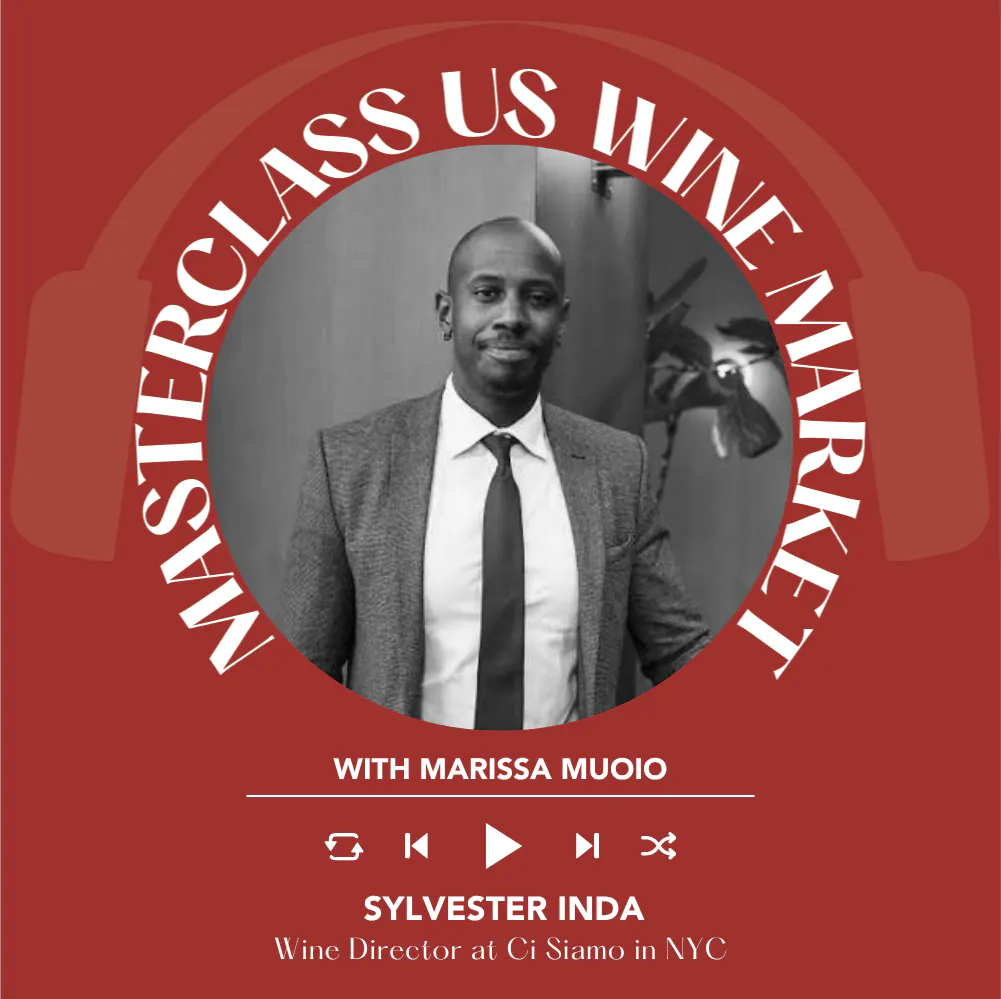
Ep. 2760 Winning the Restaurant Floor: Training, Education & Italian Wine with Sylvester Inda of Ci Siamo | Masterclass US Wine Market
Episode 2760

Ep. 2751 From Montalcino to Kazakhstan with Francesca Arquint of Collemattoni | Asia Wine Market
Episode 2751

Ep. 2748 Florida Wine Market & Vinitaly USA with VIA Italian Wine Ambassadors Stefano Campanini & Daisy Penzo | Masterclass US Wine Market
Episode 2748

Ep. 2746 From Almaty to Verona: Inside the Italian Sommelier Challenge with Leonid Kirsanov | Asia Wine Market
Episode 2746