
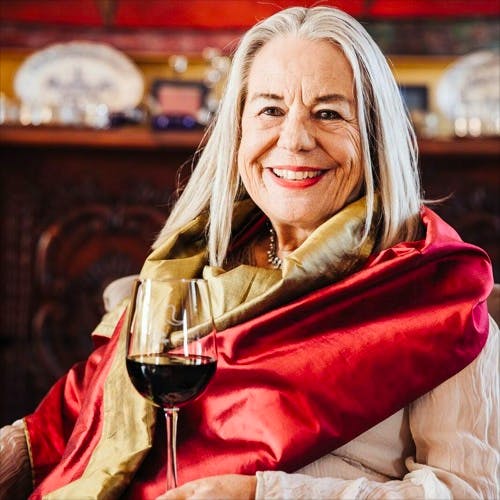
Ep. 546 Tru Miller | Voices
Voices
Episode Summary
Content Analysis Key Themes and Main Ideas 1. True Miller's inspiring personal journey and entrepreneurial spirit in establishing Adobe Guadalupe in Valle de Guadalupe, Mexico. 2. The unique viticultural characteristics and challenges of the Valle de Guadalupe region, particularly regarding water scarcity and soil salinity. 3. The freedom and experimental approach to winemaking in emerging regions like Valle de Guadalupe, focusing on blends rather than strict varietal rules. 4. The integration of hospitality and tourism (hotel, horses, and cultural experiences) as a vital component for growing wine regions. 5. True Miller's diversified ventures, including a unique Nebbiolo, horse breeding (Estecas), and a tequila brand (Tia Tula) aimed at women's empowerment. 6. The philosophy of making wine more accessible and catering to different market needs, as exemplified by her 'Harding True' wine. Summary In this episode of the Italian Wine Podcast, host Rebecca Lawrence engages in an intimate conversation with True Miller, a Dutch national, winemaker, hotelier, and horse lover, renowned for being the first woman winemaker in Baja California. True shares her deeply personal and inspiring journey, revealing how the tragic loss of her son led her to Valle de Guadalupe, Mexico, a region he admired, where she eventually established Adobe Guadalupe with significant community support. The discussion delves into the distinct terroir of Valle de Guadalupe, highlighting challenges like water scarcity and soil salinity, which uniquely influence the grapes and necessitate specific viticultural practices. True explains her preference for blending wines, a freedom afforded by the region's less stringent regulations compared to established European appellations. She also touches upon her Nebbiolo wine, exclusively produced for Rosewood Hotels, and her childhood memory of Italy, connecting it to her love for horses. The conversation expands to discuss the importance of wine tourism, with True advocating for more integrated hospitality experiences like her hotel at Adobe Guadalupe, believing it enriches visitor engagement with the region's culture and history. Finally, True discusses her entrepreneurial ventures beyond wine, including breeding Estecas horses and launching Tia Tula tequila, a brand dedicated to empowering women and aged in former French wine barrels. She also shares the motive behind her affordable 'Harding True' wine, created to provide a quality option during challenging times. Her story encapsulates resilience, innovation, and a holistic approach to winemaking and hospitality in an emerging wine region. Takeaways * Valle de Guadalupe in Baja California, Mexico, is a rapidly developing wine region. * True Miller's personal tragedy was a catalyst for her pioneering winemaking journey in Mexico. * The region's unique climate and soil conditions, including water scarcity, influence grape characteristics and winemaking styles. * Winemakers in emerging regions like Valle de Guadalupe benefit from flexibility in blending due to fewer regulatory constraints. * Integrating hospitality, such as hotels and unique experiences, is crucial for fostering wine tourism in nascent wine destinations. * True Miller has diversified her business to include horse breeding and a tequila brand, Tia Tula, which promotes women's empowerment. * Providing accessible and affordable wine options, like her 'Harding True', is part of her business philosophy. Notable Quotes * ""My journey is a little bit sad and very beautiful at the end."
About This Episode
The speakers discuss the importance of inclusion and allyship in wine production, as well as the salinity of wines and balancing them with pressure. They also talk about their love for horses and their plans to visit winery wineries and hotels. They also discuss the benefits of the wine industry, including learning about wines, animals, flowers, and tequila. They thank their guests for joining them on the Italian wine podcast and promote their website.
Transcript
Welcome to the Italian wine podcast. I'm Rebecca Lawrence, and this is voices. In this set of interviews, I will be focusing on issues of inclusion diversity and allyship through intimate conversations with wine industry professionals from all over the globe. If you enjoy listening, please consider donating through Italian wine podcast dot com. Any amount helps us cover equipment, production and publication costs, and remember to subscribe and rate our show wherever you tune in. Welcome to the Italian wine podcast with me, your host Rebecca Lawrence. I'm excited to be joined today by through Miller, wine maker, hotelier, and horse lover from Valle de Guadalupe in Mexico. Welcome to the podcast too. I'm so excited to have you talk about this wonderful wine region. I'm resisting saying new wine region because I actually, there's a a long history in in Guadalupe. I understand. Yes, there is. Yes, there is. We we went from, I think, maybe, winery was number six in the valley, and I think now we have over two hundred. So, yes, it went very fast and and people just popped up from all over the place. And speaking from all over the place, how is it that a woman from the Netherlands suddenly finds herself as the first woman making wine in Bajaq California. Can can you tell our listeners a little bit about the journey that brought you to Valle de Guadalupe? My journey is a little bit sad and very beautiful at the end. I, really wanted to get into the wine business, but not knowing very much I just only really knew about Napa. So I went to Napa to find out what was going on, what could I do? And my son was going to do this with me and was going to meet me there. And he died on the way to to the area. And so then I didn't really want to do anything with wine anymore. It was so sad because this lovely young man was going to, to help me, start a winery in Napa. That was the idea. And so that was gone. I didn't wanna go to Napa. I didn't wanna start the winery. I didn't want to do anything. But he really, was really into Mexico, and he wanted to be ambassador one day. And for for the United States in in Mexico or visa versa. But he, loved the lady of Guadalupe, which of course is, everybody knows in the whole world, but is in moving Guadalupe from Mexico. And so I, you know, you do strange things after a child died. I was looking for places where how and then I heard about a valet valley of Guadalupe in Mexico where people were starting to make wines. And I got very excited. And I said, I must go there immediately, and I did. And then things kind of just rolled around very easily. Somebody said this land is for sale. Somebody else said I can help you. One of the best white makers said, of course, I help you. One of the best, best people in the field said, I'll help you too. And it was really, really easy how all this started. And then I had to think of a name, of course, and I wanted to grab a loopy name in there, and I made it a doorway because a doorway in many languages means like a home. And so I thought that was good. And then I had to think of the names of the wines, and I thought maybe the names of the of the wines could be named after the after the angels. So that was it. That's just so beautiful to take something so tragic and somehow find such a positive outcome that you can then share with people. I think that's a beautiful story. Yes. Thank you. And I, every time it makes me happy and sad at the same time to publish story. And I think, oh, people must be so tired of this story. But this is what it is. So I'm stuck with the story, and I'm proud of the story, and I'm so glad you asked. So let's dive into the wines a little bit, because there's been some discussion I understand about the salinity of the wines, the minerality of the soil combined with this very particular microclimate that you have. Is this why you were so keen to work with the because you're working with the great agronomist Jose Fernandez? Yes. Yes. And he is one of the best in the country, and he knows he's been here forever. And he knows the land like nobody else. It is true. It's there are salters. There's there's that. We don't have enough water, and that's really our problem here. We don't have enough water where we try it. Oh, almost every day to see where we can get water from. Maybe we can get water from the ocean. Maybe we can get water from another city. Maybe we can do this. So we have water commissions and all that kind of things. Meanwhile, we live with what we have and are very happy when it rains. And, actually, we're now in the rainy season and very little has come down, but, we hope for the best because there is so, so little water, the plants are in this, of course, are in the ground and they're drier. And so that makes, you know, a different kind of grape. And in our case, that works very well because it it makes it like a special grape, and it's because really, it's because we don't have enough water. I imagine you have very low yields and a lot of concentration in your grapes, giving you that extra intensity in the wines. That that is so true. The good thing here, of course, is that we don't have, to stick with one variety. You know, we can do here what we want. So in that case, it wasn't just, you know, one kind of one kind of grape that we that we could use. We could use all the grapes we wanted. So that's why we have most of our grapes are are a mixture. Yeah. I was gonna ask because I saw that most of your wines are blends rather than single varietals. So is this the reason so that you can sort of take the the quality from each of the different grapes and put it together? Because you have got this very particular situation. Yes. And we are allowed, you know, we can do what we want. And so we try all kinds of things. And what we're not we not so much anymore because, we know what we're doing. And I think the angels that we have called it celestials are are pretty much set in the way, but we can still change certain, certain years, we make small changes and see how that goes. But basically, the, the angels that we have, we stick with them, and we stick with the varietals. Yeah. It's it's it is interesting that you say that, you know, you blend because you're allowed to because this is one of the great things about, let's say, an emerging wine region, is that often they don't have that kind of denominational control, for example, here in Italy with the denominatorre, you have very strict controls about what you can and can't put into your wines, but this must give you a real freedom when you start experimenting to just do do what you wish and find the blend that suits you? I mean, where can you do that? You know, I mean, yes, you could do it maybe in, in, I'm from the Netherlands. So you could do it in the Netherlands, but who would want to because the weather is not good enough. So really, this is absolutely wonderful. It was one of the reasons that I got so excited that we could actually blend, blend the wine and, and come up with something very, very different and very special. And so the wines that we have were very proud of and are trying every year to more or less use the same wines of of the year before. So speaking of things that are very special, grow the Italian varietal Nebula. So what what drew you to this variety and how is it express itself in Guadalupe. You know, and the Nebula. Wonderful. Right? We have, Italian winery here who brought the Nebula grape, and, you know, we, we bought something, you know, to, to, to use it here. And we thought it went really, really well. And it was very elegant and very, very red in a different way. And, so we made that. And then I'm sure you're familiar with the hotel chain in Maya Covea, what is it? The Rosewood Hotel? Yes. In fact, I used to work with the executive chef of the Rosewood Hotel in London. Did you really? I did. Yes. Right. I'm looking forward to Amsterdam because they're gonna open very soon. And so the Rosewood in in Mayacoba, in Hannah Riviera, in Cancun, we became friends. And the chef said, I really like the viola, and I said, okay, we'll just make make a mili miliiolo for you. And then Rosewood said, can you make it for us? And so we make it exclusively for them, and they're showing it in their fancy dining rooms, and and and I'm very excited. And it's because it is really a wine to have with, maybe not a fancy dinner, but with a dinner, I think. You know, it's, it's, it's a dinner wine. And I think they really saw that and really believed in it, and hopefully they'll send it to some more rose roots around New Orleans. Yeah. I I I hope I can see it on the menu in London next time I'm back there. That would be very exciting. Insist. Yeah. I must say, I really want to nip-uh. So with the travel, have you have you traveled to Italy? Yes. I have. And if you if if you like, I have a small story because I thought about this so much, you know, I'm from World War two. In, in Europe, of course. And so the first trip we took, my mother, my father, and I, after the war, was to Italy, while we were going to Italy. And so, and we had the seatola, and my mother had her her her leather gloves out, and I'm, and only child putting in the back, you know, are we there yet? Are we there yet? You know, went to, of course, we, we, we pass grants where all the champagne buildings had been bombed out. And I remember that very, very vividly. And then we went to Italy. We went to, for the Barbarrolos in the barbaresco's, of course. And then we went further south. We went to Tuscany. And, of course, my mother said, you know, like a child is here. Are we there yet? Are we there yet? I'm sitting in the back the car. And then I think a fell asleep because then she said we're here. And so it goes up the lane and to the left of the lane are all horses, to the right are all the the wines growing. And it was beautiful, and the sun was setting. And I said, what where are you? Where in my mother's world? This is Tasakaya. Oh, wonderful. And I was just amazed. And I was eight years old. How could I remember all this? And so when you told me that you were in in Italy, I thought, oh, if you have time to listen to my little story, that would be so nice. Thank you. And this is also perfect because you do have a love of horses and you have horses on your estate. Absolutely. Yes. We have, Estecas, which is a blend, like the wine. It's a blend of, a typical, horse from Southern Spain and a horse from the northern part of the United States. You know, I love to have the Spanish horses here, but, you know, you need to come here because the the mountains are tough. They're they're too tough for these beautiful andalusian horses. And so what we did we started to, breed them with the horses from, Colorado and and and and typical American horse. So we would have the strength and the beauty in a horse. And those horses became a seka horses, And in nineteen seventy two, we made sure that that they were written up in in the books and and as as as something, legitimate. And so those are the horses that I have. I'm very proud of them. So, again, they look really beautiful and they're gorgeous at that coffee. See, just just like your wines. So you say, you know, I should come and visit and obviously if I could travel, I would I would be there in a second and you do actually have a hotel as well. I do you believe that more winery should be branching into to any tourism? Oh, I think so. I think this valley is just, you know, it's it's exploding. And I think wouldn't it be wonderful if we had more hotels and better hotels and and and more courses about wine, more courses, maybe about courses, more courses about anything you can think of to make your stay more pleasant. For a person. I'm really thinking of the people who, especially now, in these difficult times. They have been so in house and not eating well, not this and that. Wouldn't it be beautiful if you could just pop, pop, into the valley and and go to, for example, to Adobe Guadalupe and have a wonderful dinner with a great wine. And then we have our our rooms. They're normal rooms, but they have bathrobes from from something special and this and that and the flowers and and the wines. So I think it would be so nice if you could just pop, pop over the border and, and do this for a weekend or longer, learn, not only just relax but learn about wines, learn about animals, learn about really flowers, learn about all the things that we have to offer, but in a very relaxed way. That's what I really would like to do. I think this is a really great direction for these emerging wine regions be taking because it makes you so much more invested in the area. If you can see where the wines are being made and this is something that we're so used to in in Europe, you know, here we can just drive through the wineries and I think this is a great direction and I'm I'm so excited that this is something that you've been doing so that it's it's not just about the wine, it's about the culture and the history and the environment and the nature all around you. Yes. And you know Mexico as a country has such stories and such, such a history and so different than you and I from, are from Europe, which, of course, is incredible and, and beautiful. But it's like Mexico has, has all these different states, and all these different states have different food, and they They have different songs and they speak differently, and it really is an interesting country. So you have wine, you have horses, you have a hotel, and now you even have a tequila. So what's next for you, true? The tequila is, it's the latest thing. I just got you okay to be selling in the United States, of course, it's hard. The tequila is called Tia Tula, and it's made really for to help women get stronger. We, put the wine, we put the tequila in barrels of our wine that have been used and that, come from France and that are still very good. And so the tequila gets a little bit of a color. From, from that. And it's dedicated mostly to the women, like last year was the year of the woman, to to drink tequila that is so strong, but with a touch of softness, which comes from the French barrels, where we have, put the, the tequila. And so I named it Tia Tula. It's a story about a woman who really wanted to study and was ready to study. And then the last minute she was was told that she couldn't because she had to take care of three children from her brother. And so she had to postpone her university for about twenty years, but she did it anyway. This to show that that as women, what we can do, we can drink tequila, and we are strong. And, it might be a little bit softer because it has a touch of of the wine bell, very, very fancy from France. So I thought it was a good combination. A great combination. And normally when I do these interviews, it makes me fancy a glass of wine, but now I'm thinking of a margarita. There you go. The slogan is let me see. In English, it would be to better to choose than to be chosen. And which is so true in in in life. And so, I'm so proud. And then we had the year of the woman, and we just really pushed this wine, and and the the wine, of course, and this tequila mostly for for women to feel strong. It's just brilliant. So before we, close our interview today, I have to ask you, of course, what you're drinking. What am I drinking? This is another thing we did. You know, everything was so hard these last these last year. And our wines are pretty pricey because we really give it a lot of give them a lot of attention, and we really only feel that we sell good wine. So I wanted to do something for people for, easy for a better price. So you people who were losing money and were having a harder time to still have, you know, a taste of of of our wines. So we came out with a basically, we used the the grapes that were left over from all the good wines and we put it together. And we made a hardin the true. My name is true. And we made it an inexpensive wine, better good wine, but just in these difficult times that we could still have good wine. And not spend god knows how much money. Well, true Miller, thank you so much for joining me on the Italian wine podcast. It's been an absolute pleasure to have this conversation and learn a little bit more about what you're doing. Where can our listeners go to find you and your wines? Of course, we are on Instagram, Facebook, and our website. Fantastic. So we will link to all of those in our social media. Trima, thank you so much. For joining me today. Thank you so much, Rebecca. Hope to see you soon. Listen to the Italian one podcast wherever you get your podcasts. We're on SoundCloud Apple Podcasts HimalIFM, and more. Don't forget to subscribe and rate the show. If you enjoy listening, please consider donating through Italian wine podcast dot com. Any amount helps cover equipment and publication costs. Until next time.
Episode Details
Keywords
Related Episodes

Ep. 2651 Diversity in the Wine Industry and Wine Tech Innovation with Jeremy McCarty | Voices with Cynthia Chaplin
Episode 2651

Ep. 2627 Regenerative Winemaking, Mentorship & LGBTQ+ Perspectives with Terah Bajjalieh | Voices with Cynthia Chaplin
Episode 2627
Ep. 2545 Building Inclusive Wine Spaces Through Storytelling with Amari Collins | Voices with Cynthia Chaplin
Episode 2545
Ep. 2531 Winemaking Journey from Mumbai to Napa with Priyanka French | Voices with Cynthia Chaplin
Episode 2531

EP. 2517 Sarah Looper | Voices with Cynthia Chaplin
Episode 2517

Ep. 2505 Ren Peir | Voices with Cynthia Chaplin
Episode 2505