
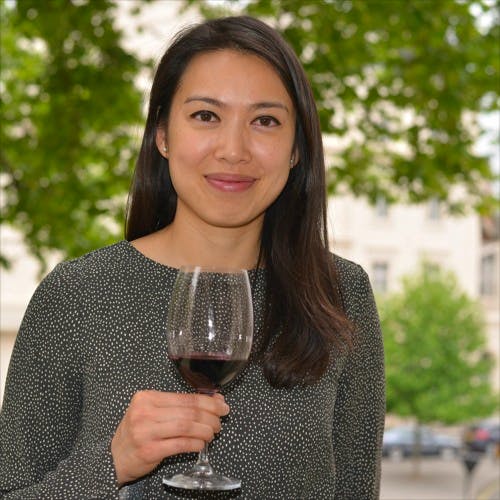
Ep. 586 Regine Lee MW | Voices
Voices
Episode Summary
Content Analysis Key Themes and Main Ideas 1. Regina Lee's career journey from politics to Master of Wine and Head of Operations at Liberty Wines. 2. The establishment, mission, and impact of ""Women in Wine"" as a grassroots organization promoting diversity and support for women in the industry. 3. The broader conversation around diversity, equity, and inclusion in the wine industry, extending beyond gender to socioeconomic factors and race. 4. The challenges faced by women in the workforce, particularly the impact of the COVID-19 pandemic and Brexit on female employment and the ""motherhood penalty."
About This Episode
Representatives from Italian wine podcasts discuss their current roles at Liberty Wines and the challenges faced in the wine industry. They emphasize the importance of networking groups for women in the wine industry and the need for flexibility and diversity in the industry. They also discuss the importance of tasting and learning about regions and styles in Italian wine and the need for industry innovators and agility. They emphasize the need for the industry to adapt quickly to changes and acknowledge the importance of diversity and inclusion in society. They also provide information on privacy policies and encourage listeners to visit their website.
Transcript
Welcome to the Italian wine podcast. I'm Rebecca Lawrence, and this is voices. In this set of interviews, I will be focusing on issues of in occlusion, diversity, and allyship through intimate conversations with wine industry professionals from all over the globe. If you enjoy listening, please consider donating through Italian wine podcast dot com. Any amount helps us cover equipment, production and publication costs, and remember to subscribe and rate our show wherever you tune in. Welcome to the Italian Warren Podcast with me and Rebecca Lawrence. Today, I am so excited because we've got another great conversation to share with you. I'm joined by master of wine, Regina Lee. Welcome to the podcast regime. Thank you so much for having me, Rebecca. So let's give our listeners maybe a little bit of background to get started. Apart from having obviously achieved the amazing and highly coveted title of master of wine, maybe you could tell us a little bit more about yourself what you're currently working on. Yeah. Absolutely. So right now I'm currently the head of operations at Liberty wines. Liberty wines is an importer distributor based in the UK, and we sell to both the on and off trade and have an Italian wines focus. But we also focus on, Australian wine, New Zealand, and increasingly around the world. French Spanish portfolios have increased, quite a bit over the last year. And, yeah, and so we're a premium wine importer and really, really focus on service, and that's what I'm doing now is I manage the operations teams, and this means the end to end logistics. So from shipping the wine from our producers and forecasting the demand, to warehousing it into the UK and distributing it out to our customers with our various distribution methods, couriers, vans, etcetera, and managing our customer services team. Oh, so just, you know, just like a really small job, like, Not very busy at all. It's been particularly busy. And I must say the last year and a bit has been hectic to say the least with the pandemic Brexit, and all the kind of changes to, our our market and what our customers have to deal with. Yeah. I can only imagine. I have to say that I'm very, well, I used to be very familiar with the Liberty Portfolio because you are one of the key suppliers that are used particularly for Italian wine when I was working in the trade. I was working for an independent. We often used your portfolio primarily for our Italian. So it was, super exciting to hear that your managing the the whole of the operations for them. Oh, fantastic. Yes. So you do us. Yeah. But I also I have kind of a non wine background to start off with as well. So I was born and raised in California, not that far from Napa. So I was always kind of an interested consumer, and that's how I built up my passion for wine. But after I graduated from Uni with a politics degree, I did quite a bit of other things. I went to Hong Kong and lived there for a while. I also started off in management consulting And then it wasn't until twenty ten when I moved to the UK that I really became interested in wine and wanted to change career tracks into the wine industry. So what I mean, that's quite a fast turnaround from, you know, deciding you're going to get into wine to M. W. Master of wine, like the the highest title you can achieve. How how did you decide that was going to be the course for yourself? Cause, yeah, like I said, that's a really like sudden change from Yeah. It was international relations and politics. So, oh, I'm gonna be a master of wine. Yeah. Well, I'm kind of I'm not the most risk taking person generally. So when I decided to change careers, I thought, okay, I'm gonna give myself a few years in the wine industry And if that doesn't work out, I'll go back to doing consulting or working in financial services or whatever. But I never I never look back. I I joined the wine industry and I loved it. I love the people. The producers are fantastic and and hearing about their stories and how much they do to make amazing wine, and the sacrifice they have to, to, to make, to do that, really inspired me to make this my career and commit to that. So once I did commit to the wine industry, and I started off you know, at a junior level role in customer services at liberty, and I kind of built my way up. And I thought, I'm just gonna push myself as as far as I can go and see where this takes me. And also, you know, I, I love just learning about wine too. And I think part of my journey has been finding the opportunities to do that through the WSTT diploma and the MW program to enjoy the journey about learning about wine regardless of whether I got you know, the qualification in the end. So that has been an incredible journey for me too. And definitely you you talk about, you know, the people who are in wine. This is obviously something that is very close to your heart, you know, I think for those of us who work in any kind of industry where customer focused service is a huge part of it, like, you have to love the people, even when you don't. But Obviously, you've done a little bit more than this because you helped to found women in wine. So I wondered if you could tell our listeners a little bit about that project, and how it came about. Absolutely. And twenty fifteen, a colleague of mine, who I worked with at WSTT named Sula Richardson, and I met up for a glass of wine in London, and we started talking about what we would love from the wine industry which is a networking group dedicated to promoting and supporting women working in the wine industry. We know that there's been historic reasons why women have been underrepresented And we were kind of looking at how we could address that through kind of a grassroots organization, which we would organize ourselves. So we started off really small. It was just us two, and then another, well, close friend of mine, Hannah, Ben Sestrin, who now works at Bancroft wine. She joined us to organize it. And, yeah, we started off small. We did, like, one event where we got a few panelists talking about the changing nature of the wine industry and the innovation, And through that small event, which we just did through word-of-mouth, for our friends and and their friends, we actually sold out. And we thought, okay, this is we've we've hit upon something. We've hit upon an actual need to have this networking group among women in the wine industry. And since then, we've just been doing event after event after event and seeing it grow and seeing the scope of what we've done grow. So it's been very fulfilling. And I think the main objective of it is that we provide the support network for women so that we can progress in our careers. We can also learn more about the wine industry in a very open and organic way. So we have these fantastic panel discussions where we bring in people and experts in their fields to talk about everything from marketing, distribution, environmental impacts of the wine industry, etcetera. So we can kind of build up confidence among women through increasing their knowledge of the wine industry, but also supporting them and being more confident in progressing in their careers and providing a networking organization for them. Obviously, I mean, the last eighteen months has been incredibly challenging for everyone. Have you managed to kind of maintain the momentum behind what you've been doing? Have you been doing virtual events? Have you how have you continued to support, you know, the women in wine during this period? Yeah. We've had, a Zoom event So we did an online event, and we also did a collaboration of, with wines great Britain, where we did a series of Instagram live one on one interviews with people within the English wine industry. So that's been very, very interesting. I think our Zoom event was particularly key because we actually interviewed someone who basically helped uncover the systemic sexual harassment and bias against women within the Court of Master Semellier's. And she was working with the New York Times to uncover what was happening and and help them sort of reveal what was going on in, in the wine sector from a me too point of view. So, obviously, we, we thought we needed to speak to someone who has firsthand knowledge of what was going on to also talk through some of the issues and what we can do amongst ourselves to identify situations where that might be happening in our own lives and our own experiences in the wine industry. So that was a very important event that we held. Yeah. I think that's right that making sure it's not just about, you know, recognizing where it's already happened in the industry, but trying to look for places where it might be happening and people either might not be aware of it, or are so used to it that maybe they don't think it's something that they can change or that they have the confidence to change. Absolutely. Yeah. So speaking of change, obviously, it was founded in twenty fifteen. So you've had some time. You've been you know, doing these kind of supporting events for a little while now. I wonder if if you are beginning to see changes if there has been an evolution since when the wine kind of started out and and how that's manifested itself for you guys. Yeah, for sure. I think there has been, and I think it's been on a couple fronts. One is that I think the general wine industry has been a lot more perceptive of the need to be diverse and inclusive. And not just with women and from a gender point of view, but also with, you know, socioeconomic, demographic, race as well. So and this has been happenstance too. I mean, there's an upswelling of this awareness throughout you know, throughout the world in some ways through the Me too movement and the Black Lives Matter movement. So women in wine, we happen to have that networking group a little bit before these movements have happened which has, have allowed us to kind of speak to those issues even more. So, yes, I think there has been a change broadly. I think this has been these issues have been on the agenda more and more through Like, you can see it in educational institutions. So both the IMW and, the WSTT have made diversity inclusion top priorities and what they focus on. But also the general media have been talking about it a lot more. And in fact, when we had the wine to wine digital conference, you know, last year, there were so many sessions focusing on this topic. And I think people have realized that it is a key part to making the wine industry sustainable commercially as well as socially. Yeah. I think that's a really good point to bring up is that it's not just important for us as an industry of of people working together, but also it makes good business sense. To make sure that your market is, you know, your industry is as inclusive and as broadly marketable as possible. And I I think that maybe that's something that's been a little bit lacking from the conversation is this importance of in not just being socially and culturally important, but it's also, like you say, it's really commercially important. It makes very much commercial sense. So you can tell you come from that kind of background. Yeah. I mean, I I think speaking, you know, as a Chinese American woman who likes wine generally. You know, I I sit in both camps. Like, I can see that there's a need to reach out to people of color, to women, to younger people as well when it comes to selling wine, and it's good for our industry to be inclusive, and it's good for us to reflect back and be inclusive within ourselves. Yeah. I can agree more. So thinking about the changes that have been happening over the last eighteen months, I mean, the UK scene in particular, there's there's been just barrage and wave after wave of of things to deal with. And so that, you know, Brexit, the pandemic. I wondered if is it too early do you think to think about the impact that these things have had on female employment, particularly maybe from a UK perspective, obviously, you're in the UK market, because here in Italy, definitely, the pandemic has had a a strong negative impact on female employment And and also the relationship between, women's, quote, unquote roles. And I wondered if you're seeing that as well in, in the UK. I think so. Yes, for sure. I mean, from what I've read, Mostly US based publications have highlighted the gender imbalance when dealing with pandemic sort of workforce issues and childcare issues, but no doubt that's happening in the UK too. And we know that traditionally women take a much larger share of childcare duties, caring duties for elderly relatives and parents. That plus more and more women working full time and being in the workplace means that there's been a lot of pressure on women practically in their time, but also mentally too. So, yes, I, I mean, I, anecdotally, I have seen that. And I think this will hopefully highlight some of the systemic issues in our society too regarding this gender imbalance. I mean, one thing that I've kind of noticed, especially in the last couple years, as I've become a mother myself, was some of the reasons why women women still experience a pay gap or difficulties progressing in their career. And a lot of it is based on the motherhood penalty. So when women have childcare responsibilities, there often comes sort of a stagnation in her pay and her career, for many, many reasons, social reasons, political reasons, economic reasons. And one thing that's quite obvious is the difference between how much men versus women take in paternal leave in the UK and in the US, you know, and actually in the UK, the system incentivizes men to not really take more than two weeks of paternity leave. And therefore, the majority of parental leave is done by the woman, which implies so many, so many things about what, what happens in their career onwards. So, yeah, I think the pandemic, which is your original question, will probably shine a light on so many other issues that have been bubbling away in society that haven't been really raised before. I think the the motherhood issue is particularly poignant for those of us working in the wine industry because, you know, apart from the alcohol involved, obviously, and the the kind of duty of care that comes with that and health, but there's also this issue of the working hours being not potentially, you know, antisocial and difficult to find childcare for, and I wondered if this is something that maybe with like you say, the the move in the pandemic to highlight some of these issues might begin to change for women in the industry and also might become a new topic of discussion in the industry in terms of diversity and inclusion because there's this importance of being able to include the choices that, people might want to make within their career plans. Mhmm. Absolutely. Yeah. I totally agree with that. And it will be interesting to see how the pandemic changes people's standpoint on flexible working. For both women and men. Right? So I think that might be a way that in some ways, like gender equality might start balancing out slightly, is that if there's flexibility for both you know, partners looking after a kid, then by natural sort of, I don't know, a leap of, of conclusions, you could say that, you know, childcare could start be being to be balanced out a little bit more But we'll see we'll see how that goes. Yeah. Let's let's hope. So at the moment, women in wine is based in London, obviously, this is where you are based. I I wondered what your plans are for expanding in the future, and potentially expanding the support that your association gives to to women in the industry. Yeah. Well, I guess, you know, being quite, a kind of grassroots organization with just me and my chief heads We don't have any plans for for world domination, really, but, but what we have been doing, like, naturally, we've been partnering with a lot of organizations across the world, and in partnering them with with them for events and other things as well and supporting them. Through Women Wine, London, we've kind of inspired people to set up women and wine groups across the UK as well. We've also talked to, quite a few of our counterparts in the US to see how we can promote what each other are doing. And also, you know, I, I think we're always up for that. We're always up for people internationally to get in contact with us to learn both ways about what they're doing, what we're doing. We all have the same goal in mind. Yeah. Absolutely. So, of course, I couldn't let the interview go on without talking about Italian wine. Because obviously, Liberty have traditionally been a little bit of a specialist, and I this is the Italian wine podcast. One thing I did wanna touch on before I maybe ask you about particular favorites of yours in the portfolio is the Italian wine and education, because obviously you've come through both the WST and the MW program. I have colleagues, and friends here in Italy who have touched on both of those programs and have always felt that the approach to Italian wine has maybe been a little bit limited or perhaps not, had the scope that they have for, you know, French or German wines. I wondered what your experience was of studying them. Like, I don't know if you found this to be the case or if this is something that you discovered later or or not at all. Yeah. I think, you know, it's hard because both the WOCT program and the MW program they're not trying to get people to learn everything about every region of the world by necessity, you know, especially WSTT, you have a syllabus trying to highlight some of the main styles and regions across the world, and you have a lot to get through. So for me, that's a jumping off point. So you learn about the classic styles and regions, for any given country, and then you go off and you explore more. And that's that's the beauty of this program. So, you know, as frustrating as it might be to feel like there's less representation with Italian wine in the diploma, for instance, maybe think of it as actually, you know, this is a way to get more Italian wines kind of understood by many more people around the world and hopefully spark that passion for them to learn more about the other regions that might not have been covered and and to generally to taste more. I the MW program is slightly different in that their syllabus doesn't outline specific regions and things that you must know and taste unlike, unlike the diploma. The MW is kind of, the the program kind of assumes that you will have a broad understanding of of regions and styles anyway, so that it's not very prescriptive in telling you what you need to know. But again, in a similar way, it it's supposed to spark that interest and that passion and for you to dig in more and more. And, yeah, I think, I think that's kind of the key is to not get too hung up about what you think you have to know to pass those exams, but just say, You know, my my wine journey is long. You know, it's varied. And I've got a lot of times after I pass these things to to go and explore more. And, you know, for sure, going to trade shows like Italy is so fantastic because you get to go and taste so many wines that don't necessarily make it to your home country and aren't exported to your home country, and there you can really start exploring some fun things. So I highly recommend that people just get out and and try stuff and go to trade shows, go to tastings, listen to podcasts. I totally agree. And and when I was studying the diploma, I was also studying for my Italian wine, Ambassador course here at Ministry International Academy. And so many of my friends studying the diploma with me were like, yeah, but, you know, we we know what we have to do for WSTT. I was like, Yeah. But I wanna know more. And I that's just this opportunity to, like you say, to to take the diploma or the NW as the jumping off point for for what might come next. You know, maybe you wanna become a specialist in Italian wine, there's exactly other ways of doing that. Like, the diploma is not that. It's gonna give you the incredibly broad and rounded view of wine, which I think is incredibly necessary. And then you can take all of that information into that next step. And, like you say, just taste, taste, taste as much as you possibly can. Yeah. And you bring up a great point, which is, you know, you can explore more by doing these programs like being an Italian wine investor, and then you get such a depth of information and knowledge about that. And, and that's a fantastic way to, to tap into that passion that you've had sparked before. So speaking of tasting, maybe you could share with our listeners, an interesting Italian wine that you've tasted recently or something that's come on to the, Liberty portfolio that you've been particularly excited about recently. Oh, that's that's a good question. Yeah. I mean, for me, the Liberty portfolio is just about such, like, the fantastic flagship producers throughout Italy. So in Tuscany, you know, we've got Fantoni, Felsana, is Aleaya Elena, you know, those are Capetzana, those, those are such amazing producers, and they are consistently amazing. I think, you know, Parapan, and Allegrini too are the cornerstones of our portfolio, and It never ceases to amaze me whenever I taste their wines. It's always like I'm tasting them again for the first time and having my eyes light up in amazement and and me thinking this is why got into the wine industry. But, also, you know, meeting these fantastic producers as well who are so generous, you know, across the Italian wine industry, you know, whether they come to the UK to do trade tastings and visits and trainings, or even when you go visit them, in Italy, or meet them at finn Italy in the trade show, they always have this huge sort of sense of generosity and, and love of what they do, which is just so infectious is, which is fantastic. Yeah. And I think, you know, the Italian wine was one of my first loves as well. You know, when I first started as like an interested consumer, You know, it was one of the things that really sparked my interest because it was so different from Californian wines as well. And, and that really kind of just set set the path for me, and in exploring more. You're so right about the generosity of producers here. I'm constantly amazed at how willing producers are to talk to you to spend time with you, and and to travel with their wines. When I was in the UK trade, one of the things that we did with Liberty amongst other people was was have winemakers come. And I was always so amazed at how often you would get the winemaker, or you'd get the winemaker's son or daughter in person at your, you know, little tasting in in this independent shop, and they would be there. And that's such an amazing kind of love for what they're doing and desire to share it with with anyone who wants to taste their wine and It's such a fantastic. It comes back to the people, like you say, about and they are the people who make the wine industry. It's it all starts with the with the farmers who who make the juice. Yeah. Absolutely. And I think, like, wine is so special in that regard, you know, compared to other beverages and and alcoholic categories. It's, it's so much about that, that passion and just the hard work and the sheer sacrifice that people make to make good wines is, is incredible. It's something to really admire. And that's why we, as the wine trade, need to really convey that to the end consumer too. You know, you're you're buying a bottle of wine. Yes, but you're also buying someone's heart and soul as well. So before we wrap up, what's what's next for you, Regina? Obviously, you've you've you've done MW. You're you're here having this amazing influence at Liberty and keeping them in check. What's what's next on your horizon for the next couple of years? I have no idea. I don't know at all. I think I I don't know master plan really right now, but yeah. I think, you know, continue on with my work at Liberty. I think I think also the wine industry in addition to what we're saying about conveying the passion really needs to look at how we are able to, like, operate commercially and effectively, because there are pressures, you know, there's pressure every year price increases in terms of logistics and transport, the impacts that various things in geopolitics have in terms of import and distribution, not just in the UK, but you know, you look at trade, yeah, everywhere. Trade disputes between the US and Europe or Australia and China And, you know, we have to be quite nimble as an industry and adapt to things very quickly, but in a way that is commercially viable for us as imported distributors, for our customers who are the on and off trade, and ultimately for producers as well. So I'd like to kind of I know that seems quite vague and big, but, you know, in my own sort of niche in in the wine trade, focus on that and and kind of highlight those those issues and you know, try to innovate within the wine industry as much as we can on that front. I think vague and vague is is really good. And also, I think what you say about the need to be nimble is something that historically the wine industry has not really been So I think that is definitely a very interesting thing to be concerned with when you're in the industry is of trying to make this kind of huge ship steer in a way that's a little bit faster and a bit more agile in the way it deals with the things that are being thrown at it constantly. I mean, the last four years have really proved that, you know, things are gonna come thick and fast, and it's gonna continue to be that way. So if we could all just start working together, and also in this kind of slightly more open minded, flexible way than we've got a very positive future for the industry ahead. For sure. And that taps into what we're talking about before with being nimble in diversity and inclusion. And, and also, you know, from an, environmental and sustainability point of view too, we have to adapt quite quickly. So hopefully, you know, we, I can push forward with what we're doing with women and wine. I can continue my work with liberty and also kind of the environmental and sustainability policies that we have here to kind of improve what we do. And in my own little way, try to to push the industry forward as much as I can. I I think it's a much bigger way than you are making it sound. So thank you. That's very kind of you. Rejean, thank you so much for joining me on the Italian wine podcast today. It's been such a great conversation. Where can our listeners find you online and on social media, and where can they find women in wine? Absolutely. So, our website is women in wine london dot co dot uk, and you can also follow us at women in wine l d n, and that is our handle for Instagram and Twitter. And then for me, I'm at Regina, m Lee. So you can find me there. Or drop me a line at at LibertyWines. You can find my contact details on on the LibertyWines website too, and I'd absolutely be happy to chat to anyone or continue this this conversation. Thank you so much. And guys, if you're listening and you're based in the UK, do check out the Liberty website because they've got not only, a great portfolio if you're looking for wines, but they are one of the sites that actually has a lot of detail about the wines they stock on there. If you're running a tasting and you need notes about your wines, Liberty was always the website that I use. Super useful. Thank you everyone for listening. Don't forget to follow us on social media, subscribe, and of course donate on the website to make sure that we can keep these amazing conversations flowing. Listen to the Italian wine podcast wherever you get your podcasts. We're on SoundCloud, Apple Podcasts, HimalIFM, and more. Don't forget to subscribe and rate the show. If you enjoy listening, please consider donating through Italian wine podcast dot com. Any amount helps cover equipment, production, and publication costs. Until next time, Chinching.
Episode Details
Keywords
Related Episodes

Ep. 2651 Diversity in the Wine Industry and Wine Tech Innovation with Jeremy McCarty | Voices with Cynthia Chaplin
Episode 2651

Ep. 2627 Regenerative Winemaking, Mentorship & LGBTQ+ Perspectives with Terah Bajjalieh | Voices with Cynthia Chaplin
Episode 2627
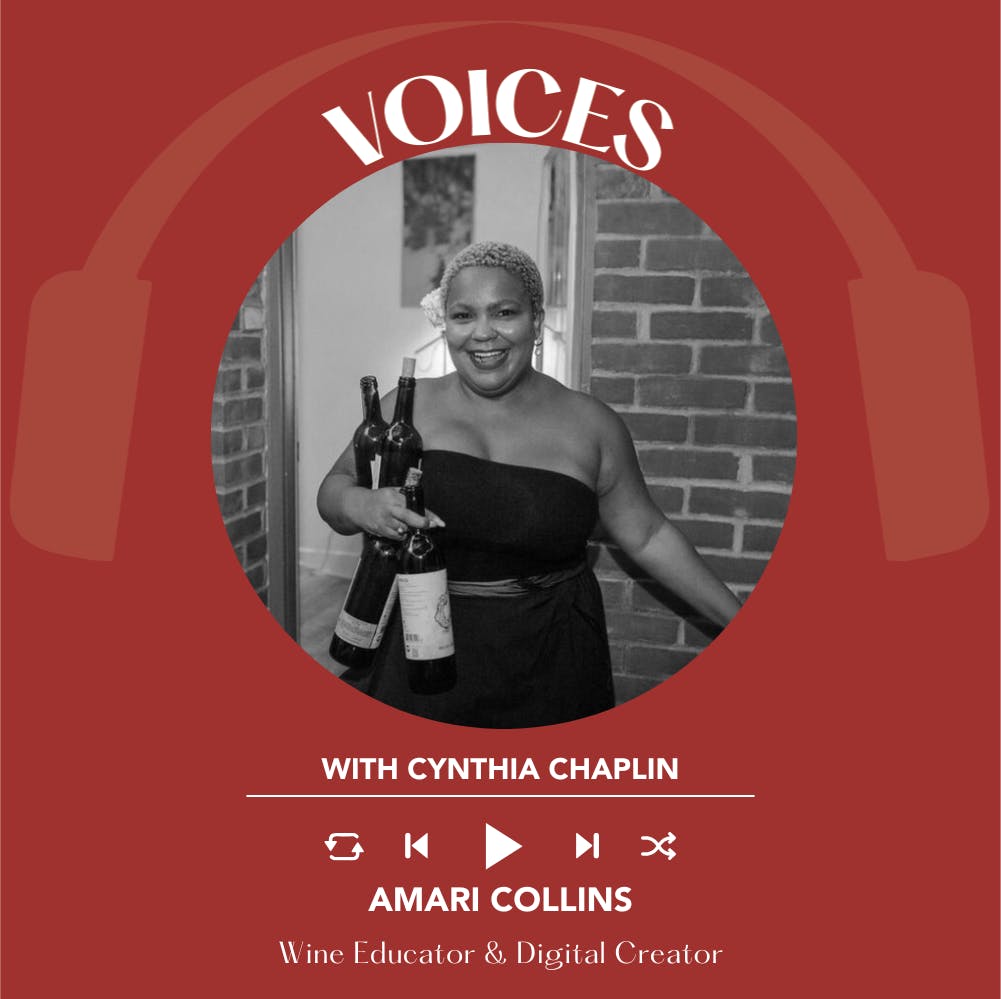
Ep. 2545 Building Inclusive Wine Spaces Through Storytelling with Amari Collins | Voices with Cynthia Chaplin
Episode 2545
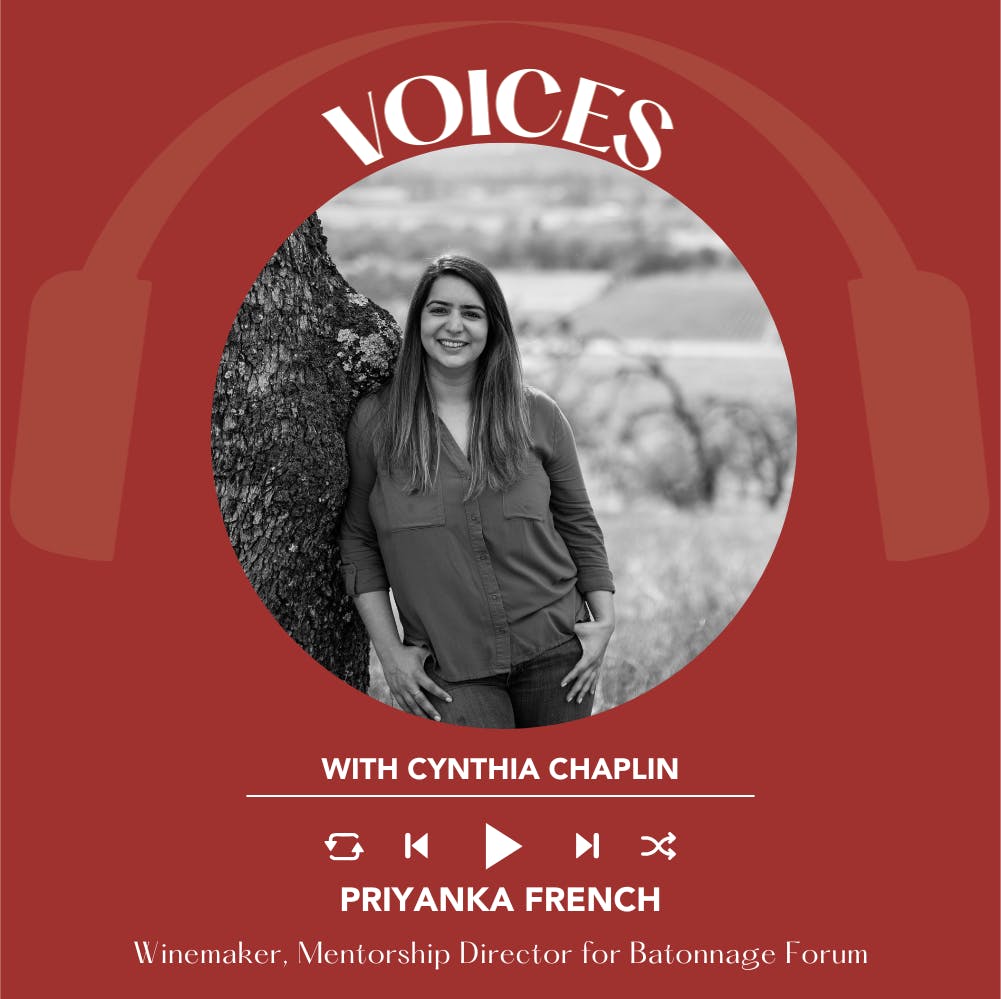
Ep. 2531 Winemaking Journey from Mumbai to Napa with Priyanka French | Voices with Cynthia Chaplin
Episode 2531

EP. 2517 Sarah Looper | Voices with Cynthia Chaplin
Episode 2517

Ep. 2505 Ren Peir | Voices with Cynthia Chaplin
Episode 2505