
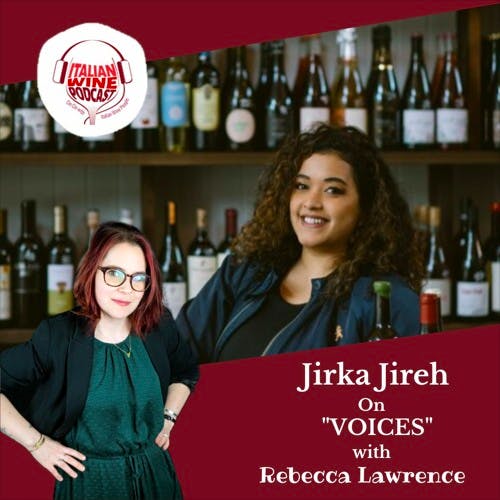
Ep. 611 Jirka Jireh | Voices
Voices
Episode Summary
Content Analysis Key Themes and Main Ideas 1. Inclusion and Diversity in the Wine Industry: Addressing issues of access, representation, and systemic biases in wine education and professional pathways. 2. Critique of Traditional Wine Education: Highlighting the limitations and exclusive nature of standardized wine certifications (e.g., WSET) for diverse communities. 3. The Philosophy and Impact of Natural Wine: Exploring natural wine as a movement focused on environmental healing, regenerative agriculture, and combating climate change, rather than just production methods. 4. Community Building through Industry Sessions: Detailing Jerca Jire's initiative to create an inclusive, accessible, and supportive network for wine professionals, particularly those from underrepresented backgrounds. 5. The Importance of Practical Winemaking Experience: Emphasizing how hands-on experience (grape to glass) deepens understanding and connection to wine. 6. Regenerative Agriculture and Food Justice: Showcasing Mirita Zrock Foridori's pioneering work in Alto Adige, integrating market farming within vineyards to promote nutrient-dense food and sustainable land use. Summary In this episode of the Italian Wine Podcast, host Rebecca Lawrence interviews Jerca Jire, a wine professional and co-founder of Industry Sessions, focusing on inclusion, diversity, and allyship in the wine world. Jire recounts her unconventional entry into wine, shaped by an inclusive tasting environment in a New York City restaurant. She critiques traditional wine education for its lack of diversity and relevance, arguing it's unwelcoming to BIPOC and LGBTQ+ communities and fails to address modern trends like natural wine. Jire passionately champions natural wine, not merely for its production methods, but as a crucial movement for healing the earth and combating climate change through regenerative farming, citing Mirita Zrock Foridori's innovative work in Alto Adige as an inspiring example. She highlights Industry Sessions as a transformative online platform that provides accessible education, uncovers underrepresented wine regions, and builds a supportive community and network for marginalized individuals, effectively breaking down traditional barriers to entry in the industry. Takeaways - Traditional wine education models often lack inclusivity and fail to adequately represent diverse perspectives or emerging industry trends like natural wine. - Natural wine is viewed as a holistic movement promoting regenerative agriculture, environmental healing, and a response to climate change. - Jerca Jire's ""Industry Sessions"" successfully creates an accessible, diverse, and supportive community for wine professionals, challenging existing gatekeeping within the industry. - Hands-on experience in winemaking and vineyard work is invaluable for a comprehensive understanding of wine. - Regenerative agricultural practices, such as market farming between vine rows, offer a promising path for sustainable viticulture and contribute to food justice. - Building strong networks and communities is essential for fostering diversity and creating opportunities in the wine industry. Notable Quotes - ""I always say that wine followed and chased me down. I definitely was trying to do other things with my life."
About This Episode
Representatives from a wine podcast discuss their passion for wine and how it is a big deal for them. They emphasize the importance of finding different journeys and tasting different ones in different wines. The shift in language and language references is also discussed, and the success of industry sessions in bringing people to learn about wine and taste. The representatives also mention their love for natural wines and the potential impact of their approach on the industry. They encourage listeners to check out industry sessions and subscribe to their podcast.
Transcript
Welcome to the Italian wine podcast. I'm Rebecca Lawrence, and this is voices. In this set of interviews, I will be focusing on issues of inclusion diversity and allyship through intimate conversations with wine industry professionals from all over the globe. If you enjoy listening, please consider donating through Italian wine podcast dot com. Any amount helps us cover equipment, production and publication costs, and remember to subscribe and rate our show wherever you tune in. Welcome to the Italian wine podcast with me Rebecca Lawrence. Today on voices, we've got a great episode for you as I'm talking to Jerca Jire. First of all, Jerca, welcome to the Italian wine podcast. Hi, Rebecca. Thank you for having me. So I like to start these interviews quite often by asking my guests to introduce themselves to our listeners, tell us a little bit about yourself and what you're doing in the world of wine. Excellent. So I am Yir Khajide. I am a wine professional based in Oakland, California. I work at a natural wine shop. Called Ordener here. And I also have my hands in a little bit of everything. I made a little bit of wine in twenty twenty. And our biggest project has been in industry sessions, which is a online series of sessions over Natural Wine, and we like to discuss different regions around the world that don't get a lot of attention. So a lot of underrepresented regions. We are in thirteenth CDs, including one in Toronto, And it's been super exciting. We turn a year old on June twenty first, and all the connections that are being made through the sessions are really starting to show fruit. I really wanna dive into that, a little bit later in our podcast, because I've been really, energized by industry sessions and what you guys have been doing. And everyone that I talk to tells me that I should, I should talk to you. But first of all, like, how did your passion for the world of wine begin? Did you start straight off in wine and hospitality? Did you dabble in other things first? Let's set the scene. So my love for wine was actually born in New York City. I always say that wine followed and chased me down. I definitely was trying to do other things with my life. I was doing a little bit of work in the music world in New York City, and I had a part time job at a fine dining restaurant in Manhattan where there was an incredible wine director named Jared Roth, who made a deep effort to have everyone be included when it came to tasting wine. It didn't matter if you were a food runner, the coffee, barista, or the head bartender, everyone came together to taste wine and to blind and to discuss what was happening in the glass. And it's not something that you see at every restaurant. A lot of the times, it's maybe only maybe it's only the captains that are focused on. But in this restaurant, it was every single person, and that made a huge impact for me. It was also a restaurant in New York that had an urban garden. So one thing that he directed us all to do was to really, like, spend time in the garden, smelling everything, go into the kitchen, touch and smell, like, smell rocks when you see them, go to the farmer's market. Like, he really encouraged us. And I I just did it to explore and to be creative, and it just turned into this whole whirlwind of finding finding different journeys and all the different wines that I was tasting. Taking me all over the world. It sounds like it's taken you you're pretty far in terms of what you're doing now because it's like you touched on your you've also made wine. Mhmm. Yeah. Tell us a little bit about your experience making wine because it's not something that I had the opportunity to do yet, but a couple of my friends have been dabbling in it, and I'm super interested. I think it's so important to try to even you don't necessarily need to do a whole harvest, but to just go to a winery or a vineyard during harvest and see the process, like, the process from grape to glass is beautiful, and it really starts to connect the dots in ways that you're not going to understand from just reading it on a page. For me, I came out to California in two thousand eighteen to do my first harvest. And, you know, New York is a big it's a big sommelier world, and it's very disconnected when it comes to, like, what's happening on the ground and what's happening with the labor, what's happening, with the different grapes that come in, what is it like when the crop isn't good, or a pick is bad, you know? All those little details, you start to really understand what decisions winemakers are making when you're tasting as well. And I feel like for me, it just came full circle and my understanding just blossomed. So much so that when I did make my first couple of wines in twenty twenty, I I learned so much because I knew exactly what I did wrong. I knew what things I did right. I made a wine without any sulfur, which is a whole mother ball game. You really have to be, like, intent and focused on what you're doing. Because it's just a different you're painting with a different brush. So so, yeah, it's been really rewarding for me, and I can't stress. Like, even if it's for a weekend, like, start checking out what's happening in the vines closest to you, like, start tasting, unfermented grape juice. It it just makes everything come together so much more beautifully in your mind. Talking about you saying working without sulfur, which is incredibly, different to, some traditional winemaking that, and it puts you in a different mindset, I think. You are passionate about natural wines, and I wondered if there was something that in particular that sparked this this interest for you if there was a kind of aha moment that led you to natural wines in particular. For me, discovering natural wines in New York City, almost by accident, it was more of a kind of a poetic stance at the beginning, you know, working without any additives or chemicals in the farming and, you know, letting the grape just show itself. Through the fermentations was just very, like, poetic to me at first. And but then, you know, once you got to see farms and see fermentation processes, it really comes together. Like, if you take care of the land, then the grapes will give you a good wine. I truly do believe in that there's just too much going on when it comes to, like, the chemicals that are going into the ground that are killing the ground. Like, there's, like, round up and glyphosate and glyphosate has been proven to be a carcinogen. It causes cancers, autoimmune diseases, autism. It's banned in so many countries, but not in the United States yet. And it's poison. So I truly believe that the natural wine movement is more about getting rid of global warming and actually trying to heal and regenerate vines than it is about having a conversation about how much sulfur is in your glass. It's more about the forming. I really like that idea of of healing and regeneration. Seeing it in that light rather than seeing it as a, oh, it's about this offer. Absolutely. I mean, that's the real conversation. We are seeing we are seeing what has happened in this year alone. Like, California's on fire every year now. And the frost that just happened in in France, like, they decimated, like, what they're gonna be able to make in twenty twenty one. And that's not going away. And that's all because of how we've treated the Earth and how much poison we've put into the ground to get rid of the nutrients and get rid of the biosphere and not be able to have a healthy plant life and a healthy animal life. All those things matter. Yeah. We can't kind of keep hiding our heads in the sand anymore. We really need to address this immediately and directly with how we are farming, how we're approaching agriculture, and wine is a huge part of agriculture. Absolutely. Why is agriculture? On this theme of actually healing and regeneration, I was quite interested recently, I read one of your interviews, and you were talking about criticisms of traditional wine education, and that it's unwelcoming to the BIPop community and that this makes people internalize a certain type of thinking. And as a wine educator who is constantly trying to improve my understanding of how I should interact in a classroom and and, you know, maybe the inherent biases that I have, the things that I'm using in the classroom that maybe are incredibly negative, and I don't realize. I wondered if you could talk a little bit more about this, and and maybe if you have advice or things to be considering for people who are educators and just generally working in the industry. Absolutely. Well, when it comes to standardized testing as a whole, it's not just that it doesn't include or welcome by pocket. It doesn't include or welcome LGBTQ. It doesn't include or welcome. People who maybe, don't have a certain social status in life and therefore don't have the money to get, like, certain tutoring or certain, testing and certain traveling in their lives. So it's not just a thing about it's not just about buy pockets, also like a classism thing. So we have to think about all these things. Right? Cause we want to treat everyone with human dignity and respect. And a lot of these standardized tests were made in the UK by groups of older British men. And, you know, I've heard whisperings and, you know, different people are telling me here and there that the different groups are starting to, like, do the research to try to diversify how they talk about wine, but, you know, it hasn't happened yet in a strong enough way. And I hope hope hope that it does, like, come to that and that a serious shift happens. There's already a shift happening in wine that's super apparent. But once we get those standardized tests to shift as well, like, that's gonna be a huge impact because then every educator is gonna be held to that standard to be open to people's palates. We all have different upbringings. We all have, you know, different things that we believe in as well. So I just think it really stifles creativity, and natural wine is even concept in any of the, like, standardized tests or the books. Like, you don't you don't read about it. I remember being in a w set class and, the instructor just said, well, natural wine is something that's here to stay, and that's the only thing they said about natural wine for the whole course. And it's just really silly to me because for the United States alone, like, there are several shops that have opened just in this year. The there's wine clubs everywhere. New winemakers are popping up. More and more people are regenerating land. So, yeah, it's really silly to me that it's just not addressed at all. And I think as long as instructors are not just dialed into memorizing what's in the book and on the on the page and actually talking about what's happening now, then we can actually get somewhere. And that's where industry sessions is really special because not only are we talking about natural wine. We're also, like, diving back into history and doing a bit of revisionist history and seeing where, marginalized people are also part of the story of wine because wine does not just belong to white people. Like, it belongs to everyone. And almost there's wine regions all over the world. So revising history and placing us in the story of wine. Is one part. And then the other part is what's happening in wine today right now? Boots on the ground. What are what is happening in wine regions as we speak? I think that really touches on several issues that I have with traditional wine education, and I I am a WSTT educator, but I really struggle with the lack of cultural background, the lack of ability to comment on sometimes the privilege view that textbooks take, and the very kind of white gaze that textbooks take. And also the problem with this idea of a quote unquote systematic approach to tasting. I understand it's about trying to communicate to people, but my experience of food and flavor is very different to somebody else's. And so I shouldn't be telling you, like, this is what I find in the glass and therefore you can't find something else or you can't use your own flavor references. And I'm really hoping that there's gonna be an overhaul in the language that we use, not just in teaching wine, but teaching about tasting wine. And actually it was Jade Malay. I was speaking with her on the podcast recently about the language we use and the flavor references we use and She was one of the people who said, you really need to check out industry sessions and direct your students to it, and and give them this broader context. And also, like you said, this revisionist history, this looking back at the past, and maybe seeing what's missing from traditional wine education, and then giving that immediate up to date. So tell us a little bit more about what industry sessions has been doing this year and and what response it's had So we started a year ago, and, you know, it was during the pandemic, which we are still in a pandemic. But it was at the it may be the first season of the pandemic. We can say And it was right after George Floyd, maybe two or three weeks. I got together with James sly, who is a wine educator in New York City, and I just pitched him this idea, and he was on board. And as I discussed it with more and more friends in the wine industry, they were also like, hey, I can get those wines in my city as well, and thus it was born. So we ended up having our first session with just people all over the United States, and it was truly beautiful. You would see all these different different walks of life, all these different faces, all different skin tones popping up on the zoom screen, and it would make you emotional. I think all of us were, you know, working in our wine shops or restaurants or you know, wineries and, you know, you are working and grinding and you don't really pull your head up because you're just trying to make it to the next level. And you don't really look you didn't really have the chance to look around and see if there was anybody else. Out there that looked like you or that you could connect with with a similar background, but opening that room up and seeing all those people, you didn't feel alone anymore. And I've heard that description of the sessions time and time again from different facilitators and speakers that we've had. And it's really created an impact because there have been so many barriers and gatekeeping and mystification of how do you get to become a winemaker? How do you become a sommelier? It's very, very hard. There's so many different keys and You have to you have to find them and there's only, like, five keys. So just getting rid of that idea and just saying, here's the information. It's available to you. I am available to you as a resource. And really having every facilitator and speaker that comes to the industry sessions have that same willingness to be, resource and a connection for every student. That attends. And there's been so many, like, beautiful relationships that have blossomed just like naturally organically. Just I see people finding mentors. I see people finding jobs, getting placed into jobs or you know, moving cross country to do their first wine harvest. And now they, like, see a pathway to become a winemaker. Different things like that that, you know, we've take many of us have taken for granted, I guess. And Now there's a through way, now there's a network, and networking is everything. It's all who you know. Right? So to give people a community and a space to find a network and to find people that do wanna help them and aren't going to make it harder and mystify it even more. That's very powerful. That's something I didn't have when I was coming up in one. Yeah. It's it's so powerful. That word community is really something that I've felt coming through industry sessions. This This open community with no barriers that is so willing to be a resource and an aid and just be even if it's just like a shoulder to lean on sometimes. Absolutely. And another thing that I've really enjoyed about it is that you tend to cover lesser known wine regions Is there one in particular that maybe has attracted the most interest or or one that you in particular have enjoyed the most? It must be difficult to pick one. I'm sure of. I mean, the one for me that stands out that was all also the most difficult to pull off was when we did our Western Georgia wine class, and we did, we did the whole thing. We had food pairings for everyone in their city. And everybody had wine. And James was the Tamada, and we had we did the whole Georgian feast. We did the whole Supra during the class. And we had several speakers. So we fashioned the class as a supra. And it was just, like, so inspiring and so beautiful, and everybody was just really into it. And I was just on the phone with Georgia and grandmothers all over the country. Trying to figure out, like, how to get food and how to, like, communicate with these, like, mom and pop restaurants, but it was really beautiful. And, yeah, I would say that was probably my favorite one So amazing. So, of course, this is the Italian wine podcast, so I I can't leave it too long without asking about Italian wine. And I wondered if there is a a favorite wine or region from Italy that you think doesn't get enough attention and maybe should be brought to the floor a little bit. You know, I have been really obsessed with not as I wouldn't say maybe a region, but maybe a person within a region. I've really been obsessed with Mirita Zrock at Foridori and farming that she's doing right now, that I think is revolutionary. I did a little interview with her and wrote an article about her, and our next interest industry sessions is actually about Alto adige. But just to sing my praises of Mirita, she, you know, studied farming in Oregon and in Quebec market farming and came back home in twenty nineteen and started lanting food between the rows. And she basically has honed in the skill of how to really make one hectare of land to be super prosperous. And for me, I think when I think of think of natural wine. I think about climate change, but I also think about food justice. And I think about how so many people don't have nutrient dense food on their plates or access to it. A lot of marginalized people when it comes to, like, classes, you know, a lot of people in lower classes. There's not even a a market they can go to. And if they go to it, it's gonna be that super round up sprayed, no nutrient dead vegetables and fruits that they're gonna find, you know. So they're just, like, not getting what they need to even have a healthy lifestyle. But when I see what Mira's doing and I see how she's taking the land and staying in its rhythm and keeping it healthy and finding a way to produce so many beautiful vegetables and fruits and starting this market gardening and bringing attention to it so that other winemakers throughout Italy are also like, how did you do this? I want to learn from you. I think that's incredible. And if that can spread all over the world, like, imagine the change that could come. Yeah. It really encompasses the success of taking, that kind of approach and getting the best from your land by not messing with it, by looking after it, and how productive it can be. And how prosperous it can be, and how delicious the wines are. You know, this is genuinely delicious food drink in an amazing ecosystem. And Yeah. Working does phonetically. Yeah. Exactly. So, yeah, I'm so glad that's such a great choice. I love her stuff. Yeah. I'm I'm obsessed. I just think it's incredible, and she was saying that she just started working with a cohort of forty winemakers. And they just started doing biodynamic theory, and they all want to market garden. And that's that's I don't know. To me, it just makes me very excited. Yeah. That's huge for the industry. Like, you've got forty winemakers that are now bracing this approach, and that might be eighty next year, and then a hundred the year after, and just spreading. And the impact that could have on both the industry, but also, like, just the earth. Yeah. And that's just the impact that one person can have, you know, one passionate person can stand up for something they believe in, put the work in, and people see that it gives results, you know, so it trickles, it ripples, and And that's how we change the world. And she's a young woman, you know. So, yeah, I'm very inspired. And that that's a perfect segue yoke into speaking of passionate inspiring women, what's next for you. What's the next thing on the horizon? Man, it's nice for me. Well, we're kicking off our next round of industry sessions, which, we're gonna talk about Alta differentiate, and we're gonna kinda we like to be a little, like, creative and silly. We don't always just keep it to, like, grapes. So we're gonna do a rice wine fermentations class. And then I think we're gonna do perhaps some spirits classes as well just to mix it up because it's kind of hard to ship wine when it's really hot in the states. So we try to, like, mix it up with other spirits. And then, you know, just prepping for harvest. I've I kind of have an idea of what I wanna do. And I also am just, like, so ready to travel. I really just wanna get out. I really wanna just, you know, I wanna come to Italy. I wanna go to Mexico. Their harvest starts July fifth on planning to go to Mexico for a little bit and kind of just explore and see what's out there winemaking wise. But, yeah, I'm just itching to travel and write. I just wanna write and travel. Sounds ideal. You're good. Thank you so much for joining me on the Italian wine podcast today. Where can our listeners find you online or social media? And where can they find industry sessions? So you can find me at Yerkita on Instagram. That's y I r k I t a. And then if you're looking for industry sessions, you can find us on Instagram as well, and that's industry sessions. I really encourage anyone listening to check out industry sessions. It's been an incredibly inspiring thing to see happen in the industry. It's just it's so fantastic. Go check it out. Thank you for listening. Don't forget to follow us on social media, subscribe, and of course donate on the website to make sure we can keep these great conversations flowing. Listen to the Italian wine podcast wherever you get your podcasts. We're on SoundCloud, Apple podcasts, Himalaya FM, and more. Don't forget to subscribe and rate the show. If you enjoy listening, please consider donating through Italian wine podcast dot com. Any amount helps cover equipment, production, and publication costs. Until next time. Chichi.
Episode Details
Keywords
Related Episodes

Ep. 2651 Diversity in the Wine Industry and Wine Tech Innovation with Jeremy McCarty | Voices with Cynthia Chaplin
Episode 2651

Ep. 2627 Regenerative Winemaking, Mentorship & LGBTQ+ Perspectives with Terah Bajjalieh | Voices with Cynthia Chaplin
Episode 2627
Ep. 2545 Building Inclusive Wine Spaces Through Storytelling with Amari Collins | Voices with Cynthia Chaplin
Episode 2545
Ep. 2531 Winemaking Journey from Mumbai to Napa with Priyanka French | Voices with Cynthia Chaplin
Episode 2531

EP. 2517 Sarah Looper | Voices with Cynthia Chaplin
Episode 2517

Ep. 2505 Ren Peir | Voices with Cynthia Chaplin
Episode 2505