
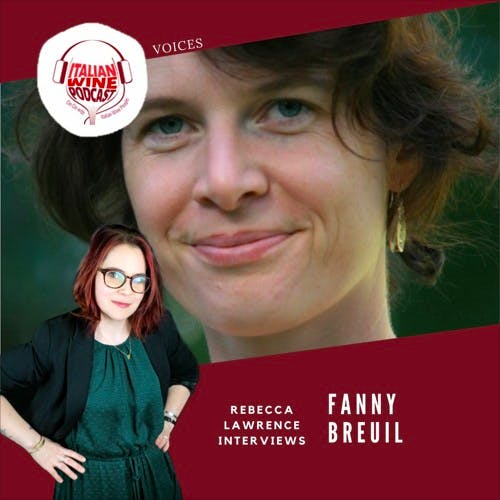
Ep. 641 Fanny Breuil | Voices
Voices
Episode Summary
Content Analysis Key Themes and Main Ideas 1. Fannie Gray's journey from winemaking to becoming a wine export ambassador. 2. The founding and ethos of Genuine Wines, focusing on less-known regions and organic/native grape varieties. 3. The importance of sustainable viticulture and preserving unique grape expressions. 4. The role of personal passion and collaboration in the wine industry. 5. Fannie Gray's personal winemaking project, La Bara, and its experimental nature. 6. The impact of early experiences and mentorship on a wine professional's career. Summary In this episode of the Italian Wine Podcast's ""Voices"" series, host Rebecca Lawrence interviews Fannie Gray, a French wine professional. Fannie recounts her background in agronomy and enology, her initial experiences in winemaking and sales, and her decision to found Genuine Wines in 2008. She explains that Genuine Wines serves as an ambassador for wine growers from less-known or underestimated regions, emphasizing organic production and native grape varieties. Fannie discusses her reasons for prioritizing organic practices—to maintain soil health— and her preference for unique, non-standardized native grape expressions to avoid mainstream uniformity. She also shares details about her personal winemaking endeavor, La Bara, a ""project of friendship"" in the Vantoue region, where she experiments with different grape varietals. Fannie highlights how her passion for Italian wine was ignited during an internship at La Stoppa, influenced by mentors Elena Pantaloni and Giulio Armani, who encouraged experimentation. She concludes by emphasizing her commitment to continuous learning and sharing knowledge within the wine world after participating in the Vinitaly International Academy program. Takeaways - Fannie Gray, a French enologist, transitioned from winemaking to founding Genuine Wines, an export company. - Genuine Wines specializes in promoting wines from underestimated regions, with a strong focus on organic farming and native grape varieties. - Fannie believes in preserving the individuality and unique expressions of wines, rejecting standardization. - Her passion for Italian wine was significantly shaped by an influential internship at La Stoppa, where experimentation was encouraged. - She also produces her own wines under the La Bara label, a side project born from friendship and a desire to experiment. - Fannie views her career as a continuous journey of learning and collaboration within the wine industry. Notable Quotes - ""I have always been working with wines. This is actually my background. I have studied agronomy engineering and analogy."
About This Episode
The hosts of the Italian wine podcast discuss their background in agronomical engineering and their interest in organic wines. They also talk about their love for creating wines that bring hope and joy to people and their desire to continue creating them. They mention their experience with L launches and their love for Italian wine, and their passion for creating wines that bring hope and joy to people. They also mention their love for L launches and their desire to continue creating their own wines. They provide updates on their progress in creating wines and encourage viewers to donate to the podcast.
Transcript
Welcome to the Italian wine podcast. I'm Rebecca Lawrence, and this is voices. In this set of interviews, I will be focusing on issues of occlusion, diversity, and allyship through intimate conversations with wine industry professionals from all over the globe. If you enjoy listening, please consider donating to Italian wine podcast dot com. Any amount helps us cover equipment, production and publication costs, and remember to subscribe and rate our show wherever you tune in. Hi, everybody. Italian wine podcast celebrates its fourth anniversary this year, and we all love the great content they put out every day. Chinching with Italian wine people has become a big part of our day, and the team in Verona needs to feel our love. Producing the show is not easy folks, hurting all those hosts, getting the interviews, dropping the clubhouse recordings, not to mention editing all the material. Let's give them a tangible fan hug with a contribution to all their costs. Head to Italian wine podcast dot com and click donate to show your love. Welcome to the Italian wine podcast. This is the voices series with me Rebecca Lawrence. This week, I'm excited to be talking to Fannie Gray. Welcome to the podcast, Fannie. Thank you. I'm very happy to be with you today. So I like to start most of these conversations by asking my guests to introduce themselves to our listeners. So maybe you can give us a little bit about who you are and what you're currently working on. Sure. I'm Fannie, Fannie Brier. I'm French. I am from Angie in Alois. I have always been working with wines. This is actually my background. I have studied agronomy engineering and analogy. And first, I have worked as a wine matcher in France, Italy, and Chile, and then as a salesperson for wine importer and the United States. And back to France in two thousand eight, I have found my company genuine genuine wines. With the deep willing to help Onegres, locating in less than on region or underestimated region, to to be more known and to develop their export markets. So now that you're primarily involved in export, What is it you miss from those initial experiences with winemaking? Because we're seeing very different being based, you know, in a more kind of office environment, being on the phone, emails, to actually being in a vineyard or a winery. So What do you miss about those experiences? Yeah. This is true. I think what I miss most, this is the harvest time, the verification. This is very intense time. Also a teamwork. You are in the in the salon. You work. Of course, every day, the yeast never stop. And, and, but there is a team and you see the the construction of, the vintage from, from the grapes to what would become the wine after this is this is really intense and everyday work. Lots of crossroads in decisions and, and exhausting, but also giving you lots of energy. That's something, I think I could miss most. But I think I'll I like people as much as I like wine. So my today's work, yeah, of course, I have emails and funning, but I also have lots of meeting in person meetings in a normal year. I mean, outside of COVID, but when you can travel, when you can always learn new culture, new habits, and, learning how to stay humble and also the education part of the work because I work with lesson on religion and native grapes. So you have to explain and to and to inform and to also sometimes only show the wines because sometimes it's wines less known. So also only a casing, the wines can talk by itself, and I really like this too. Think that this background in inology and agronomy gives you something a little bit extra when you are working in your business now. Is it advantageous to have come from this very direct background working in in the vineyards and directly with the wines. I don't know if it's, make me some an advantage. I know that for sure it makes me, decide or I have created this company. I have created the group and, and also my partners, the the the racing team that I have built. It's thanks to this background because I have always, all the basis is on technical, the the way I I select the wines. It's because I am, aware of the passion, the wine grills are showing in the wine making, and I, I need it because that's my background. That's what I know for sure. So I need to always go back to the roots, how it's made, how people worked in the vineyards. And and since I understand this, I will explore this and and use it. Everybody will, We would create a company depending on who they are on. And me, this is what made more sense to me. I had to talk. I had to the fundamental, I had to be the technical aspects. So you founded genuine wines in two thousand and eight, so very well established by now. Could you tell us a little bit more about this company, how it works, and the ethos? Yes. I was back from, the United States where I have worked for a wine importer. It was in Wisconsin. In Wisconsin, I was not able to join a wine production because there were no wine production. So that was my first experience with sales, and I have, really enjoyed it. Being part of, team and and explaining the wines to the customers, restaurants or or wine stores and and organizing and tastings. So when I came back to friends, I knew I wanted to continue this and, to explore more before maybe coming back to the wine production. So I was in AlASas at that time, and, I remember that anytime I was answering a wine position as a a wine exporter, a salesperson. I didn't really like the wine. So back to my background, the the previous question you had, I was not able. I I didn't feel I could be able to to sell these wines. And, when I really liked the wines, the producer were the the domains were too small to hire someone through time. And, this was the, the the starting point, how could I do this? How could I be, an ambassador for for ones that I really like? Only by being a a kind of part time expert manager. And it was, by talking with one group that this, project has been able to to start. I was at Lastopa, talking with, Elena Pantalione, who I knew very well, I have worked there. And and I was explaining this project. And she said, yes. Why not? Let let's do it. You know, my wine. And that has been the start. So I have started with, Lastopa wines in Emilia Romania and, Domaine de Chura. So under lesson on wine region or underestimated wine region. And I I had the feeling I have to a lot to say and, to to show all the wonderful wine it was. And today, I have continued, little by little, the it's not a big group. It's remains very small because, I do I think I have this mission to be the ambassador, seriously, of all the wine growers, as if it was them. It's really being part of each team. It's, we we work hand in hands. Sometimes do the final teaching when they do the blend. I am involved in the, in their wine solution, how they want to do wine, and I share also in return a lot about what's happening on different markets and, the wine, the wine importer, their partners, they come and deviate the winery. So I'm not an in middle person. I'm more feeling part of each team and and together. The wine grows and I, as if I was their salesperson, hired, we we we develop the export market. So one of the emphases you have is organic wines. And as you said, these very local, great varieties, why was it important for you to really put the emphasis on this rather than be doing something, you know, quote, unquote easier by working with someone who's maybe a little bit bigger or, you know, less less difficult to market, maybe. Yeah. Maybe because I like when it's difficult. So about organic, Why it's not vital? Well, I mean, yes, today, it would be hard to meet you to have a dinner, good good, having no wine to drink. But in a in an agronomy vision, we thinking that we will, use ground to grow grapes, and then to do wine. I think we need to to grip with, as less as possible, chemical product, to keep the the soil alive, to keep the soil, yeah, and polluted. I have my my major was, about, chemical treatment, how to unpolute. I don't know how we say it in English, but how to we take care of pollution. So I have always been a way of organic wines, and also because I like organic wines when I when I taste them all organic or biodynamic wines or natural wines. And, it was natural for me to to go on this, direction. I I don't belong to any church neither, so not all wine grows, were organic certified when I started, but they're they all have, weeding to work with less chemical product as as possible. And today, yes, all of the wineries I am working with has have started to to transform the wineries into organic production. And regarding as for native grapes, as for native grapes, I think it's because I like artisans. I like handcraft. I don't like standardization. I like, when it's different, whether it has an original taste and in native gray, we will bring us different taste right away because it has a different DNA, different expressions. So it's interesting. And also it's it's it changed. So, yeah, doing something I don't like mainstream. Yeah. I wanted to do something different. And what could I bring to to wines that are always known? Nothing. I think I can bring on me by showing something knew something, unknown or less known. So this is because, I need to feel useful also maybe. So speaking of you, actually, in addition to sporting wine, you have returned to the production of it with the founding of La Bara. I hope I'm pronouncing that correctly. So this is a project that you've described as a as a project of friendship. So maybe you can tell our listeners a little bit about it and the kinds of wine you're producing. Yes. It's a it's a small project, but it's lots of fun. Well, it started. It was fun for starving too. It's back to two thousand nine, ten. I was in the rural Valley. I was visiting a a friend of mine tomorrow. Classmates. We are very concerned. He and his family, and I was building the portfolio. And I was thinking she to work with, win wineries from the room. And Thomas, He is a consultant for organic producers. So, naturally, he was, helping me, meeting producers. And at the end of every every every end of day, we are we are have dinner to see wines, of course, solving the world's problem. You know, this is a very French thing. And, I think at the end of the three days of the small week, I don't remember. We were even talking about our about our ideal wines and we were trying blends. And there has been the start of of it. It's something very Thomas had already made wine for the the the the the the vintage, the birth of our kids. It has kids from two thousand and five and seven and me too. And and for all the two thousand and five, we had a few days to share with all the friends. He he was already on this, idea to to explore the wine collection. And and I think I had just started the sales and I was missing more than today even, was missing the the wine production. So it has It has been quite naturally that we have started. Our own cuvee in from Vantou. Again, Vantoue is an underestimated wine region. I think less and less how and this is great, but, back to two thousand nine and ten, it was, really the the the wine known for bad quality, little price. But, we have very serious, a great, quite possibility, great potential. So, we have focused on a very precise and it has it has worked. Well, we have found people who who like it. It's it's it's very small. And then quite naturally, Thomas was in love with the Claret, and he he wanted to do a white one from Tiette. So we named our Vackeras White after his name, Thomas. And little by little, we have increased the the range to today we have seven wines from Clarite, which is not so, so well known, but can do fantastic wines. There is no higher city, but it remains very balanced, very elegant. It's matured. It's a late harvest. So it, it's, works very well with the study and warm region. We have also chat Netipap or Verde France. So we have, arranged from different expression of points we can have from this region. Talk to Anne and Vaginas. I love that you've managed to keep all of the things that you love kind of together, you know, being an ambassador for other people's wines, but also continuing to make an experiment with wines yourself. It it seems like the best of both worlds to me? Yeah. Well, I think, nothing has never been planned in my, in my life, but it's always meeting and and passion. I have the feeling I do, I leave my dream, and, I do what I like, and and then it's like a puzzles when I when I look back. It seems that I am building a bigger puzzle every day, but still working with passions, and, and I feel happy with this. So speaking of passion, you've talked already a little bit about working with Laptop. Is this where your your passion for Italian wine started, or did it come before that? Hello. When I went to Laptop, it was in two thousand, was validated my last internship for the analogy pro diploma. So I had already the one passion before that. I have done a, an internship in Aloha with Olivier Cuosa, also passionate wine groups. But at Lastopa, I have met two people, Elena Pontaloni and Julia Armani, who really, there are people that are holding the highest team. And to whom I owe a lot, they are really, wine enthusiasts. They know wine. Than the wine, natural wine because this is wine that I they do. But even more than that, that, I remember during, the time there, we were teaching wines from everywhere, Italy, of course, but France and Germany and Chile and Australia. We were always tasting wines, for lunch, one glass, and I'm talking about it, Slovakia wines. So it it's really, especially for me, back to in two thousand as a as a French person. This was a door open to the wine world. And, and and this, I have been very lucky, I made them. And also their approach they always wonder, is this the right way to do or and this feeling this approach has always been great. To me, should we have a money, for instance, when I have done what became after later, the the future, Agino. Back in two thousand and one, it was not Agino. It was just trials, but making a white wine with skin contact, I was just a fresh analogy from friends. So white, white, white macerating white wine was really uncommon. And I remember asking him, what why what are we doing? What why do we what do we do I do something over every day? Or because we I was at the winery when the grapes, the harvest arrived, we had to dis to distill it, to crush, put in that, and then do the pumping over in the morning. I say, what what are we doing? And and I will always remember this sentence. He told me who said that we have to do a white one this way and a red one this way? Of course, I have no answers to to this question. And it's it's an open question. And also all white words, I think, all of them. They are always experimenting. They love it. They have one moment of the year to experiment. This is harvest time. And there is always a seller in the seller, a vow to borrow something but they experiment. They try, and and this is really great when you when they they let you know more about their experience. So, yes, a great experience at Laptop. So, You have recently participated in the Finisley International Academy program here, becoming an ambassador, so continuing your Italian wine journey. So in order to kind of close our conversation today, I wanted to ask what's next for you and maybe what's next for you and your journey in Italian wine? So, well, this program, in Italy, this has been fantastic, fantastic, journey in native grapes and very deep, very intense, very solid education program. So, today, they continue my journey. I have a small Italian wine importation in France, so I have already started back to verona to share all the knowledge I have learned with my customers and, being more precise, about the grapes, about the the the the origin, the terroir, and and that's that's very, that's fantastic to to to be able to to share with them. And then continuing, continuing learning, I think this has been the start. This, first, it was the first time I was back to school. We can say, back after twenty years. And, I think I want to continue to continue learning always while you learn every day when you when you work with wine, I think by listening to wine groups, but continuing learning, more, that is great country, all the native grapes from Italy or the turmoil, the the microclimate. It's a long it will be a long journey, and then also the other country. Why not? Banny, thank you so much for joining me on the Italian wine podcast today. Where can our listeners find you and what you're doing online or on social media? So you can find me on Instagram, mainly. With genuine wines or with Sunny Bai. Thank you so much for this great conversation. Thank you very much. It has been a very, a great pleasure for me to be with you today. Thank you. Thank you to everyone for listening. Don't forget to follow us and so social media, subscribe, and of course donate on the website to make sure we can keep these great conversations flowing. Listen to the Italian wine podcast wherever you get your podcasts. We're on Sun Cloud Apple podcasts, Spotify, email ISM, and more. Don't forget to subscribe and rate the show. If you enjoy listening, please consider donating through Italian wine podcast dot com. Any amount helps cover equipment, production, and publication costs. Until next time.
Episode Details
Keywords
Related Episodes

Ep. 2651 Diversity in the Wine Industry and Wine Tech Innovation with Jeremy McCarty | Voices with Cynthia Chaplin
Episode 2651

Ep. 2627 Regenerative Winemaking, Mentorship & LGBTQ+ Perspectives with Terah Bajjalieh | Voices with Cynthia Chaplin
Episode 2627
Ep. 2545 Building Inclusive Wine Spaces Through Storytelling with Amari Collins | Voices with Cynthia Chaplin
Episode 2545
Ep. 2531 Winemaking Journey from Mumbai to Napa with Priyanka French | Voices with Cynthia Chaplin
Episode 2531

EP. 2517 Sarah Looper | Voices with Cynthia Chaplin
Episode 2517

Ep. 2505 Ren Peir | Voices with Cynthia Chaplin
Episode 2505