
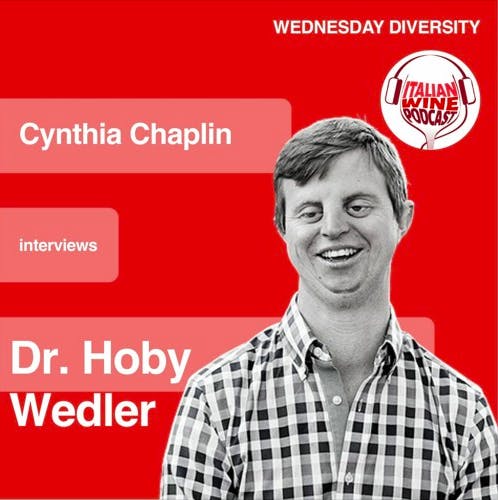
Ep. 743 Dr. Hoby Wedler | Voices With Cynthia Chaplin
Voices
Episode Summary
Content Analysis Key Themes and Main Ideas 1. Hobie Wedler's journey as a blind individual, chemist, and entrepreneur. 2. The concept and implementation of ""Tasting in the Dark"" as a multi-sensory wine experience. 3. The intersection of art and science, particularly as it applies to wine and sensory perception. 4. Advocacy for diversity, equity, and inclusion, especially for people with disabilities, in education and employment. 5. Hobie Wedler's passion for Italian wine, food, and culture. Summary In this episode of the Italian Wine Podcast, host Cynthia Chaaplin interviews Dr. Hobie Wedler, a blind organic chemist, entrepreneur, and founder of ""Tasting in the Dark."" From birth, Wedler details his lifelong curiosity about how things work, which led him to chemistry despite initial skepticism from some teachers. He discusses his transition from academia to entrepreneurship, driven by a desire to solve problems and create accessible experiences. A significant part of the conversation revolves around ""Tasting in the Dark,"" his unique wine experience that leverages senses beyond sight to deepen appreciation. He explains how this concept, born from a collaboration with Francis Ford Coppola, teaches participants to engage more fully with their non-visual senses, viewing wine as both an art and a science. Wedler also shares details about his collaboration with Ornellaia and the Guggenheim Foundation on the ""Mind's Eye"" program, which makes art accessible to blind and visually impaired individuals through audio descriptions and tactile experiences. Furthermore, he touches upon his broader advocacy work for people with disabilities, including his ""Champion of Change"" recognition from President Obama for accessible science education. He emphasizes the business case for diversity, explaining how varied perspectives lead to better problem-solving. The interview concludes with Wedler expressing his deep affection for Italian food, culture, and wine, sharing his favorite Italian wine choices. Takeaways - Dr. Hobie Wedler, blind from birth, holds a PhD in organic chemistry and is a successful entrepreneur. - ""Tasting in the Dark"" is a unique multi-sensory wine experience he created to focus on senses other than sight. - Wedler views wine as a beautiful amalgamation of art and science. - He collaborated with Ornellaia and the Guggenheim Foundation to make visual art accessible to blind people through the ""Mind's Eye"" program. - He is a strong advocate for diversity and inclusion, believing it leads to better business outcomes and problem-solving. - His work highlights the untapped potential of senses beyond vision for experiencing the world. - He founded ""Accessible Science"" to support blind students in STEM and was recognized by President Obama for his efforts. - Wedler has a profound appreciation for Italian food, culture, and especially its diverse wines. Notable Quotes - ""I am totally blind, and I wouldn't want it any other way. I've learned how to live my life as a blind person, and I know the world around me. And, I love the world around me."
About This Episode
Speaker 0 introduces Doctor Hobie Wedler, founder and owner of Tasting in the Dark, to discuss his award for the Italian wine podcast and his past experiences with diversity and inclusion in the wine industry. Speaker 2 talks about their passion for studying chemistry and how it led them to become an entrepreneur. They discuss their experiences with entrepreneurship and how it pertains to both wine and other industries. They also talk about their love for their Italian wine and their partnership with the Sullivan Representatives of the Italian wine and food Foundation. They emphasize the importance of science and art in wine and how they straddle science and art. They recommend a mildly tasty and enjoyable Italian wine called liguria and discuss their favorite Italian wines and their love for Italian wines.
Transcript
Welcome to the Italian wine podcast. I'm Cynthia Chaaplin, and this is voices. Every Wednesday, I will be sharing conversations with international wine industry professionals discussing issues in diversity, equity, and inclusion through their personal experiences, working in the field of wine. If you enjoy the show, please subscribe and rate our show wherever you get your pods. Hello, everyone. Today, I have the pleasure of introducing doctor Hobie Wedler. He has a PhD in organic chemistry at UC Davis in California. And more importantly, for Italian wine podcast, he's the founder and owner of tasting in the dark. And this year, he was named one of wine enthusiasts forty under forty tastemakers. Congratulations on your award, and welcome to the show, Hobie. Cynthia, thank you so much. It's a a real honor to talk to you. You know, I've listened to a few of your shows and, really enjoyed this podcast, and it was, it was a humbling honor to, to be invited to join you. So thank you very much. How are you today? I'm, I'm great. Very kind words. Thank you very much. I'm great. And I've been looking forward to talking to you all day. So, so we'll get this get this going because we have a lot to talk about tonight. Just will will address the the big issue right here. First of all, you've been blind from birth. Absolutely. Totally blind since birth. And, well, you've achieved some amazing things. Well, thank you. And I, you know, I I like to say that, yes, I am totally blind, and I wouldn't want it any other way. I've learned, how to live my life as a blind person, and I know the world around me. And, I love the world around me. So that's that's what I appreciate. And, you know, if I got my sight back, I'd have to relearn things. So I'm a I'm a proud blind man. Let's just say that. I love that. I love that. My my question. Well, I have a lot of questions about this, but one of the things that that really struck me immediately when I started stalking you for this interview was where did you find the inspiration and the wherewithal to become of all things a chemist? It sounds dangerous. You know, it's funny. That's a great question. I I've always had a had a deep fascination for really how things work and how things fit together. And I remember vividly actually standing in my kitchen in April of nineteen ninety. Yeah. Nineteen the year nineteen ninety one. When I was just about four years old in my in my parents kitchen and turning on the tap to get a glass of water. I'd done this hundreds of times, but it dawned on me that water was actually flowing out of this faucet into my glass and where the heck was this water coming from. And that led to a whole fascination of, wow, you know, there's plumbing throughout a city that that brings water to everyone's home, you know, where are these pipes running? How do they work? And that led to a trip to the water resources department and, you know, all all sorts of things. And my parents were just so excited about me exploring the world around me. And, I remember another example a few years later of, you know, plugging in the vacuum cleaner and turning it on and having it home to life. So I was gonna clean my my room and I thought, now what the heck is running this thing? You know, how are how are electrons flowing? Like, what what's I I know that we have don't pay for electrons, do we? And that led to a whole discussion of electricity with my father and understanding that really what we pay for is actually not the electrons themselves. Those are fairly recycled. Rather we pay for the electromotive force or voltage that, pushes those electrons through a wire. One thing I do another, and and I think a lot of people have have passions that that are developed, you know, that grown upon my childhood, but but really developed by excellent teachers. And I had a wonderful high school physical science teacher who actually ended up being my chemistry teacher. And with her in physical science, I just fell in love with chemistry. It was really I was so passionate about it. It was what drove me to enjoy enjoy science. And, you know, when it came time to take a test to see if I would get into honors chemistry, of course, I tried and scored high on that test, and she couldn't really deny me the opportunity to sit in that class. Way to figure out how we would make it accessible. And, you know, we did very well. We we brought a student in who was about one year my senior who, worked as my eyes, in in the laboratory and scribed my answers on tests, but I did everything else. It was interesting because, you know, she, in many ways, this instructor would tell the class, you know, chemistry, you might think of it as just a prerequisite to do what you think you wanna do, but really it's the It's the study of how things work. It's what we eat. It's what we drink. It's what we breathe. You know, chemistry is everything. You all should think about studying chemistry at a, you know, at a more thorough level than just what you need it for in college. And the rest of the class, don't think I was really interested. I was different. I loved chemistry and thought, well, yeah, this is exciting. I wanna study chemistry for my career, possibly. So I wanna teach it and inspire others, you know, like I was inspired. So talk to her alone and say, you know, I I really wanna study chemistry. How do you think I should do this as a blind person? And she would say, well, I don't think this makes sense for you. I think it's not necessarily the right direction for you to go. Blah blah blah, and I would I I kinda said, okay. This is interesting. Now I gotta think about why I think chemistry and a career in chemistry makes sense to me. And I remember vividly the second week of the second semester of my high school class, you know, career with her is my junior year. I went into her classroom and I said, you know, I understand that you think chemistry is a is this visual science, but I have to tell you that nobody can see atoms. Chemistry is really a cerebral science where we use our vision or our eyesight, rather, to understand a few things that might happen in the laboratory, but really chemistry is is something that we think about and ponder in our mind. And she said, wow, that's really interesting. I appreciate you for for that. And, became a great supporter and and a true ally and still is a dear friend and ally. And, she encouraged me to end it going to UC Davis and study chemistry as an undergraduate, and then that led to me wanting to teach chemistry at the college level and and applying for my PhD because I found a great chemistry mentor. And I I did that. And I had the honor of teaching some general chemistry classes, which is what I wanted to teach. As a a graduate student and realized that students didn't necessarily like to, read the textbook and they didn't speak chemistry. They, wanted to see a bunch of photos and videos and cute animations and this sort of thing, and it was like, Why is this, like, I'm spending a lot of time and money, frankly, working with assistance, making these beautiful presentations, and then spending a lot of time trying to memorize these presentations so I could present them coherently because they were not accessible to me. They were accessible to my students. And I thought, why am I why am I spending all this time trying to make something accessible to my students when it's hard to make accessible to me without assistance? So that's what sort of led me into entrepreneurship. And is actually Wound in graduate school that I that I got into wine. That's a that's an incredible story. It it's it's so interesting how, you know, a supportive parent, supportive teacher can really be so impactful on your life. I'm glad you're still friends with that teacher. That's She's amazing. Yeah. It's it's amazing. That's amazing. And also inspire you to teach as well, despite, you know, the obvious obstacles. And so it no. Of course, we have to also say that so if you were four in nineteen ninety one. You're you're obviously still a youngster. So this PhD must have been in the very recent past. It was in twenty sixteen. Yeah. That's the recent past, heavy. Wow. That's that's incredible. So what You you said you decided to stretch out and become an entrepreneur instead of staying in the classroom. I mean, how did how did that go? What was the idea? Where did you move with that? Yeah. First of all, in in general, I I got excited about entrepreneurship, sort of at the end of my graduate tenure because I realized that it was for me, and and I think for ninety five plus percent of entrepreneurs. Entrepreneurship is not about money or power. Right? It's really rather about solving problems and maybe creating a business entity to solve an important problem. And what I realized is that I had been doing this since day one for my survival as a blind person in a sighted world, and I had a really good sort of diverse approach. And could I solve problems for people that maybe they, you know, they they didn't know they needed solutions to. And that's what led me into into really wanting to be an entrepreneur. The way that I got into wine is kind of a fun story. Right at the very end of my undergraduate tenure in the beginning of my graduate work in twenty eleven, mutual friend introduced me to Francis Ford Copola. And Copola's team called me and said, Hey, what do you think of of of hosting a, you know, building with Francis, you know, a truly blindfolded wine experience. And when Francis's team says, jump, you say, okay. And what are what what are we doing here? You know, let's do it. Absolutely. You know, when they call and ask you to do something, you say, yes. And then hung up and said, oh my god, what did I just agree to do? But I worked with Francis to develop a a wine experience, and it was really my own wine experience that that Francis approved that, you know, with but but the innovation was was among me and and a lot of his amazing winemakers and and team at at the winery and the goal was to create a, an experience that was a truly blindfolded wine experience. And a lot of fun to to build that and create that. And, To me, it was not about using the blindfold as a game or a gimmick, but rather about creating an opportunity to think about why in a few different ways when maybe we're not distracted by our eyesight. Because we use eyesight to obtain eighty five to ninety percent of the information from our surroundings, which is interesting because it's one out of five senses that we use for so much information, mining, which means to me that we have four additional, perfectly good senses which we only use to take in ten to fifteen percent of the world around us. So my health theory is, come on, let's, let's drive forward and and see what we can do with our other senses. And and it it's been a great experience working with sighted people. To show them how they can experience something, whether it's a conversation that we have while we're, you know, getting ready to taste or the actual wine itself, I think they find it really rewarding. And, soon as just picked up by the Francis Ford Copeland national sales team, I got to travel a lot throughout the years of twenty thirteen, twenty fourteen, etcetera. And what was great about my chemistry is that I studied computational chemistry in graduate school because being in the lab wasn't all that safe for me. Without an assistant. So, literally, my laptop was my laboratory and I had an incredible chemistry, a graduate chemistry adviser who said, you know, you need to explore the world around you. There are limitless opportunities, and maybe you don't wanna study chemistry through your whole career. So get out there and go forth and conquer. And for me, that was, that was really exciting to hear. That was a a great opportunity. You know, I I said, okay. Let let me do this and and travel with Copola's team a lot. And that was when I met a lot of people and realized that the world of food and beverage, in particular, the world of wine, and then by the way, this tasting in the dark experience is branched out into many markets and and industry food and beverage and and other industries throughout the world. But, it was when I realized that that wine people and food people are are my kind of people as well. And maybe this is a space that I really wanted to to work and and grow and and offer offer my palette, which I didn't realize I'd trained to be a a strong palette until I started really hosting people and realizing that, you know, for my whole life, I've been remembering aromas almost as as vocabulary word. So it it sort of spawned that way. Start and, you know, we all have our our ups and downs in our entrepreneurial journey mine's been five years. So it's just burgeoning, but, I've already had some some great ups and great downs. And, you know, we just keep moving forward and figuring out what makes the most sense. That sounds incredible. I I'm just gonna ask you for the sake of our listeners, your your business is called tasting in the dark. Can you, like, give me give me the scene of what your your clients are your guests. What do they encounter when they come to have that tasting in the dark experience with you? In the dark is is sort of one of the one of the things that I do as a as a speaker. I also have a consulting company where I consult on on product development in and outside of wine, but but mostly in food and drink. And then I do a lot of experience design, which is which is great fun as well designing high end experiences that that take advantage of not only the sense of eyesight, but all of our senses. And sometimes while while depriving the sense of eyesight, but tasting in the dark in particular as it pertains to wine, is an experience where guests have done it for as few as one and as many as four hundred guests sit around tables. And oftentimes, we'll blindfold them actually before bringing them into the room where they'll be tasting. And then we walk them into the room and them where their seat is and we take time, let them feel what's on the table in front of them, or we'll we'll walk them and sighted, and then and then have them put their blindfolds on and not pour anything until the blindfold is on. But the point is for them not to be aware of the color or shape or anything visually of of what's in the cups in front of them. And we start out by having a conversation about wine, you know, what how how is wine and art? How is wine and art formed just as profound as painting or sculpture or drawing or photography or music or screenplays or anything, but, you know, wine and and food and drink in general really are art forms that have to be considered. But we also talk about how wine really straddles the intersection so beautifully of art and science. And I think there's a very narrow line between these these two fields, and I I like to tell people that that simply put, you know, science is really if we think about it like building a house, Science is the tools that we need. It's the lumber. It's the screws. It's the it's the hammers. It's the drills. It's everything we need. It's everything we need to to physical to build the house. Art is how we build it. What we put where, how we design it. This sort of thing is all art. And we talk about how wine is just this beautiful, sort of, sort of, amalgamation, if you will, of of science and art. Then we talk about the the whole, you know, we don't need to we use our eyesight for so much of what we take in from our surroundings, and you really don't need to see to love life. And we make we make wine subjective. We say, you know, you you know what kind of art you like, but but if you don't taste enough wine, you won't know what kind of wine you like. And it's okay even if they're a very high quality wine for me to like something and you not to like it or vice versa. And then we, we, I I like to prime people's palettes, by really calibrating their aromatic vocabulary. So I bring in anywhere from two to six different aroma samples that I pick out of the wines that people are tasting and and hand hand design myself, whether it's citrus or, stone fruit or, or, you know, Anice or or oak or tobacco or whatever the case may be. And then we smell those and we talk about those those sort of calibrated aromas. And then we sit around the table and together we taste, you know, four to six wines and just have a really wonderful conversation and wonderful time together, tasting wine and talking about wine and and appreciating each other. It's kind of an amazing opportunity for everyone, and it people find it to be really engaging and, and stimulating of all of their sense is. So It definitely is. It it can be very intense. I I've done a black room tasting where the entire room was dark. We didn't have black didn't have blindfolds, but it was just a black room. So you couldn't see the room or anything else. And it's very intense having sight removed when you're used to having it around all the time, but I love what you said about comparing wine and food with art. And I know you've you've recently done a project with the Solomon Guggenheim Foundation and Orneliah from Tuscany. So can you tell us a bit about it? I it sounds amazing. That collaboration. So Arneliah is one of my one of my favorite wineries in Italy, and and then I love it. I just need to confess. First of all, that that I absolutely love Italy. I love the people. I love the culture. Perhaps most importantly, I love the food and the wine of Italy. And I think that Italian wine is imminently complex and just just works so well with, with the foods of Italy and with the with the culture. You're an excellent guest. Right. Well, I love I love everything Italy truthfully, and, especially as it pertains to to great people and great food and great wine. So we'll have to do something there. Some time. But, you know, how did this come about with with Ornelaya and and the Guggenheim, the Solenar Guggenheim Foundation? So, Ornelaya has a really special program where every year an artist comes in and, does a a featured, sculpture, if you will. Have you been to one alive, by the way? Absolutely. They're iconic. Yeah. They're very iconic. And and, you know, they do a sculpture. They basically define that vintage, by a word and, into a sculpture around that word. So I think it was two thousand and six was, the, the word was happiness, and happily ever after is what they created in hedges, around a circular bench, and it it just, the print letters are are done up with hedges. Just to give you an example, it's about, I'd say, four or five meters across, diametrically across this circle. And it's just an absolutely gorgeous art piece but then the the artist also does a two dimensional version, which they paint on large format bottles of wine from that year. And those bottles are auctioned off. So that these auction house And several years ago, Orneliah got connected with the Sullivan Ruggenheim Museum and, used or really the the Guggenheim Foundation, not only the Museum of New York, but all five museums around the world. And used the funds, the proceeds from these large format bottles to fund a program called Mind's eye. Now Mind's eye is a really amazing program because it's a it's an opportunity for blind people or people experiencing sight loss to explore the world around them in a way that maybe they haven't ever been able to by hearing descriptions of the artwork in the it started in New York, but now it's it's expanded to all the Guggenheim properties, all the Guggenheim museums. But you literally aren't as described by docents who really practice and, become excellent at at describing art, in in words that are non visual. Maybe they'll bring some tactile pieces with them. Maybe they'll describe it in terms of smell or feeling or emotion But walking through, I I got to do this prior to the to the experience that I hosted walking through and and experiencing artwork as it's described to you is, really quite incredible. So what we did in, June of twenty nineteen is we did an experience, tasting in the dark experience where I hosted along alongside Axel Hines, who's the, senior wine educator for and winemaker for Ardenlya. In New York, actually in the right restaurant at the, Guggenheim Museum in the, in New York upper west side. It was just an incredible opportunity to, bring in several media, people from the media, and people from just, publicists around the world and and show them this opportunity and this this experience. And we actually did a little mind's eye tour for them. And just another aside about about mind's eye that I think is incredible, but really into the pandemic and what we just went through. As you might know, in the Guggenheim Museum art is not allowed to be photographed at all. So there are no photos, and, you know, nobody could go through and photograph the museum and create a photo tour of of any of the Guggenheim properties. But What they could do is describe the art in podcast form. So viewers around the world were able to get access of sighted viewers and blind people alike were able to get access to the artwork of the Guggenheim during the pandemic through dis audio description. And I just think it's incredible to think about how one opportunity like that can lead to so many other doors swinging open and, and and just allowing this torrent of of opportunity for sighted folks to experience artwork in the same way. I think that's so incredible to balance that out. I I think people don't often consider the fact that sighted people were trapped in their houses too and having the opportunity to experience the Guggenheim properties through words, it does put your mind in a in a certain focus. I think we're gonna have to figure out how to get you to the Peggy Guggenheim in Venice and and do your tasting in the dark there. I'm already talking to Ornela about it, and I think we're gonna we're gonna do something in twenty twenty two. We're really, really hoping for that. And, any anything you can do to help help me make that happen would be, would be greatly appreciated. You know, I just wanna I think it's a good opportunity and important opportunity for me just to share one, quick comment with you about why I I sort of love wine and and romanticize wine so much is that really simply put, wine for me is a way that I can taste the complexities of art. So when people talk about what they can see and what landscapes look like, and then when I taste a wine, I, I get that same level. I don't know if it's the same experience, but it's definitely a similar level of complexity. That's just absolutely gorgeous, that it really paints a picture in my mind. That's that is it's inspirational, and I think it's important for listeners who are experiencing sight loss to understand that focusing your mind in a different way is as much of a, you know, an exercise that has to be done as as anything else that's more physical. So I think that's a beautiful description. I know that we have our finitally international Academy Educator Sarah Heller, who's an MW, and she does paintings of how she visualizes what she tastes in wine. So the things do run side by side. Wine is such a it's it's such a holistic thing. So It is. Yeah. Well, I'm I'm gonna have to drag us away from that, which we could keep on talking about because your engagement in the world goes a lot farther than just your work with blind tastings. And in fact, president obama recognized you by naming you a champion of change for enhancing employment and education opportunities for people with disabilities. Are you still working in that arena? I know you're passionate about making the world inclusive. What are you up to these days? You know, I I do help wherever I can. So that that work. I would it was just an incredible, incredible opportunity and and such a humbling honor to to receive that from from mister Obama. But, You know, I I received that because I founded an organization called accessible science, which is a nonprofit aimed at, basically hosting annual chemistry camps for blind and visually impaired high school and and young college students really to show them how to do hands on chemistry. That was sort of the, hello, come do some chemistry with us and learn from, you know, chemistry professors how their work could be made accessible to you. But it was the truth of the of the experience was so much deeper than that. It was really a matter of of bringing people together to say, Hey, what is possible, when you when you can't see, you know, and and what we try to show them is that anything's possible, and they should pursue whatever they want no matter how visual it might seem. You know, the world is their oyster. And we had a lot of great students that we that we worked with, a lot of whom have gone on to receive master's degrees and PhDs and things that maybe they didn't think they could study beforehand. So it's just really inspirational to do that. I must admit that that project is is going to be picked up by someone else, but, went on hiatus in twenty sixteen when I completed my graduate work because I really needed to focus on my businesses and what I was what I was working on. But that said, whenever anybody reaches out, it needs help, figuring out how to access the world, how to make things more accessible. I, I I work hard and and will always accommodate that and and help them personally in any way that I can because I just I believe it's so important, and I think it's kind of a duty. And I don't think of a duty. It I don't think of it as a duty. I think of it as a passion, but, you know, if if I was able to do some things in, in in in this world, in science, maybe I can help others, who who have similar, you know, situations do do similar things. So it's a goal of mine to just help everybody be whatever they can possibly be, as they move forward and as they grow. So, that's that's what my work is there, but I really I really do, you know, a key focal point of of all of my work is making, making teams and making everything I do as diverse and as inclusive as possible. And as we know, this was sort of a hot topic spawned in twenty twenty with a series of events that that we really start thinking about how we include more people and how we how we create a more inclusive and and foster a more diverse environment in the workplace. And, you know, simply put, I feel like diversity is is really such an important thing to have on a team because if you bring more diverse skill sets to the team and more diverse minds to the table to solve problems, you're gonna get a more diverse and usually more appropriate solution. So I I really do feel like diversity increases bottom line for for a lot of companies. And, if it's viewed as a positive like that instead of a, oh, I have to make my team more diverse, you know, it it it's so much more powerful and that's the way that I think it should be viewed by everybody. Absolutely. I I think there's absolutely no doubt. And I hope that this topic, you know, doesn't become sort of a a pass a trend. I I'm obviously I'm committed to it. Which is why I'm I don't think it will. You know, I I think enough people have heard about it and experienced it, that I think it's here to stay. And I think it's a really, really important topic to consider that, you know, when we when we hire for diversity, We're not hiring the, you know, the the diversity officer who says, okay, I'm I'm in charge of diversity. You know, we can check the box. You know, really hiring a diverse team is organic and it involves every team member you bring on. And involve serious consideration. And and it is a business decision. Absolutely. It is. Oh, absolutely. Well, I'm I I love the story of how you turned your passion into, you know, into real leadership effective, you know, measurable leadership to go from, you know, a a child with the with the faucet and sort of smashing all the barriers to to your chemistry career and then turning it into this leadership role for others who maybe don't have access to those kind of mentors It's it's really important and very inspiring. So I I really appreciate that. Well, thank you. It's, it's a great honor to to talk to you today. Well, before we go, I'm not letting you escape yet because you, you've said you love Italy and you love the wine and you love the culture. So I have to ask you on behalf of my my dear Italian wine podcast, what is your favorite Italian wine? You know, I have a great friend in in liguria, which is just one of my favorite areas because the way that I described liguria is it's mild. It's just the food is mild. The air is mild. The people are calm. It's just a relaxing place. And, I love and and this is such a hard question asking me about my favorite Italian wine. It's like asking about my favorite child. I know the feeling. Today, right now, I would say that and I actually opened a bottle last night because I know I was gonna be talking to you this morning. I don't want it to get inspired is is Ligorian Vermentino. I just love a good humble Vermentino. Also another one of my favorite regions is the piedmont. I I just love the the food of the piedmont, the the richness, but also the lightness of of the food, and and the wines as well. And another white wine is coming to mind. I'm also a huge red wine fan, but for some reason today, Roerno Arnaise, Arnaise is one of my absolute favorite, white wines of the Piedmont. I just I think it's just absolutely stunning, and I'm a I'm a barbera fan. What can I say in terms of in terms of red? These are all excellent choices, by the way. You've Fair Martino from Legoria, one of my favorites. I have a colleague here in the office who will be delighted to hear that you picked that. But Rowaro Arnes is is also one of my favorites. So It's so good. Fabulous choices. When you come to Venice, we'll have to share some some wine together. We absolutely will. I I also just just have a a deep love for the south of Italy. And, actually had a project with, Barilla pasta company that, and based on a sauce line that was being made in the United States in twenty nineteen. They had took me to Calabrio. And, Just the the culture and the food of of the south of Italy is is stunning. I love it. I love the wines down there as well, but, it's just a beautiful, a beautiful part of the country as well. Well, I hope we get you back here soon. I can't wait. We we need have some of this passion going on here. I I would love them. I can't wait for the opportunity, Cynthia. Well, and thank you so much, Hobi, for giving us your time today. I I I'm really inspired by some of the things you've achieved in in such a very short lifespan. No. Well, you're kind. And it's it's an honor to know you, and I know this is not the last time we will be speaking. This is hopefully the first of many. And, Definitely. Definitely. So, thank you again, and I hope I will see you soon. I look forward to that sentier. Thank you for listening. And remember to tune in next Wednesday when I'll be chatting with another fascinating guest. Italian wine podcast is among the leading wine podcast in the world, and the only one with a daily show. Tune in every day and discover all our different shows. You can find us at Italian wine podcast dot com, SoundCloud, Spotify, Himalaya, or wherever you get your pods. Hi, guys. I'm Joy Livingston, and I am the producer of the Italian wine podcast. Thank you for listening. We are the only wine podcast that has been doing a daily show since the pandemic began. This is a labor of love and we are admitted to bringing you free content every day. Of course, this takes time and effort not to mention the cost of equipment, production, and editing. We would be grateful for your donations, suggestions, requests, and ideas. For more information on how to get in touch, go to Italian wine pot cast dot com.
Episode Details
Keywords
Related Episodes

Ep. 2651 Diversity in the Wine Industry and Wine Tech Innovation with Jeremy McCarty | Voices with Cynthia Chaplin
Episode 2651

Ep. 2627 Regenerative Winemaking, Mentorship & LGBTQ+ Perspectives with Terah Bajjalieh | Voices with Cynthia Chaplin
Episode 2627
Ep. 2545 Building Inclusive Wine Spaces Through Storytelling with Amari Collins | Voices with Cynthia Chaplin
Episode 2545
Ep. 2531 Winemaking Journey from Mumbai to Napa with Priyanka French | Voices with Cynthia Chaplin
Episode 2531

EP. 2517 Sarah Looper | Voices with Cynthia Chaplin
Episode 2517

Ep. 2505 Ren Peir | Voices with Cynthia Chaplin
Episode 2505