
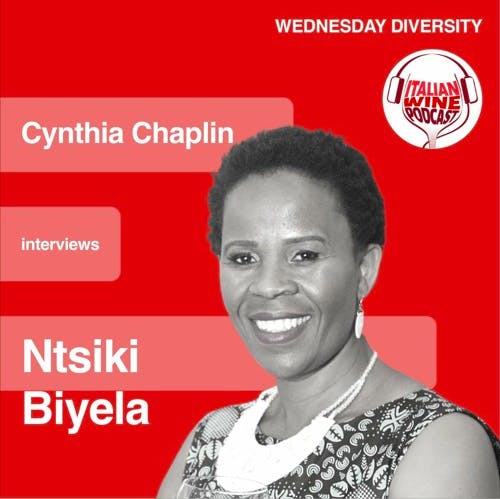
Ep. 755 Ntsiki Biyela | Voices With Cynthia Chaplin
Voices
Episode Summary
Content Analysis Key Themes and Main Ideas 1. Ntsiki Biyela's groundbreaking journey as the first black female winemaker in South Africa. 2. Overcoming significant personal, racial, and linguistic barriers in a predominantly white and Afrikaans-speaking industry. 3. The critical role of personal drive, family support, and mentorship in achieving success against adversity. 4. Pioneering diversity and inclusion in the South African wine industry, particularly regarding black South Africans and indigenous food pairings. 5. The establishment and growth of her own winery, Aslina Wines, and future aspirations. Summary In this episode of ""Voices"" on the Italian Wine Podcast, host Cynthia Chaaplin interviews Ntsiki Biyela, the first black female winemaker in South Africa. Ntsiki recounts her remarkable journey, beginning with accepting a winemaking scholarship without ever having tasted wine, driven by a desperate need to change her life. She details the immense challenges faced at Stellenbosch University in the late 1990s, including language barriers (Afrikaans), racial prejudice, and a lack of initial support from peers and faculty. Despite these hurdles, her relentless drive, bolstered by her grandmother's spiritual guidance and family support, led her to graduate. Ntsiki then discusses her successful career at Stella Kaya, a young winery where she gained hands-on experience and built strong relationships, culminating in her being recognized as the first black female winemaker in 2004 and winning a gold medal for her first red wine. Her success continued with the South Africa's Woman Winemaker of the Year award in 2009. In 2017, she founded her own winery, Aslina Wines, named after her grandmother, utilizing a model of renting cellar space and sourcing grapes—a common practice in South Africa. She passionately advocates for pairing wine with traditional South African cuisine, sharing a lively anecdote about pairing Merlot with chicken curry. Ntsiki also highlights her commitment to mentorship through the Pinotage Youth Development Academy, where she helps young black South Africans enter the wine industry. The interview concludes with her future goals, including acquiring her own facility and vineyard, and her surprising favorite Italian wine, Sangiovese, for its earthy aroma. Takeaways - Ntsiki Biyela became the first black female winemaker in South Africa in 2004. - Her path to winemaking was driven by a desire for life change, not an initial passion for wine. - She faced significant challenges at Stellenbosch University, including racial and linguistic barriers, but persevered through sheer determination and family support. - Her career at Stella Kaya was highly successful, leading to multiple awards and recognition. - Ntsiki founded Aslina Wines in 2017, operating on a model of renting production facilities and buying grapes, a common practice for emerging wineries in South Africa. - She is a strong advocate for integrating traditional South African food with wine pairing, moving beyond Western culinary norms. - Ntsiki actively mentors young black individuals through the Pinotage Youth Development Academy, providing the support she once lacked. - Her long-term goals for Aslina Wines include owning her own winemaking facility and vineyards. - Forbes magazine named her one of the top 20 most innovative women in food and drinks in 2017. Notable Quotes - ""It wasn't really about winemaking per se that made me take the scholarship. It was a need to change my life."
About This Episode
Speaker 1 and Speaker 2 discuss their success in winning a black female winemaker in South Africa and the importance of social support and finding opportunities for growth. They also discuss their experiences with parenting and working outside of home to support family members and their plans to create their own wine facility in Italy. Speaker 1 and Speaker 2 discuss their success in pairing traditional foods with flavors and working on pairing them with wine. They express excitement about their plans to export their wines to Italy and Germany and plan to create their own wine facility in their own mind. They also discuss their plans to try a new wine and ask for help from their colleagues.
Transcript
Welcome to the Italian wine podcast. I'm Cynthia Chaaplin, and this is voices. Every Wednesday, I will be sharing conversations with international wine industry professionals discussing issues in diversity, equity, and inclusion through their personal experiences, working in the field of wine. If you enjoy the show, please subscribe and rate our show wherever you get your pods. Hello, everybody, and welcome to voices. Today, I have Nitsikiki Viola with me from South Africa. She has the great honor of being the first black female winemaker in South Africa in two thousand and four. She's received many awards throughout her career, including the diversity and transformation award for her pioneering work in the industry in South Africa. That that accolade celebrated her role sort of paving the way for others by eliminating barriers. And setting an example and inspiring young people contributing to knowledge that that people can use to enter the wine industry and having an overall very positive and powerful influence on the image of the South African wine industry. So welcome, Mitsy. Thank you so much for joining us today. Thank you so much for having me. It's a great pleasure. As I said, you are widely recognized as the very first black female winemaker in South Africa. That's quite a bit of something to carry on your shoulders. Your path to coming into wine wasn't that obvious. I I know you had never tasted wine before you were offered a scholarship to study wine making at Stellenbosch University. What made you decide to accept that scholarship and go into winemaking? I think it wasn't really about winemaking per se that made me take the scholarship. It was a need to change my life. It was a need to do something. And so when the scholarship came and it said winemaking, as I've I'll take it because I wanted to change my life. I wanted to study those were the key things that I wanted. The fact that it came is in winemaking form it for me it wasn't really the reason for choosing it, but because the the reason was to change my life. What were you doing before the scholarship came along? So I finished metric, and as I started applying for bachelor's also, but all the parcels I was applying for. I was getting obviously the the very famous letters coming back saying we regret. So I got a job. I worked for a year as a domestic worker. So when I called, got called in school, I was already working as a domestic worker. So I worked for a year, and then I got this opportunity to apply for this scholarship, and then I did that. When was that? Because it's you're you're younger than I am. So this is not in the distant past. It was in nineteen ninety seven, nineteen ninety eight. Wow. Yeah. So very recently. Very recently. Yeah. So I worked in I was working in nineteen ninety eight, and then, I've got the scholarship to come to study in Boston, after That's that's incredible. How was it learning about wine literally from sort of ground zero? I think it wasn't really about wine. It was learning in Africans. That was a tricky part. It was learning in a different culture. It was being in a different environment, which doesn't look like the environment I grew up in, which doesn't feel like the environment I grew up in, and culturally, and in all aspects of it. So it was that that basically was more challenging but for me it was one of those to say no matter what comes my way, I need to get this degree. I need to pass. I need to I need to succeed in what I'm doing. That drive has clearly worked very well for you. And I'm sure there are many other people who have fallen at that hurdle. You know, we we're all very aware of sort of very long history of extreme prejudice against black people in South Africa. So going into Stellenbosch. Were were there other black students in your class? They were. I think in our class, probably about where we were like a handful really in our class. We were a handful of black people, but the rest obviously, yeah, it was white students. And I think also one of the things that was even making it difficult because as well the handful of black students and the language barrier, because we don't understand the language. It was making it tricky. I think tricky is probably, not strong enough of a word. It sounds like it was incredibly daunting. Must have been going to university is daunting enough, but to go, you know, to a place where no one looks like you, and everyone speaks another language, is that's incredibly brave. So I I get that feeling of how driven you were to do something that must have been unbelievably hard at the time. Yes. No. It it was really hard. I don't I I wouldn't, and and and I get when you say the word that I use is really, very light for actually what it was. I guess probably just the choice of words, but also I think why I was studying, there were tears, there were moments of tears, there were moments of crying. And I think one thing I'm grateful for is that not even once did I have a thought of saying I'm gonna throw my throw a towel. Again, just the strength of your drive. Did were you were you welcomed by teachers, by classmates? Did they did they support you, or was that another part of the uphill battle in this quote unquote tricky situation? There was another battle. I'll say this when it comes to students, You know, the lecturer will try to speak English in class because trying to accommodate us who didn't understand Africans and the students will make noise and saying it's an Afrikaans university. You're not gonna do that. You know? So, there was that. And it was very interesting that in our final year, only in our final year, really, that we we started bonding. And there will be the one saying to the lecturer that in the speakers. Yeah. So it was, but it was right at the end. So during the process where of the couple of years, it was really hard. So even if the lecturer want to assist so much so that we ended up had to have extra classes. You know, you you'll go to class and then you ask for extra classes where to get tutors, the lecturers will get will appoint like a a master student or a PhD student to be a tutor so that we've got a second class after class. So, essentially, you had to do everything twice. I can't imagine how hard that must have been. And and it's it's still I find it really offensive that this was only basically twenty years ago, not not long ago at all. So Yeah. Well, did who was your support system, Nitzigim, and it sounds like, as you said, there wasn't a lot of bonding happening until the end of your studies. Who did you look to as a as a mentor and a support? I think it's it's now as an adult that I'm realizing the importance of the strength of of the foundation. I had my grandmother when she was alive. She was one person. I knew that when I go home, I'm fetching my strength. To go and fight the battle. Because it it, you know, when it came to a point where you realize it, you know what, being outside of home or outside of cover, that's your battlefield. So going home, I'll come back. My my grandmother's very spiritual. So I'll get home. And then when I leave and she'll pray, and then I'll feel like, you know what? I can do anything now. And then I'll go back to university and start the battle, you know? So there was that. And also knowing that I've got sisters about family and then friends. So those were the people where because I feel it's, it it's the community that you need as a person to to go cry to when the situation gets tough. People are gonna say, we know it's hard, but we know you can do it. Absolutely. You know, it's hard, but we are here. You know, they might not be there for your books, but they are there. You know they are there. I used to call one of my sisters who are a customer based in Durban, and I called her crying. I remember the first time I called her, I said, I dream that I had failed, and the university kicked me out. And I was crying, and she was like, no, it was a dream. It's because you're you're stressing. And I couldn't say that. I was just so failing the university kicked me out. That's all the good thing. So and that drove me to say, to find out, actually, what other opportunities are there or other help that is there. And I found out that actually there was a student counseling, on campus. So I had to attend that to have to go to this, to to counseling, to say, Look, I've got issues here. This is gonna be this is a battle. This is a struggle. I'm going to fail. And, you know, to ex explain everything that I'm gonna be kicked out, but I don't I can't go back home because I'm going back to nothing. So I need to make it work here. So you guys gonna make it help me make it work? I think that's an incredible image to have that you you had to fight. You had to become a warrior because if you lost university, you were going back to nothing. I don't think many people experience that. I I think it's, yeah, it's one of those things that knowing and understanding that if I go back to nothing, then what? So I have to make it work. And I think that was one of the things that the one of the therapists that I've said, just like, looks like you feel like everything has to be. And I'm like, yes, it has to be. Because I thought you need to be gentle with you. I was like, no, I have to pass. Like I think it's difficult to to have therapy with somebody who's never been in your shoes and can't possibly understand your situation. That's a thing. That's a thing. I think, actually, we're hitting the nail on the head there. When you say, a person who hasn't looked at the situation, because they don't understand why you being so adamant that it must be like that. You know? So there was that. And so until they had said, okay. Fine. If you fail, we're gonna because you attend in therapy, we'll write a letter. The university will not kick you out. And as a and then that basically gave me a sort of like, okay. I've got a backup plan. A good safety note. Yes. I've got a safety net now. Now I can put all my energy into trying to figure out this thing. And and luckily, I was really, yeah, and luckily I passed my question. So Yeah. Well, yeah. Absolutely. And it worked because you graduated which was, you know, I think probably a huge milestone not only for you, but probably everyone in your family who was rooting for you. Yes. Yes. And and you went on to work for Stella Kaya. Yes. That's that in itself is a huge achievement. How how did you get from university to Stella Kaya? So I had applied because when I was a student, I was working part time for one of the wineries. I worked for Delheim wines, tasting room, working in the vineyards. We're working basically everywhere because I needed to understand the course that I'm doing. I had no idea also, because I had no idea of wine. So that is where I learned about wine as a student. And so when I finished my studies, I started applying for jobs. So looking for a winemaking job or a multicultural job. And, luckily, when I applied, it's still a car. When they called me for an interview and they hired me. So it was, like, one of those that they saw what they wanted, and it happened to be a kind of a place I was looking for myself because I knew when I was studying that when I got out to work, I went away in a small company, that I can learn about all the aspects of the business because at some point, I only start my own business. So I was clear. Stellakaya was was a pretty young vineyard when you started there. I mean, how Yes. How did you find that experience? It's so useful getting hands on experience. I think the value of that continues to be underrated how important it is particularly in the wine industry. Nothing else is as valuable as hands on experience. Absolutely. How how how did it go at Stellaaya? Were your colleagues accepting of you coming in there. How you know, what did you learn? How did you make it work for you? So still like I was a small company. We're still small, but you know, we was just starting. And I remember because I had a consultant. Who was a previous winemaker. And the accounts lady was the one, basically, holding my hand. She said, okay, fine. When you need to order bottles, this is where you're gonna get your bottles, you know, just to give me directions. And I remember, there was me a monster. She was she was amazing. And the seller supervisor was the one actually, again, who was holding my hand in the seller to say, okay, we've got virus here, we've got this there, you know, just to get that. And also for me getting at the door, with a lesson that one of my mothers told me, and she had said to me, know that as you go to that company, that everyone you're finding there, they know better than you because they've been with the company. So everyone in that company is gonna teach you. It does not matter whether you're gonna come in as their supervisor, their manager, whatever, but the bottom line is they know better than you. That's such wise advice. I think a lot of people tend to believe that they they know more than they do and and having that sense of humility is a great way to learn because people will will talk to you more and be more open to you if you're willing to be transparent about what you don't know. Yeah. And so when I when I got there, remember, Nicholas, Adonis. He was the one basically teaching me, and his wife who was working in the kitchen and cleaning, we call her and Sarah. She used to social stripping me, like, one of the kids, like, lunchtime because it's having some always running around. And she will come with coffee and a toasted sandwich because we had food at work. And she'll literally get in, pull the cup and put the sandwich on the table and close the door and stop. And said, you're gonna sit and eat, and I'll be like, but I need your vegetables, I said sit and eat. Very, very good mother qualities. And then I'll just sit down and eat. It was so much fun. Yeah. It was nice. It was nice. It was more like it was family. You know, it was having family at work. Well, and I think you, you've always relied on, on a family system. So finding a family at work is so incredibly helpful. And you were very, very successful there. As I said, you were named the first black female winemaker in South Africa in two thousand and four. And then you won a gold medal for your first red wine. Tell me a little bit about that. Oh, yes. That was a a Cape Cross. It was a Cape blend, Pinotash cabin, in Myrtle. So one I think one thing I remember most about that was when we the awards, it was like an engine international wine awards. So when the awards was announced, it was very interesting that in the room, at the event. I remember clearly, there were two black people. It was me and Terry Masaidi who is a winemaker. It's a guy from his from Zim, but he was making one for it. I think at that time, one of the wineries So there are the two of us as black people and then the rest of the black people with the waiters and waitresses. It must have been like being at university all over again. Absolutely. And I think what that even in touch me because What happened is when do awards have been announced, and when they called the Stellickiah Cape Cross, the waiters and waitresses screamed with excitement, and I was like, I was like, oh my god, they know me. Like, it is yeah. That must have been so self affirming. That's an amazing moment. It was a moving moment, and I was like, oh my god, they know me. That's incredible. That's and I'm sure you inspired that entire room. And so it was like, you know, so but so that moment of coming in thinking, we only two people here, two black people in this whole room that's full of people in the industry. To actually say, no, we're not only two. Yes. These ones are up here to work, but at the same time, you know, they are part of this. So it was really nice. It was That's incredible. I I love the image of that. I've I've must be a photograph somewhere. That sounds like an amazing moment. You you went on. You clearly thrived with your, success in two thousand and nine. You were named South Africa's Woman winemaker of the year. Now they they really knew who you were by then. Were were you surprised by the award? Well, I think because the award was based on resubmitting the wines, tasting blind, and so my wine, it was a two thousand and six company that one that got me that medal. Or that award. So, yeah, it was it was very it was exciting. It was exciting. I was actually, we were looking at that. We were reflecting on that last year because I got that award and it was like a milestone at that moment. And it was the people that were giving the audio still part of the michel engine. It was the michel engine on our wall. And last year, when we started twenty eighteen, got a trophy at michelangelo, it was like, Oh my goodness. You've come full circle the whole way. Yes. Yes. Well, it I I'm just I'm curious. So it's the title you won with South Africa's Woman winemaker of the year. Would you rather just be winemaker of the year? What do you what do you think about the woman distinction? Well, I I feel everything's got in space. I feel everything it has in space. There was a woman winemaker competition. It ran its course. And I think in general, obviously, as winemakers, we all winemakers, whether you were a woman or a man, we all winemakers, we all started the same thing or basically peddling on the same path. The only difference I think as women, we know that it's been a journey. So as women, we're trying to find a place in space and trying to to to find a way. So that's why that probably that our world was created to actually find a way in the space. So it ran its course. Well, yeah. You you've always said you you see the potential of of black South Africans because white winemakers weren't tapping into that. This clearly is is something you've been working on for a long time, the breaking down these barriers. Yes. I think one of the things that it's, you know, when someone presents something to you, it's different. Don't present it from their own perspective. They'll present something to you from their own understanding. But how much more when someone is presenting something to you in their own perspective and you find out that actually I relate because that's where I'm from and that's where I am or that's where I'm, you know, it's it's just it's just that way of understanding. And for me, when it comes to the wine industry talking about wines, talking about food, is that when we talk about food and food pairing, we still still talk about the Western culture. And as black people, the food we eat are daily food, we don't eat Well, some people now are eating real estate pastors and all those exact daily food. They have steaks and stuff, but we we eat dumplings. We eat tribe. We eat, you know, there's certain foods that is sort of like our foundation that we grow up eating, that we like eating, that sometimes it's it's, like, example, for me, I cannot go for a long time without having bump. It drives me nuts. I just I feel like I'm getting weak. I feel like so I have to have it. I I know and people go thought about that. No. If you did it, like, no. Like, it hurts. I have to have it. I love that. I love that. And and taking cultures that haven't been traditionally linked with wine and taking that food that means so much to you. I think we all have a food item that means so much to us and and working on how to how to pair. That's it's so exciting when that happens because as you said, you know, traditional western food You know, I grew up in in mid midwestern Ohio. I didn't know anything about French food or anything like that. So, you know, when I got into wine, learning to pair traditional wines with food that that no one ever talked about pairing with wine, spicy food, African food, you know, all kinds of things. It's really exciting. And I think it it includes more people. Yes. So I I think for now, when we when especially when I do wine tastings and talking to people about their flavors or the characters that I'm picking up on the wine, actually to talk about characters that I grew up with, talking about things that we're eating and things that people don't have to go out there and go look for things that are written on the back labels, but look at what you have in your fridge, cook the food that you normally cook, and see if it works. Just an example, I remember at some point when I was with Nitsilica, I had tasted I tasted merlot, and I love making chicken curry. I use masala because my grandmother, that's what she used to do. And so I'll make my dumpling. You took the chicken dumplings, but I used masala. Is the curry powder that I use. And so I had this masala chicken curry, and I tasted it with merlot. One of the things is people say, red wine and curry, run for your life. Right? You know, and then I'm I made that. And I remember it was at night. I called my colleague at night, and I'm like, you want to leave, what just happened? And I'm like, I'm having murder and chicken curry, and it's the bomb. It's like, it's amazing. It is till today, that is one pairing that it happened just not because I said, oh, I wanna pay this. I was like, I wanna oh, I'm cooking. I feel like eating this, and I'm gonna make myself, you know, chicken curry, and now I'm gonna open a bottle of wine. And that's what I did. I absolutely love that. That's that's basically the scene in my kitchen every night. I eat what I wanna eat and whatever in the house in the wine rack, I have to make it work. So I absolutely love that story. That's fantastic. And it it is amazing how you know, really humble food and food we make at home, food that touches our hearts. You know, it not only does it make you wanna call your colleague and say, hey, this is the best, but it is fun to play with it and fun to play with the wine. So, I love that. And I'm I'm gonna roll that into the fact that you are clearly having fun in your career and you started your own winery in two thousand and seventeen. Yes. And I believe the name of the winery as Lena is your grandmother's name. Is that correct? Yes. I named the company after my grandmother in honor of her because she played a big role, and I still feel she's playing a big role in my life and in today's spirit journey. And so, yeah, for me, it was important to pay tribute. To to the great person in that. That's lovely. I am so happy for that. I'm sure she is too. But I I have read the story, and you didn't even have a vineyard when you started this winery. What what were you doing? So, I think one of the things is I like the fact that in South Africa, unlike Prolin France, in South Africa, you can have a wine company without having a wine or a wine or a vineyard or anything. So the way of starting it was basically to rent a seller space from those who've got sellers buy grapes from those who've got convenience and make the wine. So, yeah. Incredible. So you got to pick and choose your grapes and and you got to use the seller space that somebody else had invested all their money in, and you just All you had to do was rent it and show up, which is very useful. Yes. Yes. I think did people think you were crazy? It sounds like a risk? No. It's it's it's not because most wide actually, most winemakers, most winemakers who's starting their own brands. That's what they do. Right. I I didn't realize that. Yeah. I know it's a common practice in South Africa. It is a common practice. How did it go dealing with the grape growers and and figuring out whose grapes to buy? Well, I think again working at Stedekaya gave me all that it's experience and may help me to build those relationships. That when I finished, it was in the middle of, like, starting from scratch, it was a matter of going to the people. I know that, do we do have any extra grapes? I want this out like that block, I'd like this, and I'm like that. Perfect. So it's basically just going on through the with the people that I've been working on with before and also building new relationships and getting new suppliers of graves. So, yeah. You must have built a a really strong network to be able to start that. Were you on your own? Well, if you're saying only my own financially and all that, yes. That's the question. This is another I I love how how humble you are, but these enormous achievements that you've made, another tricky situation. But you've been really successful with it. I'm I'm so impressed. It's been sort of, well, five years now. What what grapes are you growing? What wines are you making? So we've got a we've got a cheminate sauvignon. We've got a product blend called but also I use that name because it's my grandmother's nickname. So that's our Bodeau blend. And then we've got a sauvignon blanc in the chardonnay. And this past year, December, November, December, we launched the skin contact shedding blank. Oh, wow. Tell me a bit about that one. That one, since I started working, I've always I was always curious. What happened when you ferment the white wine on skin? Like, I was just always curious about that. I love the texture that you get from doing that. I love the texture. And when I remember I was speaking to Micah Old Marsh in the US, my importer at some point, and I said to her, you know what? I'm always curious about this. That is the one on one I'll make one day. And she goes, oh, there are wines like that. And that's really interesting because we're gonna go buy those wines. And so we started, like, literally, we weren't allowed to just getting different bottles and tasting those wines. And because I already had in my mind how I was feeling it coming out and how it should taste and all that. So when I was making it last year, for the first time, I already have this thing in my mind. And the excitement when I tasted, well, at the beginning of this, after fermentation and they're going through the process, and I'm like, there's there's something missing. There's this, but at the end of it, Yeah. It was amazing. That's incredible. Are so are you exporting? Can I can I find this wine in Italy, or am I gonna have to sit here and be sad? Unfortunately, not in Italy, but it is available in Germany, and actually, Germany is only gonna ship it now because when we're shipping for them last year, October, the wine wasn't ready. It was still just been bottled. So it wasn't labeled. Right. Well, if any of my Italian importer friends are listening to this podcast, they they should get in contact with you because that sounds like fascinating wine. Yes. So that it is amazing. So now this is the one of the this is one of the things in this in the in the at the office is that my my colleagues, they said they're gonna need to hide the shannon from because because it looks like anything I'm like, I've been getting every extras to open a bottle. And so we were applying. There was this application I was doing in the US for the Shannon to be part of Missouri for everyone. We have to apply for individually. So when it's been a while, we started applying for this November last year. So when I got the approval yesterday, and I'm so excited, and then I had only one bottle at home and I opened it, so I tell them about it. They're like, you see the reason that we need to hide the Shannon from you. Because it, like, it looks like whenever I wanna open a bottle, I'm just now it used to be, like, when I wanna open a bottle, I'll be like, oh, I'll open a cab, or because I believe from Sassan is the one that I need to I say to the man to go with respect, they must blend when I have to open umhasan. It's like I have to have the whole ceremonial issue with around the wine. But with Shannon, it's not only available now. Can you try another one? So yeah. Fantastic. Well, I'm so happy to be talking today. I didn't realize you got the approval yesterday. Congratulations. Yes. Thank you. So you'll be exporting to the states. Yeah. We have been exporting to the states, but this was specifically for Texas because New York, the East Coast, they already received their Shannon and they've been have been seeing people posting their portal. So I was like, oh, so yeah. You definitely can't open a bottle every time you see someone posting or you won't have anything left. Yeah. And for the, I can't do that. Well, I mean, you've been working pretty much nonstop, you know, battling through all of this to get to this successful point for the past twenty years, but you've still found time to be a board member for Pinotage youth development academy and and other things along those lines. Tell me what what's it like working with the academy. What are you doing with them? So at the academy, basically, we are training young people through the value chain of the wine industry. These are the eighteen to twenty five year olds. So they get to the academy get trained and redo your placements within the industry and the hospitality, but we're trying to expand that. But for me, as being the board member, what I like the most is I see myself and the students, and I see the growth. I see them. It it's always exciting when I see them, when they're starting near the beginning of the year. It was when it's best when they start, and then you see the person at the end. How they have grown and how they've changed and how they have developed because they already have the talent. It's just they need that extra step just to help them unleash themselves and become the best people they they are. That's beautiful. So you're you're essentially providing all the support and mentorship that you needed when you were young to a whole new generation of winemakers. That's that's really beautiful. And again, it's it's admirable, but it's more than that. It's so proactive, you know, really taking your experience and turning it into action for other people is I think something that can't be, you know, sort of celebrated enough. You should open Shannon for that, definitely. So my my one last thing that I have to say because I'm so impressed in two thousand and seventeen Forbes magazine named you one of the top twenty most innovative women in food and drinks. I mean, where are you gonna go from here? What what are you innovating with now at Aslena? What's coming next? Well, I think now that we've got the shedding that I've always wanted. Oh, this is a skin contact white one that I've always wanted. One of the things we're trying to work on now is to get our own facility other than renting. Our growth is now based on us growing to be able to get our own facility. Right. Right. And do you have dreams of a of your own vineyard? Absolutely. Absolutely. I'm excited about this. It's one step at a time. So you started in the market one step at a time. So that's why we visit the heading. That's that's incredible. Those are good goals. And from the sounds of this story, I'm sure you're gonna smash them. I'm gonna keep in touch with you. But before I let you go, because this is of course Italian wine podcast, I want to ask you, I always ask, especially my winemakers, what's your favorite Italian wine? I love Centrovezi. The reason I love Centrovezi is when I was working at Stila Kaya, I was making Centrovezi And every time I smell the wine, it always took me back to my child. It always took me back to my to my grounding. You know, it's like, you know, when you walk in in a forest and it's been hot and that drizzle, and then that effort smell. That is a perfect description of Sanjay. That's great. So for me, it's like because I love nature. So that smell, it just it you know, it's like I've smelled it and it's like I could just sink myself in it. So, yeah. Well, I'm gonna invite you to come and visit me in Italy, and and we'll go into the into the forest with our bottle of Sanjay and the Shannon, and and we can compare. That is awesome. No. I'm I'm not Sanjay. Yeah. Well, this has been a great conversation. I I can't thank you enough for being so open about all the things that you have climbed over, worked around, and and knocked out of your way to get where you are. I'm I'm utterly impressed, and I'm desperate to try that wine. Thank you so much for your honesty and for sharing some laps with me today. I've really enjoyed it. Thank you so much for having me. Thank you. I appreciate. And I I wish you all the most success for all the upcoming things. I'm gonna keep my eye on you, and I'm sure a lot of our listeners will too. Thank you. Yes. Thank you so much. You're welcome. Fine, Adiki. Thank you. Thank you for listening. And remember to tune in next Wednesday when I'll be chatting with another fascinating guest. Italian wine podcast is among the leading wine podcast in the world and the only one with a daily show tune in every day and discover all our different shows. You can find us at Italian wine podcast dot com, SoundCloud, Spotify, Himalaya, or wherever you get your pods. Hi, guys. I'm Joy Livingston, and I am the producer of the Italian wine podcast. Thank you for listening. We are the only wine podcast that has been doing a daily show since the pandemic began. This is a labor of love and we are committed to bringing you free content every day. Of course, this takes time and effort not to mention the cost of equipment, production, and editing. We would be grateful for your donations, suggestions, requests, and ideas. For more information on how to get in touch, go to Italian wine podcast dot com.
Episode Details
Keywords
Related Episodes

Ep. 2651 Diversity in the Wine Industry and Wine Tech Innovation with Jeremy McCarty | Voices with Cynthia Chaplin
Episode 2651

Ep. 2627 Regenerative Winemaking, Mentorship & LGBTQ+ Perspectives with Terah Bajjalieh | Voices with Cynthia Chaplin
Episode 2627
Ep. 2545 Building Inclusive Wine Spaces Through Storytelling with Amari Collins | Voices with Cynthia Chaplin
Episode 2545
Ep. 2531 Winemaking Journey from Mumbai to Napa with Priyanka French | Voices with Cynthia Chaplin
Episode 2531

EP. 2517 Sarah Looper | Voices with Cynthia Chaplin
Episode 2517

Ep. 2505 Ren Peir | Voices with Cynthia Chaplin
Episode 2505