

Ep. 825 Susie Barrie & Peter Richards MW's | Voices With Cynthia Chaplin
Voices
Episode Summary
Content Analysis Key Themes and Main Ideas 1. The professional and personal relationship dynamics of two Masters of Wine (Susie Barry and Peter Richards) who are married. 2. The challenges, motivations, and impact of pursuing the Master of Wine (MW) qualification. 3. The philosophy of wine education: making wine accessible, inclusive, and emotionally engaging. 4. The role and advantages of podcasting (""Wine Blast"") as a medium for wine communication. 5. The ""Big English Wine Adventure,"" a charitable project involving winemaking, community engagement, and supporting a cause. 6. The growth and unique characteristics of the English wine industry, including the performance of specific grape varieties like Meunier. 7. The importance of emotion and personal context in appreciating wine. Summary In this episode of the Italian Wine Podcast, host Cynthia Chaplin interviews Susie Barry and Peter Richards, a husband-and-wife duo who are both Masters of Wine, about their intertwined lives in the wine industry. They discuss the unique aspects of their relationship, including shared passions and occasional disagreements about wine. The couple delves into their motivations for undertaking the rigorous MW program, highlighting how it has validated their expertise and helped them make wine more approachable for others. They share insights into their successful podcast, ""Wine Blast,"" emphasizing the intimate and imaginative nature of audio as a medium for wine communication. A significant part of the conversation focuses on their ""Big English Wine Adventure,"" a charitable project where they produced English sparkling and red wines. This initiative involved public participation in naming the wines and selecting the beneficiary charity, the Marine Conservation Society. They also touch upon the exciting developments in the English wine scene, particularly the unexpected success of the Meunier grape, and the broader impact of climate change. The interview concludes with a touching story about their favorite Italian wine, underscoring the emotional connection and memorable moments that wine can create. Takeaways - The Master of Wine qualification can be a challenging but validating credential, particularly for women seeking to establish credibility in the wine industry. - Wine education should aim to enthuse and encourage experimentation rather than intimidate or create snobbery. - Podcasting offers an intimate and engaging way to communicate about wine, allowing listeners to use their imagination. - The English wine industry is dynamic and growing, with certain grape varieties like Meunier showing unique potential in the region's climate. - Community involvement (e.g., naming competitions, charity selection) can significantly enhance the impact and appeal of wine-related projects. - Wine projects can be a powerful vehicle for supporting important charitable causes, such as marine conservation. - The enjoyment of wine is deeply tied to the emotional context—who you're with, where you are, and your mood. Notable Quotes - ""Yes, the house is filled with wine. ...our life is very much about wine."
About This Episode
Speakers discuss the importance of learning about wine in a household and finding the right balance between trying to understand and enjoy the experience. They also discuss their past experiences with radio and podcasting, and their desire to support their art projects and create their own pictures. They express their love for their craft and the value of public space for people to express themselves. They also mention their upcoming trips to Sicily and their plans to film for wine and tour their wine and tour series.
Transcript
Welcome to the Italian wine podcast. I'm Cynthia Chaplin, and this is voices. Every Wednesday, I will be sharing conversations with international wine industry professionals discussing issues in diversity, equity, and inclusion through their personal experiences, working in the field of wine. If you enjoy the show, please subscribe and rate our show wherever you get your pods. Hello everybody and welcome to voices. This is Cynthia Chaplin, and today I have the great pleasure of having Susie Barry and Peter Richards with me who are both British and both masters of wine. And they studied together for the MW program, and they also happen to be married to each other. They are TV and radio presenters and event hosts, writers, columnists, authors, consultants, all of those good things, and they have a great wine podcast called wine blast. So welcome to the show, Susie and Peter. Thank you so much for coming today. Thank you for having us. Thank you for having us. It's very exciting to be here. Great. Well, I am extremely curious about your relationship. As two masters of wine in the same household. My husband is a non drinker, so I'm wondering what your house is like. Is it filled with wine? Is it wine all the time? Do you argue about what you're drinking or do you generally agree? How does it work? I think there's there's a big yes and a big no to those questions actually. Which which order is the is the same. So, yes, the Harris is filled with wine. Yeah, I mean, to to be really honest, you know, our life is very much about wine. But the great thing about wine is it is a social as well as a working thing for us. So, yes, we have a lot of wine everywhere. I think our our children despair of us, and there's a lot of wine talk as well. But, you know, we're both interested in it. So that's That's fine. As for whether we disagree, we we disagree about everything. So it would be strange if we then dis didn't disagree about wine. But, no, it's it's a really good question. And absolutely, you know, I think, you know, for example, when we were, when we often match wine and food together as we did on Saturday kitchen for for a long time. The process worked quite well. We'd be lining up a whole bunch of wines. We'd cook the dish, and then we'd argue, basically. And the wine, which we could agree on most, was the one which probably stood the best chance of appealing to as many different people out there as possible. So in a way, the arguing process does work is quite constructive. Oh, oh, discussion. I love it. Discussion. That's that's the diplomatic diplomatic way. Yes. Discussion. Discussion. Sorry. Can I can I can I replace the word argument with discussion in all everything I just said? Pated discussion. Pated discussion. Yeah. No. It's all it's it's all fine then. It's all good, but, no, absolutely. We certainly wouldn't want any of your listeners to think that we, that we agree on wine. Absolutely not. I don't think that no two people should. But frankly, Cynthia, what we are also interested to learn is is is, you know, if your husband is is, a proud brit, but also a non drinker, how does it work in your household? How how do you get through the bottles? Well, getting through the bottles is not the problem. The problem is that, there's no one to hide behind. I am shamed all the time by my children who who see the amount of wine that is in the house and consumed in the house. And I can't hide because they know, you can't blame anybody else. Yes. That's right. So, basically, I indoctrinated all of my children. So they they come home specifically because they know they can drink wine for free at mom's house. Great angle. You just need to find the way through it. Don't you think but you have seen right. You know, I always blame to if the kids say anything, I just blame Susie. I don't think vice versa. It does work quite well. Well, I have managed to drag my husband into vineyards. He's he's a photographer. So he he comes with me and has kind of managed to, soak up quite a lot of wine knowledge, even though he is still, you know, one of those people who I say, oh, just smell this fantastic brunello, and he will say, smells like wine. But it's a little sad for me when I have a good bottle around. So I do envy your your household with the with the daily ability to talk about wine in a more meaningful way than than I get to do. That's why I love my job. I love coming to the office. Oh. So now I understand that it was Susie's decision first to go for the master of wine. And Peter got pressured into it. Is that true? It's so not true. I I think Peter told you that, Cynthia. This is definitely true. This this this podcast is is my cry for help. Anyone out there, Susie pressurizes me. No. It's it was it was your fault. Though, the truth is it was me who wants to do it first. Definitely. Peter tried desperately to put me off. He knew I think he knew from everything you'd heard how tough it was going to be, on everybody, including, you know, the whole of our household. So he tried to put me off. I wasn't gonna be put off. And to be honest, Cynthia, he spent so much time listening to me talking about it, helping me out with tastings, setting things up for me, that by the time I I'd been doing it for a year, he he just thought, you know, I might as well do it myself as well, and and just go in, health for leather, and we'll we'll all have a go at it. Yeah. If you can't beat them, join them. Yeah. Yeah. It was a bit like that. But as of course, as soon as I made that decision, I realized the pressure was now on because Susie then proceeded to cover herself in glory in all the exams and and various other things, and I thought, oh, no. I've gotta try to live up to this somehow. So, but but it did actually from my perspective, it was enormously helpful. I knew that the experience Susie again doing it then helped me hugely in terms of preparation what to expect. I think a lot about BMW is you are throwing in the deep end and expected to swim. I mean, a lot of people find that very, very challenging. And, of course, you learned a lot from that too, but I was, I'm very lucky to I was I was so ridiculously naive. I just sort of thought, oh, I I really want to have a go at this. And I I in my usual way, I didn't really research it properly, and I I just sort of dived in, and it was so difficult and so painful, and I didn't think I've ever had as hard a year as in my life as as that first year of M. W. But it was great in the sense that I could let you know what it was all about. You can see what it was all about. And if I'm in all honesty, I wish it had been the other way around, and Peter has started it first, and I'd I joined on on a bit later. But But you finally did it because you felt you needed to. Yeah. I think you know, this is the I I'm not gonna stand on it on my soapbox and and bang the drum for for, females need help kind of thing, but, I felt it was a way or as a as certainly as it was as a woman, to be really honest in wine. It was a way of saying, look, I've got this qualification. Let's forget the fact I actually do know what I'm talking about, and then you can decide if I'm the person you want for this, that, or whatever job. But it was a way of sort of getting over that bit of having to prove myself to a great extent. That's such a good point. Having that, you know, really the pinnacle of, wine certification does make everything else fade away. You have to be able to, you know, meet people standing on your merit. They can't deny you. So that's that's a very interesting point about it. You obviously are great partners in crime because both of you passed all the parts of the exam on the first go, which is in credibly difficult to do and very rare. So something was going well for you. Did you study together? I know you were sort of Susie was a bit ahead, and and Peter was a bit, coming along behind. How did it work out? I mean, in terms of just the amount of time you put in together, or were you better off in separate rooms? Separate rooms. I think is the fairest answer. No. I was I was a good two years behind Susie. So, while I did sort of benefit in a general sense from knowing what to I think we we have slightly different ways of going about studying. Definitely different ways of going about studying. Definitely. It's a very personal thing. I think you've got a a job, the system that works for you, but we we ran a master of wine boot camp teaching helping students for for a decade here in Winchester. So once we were And after we passed, exactly. We well, actually, that's how it started. I have to pass some people who are my calls. So look, can you just set up some tastings to help us because it's hard to to do. So we did do that. And and, a large part of that was was helping people get get well, give them an insight into the way we went about it, not saying this is the way you should but this is just the way we went about organizing and structuring our approach, and we are quite we we, you know, we we, as writers, we're quite lucky to have that experience. We can express ourselves well, but we had other challenges. So we we just, yes, we did actually come up with a very sort of clear methodology of how to tackle the challenge ahead of us both in terms of the tasting and the the the theory, and work around those techniques, which are really, really important because, obviously, doing exam, doing a blind tasting exam is not something that you do very irregularly. So it's a very specific specific set of skills you've got to learn. But apart from all of that, I think at the same time, you know, part of the reason we did the MW, was also the, you know, you do it because you love wine, and you want to find out more about it. I think sometimes we get a bit caught up in the fact that, oh, this suddenly confers a sense of, you know, huge gravitational authority on you yet, well, maybe. But actually, the reason you do it, the rationale is to actually learn more about wine, enjoy while you're doing it. And then, crucially, and the most important part of our list is to be able to help people better. Understand why, you know, be they just wanting to have a recommendation or at the very top level talking to very top top people in the wine trade is all about helping other people that the master of wine qualification. I I have to say one thing as well, Cynthia, the the one of my motivations for for passing first time, and it was a strong one, was I had just had a, our first child, when I started studying. And I thought, you know what, if I don't just get on and get this quickly, I'll never have time do it again. You know, once you get into the world of children, you suddenly realize that there is so little time for anything extra. And so it was a I'm very grateful to my daughter that she gave me the motivation to just get on and get it passed. Excellent. I love that. I've I have six children. So the world of children is is something I'm very familiar with. Oh my goodness. Oh my goodness. We take our hats off to you. I I do think that there's a lot to be said for doing something because you love it. And dedicating, you know, such a hard core course of study as the MW is, you you really do have to have that authentic passion and love for wine, which I know both of you do. I mean, you've since then, you've become really popular in the UK wine scene, you know, presenting on TV and you crashed the Majestic Wine website after you recommended a wine on BBC Saturday Kitchen Show. So not sure you've apologized that. Yeah. I mean, you should. Yeah. I think that's, I think that's a life goal, actually. It's your own commission, Shirley. So you're you're featured a lot. You're you're talking and speaking and writing a lot What what do you want to give your audience as a takeaway? You have so much to share. What are the things that you are thinking of specifically when you're out there? So do you know, Cynthia, it's exactly what you just said that we feel about wine, that we love wine. I mean, the only thing we can ever hope or want to do is enthuse people about wine. So they don't feel it's scary. They don't feel it's something they don't really understand, and oh, I know what I like. And I just buy that bottle. It's trying to trying to encourage people to just have a go, take a risk, experiment, just see the the world of wine is so magical. And I think unless you unless you take a few risks along the way in terms of what you're buying, what you're drinking, that world will never really go into full HD color for you. You've got to you've got to, you know, be prepared to to jump in a bit, and all our job is really is encouraging people to do that. I think it was, a wonderful Italian winemaker, Alberto Antonini, who once said, to me, you know, in wine less is more, but to do less, you have to know more. And I think that's kind of our philosophy of it, isn't it? That actually, you know, we've tried to learn and and get our qualifications and credentials and really find out and get to the bottom of of what is wine, enable to be able to do things, or simply to help people whatever level they're at. I think absolutely that's what it's about. But if you boil it down, as Susie says, it it's all about emotion. Wine is about emotion. It's about enthusiasm. How can we help encourage people, infuse them and and and help them along the way? That's so true. I I as an educator myself, I love just trying to make that connection for people to air down the, you know, the, this snobbiness and and the, all those walls that keep people out and sort of make that connection and let people in and and discover as you said the joy of it, the magic of it. So, I, I completely agree with that. And you started your podcast sort of in that frame of mind, wine blast started in twenty twenty, which was, of course, in the middle of lockdowns. What inspired you to start the show? Who's the audience? And and what are you talking about typically? Well, many things inspired us to start the show. You know, I mean, great. You know, really, we know that there are first of all, there were other really good wine podcasts out there like you guys. And so, you know, I think we also loved radio a lot, didn't we? And we felt that radio and podcasting is such a good medium for wine. Absolutely. And you can do it in your pajamas while you're drinking Yeah. Well, that I'm having either of those things today. Who would who would love that? Oh, but we don't know, you see, and nobody knows. That's the mystery of it, isn't it? There we go. No, I mean, to be honest with the podcast, although it it was launched at the start of lockdown. We had been planning it for quite a while. So it was sort of just, fortuitous that that it we were able to launch it at the beginning of the lockdown because it because people weren't doing very much, we had more time to put to it and to getting it off the ground and, you know, while promoting it, you know, we already had some episodes ready to go. And so, yeah, I mean, it was sort of lucky timing, and we have genuinely loved every every minute of it. We have. But I think it stemmed from, you know, we've done radio. You, you know, we both presented on radio four, which is the it's a wonderful British channel here, which does high quality audio, spoken word, and and you've done the food program, and we both we both done stuff on there in other in other radio stations. And we felt that having done been lucky enough to do lots of media from from TV to to to radio and and other things. We we felt that radio or the spoken word podcast was just a wonderful way to connect with wine. As you know, it's it's a very intimate medium. You you you you feel very close to the people doing it. We feel close to our audience, remember doing it and vice versa. Audience sort of feel like they're with us. So that is wonderful. And you obviously, you're you're using, when you're listening, you're really using your imagination, and that's exactly what wine needs. That engagement. TV is a wonderful medium, but you don't engage in the same way. You don't buy in as a listener or a watcher. You're not sort of there in the moment in the same way that you are with with a podcast already. So we we wanted to do this for a long time, and it'd be a long time coming. Isn't it? Picking up on that, you know, there's there's almost more honesty in the in just a spoken word. You know, we've worked in TV. There's a lot of stuff has to go on to make it happen that isn't necessarily true if you know what, you know, it's sort of creating a theater, whereas with the spoken word with podcasts with radio, you don't need all of that. You just need to be listening to this. It's like reading a book. You know, you create the images yourself, and so nobody has to manufacture that, that visual, and we love the honesty of that. We do. And also just finally to pick up on your point about the audience, you know, we we knew, were podcasts out there, which doing a really good job. We felt that we could sort of hopefully add something a bit new and different, for for an for an audience. We felt there was a slight gap in the market. So it was both masters of wine and, you know, living in the same household. We felt that there was a know, we could quite easily have a conversation, which was very natural to us. It's what we do all the time about any given topic. And hopefully, that would be something that was sort of very informative for people with our very specific angle, and that that would help, so, hopefully, sort of fill a gap in the market, which And we equally, we feel that that there's room for more. There's room for more voices in in in in podcast and wine podcast, particularly out there. And and the more the merrier, we we think podcasting is a really collaborative, fun, constructive medium that I think it's got a lot more to give you. Definitely. Well, one of the things I really enjoy about your podcast is how welcoming it is. So, you know, going back to the idea of tearing down the walls that keep people out of wine, I think the two of you together have have a very welcoming, approach, which I think is great particularly for for new wine drinkers or or people, you know, younger wine drinkers, people who might not be, you know, that confident asking questions in a, in a face to face class. Can can sit and concentrate and and listen and tune in and tune out as they like to to your podcast, which is useful. Thank you. Yeah. Thank you. Thank you. It's it's it's certainly we we love to be welcoming. And for us, it's like having someone sitting table with us, you know, come and come and sit down, have a bottle of wine with us at the table, have have dinner with us. And suffer our terrible jokes. Yeah. There is there's there's always a quid pro quo, isn't there, really? Well, you both you both are, you know, an incredible team. You are very welcoming. You've you've done a lot of other things not just in media. I remember back in the day in two thousand and fourteen when you launched wine festival Winchester, in the south part of England where you both lived. And that went for, I think, six or seven additions. Yeah. Seven years. Yes. Yeah. Yeah. Yeah. Seven years and and raised over sixteen thousand pounds for charity, which, you know, there's nothing more welcoming than that. But my what I want to talk to you about today is your more recent project, the big English wine adventure. I love the name. It's it's you know, one of those great things that only comes out of England, the big English wine adventure, and you started it in twenty sixteen. So tell us about the project because I love the idea, and I'm sure our listeners would like to hear about Okay. Well, we we we've been we've been sort of tossing up for a while trying to thinking about, you know, doing a TV thing about making wine, in England. And we, you know, we've we love the English wine scene. We've we've written a book together about it. It's grown so much. It's really great. Yeah. It has. It's extraordinary, Cynthia. You're absolutely right. So it's it's such a such a vibrant industry right now. And I think that was the thing, but we were just really excited. We were really excited. And we wanted to find an outlet for that, did you? Yeah. A way that we could kind of get involved and promote it or whatever. And so we decided, look, the TV thing wasn't wasn't happening. Why don't we just make some wine with if if if a wine real have us, make some wine and and sell it all for charity, and in the at the same time promoting the the whole idea of drinking English wine and being local. And so that started in twenty sixteen because we we went to Hatingly Valley who are local to us. So they make sparkling wines just down the road from us, and they were very kind and said, yep, at absolutely, we we'll do this with you. And so we we picked a few grapes. I can't say that we joined in the whole hog. Yeah. That's that's probably a fair way of saying it. We literally we were rubbish. Absolutely. We were rubbish. I think they thought what have they what have they what have we let ourselves in? Many winemakers listening? Don't over hire us as harvest because we haven't rub it. So then so we made from twenty sixteen, we essentially made a a Blanc de Blanca chardonnay, sparkling chardonnay, we helped with the, with the blending. Well, we did the blending actually. We chose the blend if you like, and we helped with the dosage and all that kind of thing. And then, and and we would well, you particularly said, that's it. We're just doing it once. That's it. And then the next year, I said, oh, go on. Let's have another go. So we had another go, with Hatingley again, they I can't believe they had us back. And we made a twenty seventeen, which was a blender chardonnay Piner Mernier. We were quite excited about the potential of Mernier at that point. It was just becoming clear that this grape, which, obviously, for a long time, has been slightly disregarded in in Champagne as a supposedly sort of second rate variety. Actually, in in England, just is absolutely wonderful. It makes sort of wines of re particularly sparkly wines, but have real perfume, but also lovely acidity, though. I mean, that was why we we did the That down to, Peter, the the terroir in England What's it what's it giving to, Munier that is not getting in France or other places? A really good question. It's a really good question. I think we're still working on that one. It does seem to be in certain parts of of the country. Maybe it's particularly on chalk. It the the wines do retain this acidity. And I think the climate here substance about them today. Yeah. So the so I think we're getting champagne sometimes. The manure does have lovely succulents and fruitiness and fruitiness, but you don't get the same acidity as you get here because it's a slightly cooler climate you get a much more kind of floral perfume here, and I don't know why that is. I think there's just just it's quite almost difficult to to pinpoint exactly what it is, but there's just something more about it here that, adds more to a blend, gives it more sort of sub and so I would say. It's so interesting. I love it when grapes express themselves in different places. Different ways. Yeah. You know, soil and and location and aspect and things like that are so crucial. And this is a, this is an ideal conversation about how a grape that is, you know, sort of muddling along in other places is really exalting itself in in England, which just saying a grape is exalting itself in England. I think right there is is something important. Yeah. Absolutely. When would you ever imagine saying And learning particularly, which, you know, especially when they're grapes, which maybe haven't sort of had their moment in the in the in the spotlight. And then they suddenly come good somewhere else and you think, great. This is fantastic because all of these grapes have great potential, don't they? And equally, I think we're sometimes we're a bit too quick in the wine commentary division to ascribe certain characters to grapes to various if it's things like soil, like what this winemaker is doing. I think sometimes, and this is where we are in England at the moment, we need we need time. You need time, as experienced people putting heads together to say, what, what really is going on here. But at the moment, we don't know. All we can say is, it's a Mernier in English sparkling wine is a really, really, really exciting thing. Of course. And, I mean, thank you. Climate change. One of the rare times that gets said too. Yeah. So so interestingly enough, and one grape that that doesn't always work, but when climate changes on our side does is obviously pinot noir for the red wines. And so to finish off our little English wine adventure, we we absolutely said no more after our two sparkling wines. And then twenty eighteen came along, and it was this glorious year in England, you know, one of the best we've had so much sunshine, just beautiful. And we sort of thought we cannot let this one go by without attempting to make a red wine. And so we went off to the to some guys in Essex, which is one of the the driest most consistent warm climates in the UK, and they very kindly said, okay. We will do some red wine with you, and that was Danbury Ridge. Obviously, they hadn't talked to your previous producers. No. No. No. No. No. No. We made sure that they didn't, we got in there first. So so it was so that was brilliant, and they were very clever. So that was Danbury Ridge, Liam Michovski, as the winemaker there, and we made just a small amount with them. But again, they let us have some of their best wines in the barrels, and we blended all of that and came up with our own blend. So so by that point, we had three wines, and that was really our big English wine adventure. And we launched them in November last year, the red well, we sold the two sparkling and the the red as a three pack, and they've all gone, but we have still got some of the sparkling. So if anybody wants to wants to buy all for charity sparkling wines, then they can get them at the Hatttingley Valley website, hatttingley valley dot com. My father in law's ninetieth birthday is coming up, so I might be jumping on that website later on today. Have you. Well, we've used it. We've left out, one of the things that I thought was so fun and again engaging and inclusive about the big English wine adventure. It could have just been all about you and your three wines, but you held competitions to name the wine and choose the charity that the proceeds would go to. So tell us how that turned out. Well, we we definitely have you put your finger on us into here. We wanted to find a way to make this not just about us to make it as inclusive and fun, most importantly as possible. So when we were starting off, we obviously were starting to make the wine. We knew we were gonna have time before we release them. So we thought, how to get people involved right from the start? And we said, we know what we'll do. We'll run a competition to to find a name, and a charity to support because we had ideas about that. But actually, we wanted to to find out what other people cared about and and and wanted to to help. So the name, competition was a bit of fun, really, and we did get some properly, properly silly names, which I'm glad, because we encouraged that. We said to people that just send us in anything, make us laugh if you need to. And they did. So we got, you know, we ended up with the name, hope and glory for the sparkling wines, which was absolutely lovely. But we did get some funny suggestions along the way, and I've actually just got a few for you here. So some suggestions are Alfred the grape. We we live in in Alfred, the grape territory here in Winston. So that was quite a fun one. At Double Bubble, fizz McBote Fizz. That's a long story. Bublicious, Premier Sue was quite a good one instead of Premier Crew for Susie. Another one on Susie's name was Sue Bois, which I thought was quite nice. That's a lot of thought gone into there. A more topical one was COVID twenty. Which is quite nice. Sort of reset there. Another one was boozy and Peter's finest Viz. And then the the last one was a more serious one, but we thought quite a nice one was master wind, which, which was close to India, but we didn't end up. We ended up with hope and glory, which which is we felt captured the kind of spirit of the project really, really well. Well, I think hope and glory is genius and undoubtedly will be served at every prize day at every school across the country when they always play hope and glory. So the the charity where the money's going to, how how did that get chosen and which one is it? Okay. So, that was chosen, by, again, by public vote. We we got a lot, a lot of votes for such a massive range of charities, but we wanted something that was was sort of topical and would be was genuinely doing a great job right now, and we we went for the Marine Conservation Society because, you know, as I'm sure many people listening will know, you know, our oceans need looking after. They're over seventy percent of the planet as our ocean. They provide over half of our oxygen. And at the moment, they're they're not necessarily being allowed to be as clean as they could be in a lot of plastic gets dumped in the ocean, you know, the beaches end up again really, really polluted. And so the Marine conservation society do an amazing job looking after our sea grass beds and helping clean beaches, and we just felt that for us was right now a fabulous fabulous charity to be sporting. And also, I think they they make the point that blue carbon is so important. So they're not just protecting our seas and oceans. They're also, helping in the fight against climate change. Blue, we sort of we don't really have a clear idea about how much, that the oceans help, you know Request to the carbon. Success to the carbon and and help generate oxygen. But, you know, I think it's something like, they think that seagrass might be thirty five times more effective in sequestering carbon than than tropical rain forests. So it's things like that that make you think, wow, you know, this is something we need to focus our attention on. And hopefully this this sort of project, the biggest one eventually, will will help in a little way, you know, give them the funds and the awareness to help doing what what is what is a great job. So important. I I did not know that about Seegrass. And it this is really a timely, timely charity to to gift the money to. So, I'm excited about that. And I'm also very excited about your super cool label. Which I which I stopped on on the internet before, but, you found a street artist, and and there's a fun backstory to this. How did you find this person? How did you choose their artwork for your label? Well, we Well, finding this person is pretty difficult. It was. It was, he, he, she, he, she, he, she, he's we we still can't can't reveal anything. We did not want to be found. But no, we we we'd always wanted to try and make again the the labels, something local. We thought about going to maybe the university and asking students But anyway, we were on a walk one day in Winchester and saw this incredible, graffiti for want of a better way of describing it. They're quite banksy style, and thought, oh my goodness, that's amazing. And it was of a of a of a little boy holding a balloon, and the little boy was sort of black and oh, kite. Sorry, kite. And, in black and white, but with this lovely colorful kite, and it was absolutely gorgeous on just a wall hidden almost in the back you know, near near a near a walk in Winchester. And, and then we we managed to do a bit of digging. We found out it was a a street artist called Hendog. So we found this person on Instagram, and we we, eventually, it did take us a while, didn't it? But we direct message them, and they, to cut a long story short, were incredible. And the fact that we were doing it for charity, they said, absolutely, we want to be involved. They did a couple of different mock ups of labels for us. And we they ultimately we settled on one for the for the blend of our wine. They showed me Mernier and one for the blonde de blanc, and one is a as a woman, who is blowing butterflies, the Hatttingley Valley, one of their symbols is a butterfly, And one of them is is a guy, a really cool looking guy, who's sort of kicking butterflies as if he's kicking a ball. Yeah. I mean, they're just fun. We wanted to make bottles look different and striking. And you know, to to have an artist like Hendog, the quality of the art on our label. We're just so excited about and so grateful for. And, thankfully, yeah, they just, they just stand out a bit. And, you know, Hendog's point is that that actually, we need more public space for people to be able to express themselves. And and that's a major thing worldwide. I think we could all all get behind and support too. Absolutely. And, of course, with a a bottle and a label, you only have, you know, one chance to make a first impression, and that label both of the labels are really eye catching. So again, you know, it's another way of being so inclusive because, you know, even even younger drinkers or people new to, to sparkling wines see that label. It's not intimidating. It's not in some old world you know, cursive font or in a foreign language. It's attractive and it's youthful, and it's, it's a very clean, clear image. So really great selection. I think it's wonderful. Thank you. Thank you. You know, and hopefully the idea was partly to make the bottle sort of collector's item. So, you know, maybe it's the sort of Kianti Fiasco for the twenty twenty second century, you know. Oh my goodness. I think it stepped up from that. So are you gonna carry on making wine, or have you had enough of it? No. I think that I think that might I think, you know, this is where we are gonna have to. I'm afraid, break our rule and agree. And we are gonna agree on the that we are not making any more money. If anyone out there finds us doing it again, please stop us. So It's been great. It was brilliant fun, but, you know, these kind of projects take up so much time. And we've done it, you know, we've done it, and it's time for the real real winemakers to to take it. And as I think Susie said earlier, no, literally all of the profits, from this are going straight to the charity. So so, you know, we've given our time for free and it's been five years. We have a tremendous fun. We need space, man. But it has been a relief. We have new found even more respect. Let's put it that way those people who make and sell wine because it's hard. Hard work. It is hard. Well, and you you've ticked that box now. So it sounds like thoroughly that ticked that box. Well, before I let you go, I just have to ask my my famous final question If you are going to crack open a bottle of Italian wine together, what one would it be? What's your favorite? Well, this is a tough question and that we feel there's pressure to to we feel pressure to give a good answer, but we're just gonna ramble instead if that's alright. I mean, you know, as any good wine, wine people, we we drink a lot of Italian wine. We love Italian wine, but it's it's it's so difficult to come down with with a few favorites. But, you know, I I'm planning a trip to Sicily to film for, wine and travel series. We've got going on called the wild side of wine. We're filming it with a company a production company called wine masters. And that's really really exciting. We're coming to to to Sicily very soon. So I've been drinking a lot of sicilian wine in preparation. I'm loving the Karicante's from Aetna, sort of slightly surprising styles as well as the Nerellos, but some of the some of the Keracanti's are beautiful. We love Italian whites. Yeah, I've got a bottle of Pierapana, La Rocka, twenty thirteen in front of me right here, which we have a lot of, but getting through quite steadily. We love Piedmont, we love Tuscany, SASico, we visited not too long ago. We also love the the the sort of more affordable style. So with with a lot of our wine and food matching for Saturday Kitchen, the Apacamento styles, particularly from the south, just go so well with so many cuisines, especially ones which have a bit of spice or sweetness. So to be honest, you know, we we could pick so many. We could pick so many, but we did both go. I know which one it is. So, back in about two thousand and eight, we, we had a little girl who was one year old then, and we were on a on a rare occasion. We she was gonna go to grandparents and we were going away for the night. Oh, so exciting. It was very exciting. And then it snowed. And it snowed, and it snowed, and it snowed. And there was no way we were going anywhere. We couldn't get the car up the drive. There was no chance. And so we decided we were still gonna go out for the night, and so we got our wellies on, and we stomped through the snow to our local Enertekatori, which is gorgeous Italian restaurant in Putney where we lived at the time, and we sat there. There weren't many people in there, as you can imagine, just us and a few others, and we ordered a bottle of Barbarresco. And it was not I've got the bottle one of the bottles here, nineteen ninety five Brick Ronki Barbara Esco Rocka Albino. Rocka Albino, and we loved it so much. And I think it was about, you know, we believe strongly that enjoying wine is about who you're with and where you are and your mood. And it was the fact it was just so special to be there on this snowy night that we it was a very expensive meal because we went out and bought a whole case of this wine afterwards. Well, it's that's the thing that White does. It's the moment I always encourage my students to when they take their tasting notes to write down also where they were and who they were with and what they were doing when they taste that wine, even if it's just a two two dollar bottle of plancks somewhere, It's the moment. It's that creating that moment. I look back at my own notes and and the moment comes straight back to me if I've put that down. So I can picture you there in your in your lovely local An attacker having your barbaresco, which is a great choice. I love Barbaresco. And probably you could have imagined yourself being in Piamonte with that snow around you. It was. Yeah. We just it was a sis in fact, we were sitting there in our willies, doing something. There's a snow slightly melting and got soggy feet, but there is awful. It's a lovely image to end on. I'm so grateful to both of you for coming on today and sharing your English wine adventure with us, and I hope that we will have a chance to meet up in the future. Thank you so much. Thank you, Sophia. Thank you for listening, and remember to tune in next Wednesday when I'll be chatting with another fascinating guest. Italian wine podcast is among the leading wine podcasts in the world, and the only one with a daily show. Tune in every day and discover all our different shows. You can find us at Italian wine podcast dot com, SoundCloud, Spotify, Himalaya, or wherever you get your pods. Hi, guys. I'm Joy Livingston, and I am the producer of the Italian wine podcast. Thank you for listening. We are the only wine podcast that has been doing a daily show since the pandemic began. This is a labor of love and we are committed to bringing you free content every day. Of course, this takes time and effort not to mention the cost of equipment, production, and editing. We would be grateful for your donations, suggestions, requests, and ideas. For more information on how to get in touch, go to Italian wine podcast dot com.
Episode Details
Keywords
Related Episodes

Ep. 2651 Diversity in the Wine Industry and Wine Tech Innovation with Jeremy McCarty | Voices with Cynthia Chaplin
Episode 2651

Ep. 2627 Regenerative Winemaking, Mentorship & LGBTQ+ Perspectives with Terah Bajjalieh | Voices with Cynthia Chaplin
Episode 2627
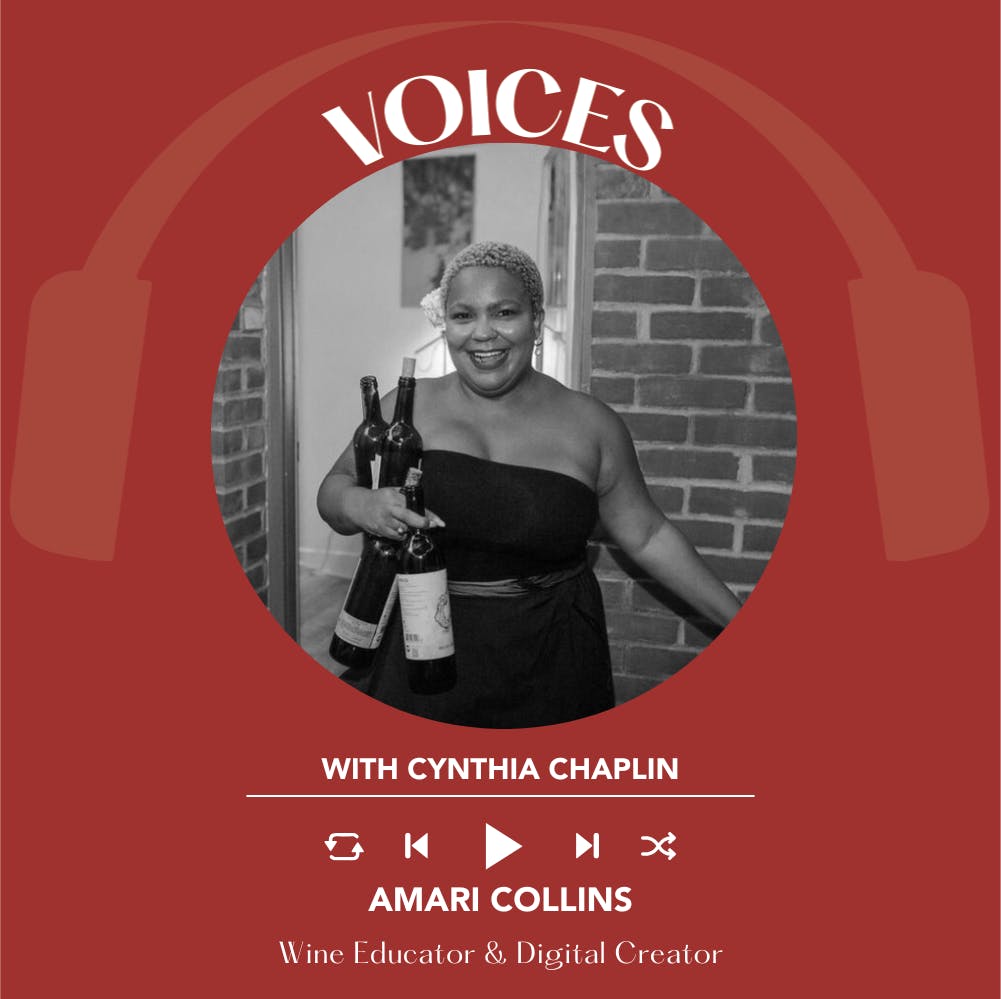
Ep. 2545 Building Inclusive Wine Spaces Through Storytelling with Amari Collins | Voices with Cynthia Chaplin
Episode 2545
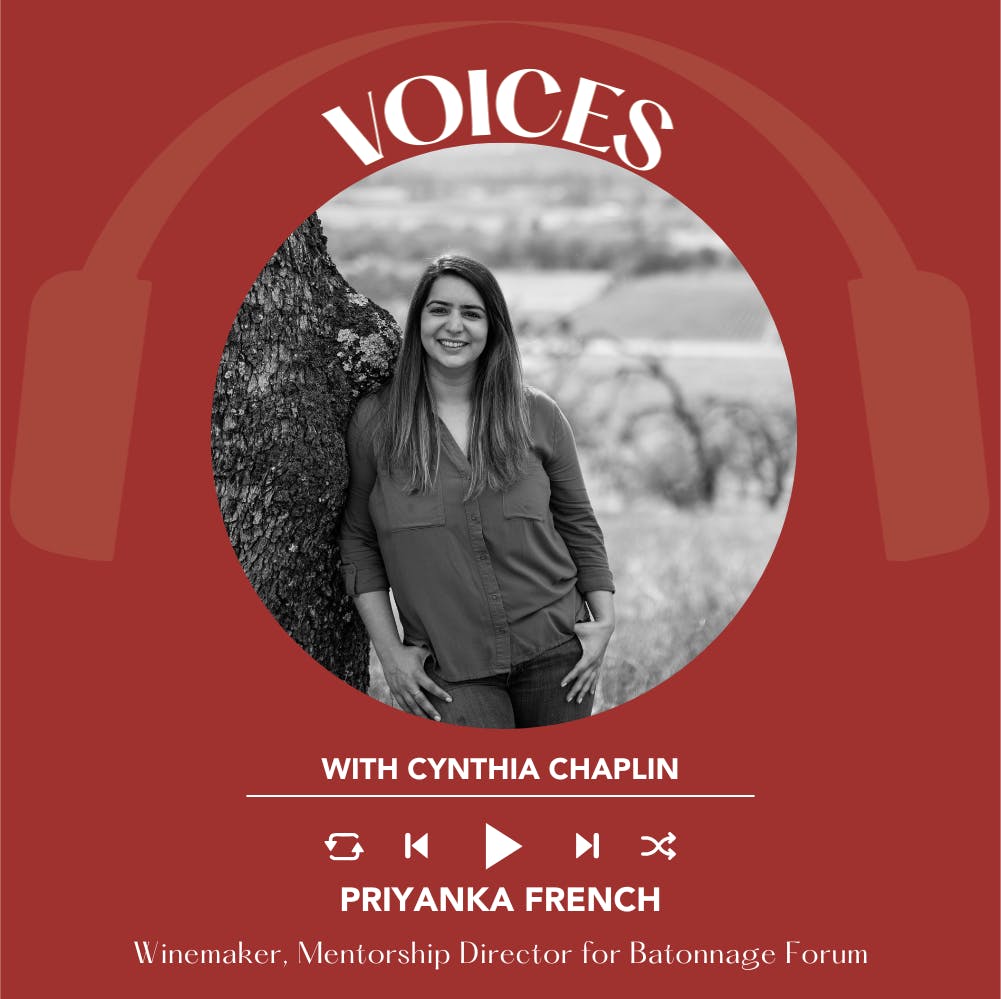
Ep. 2531 Winemaking Journey from Mumbai to Napa with Priyanka French | Voices with Cynthia Chaplin
Episode 2531

EP. 2517 Sarah Looper | Voices with Cynthia Chaplin
Episode 2517

Ep. 2505 Ren Peir | Voices with Cynthia Chaplin
Episode 2505