
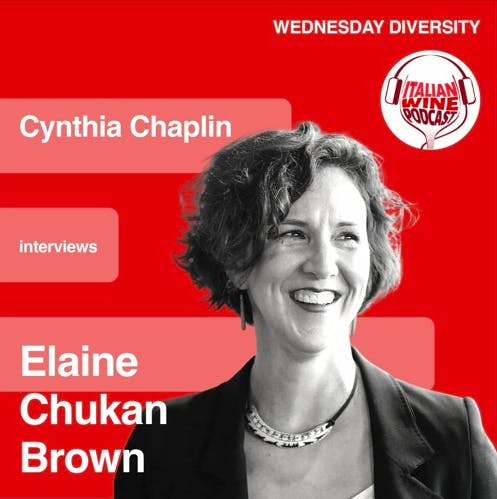
Ep. 862 Elaine Chukan Brown | Voices With Cynthia Chaplin
Voices
Episode Summary
Content Analysis Key Themes and Main Ideas 1. Elaine Chacon Brown's personal journey: from indigenous Alaskan heritage and commercial fishing to academia and ultimately, the wine industry. 2. The intersection of social justice, diversity, equity, and inclusion (DEI) with the wine sector. 3. Sustainability and climate action in wine, exemplified by the ""Rooted for Good"" initiative. 4. The evolution and importance of effective wine communication and accessibility, including visual methods. 5. The significance of mentorship and community building for fostering support and navigation within the complex wine industry. Summary In this episode of the Italian Wine Podcast, host Cynthia Chaplin interviews Elaine Chacon Brown, Executive Editor US for JancisRobinson.com. Elaine shares her unique background, growing up in Alaska with Inuit heritage, her early career as a commercial salmon fisherman, and her academic studies in philosophy and social justice. She discusses the systemic obstacles she faced as an indigenous person in education and how her curiosity led her to wine. Elaine highlights her philosophy of wine communication, emphasizing deep listening and observation, and how she leverages her influential position at JancisRobinson.com to champion diversity, equity, and inclusion, as well as climate action. She details the ""Rooted for Good"" project with Jackson Family Wines, focusing on their comprehensive sustainability efforts and the importance of employee engagement. The conversation also touches on her popular ""Hawk Wakawaka"" persona, known for pioneering visual tasting notes, and her dedication to mentoring young BIPOC individuals, including her involvement with the Diversity in Wine Leadership Forum. Elaine concludes by reflecting on the unique characteristics of the US wine market and shares her appreciation for Ronchi di Cialla, a wine that resonated with her personal values. Takeaways * Elaine Chacon Brown's diverse background, including indigenous heritage and a career in academia, provides a unique lens through which she approaches the wine industry. * Discrimination and systemic barriers can significantly impact individuals from marginalized communities, even in pursuit of education and career. * Effective wine communication goes beyond technical knowledge, requiring deep observation, listening, and storytelling to make wine more approachable and relevant. * Leadership positions in the wine industry can be leveraged to drive significant change in areas like diversity, equity, inclusion, and climate action. * Comprehensive sustainability initiatives, like ""Rooted for Good,"" involve not just environmental practices but also social responsibility and employee empowerment. * Innovative communication methods, such as visual tasting notes, can broaden wine's appeal and break down traditional barriers. * Building strong community networks and mentorship is crucial for supporting new entrants, especially from underrepresented groups, in navigating the wine industry. * The US wine market is distinct due to its largest market being also its primary production region, influencing its cultural and economic dynamics. Notable Quotes * ""My first job is to listen. But listening as funny as it might sound is a full body activity."
About This Episode
During a conversation about the importance of listening to others' stories and understanding one's values, speakers discuss the challenges of the wine industry and the importance of community and diversity in the industry. They emphasize the need for observation and listening to others' stories to understand the process of creating a wine list and the importance of learning about social equity and responsibility. They also discuss their involvement in a project called rooted for good and their use of a name for their work. They emphasize the importance of finding ways to connect with other people and build community, as well as the challenges of the wine industry and the cultural impact of the industry.
Transcript
Welcome to the Italian wine podcast. This episode is brought to you by Vinitally international wine and spirits exhibition, the fifty fourth edition of Vinitally will be held from the tenth to the thirteenth of April right here in verona to discover more about Vinitally and get your tickets. Visit vineitally dot com. This year, the Italian wine podcast will be live and in person in Pavilion six. Stand a seven. So come on down and say hello. Welcome to the Italian wine podcast. I'm Cynthia Chaplin, and this is voices. Every Wednesday, I will be sharing conversations with international wine industry professionals discussing issues in diversity, equity, and inclusion through their personal experiences, working in the field of wine. If you enjoy the show, please subscribe and rate our show wherever you get your pods. Hello. Welcome to voices. This is Cynthia Chaplin. And today, I welcome Elaine Chacon Brown, who is indigenous from Alaska. Their families originated in Northern Sound region of Alaska and their grandmother helped instigate the Alaska native heritage preservation movement in the state. Elaine's now based in Sonoma where they serve as a writer and a speaker and an educator specializing in wine and personal empowerment and social justice. They've won huge acclaim for their hawk, Waka, Waka wine reviews. And after several years as an American specialist wine reviewer for Jansis Robinson, Elaine was appointed executive editor US of Jansis Robinson dot com just this year in twenty twenty two. So welcome to the showy Lane. Thank you so much for having me. It's a huge pleasure. I just want to ask you about being indigenous from Alaska. And I happen to know that the community that you belong to is something I'm never gonna pronounce properly. So I'll ask you to discuss that a bit. Yes. Thank you. So as you mentioned, my dad's side is from Nortonstown, which is sort of Northwestern Alaska, Alaska, you know, all the way on the western coast, and his family. So my family on that side is in Nebelk, which is an Northern Alaska inuit groups. So the same group that many people know of from Northern Canada, does also stretch into Alaska. And so my dad's side's Anupelk. And my mom's side is from the Bristol Bay region, which is also on the western coast, water facing, but just a little further south from Norton Sound. And so my mom's side is, and so again, broadly speaking an inuit group, but the the point is these are all kind of coastal water peoples of Alaska. And, obviously, that coastal background played a huge part in your childhood. I know you started out as a commercial salmon fisherman in Alaska at the age of nine, which is pretty amazing, and had your own fishing business by the age of thirteen, and you sold it ten years later to go after your life in academia, which was huge. We'll get to that. Just really curious what was it that took you away from this immense family heritage and tradition and into, you know, what turned out to be years and years of university study. Yeah. So I base I mean, the answer in one sense is really simple. I was just very curious. And Alaska is still today is quite remote and especially these kind of coastal regions that we're talking about are especially so you can only get to them by flying or taking a very, very long boat trip. And so growing up, my great grandfather loved listening to the radio, just because of the time he grew up, he didn't actually learn to read and write, but you would never know that his memory was incredible, and he could really, like, he could even tell you world history, and a lot of that came quite simply just from listening to the radio. And so I grew up with that kind of influence. And as a little kid, I have vivid memories of even as young as five years old, hearing things on the radio, or hearing things my great grandfather would talk about from other parts of the world, and being a very aware that those stories were from somewhere else. And so I grew up very connected, of course, to my family and the part of Alaska that I'm from and stories of that place too. But I just really wanted to understand how the rest of the world works. And so once I was old enough, I set off traveling. Yeah. That's it's so interesting how there can be one person in your life as a young child that inspires you. My father was the same he fought in World War two. And his stories about being in Europe, which was the only time he ever traveled anywhere in his entire life, inspired me as a young person to to travel. So it's it's always nice having that one person who really catches your imagination when you're small. It's true. And I think sometimes the person doesn't even realize they're doing it. You know? Yeah. Absolutely. Absolutely. Well, you you did take your curiosity on into university. And I know a lot of your academic work concentrated on normative philosophy, which is to say sort of ethics and philosophy, gender, and race and racism, and women's sexuality studies, which is a huge avenue of study now. I don't think it was so much when I was in the universe for sure, but your dissertation focused on the question of what it means to be indigenous. How did that course of studying sort of play into your eventual career in wine? Did you get into the wine sector? How did that happen? And did you ever have any sort of obstacles thrown your way because of your indigenous identity? Yeah. I mean, the being indigenous, I had op I still have obstacles because of that. But, you know, and, like, in some ways, very simple things, but, like, in elementary school, I was regularly pulled from class to go to, special programs just for indigenous kids, but it it would sometimes mean I was missing, you know, learning how to read or or studying basic math or things like that. You know? So It's a challenge for schools, right, when they're trying to create programs, especially geared towards certain kinds of groups or certain kinds of needs. Sometimes they're inadvertently causing kids to miss the things everyone else is getting too. You know, so I had that growing up in high school. I I actually, I had great grades. I was regularly in honors classes before high school, but even so, I had counselors try to keep me from advanced classes that I wanted to take because they thought they were too hard for indigenous kids. And so in high school, I actually, like, basically had a mini protest, and I refused to leave the scheduling office until they gave me the courses I said I wanted. And thankfully, that finally worked. But then even going into graduate school, some of the courses I took, we would be studying, sorts of, got communication and cultural questions, and materials we would be reading would seem too narrow to me that they didn't really explain certain aspects of communication. And if I would raise examples from my cultural background, I actually had one professor tell me, well, those examples aren't real. Oh my goodness. That's outrageous. It is. It is, but I was also just raised by people who understood these things are simply true. Like, these things just happen. And, we keep focused on what it is we intend to do. You know? So I very much was raised with that sort of mindset. And it's ultimately been a big service for me. In terms of how I got from philosophy to wine, graduates call definitely influenced my eventually ending up in wine, but sort of indirectly there were a couple of things, you know, I I was doing doctoral work and philosophy, it's extremely demanding. The pressure is very high, which is sort of a little bit weird to try to explain. But the pressure was extremely high, and I just didn't have time to do anything outside my studies. But you always have to eat. And if you have time to eat, you have time for a glass of wine. So wine was there. I also was going to graduate school at at McGill in Montreal, and the French Canadian culture just really loves wine. It's just part of everyday life. And so it was just around so to speak. But also I realized in my academic career, the person who could order a nice wine from the list actually often got set next to the, guest speaker. And so Ah, strategy. Yeah. So this little bit of wine influence I'd gotten during graduate school ended up serving me well once I actually was in my academic career because I having lived already in a multilingual society in Quebec. I wasn't afraid of these words on a wine list, and I could kind of sort through them and pick something. It's so interesting. I mean, just sort of harking back you were saying about communication, the the ability to be able to decode a wine list is is a huge tool really breaks down a lot of barriers that keep people out of wine. So being able to look at the French and and and not feel terror strike you. Yeah. Definitely worked to your advantage. Because your wine career now is is very full speaking and writing and presenting and wine industry network named you one of the most in aspiring people in wine in two thousand and nineteen, and you were wine communicator of the year in twenty twenty. One of the things that I like when I was looking forward to this interview was that you've been known to say that your primary goal is always to witness the life in front of you be it the person or the glass? How are you achieving that goal in your work sort of as a communicator? You know, get talk back to this whole topic of communicating? Yeah. Thank you. I I really feel that my first job is to listen. But listening as funny as it might sound is a full body activity. So my attention, if I'm meeting with a producer or a Viticulturist or, you know, sommelier or or someone otherwise working in wine or even more broadly, of course, just interacting with people, you know, my job is to be present quite simply. And so listening is not just about using your ears. It's very much about overall observation. And that's what I mean when I say it's a full body activity. I my job is to be observant. And for me, I can't write a piece or speak to a topic in a seminar, for example, until I really have done that work of careful observation and listening first because I really want to understand where a person's coming from. What is influencing the region, you know, to what extent is a wine that I'm drinking informed by the growing conditions of the place, the demands of that vintage, and then the people making it, and the history they've come from. You know, so all of these things factor into the final expression in a glass of wine, and I'm there to try to observe all these factors and sort of tease out the the pieces I can communicate clearly. And also, like, I've chosen this job. I I've worked really hard to get to where I am now. But that also means I'm the person with the luxury of all that of that time with these people that make our wine. And I know a lot of wine lovers, they would love to have that time with producers and traveling the world, getting to know wine as I have done. And so I really see my second duty as, like I said, first, I want to observe and listen to understand, and then do the work to ask myself how can I communicate this clearly in a way that offers something to the reader or the audience while also respecting those people that gave me their time so that I could understand? Yeah. Absolutely. I think that the storytelling aspect of of what we do as wine communicators and and wine educators. Certainly, I find really critical to sort of making a connection with whoever is listening to me, and you're so right that you know, we have a lot of privilege being able to talk to producers and then taking that conversation and sharing it with somebody who wasn't able to be there and wasn't in the room with you is a is a skill and a fine art. And it's it The communication process is something that is so serious. I think people see wine as kind of, you know, fun and a lot of drinking and and enjoying fun things, but that's storytelling aspect is is really crucial for the producer and for people who are new to the industry and just learning. So I'm glad to hear that you feel that way about it too. Yes. Absolutely. Well, I wanna talk about Janis Robinson because this I find this absolutely fascinating. I have to say I'm a little jealous here because you started working with Janice Robinson as the American wine specialist reviewer, you know, several years ago. And this year became the executive editor US for Janice Robinson dot com. What what does this job entail? You know, how are you leveraging this position to bring some more value to your other passions and improving diversity and equity in our sector, which we all know needs a lot of help? What's a daily Sort of day in the life of Elaine at jancis robinson dot com. Yeah. Well, thank you. So, Janis is very much editor in chief. She's really, you know, leading the team. I get to work with her. She and I email, you know, multiple times a day. We set up Zoom calls, regularly. You know, the pace of those depends on if either of us are traveling or especially busy with visits and things like that. Thankfully, I, as you mentioned, I have worked with Jansis for several years now. I originally first worked with her to contribute to the fourth edition of the Oxford companion. And then the year after that, she reached out to me to see if I would be interested in writing about American wine, as you mentioned. And so it's been quite a few years now that She and I worked together. And so in that sense, the transition's been very smooth. We know each other very well. We know, you know, what each other's values are, how we work, how we communicate, what kinds of stories we're seeking. And so we're able to just talk back and forth about kind of building the future of the platform and also keeping an eye on what stories are pertinent to right now. And then how do we build that over time into this vision? And so this role that I've stepped into now is interesting, you know, as you mentioned, it's just this year. Right? And we're still relatively early in the year. So in some ways, it's it's been a short time just a few months so far. But I have this fancy new title. And my everyday work life in some ways hasn't changed at all, but it turns out a fancy new title changes a lot. Fancy new titles are key. They are. They shouldn't be, but they are. They they can have a big influence. And so, you know, really since before I started in wine, I've been having these conversations about social equity and and responsibility to our communities and these kinds of conversations. And so then once I stepped into wine, that was always braided into my work. So to speak. It's always been there. But and so I think a lot of people, anyone who did already know me through my work and wine was aware of that. But now that comes with more gravitas just because I have this new title. And so even just on a recent wine trip, I was touring through a region meeting with a lot of producers. And there was just this slight shift where the visits in some ways, again, felt very much the same. I've been doing this kind of work for a long time, but there was a way in which people were just more aware that we weren't only there to talk about how the vines grow, how the wind impacts the canopy, and things like this. We were also there to kind of have this this broader awareness. And so a number of producers actually brought up work I've done previously. And I found out, you know, the region I was in, they had actually done a lot of DEI training in the last several months with across their industry and actually sent links to several talks I gave to producers I was going to visit so that they were more aware. So it's interesting to witness this because it says so much about how the people we choose to elevate into leadership positions really are influencing all of us whether they're directly trying to or not, you know, just because I have this fancy new title that the fact I've been doing work on diversity and also on climate action for years now is already influencing people I meet with, before I even get there. And so that's that's a really interesting experience for me to see. And then, you know, more overtly, of course, I'm really always keeping an eye out for how do these how do these efforts be made by other people working on climate action or social responsibility. How does how does that inform stories that are relevant to the site too? Yeah. Absolutely. I mean, this is a classic case of using your power for good. So, you know, that's that's really inspiring. And I hope that more and more people shine a light on on you and what you're doing because using power doesn't always turn out to be a positive thing, but it sounds like you are using yours for good, which is great. Thank you. I know you led a series called rooted for good, that was sponsored by the Jackson family. The ones with the winery, not the music family. And and that was all about climate action and social justice. Can you explain that project to our listeners? Because these are these are hot topics, but it's not always obvious how crucial they are to our wine sector. Yeah. Thank you. So I'm I'm really grateful for the work that we were able to do last year on that series. So, of course, I was not yet in my current position as executive editor US for Janice. And so I was I spent ten years in wine just kind of seeking out projects I believed in and doing doing work that would increase my understanding of various aspects of the wine industry while also contributing to the public conversation on on those things. And so last year, the, you know, so Jackson Family wines who they own quite a few different wineries. Many of them actually are quite small niche brands, but then, of course, altogether, they they own a good number of brands and and vineyards all up and down the West Coast as well as elsewhere. So they have spent quite a lot of time years now and actually well, you know, well over fifteen years really trying to systematically increase their sustainability efforts. And they were founded with that kind of interest, but, of course, we've, as a culture and an industry, our understanding of what it means to do that has increased so much as well. And so they they actually formed a division in their company just devoted to sustainability, and they started measuring their own carbon footprint, their water usage, their power usage, all of these things. And then over time, they also created sort of an employee task for so that problem solving could really come from within. How do we improve on any of these efforts? Employees actually working with, you know, washing barrels or or the seller or irrigation and vineyards or any of these things. They're the ones that know where improvements could be made. And so that was how the effort was designed, bringing employees together to brainstorm. So they just last year announced this initiative that they call rooted for good, and it's a ten year commitment to cut carbon, their carbon footprint in half. To significantly decrease water usage and improve kind of water management while also supporting health of habitats and they're moving their entire fleet to electric over time. All these things can only happen over time. Right? And then, of course, importantly too, they have a social responsibility component. So they do a lot to support their own employees, but also to make it possible for their employees to support their own communities. So I got brought in because they they had an interest in figuring out how do we best communicate this effort in a way that's not about promoting them as much as sharing what they're learning. So they reached out to me to see if I would be willing to kind of help them design webinar of some sort. And I said, well, you know, actually, I would be interested in doing this if we could make it a pretty robust thorough going educational series. Where, of course, Jackson family representatives would be present so that we could kind of use them as a case study on these topics, but they wouldn't be the focus. And I wasn't sure if they would be willing to do that. Right? But but right away, they said, wow. That's actually exactly what we want. And so we spent the first half of the year just, I had to get, you know, I had to get really knowledgeable about how the carbon cycle works. You know, how water management and rainfall inform habitat, preservation, and, you know, why reservoirs matter? All these different technical things. There was a lot of work on that side. Getting to the meat of, you know, put your, you really have to understand what your back Yeah. Exactly. So I but I, you know, I spent half a year reading a lot of scientific papers getting to know what Jackson family was literally doing, but also interviewing scientists, researchers, government leaders, lots of different people. And then came back to the team with a five webinar design and suggestions on how, like, what kinds of people we would wanna interview for each, what the conversations could look like depending on who we chose. And then we worked together to invite experts from literally from around the world. And we did a five part series. The first was on the carbon cycle. We ended up also bringing in a glass supplier to interview them on, you know, how can we reduce the carbon impact from, packaging and transportation, what, you know, how Absolutely. People are so unaware of of how difficult glass is. Yeah. In that particular episode, we had, climate scientist originally from California, but now based in Sweden teaching there, Kimberly Nicholas. She is a climate scientist. Her book under the sky we make is something I strongly recommend just because it's gives you the facts that you need to know, but also in a way that is encouraging and very clear and understandable. So I I definitely recommend that book. We also were able to interview a representative from the United Nations, which on that episode, which was pretty incredible. Then the second episode, we moved into habitat restoration and water management and looked at how practices in our wineries and vineyards can actually be kind of co supportive with the surrounding environments as well. Usually important in California right now too. Yeah. Absolutely. And so that one ended up in some ways being the most California focused because it's such a stress point here, but it's really relevant worldwide. Some of the details shift, of course, depending on your conditions, but but there was a lot of important information there. And then we went into looking at soil health and regenerative farming. I that was one of our most popular episodes, actually. People are really, really interested in in that work right now, which was cool to see. And then the fourth episode, we looked at social responsibility. So, again, how can we use programs to increase and improve employee engagement so that the support employees need really are being shown and generated by them and the company can kind of respond in that sort of way. And and then, you know, use that as a perspective on how to improve diversity efforts as well. But again, in a way that's not just about a company, but about the company's place in its surrounding communities. And then the fifth episode, we kind of brought all those things back together and said, okay. Cool. But what does any of this have to do with wine and wine quality? And so in that fourth episode, we were able to bring in Rob Simmington from the Simmington family and talk about the work they're doing in Portugal and the Duro, and and then also here in Napa Valley, Beth from spotswood, Beth Milliken from spotswood, we're able to talk about, you know, how is the work they're doing informing their estate based winery as well. And, yeah, and so the series happened over several months. It's been interesting to see the effect of that as well because, again, on the trip I was just on, it turned out a number of people had watched it live as it was happening and talked about how it's changed some of the work they're they're doing in their wineries and vineyards too, which is exciting. And again, was the goal. It was not about promoting Jackson family, though I do believe the effort they're making is super important and really can act as a guide for others. It was really about trying to offer insight that can benefit all of us as an industry. And I I like the fact that the the project also sort of points out how valuable it is to engage with the people who work for you and get them vested in what you're doing, you know, ask for their opinions and, you know, make use of their knowledge and their experience in whatever, as you said, you know, the barrel washers or, you know, whomever it's such a wasted opportunity to to engage in a meaningful way with with the people who are working for you and and make them feel that they're really part of the process, which I think is a great thing to do. Well, and the truth is they're the people that make the process happen. So company leader might have the most insightful forward thinking ideas in the world, but if if the people they work with or who work for them don't believe in it too, those ideas are not gonna come to fruition. You know, our our employees are who make our work happen, and so they have to be engaged in that kind of way. And the the more we can think from that perspective, how do we work together as a team, you know, the the more quickly we can reach our goals, I think. Absolutely. Absolutely. Well, I I wanna ask you a little bit about Hawk Waka, too, your wine reviews and Instagram persona. Tell us about the name and where that came from and what you've been up to recently and sort of what's coming up for you in twenty twenty two with that side of what you do. Yeah. So when I got started in wine, I was still in my academic career. And so I needed professional anonymity And I decided, well, shoot. If I'm gonna make up a name, I might as well make up a really good one. And so the name, honestly, like, from my teens, some people have called me Hock, it was a sort of a nickname. And So that's where that part comes from. The original name, the full length of the original name was Lily Elaine Hawk, and so the first three parts of the name Lily Elaine and Hawk, they were all either literally my name or nicknames I'd had. And anyone that has known me long enough would recognize at least two of those three. And then, you know, just like great wine, you need a good finish. And so Lily Lane Hawk Walkawaka, you know, that that brings the the flourish at the end. But the the original idea was I wanted a name that anyone who knew me well enough would write realize, oh my gosh, it has to be Elaine. But Anyone that didn't know me would see no natural tie to my actual name. And and then at the same time, I wanted a name that was simultaneously ridiculous, yet had gravitas. And so Lily Lane Hawk Walkwakawaka is quite a name. The mouthful for sure. And once I realized the kind of name I wanted, that name immediately came to mind, and I started laughing. And I realized there you go. That's the name. If I'm if I'm laughing because of it, it works. And so you know, just with online, limits. It got shortened to hawk waka waka. But without my realizing in advance that this would be true, it turned out I I really think my using this ridiculous name, Haw Walkawaka actually helped my career. That was never the plan. I just needed a name I I enjoyed. But it's the kind of name that it turns out when people see it, they say what on earth is that click and they and they follow the link. And so I think it, in some ways, led to more readership and more attention. Unintentional effective marketing. Yeah. Exactly. So again, it's just sort of a fun name, but it's, you know, and it's interesting too because the first, you know, I've been doing this in wine now for about not quite ten years, but the first half of that, people mostly knew me as Hakawaka Walker and didn't know who Elaine Khan was. That's I have to admit. That's how I knew you for ages. Oh, really? Yeah. So then it started to shift where people would know both. And now it's flipped so that people do know who he launched Con Brown is and have no idea what hawk walk walk is. So it's it's sort of fun every once in a while. I'll bump into someone I haven't met before, but They've known me since Talk Walkawaka, and they'll, you know, I got started doing these quirky drawings. And, you know, that's how they remember me. So it's it's turned out to be kind of an insight into how someone knows me too. Well, the quirky drawings are pretty cool. I have to say. I mean, you're you're a great artist and all of your sort of wine related pieces are hanging in a lot of really prestigious places and private collections. What are your pieces like for people who haven't seen them? What where do you get your inspiration? So I originally got started in wine by drawing my tasting notes instead of writing them. And so in the middle of twenty eleven, when I started doing this, visual tasting notes had not been published before. And so, you know, it's so fascinating now, eleven years later to see, actually, people have come up with so many creative interpretations of communicating wine visually. But when I started, that was not a thing. We were, I think, really, in this turning point where there was this almost struggle to find a new way to communicate and things like Instagram were just starting to gain a foothold. They were not as well formed as now. Not at all. I I'm sure a lot of people are listening. You can't imagine life without Instagram, but I remember it well. I know. And, absolutely, it was just really not there yet. It's you know, it did literally exist, but people just weren't on Instagram yet. And and we were not thinking visually yet, so to speak, in the way that we are now. And so I was into wine. I had friends that loved wine, but kind of were intimidated, and I wanted to come up with a way of making it feel simpler for them, like, more approachable. And and I, you know, enjoyed drawing and just suddenly had this moment where I was like, oh my god. I could draw my tasting notes. And if I do that well, it'll just make sense. Because the thing about a visual input is, you know, it's the picture's worth a thousand words thing. You see it and you understand. It doesn't have to be spelled out in words. And I think that's the thing about wine too. When we taste it, If we like it, we just do. It doesn't have to be spelled out. But traditional wine communication is all about talky talky talky talky. Oh my goodness. Yes. It is. And so the thing about a visual tasting note is it has that immediate direct impact just like wine does when you taste it. And of course, people learn in different ways too. It's not just they taste in different ways, but they also learn in different ways. I think it's so important to have more, as you say, more ways of communicating wine to people than just that very rigid, terminology that was invented a long time ago, that not everyone can relate to. I love your drawings. For anyone who hasn't seen them, you need to look them up because they're great. And if you just search Haw Walkawaka, a lot of them will come up. Yeah. Well, I know you're devoting a lot of time and energy to mentoring young people and other bipog and indigenous people of color What advice would you have for a young person from those communities who wants to enter the wine sector now? What lessons and wisdom can you pass along from your own experience? I think the most important thing is to try to connect with other people and build the community and recognize it takes time to do that, but it's the strongest form of support any of us will find as we navigate our way through wine. The wine industry is quirky. It is a challenge. There's so many good people in wine, and yet there's so many tiny little companies and little individual regions. And so in a lot of ways, the industry is really bifurcated. There's all these little tiny parts that have sort of tenuous links between them. And so as a person coming into the industry, that can be so intimidating and difficult and just opaque to try to figure out how to navigate. So I think the most important thing is to remember it takes time and to find those channels of support that will help just give you someone to lean on or people to get help from guidance from. You know, I was really lucky when I first started, a man that had been in wine for decades happened to find, you know, my site, Hawakawaka, and we were just emailing just about wine work. And, you know, I was really honest. Look, I'm super early. And the thing to say is that Wine was not hard to learn. The wine industry is what was challenging. That's a really good differentiation. That's so true. It's yeah. They're just very they're really different skill sets, and I think sometimes we fail to admit that. And, you know, there's a lot of scholarships and and wine specific education that's available now, thankfully. But it's important for all of us to remember the wine education that has been available doesn't actually cover how the industry works usually. And so I was really lucky that this man that I happened to connect to who had worked in wine for decades. He kind of realized that was what I was struggling to understand. And he said, you know what? If you just if you have a question, just ask me. So he's now one of my longest term friends in wine, it's ten years later, and he has been a constant source of advice when I need it. I don't always have to go to him for advice now, and I don't always take his advice, you know, but but just knowing I had that option of someone to ask when I was scared, I might not understand well enough to make a decision. It that was a huge positive for me. So I now really try to give that back to other people in that position I had been in myself and and offer advice Well, you've you've built an excellent system that people can access the diversity in wine leadership forum that you started in twenty twenty with Miriam Ahmed, assuming that the idea came from this drive to, be supportive and to be available for for mentoring. What's the forum up to these days? Yeah. So, Maryim Ahmed came up with the idea of helping to connect these different organizations in wine working on diversity efforts. And then, Mary came to talk to me, and I said, this is a great idea, but we need to remember diversity doesn't have traction unless it is focused on equity too. And So, you know, so the two of us kind of came together, and we initially did start just by helping to bring together organizations working on diversity. The idea was like, look, we're gonna get tired. Any one of us can't solve this. We actually need to find ways. It's so big. We need to find ways to problem solve together, to collaborate, to realize, oh, my gosh, this organization might have figured this thing out already, and we figured this other thing out what happens if we share insights. So we initially started that way. And then we realized that there was actually a big interest. People wanted to know what we were doing and wanted to have the opportunity to learn themselves. So we then progressed into also kind of creating a central resource for people to find these organizations and now also offer educational series for people wanting to learn how to do better and really support diversity efforts more broadly. And so in late last year, I was I had to for family reasons, I had to step away from helping Marion lead that group, the diversity in wine leadership form. But before I did that, I'm really happy I was able to help Marion connect directly with doctor Akila Caday, who is a diversity consultant. And so the two of them now work together leading the diversity and wine leadership forum. And as I mentioned, continue to do the educational series for people wanting to better understand diversity, inclusion, and equity, and then also continue to do a twice yearly forum where they bring leaders of diversity organizations together. And then they also have a website that kind of people can just search and find what are the different organizations doing this work that I could support in other ways too. Which is a great website, by the way. I actually had the joy of chatting with Akila on on voices not too long ago, and she is so full of positivity. And, yeah, she's she's a really inspiring, remarkable person. So you left the the forum in good hands. Absolutely. No question at all. I I just wanna ask you one last thing about an idea that I read of yours that really struck me about understanding distinctions between communities, while also finding common ground, between them, you've said wine producers are people whose work makes them centerpieces in the culture of wine. And I think these two ideas really go hand in hand through this kind of a lens, how do you see the US wine sector in contrast to other wine producing places around the world? Yeah. So one of the things that unique about the US is that our biggest market is also where we make the wine. And I that cannot be overlooked. Like, that in so many ways defines the difference between US wine and any other part of the world. You know? And, you know, there's a great advantages with that economically, of course. I think in some ways, sometimes that can also stunt region or producer's progress though. Sometimes if it's easy to sell, you don't have to push as hard to elevate your work. You know? That said, of course, there's incredible producers here really devoted to elevating their work and their quality and and so many people leading the way in that. But, yeah, again, just the kind of, you know, the fact that we can make and sell the wine in one place is not just an economic impact. It's a big cultural impact as well. It really is. It really is. It's it's it's a very it's just a very interesting, concept of, you know, having looking at a wine producer as a centerpiece in that culture because it it really does make a difference when you sort of start to turn turn the camera on that perspective. That that idea appealed to me so much. Thank you for sort of explaining the background. And before I let you go today, because I know I've I've kept you long because you are so wonderful to talk to. Just famous final question. I know you get to drink a lot of great wine from all over the world, but if you were gonna drink something Italian, what would you open? Who would you drink it with? So in April twenty twelve, I took my first professional wine trip ever, and it was to coley orientale Delfriley. Oh, so beautiful. Good choice. Yeah. What a fantastic first wine trip to take. And so I, in the midst of that, I was able to spend an afternoon with the entire Rapuzzi family, but to listen to Paolo and Dina at Rankibichiella and hear their story of how they founded what they had been doing before you know, and, and then how they rediscovered Gilpertino and really committed to being, vineyard and winery, a wine family of freely. That had a profound impact on me, and it really, you know, to link back to one of your first questions, it made me feel like, oh, you know, as an indigenous person, so many of my values and commitments really are shared by other people as well. And that was kind of the first time in wine I real I glimpsed that. And and so I have all you know, I was very impressed with their wines from the beginning, but their Chala Bianco is a longtime favorite of mine. It's their white blend. Mine too. Yeah. I I love that wine, and it's It's such a wine of friuli again, and the detail complexity and texture of that wine. Oh my gosh. It's just I love that it not only tastes good. It feels good in the mouth. That is a perfect description. It really does. It really does. Yes. And it ages so impressively well. I've been lucky enough to have examples of it even back to the nineties, and it just stays, and it has different stages of evolution, of course. But it really it's, again, that the texture and and length of that wine is wonderful, and and it continue to love it even with age. Well, that we can't we definitely can't top that, you know, also with the the storytelling that they do at Runkadichiala. It it kind of comes right back as you said to the beginning of our conversation. How important it is that personal connection with the story. So thank you so so much for coming on. I really appreciate it. It was great to talk to you. So good to talk to you too. Thank you again for having me. And I I really am grateful for you including me in your series. It's a podcast that I've enjoyed, and and we'll continue to listen to. So thank you for having me. Thanks, Elaine. Take care. Thanks for listening to this episode of the Italian wine podcast brought to you by Vignitally international wine and spirits exhibition, the biggest drinks trade fair in the world. For more information about VIN Italy and tickets, visit VIN Italy dot com, and remember to subscribe to Italian wine podcast and catch us on SoundCloud, Spotify, and wherever you get your pods. You can also find us at Italian wine podcast dot com. Hi, guys. I'm Joy Livingston, and I am the producer of the Italian wine podcast. Thank you for listening. We are the only wine podcast that has been due a daily show since the pandemic began. This is a labor of love and we are committed to bringing you free content every day. Of course, this takes time and effort not to mention the cost of equipment, production, and editing. We would be grateful for your donations, suggestions were quests and ideas. For more information on how to get in touch, go to Italian wine podcast dot com.
Episode Details
Keywords
Related Episodes

Ep. 2651 Diversity in the Wine Industry and Wine Tech Innovation with Jeremy McCarty | Voices with Cynthia Chaplin
Episode 2651

Ep. 2627 Regenerative Winemaking, Mentorship & LGBTQ+ Perspectives with Terah Bajjalieh | Voices with Cynthia Chaplin
Episode 2627
Ep. 2545 Building Inclusive Wine Spaces Through Storytelling with Amari Collins | Voices with Cynthia Chaplin
Episode 2545
Ep. 2531 Winemaking Journey from Mumbai to Napa with Priyanka French | Voices with Cynthia Chaplin
Episode 2531

EP. 2517 Sarah Looper | Voices with Cynthia Chaplin
Episode 2517

Ep. 2505 Ren Peir | Voices with Cynthia Chaplin
Episode 2505