
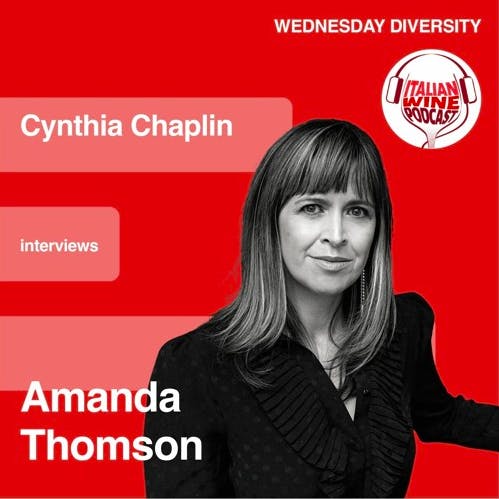
Ep. 871 Amanda Thomson | Voices With Cynthia Chaplin
Voices
Episode Summary
Content Analysis Key Themes and Main Ideas 1. The emergence and rapid growth of the premium alcohol-free beverage market. 2. Amanda Thompson's journey as a pioneer in the alcohol-free sparkling wine sector with her brand, Noughty. 3. The importance of transparency (ingredients) and sustainability (packaging) in the modern beverage industry. 4. The role of B Corp certification in demonstrating ethical and purpose-driven business practices. 5. Changing consumer attitudes towards alcohol, particularly among younger generations, and the demand for inclusive drinking options. 6. The technical process of de-alcoholization and the complexities of legal labeling for alcohol-free products. 7. Expanding the ""wine experience"" to diverse demographics, including those with health, religious, or personal preferences for abstaining from alcohol. Summary This episode of the Italian Wine Podcast features an interview with Amanda Thompson, founder of Thompson & Scott and creator of Noughty, an alcohol-free sparkling Chardonnay and Rosé. Thompson shares her career transition from broadcasting to wine, driven by an interest in the ingredients and a desire for greater transparency in the industry. She explains her unique model of collaborating with existing winemakers to produce wine for her brand. The conversation highlights the significant growth of the alcohol-free market, particularly evident in Noughty's rapid expansion into 40 countries since its 2019 launch, even during the pandemic. Thompson emphasizes Noughty's commitment to transparency (listing ingredients), sustainability (recyclable packaging), and ethical business practices (B Corp certification), aiming to build consumer trust. She discusses the diverse target audience for Noughty, including health-conscious individuals, religious communities (halal certified), and younger generations who are choosing to drink less. Amanda also details the vacuum distillation process used to de-alcoholize the wine and addresses the evolving legal landscape regarding the labeling of alcohol-free products. She envisions Noughty being available wherever fine wine is served, from airline lounges to Michelin-starred restaurants, ensuring an inclusive experience for all. Takeaways - The alcohol-free beverage market is experiencing significant growth, driven by changing consumer preferences and health consciousness. - Amanda Thompson's Noughty brand is a leader in the premium alcohol-free sparkling wine category. - Transparency in ingredients and sustainable packaging are key pillars of Noughty's brand philosophy. - Being a certified B Corp reinforces a company's commitment to ethical and socially responsible business practices, appealing to modern consumers. - Younger generations (Millennials and Gen Z) are driving a shift towards reduced alcohol consumption, partly due to social media visibility and health awareness. - Alcohol-free options, like Noughty's halal certification, contribute to greater inclusivity within the beverage industry. - De-alcoholization is a complex and costly process, making premium alcohol-free wines a distinct product category rather than simply a cheaper alternative. - The legal framework for labeling and marketing alcohol-free wines is still evolving globally. Notable Quotes - ""It's the first alcohol-free drink on the Italian wine podcast. So I'm excited to have this conversation."
About This Episode
The speakers discuss the success of their naughty and naughty capsule brands, including their former boss's N.B. brand and their partnership with naughty. They also discuss the challenges of creating sustainable packaging and the importance of zero alcohol wine in the premium category. They emphasize their commitment to creating a world-class beer brand and their love for Italian wine. They also mention their involvement in crafting their zero alcohol wine initiative and their love for Italian wine.
Transcript
Welcome to the Italian wine podcast. This episode is brought to you by Vineetili International Wine and Spirits. The fifty fourth edition of Vineetili was held from the tenth to the thirteenth of April. If you missed it, don't worry, go to benitely plus dot com for on demand recordings of all the sessions from the exhibition. Welcome to the Italian wine podcast. I'm Cynthia Chaplin, and this is voices. Every Wednesday, I will be sharing conversations with international wine industry professionals discussing issues in diversity, equity and inclusion through their personal experiences working in the field of wine. If you enjoy the show, please subscribe and rate our show wherever you get your pods. Hello, everybody, and welcome to voices. I'm delighted to welcome Amanda Thompson today. She's the CEO and founder of Thompson and Scott and the creator of naughty, which bills itself as the world's best alcohol free, sparkling chardonnay, and Rosay. So I'm very excited about this today, Amanda. Let's talk about this. It's the first alcohol free drink on the Italian wine podcast. So I'm excited to have this conversation. As a proper owner. Thank you. They have a great pleasure. You are in London. And your career did not start in the wine sector. Did it? How did you get how did you get into wine? Well, I was in the art space. So I was a BBC broadcaster, actually. So I guess, speaking for a living, like like you are now on this podcast, and I used to report on anything art space. So film, fashion, music, art, it was a really incredibly fun job, pretty long hours. And back in the day, we used to work hard play hard. This is before social media, as I tell my kids. Oh, yes. I remember those days fondly. We could actually party, right, when no one was looking. And that was where I originally built my love of champagne. I guess when I wasn't paying, and beautiful glasses were being handed to me, I used to work perhaps on the red up, but it can, interview movie stars, or traveling quite a lot. And that was my original relationship with the Fine wine world, was just enjoying it. And there was this very interesting dichotomy because I've been bought up by a health food obsessed mother and I became really interested in the ingredients in wine, in particular, the sugar, but also in some instances, the chemicals, and that was really where my journey began. Oh, well, how interesting. But it sounds like a very tough job. Standing on the red carpet in Khan, but I do understand that that attraction to fine wine, especially when it's free back in the good old days as as we say. So you you had a health food mom and found yourself with a champagne obsession. And so you founded your company in two thousand and thirteen and launched your first wine in two thousand and sixteen, which was an organic champagne. Correct? With still having alcohol in it at that point. Almost, yeah, it wasn't actually organic. It's pretty hard. There are a few aren't there now. You'll know, but it's pretty hard to do a hundred percent organic in champagne. But, yeah, that was pretty much correct. I I'd really originally, I'd consulted with the late Jaira Basse. I suppose the world's most famous simulator till he died a few years ago, sadly, but he was incredible for bringing on women in wine, and I'd originally consulted to him about my career change. And then that took me to Paris where I studied for my wine diploma, called on Blair, which is launching in France, and threw myself into the wine business. But, yeah, that's correct. Then I thought, well, I'm not gonna sell snow to the eskimos and try and launch a champagne in in France. I came back to London and started to build what then was my my alcohol brand. Right. Well, you didn't have a vineyard or get left one by by your lovely old French uncle or anything. So where were the grapes coming from? How how was that happening? Sure. So my model, actually, which remains the same today, was always inspired by, by fashion, I guess, an industry I knew a bit more about, which was this idea of diffusion and and collaboration. And I was highly aware that there were so many incredible Arterzan winemakers that because they didn't have that brand cut through, just weren't really making enough waves in the market. And then, of course, the real populist end of the wine business, you know, a bit like cheap fast fashion, you'll know you've got a lot of big players and they make it very hard for the new brilliant, you know, often better winemakers to get any cut through. So, really, the idea was me working in partnership with existing brilliant winemakers to produce liquid to my recipe, but using their talent. So that was how the champagne collaboration started. I was a blog to blonde girl historically. I was always obsessed with fine chardonnay Champagne. And see, that was the original part of the journey, which actually now has come full circle since I pivoted the business into alcohol free, and that became the benchmark really for naughty. Could I create a perfect chardonnay alcohol free that gave me the same buzz as champagne, but without the alcohol. So you launched naughty in two thousand and nineteen. I'm gonna tell our listeners it's spelled n o u g h t y. It's a fabulous name. I absolutely love it. I lived in in the UK for seventeen years. So it makes sense to me, and I think it's fab, but I'm gonna ask you to explain to our audience how you came up with this name because not everyone will get the reference No. And I love that. And our American friends, it's very popular. I'm delighted in the US. And of course, naught, meaning zero, we use it very commonly in Britain, isn't the terminology in the US, for example. So so that was an things sort of translation. So that was really how it came about. I wanted it to be a play on fun because for me, you know, having incredible wine and fun, I think really should be together, but I feel often in an industry I love, the wine business, they're often quite far apart. We we all have to be very serious and stuffy about fine wine, and then the fun is somehow cornered somewhere else, really almost at the lower ends of the business And and I believe another conversation for another time, but that's partly why young people have been lost from the industry, you know, in terms of, you know, the demographic and why why they're finding cocktails and spirits more often now. But I think that that was really the idea of play on words, you know, bringing the fun, also focused on that zero percent element, but equally having a brand that was very easy to say globally because I always had big global ambitions So I wanted it really to be champagne or naughty, a very easy capsule for for when people weren't drinking. I I love that. I I'm an educator, and so I deal often with young people new to new to wine, and I try very hard to fell the snobbery and the exclusivity that that has wrapped the wine world for so many years. So I I love the play with with not percent and and the naughtiness of of having a cheeky little drink here and there. So I've I've got I've gotta ask you, you know, sort of having, as I said, lived in the UK for many, many years, and my husband is British. The prints are generally pretty bad about drinking pressure. When my husband doesn't drink alcohol at all, just a personal choice doesn't like it. But even as an adult, he's been pressured in social, you know, sort of situations at parties and things. In England, you're considered extremely boring if you don't drink. So what brought you to the point of moving sort of away from your champagne into completely alcohol free sparkling wine because you your naughty is zero percent, isn't it? Exactly. And there's so many interesting touch points in what you've just shared. I think that we're moving on pretty quickly with recognizing that whichever way we cut it, we can't pretend alcohol's good for us. I think we've all in the industry, you know, at various points, so many people trying to set out, you know, red wine of days good for you because of their some or my personal favorite that drinking red wine protects you from COVID. Right. Well, there there there's one. I think whichever way we cut it, anyone who's got any degree of scientific analysis in them, recognizes that we're kidding ourselves. So Once we work from that place and sort of say okay, you know, let's all drink better when we're drinking alcohol and and really improve the way we're drinking and not drink, you know, without mindfulness there qualitatively at least, if we park that thought, then I think that this idea is so ingrained. You've just hit the nail on the head with Brits that not drinking equals dull, and and that is just such a a sort of long standing reputation that we have for a very good reason. But what's also interesting is we're known as innovators in the drink space, and we have quite a strong history of innovation. And I think during the pandemic, when I doubled down online, and and and all of us around the world, we're finding ourselves having conversations. As opposed to historically, when we'd just mostly be talking online amongst ourselves in each country, I started to recognize that the movement that was coming out of the UK was really forward thinking, and, and, you know, besides me in the wine business, there were lots of people doing really in things in the alcohol free space, you know, in other drinks categories. And so if we take beer, for example, I think a lot of us when we talk about alcohol free have almost forgotten the fact that alcohol free beer has been really slowly and cleverly, you know, really fixing itself in people sort of drinking vernacular quite solidly in the last five to ten years. So much so that I can't really find a pub in the UK that doesn't have at least one alcohol free beer, you know, certainly in bottle or can, if not on tap now. So I think we sort of almost ignored that because I guess we've got used to that. I think where the innovation hasn't been there, you know, when it comes to hospitality has been in the alcohol free spirits world, you know, to some degree, it's been getting better since Seaglip launched and certainly in wine where truthfully no one had been doing anything much on the quality side. So I think that the pandemic really allowed all of these global people to come together, all the thought leaders, and we started to really recognize that we could fast track the opportunity and the growth of the category, you know, by really sharing each other's stories. And and I can't tell you, you know, what happened to my brand online during lockdowns around the world. It just went crazy. The US played a big part in that Australia did, and we find ourselves now coming out in twenty twenty two in over forty countries. So I think that, yes, while us Brits have such a long standing reputation for being hard drinkers, I think you've also got this very interesting dichotomy now where everybody recognizes jokes aside, that they need to cut their drinking one way or another. And so the big opportunity, you know, I believe lies in those people actually who do still enjoy many alcoholic drinks, but recognize that they need some time off for their mental health and their physical health as well. You know, I think no one would really argue with that now. I don't think. No. It's it's so interesting to talk to you about this. I I just want to point out one thing that dropped in the middle of that of that little chat there. So you started in twenty nineteen with Naughty. And in three years, you're coming out in forty countries already. That's incredible growth, especially during a pandemic. That's cute as to you for that because that itself is quite indicative that there's a market out there. So who who do you see as your sort of primary consumer? I mean, there are a lot of people who abstained by choice, like my husband or people looking to lose weight or, you know, people who've struggled with alcohol in the past, sort of, you know, I have six children who are all in their twenties. So millennials and Zenials are driving their choices through social media. They they're drinking a lot less. They're drinking a lot differently. Where do you position naughty? What's your marketing strategy? Who's your consumer? Six children. That is another podcast they want to do with you. Everybody wants to do that podcast with me. Yes. So, you know, you've touched on that key demographic that the media has very quickly picked up on and recognized, you know, I think they've seen their parents us drink too much. They're living their lives out online. And so I think social media, one of the benefits actually has been that young people don't want their reputations ruined by one stupid video or snap of them doing something embarrassing. So, actually, that's a really positive element that social media has brought to wellness in the world when it comes to young people. That's a fantastic point that because social media never goes away. You know, I mean, that could cost you your corporate job in a heartbeat. Right? So or your prime ministership, depending on who you are? Not in Britain. I don't think. Anyway, that that's definitely another podcast. It's another podcast too. But really, I don't want to sort of shirk the question, but but who is our demographic, really anyone and everyone, you've got this really interesting opportunity with young people. So they're sharing and falling in love with Naughty from the get go. So that is brilliant. You've got the fitness crowd who who are just automatically often even famous athletes, you know, they hardly drink. You know, it's really interesting that the sports world historically has been tied, you know, very acutely with with Champagne with celebration. Of course, you talk to athletes and sports people and they hardly ever drink. So I think there's a huge opportunity within the sporting and fitness world that we're just starting to scratch the surface on. Religious people, people who don't drink for religious reasons. It was important to us to try to get our halal certification so that anyone who who really was making that choice that they felt comfortable with zero alcohol could really trust naughty. We're big with the vegan grout because we are openly telling them that there's no dairy products or animal products used in the filtration of wine, a wine specialist, you'll know many wines are vegan friendly, but going back to the history of wine, we've just not been very good at communicating that fact. So so we've been very open with Naughty to really try and be as honest as we can about what's going into the bottle. I think, voting with their feet as well, young consumers, you know, they want to build a relationship with a brand that they can trust. And so, you know, we've worked very hard on on on being an open to sustainable brand. I think we're gonna get into that a little bit more later. But what what I've loved about naughty is the fact that I am constantly surprised by the people who find and fall in love with it. So that goes back to I suppose this statistics, which say that you've got the sober community, you've got all those people who aren't drinking anyway who luckily have fallen in love with naughty, but the really big opportunity is those of us who are drinking anyway and just want to switch it up a bit and want something equally delicious And I think historically, we've not been catering for that in the wine world. You know, I think that's that's just, you know, a really legitimate point, something that's delicious and still festive and celebratory, but I wanna go back just one step, because you mentioned that Naughti is certified halal. Again, we will have some listeners who don't know what that is, but it is a requirement for Muslims. And so you're, you're actually taking a nonalcoholic beverage that is, you know, still festive and fancy and tastes delicious. And you are including a group of people who really haven't been included in wine conversations at all. So, you know, this this idea to to have the wine certified halal has opened the door to sort of the bubbly party for the Muslim community. I mean, was that, you know, a specific decision or, you know, was that something that you were looking at in terms of going with the vegan and the organic? It just made sense It made sense, and it was a specific decision. We recognized that there was a huge opportunity there to cater for for Muslim people who aren't drinking for religious reasons, and and I was fascinated globally by the amount of people that, that, as you say, just weren't catered for, that equal seat at the table, you know, where you can have something equally delicious and not feel less than. And I think for so long, non beer drinkers because they have been quite well catered for certainly in the UK with alcohol free beer in the US, but non beer drinkers have really just had either a coca killer or an orange juice or water offered to them, which really does not give you that inclusive equal seat at the table. And then we we were delighted when we spotted naughty in the Middle East to, to, to formula one event, because, of course, you know, there are certain countries where alcohol is not really supposed to legally even be there. So that really offered that beautiful opportunity to, to give something to, to that community. Where were you when you saw Nautic? So I think that was in. I want to say Abu Dhabi. Okay. Okay. And we actually had a Wow. That's so great. Yeah. We had a snap, and I mean, it was really rather wonderful. It was there was a snap of Lewis Hamilton walking, and there was naughty behind, and I was like, yes. That is what I'm talking about. You couldn't have planned it better. That's fantastic. I want to touch on what you just brought up to a minute ago. One of my favorite things about Knowlty is that you list all of its ingredients on the packaging and all the packaging is a hundred percent recyclable. Wait. Let's talk about this for a minute because it's just not that easy to achieve in the wine sector at all. So what's the philosophy that prompted listing the ingredients? I'm sure stem from your mom possibly, but the packaging, what materials are you using, and how is that affecting your cost? Because oftentimes, particularly in wine recyclable material is much more costly than the stuff that can't be recycled. It is so true. Well, let's talk about ingredients first. Yeah. So from the get go, part of my original reason for starting the business first in Champagne, and then an alcohol free, was my, to be really honest with you, shock? I mean, this is still true in twenty twenty two, although legislation is looking to tighten up, which I know is scaring lots of minors who don't put things they want to share into their bottles. I can believe that wine was a legal consumable that didn't have to list its ingredients. I mean, it's kinda crazy when you think about where we are in the world on analyzing everything else. You know, if you think about a drug, a legal prescription drug, every single micro element has to be listed on on that package. So that did shock me. And, of course, the interesting point about that is, wineries that do operate in a beautiful, sustainable, what I would historically, I suppose, in our industry, call artisan Way, are used to really making a very pure liquid. In a weird way, going back to how wine was originally made, you'll well know. But of course, with the commercialization of wine, the driving down of prices, sugar and chemicals hide a multitude of sins on the palette. And so that's where we are. So that was really what I wanted to to do was, you know, shine a light, not so much on bad practice, but really push forward good practice and focus on really what wine should be, and that led me to do a lot of thought leadership work around my obsession with transparency of labeling. And interestingly, I guess being an ex journalist, you've always got one eye on you know, I'm obsessed with Zai Geest and where we're going in the future. And I know there's quite a lot of shock in the industry right now with what's happening in different countries around legislation, but I think there won't be anything to hide, certainly in the next decade. And I think that is going to be quite a shock for consumers when they start to recognize what they've been consuming exactly as it is in, in the world of processed food. So that was very important to me. We're still always innovating in that space because sometimes ironically, you're not allowed to list ingredients. So there's this slightly complicated dichotomy where you want to be transparent and you're not always able to be because of different countries' legislation, but, you know, but that's quite a complex sort of issue to get into. So I'm doing my best on that piece. And then secondly with packaging, again, a huge shock to me. I mean, I'm your classic entrepreneur who came into an industry, although I'd done my training at cordon bleu, I came in completely cold in the sense that I hadn't grown up in the industry. And I was shocked again at how hard it was to package sustainably and to put, you know, eco credentials forward facing in my business. And and you mentioned cost. And yeah, it's really hard. And of course, that's another reason why most wineries don't sort of try and do away with plastic. Luckily, we found a way where it can be done. So we've we've got compostable packaging, which is basically halved. And and it's just sort of three compartments that wraps separately around the wine bottle, and you can pretty much throw it around within reason, which, of course, we all know in the wine business boxes do, unfortunately, if you're doing direct to consumer, literally get thrown around sometimes and dropped. Which is, you know, the central issue with glass, obviously. Unfortunately, but true. Yes. Yeah. And so that's how we've got around the problem, but it's a constant work in innovation, and our work there is never done. And obviously, bottles aren't ideal, so that's another reason to, you know, to start to try and see what what can be done there. But, you know, we're not perfect, but right from the get go, we started out wanting to do our best and to constantly try and do better. Well, let's let's get down to actually talking about this dream now. How exactly do you make zero alcohol wine. Are you legally allowed to call it wine? You know, sort of are you still using your chardonnay grapes? Or where where is this base wine coming from? I'm just fascinated by the whole process. How do you, you know, come up with a wine that is legitimately zero alcohol. So to take your one of your questions about wine, that depends on the country and the territory. So, yes, in the UK and US, no, in some of the, you know, perhaps Dubai, that differ each country has its own very strict rules. And of course, because alcohol free wine in the premium category, at least, it is a very new emerging category, each country again is analyzing and wondering and reshaping its rules. So there's quite a lot of change going on very quickly in different territories around alcohol free wine. So the legislation is constantly being shaped. And that's why I've just joined, an an alcohol free, not for profit board in the US called Amber, where we're really there to try and shape the industry. And we're then opening different chapters around the world, because I think there's so much to be done when it comes to the educative, sort of, low factors there. So naughty starts my, my sparkling, Shardon me, and my Rosie, they start out as wines, our grapes come from southern Spain, so they're nicely sun ripened. And then it's a two step process really. So then the wine is de alcoholized. We use a process called vacuum distillation, and it's done very gently to try and retain the the flavor profile, and we don't heat it too high. There are various ways to de alkaline wine. Another way is is is a different method called the spinning co method, but we believe that the vacuum distillation method creates what we like to think of as as the best liquid. So that's how we do it. So it's kind of funny because you get people saying, oh, you know, shouldn't it be really cheap, like, cheaper than wine? Because there's no alcohol. Interestingly, alcohol is not an expensive component of anything that, you know, often it's even just a byproduct. The expense, it really isn't linked to alcohol per se. You're producing actually quite a complex product when you're de alkalizing because you've got a whole other separate process, if that makes sense. Absolutely. And a and a whole second set of a process, so if you're starting with a wine that's already been made, now you're doing something else to it. So it's it's much more us than than just a typical wine would be. Exactly. Okay. Well, that's if this is absolutely fascinating to me, I I I think this is quite interesting, and I do think that this is something that is becoming much more part of, sort of, current wine conversations. And and is likely to continue being so as we head forward. So I I wanna talk to you about the fact that your company is registered as a B corp. This is this is something, again, not a lot of our listeners will know, but I find this also fascinating. So I'm just gonna ask you to explain what it means and fill us in on why it was so important to you to have your company be a B corp. So it's really putting purpose alongside profits And rather than just doing the right thing when everybody's looking, it's doing the right thing when no one's looking. And, I mean, we've even got written into our articles, our share articles, and I've got outside investors that we will put ethics alongside profit. And to ask investors to sign up to that is quite a big deal. Now I believe the way the modern business world is going, this is more important than ever, and luckily corporates are desperate to catch up on this one. But the B core organization started in the US as far as I, I'm aware, Patagonia was a brand that was instrumental in really publicizing it, you know, and they've just done a recent campaign encouraging you not to buy any of their, any of their clothes, but to repair and reuse So it's this idea of putting climate really at the heart of your business and ethics, which of course, I guess ten, twenty years ago would have just been laughed out of town, but it's really fascinating to see how the money markets are now wanting to invest in B core business because I think whichever way you look at it, even if you don't buy into, you know, caring about the climate and caring about ethics, because everybody now knows that these are the business of the future you've got to put your money where your mouth is. So I think we're at a really fascinating time when it comes to the way we view businesses. And I didn't just want to jump on that bandwagon for commercial reasons. I wanted to really get asked ification as soon as I could when I launched because it's a bit like putting your flag in the sand, like my thought leadership on label transparency, I wanted to really stand for something as a business, and I wanted my consumers to trust that not only I as the founder, but also the team and the brand really stood for something. And it's just been a delight to watch modern consumers and recognize that my hunch that that really mattered to them is really now coming to fruition because, you know, when you analyze shoppers now, they they all vote with, you know, just so that their ethics really plays such a big part in brands that they're supporting. And we all know there's been horrendous brand stories where, I mean, you can literally, your share price will plummet overnight in public companies if you're not doing the right thing. So so I think that's that's really why we became obsessed with getting our vehicle certification Absolutely. I think, again, getting back to young people as well, and I always use my my own family as my case study and these sorts of things. They, young consumers are are really voting with their wallets, absolutely. I won't name names, but there is a current big corporation, and all of my children refused to buy any of their Christmas gifts from them because of bad ethical practices. So younger consumers, I think, really do have their eye on this, and they they are taking corporations to task. So I love the B Corp philosophy, and I'm really glad to have the chance to get you to put the message out there it's it's great because naughty is clearly a big success and you were voted one of business insider Australia's coolest people in food and drink in twenty nineteen, along with George Clooney and Anthony Bernain. So that's really nice company to be in. Jances Robinson endorsed naughty with her review and she called it and I'm going to quote, hands down the best alcohol free sparkling wine I have ever tasted and one of the best alcohol free wines I've tasted overall. That is an amazing compliment coming from Janice. So what's next for naughty? Well, we've got a portfolio of still wines coming out. Now red, a still red has eluded the wine world, at least anything that tasted vaguely like bread wine. Absolutely true. So I I've been hard at work on that, and then we've got a white and a rose. So then the portfolio is complete. We want to really work with all airlines. We've just started working recently with British Airways in their lounges in London and Virgin Atlantic on their long haul flights being poured in the air. So really wherever there is fine wine, I think there should be naughty alongside it. And of course, we've started that globally with Champagne, so that's the call I want really to to to be ringing out across the world, which is champagne or naughty. And then we're going to bring out those wines that can sit alongside their, their alcoholic counterparts so that everybody gets that equal seat at the table. Such an interesting idea about airlines. I mean, we've all heard the horrific stories over the past couple of years of, alcohol abuse on planes that turns into violence and and attacks on crew staff. So that is that's a fascinating idea of getting non alcoholic wines onto planes hadn't occurred to me. And obviously, you know, quite quite the perfect place to put them. So I hope that goes well for you. I'm gonna ask you my famous final question before I let you go when you are having an alcoholic wine on on the off day. What's your favorite Italian wine? So one of my favorite places in the world is Lohanda Alcoli in Tuscany. I always get nervous saying it. Nice choice. Nice choice. I get nervous saying it because you can never ever get get a room there anyway. I shouldn't really publicize it. My wonderful friend Ricardo, runs it, and I was I was, calling him actually just when I was doing the research for this podcast because I had some photos of these wonderful Italian wines that I tasted there with him, my favorites, and I wanted to recap and try and get the names right. So you're gonna have to excuse my pronunciation. So a white, Monte Pepepper. Alright. Yes. Okay. Yes. And a red I had a beautiful red sangiovese, which was Anemosa. Oh, wonderful. Full. Okay. And and I really I don't know if this is, a cliche to admit. When I was doing my wine training, I, did the grand tasting in Paris, and I was helping with all the fancy sort of bottles being opened. And I do have a very soft spot in my heart, not I'm paying, obviously, for, for, for, for lovely SASKaya, when I when someone's treating me, I'm always in. Oh my goodness. Aren't we all? Well, excellent choices. And I can't thank you enough for coming on Amanda and sort of opening the door, to all our listeners for, you know, what is really obviously going to be a high quality, you know, fine wine in the non alcoholic realm. I'm gonna encourage everyone to jump on your website packaging is elegant, clean, you know, very high end looking, and all all indicators are pointing to Northeast as being a huge success sort of smashing that barrier for people who don't want to have an alcoholic beverage, but still want to be part of the wine world. And as you said, have a seat at the wine table. So thank you for opening the door to include that segment of our community, and I wish you lots of success in the future. That's so kind. And our website just to recap is naughty a f dot com, and that's naughty with a zero with an o, rather, but to stand for zero. Thanks, Amanda. Thank you. Thanks for listening to this episode of the Italian wine podcast brought to you by Vineetly International Wine and Spirits exhibition, the biggest drinks trade fair in the world. Remember to subscribe to Italian wine podcast and catch us on SoundCloud spotify, and wherever you get your pods. You can also find us at Italian wine podcast dot com. Hi guys. I'm Joy Livingston, and I am the producer of the Italian wine podcast. Thank you for listening. We are the only wine podcast that has been doing a daily show since the pandemic began. This is a labor of love and we are committed to bringing you free content every day. Of course, this takes time and effort not to mention the cost of equipment, production, and editing. We would be grateful for your donations, suggestions, requests, and ideas. For more information on how to get in touch, go to Italianwine podcast dot com.
Episode Details
Keywords
Related Episodes

Ep. 2651 Diversity in the Wine Industry and Wine Tech Innovation with Jeremy McCarty | Voices with Cynthia Chaplin
Episode 2651

Ep. 2627 Regenerative Winemaking, Mentorship & LGBTQ+ Perspectives with Terah Bajjalieh | Voices with Cynthia Chaplin
Episode 2627
Ep. 2545 Building Inclusive Wine Spaces Through Storytelling with Amari Collins | Voices with Cynthia Chaplin
Episode 2545
Ep. 2531 Winemaking Journey from Mumbai to Napa with Priyanka French | Voices with Cynthia Chaplin
Episode 2531

EP. 2517 Sarah Looper | Voices with Cynthia Chaplin
Episode 2517

Ep. 2505 Ren Peir | Voices with Cynthia Chaplin
Episode 2505